

P0412 on 2005-2009 Toyota 4Runner: Air Injection Valve Circuit Fault Causes & Fixes
This code on a 4Runner with the 4.7L V8 almost always points to a failure in the Secondary Air Injection (SAI) system. The most common culprits are a seized air pump or stuck air switching valves, often caused by moisture getting into the system. The pump's foam filter can disintegrate, sending debris into the valves. Expect a repair cost of several hundred to over a thousand dollars unless you opt for an aftermarket bypass kit, which is a popular long-term solution for owners.
- P0412 on a 2005-2009 4Runner is almost exclusively a problem for the 4.7L V8 engine.
- The root cause is typically a failed air pump due to water ingestion, which then damages the air switching valves.
- Repair is expensive and labor-intensive, as the valves are located under the intake manifold.
- Before buying parts, inspect the wiring harness for damage from rodents, a known issue.
- Many owners choose an aftermarket bypass kit for a more permanent and affordable (but not emissions-compliant) solution.
What's Unique About the 2005-2009 Toyota 4RUNNER
The Secondary Air Injection (SAI) system on the 4.7L V8 (2UZ-FE) engine in this generation of 4Runner is notoriously problematic. The air pump's intake is located in the passenger-side fender well, where it is susceptible to ingesting moisture and road debris. This moisture causes the pump's internal foam filter and plastic fan blades to degrade and break apart over time. This shrapnel is then forced downstream into the air switching valves, causing them to jam open or closed. This cascade of failures is a well-documented issue across Toyota trucks and SUVs with this engine, including the Tundra, Sequoia, and Lexus GX470/LX470.
Diagnostic Flowchart
Tap your situation to follow the diagnostic path that matches what you're seeing on this vehicle.
Symptoms You May Notice
- Check Engine Light is on
- Associated VSC and TRAC OFF lights may illuminate
- Vehicle may enter 'limp mode' (reduced power, won't accelerate past a certain speed), particularly if codes for valves stuck open (P2440, P2442) are also present.
- Audible noise from the air pump (like a small vacuum cleaner) may be absent during a cold start for the first 30-60 seconds.
- A loud, grinding, or failing bearing sound may be heard from the pump during operation, indicating imminent failure.
- A booming sound from the exhaust on startup can occur if a valve is stuck open.
- Replacing only the air switching valves without replacing a failed air pump. If the pump has disintegrated, it will quickly contaminate and destroy the new valves.
- Replacing only the air pump without cleaning the lines and inspecting the valves. Debris left in the system can get lodged in the valves, causing them to fail shortly after the repair.
- Misdiagnosing the P0412 circuit code as a purely electrical issue without inspecting for the underlying mechanical cause, which is most often debris from the pump.
Most Likely Causes
- Failed Secondary Air Injection Pump 🔴 High Probability → Shop Secondary Air Injection Pump The pump is located in an area where it can ingest water and road debris, causing corrosion and seizure. The internal foam filter and plastic impeller disintegrate, sending debris downstream to the valves.
How to confirm: During a cold start, listen for a whirring sound from the front passenger side fender area for about 30-60 seconds. If there is no sound, check the 'AIR' fuse and relay. If power is present at the pump's electrical connector but the pump doesn't run, it has failed. If it makes a loud grinding noise, it is failing. Debris in the air lines is also a confirmation.
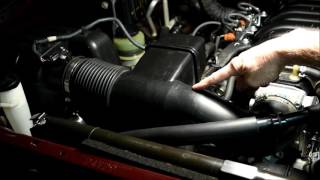
Typical fix: Replace the air injection pump. 🎬 See how to properly replace and fix the air valves It is critical to clean out all air lines and inspect or replace the air switching valves at the same time, as they are likely contaminated with debris from the failed pump.
Est. part cost: $200-$600 - Stuck/Failed Air Switching Valve(s) 🔴 High Probability Valves get contaminated with plastic and foam debris from a failed air pump or from carbon buildup. The P0412 code specifically points to an electrical fault in the valve's solenoid, but this is often a result of the mechanical failure.
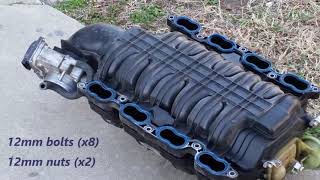
How to confirm: The valves are located under the intake manifold against the firewall, making access difficult. Diagnosis requires removing the manifold for inspection 🎬 Watch: Step-by-step guide to removing the intake manifold and testing. A scan tool like Toyota's Techstream can command the valves to open/close for testing, but physical inspection for debris is often necessary.
Typical fix: Replace the faulty air switching valve(s) and associated gaskets. This is a labor-intensive job due to the location under the intake manifold. Many owners replace both valves at the same time as a preventative measure.
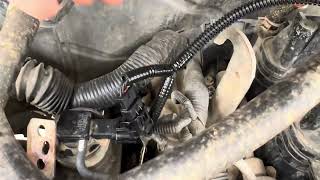
Est. part cost: $150-$600 per valve - Damaged Wiring or Connectors 🟡 Medium Probability Rodents can chew on the wiring harness under the intake manifold. Connectors for the switching valves or the Air Injection Control Driver can also become corroded or loose.
How to confirm: Visually inspect the wiring harness leading to the air switching valves and the air pump. This is difficult and may require an inspection scope to see under the intake manifold. Check for continuity and voltage at the connectors per the factory service manual.
Typical fix: Repair the damaged section of the wiring harness or replace the connector. This can be complex if the damage is under the intake manifold.
Est. part cost: $10-$50 - Failed Air Injection Control Driver or Relay ⚪ Low Probability → Shop Secondary Air Injection Solenoid A short circuit in a seized air pump can overload and damage the control driver or the main relay. The TSB for this issue specifically calls out checking and possibly replacing the driver if certain codes are present.
How to confirm: The Air Injection Control Driver is located on the right (passenger) fender near the firewall. Diagnosis requires advanced electrical testing with a multimeter or oscilloscope to verify signals from the ECM and to the pump/valves, as outlined in the service manual. The main 'AIR' relay can be swapped with a known good relay as a simple test.
Typical fix: Replace the faulty relay or the Air Injection Control Driver.
Est. part cost: $20-$80 for a relay, $100+ for a driver
Diagnosis Steps
- Scan for all DTCs. Note if P0412 is accompanied by other codes like P0418 or any P244x codes, as this points towards a larger system failure.
- On a cold start (after the vehicle has sat for 7+ hours), listen for the air pump running for the first 30-60 seconds. It should sound like a small, powerful vacuum cleaner from the passenger fender area.
- If the pump does not run, check the 7.5A 'ECU-B1' fuse and the 'AIR' relay in the engine bay fuse box.
- If the fuse and relay are good, access the air pump and test for 12V power at its connector during a cold start. If power is present but the pump is silent, the pump has failed. If it makes a grinding noise, it has failed.
- If the pump runs, the issue is likely with the switching valve circuit. Inspect the air lines for black debris, which confirms pump impeller disintegration.
- Using a professional scan tool (like Toyota Techstream), command the air pump and switching valves to operate. This can help determine if the command is being sent and if the components are responding.
- If wiring is suspected, inspect the harness for any visible damage, especially under the intake manifold (an inspection camera is essential here). Check for continuity between the Air Injection Control Driver and the valve connectors.
- If wiring is intact and the valve doesn't respond to scan tool commands, the fault is likely the Air Switching Valve itself or the Air Injection Control Driver. Testing these components is involved and requires removing the intake manifold for access to the valves.
Parts You'll Likely Need
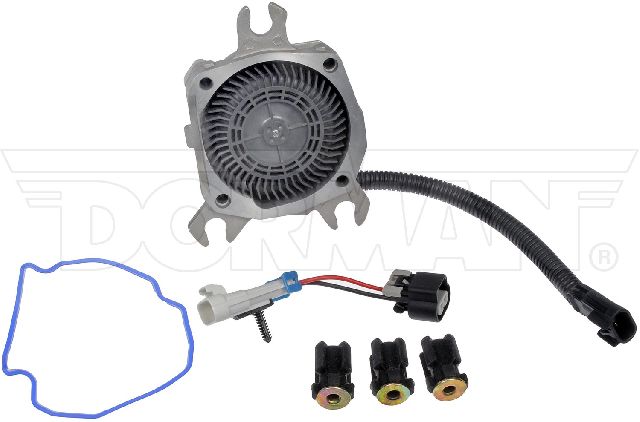
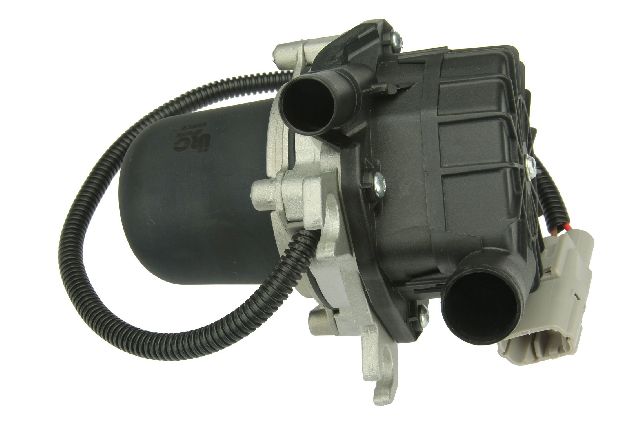
- Air Injection Pump
(OEM #17600-0F010)— This is the primary failure point due to moisture and debris ingestion. Its failure often causes a chain reaction, damaging other components.
Trusted brands: Toyota (OEM), Dorman (e.g., 306-010)
OEM price range: $450-$600
Aftermarket price range: $150-$350 - Air Switching Valve Assembly
(OEM #25710-50022 (Superseded by 25710-50032))— These valves get stuck open or closed from debris sent by a failing air pump. P0412 points to an electrical fault in this valve's circuit, which is often caused by the mechanical failure.
Trusted brands: Toyota (OEM)
OEM price range: $300-$500
Aftermarket price range: $150-$250 - Air Switching Valve Gasket
(OEM #25717-75010)— Required when replacing the air switching valves to ensure a proper seal. Two are needed.
Trusted brands: Toyota (OEM)
OEM price range: $3-$10
Aftermarket price range: $3-$10 - Secondary Air Injection System Bypass Kit — A popular and permanent alternative to costly OEM repairs. These kits electronically bypass the SAI system, preventing codes from being set and limp mode from being triggered. Since P0412 is an electrical code, a 'Gen 2' or equivalent kit that handles both mechanical and electrical faults is required.
Trusted brands: Hewitt Technologies, Slyfox75
OEM price range: N/A
Aftermarket price range: $200-$450
Related Codes That Often Appear With This One
- P0418 — This code indicates a fault in the air pump relay circuit, which is often triggered when the pump itself seizes or shorts out. It is frequently seen with P0412.
- P2440, P2441, P2442, P2443, P2445 — These codes indicate that the air switching valves are stuck open or closed, which is a direct mechanical consequence of the system's common failure modes (debris contamination). These codes often trigger 'limp mode'.
- C1201 — This code indicates an Engine Control System Malfunction and is often set alongside the SAI codes when the vehicle enters limp mode, disabling VSC and TRAC systems.
Technical Service Bulletins (TSBs) & Recalls
- T-SB-0230-12 Rev1 (October 17, 2013): This bulletin explicitly covers the 2005-2009 4Runner 2UZ-FE and lists P0412. It states the condition may be caused by debris from the air injection pump contaminating the system and provides a diagnostic procedure, including checking the Air Injection Control Driver.
- T-SB-0230-12 (November 27, 2012): The original version of the bulletin, also linking P0412 to debris from the air pump on 2005-2009 4Runners with the 4.7L V8 engine.
Platform-Specific Known Issues
- A known design flaw allows the air pump to ingest water from the fender well, leading to premature failure. Some owners proactively add a filter or relocate the pump's air intake hose to a higher, drier location in the engine bay as a preventative measure.
- When the air pump fails, it often shatters its internal plastic impeller and foam filter, sending shrapnel throughout the system and lodging in the air switching valves, requiring replacement of multiple components.
- The location of the air switching valves under the intake manifold at the rear of the engine makes replacement a very labor-intensive and costly repair.
Mechanic-Grade Diagnostic Values
- Air Switching Valve (ASV) coil resistance — expected: 19 to 23 Ω at 68°F (20°C). Failure: Resistance is outside the specified range, indicating a faulty valve solenoid.
Scan Tool Commands That Help
- Toyota Techstream: Active Test: 'AIR INJ CHECK' — This function allows a technician to manually command the air pump (AP) and air switching valve (ASV) to operate for 5-second intervals. It is used to verify if the components respond to commands from the ECM/AID, helping to isolate a failed component from a wiring or control module issue.
- Toyota Techstream: System Check > AIR INJ CHECK > MANUAL OPERATION — This specific path in Techstream allows for the intrusive operation of the AIR system while the engine is idling. It can be used to monitor the Air Injection Control Driver (AID) voltage output with an oscilloscope to confirm correct duty cycle signals are being sent and received.
Wiring & Ground Locations
- Engine Block to Chassis Ground — On the driver's side, a ground strap runs from the engine block (near the exhaust manifold) to the frame/chassis. A primary ground point is located behind the lower control arm, connecting the battery negative, engine block, and frame.. A poor engine ground can cause a variety of electrical issues and fault codes. While not a direct cause of P0412, ensuring all major grounds are clean and tight is a critical first step in any electrical diagnosis.
- Firewall / Body Grounds — Multiple 10mm grounds are located along the firewall in the engine bay. A key ground strap for the engine harness is located on the back of the passenger-side cylinder head, between the head and the firewall.. The Air Injection Control Driver and associated wiring rely on solid ground connections. A loose or corroded ground on the firewall or cylinder head can cause intermittent circuit faults like P0412.
- Air Injection Control Driver (AID) — Located on the passenger (right) side fender wall, near the firewall.. This is the control module for the SAI system. All wiring for the pump and valves routes through this driver. Checking for power, ground, and signal at this location is essential for diagnosis.
Real Owner Repair Stories
- Toyota Tundra Forum user (Toyota Tundra with 4.7L 2UZ-FE) — Check Engine Light with code P0412.
❌ Tried (didn't work) Initial diagnosis suggested replacing the air injection pump and valves.
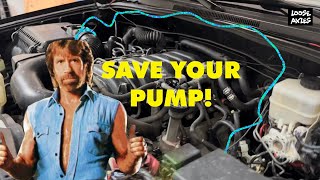
✅ What actually fixed it The owner used an inspection scope to look under the intake manifold and discovered several chewed wires from rodents. The fix was to remove the intake manifold, repair the 6 damaged wires, and clean out the nest. The code was resolved without replacing any major components. - T4R.org / YouTube user 'Loose Axles' (2005 Toyota 4Runner with 4.7L 2UZ-FE) — Check Engine Light, VSC, and TRAC lights on, vehicle in limp mode. Codes indicated the SAI system was stuck closed, a common issue in cold weather.
❌ Tried (didn't work) The owner chose not to pursue the expensive OEM repair.
✅ What actually fixed it Installed a preventative/bypass kit (Slyfox75 from T4R.org) which involves adding a relay and splicing into the MAF sensor's yellow/black wire (pin 4) to trick the computer. This permanently prevents the system from running and setting codes. For active electrical codes like P0412, a more comprehensive 'Gen 2' kit from a company like Hewitt Technologies is required. - Toyota Tundra Forum user 'wandering_boy' (1st Gen Toyota Tundra (2000-2006)) — Check Engine Light, limp mode (unable to exceed 2500 RPM or 30 mph). Codes P1441 and P1444 (valves stuck open).
❌ Tried (didn't work) The previous owner had installed a bypass kit, but it did not fix the issue because the valves were already physically stuck from debris.
✅ What actually fixed it The owner had to perform the full mechanical repair: removed the intake manifold, replaced the stuck air switching valves, and replaced the air pump with a Dorman 306-010 unit (requiring splicing the connector). This highlights that a bypass kit cannot fix a pre-existing, physical 'stuck open' or 'stuck closed' valve failure.
When the Usual Fixes Don't Work
- While P0412 is an electrical circuit code, the root cause is very often mechanical. Debris from a disintegrating air pump can jam the air switching valves, which can subsequently cause the valve's internal solenoid to short out or burn out, triggering the P0412 code. Simply addressing the electrical fault (e.g., replacing a valve) without addressing the source of the debris (the air pump) will lead to a repeat failure. Furthermore, in cases of severe rodent damage, the valves and pump may be perfectly fine, with the true issue being a shorted or open wire hidden under the intake manifold.
OEM Part Supersession History
25710-50030, 25710-50031→25710-50032— Standard part revision and improvement by the manufacturer.
Heads up: The newer part number (25710-50032) is the correct replacement for the older versions and is fully compatible.
Helpful Videos
We Have This Part in Stock


The information in this article is provided for general reference and educational purposes only. Vehicle specifications, procedures, and part compatibility can vary by production date, trim level, and region. Always consult your vehicle's factory service manual and verify part numbers before purchasing or performing repairs. Safety-critical components such as airbags, seat belts, and braking systems should be installed by a qualified professional.
- Toyota 4RUNNER:
- 🧭 Diagnostic Flowchart
- 🎬 Helpful Videos
- 🛍️ Shop This Part
- What's Unique About the 2005-2009 Toyota 4RUNNER
- Symptoms You May Notice
- Most Likely Causes
- Diagnosis Steps
- Parts You'll Likely Need
- Related Codes That Often Appear With This One
- Technical Service Bulletins (TSBs) & Recalls
- Platform-Specific Known Issues
- Mechanic-Grade Diagnostic Values
- Scan Tool Commands That Help
- Wiring & Ground Locations
- Real Owner Repair Stories
- When the Usual Fixes Don't Work
- OEM Part Supersession History
- 🎟️ Get 5% Off