

P0418 on 2008-2013 Toyota Sequoia: Air Injection System Circuit Fault Causes & Fixes
On a 2008-2013 Toyota Sequoia, code P0418 almost always points to a failure in the Secondary Air Injection (SAI) system. The most common culprits are seized air pumps due to water intrusion or the internal foam filter breaking down and jamming the motor. This can trigger a power-reducing 'limp mode' and is often an expensive repair, exceeding $1,500-$2,500 at a dealership. Many owners opt for an aftermarket electronic bypass kit as a permanent, more affordable solution.
- P0418 on a 2008-2013 Sequoia indicates a fault in the Secondary Air Injection (SAI) system's control circuit.
- The most likely cause is a seized air pump due to water damage or internal filter decay, which then may damage the control driver/relay.
- This is a very common and well-documented problem for this vehicle, and repair can be expensive, often exceeding $1,500-$2,000 at a dealership.
- Diagnosis involves checking fuses, testing the pumps with a scan tool, and checking for voltage at the pump and driver.
- For 2012-2013 models, an ECM software update may be the required fix as per Toyota TSB T-SB-0024-13.
What's Unique About the 2008-2013 Toyota SEQUOIA
The second-generation Sequoia, along with its sibling the Tundra, is notorious for Secondary Air Injection (SAI) system failures. The problem was so widespread that Toyota issued a Customer Support Program (CSP ZTQ) extending the warranty for this specific issue on 2008-2010 models to 10 years or 150,000 miles. The system's design is prone to water intrusion into the air pumps and switching valves, leading to corrosion and seizure. A secondary failure mode involves the internal foam filters of the air pumps disintegrating, with the debris getting sucked into the pump and jamming it, or traveling downstream and holding the air switching valves open. This common failure often results in a cascade of related trouble codes and can put the vehicle into a power-reducing 'limp mode', making it a frequently discussed and expensive issue among owners.
Diagnostic Flowchart
Tap your situation to follow the diagnostic path that matches what you're seeing on this vehicle.
Symptoms You May Notice
- Check Engine Light (MIL) is on
- Vehicle may enter 'limp mode' with significantly reduced engine power, often accompanied by the VSC and 4-LO lights flashing.
- Abnormal noise, like a vacuum cleaner, from the passenger side fender well for about 30-60 seconds on a cold start (indicates a failing air pump).
- Engine hesitation or stalling in some cases.
- No noticeable symptoms other than the Check Engine Light, especially if limp mode has not been triggered.
- Replacing oxygen (O2) sensors or catalytic converters. While the SAI system's function is to help the catalysts, the fault codes are specific to the air injection components, not the catalysts themselves. Some generic code readers may incorrectly suggest O2 sensor issues.
Most Likely Causes
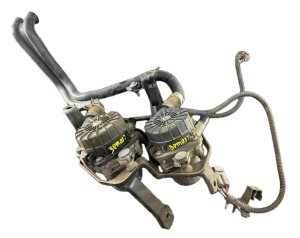
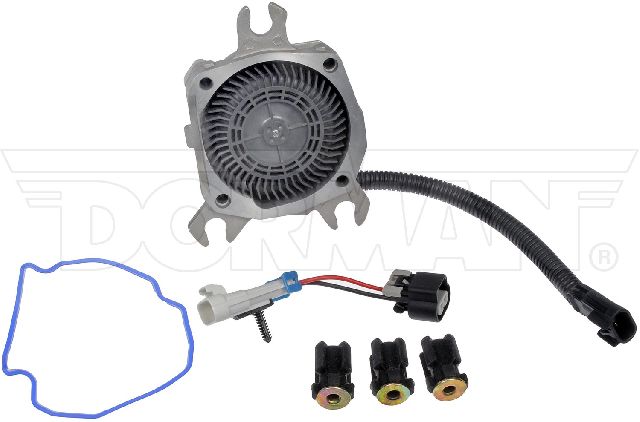
- Failed Secondary Air Injection Pump(s) 🔴 High Probability → Shop Secondary Air Injection Pump The pumps are highly susceptible to failure from two main causes: water intrusion from the intake snorkel and the degradation of internal foam filters. The foam breaks apart and jams the pump's impeller, causing it to seize. This is a well-documented issue for this platform, leading to warranty extensions.
How to confirm: Use a scan tool to command the pumps on; listen for their operation. If a pump does not run, check for voltage at its connector. If voltage is present but the pump is silent or makes a grinding noise, it has failed. The pumps are located behind the passenger-side front wheel well liner. Opening the old pump housing will often reveal the disintegrated foam filter as the culprit.
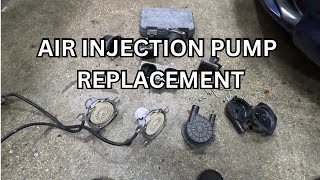
Typical fix: Replace the failed air injection pump assembly. Due to the common failure mode, it is often recommended to replace both pumps at the same time. 🎬 Watch: Step-by-step guide to replacing your air pumps and valves. Some owners modify the new pumps by removing the internal foam filter and adding an external filter, like a K&N 62-1010, to the intake hose to prevent recurrence.
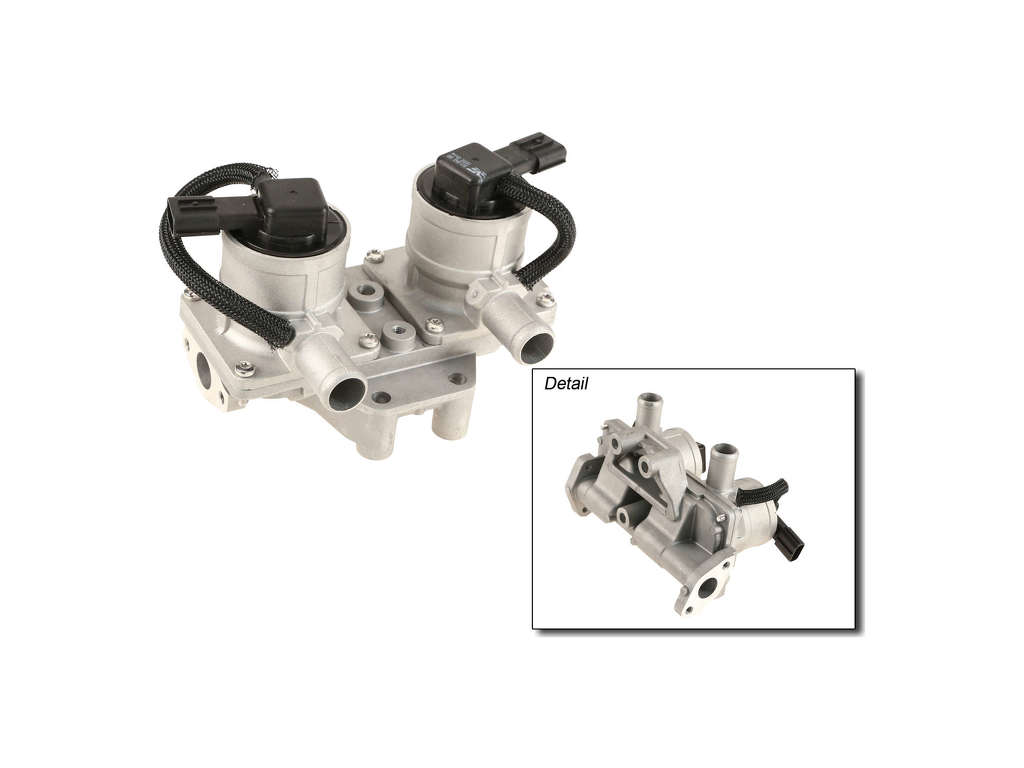
Est. part cost: $400-$900 for one OEM pump assembly. Aftermarket options are available for less. - Stuck or Failed Air Switching Valves 🔴 High Probability Like the pumps, these valves are prone to failure from moisture and carbon buildup. Debris from a disintegrating air pump filter can also travel to the valves and hold them open, causing them to burn out from constant exposure to hot exhaust gas. This is a very common issue on the 5.7L V8.
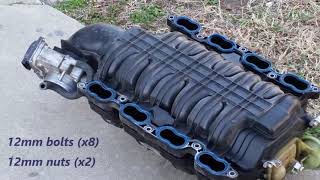
How to confirm: Diagnosis often requires checking for related codes like P2440, P2441, P2442, or P2443. The valves are located under the intake manifold. 🎬 Watch: A closer look at the updated air switching valve design. Once the manifold is removed, the valves can be inspected for carbon buildup or physical damage. A stuck-open valve may show signs of burning on its internal seal.
Typical fix: Replace the air switching valve assembly. On the 5.7L engine, this is a labor-intensive job as the assembly is located under the intake manifold. It is highly recommended to replace the intake manifold gaskets at the same time.
Est. part cost: $500-$900 for the OEM valve assembly (Part No. 25701-38064). - Faulty Air Injection Control Driver/Relay 🟡 Medium Probability → Shop Secondary Air Injection Solenoid A seized air pump can draw excessive current, overloading and damaging the control driver, which is the component the P0418 code directly references. The driver module is essentially a solid-state relay that controls power to the pump.
How to confirm: The control drivers (one for each pump) are located near the main fuse box in the engine bay. If a new pump fails to operate, the control driver is the next logical component to test. This can be done by checking for a command signal from the ECM and output voltage to the pump circuit. Swapping with a known-good driver is a common diagnostic step. P0418 refers to the 'A' circuit, which on some models is the top driver module.
Typical fix: Replace the Air Injection Control Driver module. The OEM part number is often 89581-34041.
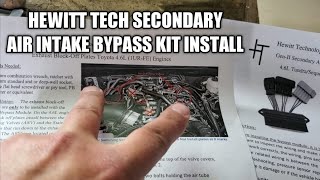
Est. part cost: $150-$300 for an OEM part. - SAIS Electronic Bypass Kit Installation 🟡 Medium Probability This is not a cause of the initial problem, but a very popular solution. Many owners, faced with high repair bills for a non-essential emissions component, choose to install an electronic bypass kit from companies like Hewitt Technologies. These kits trick the ECM into thinking the SAIS is functioning correctly, clearing the codes and preventing limp mode without replacing the expensive mechanical parts.
How to confirm: Visually inspect the engine bay for a small electronic module wired into the SAIS harness, typically near the air pumps or control drivers. The kit also includes block-off plates installed on the exhaust manifolds, which may be visible from underneath the vehicle.
Typical fix: This is the fix itself. Installation involves installing a control module, wiring harness adapters, and block-off plates. It is a permanent alternative to repairing the OEM system and will prevent future SAIS-related codes. Note: This solution may not be legal in areas with strict emissions testing.
Est. part cost: $300-$450 for a complete bypass kit. - Outdated ECM Software (2012-2013 Models) ⚪ Low Probability As per TSB T-SB-0024-13, the ECM logic on some 2012-2013 models with the 3UR-FBE (Flex Fuel) engine can be overly sensitive, falsely triggering P0418 and/or P2445.
How to confirm: A Toyota dealership can check the vehicle's service history and current software calibration to see if the update from T-SB-0024-13 is applicable and has been performed.
Typical fix: Update/reflash the Engine Control Module (ECM) with the revised software.
Est. part cost: $0 if covered, otherwise dealer labor charge of $100-$200. - Blown Fuses or Damaged Wiring ⚪ Low Probability A seized pump motor can cause a current surge that blows the main fuse for the SAI system. Wiring and connectors, especially around the pumps in the fender well, are susceptible to corrosion and damage.
How to confirm: Visually inspect the fuses for the SAI system in the main fuse box under the hood. Inspect the wiring harness and connectors leading to the pumps and driver for any signs of corrosion, melting, or physical damage.
Typical fix: Replace the blown fuse and diagnose the underlying cause of the overcurrent (usually a bad pump). Repair or replace damaged wiring.
Est. part cost: $1-$20
Diagnosis Steps
- Read all stored DTCs with an OBD-II scanner. Note any codes accompanying P0418, as they are crucial for diagnosis (e.g., P2440-series codes point to valves).
- Inspect the main fuses related to the Secondary Air Injection system in the under-hood fuse box.
- On a cold engine, start the vehicle and listen for the air pumps. They are located in the passenger side fender well and should run with a distinct 'vacuum cleaner' sound for 30-90 seconds. No sound or a grinding noise indicates a pump failure.
- If a pump does not run, access the pumps by removing the passenger fender liner. Test for battery voltage at the pump's electrical connector when it is commanded ON (either by a cold start or an active test with a capable scan tool). If voltage is present, the pump motor has failed.
- If no voltage is present at the pump, test the Air Injection Control Driver. Check for an input command signal from the ECM and output voltage to the pump circuit. The drivers are located near the main fuse box.
Parts You'll Likely Need
- Secondary Air Injection Pump
(OEM #17610-0S010)— This is the most common component to fail, typically due to water intrusion or internal filter decay, which leads to a seized motor and triggers the P0418 circuit code.
Trusted brands: Toyota (OEM), Dorman
OEM price range: $400-$900
Aftermarket price range: $150-$300 - Air Switching Valve Assembly
(OEM #25701-38064 (supersedes 25701-38060, 25701-38061, etc.))— These valves, located under the intake manifold on the 5.7L V8, are the second most common failure point. They get stuck from moisture and carbon, or debris from the pumps, triggering limp mode and various SAI codes.
Trusted brands: Toyota (OEM), Dorman
OEM price range: $500-$900
Aftermarket price range: $250-$450 - Air Injection Control Driver
(OEM #89581-34041 (supersedes 89581-34020, 89581-34040))— This module controls the air pumps. A seized pump can overload and burn out this driver, which is what the P0418 code directly points to. It's often replaced along with the pumps.
Trusted brands: Toyota (OEM)
OEM price range: $150-$300
Aftermarket price range: $100-$200 - SAIS Bypass Kit — A popular and permanent alternative to OEM part replacement. This kit electronically bypasses the system, tricking the computer to clear codes and prevent limp mode. It is significantly cheaper than a full OEM repair.
Trusted brands: Hewitt Technologies
Aftermarket price range: $300-$450
Related Codes That Often Appear With This One
- P0419 — This is the corresponding circuit fault code for the 'B' circuit or Bank 2 of the SAI system. It often appears alongside P0418 if both pumps or control circuits have issues.
- P2440, P2441, P2442, P2443 — These codes indicate an air switching valve is stuck open or closed for Bank 1 or Bank 2. A stuck valve is a very common related failure, often caused by the same moisture or debris issues.
- P2445, P2447 — These codes indicate an air pump is stuck OFF for Bank 1 or Bank 2, often triggered by the same water intrusion or foam filter degradation that causes the P0418 circuit fault.
Technical Service Bulletins (TSBs) & Recalls
- T-SB-0024-13
- T-SB-0230-12
- CSP ZTQ (Warranty Enhancement POL11-05)
Platform-Specific Known Issues
- source — A user on TundraTalk.net with a 2007 Tundra (shared platform) reported clearing a P0418 code after replacing both air pumps. Upon opening the old pumps, they found the internal foam filter had degraded and 'gummed up the pump,' confirming this common failure mode. This highlights the importance of inspecting the old parts to understand the root cause.
- source — On the IH8MUD.com forum, a user with a P0418 code first replaced a bad air pump, but the code remained. The fix was ultimately replacing the Air Injection Control Driver module located behind the main fuse box. The user noted the code returned again after two months, suggesting a potential underlying wiring issue, but confirmed the driver was the direct cause of the P0418 code. They also specified that for their vehicle, the 'A' driver was the top module and 'B' was the bottom.
- source — Toyota acknowledged the high failure rate by issuing Customer Support Program ZTQ. This extended the warranty on the air injection pumps and air switching valves for many 2008-2010 Sequoias (and 2007-2010 Tundras) to 10 years or 150,000 miles from the date of first use. While this program has expired for most vehicles by now, it serves as official acknowledgment of the widespread defect.
- The Popularity of the Hewitt-Tech Bypass Kit: Numerous forum threads and YouTube videos document owners choosing to install an electronic bypass kit from Hewitt Technologies rather than pay for an expensive OEM repair. Testimonials frequently mention saving thousands of dollars and permanently solving the problem of recurring check engine lights and limp mode associated with the SAIS system. The installation is considered a DIY-friendly job that takes a few hours.
Mechanic-Grade Diagnostic Values
- Secondary Air Injection Pump Resistance — expected: 0.2 to 10 Ω. Failure: A reading outside this range, particularly a very high or infinite resistance, indicates a failed pump motor.
- Air Injection Control Driver (AID) Diagnostic Signal — expected: A duty cycle waveform viewable on an oscilloscope connected to the AIDI terminal of the ECM.. Failure: An abnormal waveform (e.g., flat line, incorrect voltage) when the SAIS is commanded on via a scan tool indicates a fault in the driver or its circuits.
Scan Tool Commands That Help
- Toyota Techstream: Utility -> Air Injection Check -> Automatic Mode — This active test commands the SAIS pumps and valves to operate for 5 seconds, allowing a technician to listen for pump activation and check for voltage at components without needing a cold start. It's critical for verifying if the control circuit and components are functional. Note: The test can only be run 4 times per trip with a 30-second interval.
Wiring & Ground Locations
- Ground Point EA — On the right (passenger side) fender, near the washer fluid reservoir.. This is the main ground point for the Air Injection Control Driver and the air pump itself. A corroded or loose connection here can cause intermittent or total failure of the SAIS, leading to P0418 and other related codes.
- AIDI Terminal — On the Engine Control Module (ECM) connector.. This is the diagnostic signal pin from the Air Injection Control Driver (AID) to the ECM. Connecting an oscilloscope to this terminal allows a technician to directly monitor the health and status signals being sent by the AID, which is essential for diagnosing complex circuit faults.
- A/PUMP Fuse (50A) — In the main engine bay fuse box.. This is the main power source for the air pumps. A seized pump can draw excessive current and blow this fuse, cutting all power to the system. It receives power directly from the battery at all times.
Real Owner Repair Stories
- IH8MUD.com Forum user SoCal818 (2005 Toyota Sequoia 4x4) — Intermittent P0418 and P1613, later accompanied by O2 sensor codes (P0031, P0051) and random misfire (P0300). Vehicle was running rich.
❌ Tried (didn't work) Replacing the Air Injection Control Driver., Replacing upstream and downstream O2 sensors.
✅ What actually fixed it The root cause was a faulty ground wire for both the secondary air injection system and the A/F sensors. The ground is located in the valley of the engine near the starter. The shop created a new, solid ground point to resolve the issue permanently.
OEM Part Supersession History
89581-34020, 89581-34040→89581-34041— Component revision and consolidation.25701-38060, 25701-38061, 25701-38062, 25701-38063→25701-38064— Updated design for the air switching valve assembly to improve durability.17610-0S010→N/A - This is the primary OEM part number for the air pump itself.
Heads up: This OEM part number is cross-referenced by many aftermarket manufacturers like Standard Motor Products (AIP28) and SKP (SKAP913060).
Model Year Variations Within This Range
- 2012-2013: Models with the 3UR-FBE (Flex Fuel) engine may trigger P0418 and/or P2445 due to overly sensitive ECM logic. Toyota issued TSB T-SB-0024-13 with a software update to correct this. The fix is to reflash the ECM with the new calibration, not necessarily replace hardware.
- 2012-2013: Another TSB (T-SB-0143-14) addresses P2440/P2442 (valve stuck open) on 2012-2013 models, which can be caused by debris or ice. The fix is also an ECM logic update, not necessarily valve replacement, to prevent false triggers.
Helpful Videos
Used OEM Parts in Stock
New Aftermarket Parts Available


The information in this article is provided for general reference and educational purposes only. Vehicle specifications, procedures, and part compatibility can vary by production date, trim level, and region. Always consult your vehicle's factory service manual and verify part numbers before purchasing or performing repairs. Safety-critical components such as airbags, seat belts, and braking systems should be installed by a qualified professional.
- Toyota SEQUOIA:
- 🧭 Diagnostic Flowchart
- 🎬 Helpful Videos
- 🛍️ Shop This Part
- What's Unique About the 2008-2013 Toyota SEQUOIA
- Symptoms You May Notice
- Most Likely Causes
- Diagnosis Steps
- Parts You'll Likely Need
- Related Codes That Often Appear With This One
- Technical Service Bulletins (TSBs) & Recalls
- Platform-Specific Known Issues
- Mechanic-Grade Diagnostic Values
- Scan Tool Commands That Help
- Wiring & Ground Locations
- Real Owner Repair Stories
- OEM Part Supersession History
- Model Year Variations Within This Range
- 🎟️ Get 5% Off