

P0420 on 2010-2016 Audi S4 3.0T: Catalyst Efficiency Causes and Fixes
On the 2010-2016 Audi S4 3.0T, a P0420 code almost always means the Bank 1 (driver's side in the US) catalytic converter has failed due to heat degradation. The most common and definitive fix is replacing the catalytic converter. In some rare cases on early B8.5 models, a dealer software update may resolve an overly sensitive monitor.
- For the 2010-2016 Audi S4, P0420 almost always indicates a failing driver's side catalytic converter, not just a bad sensor.
- The root cause is the converter's proximity to the engine, leading to failure from extreme heat.
- Do not ignore symptoms like power loss or a flashing EPC light, as a clogged converter can cause serious engine damage.
- Before replacing the expensive converter, rule out exhaust leaks and confirm the downstream O2 sensor is functioning correctly by graphing its live data.
- If replacing the converter, consider high-quality aftermarket options, as they may be more durable than the OEM design.
What's Unique About the 2010-2016 Audi S4
Unlike many cars where a P0420 code might be a faulty sensor, on the B8/B8.5 Audi S4 with the 3.0T engine, it's a well-known indicator of premature catalytic converter failure. The primary cause is the design choice of placing the converters very close to the engine manifolds. While this helps them heat up quickly for better emissions control, it also subjects them to extreme, sustained heat that degrades the internal precious metals over time, leading to melting, clogging, and inefficiency. This issue is prevalent on both stock and especially on tuned vehicles where exhaust gas temperatures are even higher. Enthusiasts often refer to this as a 'fatal flaw' of the platform.
Generation note: The 2010-2016 year range covers both the B8 generation (2010-2012) and the B8.5 generation (2013-2016) of the Audi S4. The P0420 issue related to catalytic converter failure is a known problem across both generations sharing the 3.0T supercharged engine. Some early B8.5 models (2012-2014) may be eligible for a TSB related to overly sensitive software, but physical failure is far more common.
Symptoms You May Notice
- Check Engine Light is on
- Vehicle fails emissions testing
- Sluggish acceleration and loss of power, especially under high load
- Car struggles or refuses to rev past a certain RPM (e.g., 5000 RPM) and may enter limp mode
- EPC light may illuminate, particularly with misfires
- Rattling noises from underneath the car if the catalyst's internal structure has broken apart
- A 'rotten egg' or sulfur smell from the exhaust
- White, powdery material on the exhaust tips, indicating the catalyst substrate is breaking down and being blown out 🎬 Watch: A breakdown of common 3.0T catalyst wear symptoms
- Replacing the oxygen sensors without confirming their failure. The O2 sensors are often just doing their job by reporting the inefficiency of the catalytic converter. On the S4 3.0T, the converter itself is the most likely point of failure.
- Replacing the catalytic converter without addressing the root cause of its failure, such as engine misfires or excessive oil consumption, which will lead to premature failure of the new part.
Most Likely Causes
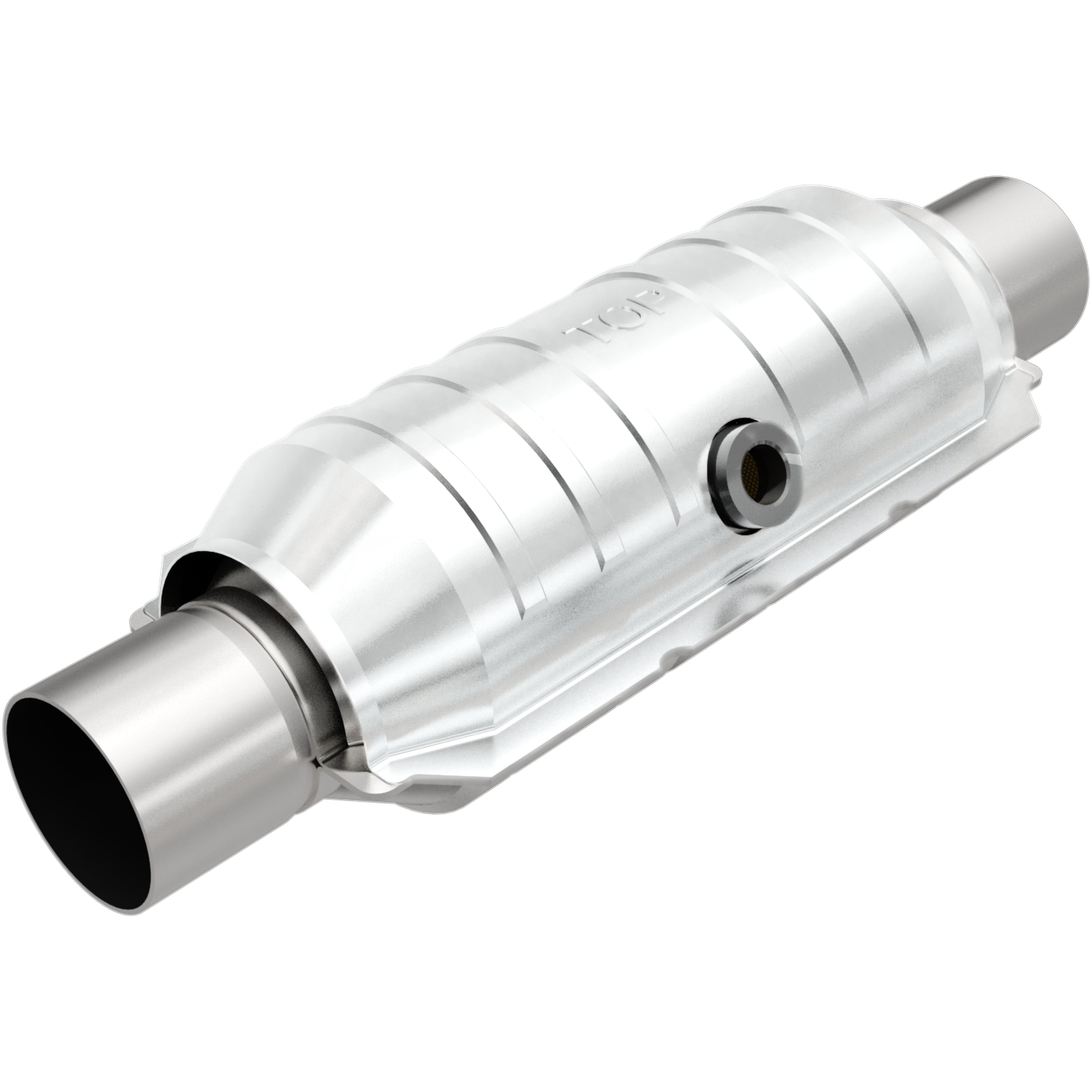
- Failed Catalytic Converter (Bank 1) 🔴 High Probability → Shop Catalytic Converter The catalytic converters are mounted very close to the engine, leading to extreme heat exposure that degrades the internal catalyst materials over time, causing them to melt, break apart, and become inefficient or clogged. This is the most common cause on the 3.0T engine, with the driver's side (Bank 1) often failing first.
How to confirm: A mechanic can perform a backpressure test. Another method is to use an infrared thermometer to check the temperature of the converter's inlet and outlet pipes; a working converter should be significantly hotter at the outlet. Visually inspecting the catalyst honeycomb (if removed) for melting, breakage, or blockage is definitive. Logging requested vs. actual boost with a diagnostic tool can also reveal a restriction, as the turbo will work much harder to overcome the backpressure.
Typical fix: Replace the Bank 1 catalytic converter assembly. 🎬 See this walkthrough on replacing your S4's catalytic converters Due to the high cost of OEM parts, many owners opt for high-quality aftermarket units (e.g., MagnaFlow) or, if regulations permit, test pipes combined with an ECU tune to prevent the CEL.
Est. part cost: $900-$2200 - Failed Oxygen Sensor (Downstream) ⚪ Low Probability → Shop Oxygen Sensor
How to confirm: Use a scan tool to graph the voltage of the downstream (Bank 1, Sensor 2) O2 sensor. If the reading is stuck at a specific voltage and doesn't change, the sensor is likely faulty. If it's fluctuating and mirroring the upstream sensor, it's correctly reporting a bad converter. Swapping the downstream sensors between Bank 1 and Bank 2 can also help diagnose; if the code changes to P0430, the sensor is bad.
Typical fix: Replace the downstream oxygen sensor for Bank 1.
Est. part cost: $80-$250 - Exhaust Leak ⚪ Low Probability Flex pipes on the downpipes can crack and rot over time, especially in regions that use road salt. Gaskets can also fail. A leak before the catalytic converter or between the two O2 sensors can introduce oxygen and trick the sensor into reporting a false P0420.
How to confirm: Perform a visual inspection of the exhaust system from the manifolds to the rear O2 sensor. Listen for ticking or hissing sounds, especially on a cold start. A smoke test is the most effective way to pinpoint small leaks.
Typical fix: Repair the leak. This may involve replacing a gasket or welding a cracked pipe or flex joint.
Est. part cost: $20-$500 - Engine Control Module (ECM) Software Sensitivity Very Low Probability A specific TSB was issued for some 2012-2014 models with the 3.0T engine where the diagnostic thresholds for the catalytic converters were programmed too tightly, causing a false P0420 or P0430 code.
How to confirm: A dealership can check if TSB 01-16-49 (also listed as 2041120/3) applies to your vehicle's VIN. This should be considered only after ruling out physical converter failure.
Typical fix: Update the ECM software at an Audi dealership or qualified independent shop.
Est. part cost: $0-$250
Rare But Worth Checking
- Engine Misfires: While often a symptom of a clogged cat, severe, unaddressed misfires from bad spark plugs or ignition coils can also cause a P0420. Unburned fuel enters the exhaust and superheats the converter, leading to its failure. If you have misfire codes (P0300-P0306) along with P0420, address the misfire cause first to avoid destroying a new converter.
- Stuck-Open Thermostat: A thermostat that is stuck open will prevent the engine from reaching its proper operating temperature. The ECU requires the engine to be fully warm before it will run the catalytic converter efficiency test. If the engine is always running too cool, the test may never complete or may run when conditions are not ideal, potentially leading to a false P0420 code.
Diagnosis Steps
- Read the codes: Use an OBD-II scanner to confirm P0420 and check for any other codes, such as P0430 (Bank 2) or misfire codes (P030x).
- Check for TSBs: For 2012-2014 models, ask a dealer if TSB 01-16-49 (2041120/3) applies, which addresses overly sensitive software and may be a simple fix.
- Inspect for exhaust leaks: Visually inspect the entire exhaust system for cracks, especially around the manifold, flex pipes, and gaskets. A smoke test is highly effective for finding leaks.
- Analyze Oxygen Sensor Data: Use a scan tool with live data graphing. Observe the voltage for the Bank 1 upstream (Sensor 1) and downstream (Sensor 2) O2 sensors at a steady 2500 RPM. The upstream sensor should fluctuate rapidly. The downstream sensor should hold a relatively steady voltage (typically 0.4-0.8V). If the downstream sensor is fluctuating and mirroring the upstream, the catalytic converter is not working. 🎬 Watch: A guide to diagnosing P0420 causes and solutions
- Test for a Clogged Converter: If a severe loss of power is present, an exhaust backpressure test can confirm a blockage. An infrared temperature gun can also be used; the outlet of the converter should be at least 100°F hotter than the inlet on a healthy, warmed-up unit.
- Inspect the Catalytic Converter: If all other tests point to the converter, the final step is removal and visual inspection. Look for signs of melted, collapsed, or broken internal honeycomb structure.
Parts You'll Likely Need
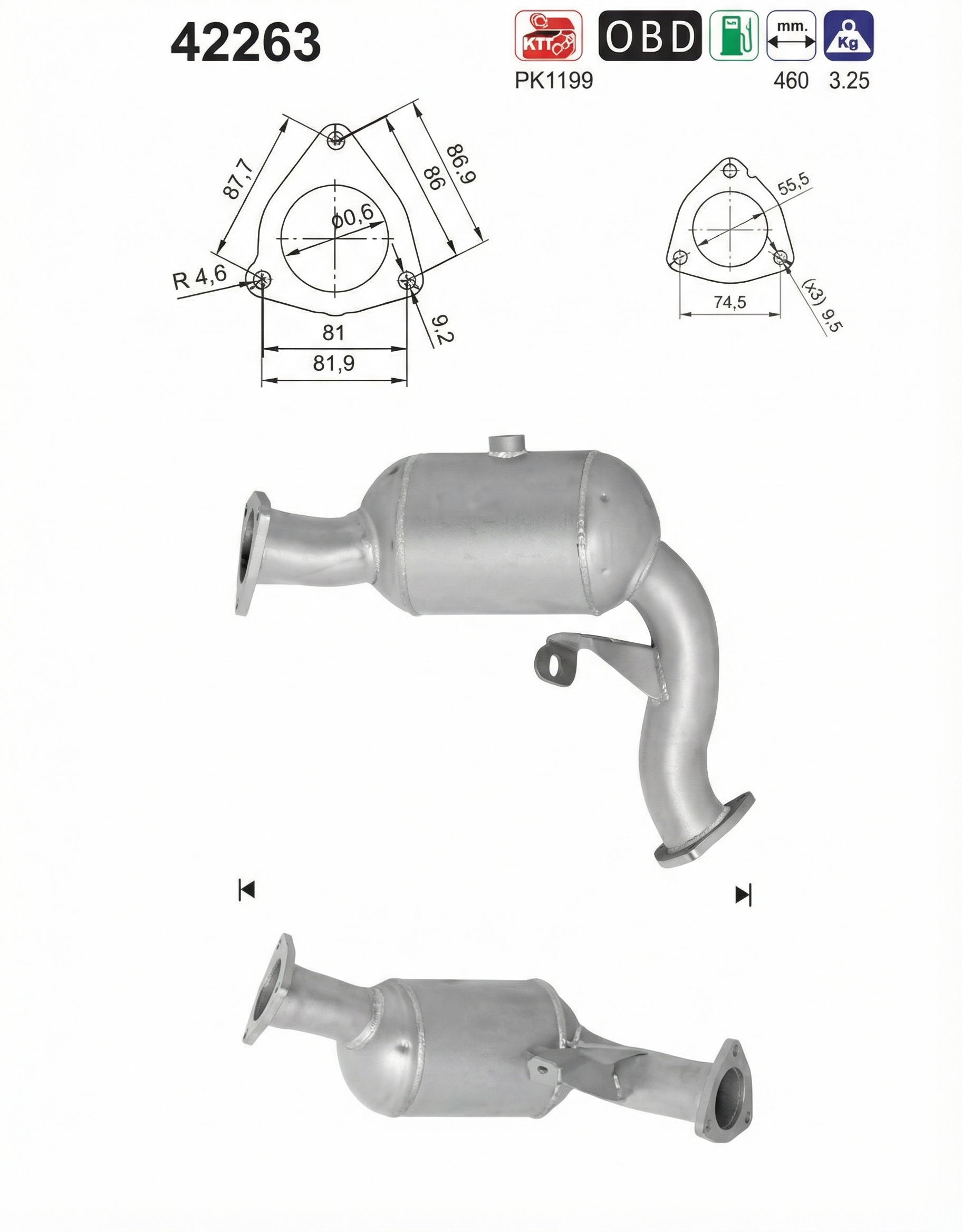
- Catalytic Converter (Bank 1)
(OEM #8K0254252KX (or similar variant like 8K0254252TX))— This is the most common failure part for a P0420 code on this specific vehicle due to heat degradation. Bank 1 is the driver's side in LHD vehicles.
Trusted brands: Audi Genuine, MagnaFlow (P/N 49135 for Left/Driver side), JHM (High-flow aftermarket)
OEM price range: $1800-$2500
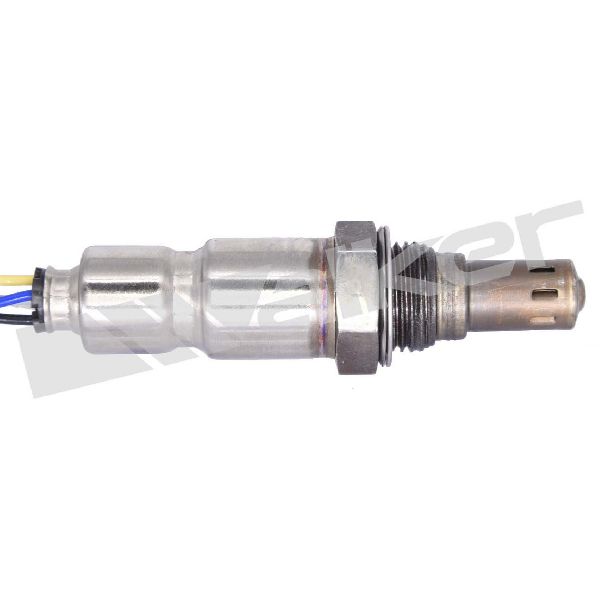
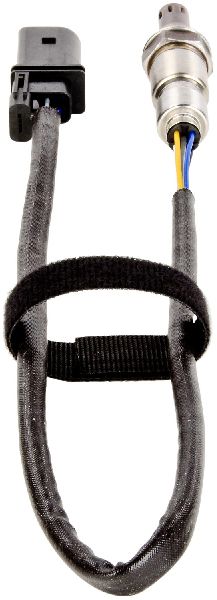
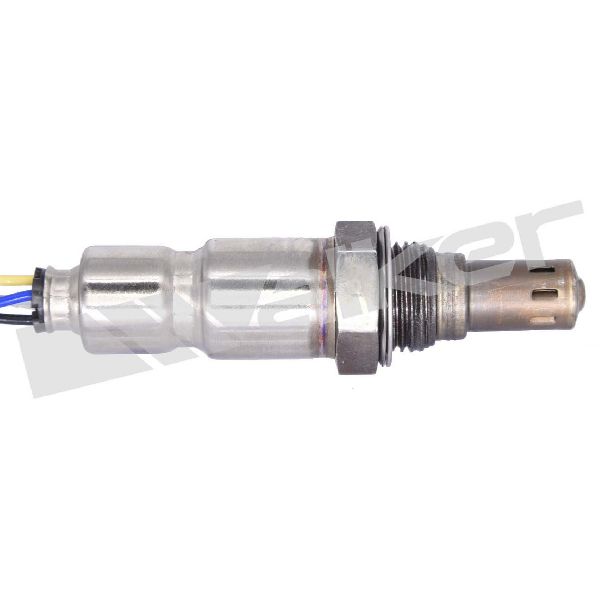
Aftermarket price range: $900-$1600 - Downstream Oxygen Sensor (Bank 1, Sensor 2)
(OEM #06E906265AJ (Bosch 16073 is a common equivalent))— While less common than converter failure, a faulty sensor can cause this code. It's often replaced during a catalytic converter job as a preventative measure.
Trusted brands: Bosch, NTK, Denso
OEM price range: $180-$250
Aftermarket price range: $80-$150 - Exhaust Gasket
(OEM #8K0253115D)— Required when replacing the catalytic converter to ensure a proper seal between the converter and the downpipe.
Trusted brands: Audi Genuine, Elring
OEM price range: $15-$25
Aftermarket price range: $10-$20
Related Codes That Often Appear With This One
- P0430 — This is the identical code for Bank 2 (passenger side). The catalytic converters on both sides of the engine are subjected to the same conditions, so it's common for them to fail around the same time.
- P0300, P0301-P0306 — These are misfire codes. A severely clogged catalytic converter can cause excessive backpressure, leading to misfires, especially under load. Conversely, persistent misfires can destroy a catalytic converter.
Technical Service Bulletins (TSBs) & Recalls
- TSB 01-16-49 / 2041120/3: Addresses a Check Engine Light with codes P0420 or P0430 on some 2012-2014 A6 models with the 3.0T engine, caused by overly sensitive engine computer software. An update may fix the issue. While for the A6, it's relevant to the same engine family.
- TSB 21 13 84 / 2035273: An older TSB related to carbon buildup in secondary air injection ports, which involves cleaning procedures. While not a direct cause of P0420, it highlights the emissions-related issues on the 3.0T engine.
Platform-Specific Known Issues
- The 3.0T engine's catalytic converters are known to be a 'fatal flaw' by enthusiasts due to their placement causing heat-related failure, which can lead to clogging and, in worst-case scenarios, engine damage from excessive backpressure.
- Owners who modify their vehicles with performance software (tunes) increase exhaust gas temperatures, which can accelerate the failure of the stock catalytic converters.
- In a thread on MyS4.org, an owner notes that the driver's side cat often fails first and that the CEL tends to appear when the engine isn't fully warmed up before driving.
- On Audi-Sport.net, a user confirms that the location is the primary issue and that blocked cats can cause catastrophic engine damage, making test pipes a popular preventative modification for peace of mind.
Mechanic-Grade Diagnostic Values
- Downstream O2 Sensor (Post-Cat) Voltage at steady 2,500 RPM — expected: Relatively stable voltage, typically between 0.6V and 0.8V.. Failure: Voltage fluctuates rapidly, mimicking the upstream (pre-cat) sensor's waveform, indicating the catalyst is not storing oxygen.
- O2 Sensor Heater Element Resistance — expected: Typically below 20 ohms when measured with a multimeter across the heater pins of a disconnected sensor.. Failure: A very high or infinite resistance (Open Loop) reading indicates a broken heater element, requiring sensor replacement.
- Catalyst Temperature (VCDS Basic Settings) — expected: During the catalyst test (Group 046), the catalyst temperature must be above 350-400°C (662-752°F) for the test to run.. Failure: If the temperature fails to reach this threshold, it could indicate a problem with the engine reaching operating temperature (e.g., bad thermostat) or a sensor issue.
- Catalytic Converter Efficiency Test Result (VCDS Basic Settings, Group 046) — expected: The test result should read 'CAT B1 OK'.. Failure: A result other than 'OK' indicates the catalyst failed the ECU's internal efficiency test.
Scan Tool Commands That Help
- VCDS (VAG-COM) or similar advanced scanner: Engine -> Measuring Blocks -> Groups 030-049 — This is the primary method for live data diagnosis. Use Group 032 to check long-term fuel trims (to rule out a mixture problem poisoning the cat), Group 033 to see Bank 1 Lambda regulation, and Group 036 to view catalyst temperatures. This allows a technician to see the O2 sensors and catalyst working (or not working) in real-time.
- VCDS (VAG-COM) or similar advanced scanner: Engine -> Basic Settings -> Group 046 — Use this to manually initiate the ECU's internal catalytic converter efficiency test for Bank 1. The engine must be at idle and fully warmed up (catalyst temp >350°C). The tool will display the test status and the final result (e.g., 'CAT B1 OK'), providing a definitive pass/fail from the ECU's perspective.
- VCDS (VAG-COM) or similar advanced scanner: Engine -> Basic Settings -> Group 034 — This function runs an aging test for the pre-catalyst oxygen sensor. While not a direct test of the converter, it helps rule out a lazy upstream sensor that could be contributing to poor catalyst performance or inaccurate readings.
Wiring & Ground Locations
- O2 Sensor Connectors (Post-Cat) — The downstream (post-cat) O2 sensor connectors are typically located on the transmission tunnel, accessible from underneath the vehicle. They are often black or brown multi-pin connectors.. These connectors are a key point for testing. A technician can disconnect them to measure the sensor's internal heater resistance or check for voltage from the ECU harness side. Corrosion or damage here can interrupt the signal and cause false codes.
- Engine to Chassis Ground Strap — A primary ground strap is located on the driver's side of the engine bay, connecting the engine block to the chassis frame rail. Other grounds are present, including near the ECU in the plenum chamber.. A poor ground connection can cause erratic voltage readings for all engine sensors, including the oxygen sensors. While not a common cause for P0420 specifically, it can lead to difficult-to-diagnose electrical issues and should be checked if sensor readings are bizarre or inconsistent.
Real Owner Repair Stories
- MyS4.org user blog post (2013 Audi S4 (B8.5)) — P0420 Check Engine Light, particularly when the engine is not fully warmed up before driving.
❌ Tried (didn't work) The user was battling the code since tuning the car to Stage 1, implying that clearing the code was only a temporary fix.
✅ What actually fixed it The user acknowledged the known issue of catalytic converter failure and was deciding between replacing them with Magnaflow units or gutting the stock cats. The story confirms that for owners on this platform, the ultimate fix is understood to be addressing the failed catalytic converter itself, not chasing sensors.
OEM Part Supersession History
8K0254250KX→8K0254252KX, 8K0254252TX— Part revisions and updates by the manufacturer over the vehicle's production run.
Heads up: While physically interchangeable across the B8/B8.5 S4 range, it is critical to use the correct part number for your vehicle's VIN. The primary difference between B8 and B8.5 exhaust components is cosmetic and related to the rear section, but using the latest revision of the catalytic converter is always recommended.
Model Year Variations Within This Range
- 2013-2016 (B8.5): The B8.5 features a cosmetic facelift with different headlights, grille, and bumpers. Mechanically, the B8.5 S4 received electromagnetic steering versus the B8's hydraulic steering and an updated crown-gear center differential. While the core engine and exhaust manifold/catalyst design causing the P0420 issue remained the same, some early B8.5 models (2012-2014) were subject to a TSB for overly sensitive catalyst monitoring software, a fix not applicable to the B8.
Diagnostic Flowchart
Other Known Issues on This Vehicle
Issues unrelated to this code that are worth knowing about as an owner of this generation:
- DSG Mechatronics Failure 🔴 High — More common on early B8 models (2010-2012). Symptoms include jerky shifts, flashing PRNDS light, and loss of reverse or drive gears.
- Water Pump & Thermostat Failure 🔴 High — Very common failure item. Early B8 models used plastic pumps that were prone to leaking coolant. Failure can lead to overheating. Often replaced together as a preventative measure. (Ref: Multiple revisions and service actions were issued for early models.)
- PCV Valve Failure 🟠 Medium → Shop PCV Valve — Common issue leading to high oil consumption, rough idle, and sometimes a whistling noise. The plastic valve, located under the supercharger, can crack or its diaphragm can tear.
- Carbon Buildup on Intake Valves 🟠 Medium — As a direct-injection engine, carbon deposits accumulate on the intake valves over time, typically becoming an issue after 60,000-80,000 miles. Symptoms include rough idle and reduced fuel economy.
- Timing Chain Tensioner Wear 🟠 Medium — Less common than on other VAG engines, but can occur. The primary symptom is a brief chain rattle on cold starts that lasts more than a few seconds, indicating worn upper tensioners.
Used vs. New Parts: Buying Guide for This Vehicle
When a used part is the smart pick: For this specific repair, buying a used OEM catalytic converter is a very high-risk, generally inadvisable choice. Given that premature failure is a known flaw of the original part, a used unit from a donor car is likely to have significantly reduced lifespan or may already be degraded.
Donor-vehicle mileage cap: roughly under 30000 miles for the part to have meaningful remaining life.
What to inspect on the donor part:
- Ask for proof of the donor vehicle's mileage; anything over 50,000 miles is a major gamble.
- Visually inspect the catalyst honeycomb with a borescope or flashlight. Look for any signs of melting, crumbling, or blockage.
- Avoid any parts with significant external rust or corrosion, especially around the flex pipe sections.
OEM-only on this vehicle (don't cheap out):
- While not strictly 'OEM-only', the catalytic converter is a part where quality is paramount. Cheap, unbranded aftermarket converters are notorious for failing to meet the ECU's strict efficiency monitoring, causing the P0420 code to return quickly.
Aftermarket brands forum-validated for this vehicle:
- MagnaFlow: Often cited as a reliable, direct-fit OEM-style replacement that meets emissions requirements.
- JHM (JH Motorsports): A popular performance-oriented option. They offer high-flow cats, often relocated further downstream to reduce heat exposure and improve longevity, but this requires other exhaust modifications and an ECU tune.
- Bosch or NTK: For oxygen sensors, these are the OEM suppliers and are highly recommended over generic parts store brands.
Brands owners have reported issues with on this vehicle:
- Universal or 'no-name' catalytic converters found on sites like eBay or Amazon. These often lack the necessary precious metal loading to satisfy the Audi's sensitive emissions monitoring and may trigger the P0420 code within a few hundred miles.
Real Owner Stories
Aggregated from forums and TSBs cited above. Mileages and costs reflect what owners reported in those sources.
2013 Audi S4 3.0T
Symptoms: Check Engine Light for Catalyst System Efficiency on a tuned B8.5; noted the light often appeared when the engine wasn't fully warmed up before driving.
What fixed it: Discussed options including Magnaflow replacement or gutting the stock catalytic converters.
Source hint: MyS4.org: 'P0420 CEL - Catalyst System Efficiency'
2013 Audi A6 3.0T — ~120000 miles
Symptoms: P0420 and P0430 codes appearing on a high-mileage vehicle.
What fixed it: Discussed the high cost of replacement versus using O2 spacers as a workaround for burned-out cats.
Source hint: AudiWorld Forums: 'P0420 and p0430'
2010-2016 Audi S4 3.0T
Symptoms: OEM cat failure that can lead to engine failure; described as a major issue even on stock cars.
What fixed it: Test pipes recommended as a fix to prevent potential engine damage.
Source hint: Reddit r/AudiS4: 'Common Issues & Things to look out for on B8 / B8.5 Platform'
2010-2016 Audi S4 3.0T
Symptoms: Blocked cats causing core breakdown due to immense heat from their location near the engine.
What fixed it: Test pipes used as a preventative modification for peace of mind to avoid catastrophic engine damage.
Source hint: Audi-Sport.net: 'Cat problems'
Related OBD-II Codes
Frequently Asked Questions
Does TSB 01-16-49 apply to my 2013 Audi S4 with the 3.0T engine?
Why does the driver's side catalytic converter seem to fail first on the S4 3.0T?
Can a performance tune on my B8.5 S4 cause a P0420 code?
I'm hearing a rattling noise from under my car and have a P0420; what does this mean?
Are there cheaper alternatives to the $2,200 OEM Audi catalytic converter?
Could a 'rotten egg' smell be related to my P0420 code?
Helpful Videos


Used OEM Parts in Stock
New Aftermarket Parts Available


The information in this article is provided for general reference and educational purposes only. Vehicle specifications, procedures, and part compatibility can vary by production date, trim level, and region. Always consult your vehicle's factory service manual and verify part numbers before purchasing or performing repairs. Safety-critical components such as airbags, seat belts, and braking systems should be installed by a qualified professional.
- Audi S4:
- 🧭 Diagnostic Flowchart
- 🎬 Helpful Videos
- 🛍️ Shop This Part
- What's Unique About the 2010-2016 Audi S4
- Symptoms You May Notice
- Most Likely Causes
- Rare But Worth Checking
- Diagnosis Steps
- Parts You'll Likely Need
- Related Codes That Often Appear With This One
- Technical Service Bulletins (TSBs) & Recalls
- Platform-Specific Known Issues
- Mechanic-Grade Diagnostic Values
- Scan Tool Commands That Help
- Wiring & Ground Locations
- Real Owner Repair Stories
- OEM Part Supersession History
- Model Year Variations Within This Range
- Other Known Issues on This Vehicle
- Used vs. New Parts: Buying Guide for This Vehicle
- Real Owner Stories
- 2013 Audi S4 3.0T
- 2013 Audi A6 3.0T — ~120000 miles
- 2010-2016 Audi S4 3.0T
- 2010-2016 Audi S4 3.0T
- Related OBD-II Codes
- Frequently Asked Questions
- 🎟️ Get 5% Off