

P0420 on 2004-2006 Cadillac Escalade EXT: Catalyst Efficiency Causes & Fixes
P0420 on your Escalade EXT most commonly means the Bank 1 (driver's side) catalytic converter has failed. Before replacing this expensive part, it's critical to rule out cheaper causes like exhaust leaks and faulty oxygen sensors. A new OEM converter can cost over $2,500, while aftermarket direct-fit options are available for $400-$900.
- P0420 on a 2004-2006 Escalade EXT points to an inefficient catalytic converter on the driver's side (Bank 1).
- Do not replace the catalytic converter without first ruling out cheaper and common problems: exhaust leaks (especially cracked manifolds) and a faulty downstream oxygen sensor.
- Use a scan tool to watch live O2 sensor data. This is the most reliable way to confirm if the converter is truly bad.
- Always fix any other engine codes (especially for misfires or fuel system issues) before addressing a P0420, as they are likely the root cause that damaged the converter.
What's Unique About the 2004-2006 Cadillac ESCALADE EXT 1500
The 2004-2006 Escalade EXT uses the powerful 6.0L LQ9 V8 engine on the GMT800 platform. This combination is well-known for two specific issues that can cause a P0420 code. First, the cast iron exhaust manifolds are notorious for breaking the rearmost bolts that attach them to the cylinder head, causing a distinct 'ticking' sound on cold starts and allowing outside air into the exhaust. This unmetered oxygen can trick the O2 sensors and set a false P0420 code. Second, GM issued a Technical Service Bulletin (TSB PIP3119 series) acknowledging that the P0420 diagnostic can trigger falsely on new vehicles or after a converter replacement if a specific break-in drive cycle is not performed.
Diagnostic Flowchart
Tap your situation to follow the diagnostic path that matches what you're seeing on this vehicle.
Symptoms You May Notice
- Check Engine Light is on
- Failure to pass an emissions inspection
- Reduced engine power or hesitation, especially under load if the converter is clogged
- A rotten egg or sulfur smell from the exhaust, indicating an overheating and failing converter
- A ticking noise from the engine bay, especially when cold, which can indicate an exhaust manifold leak that is the root cause
- Immediately replacing the catalytic converter without first checking for exhaust leaks or testing the oxygen sensors. This is a very expensive and common mistake.
- Replacing the oxygen sensor when the catalytic converter has already been permanently damaged by a long-term engine misfire or rich condition.
- Replacing the catalytic converter without fixing the root cause (like broken manifold bolts or misfires), which will cause the new converter to fail prematurely.
Most Likely Causes
- Failed Catalytic Converter (Bank 1) 🔴 High Probability → Shop Catalytic Converter The large V8 engine produces high exhaust temperatures that contribute to wear over time. After 100,000-150,000 miles, simple aging is a primary cause. Underlying issues like misfires or oil consumption can also contaminate and destroy the converter substrate.
How to confirm: Use a scan tool to graph the upstream (B1S1) and downstream (B1S2) oxygen sensors. If the downstream sensor's voltage fluctuates similarly to the upstream sensor, the converter is not working. A good converter will have a steady, flat voltage from the downstream sensor. An infrared thermometer can also be used; the converter's outlet should be significantly hotter (by at least 100°F) than its inlet on a fully warmed-up engine.
Typical fix: Replace the Bank 1 catalytic converter. It is often recommended to replace the oxygen sensors at the same time. Many owners opt for direct-fit aftermarket units from brands like Walker or Magnaflow.
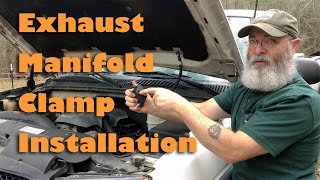
Est. part cost: $400-$2600 - Exhaust Leak 🟡 Medium Probability Cracked exhaust manifolds and broken manifold-to-head bolts are a well-documented, extremely common problem on GMT800 trucks. 🎬 See this easy fix for leaking exhaust manifold bolts. The rearmost bolts are especially prone to breaking. A leak before or near the upstream O2 sensor introduces oxygen and tricks the sensors into setting a P0420 code.
How to confirm: Listen for a rhythmic ticking or hissing sound from the driver's side of the engine, most noticeable when the engine is cold. Visually inspect the exhaust manifold for cracks or black soot trails indicating a leak. A smoke test is the most definitive way to find small leaks.
Typical fix: Replace the leaking gasket and any broken bolts. If the manifold is cracked, it must be replaced. This can be a difficult DIY job due to bolt access.
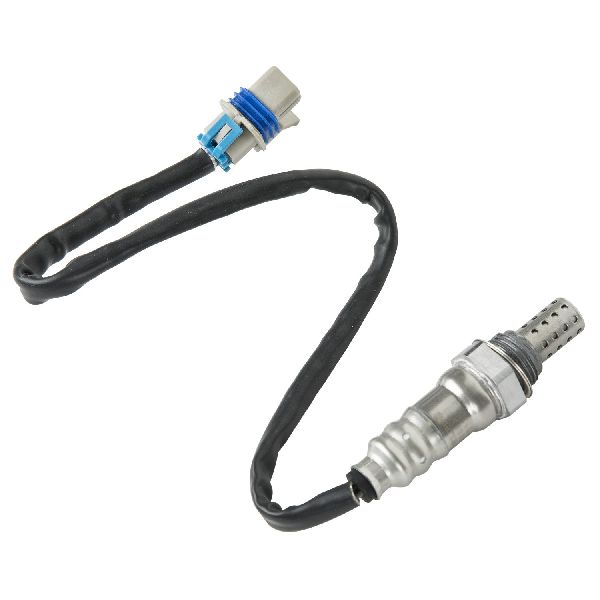
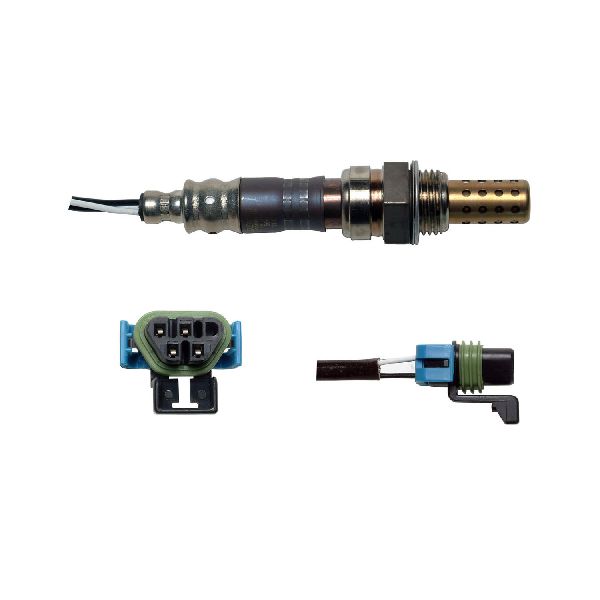
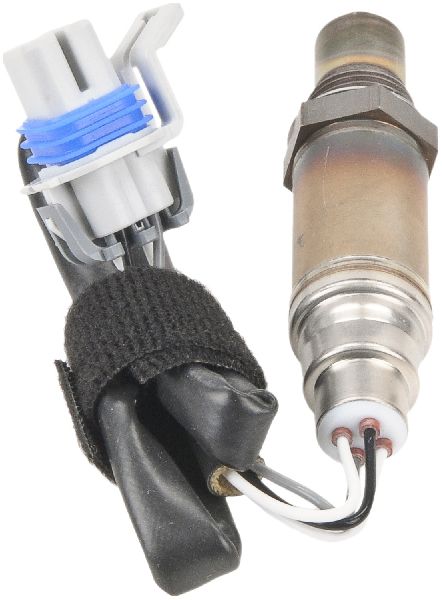
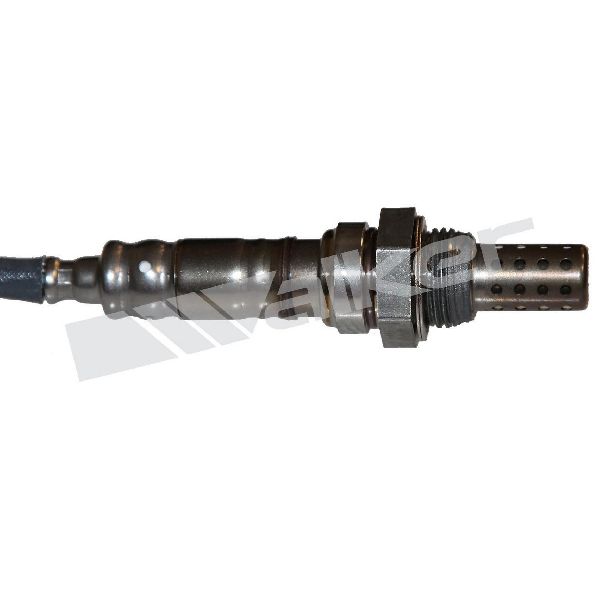
Est. part cost: $20-$400 - Faulty Oxygen Sensor (Bank 1, Sensor 2) 🟡 Medium Probability → Shop Oxygen Sensor The downstream O2 sensor can become 'lazy' or biased with age and contamination, sending incorrect data to the PCM and falsely triggering a P0420 code. Many forum users report fixing P0420 by only replacing this sensor.
How to confirm: A simple and effective diagnostic is to swap the downstream (Sensor 2) oxygen sensors between Bank 1 and Bank 2. Clear the codes and drive. If the code returns as P0430 (Catalyst Efficiency Bank 2), the sensor is confirmed to be the problem.
Typical fix: Replace the Bank 1, Sensor 2 (downstream) oxygen sensor. Using an OEM ACDelco or reputable brand like Denso is recommended, as these trucks can be sensitive to off-brand sensors.
Est. part cost: $40-$120 - Underlying Engine Issues ⚪ Low Probability Ignition misfires (P0300-P0308) or a rich fuel condition (P0172/P0175) can dump raw fuel into the exhaust, which rapidly overheats and melts the internal structure of the catalytic converter. These must be addressed before replacing the converter.
How to confirm: Check for other diagnostic trouble codes. Address and fix any misfire, fuel system, or sensor codes before replacing any emissions components.
Typical fix: Fix the root cause, which could involve replacing spark plugs, ignition coils, fuel injectors, or addressing a vacuum leak causing a rich condition.
Est. part cost: $50-$500+
Rare But Worth Checking
- PCM Software/Calibration Issue: The existence of TSB #PIP3119N suggests that under certain conditions, such as after a battery disconnect on a low-mileage vehicle or immediately after a converter replacement, the PCM may run its diagnostic test before the catalyst is properly broken in, leading to a false code. Performing the prescribed drive cycle is the fix.
Diagnosis Steps
- Scan for all stored DTCs. Address any misfire (P030x), fuel system (P017x), or oxygen sensor heater circuit codes before diagnosing P0420.
- Perform a cold start and listen carefully for any ticking or exhaust leak sounds from the engine bay, particularly on the driver's side near the firewall.
- Visually inspect the exhaust system from the engine to the rear O2 sensor. Look for cracks in the exhaust manifolds, broken bolts at the cylinder head, and black soot indicating a leak.
- Use a scan tool with live data graphing capabilities. At a steady 2,000 RPM, monitor the voltage of the Bank 1 Sensor 1 (upstream) and Bank 1 Sensor 2 (downstream) O2 sensors.
- A good catalytic converter will show a rapidly fluctuating upstream sensor (approx. 0.1V to 0.9V) and a very steady, flat downstream sensor (typically above 0.5V).
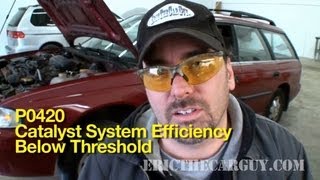
- If the downstream sensor's graph mimics the upstream sensor's fluctuations, the catalytic converter has failed and is no longer storing oxygen. 🎬 Watch: EricTheCarGuy shows you how to diagnose a bad converter.
- If the downstream sensor seems lazy or flat-lined, test the sensor itself. The easiest test is to swap the Bank 1 and Bank 2 downstream sensors and see if the code follows the sensor to the other bank (triggering a P0430). If it does, the sensor is bad.
- If no definitive conclusion can be made, use an infrared thermometer to check the converter's temperature. After the engine is fully warmed up, the outlet pipe should be at least 100°F hotter than the inlet pipe. If it's not, the converter is not working.
Parts You'll Likely Need
- Catalytic Converter (Bank 1)
(OEM #15104494)— This is the most common failure part that directly causes the P0420 code once other possibilities are ruled out, especially on vehicles over 100,000 miles. 🎬 Watch: Step-by-step guide to replacing the catalytic converter assembly.
Trusted brands: ACDelco (OEM), Walker Exhaust (e.g., p/n 16468), MagnaFlow
OEM price range: $1500-$2800
Aftermarket price range: $400-$900 - Downstream Oxygen Sensor (Bank 1, Sensor 2) — A faulty downstream sensor can send incorrect data, falsely triggering the P0420 code. It's a common point of failure and a relatively inexpensive part to replace for diagnosis.
Trusted brands: ACDelco (GM Genuine), Denso (p/n 234-4407), Bosch (p/n 15895)
OEM price range: $70-$120
Aftermarket price range: $40-$80 - Upstream Oxygen Sensor (Bank 1, Sensor 1)
(OEM #12573721 (superseded by ACDelco 213-1574))— While less likely to cause P0420 directly, a failing upstream sensor can affect fuel control, which can contribute to catalyst failure over time. It is often replaced with the downstream sensor as preventative maintenance.
Trusted brands: ACDelco (GM Genuine), Denso (p/n 234-4669), Bosch
OEM price range: $60-$100
Aftermarket price range: $35-$70
Related Codes That Often Appear With This One
- P0430 — This is the same catalyst efficiency code but for Bank 2 (passenger side). It's common for both converters to degrade at a similar rate, or for a single root cause (like a fuel system issue) to affect both banks. Seeing both codes often points to an aging exhaust system.
- P0300 — A random/multiple cylinder misfire code. Unburnt fuel from misfires is a primary cause of catalytic converter failure. If you see P0300 with P0420, the misfire is the root cause that must be fixed first to avoid destroying a new converter.
- P0172 / P0175 — These codes indicate a rich fuel condition on Bank 1 and Bank 2. Excess fuel entering the exhaust will overheat and damage the catalytic converter, leading to a P0420 code.
Technical Service Bulletins (TSBs) & Recalls
- Catalytic Converter Break-In Information To Prevent DTCs P0420 And/Or P0430: → Shop Catalytic Converter GM issued this bulletin to address false P0420/P0430 codes on new/low-mileage vehicles or after a converter has been replaced. It explains that the diagnostic test for the converter is disabled for the first hour of engine run time to allow for a 'break-in' period. If this period is interrupted (e.g., by a battery disconnect), or on a newly replaced converter, the code may set falsely. The TSB provides a specific drive cycle procedure to properly break in the converter and allow the diagnostic to run correctly.
Platform-Specific Known Issues
- TSB #PIP3119N: This Technical Service Bulletin addresses scenarios where a P0420 or P0430 code appears on a low-mileage vehicle. It advises that the diagnostic for converter efficiency is disabled under certain conditions, highlighting a known sensitivity in the system that could lead to false codes. [⭐ MANUFACTURER TSB — highest authority]
- Cracked Exhaust Manifolds: → Shop Exhaust Manifold The GMT800 platform, which this Escalade is built on, is known for developing cracks in the exhaust manifolds or having the manifold bolts break. This creates an exhaust leak that is a very common cause of a false P0420 code.
Mechanic-Grade Diagnostic Values
- Upstream O2 Sensor (B1S1) Voltage — expected: Rapidly fluctuating between 0.1V and 0.9V in closed loop.. Failure: A slow, lazy response or a flat-lined voltage.
- Downstream O2 Sensor (B1S2) Voltage (Good Catalyst) — expected: Relatively stable and steady voltage, typically between 0.4V and 0.8V.. Failure: Voltage fluctuates in a pattern that mimics the upstream sensor, indicating the catalyst is not storing oxygen.
- Long-Term Fuel Trim (LTFT) for Bank 1 — expected: Within +/- 10% at idle and steady RPM.. Failure: Consistently high positive trims (e.g., > +15%) suggest a vacuum leak (like an intake gasket), while high negative trims suggest a rich condition that can damage the converter.
- Mode $06 Catalyst Efficiency Monitor (TID $01, CID $01) — expected: The test value should be above the minimum threshold set by the manufacturer.. Failure: A test value reported as below the minimum threshold. For example, if the minimum ratio is 77% and the scan tool reports a current value of 52%, the test has failed.
Hidden / Shadow Codes Worth Checking
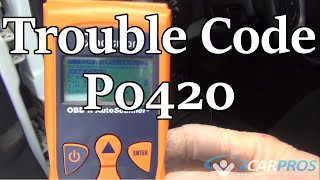
- Mode $06, TID $01, CID $01: This is not a DTC but raw test data from the PCM's non-continuous catalyst efficiency monitor. TID stands for Test ID and CID for Component ID. This specific test measures the switching ratio of the downstream O2 sensor compared to the upstream sensor. A low value indicates the catalyst has failed the test. (see via Requires a scan tool capable of reading Mode $06 data, such as a GM Tech 2 or many advanced aftermarket scanners and apps.)
Scan Tool Commands That Help
- GM Tech 2 / Advanced Scan Tool: Live Data Graphing (O2 Sensors) — This is the primary diagnostic function for P0420. Graphing B1S1 and B1S2 voltages simultaneously on a warm engine at ~2000 RPM provides a clear visual confirmation of whether the catalyst is storing oxygen (steady downstream voltage) or is inefficient (fluctuating downstream voltage).
- GM Tech 2 / Advanced Scan Tool: I/M (Inspection/Maintenance) System Status — After a repair, this function confirms if the Catalyst Monitor has run and passed its self-test during a drive cycle. If the monitor shows 'Ready' or 'Passed', the fix is confirmed. If it shows 'Incomplete' or 'Failed', further diagnosis is needed.
Wiring & Ground Locations
- G104 — On the left rear of the engine block.. This is a primary engine-to-chassis ground. A poor connection here can cause erratic behavior in engine sensors, including the O2 sensors and their heater circuits, potentially leading to false codes.
- G103 — On the right rear of the engine block.. Similar to G104, this ground is critical for the proper operation of engine electronics. Some wiring diagrams show it as a ground point for O2 sensor circuits.
- Powertrain Control Module (PCM) — Located at the left front of the engine compartment, typically under or near the battery tray.. This is the computer that receives all sensor data and sets the code. Its connections and grounds must be clean and secure. The O2 sensor signal wires run directly to this module.
Real Owner Repair Stories
- GenVibe Forums / ClubLexus Forums (Similar platform vehicle with P0420) — Persistent P0420 code after replacing multiple parts.
❌ Tried (didn't work) Replaced catalytic converter, Replaced both oxygen sensors, Replaced spark plugs
✅ What actually fixed it Replaced a leaking intake manifold gasket. The vacuum leak was causing a fuel trim issue that the PCM was trying to correct, leading to a rich exhaust that overwhelmed the catalyst and mimicked a catalyst failure.
"I Checked Everything" — The Actual Cause
- A common hidden cause for P0420 on GMT800 trucks is a leaking intake manifold gasket. An exhaust system smoke test will show no leaks, leading a technician to condemn the catalytic converter. However, the unmetered air from the intake leak causes the PCM to command a richer fuel mixture to compensate. This rich mixture can overwhelm the catalytic converter, preventing it from operating efficiently and triggering a P0420 code, even though the converter and O2 sensors are functioning correctly. The true root cause is the vacuum leak at the intake.
OEM Part Supersession History
12589463 (from Pass 2)→N/A - Incorrect Part Type— Correction
Heads up: Part number 12589463 is for the Powertrain Control Module (PCM), not the downstream oxygen sensor. Installing a PCM will not fix an O2 sensor or catalyst issue without proper diagnosis.
Helpful Videos


We Have This Part in Stock
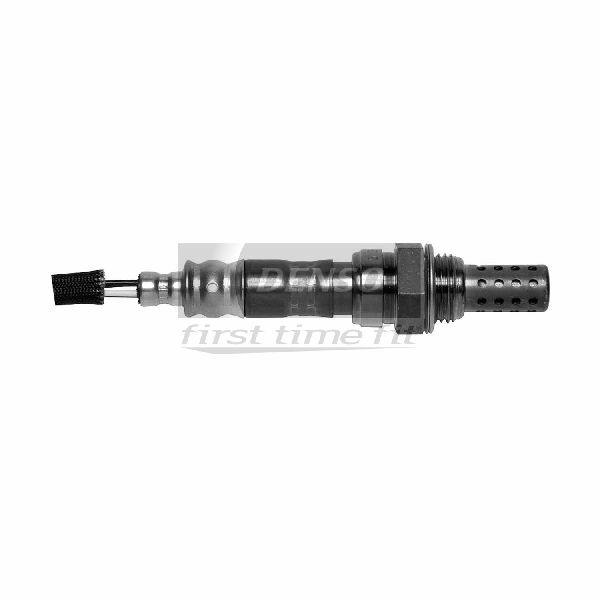
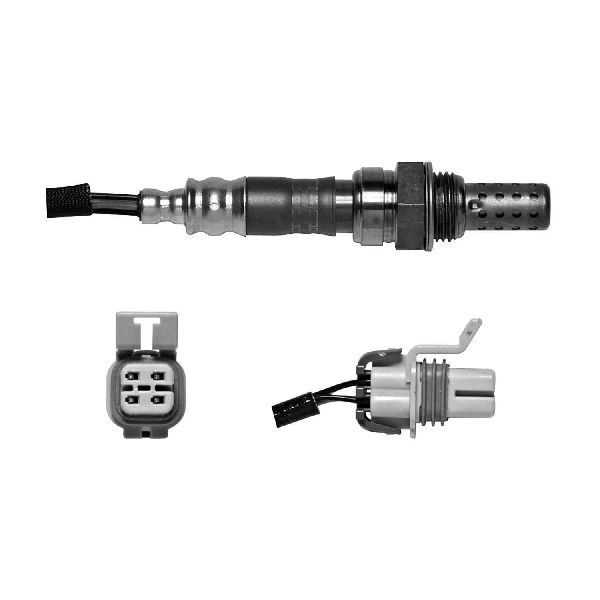

The information in this article is provided for general reference and educational purposes only. Vehicle specifications, procedures, and part compatibility can vary by production date, trim level, and region. Always consult your vehicle's factory service manual and verify part numbers before purchasing or performing repairs. Safety-critical components such as airbags, seat belts, and braking systems should be installed by a qualified professional.
- Cadillac ESCALADE EXT 1500:
- 🧭 Diagnostic Flowchart
- 🎬 Helpful Videos
- 🛍️ Shop This Part
- What's Unique About the 2004-2006 Cadillac ESCALADE EXT 1500
- Symptoms You May Notice
- Most Likely Causes
- Rare But Worth Checking
- Diagnosis Steps
- Parts You'll Likely Need
- Related Codes That Often Appear With This One
- Technical Service Bulletins (TSBs) & Recalls
- Platform-Specific Known Issues
- Mechanic-Grade Diagnostic Values
- Hidden / Shadow Codes Worth Checking
- Scan Tool Commands That Help
- Wiring & Ground Locations
- Real Owner Repair Stories
- "I Checked Everything" — The Actual Cause
- OEM Part Supersession History
- 🎟️ Get 5% Off