

P0420 on 2012-2016 Chevrolet Express: Catalyst Efficiency Causes & Fixes
On 2012-2016 Chevrolet Express vans, a P0420 code means the catalytic converter on Bank 1 isn't working efficiently. Before replacing the expensive converter, it is critical to check for exhaust leaks (especially after the rear O2 sensor per GM TSBs), faulty oxygen sensors, and on Duramax diesel models, issues with the 9th fuel injector. An exhaust leak or a bad O2 sensor is a much cheaper fix and a common cause of misdiagnosis.
- P0420 means Bank 1 catalyst efficiency is low, but DO NOT replace the catalytic converter without a full diagnosis.
- On all engines, check for exhaust leaks and failing oxygen sensors first. These are common, cheaper fixes.
- If you have a 6.6L Duramax diesel, the 9th fuel injector is a primary suspect and should be tested.
- An engine that is misfiring or burning oil will destroy a new catalytic converter. Fix any other engine problems before replacing the converter.
What's Unique About the 2012-2016 Chevrolet EXPRESS
The Chevrolet Express was available with both gasoline (V6/V8) and 6.6L Duramax diesel engines. While P0420 means catalyst inefficiency on both, the specific catalyst and common causes differ. On gas engines, it refers to the three-way catalytic converter. On the Duramax diesel, it refers to the Diesel Oxidation Catalyst (DOC). Notably, several Technical Service Bulletins (TSBs) for the diesel Express link P0420 to issues with the diesel particulate filter (DPF) system and the separate aftertreatment fuel injector (often called the 9th injector). For all engines, GM has also issued TSBs highlighting the importance of checking for exhaust leaks, specifically leaks *after* the downstream O2 sensor, which can introduce air and trick the sensors into setting a false P0420 code.
Diagnostic Flowchart
Tap your situation to follow the diagnostic path that matches what you're seeing on this vehicle.
Symptoms You May Notice
- Check Engine Light is on
- Reduced engine power or sluggish acceleration
- A 'rotten egg' or sulfur smell from the exhaust, indicating an overheating converter
- Rough idle
- Failure to pass an emissions test
- Reduced fuel economy
- Immediately replacing the catalytic converter without diagnosing other potential causes. An expensive converter can be quickly ruined again if an underlying issue like a misfire or oil leak is not resolved first.
- Replacing the upstream O2 sensor when the downstream sensor is the one that primarily monitors catalyst efficiency.
- Overlooking a small exhaust leak, especially one located after the rear O2 sensor as noted in GM TSBs.
Most Likely Causes
- Failed Catalytic Converter 🔴 High Probability → Shop Catalytic Converter Converters can fail from age, contamination from burning oil/coolant, or physical damage. However, they most often fail because of another underlying problem like persistent engine misfires or a rich fuel condition that overheats and melts the internal structure.
How to confirm: Graph the upstream and downstream O2 sensor voltages with a scan tool. If the downstream sensor's waveform mirrors the upstream sensor's, the converter is not storing oxygen and has likely failed. Another method is to use an infrared thermometer to check the temperature before and after the converter; the outlet should be significantly hotter than the inlet on a working converter.
Typical fix: Replace the Bank 1 catalytic converter. Always fix the root cause (e.g., misfires, oil leaks) first to avoid destroying the new converter.
Est. part cost: $300-$1200 - Faulty Oxygen (O2) Sensor 🟡 Medium Probability → Shop Oxygen Sensor O2 sensors age and become slow to respond, or can be contaminated by engine issues. A lazy or biased downstream (post-catalyst) sensor can send incorrect data to the ECM, falsely triggering a P0420 code when the converter is still good.
How to confirm: Test the O2 sensor's response time and voltage output with a scan tool or multimeter. Check for a steady voltage from the downstream sensor on a warm engine at steady RPM. A sensor that is slow to respond or has a stuck voltage is suspect.
Typical fix: Replace the faulty oxygen sensor, typically the downstream (post-catalyst) one for this code. Bank 1 is on the passenger side.
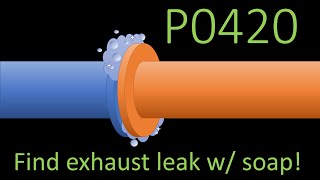
Est. part cost: $50-$150 - Exhaust System Leak 🟡 Medium Probability Gaskets and flex pipes can fail over time. GM specifically issued TSBs #PIP5110A, #PIP5110B, and #PIP5110C for the Express, advising technicians to check for leaks *after* the downstream O2 sensor, which can cause this code by allowing outside oxygen into the exhaust stream. Leaks before the converter can also introduce oxygen and skew sensor readings, leading to the code.
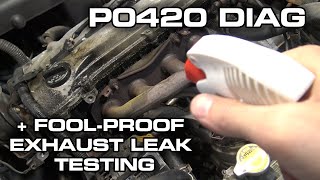
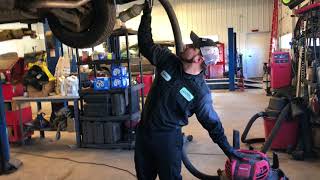
How to confirm: Perform a visual inspection for soot marks or cracks, especially around the exhaust manifold flanges and clamps. A smoke test is the most effective way to find small, hard-to-see leaks.
Typical fix: Repair the leak by replacing the gasket, repairing the pipe, or tightening/replacing clamps. Per TSBs, sometimes simply repositioning a clamp or using a wider band clamp can solve the issue.
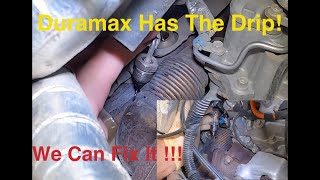
Est. part cost: $20-$200 - Faulty 9th Injector (6.6L Duramax Diesel Only) 🟡 Medium Probability On Duramax engines, a separate injector (the '9th injector' or 'indirect fuel injector') sprays fuel into the exhaust to raise temperatures for DPF regeneration. If this injector gets clogged with soot or fails, it can't heat the Diesel Oxidation Catalyst (DOC) properly during a regen cycle, leading the ECM to believe the catalyst is inefficient and set a P0420 code. This is often seen with DPF-related codes like P2463.
How to confirm: Perform an 'Indirect Fuel Injector Quantity Test' using a capable scan tool (like a GM Tech 2). Visually inspect the injector nozzle for heavy soot buildup after removal. During a commanded test with the injector removed from the pipe, you should see a good spray pattern of diesel fuel.
Typical fix: Clean or, more reliably, replace the indirect/9th fuel injector and its associated fuel line.
Est. part cost: $150-$400 - Engine Misfires or Rich/Lean Fuel Condition ⚪ Low Probability Issues like faulty spark plugs, ignition coils, or leaking fuel injectors can send unburned fuel (a rich condition) into the exhaust, which can damage the catalytic converter over time and trigger the code. An engine running lean can also increase temperatures and damage the converter.
How to confirm: Check for other trouble codes related to misfires (P0300-P0308) or fuel trim (P0171, P0172, P0174, P0175). Analyze engine data for misfire counts and long-term fuel trim values. Fuel trim values consistently above +10% or below -10% indicate a problem that needs to be addressed.
Typical fix: Address the root cause of the misfire or fuel mixture issue (e.g., replace spark plugs, ignition coils, or fuel injectors).
Est. part cost: $50-$500
Rare But Worth Checking
- ECM Software Calibration Error: GM TSB #PIP3119P discusses how a P0420/P0430 can set on low-mileage vehicles or after a converter replacement if a proper break-in procedure isn't completed. The diagnostic is disabled for the first hour of engine run time to allow the new converter to out-gas. If the battery was disconnected, this timer could be reset, allowing the diagnostic to run prematurely and set a false code. An ECM re-flash with updated software can sometimes resolve overly sensitive catalyst monitoring parameters.
Diagnosis Steps
- Read all stored fault codes with an OBD-II scanner. Note any other codes besides P0420, as they can point to the root cause (e.g., P030x for misfires, P2463 for DPF issues).
- Analyze Freeze Frame data to see the engine conditions (RPM, speed, temperature) when the code was set. For Duramax, TSB #PIP5204A specifically requests EGT sensor temperature readings from the freeze frame data.
- Inspect the entire exhaust system for leaks, from the manifolds to the tailpipe. Pay close attention to gaskets, flex pipes, and clamps. Per TSB #PIP5110C, specifically check for leaks *after* the Bank 1 downstream O2 sensor. A smoke test is highly recommended.
- Check for any underlying engine issues. Look for misfire codes or check live data for fuel trim values that are significantly off (ideally within +/- 5%).
- (For 6.6L Duramax) If P0420 is present with DPF codes (P2463, P24A0), suspect the 9th injector. Perform a quantity test on the injector using a scan tool to ensure it's spraying fuel correctly.
- Using a scan tool with graphing capabilities, monitor the voltage of the upstream (Sensor 1) and downstream (Sensor 2) oxygen sensors for Bank 1. At a steady 2500 RPM, the upstream sensor should fluctuate rapidly between ~0.1V and ~0.9V. The downstream sensor should hold a relatively steady, high voltage (typically >0.6V). If the downstream sensor mimics the upstream sensor's rapid switching, the catalytic converter has failed.
- If the O2 sensor data is inconclusive, test the catalytic converter's temperature. With the engine fully warmed up and held at ~2000 RPM, use an infrared thermometer to measure the temperature of the exhaust pipe just before and just after the converter. The outlet should be at least 100°F (38°C) hotter than the inlet. If it's not, the converter is not working.
- If all other tests pass, the downstream O2 sensor itself may be faulty or slow to respond. Test the sensor's heater circuit for correct resistance and check the signal wire for proper voltage as per service manual specifications.
Parts You'll Likely Need
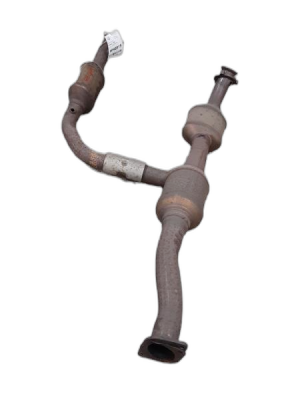
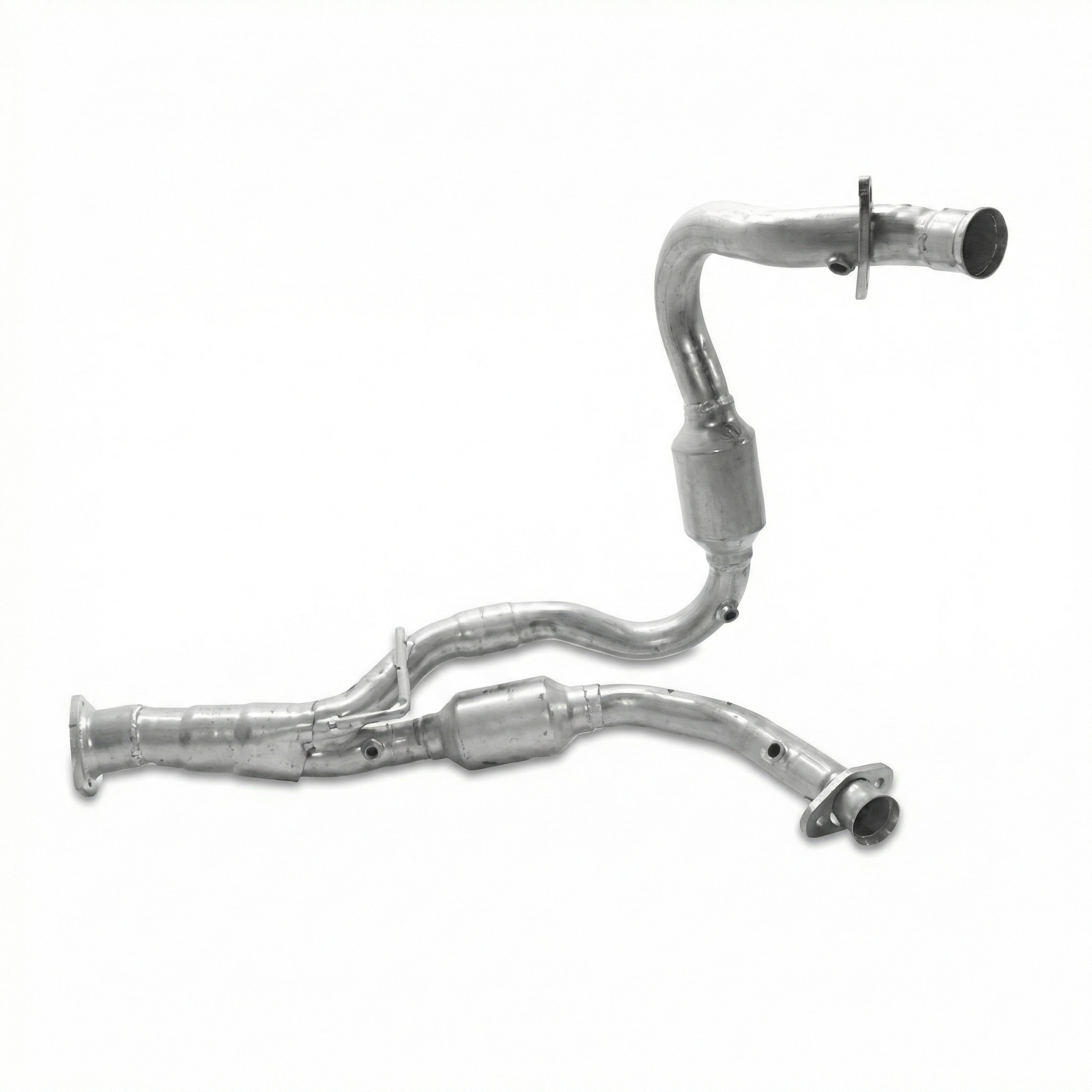
- Catalytic Converter (Bank 1)
(OEM #19418962)— This is the component directly monitored by the P0420 code. It is often the point of failure after all other contributing factors are ruled out. - Downstream Oxygen Sensor (Bank 1, Sensor 2)
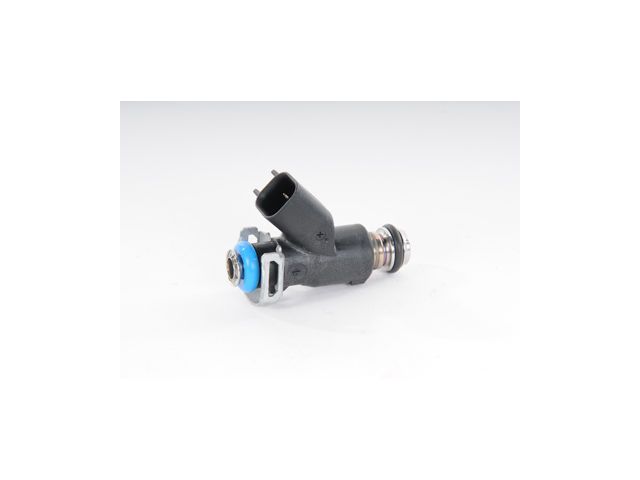
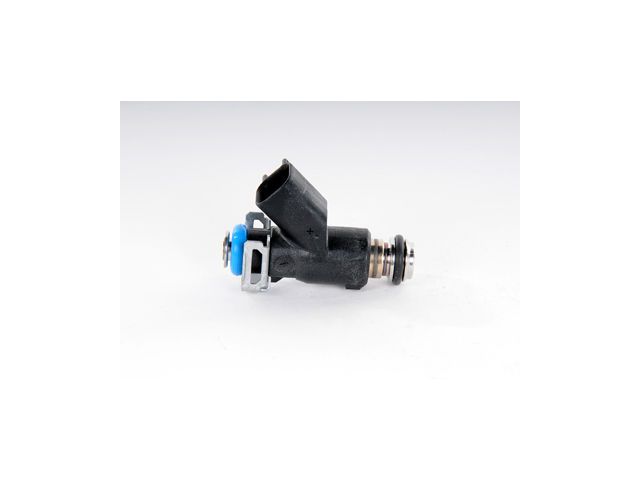
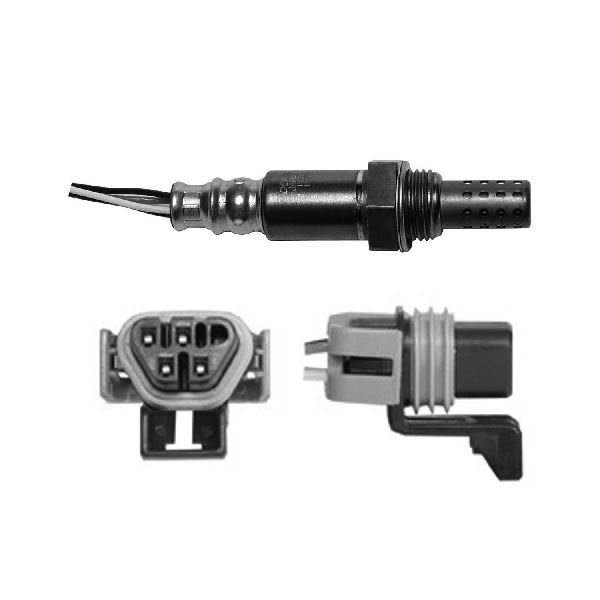
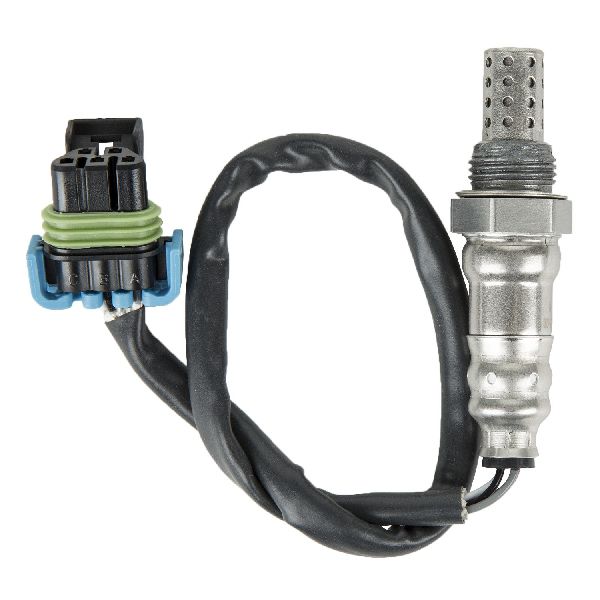
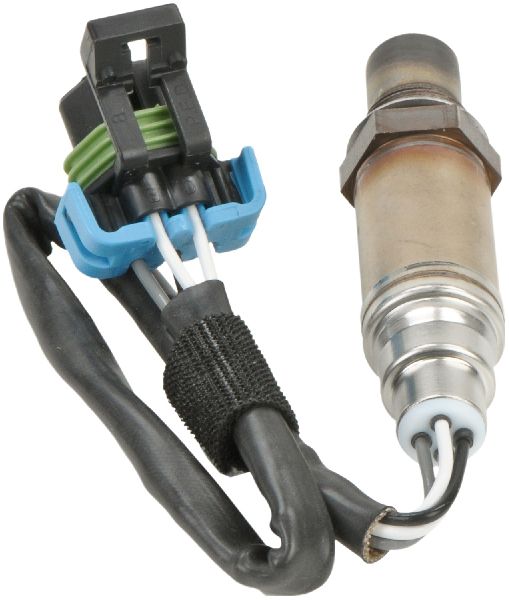
(OEM #12657188)— A faulty or lazy downstream sensor is a common cause of a false P0420 code. - 9th Injector / Indirect Fuel Injector (6.6L Duramax)
(OEM #19421482)— On diesel models, a clogged or failed 9th injector is a frequent root cause of P0420, as it prevents proper heating of the DOC during regeneration. - Exhaust Gasket / Clamp — An exhaust leak is a common and relatively inexpensive cause for this code, as highlighted by multiple GM service bulletins.
Related Codes That Often Appear With This One
- P0430 — This is the identical code for Bank 2. If both P0420 and P0430 are present, it suggests a common problem affecting both engine banks, like a fuel system issue, or that both catalytic converters have failed due to age or contamination.
- P0300-P0308 — These are misfire codes. An engine misfire allows unburned fuel to enter the exhaust, which can quickly overheat and destroy the catalytic converter, making the misfire the root cause of the P0420 code.
- P2463 / P24A0 (Diesel Only) — These codes relate to a soot-clogged Diesel Particulate Filter (DPF). TSBs #PIP5085A and #PIP5085C link them with P0420 on Duramax models, indicating a broader issue within the exhaust aftertreatment system, often pointing back to a faulty 9th injector that is failing to initiate a proper DPF regeneration.
Technical Service Bulletins (TSBs) & Recalls
- PIP3119P: Notes that P0420/P0430 diagnostics can be disabled at low mileage.
- PIP5110B / PIP5110C: Advises checking for exhaust leaks behind the downstream O2 sensor.
- PIP5085A / PIP5085C: Links P0420 with DPF codes (P24A0, P2463) on diesel models and advises diagnostics.
- PIP5204A: Mentions a parts restriction on the Diesel Oxidation Converter (DOC) for quality feedback, and asks for specific data related to P0420 when ordering.
Platform-Specific Known Issues
- Exhaust Leaks After Rear O2 Sensor: → Shop Oxygen Sensor GM TSBs PIP5110A, B, and C specifically call out the possibility of an exhaust leak occurring *after* the Bank 1 Sensor 2 (downstream) O2 sensor. This can happen due to misaligned clamps or insufficient clearance from aftermarket equipment like utility beds. This leak allows oxygen to be drawn into the exhaust pipe, which alters the reading of the downstream O2 sensor and can falsely trigger a P0420 code.
- Premature P0420 from Skipped Break-In: According to TSB PIP3119P, the catalyst efficiency monitor is disabled for the first hour of engine operation on a new vehicle to allow the converter to break-in. If the battery is disconnected during this period, the timer resets, and the monitor may run before the converter is fully broken-in, causing a false P0420 code. The same can occur after a converter replacement.
Mechanic-Grade Diagnostic Values
- Downstream O2 Sensor High Signal Wire Voltage (Gasoline Engine) — expected: ~0.5V (450mV). Failure: Significant deviation from 0.5V with key on, engine off.
- Downstream O2 Sensor Low Signal/Reference Wire Voltage (Gasoline Engine) — expected: ~0.04V (40mV). Failure: Higher voltage may indicate a wiring or ECM ground issue.
- EGT Sensor 1 vs. EGT Sensor 2 Temperature Differential (6.6L Duramax) — expected: Within 100°C (180°F) of each other in freeze frame data.. Failure: If EGT 2 is not within 100°C (180°F) of EGT 1, it points towards a problem with the 9th injector (Indirect Fuel Injector) not heating the DOC properly.
- Catalytic Converter Temperature Differential (Gasoline & Diesel) — expected: Outlet pipe temperature should be at least 100°F (38°C) hotter than the inlet pipe temperature.. Failure: Outlet temperature is the same or cooler than the inlet, indicating the converter is not 'lighting off'.
Hidden / Shadow Codes Worth Checking
- Mode $06, MID $21: This is not a DTC, but a diagnostic monitor ID for the Catalyst Monitor on CAN vehicles. Technicians can view the raw test data the ECM uses to determine catalyst efficiency. It provides a measured value and a pass/fail threshold. (see via A professional scan tool with Mode $06 data viewing capability. The results are viewed after the catalyst monitor has run to completion during a drive cycle.)
Scan Tool Commands That Help
- GDS2 / Tech2: Service Regeneration Enable (Diesel Only) — Use this function to enable the P0420 catalyst efficiency monitor to run during a road test. A standard 'Service Regeneration' (forced regen) in the service bay will NOT run the P0420 diagnostic, which can lead to misdiagnosis.
- GDS2 / Tech2: Indirect Fuel Injector Diagnosis / Flow Test (Diesel Only) — Use this bidirectional test to command the 9th injector (Q67) to spray and verify its function. This is critical when P0420 is accompanied by DPF codes or when EGT temperature spreads are incorrect during regeneration.
Wiring & Ground Locations
- G103 — On the right rear of the engine for gasoline V8 models (4.8L, 5.3L, 6.0L).. This is a primary engine ground. A poor connection here can cause erratic sensor readings, including from the O2 sensors, leading to false codes.
- G109 — Located on the lower right front of the engine.. Another key engine ground point. Corrosion or looseness can affect multiple engine sensors and control modules.
- G302 — Behind the left kick panel, inside the passenger cabin.. This is a chassis ground point. While less likely to directly cause a P0420, issues here can affect communication between modules or power to components in the cabin that interface with the ECM.
- G107 (Diesel) — On the left front lower side of the engine block on Duramax models.. A critical ground point for the diesel engine. A bad ground here can impact the ECM and all associated aftertreatment sensors and actuators, including the 9th injector controls.
Real Owner Repair Stories
- Diesel Training Group Forum / YouTube Mechanic Video (2016 Chevrolet Express with 6.6L LGH Duramax Diesel, 110,000 miles) — P0420 and P2463 (DPF Soot Accumulation) codes present. Service regeneration runs for only 2-3 minutes before shutting off.
❌ Tried (didn't work) Running a forced service regeneration, which completed but did not resolve the underlying issue., Clearing codes, which returned after a short drive.
✅ What actually fixed it The root cause was a clogged nozzle on the 9th injector (hydrocarbon injector). It was unable to spray fuel into the exhaust to heat the Diesel Oxidation Catalyst (DOC) during regeneration. The ECM interpreted the lack of temperature rise as catalyst inefficiency. Replacing the 9th injector assembly (Part #12661071 or 19421482) resolved both the P0420 and P2463 codes.
"I Checked Everything" — The Actual Cause
- An exhaust leak located *after* the downstream (post-cat) O2 sensor. This allows outside oxygen to be pulled into the exhaust stream, which the sensor reads as high oxygen content, mimicking a failed converter. This type of leak is often missed because technicians typically focus on leaks before or between the sensors. This is specifically noted in GM TSBs PIP5110B and PIP5110C.
- A clogged or failed 9th injector on 6.6L Duramax models. The exhaust system itself can be perfectly sealed with no leaks, and the DOC/catalyst may be physically intact. However, the failure of the injector to add fuel during the regeneration cycle prevents the catalyst from reaching operating temperature, causing the ECM to falsely report a P0420.
OEM Part Supersession History
12661071→19421482— Standard part revision or manufacturer change for the 6.6L Duramax 9th Injector (Indirect Fuel Injector).
Heads up: The parts are interchangeable. Both numbers are often listed for the same application covering 2011-2016 LGH/LML engines.
Model Year Variations Within This Range
- 2012-2016: The primary difference in P0420 diagnosis is between the gasoline and diesel engines. The 6.6L LGH Duramax was the consistent diesel option for this entire period, and its diagnosis focuses heavily on the 9th injector and DPF system. The gasoline engines (4.8L L20 V8 and 6.0L L96 V8 being the most common) use a traditional three-way catalyst system where diagnosis focuses on O2 sensors, exhaust leaks, and fuel control issues.
Helpful Videos


Used OEM Parts in Stock
New Aftermarket Parts Available

The information in this article is provided for general reference and educational purposes only. Vehicle specifications, procedures, and part compatibility can vary by production date, trim level, and region. Always consult your vehicle's factory service manual and verify part numbers before purchasing or performing repairs. Safety-critical components such as airbags, seat belts, and braking systems should be installed by a qualified professional.
- Chevrolet EXPRESS:
- 🧭 Diagnostic Flowchart
- 🎬 Helpful Videos
- 🛍️ Shop This Part
- What's Unique About the 2012-2016 Chevrolet EXPRESS
- Symptoms You May Notice
- Most Likely Causes
- Rare But Worth Checking
- Diagnosis Steps
- Parts You'll Likely Need
- Related Codes That Often Appear With This One
- Technical Service Bulletins (TSBs) & Recalls
- Platform-Specific Known Issues
- Mechanic-Grade Diagnostic Values
- Hidden / Shadow Codes Worth Checking
- Scan Tool Commands That Help
- Wiring & Ground Locations
- Real Owner Repair Stories
- "I Checked Everything" — The Actual Cause
- OEM Part Supersession History
- Model Year Variations Within This Range
- 🎟️ Get 5% Off