

P0420 on 2017-2018 Chevrolet Express: Catalyst, O2 Sensor, and Leak Fixes
On a 2017-2018 Chevy Express, P0420 often points to a failed catalytic converter, but DO NOT replace it without first checking for exhaust leaks and faulty oxygen sensors. An exhaust leak, commonly from broken exhaust manifold bolts, is a very frequent, cheaper-to-fix issue that causes a false P0420 code on these vans.
- P0420 means the Bank 1 (driver's side) catalytic converter is not working efficiently.
- Before buying a new catalytic converter, ALWAYS check for exhaust leaks and test the downstream O2 sensor. These are common, cheaper problems that frequently cause this code.
- On GM V8 engines, pay close attention to the exhaust manifolds for leaks caused by broken bolts.
- If you have any other engine codes, especially for misfires (P030x), fix those problems first to avoid destroying a new catalytic converter.
What's Unique About the 2017-2018 Chevrolet EXPRESS
For the 2017-2018 Express, especially those with the 6.0L V8, exhaust leaks from broken manifold bolts are a notorious issue that can trick the computer into setting a false P0420 code. The rearmost bolts are particularly prone to snapping from heat cycles. Furthermore, a specific GM Technical Service Bulletin (TSB #PIP3119P) for 2017 models notes that the catalyst efficiency test is disabled for the first hour of engine run time to allow the converter to break-in. If the battery is disconnected during this initial period, the test can run prematurely and set a false P0420 code, a unique situation for new or recently repaired vans.
Diagnostic Flowchart
Tap your situation to follow the diagnostic path that matches what you're seeing on this vehicle.
Symptoms You May Notice
- Check Engine Light is on
- Vehicle may fail an emissions test
- Reduced engine power or hesitation, especially if the converter is clogged
- A sulfur or "rotten egg" smell from the exhaust
- A ticking or tapping noise from the engine bay, especially noticeable on a cold start, which then may quiet down as the engine warms up (a classic sign of an exhaust manifold leak).
- Immediately replacing the catalytic converter without first thoroughly checking for exhaust leaks or testing the oxygen sensors. An exhaust leak from a broken manifold bolt is a very common cause for P0420 on these vans and is much cheaper to fix.
Most Likely Causes
- Exhaust System Leak 🔴 High Probability The Vortec V8 engines are notorious for exhaust manifold bolts breaking, especially the rearmost ones closest to the firewall. The constant heat cycles cause the bolts to become brittle and snap, creating a leak at the cylinder head that lets in oxygen and triggers a false P0420. Rust and vibration can also cause leaks at flange gaskets or the flex pipe.
How to confirm: Listen for a ticking noise on a cold start. Visually inspect the exhaust manifolds (especially the rear bolts) for broken heads or black soot trails indicating a leak. A mechanic can use a smoke machine to pressurize the exhaust and easily spot leaks.
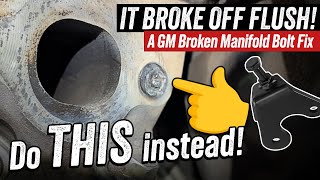
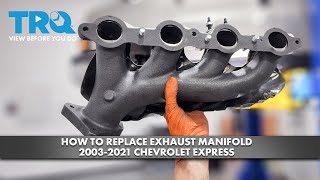
Typical fix: Replace the leaking gasket and broken manifold bolts. This can be difficult due to limited space. 🎬 Watch this walkthrough on replacing the exhaust manifold. A popular and cost-effective DIY repair involves using an aftermarket exhaust manifold bolt repair bracket that clamps the manifold to the head without needing to extract the broken bolt. 🎬 Watch: How to install an exhaust manifold bolt repair bracket.
Est. part cost: $20-$150 - Failed Catalytic Converter 🟡 Medium Probability → Shop Catalytic Converter Converters fail over time due to age or contamination. An underlying engine issue like a misfire or burning oil can significantly shorten its lifespan by overheating it. Aftermarket converters may also fail prematurely or not meet the PCM's strict efficiency standards, causing the code to return.
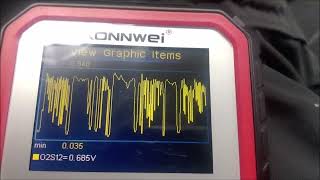
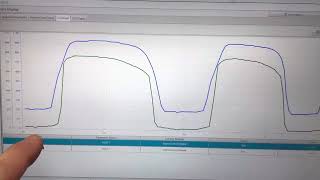
How to confirm: After confirming no exhaust leaks or sensor issues, use a scan tool to graph O2 sensor data. If the downstream sensor voltage switches rapidly like the upstream sensor, the converter has failed. 🎬 See how to diagnose P0420 using scan tool live data. An infrared thermometer should show the outlet temperature is at least 100°F hotter than the inlet on a working converter.
Typical fix: Replace the Bank 1 catalytic converter. It is critical to fix any engine misfires or leaks first, as they will destroy the new converter. After replacement, perform the drive cycle outlined in TSB #PIP3119P to allow the new converter to break-in properly.
Est. part cost: $400-$1500 - Faulty Downstream Oxygen (O2) Sensor 🟡 Medium Probability → Shop Oxygen Sensor O2 sensors are wear items that become slow or 'lazy' with age and contamination. A faulty downstream sensor can send incorrect data, causing the PCM to misinterpret the catalytic converter's efficiency. Using non-OEM sensors can sometimes cause persistent issues, as their performance characteristics may differ from the original part.
How to confirm: Use a scan tool to observe the sensor's voltage reading. A healthy downstream sensor should show a relatively steady voltage (e.g., >0.6V). If it's stuck, unresponsive, or switching rapidly when it shouldn't be, it's likely faulty. Also check for O2 sensor-specific trouble codes (e.g., P0137, P0141) and check the sensor's heater circuit fuse in the underhood fuse block.
Typical fix: Replace the Bank 1, Sensor 2 (downstream) oxygen sensor. Using an O2 sensor socket makes the job easier. It is often recommended to use an OEM ACDelco or NTK sensor to avoid compatibility issues.
Est. part cost: $50-$120 - Engine Performance Issues ⚪ Low Probability Ignition misfires (from worn spark plugs/coils) or fuel system problems (leaking injectors, bad fuel pressure regulator) can send unburned fuel into the exhaust, which superheats and melts the internal structure of the catalytic converter.
How to confirm: Check for other trouble codes, especially misfire codes (P0300-P0308) or fuel trim codes (P0171, P0174). Address these codes first as they are the root cause.
Typical fix: Perform a full engine tune-up (spark plugs, wires, coils) or repair the identified fuel system component.
Est. part cost: $100-$500
Rare But Worth Checking
- Premature Catalyst Monitoring (Low Mileage Vehicles): Per TSB #PIP3119P, on 2017 models with very low mileage, if the battery was disconnected, the catalyst monitor might run before the converter is fully broken-in, causing a false P0420. The fix is to clear the code and perform a specific drive cycle: drive at highway speed for 25-30 mins, stop and shut off for 1 min, then resume highway speed for another 10-15 mins.
- Faulty 9th Injector (2.8L Duramax Diesel Only): On the optional 2.8L diesel engine, a clogged or failed 9th fuel injector (indirect injector) can prevent proper heating during DPF regeneration, leading to a P0420 code.
- ECM Calibration Issue: In some cases for various GM vehicles, a P0420 can be triggered by a calibration error in the Engine Control Module (ECM). A dealer may need to check if the ECM has the latest software calibration and reprogram it if an update is available to address the P0420 logic, as mentioned in bulletins like 19-NA-206.
Diagnosis Steps
- Scan for all stored DTCs. If misfire (P030x) or fuel system (P017x) codes are present, diagnose and fix them first, as they are the root cause of converter failure.
- Perform a thorough visual and audible inspection of the entire exhaust system, especially when the engine is cold. Listen for a 'ticking' sound from the engine bay that points to a manifold leak. Look for black soot around gaskets and welds, paying close attention to the exhaust manifolds for broken bolt heads.
- Use a scan tool with live data graphing. At a steady 2,500 RPM, observe the Bank 1 O2 sensors. The upstream (Sensor 1) voltage should fluctuate rapidly between ~0.1V and ~0.9V. The downstream (Sensor 2) voltage should be relatively stable and high (e.g., >0.6V).
- If the downstream sensor's voltage is mimicking the rapid switching of the upstream sensor, and you have confirmed there are absolutely no exhaust leaks, the catalytic converter has likely failed.
- If the downstream sensor's voltage is flat, unresponsive, or stuck at 0V, test the sensor's heater circuit, wiring, and its dedicated fuse in the underhood fuse block before condemning the sensor itself.
- As a final confirmation, use an infrared thermometer to measure the temperature of the pipe entering and exiting the catalytic converter after the engine is fully warmed up. A working converter should have an outlet temperature at least 100°F (38°C) hotter than the inlet.
Parts You'll Likely Need
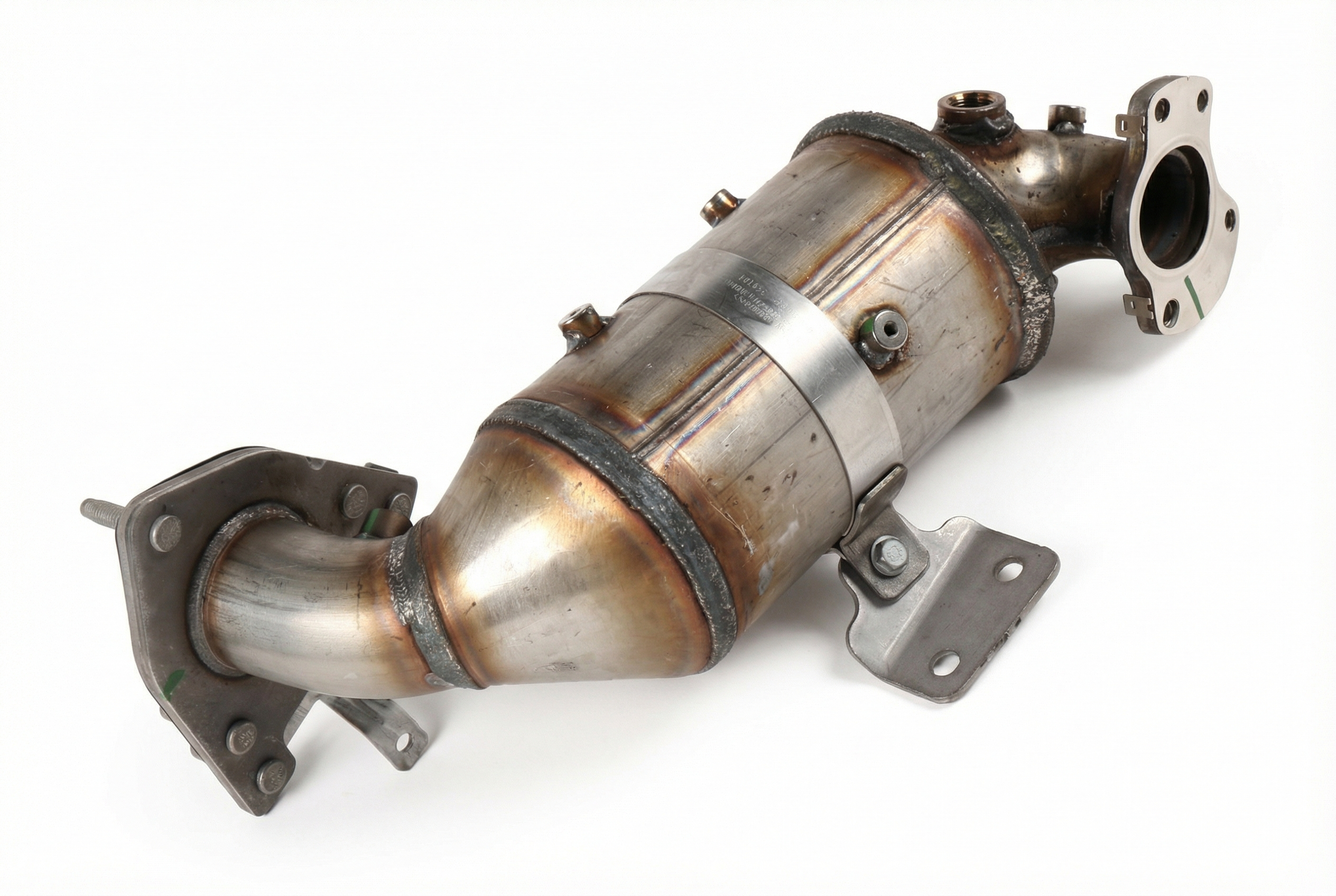
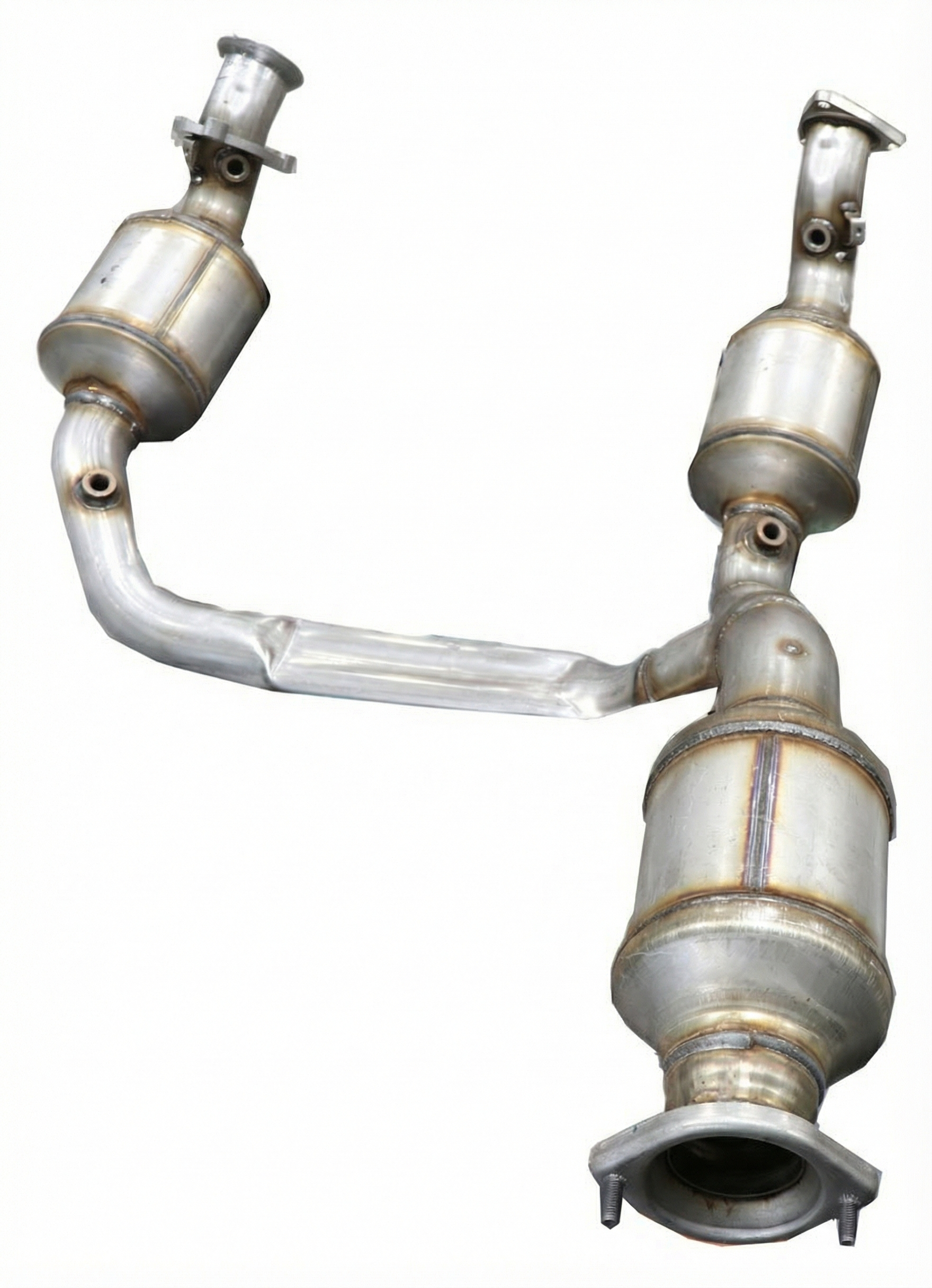
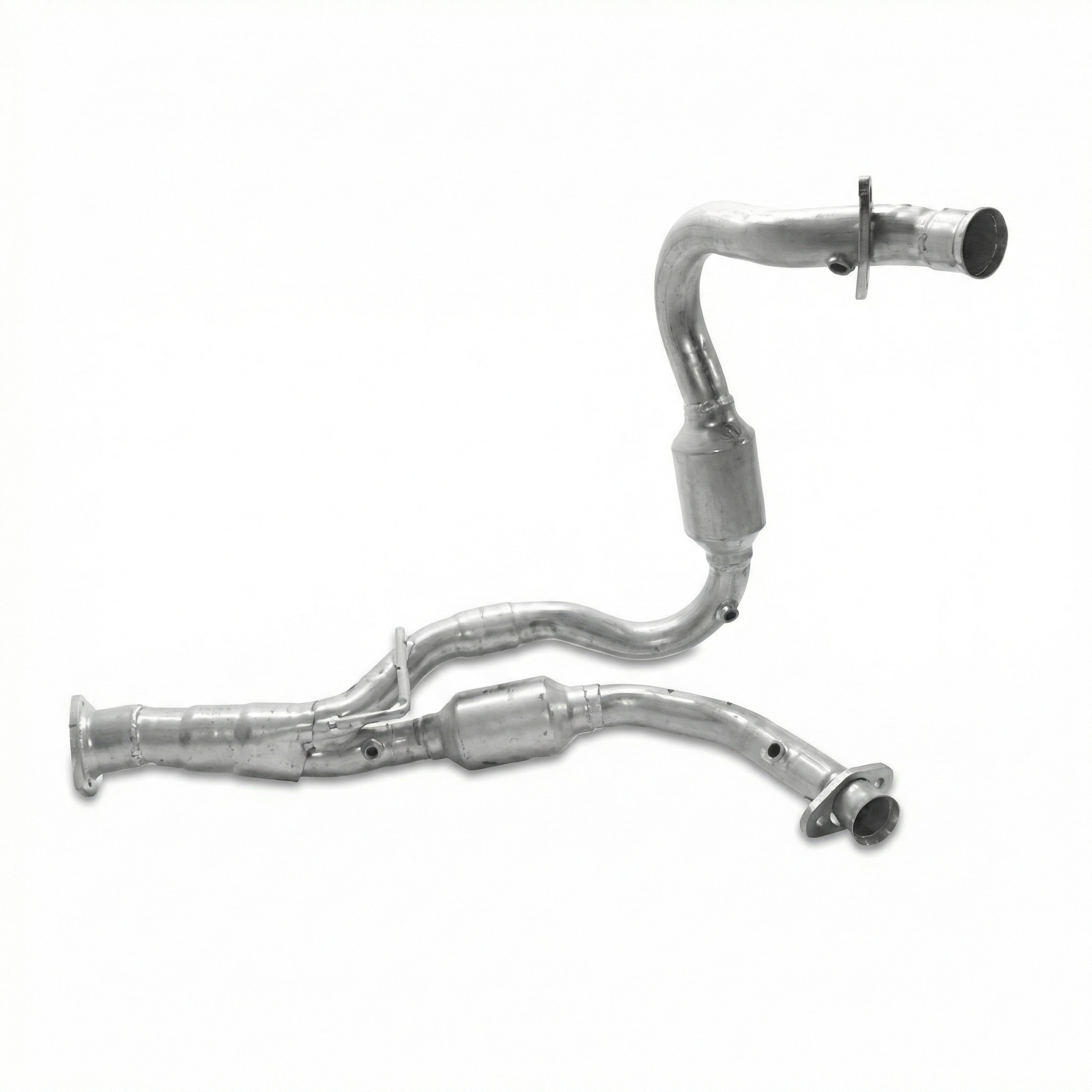
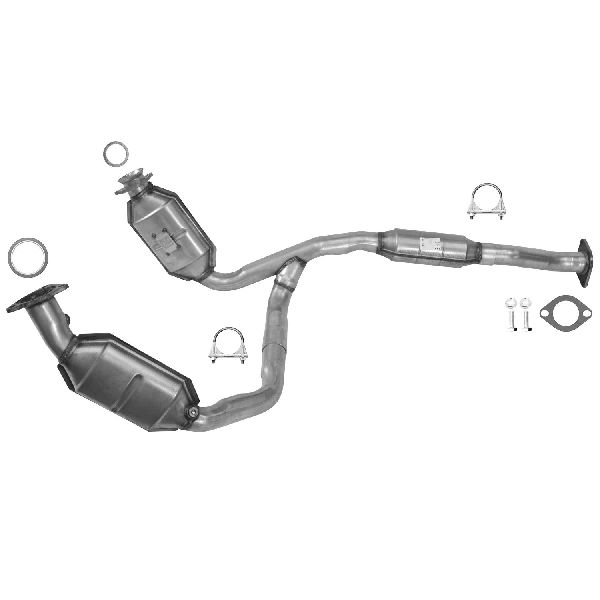
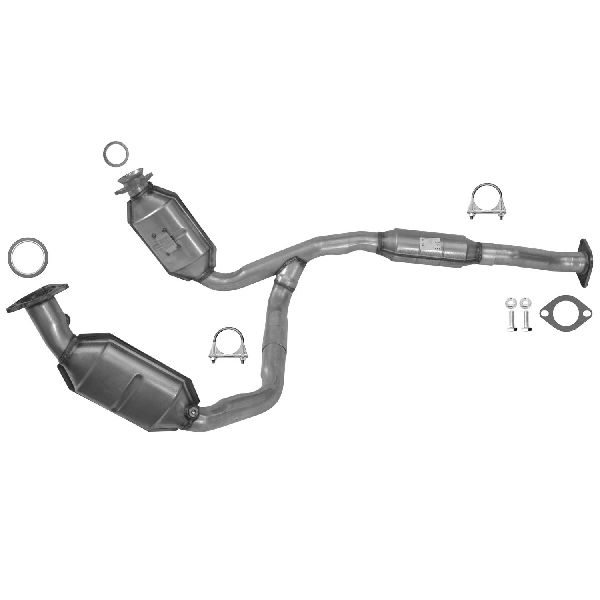
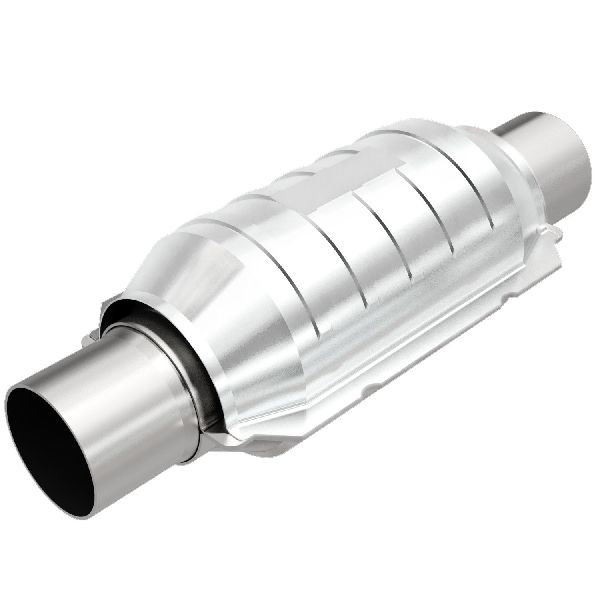
- Catalytic Converter (Bank 1)
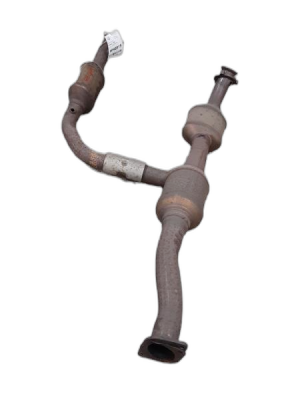
(OEM #19370381)— This is the component that has lost efficiency, but it should only be replaced after ruling out all other causes. For the 6.0L V8, this is often a Y-pipe assembly.
Trusted brands: Walker Exhaust, MagnaFlow, AP Exhaust, ACDelco (OEM)
OEM price range: $700-$1300
Aftermarket price range: $400-$800
Related Codes That Often Appear With This One
- P0430 — This is the identical code for Bank 2 (passenger side). If both are present, it suggests a widespread issue like a fuel system problem or that both converters have failed due to age. It can also indicate broken manifold bolts on both sides.
- P0300-P0308 — These are engine misfire codes. A misfire is a root cause that allows unburned fuel to enter the exhaust, which will quickly destroy the catalytic converter and cause a P0420.
- P0137, P0141 — These codes point directly to a problem with the Bank 1 downstream O2 sensor circuit (low voltage, heater circuit fault), indicating the sensor itself is likely the cause of the incorrect catalyst reading.
Technical Service Bulletins (TSBs) & Recalls
- PIP3119P: Mentions that the P0420 and P0430 diagnostic tests are disabled on new/low-mileage vehicles to allow for catalytic converter break-in.
Platform-Specific Known Issues
- Broken Rear Exhaust Manifold Bolts: → Shop Exhaust Manifold The V8 engines in the Express/Savana platform are widely known for breaking the rearmost exhaust manifold bolts. The constant expansion and contraction from heat cycles fatigues the bolt until it snaps, creating an exhaust leak right at the cylinder head. This leak introduces unmetered oxygen into the exhaust stream before the O2 sensors, which is a primary cause of a false P0420 code. The tell-tale sign is a ticking noise from the engine bay on a cold start.
Mechanic-Grade Diagnostic Values
- Downstream O2 Sensor Voltage (at steady 2,500 RPM) — expected: Relatively stable voltage between 0.6V and 0.8V.. Failure: Voltage fluctuates rapidly, mimicking the upstream sensor, or is stuck low (<0.2V).
- O2 Sensor Heater Element Resistance (cold) — expected: 3 to 20 Ohms.. Failure: Near 0 Ohms (short circuit) or OL/infinite resistance (open circuit).
- O2 Sensor Signal Circuit Bias Voltage (Key On, Sensor Disconnected) — expected: ~0.45 Volts (450 mV).. Failure: Reading of 0V or a significantly different voltage suggests a wiring or ECM issue.
- Catalytic Converter Temperature Differential (fully warm, at idle) — expected: Outlet pipe temperature is at least 100°F (38°C) hotter than the inlet pipe temperature.. Failure: Outlet temperature is the same as or cooler than the inlet, indicating the converter is not 'lit off'.
- Exhaust Back Pressure — expected: Below 1.5 PSI at idle; under 3.0 PSI at 2500 RPM.. Failure: Readings higher than the specification indicate a restriction, likely a clogged or melted converter.
Hidden / Shadow Codes Worth Checking
- Mode $06, OBDMID $21, TID $A2: This is the specific onboard monitor test for 'Passive monitoring of the oxidation catalyst efficiency (Bank 1)'. It provides the raw, unitless efficiency value calculated by the ECM, which can be compared to the manufacturer's MIN/MAX thresholds to see how close the catalyst is to failing before the P0420 code is set. (see via An advanced scan tool (like GM's GDS2) or a consumer tool capable of displaying Mode $06 data.)
Scan Tool Commands That Help
- GM GDS2 (or equivalent professional scanner): Catalyst System Test / Service Bay Test — This bidirectional function forces the ECM to run the catalyst monitor test under controlled conditions in the service bay. It commands specific air/fuel ratios and graphs the O2 sensor responses to provide a pass/fail result without requiring a lengthy, specific drive cycle.
Wiring & Ground Locations
- Bank 1 O2 Sensor Harness Wires — At the oxygen sensor connectors for Bank 1 (driver's side).. Knowing the wire colors is critical for testing. On many GM trucks/vans: Pink is 12V heater power (key on), Blue is the computer-controlled heater ground, Purple w/ White is the high signal (~0.45V bias), and Tan is the low signal/sensor ground from the ECM.
- Ground G101 — Typically located on the lower front of the engine block.. This is a primary ground for the Engine Control Module (ECM). A poor connection here can cause erratic behavior from multiple sensors, including the O2 sensors, leading to false codes.
- Ground G104 — On the left (driver's side) rear corner of the engine, mounted to the cylinder head.. This ground is physically close to the Bank 1 exhaust manifold and O2 sensors. Corrosion or a loose connection here can affect nearby sensor readings and is often disturbed during manifold repairs.
Real Owner Repair Stories
- Chevrolet Forum user 'Triaged' (2015 Express 3500 6.0L with ~40,000 miles) — Slight exhaust tick noise, especially on cold start.
✅ What actually fixed it The owner found the head of the rearmost driver-side exhaust manifold bolt was broken off. Instead of extracting the broken stud, they installed an aftermarket exhaust manifold bolt repair clamp/bracket. This sealed the leak and eliminated the ticking noise, which would also resolve a false P0420 code caused by the leak. - Car Talk Community user (Not specified, but general automotive context) — Check Engine Light with code P0420 appeared immediately after an exhaust repair.
❌ Tried (didn't work) The initial repair was replacing a front exhaust pipe to fix a leak.
✅ What actually fixed it The user was advised that the P0420 code appearing right after the repair strongly suggested that an O2 sensor or its wiring was damaged during the installation of the new pipe. This highlights a common misdiagnosis where the new code is blamed on the converter instead of the recent repair work.
"I Checked Everything" — The Actual Cause
- A common scenario is a smoke test on a cold engine passing, but the P0420 code returning. This can be caused by a hairline crack in the exhaust manifold that only opens up and leaks when the metal expands from engine heat. The extra oxygen drawn in when hot is enough to fool the O2 sensors, but the leak is undetectable when the engine is cold.
Model Year Variations Within This Range
- 2017 vs 2018: The base engine changed. In 2017, the base engine was the 4.8L V8 (L20). In 2018, it was replaced by the 4.3L EcoTec3 V6 (LV1) with an 8-speed transmission. The 6.0L V8 (L96) remained an option for both years. Diagnostic procedures and component locations for the base engine will differ between these two years.
Helpful Videos


Used OEM Parts in Stock
New Aftermarket Parts Available


The information in this article is provided for general reference and educational purposes only. Vehicle specifications, procedures, and part compatibility can vary by production date, trim level, and region. Always consult your vehicle's factory service manual and verify part numbers before purchasing or performing repairs. Safety-critical components such as airbags, seat belts, and braking systems should be installed by a qualified professional.
- Chevrolet EXPRESS:
- 🧭 Diagnostic Flowchart
- 🎬 Helpful Videos
- 🛍️ Shop This Part
- What's Unique About the 2017-2018 Chevrolet EXPRESS
- Symptoms You May Notice
- Most Likely Causes
- Rare But Worth Checking
- Diagnosis Steps
- Parts You'll Likely Need
- Related Codes That Often Appear With This One
- Technical Service Bulletins (TSBs) & Recalls
- Platform-Specific Known Issues
- Mechanic-Grade Diagnostic Values
- Hidden / Shadow Codes Worth Checking
- Scan Tool Commands That Help
- Wiring & Ground Locations
- Real Owner Repair Stories
- "I Checked Everything" — The Actual Cause
- Model Year Variations Within This Range
- 🎟️ Get 5% Off