

P0420 on 2018 Chevrolet Tahoe: Catalyst, O2 Sensor, and Oil Consumption Guide
On a 2018 Chevy Tahoe, code P0420 means the driver's side catalytic converter is inefficient. Before replacing the expensive converter, check for simpler causes like broken exhaust manifold bolts, a bad air filter box seal (per TSB #16NA111), or faulty oxygen sensors. Underlying engine oil consumption is also a known issue that can ruin a new converter.
- P0420 on a 2018 Tahoe means the driver's side catalytic converter is inefficient, but the converter itself might not be the root cause.
- Always check for cheaper, simpler fixes first: inspect the air box seal (TSB #16NA111), look for exhaust leaks, and test the downstream O2 sensor.
- Be aware of potential underlying issues like excessive oil consumption, which can destroy a new catalytic converter if not addressed.
- Do not replace the catalytic converter until you have ruled out all other possible causes, or you risk wasting money on a recurring problem.
What's Unique About the 2018-2018 Chevrolet TAHOE
For this generation of Tahoe and its platform mates (Yukon, Silverado, Suburban), P0420 isn't always a straightforward converter failure. A primary culprit is often broken exhaust manifold bolts, especially the rearmost ones, which cause leaks that trick the O2 sensors. Additionally, GM TSB #16NA111 highlights that a poor seal on the air filter box can allow debris to enter, damaging sensors and the converter. Finally, excessive oil consumption related to the Active Fuel Management (AFM) system can contaminate and destroy the catalytic converter over time. Ignoring these platform-specific issues can lead to replacing the catalytic converter, only to have the new one fail again.
Diagnostic Flowchart
Tap your situation to follow the diagnostic path that matches what you're seeing on this vehicle.
Symptoms You May Notice
- Check Engine Light is on
- Reduced engine power and sluggish acceleration
- Rotten egg or sulfur smell from the exhaust
- Rattling noise from underneath the vehicle if the converter's internal structure has broken apart
- A ticking or puffing sound from the engine bay, especially when cold, indicating an exhaust manifold leak from a broken bolt.
- Blueish smoke from the exhaust, as noted in an owner complaint related to oil consumption.
- Replacing the catalytic converter without diagnosing the root cause. If an exhaust leak, engine oil consumption, or a rich fuel condition exists, the new converter will also fail quickly.
- Replacing the upstream (Sensor 1) O2 sensor. The P0420 code is based on the readings from the downstream (Sensor 2) sensor, which monitors the converter's efficiency.
Most Likely Causes
- Exhaust Leak (Broken Manifold Bolts) 🔴 High Probability These V8 engines are notorious for exhaust manifold bolts breaking, particularly the rearmost bolts on both banks due to thermal stress. A leak before the O2 sensors allows oxygen to enter the exhaust, skewing sensor readings and falsely triggering P0420.
How to confirm: Perform a visual inspection for broken bolt heads on the exhaust manifold where it meets the cylinder head. Listen for a distinct 'ticking' noise when the engine is cold. A smoke test can definitively pinpoint the leak's location.
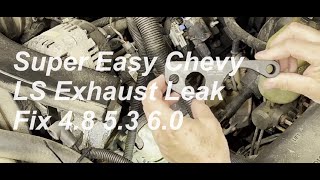
Typical fix: The proper fix is to extract the broken bolt and replace it with the gasket. This can be very difficult and expensive. A common and effective DIY/shop fix is to install an exhaust manifold bolt repair clamp (e.g., Dorman 917-142, Kral Auto Parts KAP-single) which brackets the manifold 🎬 Watch: How to install a manifold bolt repair clamp to the head, sealing the leak without drilling.
Est. part cost: $40-$100 for a repair clamp, $200-$1000+ for bolt extraction. - Failed or Failing Catalytic Converter 🔴 High Probability → Shop Catalytic Converter Often a symptom of another problem. Oil consumption, coolant leaks, or unburned fuel from misfires can contaminate and clog the converter's internal structure. It can also be damaged by ingested debris from a bad airbox seal.
How to confirm: Use a scan tool to watch O2 sensor data; the downstream sensor (Sensor 2) voltage should be steady, not fluctuating like the upstream sensor (Sensor 1). An infrared thermometer can also be used; the outlet temperature of the converter should be significantly hotter than the inlet.
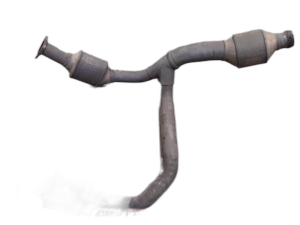
Typical fix: Replace the Bank 1 catalytic converter after the root cause of the failure (e.g., oil consumption, exhaust leak) has been fixed. GM OEM Part is approx. 84146063.
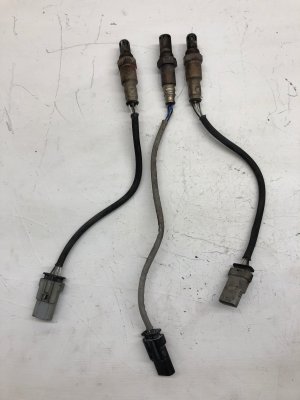
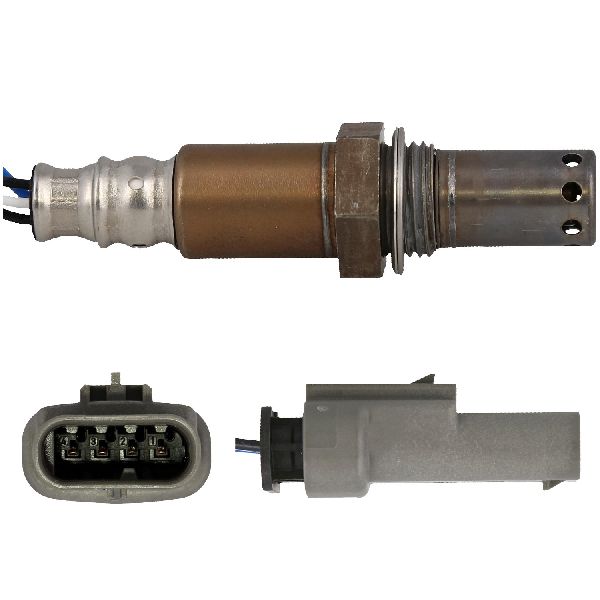
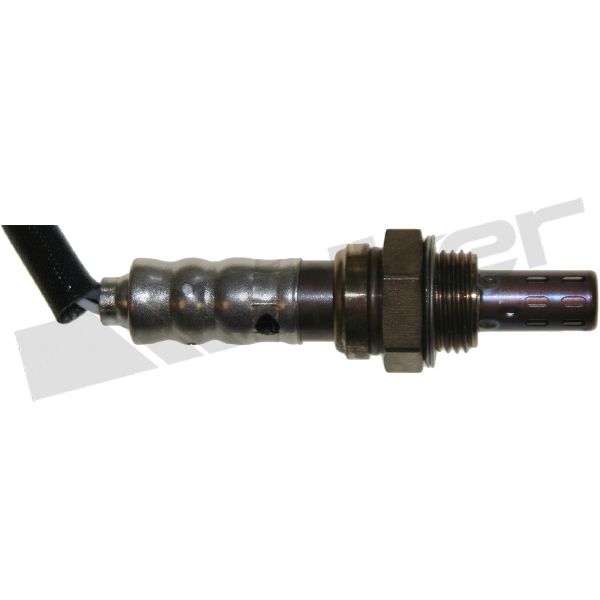
Est. part cost: $400-$1500 - Faulty Downstream Oxygen (O2) Sensor 🟡 Medium Probability → Shop Oxygen Sensor O2 sensors can wear out or become contaminated by oil or debris, sending false data to the ECM that mimics a bad catalytic converter. It's a common misdiagnosis to replace the converter when only the sensor is bad.
How to confirm: Test the sensor's operation with a scan tool or multimeter. A simple diagnostic trick is to swap the downstream sensors from Bank 1 and Bank 2. If the code changes to P0430 (Bank 2), the sensor is faulty.
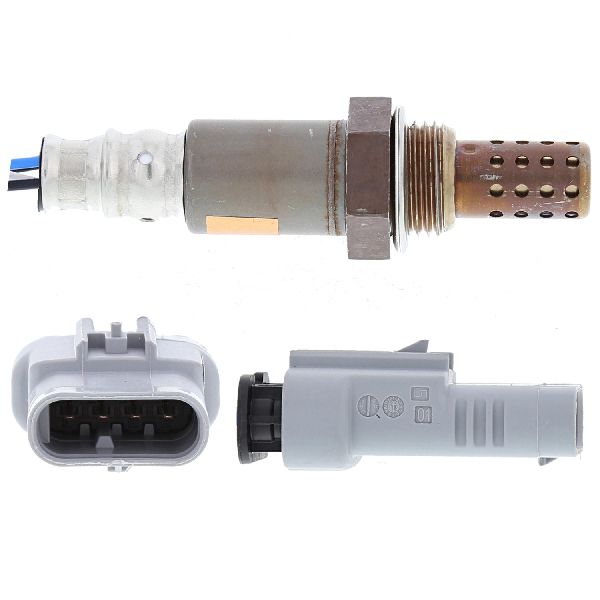
Typical fix: Replace the Bank 1, Sensor 2 (downstream) oxygen sensor. A common part is ACDelco 12677895.
Est. part cost: $50-$150 - Air Intake Leak (Air Box Seal) 🟡 Medium Probability → Shop Engine Air Intake Resonator Manufacturer TSB #16NA111 specifically calls out a poor seal on the air filter box. This allows unmetered air and abrasive debris (sand, dirt) to enter the engine, which can directly damage the O2 sensor element and clog the catalytic converter.
How to confirm: Visually inspect the foam seal where the air filter housing meets the inner fender. Per the TSB, check for broken tabs on the housing cover and look for dirt trails past the filter seal inside the intake tube.
Typical fix: Replace the air filter and/or the entire air cleaner assembly if the housing is warped or broken. Some owners fabricate a new seal using weatherstripping foam.
Est. part cost: $10-$200 - Excessive Oil Consumption ⚪ Low Probability The 5.3L L83 engine features Active Fuel Management (AFM), which can sometimes lead to issues with piston rings or lifters, causing oil to be consumed. This oil burns in the exhaust, contaminating the O2 sensors and 'poisoning' the catalytic converter.
How to confirm: Monitor engine oil levels closely. Consumption of more than one quart per 2,000 miles is a strong indicator. Check for blueish smoke from the exhaust. An owner complaint specifically links recurring P0420 faults to this issue.
Typical fix: This is a complex engine repair, potentially requiring piston ring replacement or AFM system service/disabling. This underlying issue MUST be fixed before replacing the catalytic converter.
Est. part cost: $1500-$5000+
Rare But Worth Checking
- Engine Running Too Rich/Lean: A faulty fuel injector, weak fuel pump, or stuck-open thermostat can alter the air-fuel mixture. This can overheat and damage the catalytic converter. Usually, this will be accompanied by other codes like P0171, P0172, P0174, or P0175.
- Leaking Brake Booster: A forum user reported chasing a rough running condition alongside a P0420, which was ultimately traced to a vacuum leak from a faulty brake booster. While not a direct cause, it created a lean condition that complicated diagnosis.
Diagnosis Steps
- Check for other DTCs. Address any misfire (P030x), fuel trim (P017x), or other engine sensor codes before diagnosing P0420.
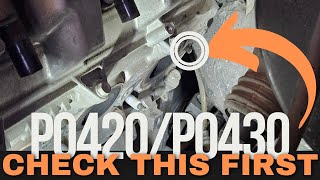
- Inspect for Exhaust Leaks. This is a critical first step on this platform. With the engine cold, listen for a 'ticking' sound from the manifold area. Visually inspect the exhaust manifolds for broken bolt heads, especially the ones closest to the firewall.
- Inspect the Air Intake System. Per TSB #16NA111, check the air filter box for a proper seal, broken tabs, and any signs of dirt or debris bypassing the filter into the intake tube.
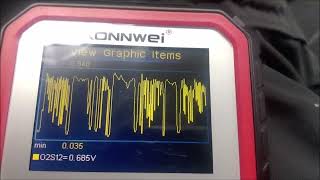
- Analyze O2 sensor data with a scan tool. Graph the voltage for Bank 1 Sensor 1 and Bank 1 Sensor 2. The upstream sensor (S1) should fluctuate rapidly between ~0.1V and ~0.9V. The downstream sensor (S2) should hold a relatively steady, high voltage (e.g., >0.6V). If S2 is mirroring S1, the converter 🎬 See how to differentiate between a bad sensor and converter is not working or an exhaust leak is present.
- Test the downstream O2 sensor. If you suspect the sensor itself is faulty, swap the Bank 1 and Bank 2 downstream sensors and see if the code follows (changes to P0430). If it does, the sensor is bad.
- Check for underlying engine problems. Monitor for excessive oil consumption, which is a known issue that can foul the catalytic converter.
- If all other possibilities are ruled out, the catalytic converter has likely failed and needs replacement. Ensure any new converter undergoes a proper break-in drive cycle as mentioned in TSB PIP3119P.
Parts You'll Likely Need
- Bank 1 Catalytic Converter
(OEM #84146063)— This is the part identified by the code as inefficient. It's often the final fix after ruling out other causes, or it fails due to contamination from those other causes.
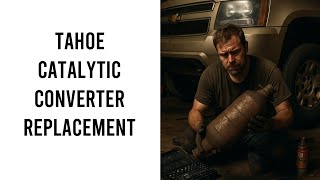
Trusted brands: ACDelco (GM Genuine), Walker Exhaust 🎬 Watch this step-by-step Tahoe catalytic converter replacement walkthrough (e.g., 16839), MagnaFlow
OEM price range: $800-$1500
Aftermarket price range: $400-$900 - Downstream Oxygen Sensor (Bank 1 Sensor 2)
(OEM #12677895)— This sensor provides the data that triggers the P0420 code. It can fail or become contaminated, sending inaccurate readings.
Trusted brands: ACDelco (GM Genuine), Bosch, Denso
OEM price range: $80-$150
Aftermarket price range: $50-$100 - Exhaust Manifold Bolt Repair Clamp — A common, cost-effective solution to seal an exhaust leak caused by a broken rear manifold bolt, which is a frequent root cause of P0420 on this platform.
Trusted brands: Dorman 917-142, Kral Auto Parts KAP-single
OEM price range: N/A
Aftermarket price range: $40-$100
Related Codes That Often Appear With This One
- P0430 — This is the identical code for Bank 2 (passenger side). It's common for both converters to degrade at a similar rate, or for a systemic issue like an air intake leak or broken manifold bolts on both sides to affect both banks.
- P0300-P0308 — These are engine misfire codes. Unburned fuel from a misfire enters the exhaust and superheats the catalytic converter, quickly destroying it. Misfires must be fixed immediately to prevent converter damage.
Technical Service Bulletins (TSBs) & Recalls
- Bulletin #16NA111: 'This informational bulletin provides diagnostic/inspection information for the air box and air filter seal to correct a MIL and DTCs P0420 and P0430 setting.'
- Bulletin #PIP3119P: Mentions that P0420/P0430 diagnostics are disabled at low mileage and provides repair advice for the Service Engine Soon lamp.
Platform-Specific Known Issues
- TSB #16NA111: A specific GM bulletin points to the air box and air filter seal as a potential cause for P0420/P0430 codes. An improper seal allows unmetered air into the engine.
- TSB #PIP3119P: This bulletin notes that at very low mileage, the diagnostic for P0420/P0430 may be disabled, indicating GM is aware of potential nuisance codes on new vehicles.
- Owner Complaint ODI #11725697: A 2022 complaint on a Tahoe highlights a pattern of excessive oil consumption leading to repeated P0420 codes and catalytic converter replacements, confirming a link between oil burning and this fault.
Mechanic-Grade Diagnostic Values
- Downstream O2 Sensor (Bank 1, Sensor 2) Voltage — expected: Relatively steady voltage, typically above 0.6V (600mV) when the engine is at operating temperature and under steady load.. Failure: Voltage fluctuates rapidly, mimicking the upstream O2 sensor's waveform (0.1V to 0.9V). This indicates oxygen is passing through the converter un-processed.
- Catalytic Converter Temperature Differential — expected: The outlet pipe of the catalytic converter should be significantly hotter (e.g., 100°F or more) than the inlet pipe, measured with an infrared thermometer.. Failure: The outlet temperature is the same as or cooler than the inlet temperature, suggesting the chemical reaction is not occurring inside.
- Engine Coolant Thermostat Opening Temperature — expected: Should open around the manufacturer's specified temperature, typically 194°F or higher.. Failure: A thermostat stuck open or opening too early (e.g., at 163°F) can cause the engine to run rich, which can foul the catalytic converter and trigger a P0420 code.
Scan Tool Commands That Help
- GDS2 (GM Global Diagnostic System 2): Catalyst Monitor Test — To manually initiate the catalyst efficiency test after a repair. The tool can confirm if the monitor is ready to run and display the results without waiting for a full, natural drive cycle.
- GDS2 (GM Global Diagnostic System 2): A/F Control / Fuel Trim Reset — After addressing a fuel system issue (like a leaky injector or bad MAF sensor) that may have caused the P0420. Resetting fuel trims forces the ECM to relearn, preventing it from running rich/lean based on old data and potentially damaging a new converter.
- GDS2 (GM Global Diagnostic System 2): Freeze Frame / Failure Records — This is the first step in any diagnosis. It provides a snapshot of all sensor values (engine speed, load, temperature, etc.) at the exact moment the P0420 code was set, which can provide crucial clues about the root cause.
Wiring & Ground Locations
- Bank 1 O2 Sensor Wires — On the wiring harness connector for the O2 sensors.. Incorrectly wiring a replacement sensor or damage to these wires can cause false readings. For Bank 1 (driver's side), the signal wires are typically Tan and Purple, while the heater circuit wires are Pink and Black.
- G103 / G104 — Main engine grounds, typically a large cable from the negative battery terminal to the front of the engine block on the driver's side.. A poor engine ground can cause erratic voltage in the entire engine management system, leading to incorrect sensor readings and phantom codes. The ECM and its sensors rely on this as a stable reference.
- Firewall Ground Strap — A braided strap connecting the engine/cylinder head to the vehicle's firewall, typically on the driver's side.. This ground is critical for body-referenced sensors and modules. Corrosion or looseness can introduce electrical noise that may affect sensor readings, including those from the O2 sensors.
- Frame Grounds — Located on the frame rails, notoriously behind the front wheels.. These grounds are in a terrible location and are susceptible to corrosion from road spray. A bad frame ground can affect various systems, including the fuel pump, which can indirectly lead to fuel mixture issues that cause P0420.
Real Owner Repair Stories
- Compilation of multiple threads on TahoeYukonForum.com and GM-Trucks.com (2015-2019 Chevrolet Tahoe/Suburban/Silverado with 5.3L V8) — Persistent P0420 and/or P0430 code. A distinct 'ticking' or 'puffing' exhaust noise from the engine bay, most noticeable on a cold start, that goes away as the engine warms up.
❌ Tried (didn't work) Replacing downstream O2 sensors, Using fuel additives or 'catalytic converter cleaner', Replacing the catalytic converter (code returned shortly after)
✅ What actually fixed it The root cause was a broken rearmost exhaust manifold bolt on one or both sides. The thermal expansion of the manifold would seal the leak once the engine was hot, making it hard to diagnose. The fix was installing an exhaust manifold bolt repair clamp (like a Dorman 917-142) that pulls the manifold tight against the head, sealing the leak without needing to extract the broken bolt.
"I Checked Everything" — The Actual Cause
- A common scenario is a smoke test on the exhaust system shows no leaks, yet the P0420 code persists. The actual cause is often a broken rear exhaust manifold bolt. The leak is a very small crack that only allows a significant amount of air to be drawn in under specific negative pressure pulses in the exhaust stream, or it seals up when the manifold gets hot. A smoke test at atmospheric pressure on a cold engine may not be sufficient to reveal this type of leak.
Helpful Videos
Used OEM Parts in Stock
New Aftermarket Parts Available


The information in this article is provided for general reference and educational purposes only. Vehicle specifications, procedures, and part compatibility can vary by production date, trim level, and region. Always consult your vehicle's factory service manual and verify part numbers before purchasing or performing repairs. Safety-critical components such as airbags, seat belts, and braking systems should be installed by a qualified professional.
- Chevrolet TAHOE:
- 🧭 Diagnostic Flowchart
- 🎬 Helpful Videos
- 🛍️ Shop This Part
- What's Unique About the 2018-2018 Chevrolet TAHOE
- Symptoms You May Notice
- Most Likely Causes
- Rare But Worth Checking
- Diagnosis Steps
- Parts You'll Likely Need
- Related Codes That Often Appear With This One
- Technical Service Bulletins (TSBs) & Recalls
- Platform-Specific Known Issues
- Mechanic-Grade Diagnostic Values
- Scan Tool Commands That Help
- Wiring & Ground Locations
- Real Owner Repair Stories
- "I Checked Everything" — The Actual Cause
- 🎟️ Get 5% Off