

P0420 on 2012-2014 Chrysler 200: Catalyst Efficiency Causes and Fixes
P0420 on a 2012-2014 Chrysler 200 means the catalytic converter on Bank 1 is failing. For the 3.6L V6, Bank 1 is the firewall side. While the converter itself is the most common cause, it's crucial to first rule out faulty oxygen sensors or exhaust leaks to avoid a costly misdiagnosis. For 3.6L V6 models, a PCM software update (TSB #18-102-16) may also be required, making it a critical first check.
- P0420 means the Bank 1 catalytic converter's efficiency is low.
- For the 3.6L V6, check for a PCM software update (TSB #18-102-16) before replacing any parts.
- Always rule out cheaper fixes like exhaust leaks and faulty oxygen sensors before condemning the expensive catalytic converter.
- Address any engine misfire codes (P030x) immediately, as they are a primary cause of catalytic converter failure.
- A definitive test is to compare the converter's inlet and outlet temperatures with an infrared thermometer; the outlet must be hotter.
What's Unique About the 2012-2014 Chrysler 200

For the 2012-2014 Chrysler 200 with the 3.6L V6 engine, the P0420 code is specifically mentioned in a Technical Service Bulletin (TSB #18-102-16). This bulletin indicates that the code can appear alongside other DTCs, such as those for slow oxygen sensor response (P0133) and EVAP system performance (P0441). The prescribed fix is a PCM software update, suggesting that the root cause may be related to the module's calibration rather than an immediate hardware failure. This makes checking for available software updates a critical and unique first step for V6 owners. Additionally, some 2.4L models were part of Emissions Recall U67 for premature catalytic converter failure, making it important to check if the vehicle has had this free repair performed.
Diagnostic Flowchart

Tap your situation to follow the diagnostic path that matches what you're seeing on this vehicle.
Symptoms You May Notice

- Check engine light is on.
- Vehicle fails an emissions test.
- Reduced engine power or acceleration, especially when going uphill.
- A rotten egg or sulfur smell from the exhaust, indicating the converter is struggling to process unburned fuel.
- Decreased fuel economy as the engine may run less efficiently.
- Replacing the oxygen sensors without proper diagnosis. While an O2 sensor can be the cause, it's often misdiagnosed. If the downstream O2 sensor is correctly reporting the poor performance of the converter, replacing the sensor will not fix the code.
- Replacing the catalytic converter without fixing the root cause. If a misfire or oil leak destroyed the original converter, it will destroy the new one as well.
Most Likely Causes

- Failing Catalytic Converter 🔴 High Probability → Shop Catalytic Converter Catalytic converters can fail from age, but more often they are damaged by other issues. For the 2.4L engine, excessive oil consumption, a known issue, can contaminate and clog the converter. For both engines, persistent misfires can send unburned fuel that superheats and melts the converter's internal structure. An owner complaint filed with the NHTSA for a 2013 model specifically mentions needing to replace the catalytic converter for a P0420 code.
How to confirm: After confirming O2 sensors are working and there are no exhaust leaks, use an infrared thermometer to check the converter's temperature. The outlet should be significantly hotter (by at least 100°F) than the inlet on a fully warmed-up engine. If temperatures are similar or the outlet is cooler, the converter is not working.
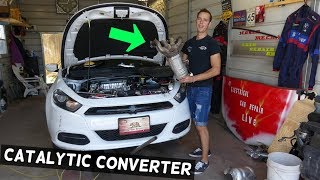
Typical fix: Replace the Bank 1 catalytic converter. 🎬 See this walkthrough for replacing the 2.4L catalytic converter On the 3.6L V6, Bank 1 is the rear manifold, closer to the firewall. Always address the root cause (e.g., misfires, oil consumption) before replacing the converter.
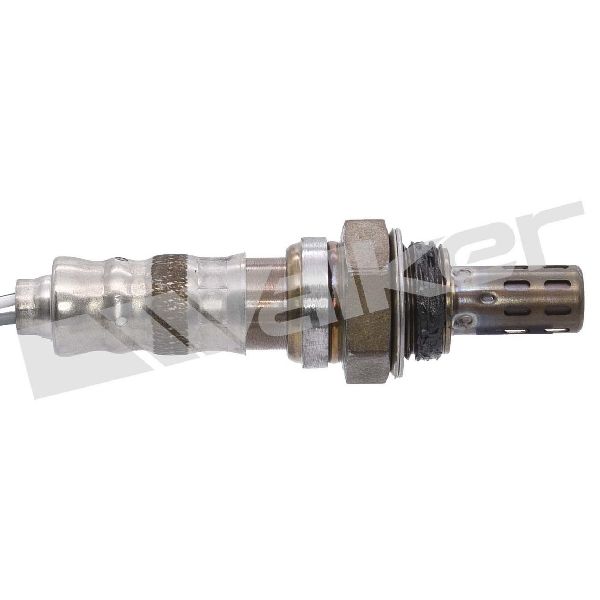
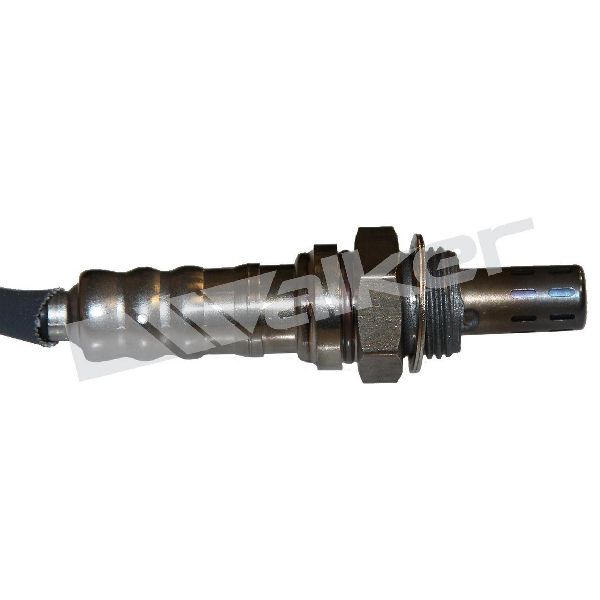
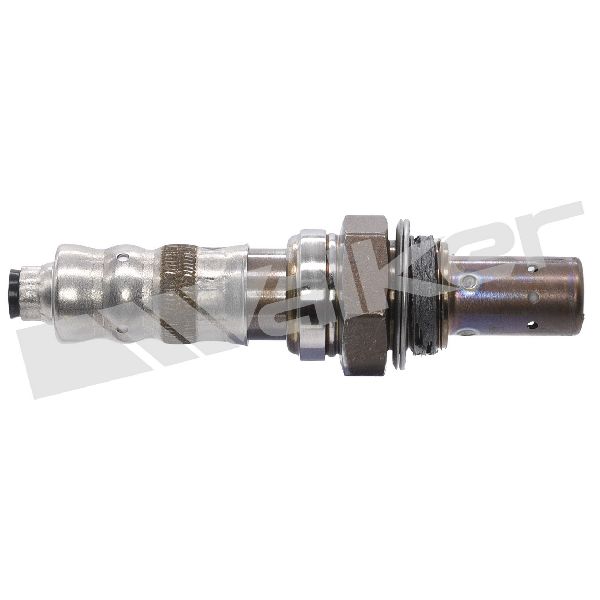
Est. part cost: $300-$800 - Faulty Downstream Oxygen (O2) Sensor 🟡 Medium Probability → Shop Oxygen Sensor The downstream O2 sensor is responsible for reporting the converter's efficiency. If the sensor becomes lazy or inaccurate due to age or contamination, it can send false data to the PCM, incorrectly triggering a P0420 code. However, it is frequently replaced when the catalytic converter is actually the problem.
How to confirm: Use a scan tool with live data graphing. The downstream (Bank 1, Sensor 2) O2 sensor voltage should be relatively stable, typically above 0.650 volts on a warm engine. If it's fluctuating rapidly like the upstream sensor, the converter is likely bad. If the sensor voltage is stuck or unresponsive, the sensor itself is likely faulty.
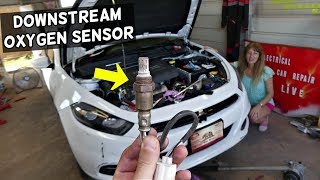
Typical fix: Replace the Bank 1, Sensor 2 (downstream) oxygen sensor. 🎬 Watch: How to remove and replace the downstream O2 sensor
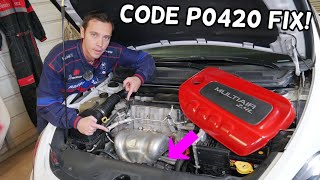
Est. part cost: $50-$120 - Exhaust System Leak 🟡 Medium Probability Leaks in the exhaust system between the upstream and downstream O2 sensors can allow extra oxygen to enter, skewing the downstream sensor's readings and tricking the PCM into thinking the converter has failed. 🎬 Watch: Diagnosing P0420 codes on the Chrysler 2.4L engine Flex pipes and manifold gaskets are common leak points.
How to confirm: Visually inspect the exhaust manifold, flex pipe, and all connections for cracks, holes, or black soot trails indicating a leak. You can also use a shop vacuum in reverse (blower mode) at the tailpipe and spray soapy water on exhaust components to look for bubbles.
Typical fix: Repair the leak by replacing the gasket, tightening bolts, or welding the damaged component.
Est. part cost: $20-$200 - PCM Software Update Needed (3.6L V6) ⚪ Low Probability TSB #18-102-16 explicitly lists P0420 as a code that can be resolved by a PCM software update on 2012-2014 models with the 3.6L engine. This suggests the original software logic may be too sensitive in monitoring catalyst efficiency.
How to confirm: A Chrysler dealership or a qualified shop with a wiTECH scan tool can check if your vehicle's PCM has the latest software version installed by referencing the TSB. The flash process itself takes only a few minutes but requires specialized tools.
Typical fix: Reprogram the Powertrain Control Module (PCM) with the updated software. This typically costs between $100-$250 at a dealership or specialist shop.
Est. part cost: $0-$250
Rare But Worth Checking
- Engine Misfires or Fuel System Issues: A catalytic converter rarely fails on its own. Unburned fuel from persistent engine misfires (codes P0300-P0306) or a rich running condition from a leaking fuel injector can overheat and destroy the converter. Always fix underlying engine problems first to protect your new converter.
- Engine Oil Contamination (2.4L): The 2.4L Tigershark engine can suffer from excessive oil consumption due to piston ring issues. This oil can enter the exhaust, coating the catalytic converter's internals and rendering it ineffective, leading to a P0420 code.
Diagnosis Steps
- Scan for all stored trouble codes. If other codes are present, especially misfire (P030x) or fuel system codes, diagnose and fix them first.
- For 3.6L V6 models, check with a dealer if TSB #18-102-16 applies and if a PCM update is available. This should be a primary step.
- For 2.4L models, check the vehicle's VIN to see if it was part of Emissions Recall U67 and if the repair was performed.
- Thoroughly inspect the exhaust system for any leaks between the engine and the rear O2 sensor. Pay close attention to the exhaust manifold gaskets and flex pipe for soot or cracks.
- Using a scan tool, observe the live data for the upstream (Bank 1, Sensor 1) and downstream (Bank 1, Sensor 2) oxygen sensors. The upstream sensor should fluctuate rapidly (0.1V-0.9V), while the downstream should be relatively steady and stable.
- If the downstream sensor's readings mirror the upstream sensor, the catalytic converter is not functioning correctly.
- If the downstream sensor's voltage is flat or slow to respond, test the sensor itself before condemning the converter.
- If all sensors and software are good and there are no leaks, perform a temperature test on the catalytic converter using an infrared thermometer. A properly functioning converter should have an outlet temperature at least 100°F hotter than the inlet.
Parts You'll Likely Need
- Catalytic Converter (Bank 1)
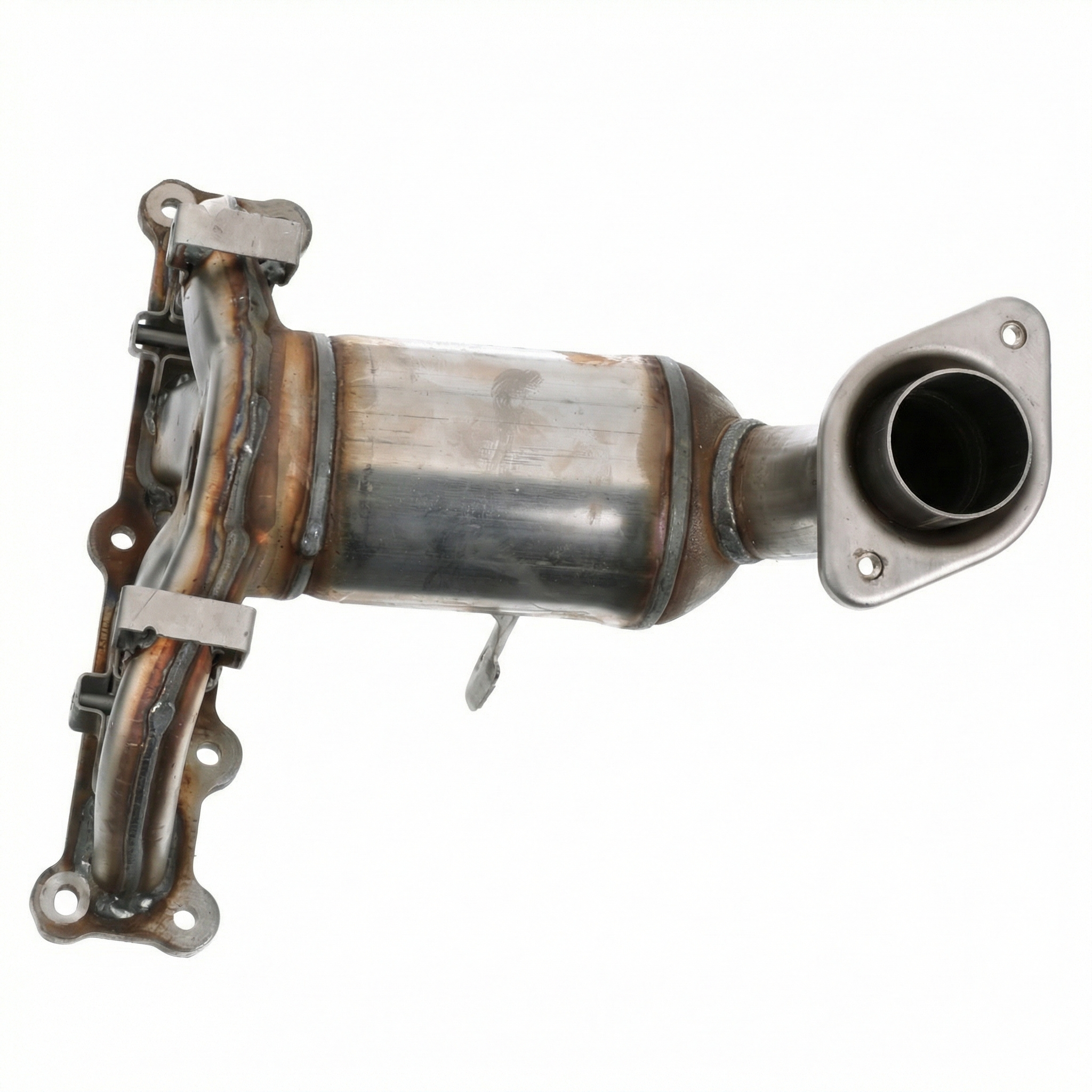
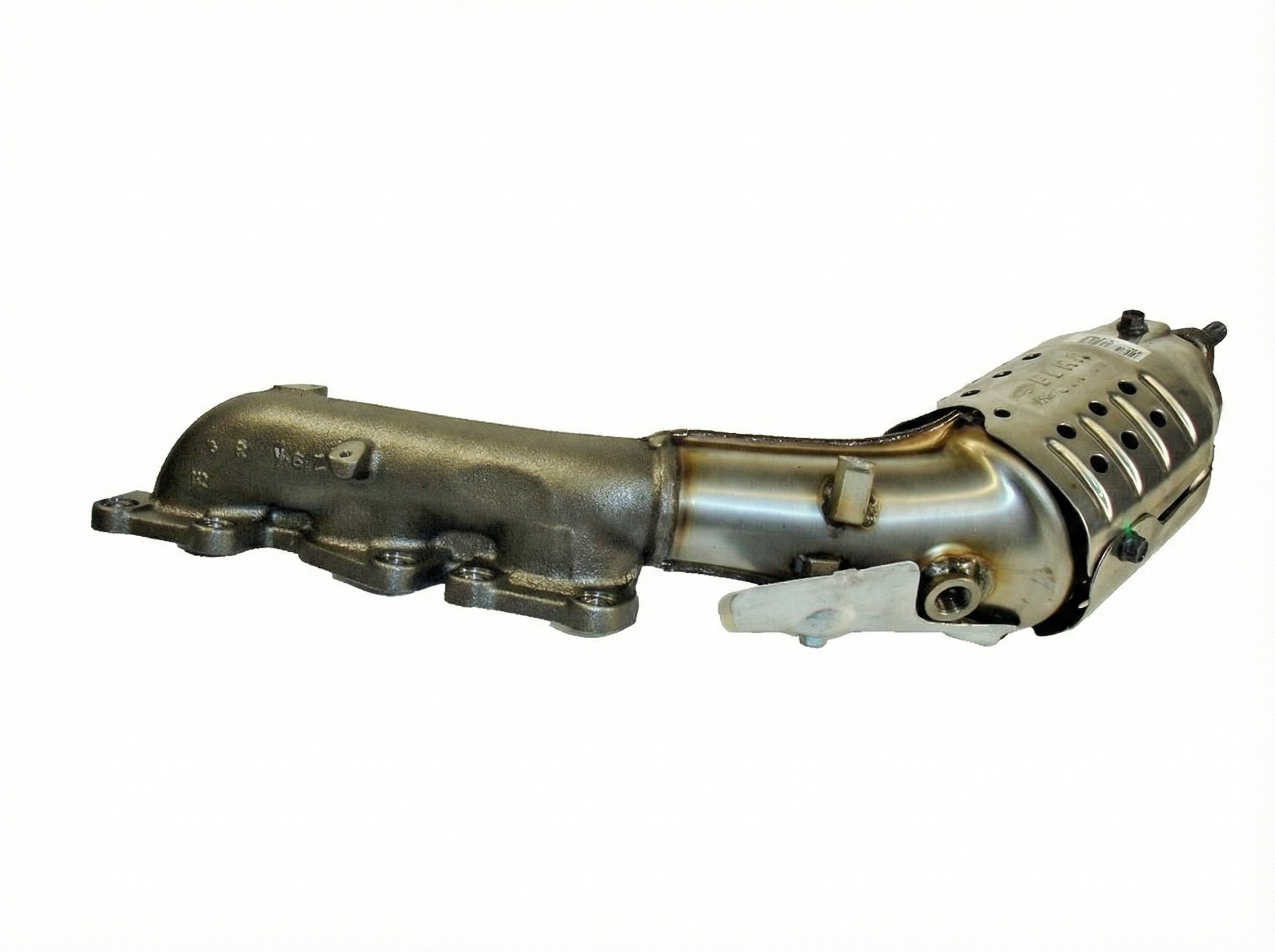
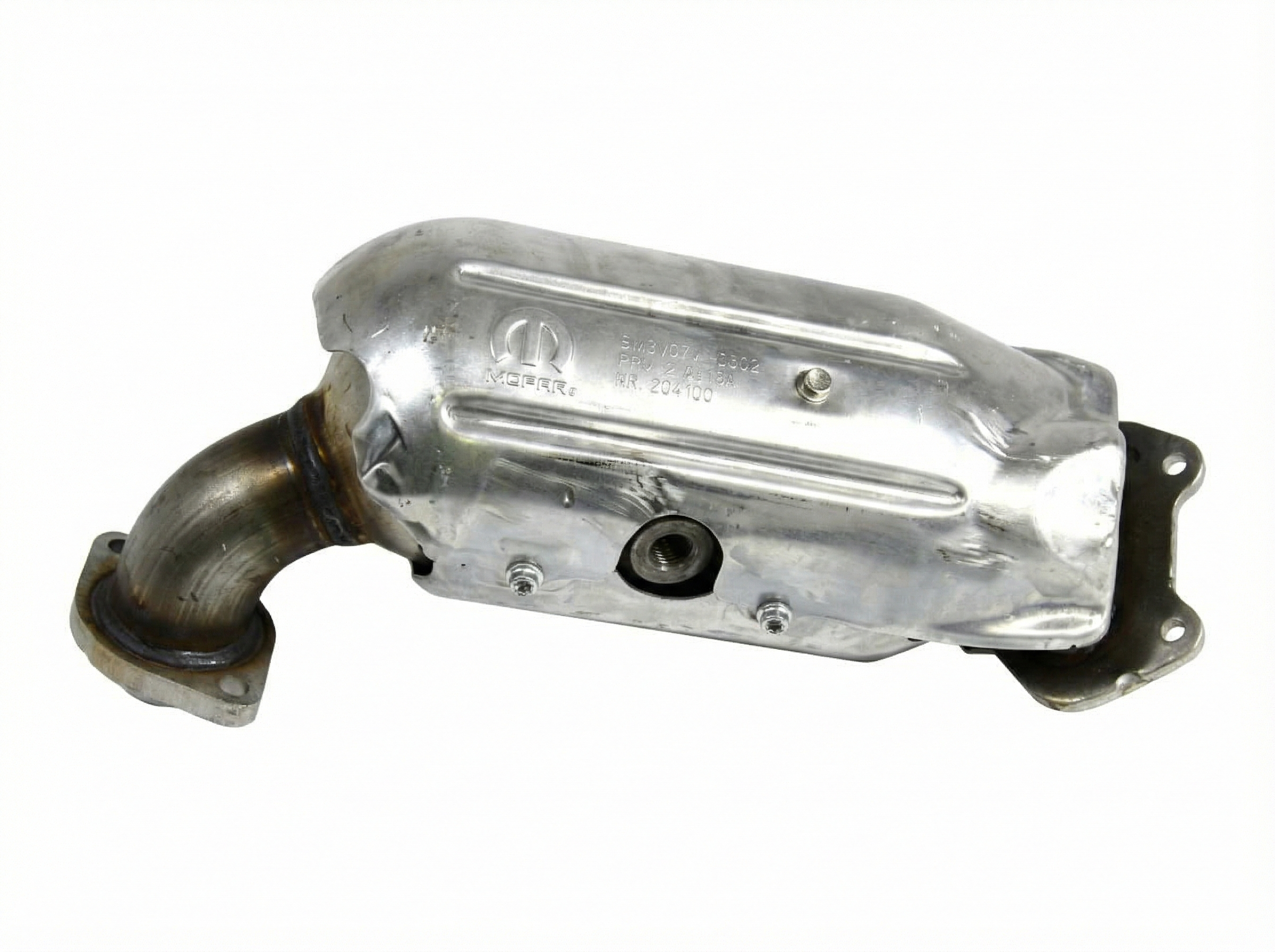
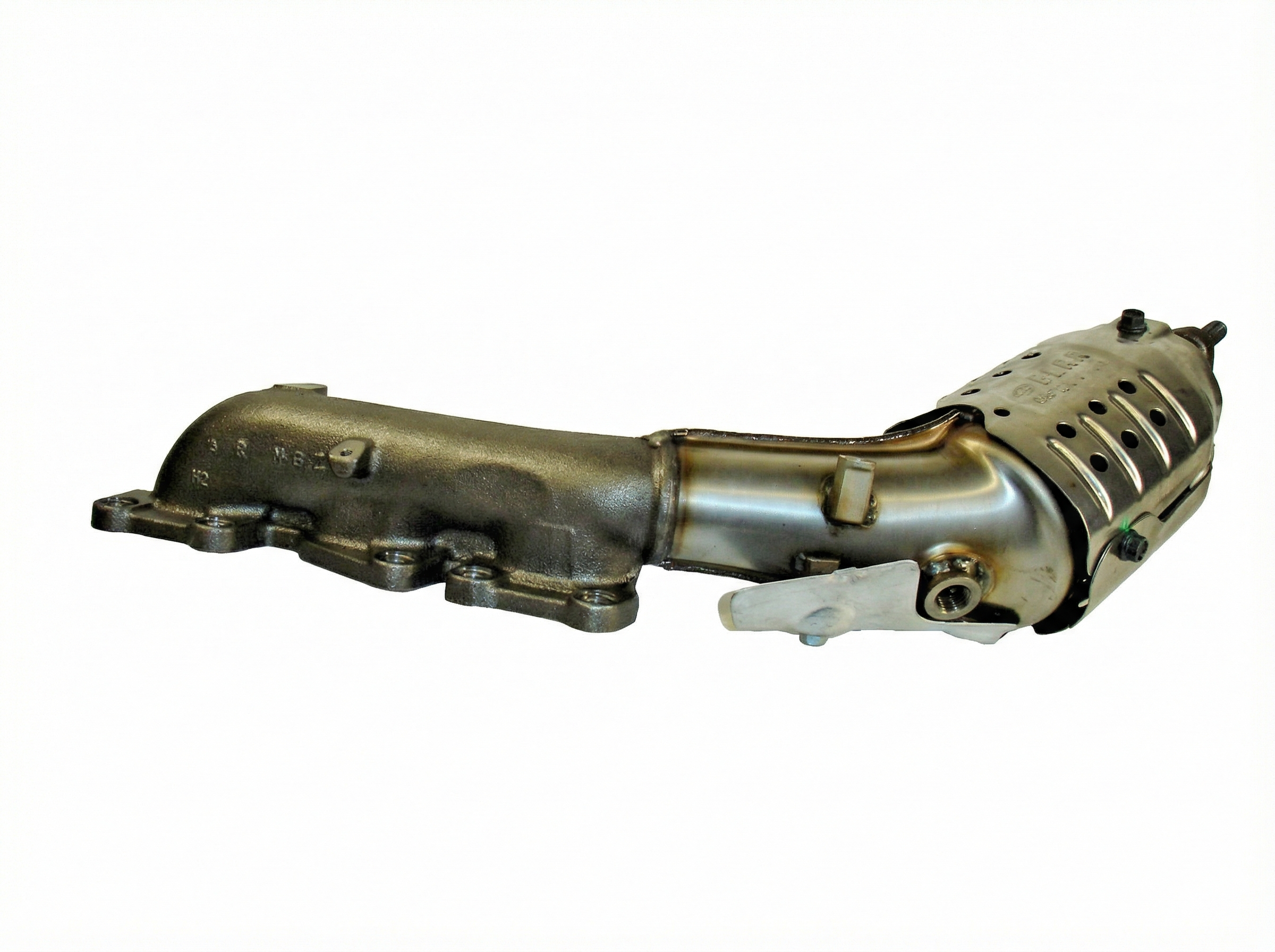
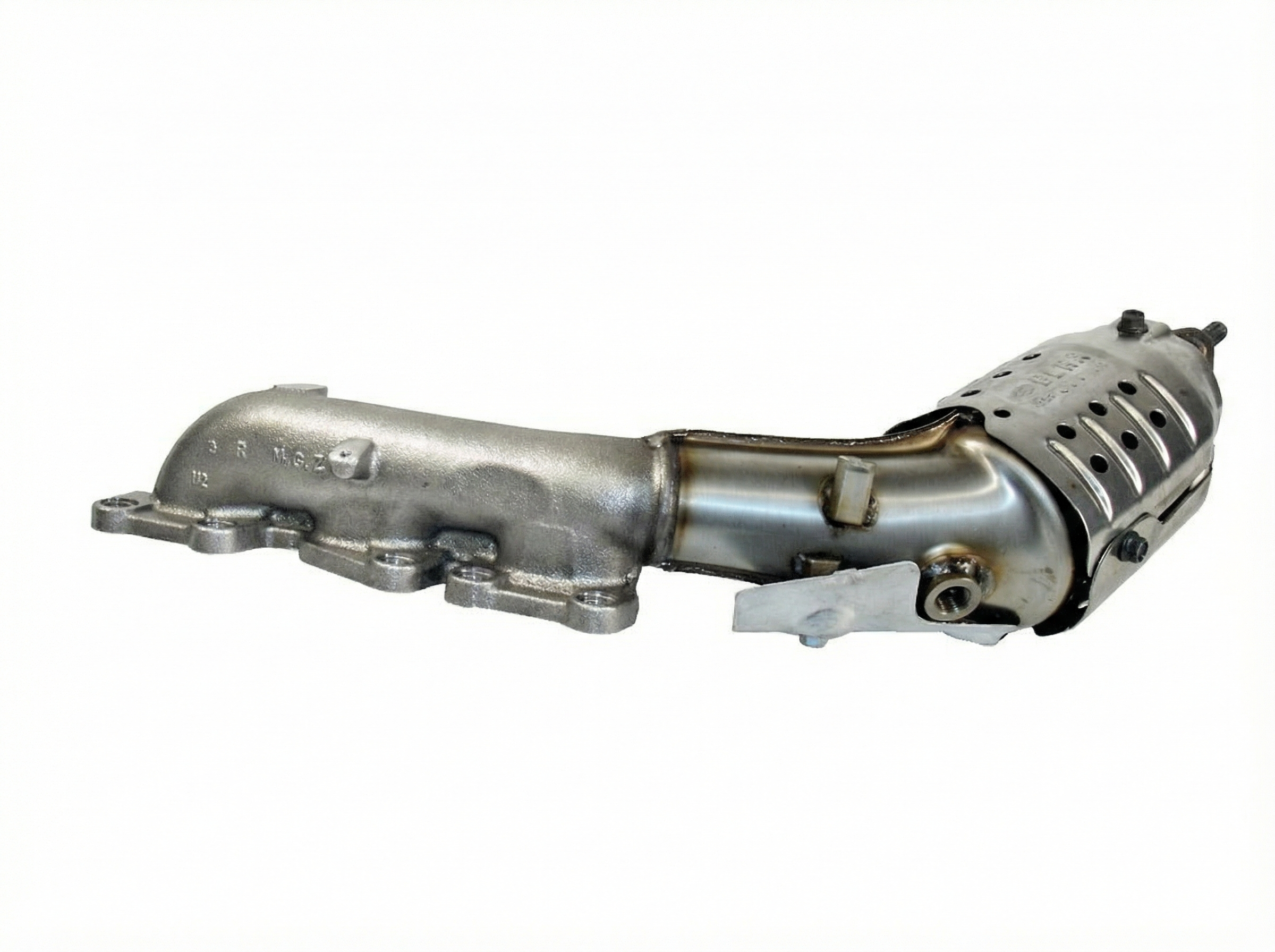
(OEM #68067130AB (For 3.6L V6, Bank 1 - Firewall Side))— This is the most common direct cause for the P0420 code when all other possibilities have been ruled out. Bank 1 on the 3.6L is the rear converter.
Trusted brands: Walker, MagnaFlow, Bosal, Eastern Catalytic
OEM price range: $600-$1000
Aftermarket price range: $250-$800 - Downstream Oxygen Sensor (Bank 1, Sensor 2)
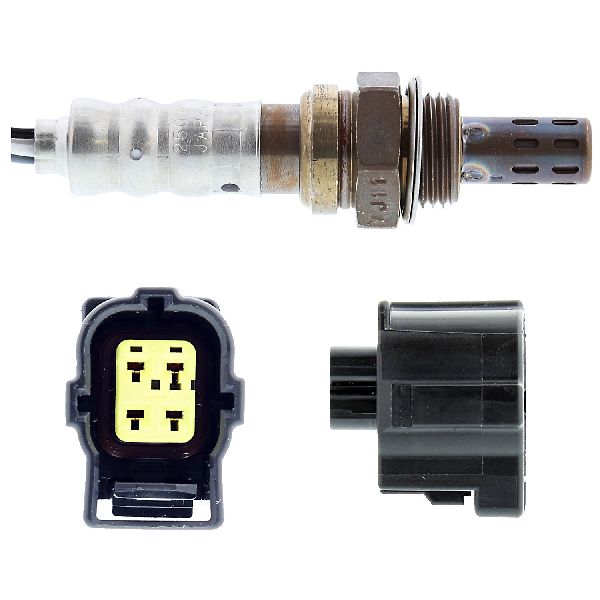
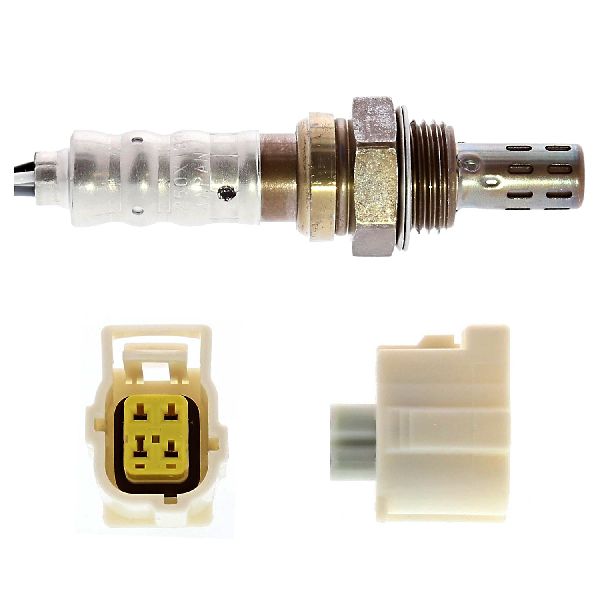
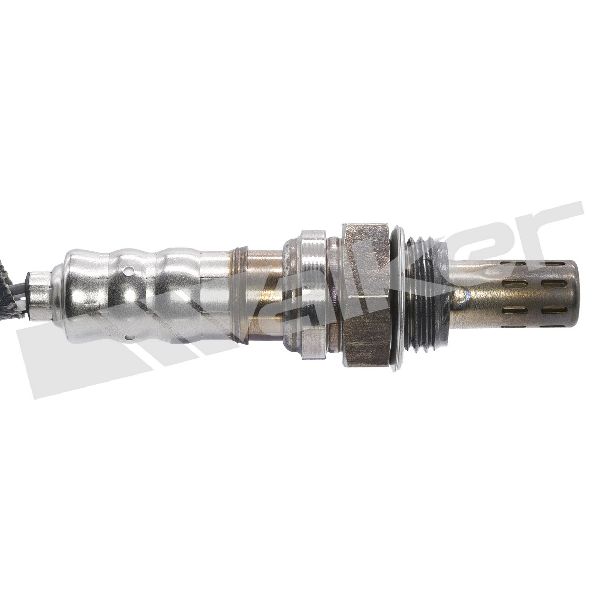
(OEM #5149171AB (Supersedes 5149171AA) or Denso Part #234-4547 for 2.4L)— This sensor is the second most likely cause, either by failing itself or being the first part replaced during a misdiagnosis.
Trusted brands: Denso, NGK, Bosch, Mopar
OEM price range: $80-$150
Aftermarket price range: $40-$100
Related Codes That Often Appear With This One
- P0430 — This is the same catalyst efficiency code but for Bank 2 (on the 3.6L V6). If both appear, it may suggest a common problem like contaminated fuel, a systemic engine issue, or the PCM software issue described in TSB #18-102-16.
- P0133 / P0153 — These codes for 'O2 Sensor Slow Response' are listed in TSB #18-102-16 along with P0420, indicating a potential PCM software issue or related sensor degradation on the 3.6L V6.
- P0300-P0306 — Misfire codes. A consistent misfire sends unburned fuel into the exhaust, which can quickly damage the catalytic converter, causing P0420. The misfire is the root cause that must be fixed.
Technical Service Bulletins (TSBs) & Recalls
- 18-102-16: Addresses MIL illumination for P0420, P0430, P0133, P0153, and other codes on 3.6L V6 models, recommending a PCM software update.
- U67 (Emissions Recall): Addresses premature catalytic converter failure on some 2011-2014 models with the 2.4L engine.
Platform-Specific Known Issues
- For 2012-2014 models with the 3.6L V6, Chrysler issued TSB #18-102-16 which indicates that a PCM software update can resolve a P0420 code, sometimes accompanied by other codes like P0133 and P0441.
- For 2011-2014 models with the 2.4L engine, some vehicles were included in Emissions Recall U67 due to premature catalytic converter failure. Owners should verify if their vehicle was affected and if the recall work was completed.
- The 2.4L 'Tigershark' engine has a known history of high oil consumption which can lead to oil fouling and premature failure of the catalytic converter.
Mechanic-Grade Diagnostic Values
- Downstream O2 Sensor (Bank 1, Sensor 2) Voltage — expected: Relatively steady voltage, typically above 0.650V (650mV) on a fully warmed-up engine at steady RPM.. Failure: Voltage fluctuates rapidly, mimicking the waveform of the upstream O2 sensor.
- Upstream O2 Sensor (Bank 1, Sensor 1) Voltage — expected: Constantly fluctuating between approximately 0.1V (lean) and 0.9V (rich).. Failure: Signal is slow, lazy, or stuck at a specific voltage. This would typically set a different code (like P0133) but is a critical health check.
- O2 Sensor Heater Element Resistance — expected: Between 3 and 15 Ohms when the sensor is cold.. Failure: Resistance is outside this range, indicating a failed heater circuit which can cause incorrect sensor readings before the engine is fully warm.
- Catalytic Converter Temperature Differential — expected: The outlet pipe should be at least 100°F hotter than the inlet pipe on a fully warmed-up engine held at ~2000 RPM.. Failure: The outlet temperature is the same as or cooler than the inlet, indicating the chemical reaction is not occurring.
Hidden / Shadow Codes Worth Checking
- Mode $06, Catalyst Monitor (e.g., TID $21, CID $A9): Mode $06 provides the raw test results from the PCM's internal emissions monitors before a code is set. For P0420, it shows the calculated catalyst efficiency value (switch ratio or index ratio) and compares it against the PCM's programmed minimum and maximum thresholds. (see via An advanced OBD-II scan tool that supports Mode $06 data. The tool translates the hexadecimal values into readable data, often with a pass/fail indicator.)
Scan Tool Commands That Help
- wiTECH (Chrysler OEM Scan Tool): Reprogram PCM / Flash Module — This is a required function to apply the software update specified in TSB #18-102-16 for 3.6L V6 models experiencing a P0420 code, often with other DTCs.
- Advanced OBD-II Scanner: View Live Data (Graphing) — Essential for visually comparing the upstream and downstream O2 sensor voltage waveforms in real-time to determine if the downstream sensor is mimicking the upstream, which confirms poor catalyst efficiency.
- N/A - Driving Procedure: Catalyst Monitor Drive Cycle — After a repair or clearing codes, a specific drive cycle must be completed to allow the PCM to run the catalyst efficiency monitor. A general procedure involves holding a steady speed (e.g., 55-60 mph) for several minutes after the engine is warm.
Wiring & Ground Locations
- G302 — Located in the driver's side left kick panel area.. This is a primary chassis ground. Poor grounding in Chrysler vehicles can cause a wide range of difficult-to-diagnose electrical problems, including erratic sensor readings that could falsely trigger a P0420 code.
- G105 — Located on the right side of the engine compartment.. As an engine compartment ground, a poor connection here can affect various engine sensors and the PCM, potentially impacting O2 sensor reference voltages or heater circuit performance.
- PCM Connector C2, Pin 18 (Circuit K904) — At the Powertrain Control Module (PCM).. For the 3.6L engine, this specific pin is the O2 Return for the downstream sensor. It can be tested for continuity, shorts to ground, or voltage issues if a sensor is suspected to be good but readings are incorrect at the PCM.
Real Owner Repair Stories
- Ask Scotty Community / CarKiller Forum (Chrysler 200 3.6L with 97,000 miles) — Persistent P0420 code after clearing other initial codes.
❌ Tried (didn't work) Replaced all oxygen sensors., Replaced the Bank 1 (right side) catalytic converter., When the code returned, the shop replaced the same catalytic converter a second time.
✅ What actually fixed it The code returned even after replacing the converter for a second time. The final resolution was not posted, highlighting that replacing the most common parts is not a guaranteed fix and the root cause may be more complex (wiring, PCM, etc.).
When the Usual Fixes Don't Work
- In at least one documented case for a 3.6L Chrysler 200, the P0420 code persisted even after a professional shop replaced all oxygen sensors and the Bank 1 catalytic converter twice. This strongly suggests that while the converter and sensors are the most common culprits, they are not the only cause. Technicians and owners should be prepared to investigate deeper issues, such as intermittent wiring faults, poor engine grounds, or a PCM software anomaly not covered by the known TSB, before committing to repeated expensive part replacements.
OEM Part Supersession History
5149171AA→5149171AB— Standard part revision and update by the manufacturer.
Heads up: The newer part number should be used for all replacements.Multiple previous part numbers for 3.6L V6 Catalytic Converter→68036151AM (Example from related vehicle)— Likely updates to catalyst materials or construction to improve longevity or efficiency.
Heads up: This part number is from a Jeep with the same 3.6L engine and illustrates a history of revisions. Always confirm the exact part number for the Chrysler 200 with a dealer VIN lookup.
Model Year Variations Within This Range
- 2012-2014: The 2.4L I4 engine was offered with two different automatic transmissions: a 4-speed (on the base LX model) and a 6-speed. While not a direct cause, the transmission can affect engine load and operating characteristics, which could subtly influence when the catalyst monitor runs.
Helpful Videos
Used OEM Parts in Stock
New Aftermarket Parts Available

The information in this article is provided for general reference and educational purposes only. Vehicle specifications, procedures, and part compatibility can vary by production date, trim level, and region. Always consult your vehicle's factory service manual and verify part numbers before purchasing or performing repairs. Safety-critical components such as airbags, seat belts, and braking systems should be installed by a qualified professional.
- Chrysler 200:
- 🧭 Diagnostic Flowchart
- 🎬 Helpful Videos
- 🛍️ Shop This Part
- What's Unique About the 2012-2014 Chrysler 200
- Symptoms You May Notice
- Most Likely Causes
- Rare But Worth Checking
- Diagnosis Steps
- Parts You'll Likely Need
- Related Codes That Often Appear With This One
- Technical Service Bulletins (TSBs) & Recalls
- Platform-Specific Known Issues
- Mechanic-Grade Diagnostic Values
- Hidden / Shadow Codes Worth Checking
- Scan Tool Commands That Help
- Wiring & Ground Locations
- Real Owner Repair Stories
- When the Usual Fixes Don't Work
- OEM Part Supersession History
- Model Year Variations Within This Range
- 🎟️ Get 5% Off