

P0420 on 2011-2014 Ford Edge 3.5L V6: Catalyst Efficiency Causes and Fixes
The P0420 code on a 2011-2014 Ford Edge 3.5L V6 indicates low catalytic converter efficiency on Bank 1. While this often means a failed catalytic converter, it's crucial to first rule out cheaper fixes like faulty oxygen sensors or exhaust leaks. A new converter is a costly repair. Critically, underlying engine issues like a failing internal water pump can destroy a new converter if not addressed first.
- P0420 on your Ford Edge means the catalytic converter on Bank 1 (firewall side) is inefficient.
- Before replacing the expensive catalytic converter, always check for exhaust leaks and test the downstream (Bank 1, Sensor 2) oxygen sensor.
- Address any other engine codes, especially for misfires, before diagnosing the P0420, as they can be the root cause.
- If you do replace the converter, consider replacing the oxygen sensors at the same time, as they have a similar service life.
- This repair can be difficult for a DIYer due to the location of the Bank 1 converter against the firewall.
What's Unique About the 2011-2014 Ford Edge
For the second-generation Ford Edge (2011-2014), the P0420 code is a relatively common issue, particularly as these vehicles accumulate higher mileage. The catalytic converters are integrated with the exhaust manifolds, making replacement more involved than a simple bolt-in converter on some other vehicles. A critical issue for this platform is the internally-mounted, timing-chain-driven water pump; when it fails, it leaks coolant into the oil, which can contaminate and destroy the catalytic converters. This makes checking for coolant in the oil a vital, non-obvious diagnostic step before replacing a converter.
Symptoms You May Notice
- Check Engine Light is on.
- Reduced engine performance or a sluggish feeling, especially if the converter is clogged.
- Decreased fuel efficiency.
- A sulfur or "rotten egg" smell from the exhaust, indicating the converter is overheating with unburned fuel.
- Failing a state emissions inspection.
- A rattling sound from the exhaust, especially on startup or acceleration, indicating the ceramic honeycomb inside the converter has broken apart.
- Immediately replacing the catalytic converter without testing the oxygen sensors or checking for exhaust leaks. A faulty O2 sensor is a much cheaper fix and a common cause.
- Replacing the wrong bank's components. P0420 is for Bank 1, which is the firewall side on the transverse 3.5L V6. Bank 2 (radiator side) would trigger a P0430 code.
- Replacing a catalytic converter without diagnosing an underlying engine problem (like a leaking injector or failing water pump), which will cause the new converter to fail prematurely.
Most Likely Causes
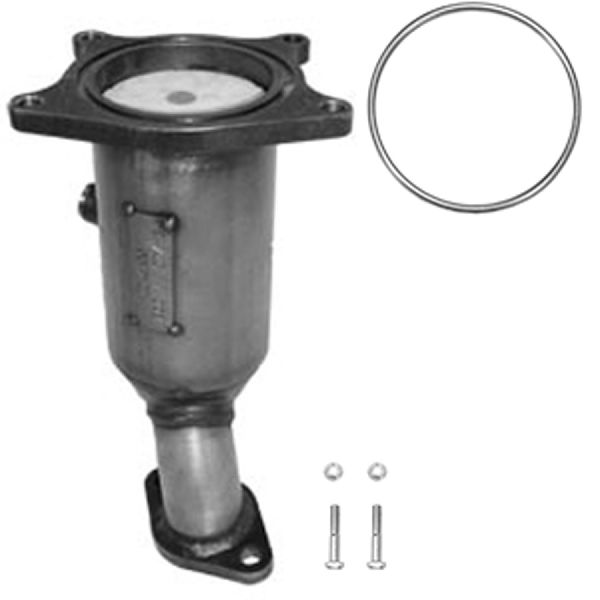
- Failed Catalytic Converter 🔴 High Probability → Shop Catalytic Converter Catalytic converters have a finite lifespan and can fail from normal aging (80,000-150,000 miles) or be damaged by other engine issues like misfires or rich fuel conditions. Coolant contamination from a failing internal water pump is a major cause of premature failure on this specific engine.
How to confirm: After confirming O2 sensors and the exhaust system are good, use a scan tool to watch live data. If the downstream O2 sensor voltage graph mimics the fluctuating graph of the upstream sensor, the converter is not storing oxygen and has failed. An infrared thermometer can also be used; the outlet of a working converter should be significantly hotter than the inlet. A rattling noise from the unit is a definitive sign of physical failure.
Typical fix: Replace the Bank 1 catalytic converter, which is integrated with the exhaust manifold. 🎬 See this walkthrough for replacing the Bank 1 catalytic converter
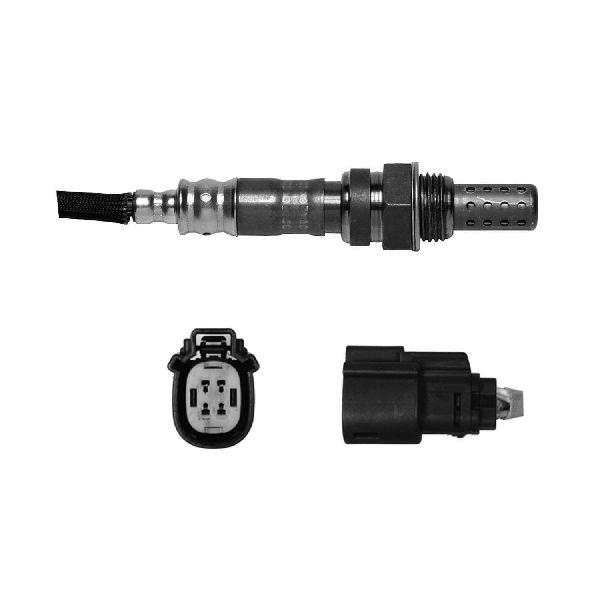
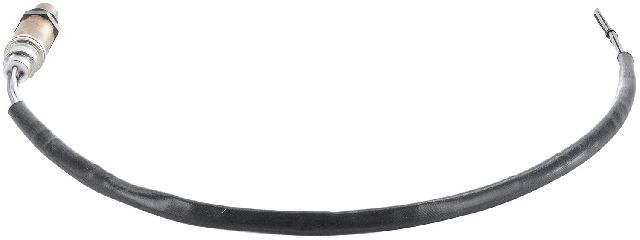
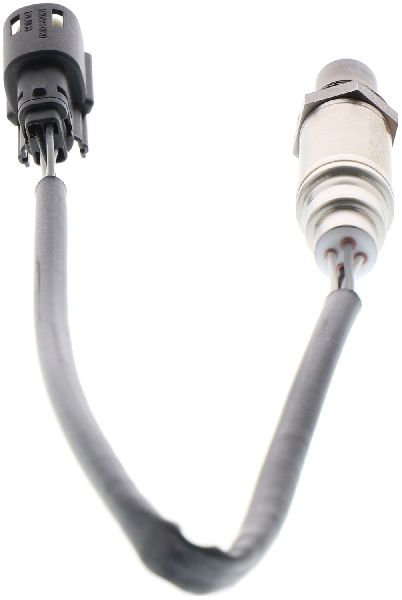
Est. part cost: $300-$600 for an aftermarket direct-fit unit, $1100+ for OEM. - Faulty Downstream Oxygen (O2) Sensor 🟡 Medium Probability → Shop Oxygen Sensor The downstream O2 sensor is the primary sensor used to measure catalyst efficiency. If it becomes lazy or biased due to age or contamination, it can send false data to the PCM, triggering a P0420 code.
How to confirm: Use a scan tool to graph the downstream O2 sensor voltage. It should show a relatively steady voltage (typically above 0.45V, often fluctuating slowly between 0.6V and 0.8V) on a warm, running engine at steady RPM. If it's stuck low, high, or fluctuates rapidly like the upstream sensor, it's likely faulty.
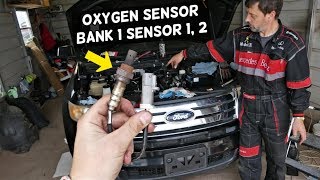
Typical fix: Replace the Bank 1, Sensor 2 🎬 Watch: How to locate and replace your oxygen sensors (downstream) oxygen sensor.
Est. part cost: $45-$145 - Exhaust Leak 🟡 Medium Probability Leaks from cracked manifolds, broken flange gaskets, or rusted pipes between the upstream and downstream O2 sensors can allow extra oxygen into the exhaust. This fools the downstream sensor into reading lean, mimicking a bad converter.
How to confirm: Perform a visual inspection of the exhaust system from the engine to the tailpipe, looking for black soot, cracks, or holes. A smoke test is the most effective way to find small, hard-to-see leaks.
Typical fix: Repair the leak by replacing the gasket, flex pipe, or damaged section of the exhaust.
Est. part cost: $20-$200 depending on the location and severity of the leak. - Engine Misfires or Fuel System Issues ⚪ Low Probability Unburned fuel from misfires (due to bad spark plugs or coils) or a rich condition (leaking injectors) can enter the exhaust and overheat the catalytic converter, permanently damaging its internal structure.
How to confirm: Check for other diagnostic trouble codes, such as misfire codes (P0300-P0306) or fuel trim codes (P0171, P0174). Address and fix these codes before diagnosing the P0420.
Typical fix: Resolve the root cause of the misfire or fuel issue (e.g., replace spark plugs, ignition coils, or fuel injectors).
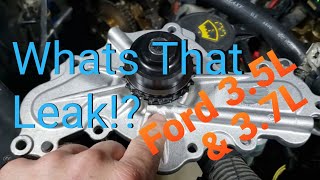
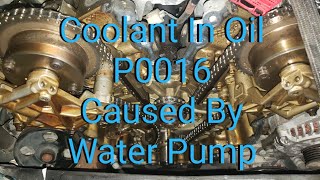
Est. part cost: $50-$500+ - Internal Water Pump Failure Leading to Coolant Contamination ⚪ Low Probability This is a major, well-documented design flaw 🎬 Watch: How to spot signs of a water pump leak in the transverse 3.5L Duratec V6. The timing-chain-driven water pump is internal; when its seal fails, coolant leaks directly into the oil pan. This coolant-oil mixture gets burned in combustion, and the contaminants (silicates, phosphates) quickly poison the catalytic converter, leading to P0420/P0430 codes, often before the engine is catastrophically damaged.
How to confirm: Check the engine oil for a milky, 'milkshake'-like appearance on the dipstick or oil cap. Monitor coolant levels for unexplained loss. A block test can check for combustion gases in the coolant. If a P0420/P0430 code appears suddenly, especially on a higher-mileage engine, this should be a primary suspect.
Typical fix: This is a major engine-out repair. The timing cover must be removed to replace the water pump and timing chain components. The oil and coolant must be flushed. If this is the cause, the catalytic converters will almost certainly need to be replaced as well, but only after the engine is repaired.
Est. part cost: $400-$800 for water pump and timing components; total repair often exceeds $2500-$5000 due to labor.
Rare But Worth Checking
- Faulty Upstream Oxygen (O2) Sensor: → Shop Oxygen Sensor While less common, a faulty upstream (Bank 1, Sensor 1) O2 sensor can cause an improper air/fuel mixture, which over time can lead to conditions that trigger a P0420 code. It's worth considering if other causes have been ruled out.
- EVAP System Restrictions: In some Ford vehicles, a restricted EVAP emission system purge vapor line (P144A) or an inability to bleed up fuel tank vacuum (P1450) can appear alongside a P0420 code, as noted in NHTSA ODI #11443669 and NHTSA ODI #11576173.
Diagnosis Steps
- Check for any other stored trouble codes. If codes for misfires, fuel trim, oxygen sensor faults, or engine temperature are present, diagnose and repair those first. NHTSA ODI #10713413 illustrates a case where P0420 appeared alongside multiple ignition coil codes (P0351, P0352, P0354) and misfire codes (P0301, P0302).
- Inspect the engine oil and coolant. Check the oil dipstick and oil cap for a milky, frothy appearance, which indicates coolant contamination from a likely internal water pump failure. This must be ruled out before proceeding.
- Visually inspect the exhaust system for any signs of leaks, damage, or rust, particularly between the engine and the catalytic converter. A smoke test is highly effective for finding small leaks.
- Use a scan tool to monitor live data. Compare the voltage readings of the upstream O2 sensor (Bank 1, Sensor 1) and the downstream O2 sensor (Bank 1, Sensor 2).
- The upstream sensor's voltage should fluctuate rapidly between approximately 0.1V and 0.9V. The downstream sensor's voltage should remain relatively stable and steady (typically >0.45V).
- If the downstream sensor's voltage graph mirrors the upstream sensor's fluctuations, the catalytic converter is likely not functioning correctly.
- If the downstream sensor's voltage is stuck low or high and not responding, the sensor itself may be faulty.
- If no definitive conclusion can be made from the sensor data, perform a backpressure test or use an infrared thermometer to check the converter's inlet and outlet temperatures. The outlet should be noticeably hotter (by at least 100°F) than the inlet on a fully warmed-up engine.
- If all other possibilities are ruled out, the catalytic converter is the most likely cause of the code.
Parts You'll Likely Need
- Catalytic Converter (Bank 1, Firewall Side)
(OEM #BT4Z-5G232-C)— This is the most common, albeit most expensive, fix for a persistent P0420 code after other causes have been eliminated. This part number is confirmed to fit 2011-12 models and is superseded from BT4Z-5G232-B.
Trusted brands: Walker, MagnaFlow, AP Exhaust, Motorcraft
OEM price range: $1150 - Downstream Oxygen Sensor (Bank 1, Sensor 2) — This sensor measures catalyst efficiency. If it becomes faulty, it can incorrectly trigger a P0420 code. It is a common and relatively inexpensive part to replace as a diagnostic step.
Trusted brands: Motorcraft, Denso, NTK, Bosch
OEM price range: $80 - Exhaust Manifold Gasket (Bank 1) — An exhaust leak between the cylinder head and the integrated manifold/converter assembly is a common cause for P0420. The gasket is replaced whenever the catalytic converter is serviced.
Trusted brands: Fel-Pro, Victor Reinz, Motorcraft
OEM price range: $25
Related Codes That Often Appear With This One
- P0430 — If both P0420 and P0430 are present, it indicates that the catalytic converters on both banks are failing. This strongly points to a systemic issue like a failing internal water pump contaminating the oil, contaminated fuel, or a long-term engine problem that has damaged both converters.
- P0301-P0306 — Misfire codes for cylinders on Bank 1 (P0301, P0302, P0303) can indicate the root cause of the catalytic converter failure. Unburned fuel from a misfire can destroy the converter.
- P1450 — Unable to bleed up fuel tank vacuum. An owner reported this code appearing directly after refueling, accompanied by a P0420 and a noticeable change in drivability (NHTSA ODI #11576173).
Technical Service Bulletins (TSBs) & Recalls
- TSB 18-2013: Addresses the 'door ajar' lamp staying on with all doors closed, which can drain the battery. The fix involves cleaning a switch within the door latch assembly.
- TSB 09-25-7: Pertains to Power Transfer Unit (PTU) fluid leaks on AWD models. It provides diagnostic procedures based on fluid color (red for transmission fluid, brown/black for PTU gear lube) and details seal replacement kits.
Mechanic-Grade Diagnostic Values
- Fuel Pressure (Key On, Engine Off) — expected: 35-65 PSI. Failure: Pressure below this range can cause a lean condition, which may not be enough for the catalyst to light off, leading to an efficiency code.
- Fuel Pressure (Engine Idling) — expected: 26-45 PSI. Failure: Low or fluctuating pressure indicates a weak pump or faulty regulator. Pulling the vacuum line off the regulator should cause pressure to rise to max; if not, the regulator may be bad.
- Long Term Fuel Trim (LTFT) at Idle — expected: -5% to +5%. Failure: Consistently high positive values (e.g., > +10%) indicate the PCM is adding fuel to compensate for a vacuum leak or weak fuel delivery. This underlying lean condition can prevent the new cat from working correctly and must be fixed first.
- Oxygen Sensor Torque Specification — expected: 48 Nm (35 lb-ft). Failure: Improper torque can damage the sensor or allow exhaust leaks.
Hidden / Shadow Codes Worth Checking
- Mode $06, TID $81, CID $11 (Bank 1): This is the Catalyst Efficiency Monitor test data. It shows the measured switching ratio of the front and rear O2 sensors. A value near the maximum limit indicates the catalyst is borderline and about to fail, even before the P0420 code becomes active. (see via A professional scan tool with Mode $06 capability (e.g., Ford IDS, FORScan, high-end Autel/Launch scanners).)
Scan Tool Commands That Help
- Ford IDS (or equivalent): Catalyst Monitor Drive Cycle — After replacing a catalytic converter or O2 sensor, this specific drive cycle must be performed to allow the PCM to run its internal test and confirm the repair. Simply clearing the code is not enough.
- Ford IDS (or equivalent): Misfire Monitor Neutral Profile Correction — After repairs that involve disconnecting the Crankshaft Position (CKP) sensor, this procedure must be run to relearn the engine's rotational profile, ensuring accurate misfire detection which is critical for protecting the new catalytic converter.
Wiring & Ground Locations
- G100 — Left side of the engine compartment.. This is a primary engine bay ground. A corroded or loose connection at G100 can cause erratic voltage readings for various sensors, including the oxygen sensors, potentially leading to a false P0420 code.
- G101 — Right rear of the engine.. Serves as another critical ground point for engine components. Verifying its integrity is important when diagnosing any electronic engine control issues.
- G105 — Left front of the engine compartment.. A chassis ground point that can affect sensor readings if compromised. It's part of the overall ground distribution network for the front of the vehicle.
- PCM Connector C175B — At the Powertrain Control Module (PCM), typically located in the engine bay near the firewall.. This connector contains the pins for the oxygen sensor signals and heaters. Checking for voltage, ground, and signal integrity directly at these pins can isolate a wiring problem from a faulty sensor or PCM.
Real Owner Repair Stories
- Ford F150 Forum user (2011 F-150 3.5L (same engine family, similar issue)) — P0420 code appeared after installing aftermarket 'green catted' downpipes.
❌ Tried (didn't work) Assuming the new cats were good and that an O2 sensor must be bad.
✅ What actually fixed it The consensus was that high-flow aftermarket cats, even new ones, often don't have enough catalyst material to satisfy the PCM's efficiency test, leading to a P0420 code. The fix is often to either tune the vehicle to ignore the rear O2 sensor (for off-road use) or reinstall OEM-spec converters. - Ford Edge Forum user (2011 Ford Edge FWD Limited, 130k miles) — P0420 and P0430 codes appeared after replacing a bad battery.
❌ Tried (didn't work) Clearing the codes.
✅ What actually fixed it The user was advised that with both bank codes appearing simultaneously, the issue is likely systemic. The primary suspects given were a failing internal water pump contaminating the oil and destroying both cats, or simply age-related failure of both converters. The resolution was not posted, but the diagnostic path points away from individual sensor failure. - NHTSA Report Anecdote — An owner reported that a P0420 code was caused by a defective catalytic converter, engine misfire, vacuum leak, or engine oil leakage into the exhaust, resulting in very high gas consumption (NHTSA ODI #11022308).
- NHTSA Software Concern — One owner suggested that faulty software was causing improper diagnosis of catalytic converter efficiency, prompting a P0420 code that prevented the vehicle from passing emissions testing (NHTSA ODI #11642766).
"I Checked Everything" — The Actual Cause
- In cases where a smoke test reveals no exhaust leaks and O2 sensors appear to be switching correctly, a persistent P0420 can be caused by a lean fuel condition. If long-term fuel trims are highly positive (e.g., >+10%), the engine isn't getting enough fuel for the catalyst to 'light off' and operate efficiently. The root cause could be a weak fuel pump, clogged injectors, or a vacuum leak the smoke test missed. The PCM sees an inefficient catalyst, but the real problem is a fuel delivery issue starving it.
When the Usual Fixes Don't Work
- While a P0420 code is most often a bad catalytic converter, a significant number of cases exist where replacing the converter (even multiple times) does not fix the issue. These instances almost always point back to an unaddressed root cause. The most common are subtle fuel delivery problems (a lean condition preventing the cat from lighting off) or the use of aftermarket converters that lack the precious metal loading required to meet the PCM's efficiency standards. A technician may find that inducing a slightly rich condition with propane causes the downstream O2 sensor to respond correctly, proving the new cat is functional but is being starved of the fuel it needs to work.
OEM Part Supersession History
BT4Z-5G232-B→BT4Z-5G232-C— Standard part revision by the manufacturer, likely for minor improvements in manufacturing or materials.
Model Year Variations Within This Range
- 2011-2014: The 2011 model year marked a significant refresh. The 3.5L V6 engine's power was increased from 265 hp to 285 hp. While the core engine design and P0420 causes are the same, PCM software calibrations may differ slightly between years. The Sport trim used a different 3.7L V6 engine.
- 2012-2014: An optional 2.0L EcoBoost 4-cylinder engine became available. This guide is specific to the 3.5L V6.
Diagnostic Flowchart
Other Known Issues on This Vehicle
Issues unrelated to this code that are worth knowing about as an owner of this generation:
- Internal Water Pump Failure 🔴 High — Commonly occurs between 80,000 and 150,000 miles. A major design flaw of the transverse 3.5L Duratec engine.
- Power Transfer Unit (PTU) Leak/Failure (AWD Models) 🟠 Medium — Common across the vehicle's lifespan. Leaks are frequent and can lead to failure if the fluid level drops too low. (Ref: TSB 09-25-7)
- Faulty Electronic Throttle Body (ETB) 🟠 Medium — Most common on 2011-2012 models, leading to a customer satisfaction program. (Ref: Customer Satisfaction Program 16B23)
- Door Ajar Sensor Malfunction 🟡 Low — Extremely common issue for this generation. (Ref: TSB 18-2013)
Used vs. New Parts: Buying Guide for This Vehicle
When a used part is the smart pick: Used parts are generally not recommended for this repair. A used oxygen sensor has an unknown remaining lifespan and is not worth the labor to install. A used catalytic converter is a major gamble, as it could be from a vehicle that had the same underlying issues (like coolant contamination) that caused its own failure.
Donor-vehicle mileage cap: roughly under 60000 miles for the part to have meaningful remaining life.
What to inspect on the donor part:
- For a catalytic converter, check for any rattling (indicating broken substrate), heavy external rust, or signs of oil/coolant residue in the inlet/outlet pipes.
- Ask for the VIN of the donor vehicle to check its history for accidents or recurring engine problems.
- Avoid parts from regions with heavy road salt usage.
OEM-only on this vehicle (don't cheap out):
- Catalytic Converter: This is the strongest recommendation. Many aftermarket converters, especially budget brands, have lower catalyst loadings and will fail to meet the PCM's efficiency threshold, causing the P0420 code to return within a few drive cycles. This is a well-documented issue across many modern vehicles.
Aftermarket brands forum-validated for this vehicle:
- Oxygen Sensors: Denso, NTK (which is NGK), and Bosch are reputable OEM suppliers and are considered safe alternatives to the more expensive Motorcraft-branded part.
- Catalytic Converters (with caution): If OEM is not an option, brands like MagnaFlow and Walker are considered the top-tier aftermarket choices, but success is not guaranteed. Ensure the specific part is listed as 'OEM Grade' or 'CARB Compliant' if applicable in your state, as these have a higher chance of working correctly.
Brands owners have reported issues with on this vehicle:
- Unbranded/generic catalytic converters (e.g., from eBay or Amazon) should be avoided. They are the most likely to fail quickly and cause the code to return.
- Some forum users have reported issues with Catco-branded converters.
Real Owner Stories
Aggregated from forums and TSBs cited above. Mileages and costs reflect what owners reported in those sources.
2013 Ford Edge 3.5L V6 — 126000 miles
Symptoms: Recurring P0420 code that would temporarily clear after using a fuel additive like Seafoam.
What fixed it: The owner noted the additive only provided a temporary fix for a borderline-efficiency converter, suggesting the converter was nearing the end of its lifespan.
Source hint: Reddit - r/MechanicAdvice - 2013 Ford Edge P0420 Experience
2011 Ford Edge 3.5L V6
Symptoms: P0420 code present; owner attempted to use a non-fouler (O2 sensor spacer) to bypass the error.
What fixed it: The attempt to use a spacer failed and resulted in an additional diagnostic code, P0133 (O2 Sensor Slow Response).
Source hint: Ford Edge Forum - Help with P0420 code - 3.5L
2011-2014 Ford Edge 3.5L V6
Symptoms: P0420 code triggered; owner noticed a rattling sound coming from the exhaust assembly.
What fixed it: After removing the manifold/catalytic converter assembly, the owner confirmed the internal substrate was rattling and replaced the unit.
Source hint: Reddit - r/FordEdge - P0420 Physical Confirmation
Related OBD-II Codes
Frequently Asked Questions
I have a 2011 Ford Edge with a P0420 code; can I use an O2 sensor spacer to fix it?
Could my P0420 code be related to the internal water pump issue on the 3.5L Duratec V6?
Is there a TSB for the 'door ajar' light on my 2011-2014 Edge?
How can I tell if the P0420 on my Ford Edge is a physical failure of the converter?
Does TSB 09-25-7 apply to my 2011-2014 Ford Edge AWD?
Where is the Bank 1 catalytic converter located on the 3.5L V6 Edge?
Helpful Videos
We Have This Part in Stock


The information in this article is provided for general reference and educational purposes only. Vehicle specifications, procedures, and part compatibility can vary by production date, trim level, and region. Always consult your vehicle's factory service manual and verify part numbers before purchasing or performing repairs. Safety-critical components such as airbags, seat belts, and braking systems should be installed by a qualified professional.
- Ford Edge:
- 🧭 Diagnostic Flowchart
- 🎬 Helpful Videos
- 🛍️ Shop This Part
- What's Unique About the 2011-2014 Ford Edge
- Symptoms You May Notice
- Most Likely Causes
- Rare But Worth Checking
- Diagnosis Steps
- Parts You'll Likely Need
- Related Codes That Often Appear With This One
- Technical Service Bulletins (TSBs) & Recalls
- Mechanic-Grade Diagnostic Values
- Hidden / Shadow Codes Worth Checking
- Scan Tool Commands That Help
- Wiring & Ground Locations
- Real Owner Repair Stories
- "I Checked Everything" — The Actual Cause
- When the Usual Fixes Don't Work
- OEM Part Supersession History
- Model Year Variations Within This Range
- Other Known Issues on This Vehicle
- Used vs. New Parts: Buying Guide for This Vehicle
- Real Owner Stories
- 2013 Ford Edge 3.5L V6 — 126000 miles
- 2011 Ford Edge 3.5L V6
- 2011-2014 Ford Edge 3.5L V6
- Related OBD-II Codes
- Frequently Asked Questions
- 🎟️ Get 5% Off