

P0420 on 2008-2012 Ford Escape Hybrid: Catalyst Efficiency Causes and Fixes
On a 2008-2012 Escape Hybrid, P0420 almost always means the catalytic converter has failed due to age. Because it's integrated with the exhaust manifold, replacement is costly. Before replacing it, rule out cheaper fixes like exhaust leaks or a faulty downstream oxygen sensor, as misdiagnosis is common.
- P0420 on a 2008-2012 Escape Hybrid points to low catalytic converter efficiency, most often caused by the converter simply wearing out.
- Before spending money on a new converter (which is integrated with the exhaust manifold and expensive), you must rule out an exhaust leak or a faulty downstream O2 sensor.
- Always fix any other engine codes for misfires or fuel mixture problems *before* replacing the catalytic converter, or you will likely ruin the new part.
- Due to the manifold-integrated design, replacing the catalytic converter is a moderately difficult job (DIY 4/5) that may be best left to a professional unless you are an experienced DIYer.
What's Unique About the 2008-2012 Ford Escape Hybrid
For this specific generation of Escape Hybrid, the P0420 code is a very common issue as these vehicles have aged. The primary catalytic converter is integrated directly into the exhaust manifold, making it a more labor-intensive and expensive part to replace compared to a simple under-vehicle converter. While oxygen sensors can fail, the high probability points towards the converter itself being at the end of its service life. There are no widespread software-related TSBs for P0420 on this specific model, pointing to it being a standard wear-and-tear component failure rather than a design flaw requiring a software update.
Symptoms You May Notice
- Check Engine Light is on
- Reduced engine power and acceleration
- Noticeable decrease in fuel economy
- A sulfur or "rotten egg" smell from the exhaust
- Vehicle will fail an emissions test
- Engine may run rough or hesitate
- Immediately replacing the catalytic converter without testing the oxygen sensors or checking for exhaust leaks. A faulty O2 sensor is a much cheaper fix and a common cause of a false P0420 code. Studies have shown that up to 30% of P0420 diagnoses are incorrect, with the actual fault lying elsewhere.
Most Likely Causes
- Failed Catalytic Converter 🔴 High Probability → Shop Catalytic Converter As these vehicles are now over a decade old, the catalytic converter has likely reached the end of its effective service life through normal use. The precious metals inside degrade over time. It is integrated with the exhaust manifold on this engine, making replacement more involved.
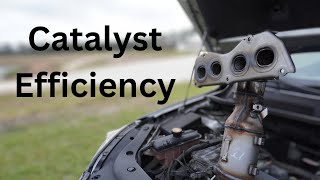
How to confirm: After confirming O2 sensors are working and there are no exhaust leaks, the converter is the default culprit. An infrared thermometer can be used to measure the inlet and outlet temperatures; a working converter should be significantly hotter at the outlet. A downstream O2 sensor graph that mimics the upstream sensor's fluctuations on a scan tool is a strong indicator of a failed converter.
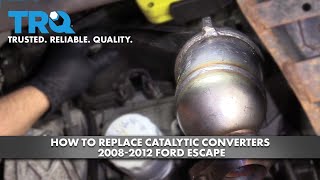
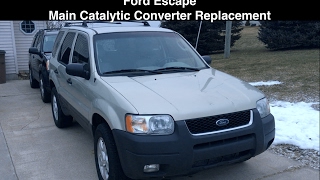
Typical fix: Replace the catalytic converter and exhaust manifold assembly. 🎬 Watch: Step-by-step guide to replacing the catalytic converter assembly. It is highly recommended to replace both oxygen sensors at the same time to ensure proper system operation and avoid a repeat failure.
Est. part cost: $250-$600 for aftermarket, $700+ for OEM. - Faulty Downstream Oxygen (O2) Sensor 🟡 Medium Probability → Shop Oxygen Sensor O2 sensors are wear items that degrade over time. A lazy or failed downstream sensor can send incorrect data to the PCM, falsely triggering a P0420 code. It is a very common misdiagnosis to replace the converter when only the sensor was bad.
How to confirm: Use a scan tool to graph the voltage of the downstream O2 sensor (Bank 1, Sensor 2). A healthy sensor should show a relatively steady, flat voltage on a warm engine at steady RPM. If it fluctuates rapidly like the upstream sensor or is stuck at a certain voltage, it is likely faulty.
Typical fix: Replace the downstream oxygen sensor (Bank 1, Sensor 2).
Est. part cost: $50-$120 depending on brand (Bosch, Denso, Motorcraft). - Exhaust System Leak ⚪ Low Probability Rust and corrosion can cause cracks or gasket failures in the exhaust manifold or pipes, especially in regions that use road salt. A leak between the upstream and downstream O2 sensors can allow oxygen to enter the exhaust, skewing the downstream sensor's reading and triggering a false P0420.
How to confirm: Visually inspect the exhaust manifold and the exhaust pipe between the two O2 sensors for black soot marks, which indicate a leak. You can also have a helper temporarily block the tailpipe while the engine is running to make leaks more audible. A smoke test is the most definitive way to find small leaks.
Typical fix: Repair the leak. This may involve replacing a gasket, welding a crack, or replacing the leaking section of pipe.
Est. part cost: $20-$200 depending on the nature of the repair.
Rare But Worth Checking
- Engine Misfire or Fuel Mixture Issue: If you have other codes like P030x (misfire) or P0171/P0172 (fuel trim), these MUST be addressed first. An engine running rich or misfiring will dump unburned fuel into the exhaust, which will quickly overheat and destroy a new catalytic converter. NHTSA ODI #11022308 notes that P0420 can be triggered by engine misfires, vacuum leaks, or even engine oil leakage into the exhaust.
Diagnosis Steps
- Scan for other DTCs. If any misfire (P030x) or fuel trim (P017x, P209x) codes are present, diagnose and fix them first as they are the likely root cause of catalyst damage. NHTSA ODI #11637488 describes a vehicle where P0420 appeared alongside evaporative emission codes P0456 and P1450.
- With the engine cool, perform a thorough visual inspection of the exhaust system from the manifold to the downstream O2 sensor. Look for any signs of cracks, rust holes, or black soot that would indicate a leak.
- Using a scan tool with live data capability, bring the engine to operating temperature and hold a steady 2500 RPM.
- Graph the voltage signals from the upstream (B1S1) and downstream (B1S2) oxygen sensors. The upstream sensor should fluctuate rapidly between approximately 0.1V and 0.9V. A healthy downstream sensor should show a much steadier, flatter voltage, typically above 0.5V.
- If the downstream sensor's graph mimics the upstream sensor's rapid fluctuations, it confirms the catalytic converter is not storing oxygen and is likely faulty. NHTSA ODI #11270917 reports an instance where the P0420 code indicated the catalytic converter was operating under threshold, with the check engine light turning on and off periodically.
- If the downstream sensor's voltage is flat but very low (e.g., <0.2V) or very high (e.g., >0.8V), or not responding at all, the sensor itself is likely bad.
- If no definitive conclusion can be made from the sensor data, consider using an infrared thermometer to check the converter's temperature. The outlet pipe should be at least 100°F (38°C) hotter than the inlet pipe. If it's not, the catalytic reaction is not occurring.
- If all other components test good, the catalytic converter is the cause and should be replaced.
Parts You'll Likely Need
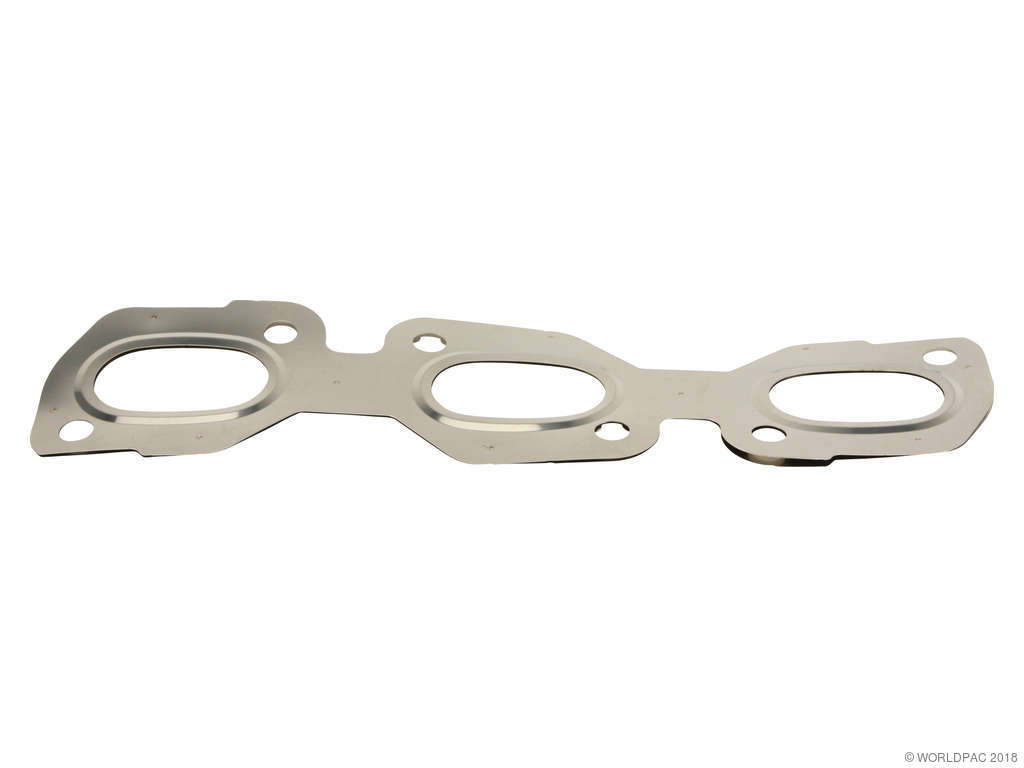
- Catalytic Converter / Exhaust Manifold Assembly
(OEM #9L8Z-5G232-C (replaces 9L8Z-5E212-G), AL8Z-5E212-G)— This is the most common failure point for a P0420 code on an older Escape Hybrid due to normal aging and wear. The original part number 9L8Z-5E212-G was superseded by 9L8Z-5G232-C.
Trusted brands: Motorcraft (OEM), Walker Exhaust, MagnaFlow, AP Exhaust, Eastern Catalytic
OEM price range: $700-$1000+
Aftermarket price range: $250-$600 - Downstream Oxygen Sensor (Bank 1, Sensor 2)
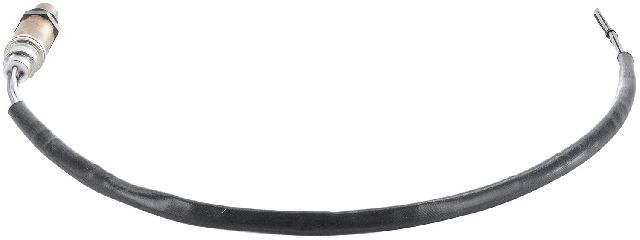
(OEM #Motorcraft DY-1153 (BE5Z-9G444-B))— This sensor is responsible for reporting the converter's efficiency. It can fail or become 'lazy' with age, sending incorrect readings and causing a false P0420 code. It's a common misdiagnosis and a wise part to test or replace before the expensive converter.
Trusted brands: Motorcraft (OEM), Denso (Part No. 234-4490), Bosch (Part No. 15719), NGK/NTK
OEM price range: $80-$120
Aftermarket price range: $50-$90
Related Codes That Often Appear With This One
- P0136 — This code indicates a direct fault with the downstream O2 sensor circuit (Bank 1, Sensor 2), which could be the root cause of the P0420 reading.
- P0300-P0304 — These are cylinder misfire codes. A misfire allows unburned fuel to enter the exhaust, which can overheat and damage the catalytic converter, leading to the P0420 code.
- P0171 / P0172 — These codes indicate a lean (P0171) or rich (P0172) fuel mixture. An improper air/fuel ratio over time can degrade the catalytic converter's efficiency and cause it to fail.
- P1450 / P0456 — As noted in NHTSA ODI #11637488, evaporative system faults can sometimes be present alongside catalyst efficiency codes.
Technical Service Bulletins (TSBs) & Recalls
- While no TSBs are specifically for P0420 on the 2008-2012 Escape Hybrid, TSB 22-2260 for other Ford models outlines a 'sulfur removal cycle' to potentially clean a contaminated converter before replacement, which could be attempted as a last resort.
Platform-Specific Known Issues
- Owner experiences on forums confirm that while the catalytic converter is the most frequent cause, many have successfully resolved the P0420 code by first replacing the downstream O2 sensor, which had failed.
- Purge Valve Interference: → Shop Vapor Canister In related Ford platforms, a faulty purge valve has been linked to P0420 codes. NHTSA ODI #11093351 describes a vehicle taken in for a P0420 code where the purge valve was a primary concern, while NHTSA ODI #11089863 reports a P0420 fault code that was initially associated with rough idling and stalling at stops.
Mechanic-Grade Diagnostic Values
- Downstream O2 Sensor (B1S2) Voltage — expected: Relatively steady voltage, typically between 0.5V and 0.8V on a fully warm engine at steady RPM.. Failure: Voltage fluctuates rapidly, mimicking the upstream (B1S1) sensor's 0.1V-0.9V switching pattern. This indicates the catalyst is not storing oxygen.
- Upstream O2 Sensor (B1S1) Voltage — expected: Rapidly fluctuates between approximately 0.1V and 0.9V as the PCM adjusts the air-fuel ratio.. Failure: A slow, lazy, or flat-lined signal indicates a failing upstream sensor, which can affect fuel control and indirectly lead to catalyst damage.
- Mode $06 Catalyst Efficiency Test (TID $01, CID $01 or MID $21) — expected: The test value should be below the maximum threshold specified in the scan tool data. A value near 0.0 is ideal.. Failure: The test value exceeds the maximum limit, or approaches a ratio of 1.0, confirming the PCM's diagnosis of low efficiency.
Hidden / Shadow Codes Worth Checking
- Mode $06, TID $01/CID $01 (pre-CAN) or MID $21 (CAN): This is not a trouble code, but the raw data from the PCM's internal Catalyst Efficiency Monitor test. It provides a numerical value of the catalyst's performance against a programmed threshold. A failing value in Mode $06 is what ultimately triggers the P0420 DTC. (see via A professional scan tool or advanced DIY software like FORScan that can access Mode $06 diagnostic data.)
Scan Tool Commands That Help
- FORScan / Ford IDS: Live Data Graphing (PIDs: O2S11, O2S12) — This is the primary diagnostic step. Graphing the upstream and downstream O2 sensors simultaneously allows for a visual confirmation of catalyst efficiency. A downstream sensor that mirrors the upstream sensor's activity points to a failed converter.
- FORScan / Ford IDS: Reset All Adaptations / Reset KAM (Keep Alive Memory) — After replacing the catalytic converter or oxygen sensors, this function should be used to clear the PCM's learned fuel trim and emissions monitoring values. This forces the computer to relearn using the new components, ensuring accurate operation and preventing a false-positive return of the P0420 code.
- FORScan / Ford IDS: Catalyst Monitor Drive Cycle — After a repair, the vehicle must be driven in a specific way to allow the PCM to run its internal catalyst efficiency test. A scan tool can initiate and monitor the status of this drive cycle to confirm that the repair was successful and the P0420 code will not return.
Wiring & Ground Locations
- G101 — Located on the rear of the engine for the 2.5L model.. This is a primary engine ground. A poor connection here can cause erratic behavior in various engine sensors, including the oxygen sensors, potentially leading to incorrect readings and false codes.
- G109 — Located on the firewall in the rear of the engine compartment.. This ground is used by components in the engine control system. Corrosion or a loose connection can introduce electrical noise and interfere with sensor signals processed by the PCM.
- PCM Connector C175B — This is one of the main connectors at the Powertrain Control Module (PCM).. The signal and heater circuit wires for both oxygen sensors run through this connector to the PCM. Any corrosion or pin damage at this specific connector can directly cause O2 sensor circuit faults (like P0136) or the catalyst efficiency code P0420.
Real Owner Repair Stories
- Escape-City.com forum user (2009 Ford Escape Hybrid, ~150,000 miles) — Check Engine Light with code P0420.
❌ Tried (didn't work) Clearing the code, but it returned within a week.
✅ What actually fixed it The owner replaced only the downstream (Bank 1, Sensor 2) oxygen sensor. After replacement and clearing the code, the P0420 did not return, confirming the sensor was the sole cause of the problem, not the catalytic converter. - Ford Truck Enthusiasts forum user (2010 Ford Escape 2.5L (Non-Hybrid, but same engine block and emissions layout)) — P0420 code present.
❌ Tried (didn't work) Using catalytic converter cleaner additives., Initially suspecting the catalytic converter itself.
✅ What actually fixed it The problem was traced to a small crack in the exhaust manifold, which is integrated with the catalytic converter on this engine. The crack allowed unmetered oxygen to enter the exhaust stream before the downstream O2 sensor, causing the false P0420 code. Replacing the entire manifold/converter assembly resolved the issue.
"I Checked Everything" — The Actual Cause
- A failing PCV (Positive Crankcase Ventilation) system can cause an internal vacuum leak that won't be found with a smoke test. This unmetered air can lean out the fuel mixture, forcing the PCM to compensate by adding fuel (positive fuel trims). Over time, this can affect the O2 sensor readings and potentially trigger a P0420 code, even with a functional converter and no external exhaust leaks.
When the Usual Fixes Don't Work
- While the catalytic converter is the most common failure, a significant number of owners have reported fixing the P0420 code by only replacing the downstream oxygen sensor. Given the much lower cost and easier replacement of the sensor compared to the manifold-converter assembly, it is a highly recommended first step for DIY diagnosis, especially on high-mileage vehicles where the sensor is likely nearing the end of its service life anyway.
OEM Part Supersession History
9L8Z-5E212-G→9L8Z-5G232-C— This is a standard part number update by Ford. The new part is a direct replacement for the old one.BE5Z-9G444-B (for O2 Sensor)→Motorcraft DY-1153 is the service part number.— Part number consolidation for service and retail channels.
Diagnostic Flowchart
Other Known Issues on This Vehicle
Issues unrelated to this code that are worth knowing about as an owner of this generation:
- Motor Electronics Coolant (MECS) Pump Failure 🔴 High — Very common on 2005-2008 models, leading to a recall. Still a known failure point on 2009-2012 models. Failure causes the hybrid electronics to overheat, leading to a 'Stop Safely Now' warning and powertrain shutdown. (Ref: Recall 14S19 (NHTSA 14V-526) for 2005-2008 models.)
- A/C Blend Door Actuator Failure 🟡 Low — Common failure. Owners report a clicking or ticking noise from the dashboard, and/or the inability to control cabin temperature or defrost functions.
- Electronic Throttle Body (ETB) Failure 🟠 Medium — Can cause intermittent loss of power, stumbling, or stalling. Often requires cleaning or replacement of the throttle body assembly.
- HV Battery Cooling Fan Failure 🟠 Medium — The two fans inside the high-voltage battery pack can fail, leading to battery overheating, reduced EV range, and poor performance, especially in hot weather. Often presents with codes like P0A81 or P0A96.
- Rear Quarter Panel / Wheel Arch Rust 🟠 Medium — Extremely common in regions using road salt. The area inside the rear wheel wells and on the quarter panels is prone to severe rust-through.
Used vs. New Parts: Buying Guide for This Vehicle
When a used part is the smart pick: A used part is generally not recommended for this repair. Catalytic converters and oxygen sensors are wear items with a finite lifespan. A used catalytic converter from a junkyard has an unknown history and may fail soon after installation, causing you to do the job twice.
Donor-vehicle mileage cap: roughly under 60000 miles for the part to have meaningful remaining life.
What to inspect on the donor part:
- For a catalytic converter, inspect for any signs of physical damage, cracks, or rattling, which indicates the internal substrate is broken.
- Ensure the donor vehicle was not in a front-end collision that could have damaged the exhaust manifold.
- Check that the O2 sensor bungs and exhaust flange studs are intact and not stripped or excessively rusted.
OEM-only on this vehicle (don't cheap out):
- Catalytic Converter: While expensive, the OEM Motorcraft converter is designed specifically for the vehicle's emissions calibration. Many aftermarket converters, especially budget-priced ones, have a lower loading of precious metals and may fail to keep the P0420 code away, particularly in states with strict emissions testing (CARB states).
Aftermarket brands forum-validated for this vehicle:
- Oxygen Sensors: Denso and NTK (NGK) are often the original equipment manufacturers for Ford and are considered highly reliable replacements.
- Catalytic Converters: If OEM is not an option, brands like MagnaFlow and Walker are reputable aftermarket choices that generally offer better performance and longevity than no-name online parts.
Brands owners have reported issues with on this vehicle:
- Unbranded, low-cost catalytic converters sold on platforms like eBay or Amazon should be avoided. They are notorious for failing within a year and not meeting the efficiency requirements of the PCM, leading to a quick return of the P0420 code.
Real Owner Stories
Aggregated from forums and TSBs cited above. Mileages and costs reflect what owners reported in those sources.
2009 Ford Escape Hybrid 2.5L
Symptoms: The Check Engine Light was on and the owner was debating whether to replace the catalytic converter or just the sensors.
What fixed it: Replacing the downstream O2 sensor resolved the P0420 code.
Source hint: vehicle_specific_issues
2010 Ford Escape Hybrid 2.5L
Symptoms: Owner sought advice on whether the P0420 code was definitely the converter or if sensor data should be checked first.
What fixed it: Checking O2 sensor data before replacing the converter as recommended by community members.
Source hint: Reddit (r/fordescape)
Documented NHTSA Reports
- An owner reported in NHTSA ODI #11022308 that their vehicle displayed a P0420 code due to a defective catalytic converter, engine misfire, vacuum leak, or engine oil leakage into the exhaust, resulting in very high gas consumption.
- NHTSA ODI #11270917 describes a situation where the P0420 code indicated the catalytic converter was operating under threshold, causing the check engine light to turn on and off periodically.
- In NHTSA ODI #11637488, an owner noted that the P0420 code appeared alongside P0456 and P1450, even though the vehicle was not listed in a specific recall.
- NHTSA ODI #11093351 mentions a vehicle taken for service due to a P0420 code, where a problem with the catalytic converter was identified following concerns with the purge valve.
- According to NHTSA ODI #11089863, a P0420 fault code was documented in a vehicle experiencing rough idle and stalling when coming to a stop.
Related OBD-II Codes
Frequently Asked Questions
Can I use TSB 22-2260 to fix the P0420 code on my 2010 Ford Escape Hybrid?
Is it true that the catalytic converter on the 2.5L Atkinson-Cycle engine is harder to replace than on other cars?
I have a P0420 code; should I replace the catalytic converter or the O2 sensor first?
How much should I expect to pay for a new catalytic converter for my 2008-2012 Escape Hybrid?
Could a leak in my exhaust system be causing this code?
Does this P0420 issue also affect the Mercury Mariner Hybrid or Mazda Tribute Hybrid?
Helpful Videos

We Have This Part in Stock


The information in this article is provided for general reference and educational purposes only. Vehicle specifications, procedures, and part compatibility can vary by production date, trim level, and region. Always consult your vehicle's factory service manual and verify part numbers before purchasing or performing repairs. Safety-critical components such as airbags, seat belts, and braking systems should be installed by a qualified professional.
- Ford Escape Hybrid:
- 🧭 Diagnostic Flowchart
- 🎬 Helpful Videos
- 🛍️ Shop This Part
- What's Unique About the 2008-2012 Ford Escape Hybrid
- Symptoms You May Notice
- Most Likely Causes
- Rare But Worth Checking
- Diagnosis Steps
- Parts You'll Likely Need
- Related Codes That Often Appear With This One
- Technical Service Bulletins (TSBs) & Recalls
- Platform-Specific Known Issues
- Mechanic-Grade Diagnostic Values
- Hidden / Shadow Codes Worth Checking
- Scan Tool Commands That Help
- Wiring & Ground Locations
- Real Owner Repair Stories
- "I Checked Everything" — The Actual Cause
- When the Usual Fixes Don't Work
- OEM Part Supersession History
- Other Known Issues on This Vehicle
- Used vs. New Parts: Buying Guide for This Vehicle
- Real Owner Stories
- 2009 Ford Escape Hybrid 2.5L
- 2010 Ford Escape Hybrid 2.5L
- Documented NHTSA Reports
- Related OBD-II Codes
- Frequently Asked Questions
- 🎟️ Get 5% Off