

P0420 on 2020-2025 Ford Explorer 2.3L EcoBoost: Causes, TSBs, and Fixes
On a 2020-2025 Explorer with the 2.3L engine, P0420 is often caused by a PCM software error that requires a dealer update per Ford TSBs. Before replacing the expensive catalytic converter, have a dealer check for software updates first. If no software fix is available, the converter itself, an O2 sensor, or an exhaust leak are the next most likely causes.
- Always check with a Ford dealer for a PCM software update first; it's a known issue for this vehicle and could be a simple fix.
- Do not replace the catalytic converter without ruling out software issues, exhaust leaks, and faulty oxygen sensors first.
- If you have any other engine codes, especially for misfires (P030x), they must be resolved before addressing the P0420 to prevent damaging a new converter.
- A healthy downstream O2 sensor should have a steady voltage on a scan tool, while a bad converter will cause it to fluctuate like the upstream sensor.
What's Unique About the 2020-2025 Ford Explorer
For this specific generation of Ford Explorer, a P0420 code does not automatically mean the catalytic converter has failed. Ford has issued Technical Service Bulletins (TSBs) for 2020-2023 Explorers with the 2.3L EcoBoost engine, acknowledging that the factory software calibration can be too sensitive, leading to a false P0420 code. For example, TSBs 25-2072 and 25-2188 have been released for 2022-2025 models to address this exact issue. As a result, the first and most critical diagnostic step is to check with a Ford dealer for a potential PCM software update, which can be a simple fix compared to replacing expensive hardware.
Symptoms You May Notice
- Check Engine Light is on
- Reduced engine power or sluggish acceleration, especially if the converter is clogged
- A rotten egg or sulfur smell from the exhaust, indicating the converter is struggling
- Rattling noises from underneath the vehicle if the internal catalyst honeycomb has broken apart
- Replacing the catalytic converter without first checking for PCM software updates. This is the most common and expensive mistake on this specific vehicle.
- Replacing the upstream (Air/Fuel Ratio) oxygen sensor. The P0420 code is based on the downstream sensor's reading, and while a bad upstream sensor can cause other issues, it's not the direct cause of this code.
Most Likely Causes
- Powertrain Control Module (PCM) Software Error 🔴 High Probability Ford has issued multiple TSBs for 2020-2025 Explorers with the 2.3L EcoBoost engine for an incorrectly illuminated check engine light with DTC P0420 due to PCM software logic. TSBs 25-2072 and 25-2188 are specific examples for newer models.
How to confirm: Contact a Ford dealership with your vehicle's VIN. They can check their system (OASIS) for any open TSBs or software updates applicable to your specific vehicle.
Typical fix: Reprogramming the PCM with the latest software version. This must be done by a dealer or a qualified shop with Ford's diagnostic tools (FDRS).
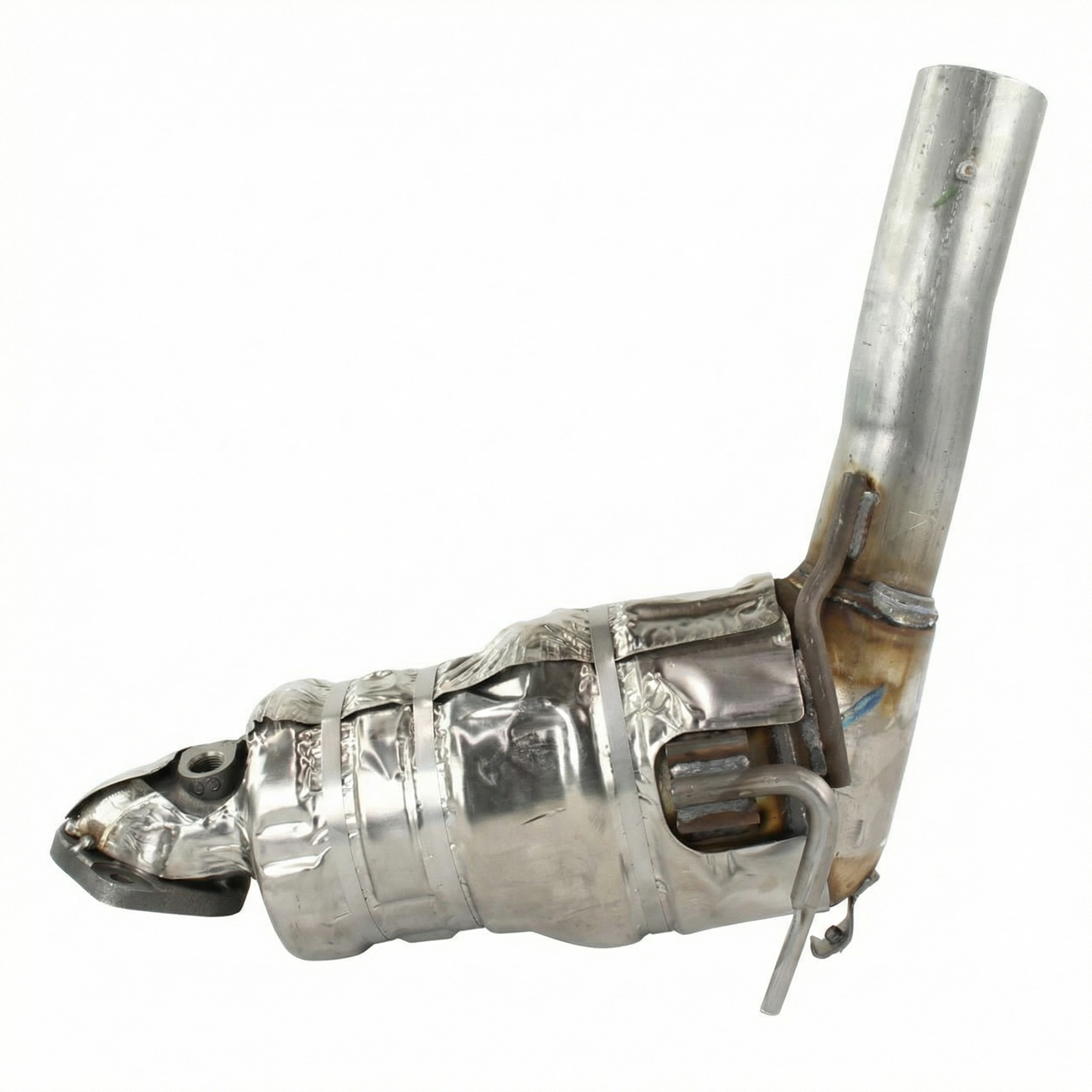
Est. part cost: $0-$200 - Failed Catalytic Converter 🟡 Medium Probability → Shop Catalytic Converter While software is a primary suspect, the catalytic converter can still fail. Engine issues like misfires or running rich can send unburned fuel into the exhaust, overheating and damaging the converter's internal structure. Coolant leaks from other engine issues can also poison the catalyst materials.
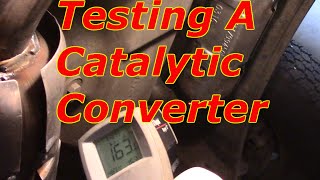
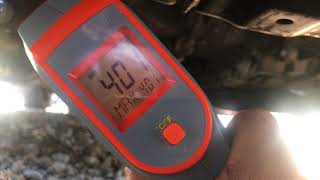
How to confirm: A technician can use a scan tool to monitor the upstream and downstream O2 sensor data. A healthy converter will show a steady downstream O2 sensor reading, while a failed one will show it fluctuating similarly to the upstream sensor. An infrared thermometer can also be used to check the inlet and outlet temperatures; the outlet should be significantly hotter (at least 100°F) than the inlet.
Typical fix: Replace the Bank 1 catalytic converter. It is critical to resolve any underlying engine issues (misfires, fuel system problems) before replacing the converter to prevent damaging the new part.
Est. part cost: $700-$1500 - Faulty Downstream Oxygen (O2) Sensor ⚪ Low Probability → Shop Oxygen Sensor O2 sensors are wear items and can fail over time, sending incorrect data to the PCM. However, it is more often misdiagnosed as the cause of P0420 when the converter or software is the real issue.
How to confirm: A technician can test the sensor's response time and voltage output with a scan tool. A healthy downstream sensor should show a relatively stable voltage (e.g., >0.6V) when the engine is warm and at a steady RPM. A failed or lazy sensor might be stuck or show slow, erratic readings.
Typical fix: Replace the Bank 1, Sensor 2 (downstream) oxygen sensor. The Motorcraft part number is DY-160.
Est. part cost: $80-$150 - Exhaust Leak ⚪ Low Probability
How to confirm: Visually inspect the exhaust system from the engine to the tailpipe for cracks, rust, or loose connections, especially around the manifold and converter flanges. A smoke test can also be performed to pinpoint small leaks. An exhaust leak can draw in outside air, skewing the O2 sensor readings and tricking the PCM into setting a P0420 code.
Typical fix: Repair the leak by replacing the gasket, tightening bolts, or welding the damaged section.
Est. part cost: $20-$300
Rare But Worth Checking
- Engine Misfires or Fuel System Issues: If you have other codes like P0300-P0308 (misfires) or fuel trim codes (P0171, P0172), these must be addressed first. An engine running rich or misfiring will send unburned fuel into the exhaust, which will quickly destroy a new catalytic converter.
- High Sulfur Fuel: In some cases, fuel with high sulfur content can temporarily coat the catalyst materials and reduce efficiency, triggering a P0420. Ford has issued TSBs for other models (like TSB 21-2381 for the Expedition) with a 'de-sulfation' procedure that involves a specific driving cycle to burn off the deposits.
Diagnosis Steps
- Check for TSBs: Contact a Ford dealer with your VIN to see if any software updates (like those mentioned in TSBs 25-2072 and 25-2188 for 2022-2025 models) apply to your vehicle for a P0420 code. This should always be the first step.
- Scan for Other Codes: Use an OBD-II scanner to check for any other pending or active codes. If misfire (P030x) or fuel system (P0171/P0172) codes are present, they must be diagnosed and repaired first.
- Inspect for Exhaust Leaks: Visually inspect the entire exhaust system, paying close attention to the exhaust manifold, gaskets, and the flanges before and after the catalytic converter. Listen for any unusual hissing or ticking sounds.
- Analyze O2 Sensor Data: Using a capable scan tool, graph the voltage of the upstream (Bank 1 Sensor 1) and downstream (Bank 1 Sensor 2) oxygen sensors. On a warm, running engine, the upstream sensor should fluctuate rapidly. The downstream sensor should hold a relatively steady, high voltage (e.g., >0.6V). If the downstream sensor mimics the upstream sensor's fluctuations, the catalytic converter is likely not working.
- Test the Downstream O2 Sensor: If the converter appears to be working based on sensor data, test the downstream O2 sensor itself for proper response. A lazy or failed sensor can also cause this code.
- Check Converter Temperature: Use an infrared thermometer to measure the temperature of the exhaust pipe going into the catalytic converter and coming out. The outlet temperature should be at least 100°F hotter than the inlet, indicating the converter is working.
- If all other possibilities are ruled out, the catalytic converter has likely failed and requires replacement.
Parts You'll Likely Need
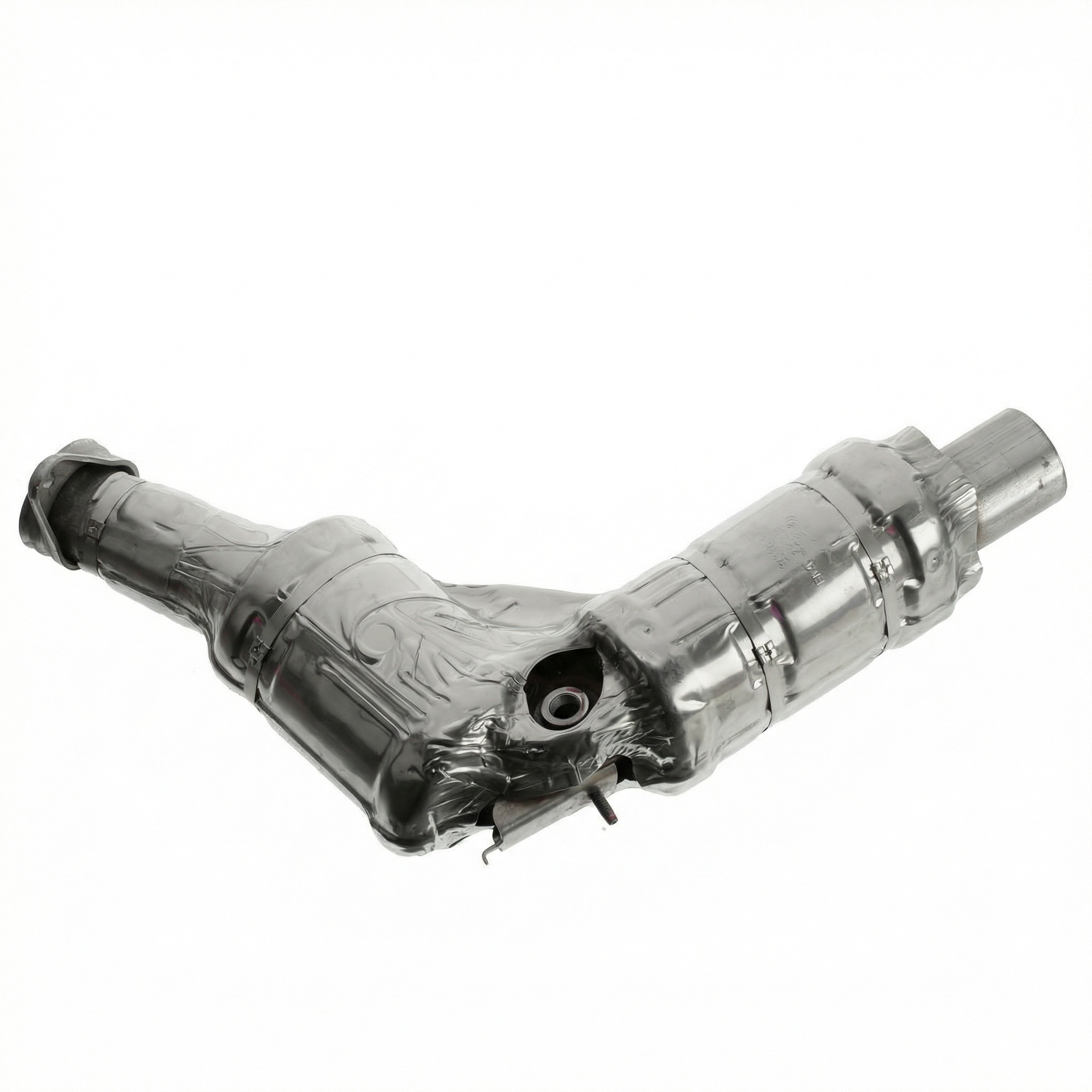
- Catalytic Converter (Bank 1) — This is the direct cause of the code if it has failed internally due to age, contamination, or damage from engine issues. It is often replaced after software issues and O2 sensors have been ruled out.
Trusted brands: Motorcraft, Walker Exhaust, MagnaFlow
OEM price range: $700-$1400
Aftermarket price range: $400-$900 - Downstream Oxygen Sensor (Bank 1, Sensor 2)
(OEM #DY-160 (replaces DY-1526, JD8Z-9G444-B))— A faulty sensor can send incorrect data, falsely triggering the P0420 code. It is sometimes replaced as a diagnostic step or alongside a new converter, but it is a less common cause than the converter itself or a software issue.
Trusted brands: Motorcraft, Bosch, Denso, NTK
OEM price range: $100-$150
Aftermarket price range: $50-$100 - Upstream Oxygen Sensor (Bank 1, Sensor 1)
(OEM #DY-1537 (Ford part L1MZ-9F472-E))— While not a direct cause of P0420, a faulty upstream sensor can cause incorrect fuel mixture, leading to conditions that can damage the catalytic converter over time. It's often replaced as preventative maintenance during a converter replacement.
Trusted brands: Motorcraft, Bosch, Denso
OEM price range: $90-$130
Aftermarket price range: $60-$100
Technical Service Bulletins (TSBs) & Recalls
- TSB 25-2072: Addresses incorrectly illuminated MIL with DTC P0420 on 2022-2025 models.
- TSB 25-2188: Also addresses incorrectly illuminated MIL with DTC P0420 on 2022-2025 models.
- TSB 23-2176: Addresses delayed reverse engagement on 2020-2022 2.3L models via a PCM reprogram, which may be bundled with other updates.
Platform-Specific Known Issues
- Ford has issued TSBs for some 2020-2023 Explorers with the 2.3L EcoBoost engine due to overly sensitive PCM software causing false P0420 codes. Specifically, TSBs 25-2072 and 25-2188 address this for 2022-2025 models.
Mechanic-Grade Diagnostic Values
- Downstream O2 Sensor (Bank 1, Sensor 2) Voltage — expected: A healthy catalytic converter should result in a relatively stable and high voltage, fluctuating slowly between 0.6 and 0.8 volts, when the engine is warm and held at a steady 2,000 RPM.. Failure: If the voltage fluctuates rapidly between 0.2 and 0.8 volts, mimicking the upstream sensor's activity, the catalytic converter is not storing oxygen and is considered defective.
- Long-Term Fuel Trim (LTFT) — expected: At idle and various steady RPMs (1500, 2000, 2500), the LTFT value should be within ±10%.. Failure: Values consistently outside of the ±10% range indicate a potential vacuum leak, fuel delivery issue, or other engine problem that must be fixed before addressing the P0420, as it could be the root cause of catalyst damage.
- Catalyst Monitor Test (Mode $06) — expected: The PCM calculates a 'switch ratio' or 'index ratio' by comparing the switching frequency of the upstream O2 sensor to the downstream one. A ratio near 0.0 indicates high efficiency.. Failure: As the catalyst fails, the downstream sensor begins to switch more rapidly, causing the ratio to approach 1.0. When this ratio exceeds a calibrated threshold in the PCM, the P0420 code is set.
Hidden / Shadow Codes Worth Checking
- P008A: Low Pressure Fuel System Pressure - Too Low. TSB 25-2072 specifically notes that this code may appear alongside P0420 on some 2022-2025 2.3L models. (see via A standard OBD-II scanner. The key insight is that this code is not a separate fuel system problem, but is caused by the same PCM software logic error that triggers the false P0420.)
Scan Tool Commands That Help
- Ford IDS / FDRS: PCM Reprogramming / Module Programming — This function is required to apply the software update specified in TSBs 25-2072 and 25-2188. This should be the first step in diagnosis for a P0420 on a 2022-2025 model to avoid unnecessary parts replacement.
Wiring & Ground Locations
- O2 Sensor Circuit Grounds — Specific ground point locations (e.g., G104, G105) for the O2 sensor circuits on the 2020-2025 Explorer are not readily available in public-facing documents.. A poor ground connection for an O2 sensor can cause erratic voltage readings, potentially tricking the PCM into setting a false P0420 code. Technicians typically rely on paid subscription services (like Alldata, Mitchell1) or Ford's official service information to obtain vehicle-specific wiring and ground diagrams.
Real Owner Repair Stories
- Consensus from multiple automotive tech sites and TSBs (2022-2025 Ford Explorer 2.3L EcoBoost) — Check Engine Light with code P0420, with no other noticeable running issues.
❌ Tried (didn't work) Replacing the downstream oxygen sensor., Using a catalytic converter cleaner additive., Getting a quote for an expensive catalytic converter replacement.
✅ What actually fixed it The definitive fix for many owners has been taking the vehicle to a Ford dealership to have the PCM reprogrammed according to Technical Service Bulletins 25-2072 or 25-2188. The software update corrects the overly sensitive monitoring logic, resolving the code without any parts being replaced.
"I Checked Everything" — The Actual Cause
- A P0420 code can be caused by a pre-catalyst exhaust leak, such as a cracked exhaust manifold or a failed manifold-to-turbo gasket. This leak allows unmetered oxygen into the exhaust stream before the upstream O2 sensor, skewing its readings and causing the PCM to misinterpret catalyst efficiency. A standard smoke test performed at the tailpipe may not pressurize the system enough to reveal such a leak, which is often best found by a cold-start visual and auditory inspection for ticking noises that diminish as the metal expands.
Model Year Variations Within This Range
- 2022-2025: These models are specifically called out in TSBs 25-2072 and 25-2188 for a false P0420 code caused by PCM software logic. The primary fix is a dealer-installed software update, not a hardware replacement.
- 2025+: For the 2025 model year, Ford updated the 2.3L EcoBoost engine to include a dual-injection system (both port and direct injection). This was primarily done to combat carbon buildup on intake valves, an issue inherent to direct-injection-only engines (2020-2024 models). While not a direct fix for P0420, improved engine health can lead to longer catalyst life.
- 2020-2021: These early years of the generation had more reported issues and numerous software updates for various modules. While not specifically named in the primary P0420 TSBs, it's possible that a general PCM update for another issue could resolve overly sensitive catalyst monitoring.
Diagnostic Flowchart
Other Known Issues on This Vehicle
Issues unrelated to this code that are worth knowing about as an owner of this generation:
- Rear Axle Mounting Bolt Fracture 🔴 High — Affects 2020-2022 models, with over 238,000 vehicles recalled. Can lead to loss of power or vehicle rollaway. (Ref: NHTSA 23V-675 (Ford recall 23S55). Previous attempts were 22V-255 and 23V-199.)
- 360-Degree Camera System Failure 🟠 Medium — Widespread on 2020-2023 models, resulting in a blue or black screen. Over 380,000 vehicles recalled across Explorer and Aviator lines. (Ref: Recall 23S23 (supersedes 21S44).)
- 10R60 Transmission Issues 🟠 Medium — Owners of 2020-2022 models report harsh shifting, delayed reverse engagement, or complete failure. (Ref: TSB 23-2176 for delayed reverse; other TSBs like 23-2123 exist for general shift quality issues.)
Used vs. New Parts: Buying Guide for This Vehicle
When a used part is the smart pick: A used OEM catalytic converter from a low-mileage, verified-running donor vehicle can be a cost-effective alternative to a new OEM unit. This is only recommended AFTER a dealer has confirmed no software updates are available or the update has already been performed and did not fix the code.
Donor-vehicle mileage cap: roughly under 50000 miles for the part to have meaningful remaining life.
What to inspect on the donor part:
- Verify the donor vehicle's mileage and check for collision damage that could have cracked the catalyst's ceramic core.
- Inspect the part for any signs of external damage, heavy rust, or cut sensor wires.
- Look into the converter inlet/outlet; the honeycomb structure should be intact and not melted or clogged.
- Avoid parts from vehicles that had known engine issues (like head gasket failure) as the converter could be contaminated.
OEM-only on this vehicle (don't cheap out):
- Catalytic Converter: While not strictly 'OEM-only', it is highly recommended. Many aftermarket converters, especially budget options, lack the precious metal loading required by modern emissions systems and may fail to keep the P0420 code away for long, even if they physically fit.
Aftermarket brands forum-validated for this vehicle:
- For O2 Sensors: Motorcraft (OEM), NTK, Denso, Bosch are widely trusted.
- For Catalytic Converters: MagnaFlow and Walker are established brands that offer direct-fit options, but ensure you purchase their 'OEM Grade' or state-compliant (CARB) versions, not just the cheapest federal-spec model.
Brands owners have reported issues with on this vehicle:
- Unnamed, no-brand catalytic converters sold on online marketplaces. These frequently use minimal catalyst materials and are a common source of repeat P0420 failures.
Real Owner Stories
Aggregated from forums and TSBs cited above. Mileages and costs reflect what owners reported in those sources.
2022 Ford Explorer 2.3L EcoBoost
Symptoms: Check engine light illuminated with DTC P0420; no noticeable driving issues.
What fixed it: Reprogramming the PCM with the latest software version as per TSB 25-2072.
Source hint: TSB 25-2072
2021 Ford Bronco 2.3L
Symptoms: P0420 code triggered; similar behavior to the Explorer platform-mate.
What fixed it: Replacement of the catalytic converter or faulty oxygen sensors.
Source hint: 2021-present Ford Bronco relationship in article context
Related OBD-II Codes
Frequently Asked Questions
My 2023 Explorer 2.3L has a P0420 code; is there a software update for this?
Can I use a used catalytic converter to fix my 2020 Explorer?
What is the specific Motorcraft part number for the downstream O2 sensor on my 2.3L EcoBoost?
Could my P0420 code be related to the transmission shifting issues I'm having?
How can I tell if my Explorer's catalytic converter is actually failed or if it's just a sensor?
Helpful Videos

We Have This Part in Stock

The information in this article is provided for general reference and educational purposes only. Vehicle specifications, procedures, and part compatibility can vary by production date, trim level, and region. Always consult your vehicle's factory service manual and verify part numbers before purchasing or performing repairs. Safety-critical components such as airbags, seat belts, and braking systems should be installed by a qualified professional.
- Ford Explorer:
- 🧭 Diagnostic Flowchart
- 🎬 Helpful Videos
- 🛍️ Shop This Part
- What's Unique About the 2020-2025 Ford Explorer
- Symptoms You May Notice
- Most Likely Causes
- Rare But Worth Checking
- Diagnosis Steps
- Parts You'll Likely Need
- Technical Service Bulletins (TSBs) & Recalls
- Platform-Specific Known Issues
- Mechanic-Grade Diagnostic Values
- Hidden / Shadow Codes Worth Checking
- Scan Tool Commands That Help
- Wiring & Ground Locations
- Real Owner Repair Stories
- "I Checked Everything" — The Actual Cause
- Model Year Variations Within This Range
- Other Known Issues on This Vehicle
- Used vs. New Parts: Buying Guide for This Vehicle
- Real Owner Stories
- 2022 Ford Explorer 2.3L EcoBoost
- 2021 Ford Bronco 2.3L
- Related OBD-II Codes
- Frequently Asked Questions
- 🎟️ Get 5% Off