

P0420 on 2000-2007 Ford Taurus: Catalyst Efficiency Causes and Fixes
P0420 on a 2000-2007 Taurus most often points to a failed catalytic converter, but it's crucial to rule out cheaper fixes first. Always inspect for exhaust leaks and test the oxygen sensors before replacing the expensive converter. Underlying engine issues like misfires or vacuum leaks must be addressed to prevent repeat failure of a new converter.
- P0420 on a 2000-2007 Taurus means the catalytic converter on Bank 1 (firewall side) is not efficient.
- Do not immediately replace the catalytic converter. First, rule out cheaper and simpler problems.
- **Always** inspect for exhaust leaks between the engine and the rear O2 sensor. A smoke test is the best method.
- Use a scan tool to test the oxygen sensors. A lazy or failed downstream (Sensor 2) O2 sensor can cause a false P0420 code.
- If you do replace the converter, make sure any other engine issues (like misfires or rich running conditions) are fixed first, or you will destroy the new converter.
What's Unique About the 2000-2007 Ford Taurus
The 2000-2007 Taurus was equipped with two different 3.0L V6 engines: the older pushrod 'Vulcan' and the more modern DOHC 'Duratec'. While both can experience a P0420 code, the diagnostic approach is similar. These vehicles use a Y-pipe exhaust design with two primary catalytic converters directly off the exhaust manifolds, and sometimes a third converter downstream. Due to the age of these vehicles, catalytic converter failure is common, but so are exhaust leaks from rusted gaskets and flanges, which can easily be misdiagnosed as a bad converter. The Vulcan engine, in particular, is known for issues with its camshaft synchronizer, which can affect timing and fuel mixture, indirectly contributing to converter failure over time.
Symptoms You May Notice
- Check Engine Light is on
- Reduced engine power or sluggish acceleration, especially if the converter is clogged.
- Rotten egg or sulfur smell from the exhaust, indicating the converter has failed.
- Rattling noise from underneath the car if the internal honeycomb structure of the converter has broken apart.
- Inability to accelerate above 30-40 mph if the converter is severely blocked.
- Replacing the catalytic converter without checking for exhaust leaks first. A small leak can trick the O2 sensors and cause a P0420 code.
- Replacing the upstream O2 sensor. While it can be a contributing factor to long-term failure, the P0420 code is calculated based on the downstream O2 sensor's reading. A faulty downstream sensor is a more direct cause of a false code.
- Using a cheap, inefficient aftermarket catalytic converter. Some low-quality converters may not have enough precious metal loading to satisfy the PCM's efficiency test, causing the P0420 code to return shortly after replacement.
Most Likely Causes
- Failing or Failed Catalytic Converter 🔴 High Probability → Shop Catalytic Converter As vehicles age, the precious metals inside the converter degrade, losing their effectiveness. This is the most common cause on high-mileage vehicles, especially if other engine maintenance has been neglected.
How to confirm: Use a scan tool to graph O2 sensor data. If the downstream sensor (Bank 1, Sensor 2) voltage fluctuates rapidly, mirroring the upstream sensor (Bank 1, Sensor 1), the converter is not working. An infrared thermometer can also be used; the outlet of a working converter should be significantly hotter (at least 100°F) than the inlet. If the inlet is hotter, the converter is likely clogged.
Typical fix: Replace the Bank 1 catalytic converter. It is critical to fix the root cause (e.g., misfires, bad sensor) that made the original converter fail.
Est. part cost: $250-$700 for a direct-fit aftermarket unit. - Exhaust System Leak 🟡 Medium Probability Gaskets and flex pipes degrade over time, leading to leaks. Rust is common on vehicles of this age, especially in the salt belt. A leak before the downstream O2 sensor allows outside air to enter the exhaust, skewing sensor readings and triggering a false P0420.
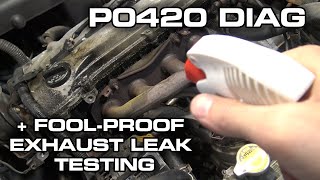
How to confirm: Visually inspect the exhaust system from the engine to the rear O2 sensor for black soot trails, cracks, or holes, particularly around the exhaust manifold and Y-pipe flanges. Listen for a ticking noise on a cold start. A smoke test is the most effective way to find small leaks. 🎬 Watch: How to diagnose P0420 and test for exhaust leaks.
Typical fix: Replace the leaking gasket or repair the cracked pipe section. Exhaust manifold gaskets and flex pipes are common failure points.
Est. part cost: $10-$100 - Faulty Oxygen (O2) Sensor 🟡 Medium Probability → Shop Oxygen Sensor O2 sensors are wear-and-tear items with a finite lifespan. A 'lazy' or biased downstream sensor is a common cause of a false P0420 code, as it is the primary sensor used to measure converter efficiency.
How to confirm: Use a scan tool with live data. If the downstream sensor (Bank 1, Sensor 2) voltage is stuck, flat, or very slow to respond when the engine RPM is changed, the sensor itself is likely faulty. A healthy downstream sensor on a working converter should show a steady voltage, typically above 0.6V, with minimal fluctuation.
Typical fix: Replace the downstream (post-catalyst) oxygen sensor for Bank 1. Using a quality OEM-style sensor from brands like Motorcraft, NTK, or Denso is recommended.
Est. part cost: $40-$90 - Underlying Engine Problems ⚪ Low Probability Problems that cause an overly rich or lean fuel mixture, or engine misfires, will destroy a new catalytic converter quickly by either overheating it or coating it with contaminants. Common issues on this platform like vacuum leaks from PCV hoses or a failing camshaft synchronizer can contribute.
How to confirm: Scan for other trouble codes. Misfire codes (P0300-P0306), fuel trim codes (P0171, P0174), or fuel injector codes point to a problem that must be fixed first.
Typical fix: Address the root cause, which could involve replacing spark plugs, ignition coils, fuel injectors, or fixing vacuum leaks from aged hoses.
Est. part cost: $50-$500+
Rare But Worth Checking
- Failing Camshaft Synchronizer (3.0L Vulcan):
Diagnosis Steps
- Check for any other stored trouble codes. Address any misfire, fuel system, or O2 sensor circuit codes before proceeding with P0420 diagnosis.
- Perform a thorough visual inspection of the exhaust system. Look for cracks in the exhaust manifolds, broken flange bolts, and black soot marks indicating a leak between the engine and the downstream O2 sensor.
- Use a scan tool to view live data from the Bank 1 oxygen sensors. At a steady 2,500 RPM, the upstream sensor (B1S1) should show a rapidly fluctuating voltage (approx. 0.1V to 0.9V). The downstream sensor (B1S2) should show a relatively steady, higher voltage (typically >0.6V).
- If the B1S2 voltage is fluctuating wildly like B1S1, the catalytic converter has likely failed.
- If the B1S2 voltage is flat, stuck, or responds very slowly, the sensor itself is likely bad.
- If you suspect an exhaust leak but cannot see one, perform a smoke test to pinpoint the source.
- Check for any Technical Service Bulletins (TSBs) or recalls that may apply to your vehicle's symptoms.
- If all sensors and the exhaust system check out, the catalytic converter is the most likely culprit. Before replacing, ensure no underlying engine issues are present that could damage the new part.
Parts You'll Likely Need
- Catalytic Converter (Bank 1) — This is the most common cause of a true P0420 code, especially on higher mileage vehicles where the catalyst has degraded over time.
Trusted brands: Walker Exhaust, MagnaFlow, Bosal, Motorcraft
OEM price range: $800-$1500+
Aftermarket price range: $250-$700 - Downstream Oxygen Sensor (Bank 1, Sensor 2)
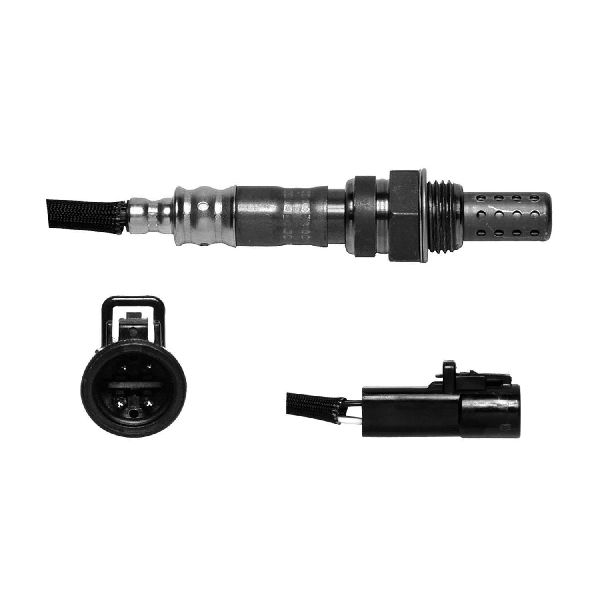
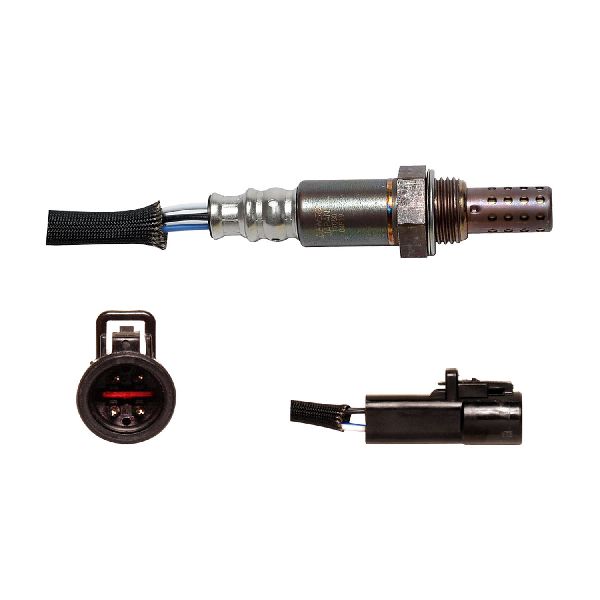
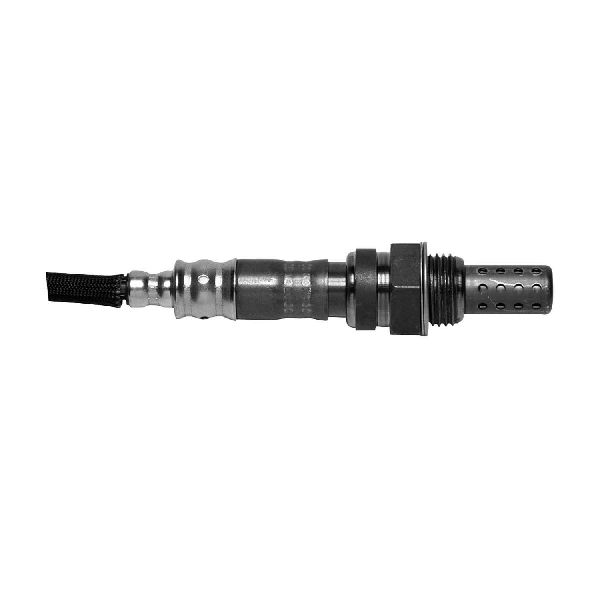
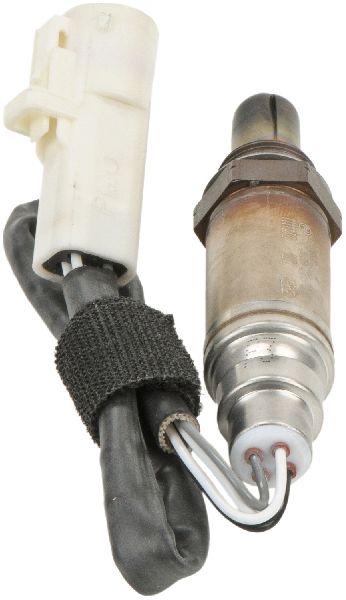
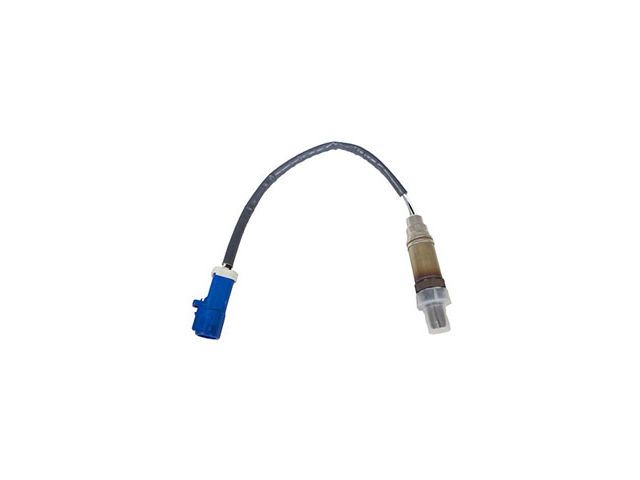
(OEM #Motorcraft DY-1097 (or similar, verify by VIN))— A faulty downstream O2 sensor can send incorrect data to the PCM, falsely triggering a P0420 code. It's a common point of failure and a wise part to check before replacing the converter.
Trusted brands: Motorcraft, Bosch, Denso
OEM price range: $70-$120
Aftermarket price range: $40-$90
Related Codes That Often Appear With This One
- P0430 — This is the same code for Bank 2 (the front cylinder bank). It's common for converters on both banks to fail around the same time on an older V6 engine, as they have been subjected to the same conditions for the same mileage.
- P0171 / P0174 — These 'System Too Lean' codes indicate a problem like a vacuum leak or weak fuel pump. This condition can cause high combustion temperatures, damaging the converter over time. A common source of vacuum leaks on the Taurus is a deteriorated PCV valve hose elbow.
- P0300 - P0306 — Misfire codes. Unburned fuel from a misfiring cylinder can enter the exhaust and superheat the catalytic converter, melting its internal structure and causing it to fail.
Technical Service Bulletins (TSBs) & Recalls
- TSB 02-22-1: Addresses diagnosis and correct installation procedures for the gear-driven camshaft position (CMP) sensor synchronizer on 3.0L Vulcan engines, which can cause various driveability issues if misaligned.
- NHTSA Recall 04V332000 / Ford Recall 04S17: Related to front coil springs fracturing due to corrosion in salt-belt states. A fractured spring could contact and rupture a front tire. While not related to P0420, it's a critical safety issue for this platform.
Platform-Specific Known Issues
- On the 3.0L Vulcan engine, a chirping or squeaking noise from the passenger side of the engine bay often indicates a failing camshaft synchronizer, which should be addressed immediately to prevent further engine damage and to rule it out as an indirect cause of the P0420 code.
- The automatic transmissions used in this generation (AX4S/AX4N) have a high failure rate, sometimes manifesting as a sudden loss of forward motion. While not a direct cause of P0420, owners should be aware of this significant potential repair cost.
- Rust is a major issue for these vehicles, particularly in the 'salt belt'. This not only makes exhaust leaks more likely but also leads to failures of front coil springs, which were subject to a recall (NHTSA 04V332000).
Mechanic-Grade Diagnostic Values
- Mode $06 Catalyst Efficiency Switch Ratio (TID $81, CID $01) — expected: A value near 0.0 indicates a healthy converter with high oxygen storage capacity.. Failure: A value approaching 1.0, or exceeding the manufacturer's calibrated threshold on the scan tool, indicates the catalyst has failed the PCM's internal test.
- Downstream O2 Sensor (B1S2) Voltage — expected: Should remain relatively stable, typically between 0.4V and 0.6V at idle on a warm engine.. Failure: Voltage fluctuates wildly, mimicking the upstream sensor's waveform, or is stuck at a specific voltage.
- Upstream O2 Sensor (B1S1) Voltage — expected: Rapidly fluctuating between approximately 0.1V and 0.9V on a warm engine at steady RPM.. Failure: Slow, lazy, or flat-lined response.
- Catalytic Converter Temperature Differential — expected: The outlet pipe temperature should be 30-100°F hotter than the inlet pipe temperature on a fully warmed-up engine.. Failure: Little to no temperature difference, or the inlet is hotter than the outlet (indicating a clog).
- Mode $06 Catalyst Oxygen Storage Value — expected: A value greater than 0.4 after a drive cycle.. Failure: A value less than 0.4 on the affected bank after a drive cycle, as per Ford TSB 25-2233.
Hidden / Shadow Codes Worth Checking
- Mode $06, TID $81, CID $01: This is not a DTC but a request for the results of the onboard Catalyst Efficiency Monitor test for Bank 1. The returned value represents the catalyst's oxygen storage capacity switch ratio. (see via A professional scan tool or an advanced OBD-II reader with Mode $06 functionality is required.)
Scan Tool Commands That Help
- Ford IDS / FDRS: PCM Reprogram — Use when a Technical Service Bulletin (TSB) indicates that an illuminated MIL with DTC P0420 may be caused by PCM calibration sensitivity. This re-flashes the computer with updated software that may have revised thresholds for the catalyst monitor.
- Professional Scan Tool w/ Lab Scope: Oxygen Storage Test (Propane Enrichment) — This is a forced test to verify O2 sensor and catalyst function. By introducing propane into the intake to create a rich condition, a technician can observe the reaction time and behavior of both upstream and downstream O2 sensors to definitively test the catalyst's ability to store and release oxygen.
Wiring & Ground Locations
- G101 — Located on the left side of the engine, above the starter motor.. A poor engine ground can cause erratic sensor readings and interfere with PCM operation, potentially leading to false codes. This is a primary engine-to-chassis ground point.
- G100 / G107 — Located on the left side of the engine compartment, often near the battery tray or on the radiator support.. These are key chassis ground points for various components in the engine bay. Corrosion here can affect multiple systems, including sensor grounds.
- G202 / G203 — Located at the base of the driver's side 'A' pillar, likely behind the kick panel.. These are interior grounds that can be relevant for the Powertrain Control Module (PCM) and its related circuits.
- O2 Sensor Harness — Runs along the exhaust system from the sensors to the main engine harness.. The wiring, especially for the downstream sensor, is susceptible to heat damage, melting, or physical abrasion from road debris, which can cause short circuits or open circuits, leading to incorrect sensor readings.
Real Owner Repair Stories
- YouTube video by 'How I fixed' (2000 Ford Taurus 3.0L DOHC) — Check Engine Light with codes P0171 and P0174 (System Too Lean).
❌ Tried (didn't work) Initial diagnosis pointed towards various potential vacuum leaks.
✅ What actually fixed it The problem was a collapsed and cracked PCV hose elbow hidden under the intake manifold. Replacing this cheap part resolved the lean codes, which are a known upstream cause of catalytic converter damage and P0420. - YouTube video by 'The Car Life' (2013 Ford Taurus SEL (Later generation, but same principle)) — Check Engine Light with code P0420, but the car was running perfectly fine with no loss of power or rough idle.
❌ Tried (didn't work) Was repeatedly told by others that the catalytic converter must be bad.
✅ What actually fixed it The owner suspected a sensor issue due to the lack of performance symptoms. Replacing the downstream oxygen sensor (Bank 1, Sensor 2) fixed the problem and the code did not return.
"I Checked Everything" — The Actual Cause
- A common scenario for the related P0171/P0174 lean codes (which can lead to P0420) is a cracked or collapsed PCV hose elbow located under the intake manifold. An exhaust smoke test would come back clean because the leak is on the intake side of the engine, allowing unmetered air to enter. This causes a lean condition that the PCM overcorrects, eventually damaging the catalytic converter.
When the Usual Fixes Don't Work
- While the catalytic converter is the most common cause, numerous owners have replaced the converter and both O2 sensors only to have the P0420 code return. In these cases, the root cause is often an upstream issue that was never diagnosed, such as a small vacuum leak from a hidden PCV hose, a leaking intake manifold gasket, a faulty fuel injector, or a PCM calibration issue that requires a software update from a dealer. This highlights the critical importance of diagnosing the entire system rather than just replacing the component flagged by the code.
Model Year Variations Within This Range
- 2001-2003: A specific PCV elbow hose is noted as a very common failure point for causing vacuum leaks on these model years, leading to lean codes that can cause P0420 over time.
Diagnostic Flowchart
Other Known Issues on This Vehicle
Issues unrelated to this code that are worth knowing about as an owner of this generation:
- Automatic Transmission Failure (AX4S/AX4N) 🔴 High — Very common, often occurs between 60,000 and 120,000 miles. Failure can be sudden loss of movement due to stripped torque converter splines.
- Front Coil Spring Fracture 🔴 High — Common in salt-belt states, leading to a major safety recall. Springs corrode and can break, potentially puncturing the front tire. (Ref: NHTSA Recall 04V332000)
- Camshaft Synchronizer Failure (3.0L Vulcan Engine) 🟠 Medium — A frequent issue on the Vulcan V6. Presents as a 'chirp' or 'squeak' from the engine. If ignored, can lead to oil pump failure and severe engine damage. (Ref: TSB 02-22-1)
- Oil Leaks Soaking Starter Motor 🟡 Low — Common for oil from valve cover or oil pan gaskets to leak down onto the starter, causing premature failure.
- Vacuum Leaks (PCV Hoses) 🟡 Low — Rubber PCV hoses and elbows, particularly on the Duratec engine, become brittle and crack, causing vacuum leaks that lead to rough idling and lean codes (P0171/P0174).
Used vs. New Parts: Buying Guide for This Vehicle
When a used part is the smart pick: For this repair, used parts are generally not recommended for the core components. However, a used intake manifold or a section of exhaust pipe from a rust-free donor vehicle could be a cost-effective choice if those parts are the source of a leak.
Donor-vehicle mileage cap: roughly under 100000 miles for the part to have meaningful remaining life.
What to inspect on the donor part:
- For exhaust components, inspect for deep rust, cracks near welds, and the integrity of mounting flanges.
- For engine components like an intake manifold, check for cracks, warping, and signs of previous oil or coolant leaks.
OEM-only on this vehicle (don't cheap out):
- Catalytic Converter: Many aftermarket converters, especially low-cost 'universal' units, lack the necessary precious metal loading to satisfy the Ford PCM's efficiency test, leading to a quick return of the P0420 code. An OEM or high-quality, direct-fit CARB-compliant converter is strongly advised.
- Oxygen Sensors: While some aftermarket brands are reliable, cheap, unbranded sensors are a frequent cause of incorrect readings and false codes. Sticking with OEM (Motorcraft) or OEM-supplier brands is the safest bet.
Aftermarket brands forum-validated for this vehicle:
- Catalytic Converters: Walker, MagnaFlow (ensure it is a direct-fit, compliant model)
- Oxygen Sensors: NTK, Denso, Bosch
Brands owners have reported issues with on this vehicle:
- Unbranded or generic 'eBay special' catalytic converters and oxygen sensors are frequently reported on forums to fail quickly or not work correctly out of the box.
Real Owner Stories
Aggregated from forums and TSBs cited above. Mileages and costs reflect what owners reported in those sources.
2000-2007 Ford Taurus 3.0L V6
Symptoms: The owner experienced a P0420 code and noted that exhaust leaks at the manifold or Y-pipe flanges are frequent culprits on this platform.
What fixed it: Checking for and repairing exhaust leaks at the manifold or Y-pipe flanges before replacing the converter.
Source hint: TaurusCarClub.com / FordForums.com
Ford Taurus 3.0L V6
Symptoms: The code P0420 was triggered, and the owner was concerned about which converter to replace.
What fixed it: Identifying that Bank 1 is located near the firewall and replacing the monitored converter directly off that manifold.
Source hint: r/MechanicAdvice on Reddit
Related OBD-II Codes
Frequently Asked Questions
I hear a chirping noise from the passenger side of my 3.0L Vulcan engine; could this be related to my P0420 code?
Which catalytic converter is the P0420 code referring to on my Ford Taurus V6?
Can I use a cheap universal catalytic converter to fix the P0420 on my Taurus?
Is there a recall for the exhaust system or catalytic converter on the 2000-2007 Taurus?
Could an exhaust leak be causing a false P0420 code on my high-mileage Taurus?
How can I tell if my Bank 1 Sensor 2 is the reason for the code?
Helpful Videos

We Have This Part in Stock


The information in this article is provided for general reference and educational purposes only. Vehicle specifications, procedures, and part compatibility can vary by production date, trim level, and region. Always consult your vehicle's factory service manual and verify part numbers before purchasing or performing repairs. Safety-critical components such as airbags, seat belts, and braking systems should be installed by a qualified professional.
- Ford Taurus:
- 🧭 Diagnostic Flowchart
- 🎬 Helpful Videos
- 🛍️ Shop This Part
- What's Unique About the 2000-2007 Ford Taurus
- Symptoms You May Notice
- Most Likely Causes
- Rare But Worth Checking
- Diagnosis Steps
- Parts You'll Likely Need
- Related Codes That Often Appear With This One
- Technical Service Bulletins (TSBs) & Recalls
- Platform-Specific Known Issues
- Mechanic-Grade Diagnostic Values
- Hidden / Shadow Codes Worth Checking
- Scan Tool Commands That Help
- Wiring & Ground Locations
- Real Owner Repair Stories
- "I Checked Everything" — The Actual Cause
- When the Usual Fixes Don't Work
- Model Year Variations Within This Range
- Other Known Issues on This Vehicle
- Used vs. New Parts: Buying Guide for This Vehicle
- Real Owner Stories
- 2000-2007 Ford Taurus 3.0L V6
- Ford Taurus 3.0L V6
- Related OBD-II Codes
- Frequently Asked Questions
- 🎟️ Get 5% Off