

P0420 on 2016-2018 Ford Taurus: Catalyst Efficiency Causes and Fixes
P0420 on your Taurus indicates a failing catalytic converter, a repair that can exceed $2,000. However, the cause is often a less expensive faulty oxygen (O2) sensor or an exhaust leak. Always diagnose O2 sensors and check for leaks before replacing the converter. Some 2016-2017 models were also part of a customer satisfaction program for cracked converters, and Police Interceptor models with the 3.7L engine have specific TSBs related to this code.
- P0420 means your Bank 1 catalytic converter is inefficient, but don't assume the converter is the problem.
- Before any major repair, check for other codes (especially misfires) and have the oxygen sensors tested.
- A thorough inspection for exhaust leaks between the engine and rear O2 sensor is a critical, cost-saving diagnostic step.
- If you own a 2016-2017 model, ask a Ford dealer about Customer Program 21B42 for cracked converters.
- Never replace a catalytic converter without first identifying and fixing the underlying problem that caused it to fail.
What's Unique About the 2016-2018 Ford TAURUS
While P0420 is a generic code, the 2016-2018 Taurus has some specific considerations. Ford issued a customer satisfaction program (21B42) for some 2016-2017 models due to cracked right-hand catalytic converters, which can cause this code along with noise or odors. Additionally, the Police Interceptor model equipped with the 3.7L engine has a specific Technical Service Bulletin (TSB 19-2366, which supersedes 18-2297) for this code, often caused by catalyst degradation from aggressive driving maneuvers. For most owners, the consensus in enthusiast communities is to thoroughly check the oxygen sensors and for exhaust leaks before condemning the expensive catalytic converter, as a bad sensor is a common misdiagnosis.
Diagnostic Flowchart
Tap your situation to follow the diagnostic path that matches what you're seeing on this vehicle.
Symptoms You May Notice
- Check Engine Light is on
- Reduced fuel economy
- Slight loss of engine power or sluggish acceleration, especially when going uphill
- A sulfur or "rotten egg" smell from the exhaust, especially under hard acceleration
- Vehicle will fail an emissions test
- Rattling noise from the exhaust if the internal honeycomb of the converter has broken apart
- Immediately replacing the catalytic converter without first testing the oxygen sensors or checking for exhaust leaks. This is a very expensive mistake, as a bad O2 sensor or a small leak are much cheaper to fix and common causes of this code.
Most Likely Causes
- Failing Catalytic Converter 🔴 High Probability → Shop Catalytic Converter Converters can fail from age, but failure is often accelerated by other issues like misfires. Some 2016-2017 models were known to have cracked converters (Customer Program 21B42). Police Interceptor models with the 3.7L engine are also prone to catalyst degradation due to aggressive driving, covered under TSB 19-2366.
How to confirm: After confirming O2 sensors and the exhaust system are good, a mechanic can use an infrared thermometer to check the converter's inlet and outlet temperatures. The outlet should be significantly hotter (at least 100°F) than the inlet on a fully warmed-up engine. If the inlet is hotter, the converter is likely clogged or inactive.
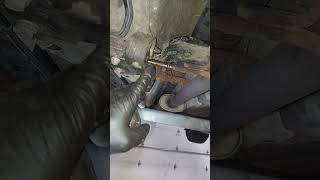
Typical fix: Replace the Bank 1 catalytic converter. 🎬 See these helpful tips for replacing the Bank 1 converter. It is critical to fix the root cause (e.g., misfires, bad sensor, coolant/oil leaks) that made the original converter fail, or the new one will also be destroyed.
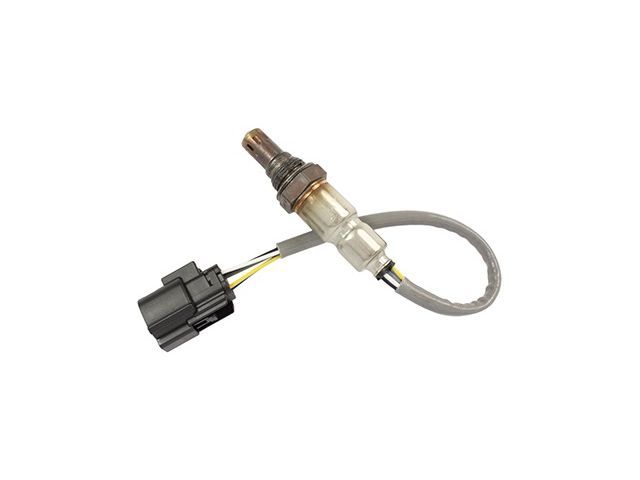
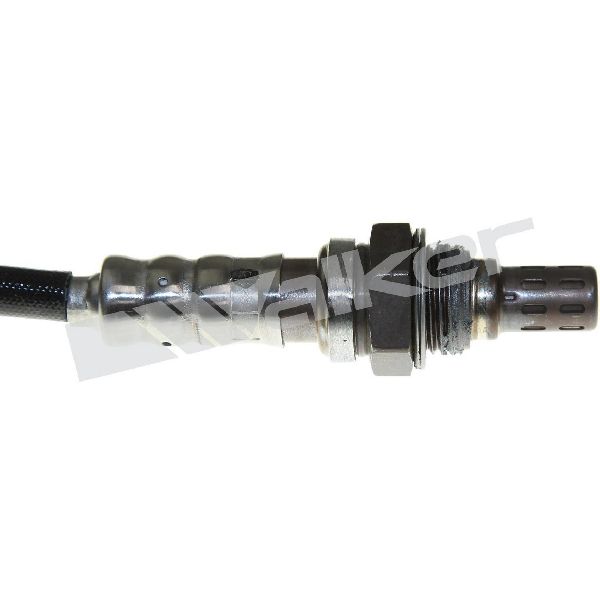
Est. part cost: $200-$700 (Aftermarket), $2100-$2400 (OEM) - Faulty Oxygen (O2) Sensor 🟡 Medium Probability → Shop Oxygen Sensor O2 sensors are wear-and-tear items that have a finite lifespan and often fail before the catalytic converter itself. A lazy or biased downstream sensor is a common cause of a false P0420 code. Owners on forums frequently report fixing the code by replacing the Bank 1, Sensor 2 (downstream) sensor.
How to confirm: Use a scan tool with live data graphing. 🎬 Watch: How to diagnose and fix P0420 using live data. The upstream (Bank 1, Sensor 1) O2 sensor voltage should fluctuate rapidly between approximately 0.1 and 0.9 volts. The downstream (Bank 1, Sensor 2) sensor voltage should remain relatively steady and stable. If the downstream sensor is fluctuating wildly like the upstream one, the converter is likely bad. If the sensor is stuck at one voltage or slow to respond, the sensor itself is likely faulty.
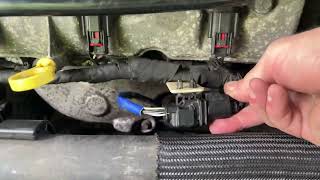
Typical fix: Replace the faulty oxygen sensor, most commonly the downstream (post-catalyst) one for this code. 🎬 Watch: A simple walkthrough for replacing a Ford oxygen sensor. It's often recommended to replace them in pairs (both downstream sensors or both Bank 1 sensors).
Est. part cost: $50-$150 per sensor - Exhaust System Leak 🟡 Medium Probability Exhaust manifold gaskets and flex pipes can degrade over time, causing leaks. A leak between the engine and the downstream O2 sensor allows outside oxygen into the exhaust, which skews the sensor's readings and can falsely trigger a P0420 code.
How to confirm: Perform a visual inspection for black soot trails or cracks around the exhaust manifold and connecting pipes, especially near welds and flanges. Listen for a ticking or hissing noise, especially when the engine is cold. A shop can introduce smoke into the exhaust system to pinpoint the exact location of a leak.
Typical fix: Replace the leaking gasket or repair/replace the cracked section of the exhaust pipe. A common leak point is the exhaust manifold gasket.
Est. part cost: $20-$200 depending on the location and severity of the leak - Engine Misfires or Fuel System Issues ⚪ Low Probability Issues like worn spark plugs, faulty ignition coils, or leaking fuel injectors cause unburned fuel to be dumped into the exhaust. This raw fuel superheats and melts the internal ceramic structure of the catalytic converter, destroying it. This is a primary cause of premature converter failure.
How to confirm: Check for other diagnostic trouble codes, particularly misfire codes (P0300-P0306) or fuel trim codes (P0171, P0174). Address these codes first before dealing with P0420. A misfire is a root cause that must be fixed before replacing a converter.
Typical fix: Repair the underlying cause of the misfire or fuel system problem, which may involve replacing spark plugs, ignition coils, or fuel injectors.
Est. part cost: $50-$400 depending on the specific fault
Rare But Worth Checking
- Contaminated Catalytic Converter: An internal engine coolant or oil leak can contaminate the catalytic converter, coating the catalyst materials and rendering them ineffective. This often points to a larger engine problem, such as a failing head gasket or piston rings.
- PCM Software Glitch: On some Ford models, outdated Powertrain Control Module (PCM) software can have overly sensitive parameters for the catalyst monitor, triggering a false P0420. It's worth checking with a dealer for any available software updates, especially if no other symptoms are present.
Diagnosis Steps
- Check for any other stored DTCs. If misfire (P030x), fuel system (P017x), or O2 sensor circuit codes are present, diagnose and fix them first.
- Using a scan tool, observe the live data for the Bank 1 upstream (B1S1) and downstream (B1S2) O2 sensors at a steady 2,000-2,500 RPM once the engine is fully warmed up.
- The upstream B1S1 sensor voltage should fluctuate rapidly and consistently between ~0.1V and ~0.9V. The downstream B1S2 sensor voltage should be relatively stable and steady, typically above 0.5V.
- If the B1S2 sensor is mimicking the rapid switching of the B1S1 sensor, the catalytic converter has failed and is no longer storing oxygen.
- If the B1S2 sensor is stuck at a low voltage (e.g., <0.2V) or is very slow to respond, suspect an exhaust leak or a faulty sensor.
- Thoroughly inspect the exhaust system for leaks from the exhaust manifold all the way to the downstream O2 sensor. Use a smoke machine for best results. Listen for ticking noises when cold.
- If no leaks are found and the O2 sensors appear to be functioning, test the catalytic converter directly by measuring its temperature differential with an infrared thermometer. The outlet pipe should be at least 100°F hotter than the inlet pipe.
- Check with a Ford dealer using your VIN to see if your vehicle is covered under Customer Program 21B42 (2016-2017 models) or TSB 19-2366 (3.7L Police Interceptor).
Parts You'll Likely Need
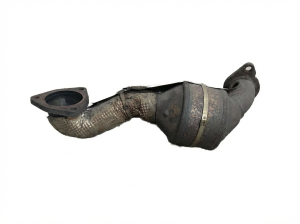
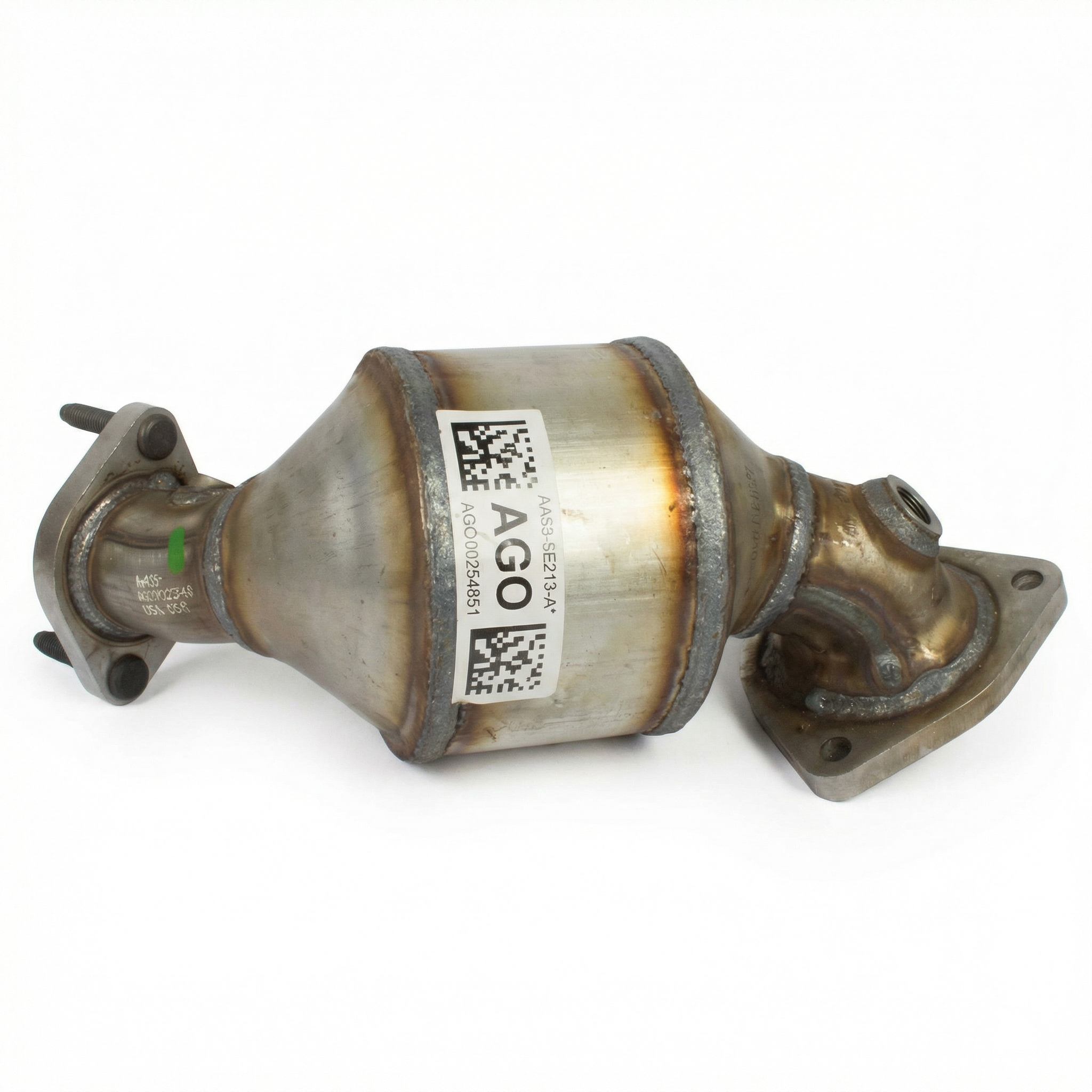
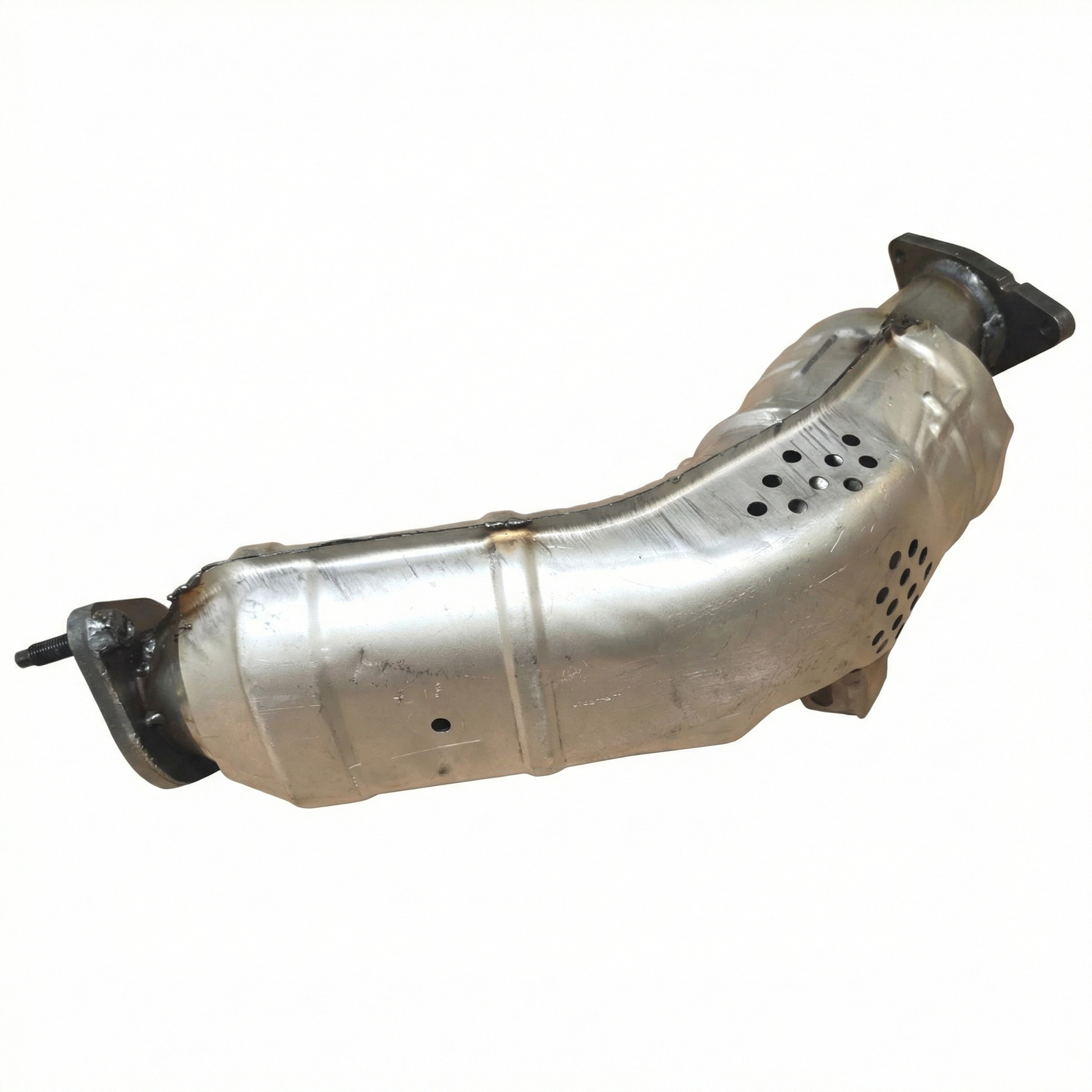
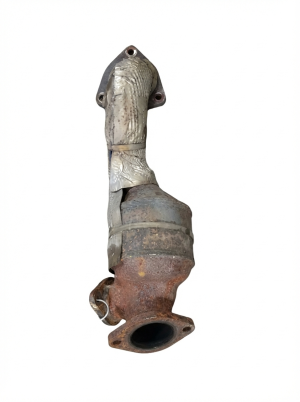
- Catalytic Converter (Bank 1)
(OEM #Varies by engine and drivetrain. Example for 3.5L/3.7L is BG1Z-5E212-A (rear/Bank 1). Always verify with dealer via VIN.)— This is the part the code directly points to as inefficient. It may have failed due to age or damage from other engine problems.
Trusted brands: Motorcraft (OEM), Walker, MagnaFlow, AP Exhaust
OEM price range: $2100-$2400
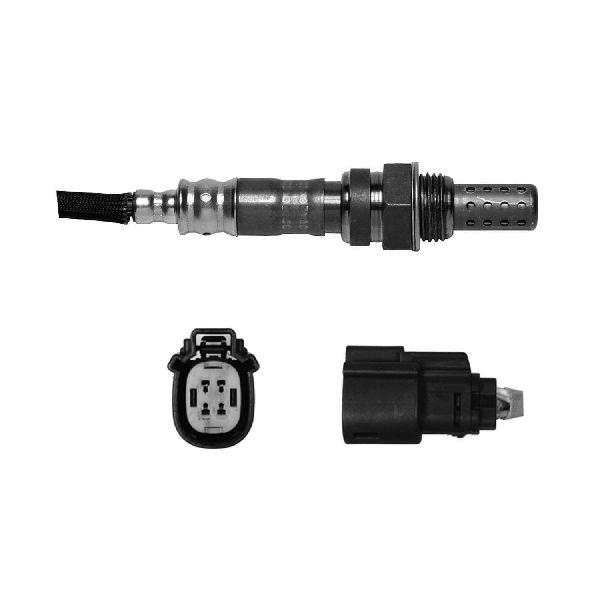
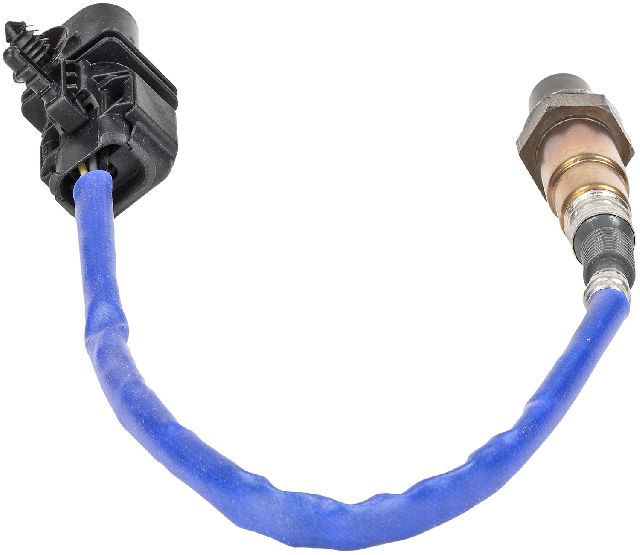
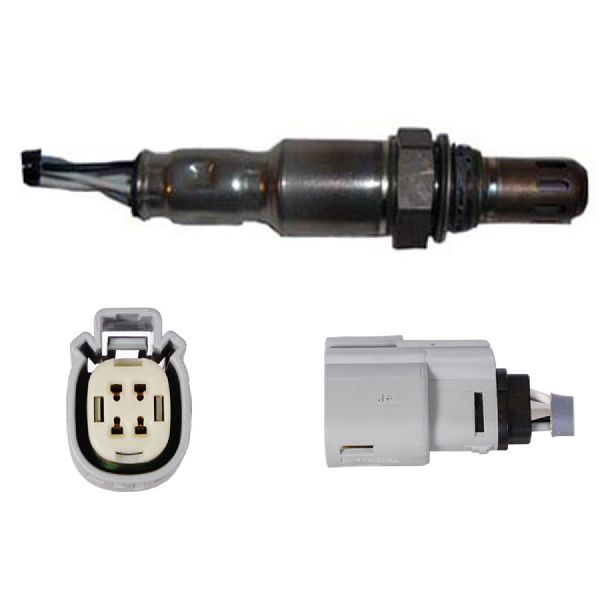
Aftermarket price range: $200-$700 - Oxygen Sensor (Bank 1, Sensor 2) — The downstream sensor is what measures catalyst efficiency. It can become 'lazy' or fail, sending incorrect data that falsely triggers P0420. It's a common point of failure and a frequent fix.
Trusted brands: Motorcraft (OEM), Bosch, Denso, NTK
OEM price range: $80-$150
Aftermarket price range: $50-$100
Related Codes That Often Appear With This One
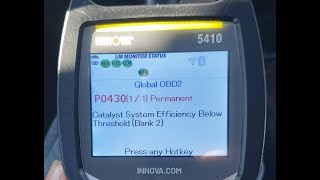
- P0430 — This is the identical code for Bank 2 (the front/radiator side bank). If both appear, it suggests a systemic issue like bad fuel, an engine-wide problem (like a vacuum leak or fuel pressure issue), or that both converters have reached the end of their life.
- P0300-P0306 — These are misfire codes. An ongoing misfire will destroy a new catalytic converter quickly by sending unburned fuel into it. These must be fixed before replacing a converter.
- P2096 — Post Catalyst Fuel Trim System Too Lean Bank 1. This code can appear alongside P0420 and may point more strongly toward a vacuum leak, exhaust leak, or a failing oxygen sensor rather than the converter itself.
Technical Service Bulletins (TSBs) & Recalls
- TSB 19-2366: Supersedes TSB 18-2297. For 2016-2019 Police Interceptor Sedans with the 3.7L engine, this TSB addresses MIL illumination with DTCs P0420 and/or P0430 due to a damaged catalytic converter. The procedure involves replacing the affected converter and reprogramming the PCM.
- Customer Satisfaction Program 19M01: Extended warranty coverage for catalytic converters on 2013-2018 Police Interceptor Utility vehicles with the 3.7L engine, which may overheat and degrade due to aggressive driving maneuvers, causing P0420/P0430.
- TSB 14-0102: An older TSB for 2013-2014 Police Taurus/Explorer and Lincoln MKS/MKT with 3.5L/3.7L engines for P0420/P0430, instructing dealers to replace the affected catalytic converter and reprogram the PCM.
Platform-Specific Known Issues
- Customer Program 21B42 was issued for some 2016-2017 Taurus models to inspect and potentially replace cracked right-hand catalytic converters.
- TSB 18-2297 exists for Police Interceptor models with the 3.7L engine that may exhibit P0420 and/or P0430, requiring a specific service procedure.
Mechanic-Grade Diagnostic Values
- Upstream O2 Sensor (B1S1/B2S1) Voltage — expected: Should fluctuate rapidly and continuously between approximately 0.1V (lean) and 0.9V (rich) once the engine is in closed loop.. Failure: A sensor that is stuck at a specific voltage (e.g., below 0.5V or above 0.9V) or responds very slowly is faulty.
- Downstream O2 Sensor (B1S2/B2S2) Voltage — expected: Should remain relatively stable, typically between 0.4V and 0.6V at idle on a warm engine with a functioning catalytic converter.. Failure: If the voltage fluctuates wildly, mimicking the upstream sensor, it indicates the catalytic converter is not storing oxygen and has failed.
- Mode $06 Catalyst Efficiency Switch Ratio (TID $81, CID $01 for Bank 1) — expected: A switch ratio near 0.0 indicates high oxygen storage capacity (good converter). The value should be well below the maximum threshold specified by the manufacturer on the scan tool.. Failure: A switch ratio near 1.0 indicates low oxygen storage capacity. If the measured value exceeds the calibrated threshold, the catalyst is considered failed by the PCM.
Hidden / Shadow Codes Worth Checking
- Mode $06 Test Data: This is not a DTC, but a diagnostic mode that provides the raw test results from the PCM's self-tests. For P0420, technicians can view the catalyst efficiency monitor's calculated switch ratio. This allows a mechanic to see if the converter is truly failing or just borderline, which can help prevent misdiagnosis. (see via A professional-level scan tool (like Ford IDS, Launch X-431, etc.) that can access Global OBD-II Mode $06 data.)
Scan Tool Commands That Help
- Ford IDS (Integrated Diagnostic System): Module Reprogramming (PCM) — If a TSB indicates that a PCM software update is available to correct overly sensitive catalyst monitoring parameters or other related issues, this function is used to flash the new calibration. After certain repairs, the PCM's adaptive learning must be reset.
Wiring & Ground Locations
- Fuse F67 (Under-hood Fuse Box) — In the under-hood fuse box (Power Distribution Box).. This 20A fuse supplies power to the heater elements of the oxygen sensors. If this fuse is blown, the O2 sensors will not heat up properly, leading to slow response times and potentially triggering false catalyst or O2 sensor codes.
Real Owner Repair Stories
- Reddit user in r/MechanicAdvice (Unknown year/model, but common Ford issue) — Persistent P0420 code after replacing catalytic converter and O2 sensors. Fuel trims showed the engine was running slightly rich.
❌ Tried (didn't work) Replacing O2 sensors, Replacing the catalytic converter with an aftermarket unit
✅ What actually fixed it The user cleaned the Mass Airflow (MAF) sensor. After cleaning the MAF and allowing the new converter to 'break in' for a few hundred kilometers, the code cleared and the vehicle passed emissions.
"I Checked Everything" — The Actual Cause
- In some cases, a P0420 can be triggered by a rich running condition that overloads the converter, even with no exhaust leaks present. One user reported that after replacing the cat and O2 sensors, the code remained. The actual cause was a faulty purge control solenoid that was drawing excessive fuel vapor from the EVAP canister, creating a rich mixture that the new converter couldn't clean effectively.
When the Usual Fixes Don't Work
- While replacing the catalytic converter is the ultimate fix for a truly failed unit, it's often not the first or only necessary step. Multiple owner accounts describe replacing both the converter and O2 sensors, only for the P0420 code to return. In one documented case, the final solution was cleaning a dirty Mass Airflow (MAF) sensor that was causing a rich fuel mixture, which the new converter couldn't handle. This highlights the critical importance of diagnosing the entire engine management system for issues like incorrect fuel trim, vacuum leaks, or faulty sensor inputs before condemning the most expensive part.
Model Year Variations Within This Range
- 2016-2017: The 2.0L EcoBoost I4 engine was only available for these two model years in the sixth-generation Taurus and was discontinued for 2018.
- 2016-2017: Ford issued Customer Satisfaction Program 21B42 for some models in this range due to potentially cracked right-hand catalytic converters. This program had an expiration date of July 31, 2022.
Helpful Videos
Used OEM Parts in Stock
New Aftermarket Parts Available


The information in this article is provided for general reference and educational purposes only. Vehicle specifications, procedures, and part compatibility can vary by production date, trim level, and region. Always consult your vehicle's factory service manual and verify part numbers before purchasing or performing repairs. Safety-critical components such as airbags, seat belts, and braking systems should be installed by a qualified professional.
- Ford TAURUS:
- 🧭 Diagnostic Flowchart
- 🎬 Helpful Videos
- 🛍️ Shop This Part
- What's Unique About the 2016-2018 Ford TAURUS
- Symptoms You May Notice
- Most Likely Causes
- Rare But Worth Checking
- Diagnosis Steps
- Parts You'll Likely Need
- Related Codes That Often Appear With This One
- Technical Service Bulletins (TSBs) & Recalls
- Platform-Specific Known Issues
- Mechanic-Grade Diagnostic Values
- Hidden / Shadow Codes Worth Checking
- Scan Tool Commands That Help
- Wiring & Ground Locations
- Real Owner Repair Stories
- "I Checked Everything" — The Actual Cause
- When the Usual Fixes Don't Work
- Model Year Variations Within This Range
- 🎟️ Get 5% Off