

P0420 on 2019-2025 Genesis G70: Catalyst Efficiency Causes and Fixes
P0420 on a Genesis G70 means the Bank 1 catalytic converter is failing its efficiency test. Before replacing the expensive converter (often $3,000+), first check for underlying issues like a faulty oxygen sensor (a common misdiagnosis), exhaust leaks, or engine problems. A known fuel pump issue on 2.0T models can also cause this code, so verifying recall status is a critical first step.
- P0420 means the Bank 1 catalytic converter is inefficient, but the converter itself may not be the root cause.
- **Always check for other codes first.** Misfires or fuel system issues (like the known HPFP problem) must be fixed before you replace the converter, or you will damage the new one.
- A faulty downstream O2 sensor is a common misdiagnosis. Consider testing or replacing this relatively inexpensive part before the very expensive catalytic converter.
- Ask your Genesis dealer if your vehicle is affected by the high-pressure fuel pump recall (TSB 23-01-046H), as this is a likely cause of the problem.
- If you have the 3.3T V6 engine, P0420 refers to Bank 1. P0430 is the corresponding code for Bank 2.
What's Unique About the 2019-2025 Genesis G70
For the Genesis G70, particularly the 2.0T model, a P0420 code should immediately make you investigate underlying engine running conditions. A recall (NHTSA 24V528000 / Hyundai 262/023G) and a warranty extension (Z05G / TSB 25-FL-002G) were issued for the high-pressure fuel pump (HPFP) on 2019-2023 2.0T models. This pump's control valve can wear prematurely, causing an excessively rich fuel mixture and triggering code P0088. This rich condition can overwhelm and damage the catalytic converter over time, leading to a P0420 code. Therefore, it's crucial to ensure this recall has been performed and that there are no other fuel system or misfire codes present before condemning the converter. 🎬 Watch: A breakdown of P0420 causes and potential solutions. A separate recall (NHTSA 24V191000) for a leaking turbocharger oil feed pipe on 2019-2022 3.3T models can also lead to oil contamination of the exhaust and damage the catalytic converter.
Symptoms You May Notice
- Check Engine Light is on
- Reduced engine performance or acceleration
- Vehicle may enter 'limp mode' with no turbo boost
- A sulfur or "rotten egg" smell from the exhaust
- Decreased fuel efficiency
- Vehicle will fail an emissions test
- Rough running engine
- Immediately replacing the catalytic converter without diagnosing underlying causes. A new converter can be quickly ruined if the root problem (like a rich fuel mixture or misfire) is not fixed. A user on the r/GenesisG70 subreddit experienced the P0420 code returning just days after a dealer replaced the catalytic converter under warranty, demonstrating this exact issue.
Most Likely Causes
- Failing Catalytic Converter 🔴 High Probability → Shop Catalytic Converter Often damaged by other underlying issues, such as the fuel pump problem noted in recall 023G for the 2.0T engine. Converters don't typically fail on their own; they are killed by other problems like misfires or rich/lean conditions. One owner on Reddit reported a P0420 returning even after the dealer replaced the catalytic converter, highlighting the need to find the root cause.
How to confirm: After confirming O2 sensors are working and there are no exhaust leaks or other engine codes, a scan tool showing the downstream O2 sensor voltage fluctuating wildly is a strong indicator. An infrared thermometer can also be used; the converter's outlet pipe should be significantly hotter than the inlet pipe on a warm engine.
Typical fix: Replace the Bank 1 catalytic converter. This should only be done after addressing the root cause of the failure (e.g., misfires, rich condition, oil leaks).
Est. part cost: $2800-$3000 - Faulty Downstream Oxygen (O2) Sensor 🟡 Medium Probability → Shop Oxygen Sensor O2 sensors are wear items and can become slow to respond with age, sending inaccurate data to the PCM. This is a very common misdiagnosis for P0420. Given the high cost of a converter, replacing the downstream O2 sensor is often a wise, and much cheaper, first step.
How to confirm: Use a scan tool to graph the sensor's voltage. A healthy downstream sensor should show a relatively steady voltage. If it's lazy, stuck, or fluctuating in sync with the upstream sensor, the sensor may be bad, or the converter is confirmed to be inefficient. Swapping the Bank 1 and Bank 2 downstream sensors (on the 3.3T) and seeing if the code changes to P0430 is another diagnostic trick.
Typical fix: Replace the Bank 1, Sensor 2 (downstream) oxygen sensor.
Est. part cost: $50-$150 - Engine Misfires or Rich Fuel Mixture 🟡 Medium Probability Recall 023G for the high-pressure fuel pump (HPFP) on 2019-2023 2.0T models can cause a rich condition (P0088). Unburned fuel from misfires (e.g., from bad spark plugs or ignition coils) or a rich mixture overheats and destroys the internal structure of the catalytic converter.
How to confirm: Scan for other trouble codes, especially misfire codes (P0300-P0306) or fuel system codes (P0171, P0172, P0088). Address these codes FIRST.
Typical fix: Fix the root cause, which could be worn spark plugs, faulty ignition coils, leaking fuel injectors, or replacing the HPFP per the recall.
Est. part cost: $100-$800 - Exhaust System Leak ⚪ Low Probability Leaks can occur at gasket joints or from cracks in the manifold or pipes. These leaks can allow outside oxygen into the exhaust stream, which fools the oxygen sensors into providing incorrect readings to the PCM.
How to confirm: Visually inspect the exhaust manifold and pipes for cracks or black soot marks. Listen for a ticking or hissing sound, especially when the engine is cold. A smoke machine test is the most effective way to find small leaks.
Typical fix: Replace the leaking gasket or weld/replace the cracked section of the exhaust.
Est. part cost: $20-$300
Rare But Worth Checking
- PCM Software Calibration Error: While not confirmed for Genesis for P0420 specifically, other manufacturers have issued TSBs where a simple software update was needed to correct overly sensitive P0420 logic. Hyundai issued TSB 23-01-046H for a related ECU/TCU update on some models, so it's always worth asking a dealer if any software updates are available for your vehicle's VIN.
Diagnosis Steps
- Scan for all stored diagnostic trouble codes. If any codes for misfires (P030x), fuel pressure (P0088), or fuel trim are present, diagnose and repair those issues first.
- Check for Recalls and TSBs. Enter your VIN on the NHTSA website or call a Genesis dealer. Specifically ask about recall 023G / warranty extension Z05G for the high-pressure fuel pump (2019-2023 2.0T) and recall 24V191000 for the turbo oil feed pipe (2019-2022 3.3T).
- Thoroughly inspect the exhaust system from the engine to the catalytic converter for any signs of leaks, such as black soot, cracks, or audible hissing. A smoke test is definitive.
- Use a scan tool with live data graphing capabilities. Observe the voltage of the Bank 1 Sensor 1 (upstream) and Bank 1 Sensor 2 (downstream) oxygen sensors with the engine fully warmed up and running at a steady 2,000-2,500 RPM.
- Analyze the data: The upstream sensor should fluctuate rapidly between ~0.1V and ~0.9V. A healthy downstream sensor should show a relatively flat and steady voltage (typically over 0.45V).
- If the downstream sensor's voltage is fluctuating in a similar pattern to the upstream sensor, it confirms the catalytic converter is not functioning correctly.
- If the downstream sensor's voltage is flat but low, or doesn't respond, the sensor itself may be faulty. Test or replace the downstream O2 sensor as a diagnostic step.
- If all other causes are ruled out, the catalytic converter is the likely culprit.
Parts You'll Likely Need
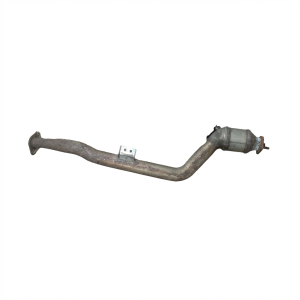
- Bank 1 Catalytic Converter — This is the component directly identified by the code, but it often fails due to other issues. It is the most expensive part to replace.
Trusted brands: Genuine Genesis
OEM price range: $2800-$3000
Aftermarket price range: $600-$1500 - Bank 1 Downstream Oxygen Sensor (Sensor 2)
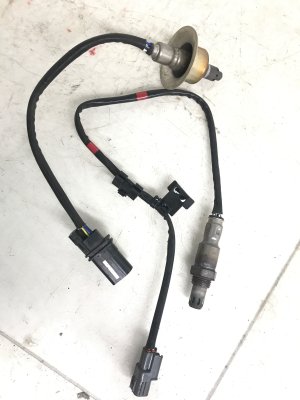
(OEM #39210-2CTB5 (for 2.0T models))— A faulty sensor is a common cause of a false P0420 code. Replacing this part is a critical diagnostic step before condemning the expensive converter. An aftermarket equivalent is NTK 25262.
Trusted brands: Bosch, NGK/NTK, Denso
OEM price range: $150-$250
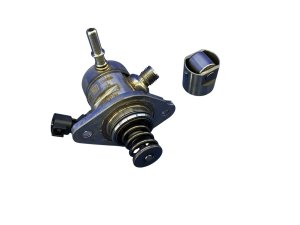
Aftermarket price range: $50-$150 - High-Pressure Fuel Pump (HPFP) — Specific to 2019-2023 2.0T models, a faulty HPFP is the subject of a recall and can cause a rich condition that destroys the catalytic converter. This is a primary suspect if P0088 is also present.
Trusted brands: Genuine Genesis
OEM price range: $600-$800
Related Codes That Often Appear With This One
- P0430 — This is the same efficiency code but for Bank 2 (driver's side on the 3.3T V6 engine). If both P0420 and P0430 appear, it points to a systemic issue like bad fuel, a problem with the fuel pump affecting the whole engine, or another issue common to both banks.
- P0300-P0306 — These are misfire codes for specific cylinders (P0301-P0306) or random misfires (P0300). Unburned fuel from a misfiring cylinder will enter the exhaust and destroy the catalytic converter, causing P0420.
- P0088 — This code for 'Fuel Rail/System Pressure - Too High' is specifically associated with the faulty high-pressure fuel pump on 2.0T models. This is a major red flag that the HPFP is the root cause of the P0420.
Technical Service Bulletins (TSBs) & Recalls
- TSB 25-FL-002G / Warranty Extension Z05G: Extends warranty coverage for the High Pressure Fuel Pump (HPFP) on certain 2019-2023 G70 2.0T vehicles to 15 years/150,000 miles.
- Recall 023G / NHTSA 24V528000: Recall for premature wear of the fuel control valve in the HPFP on 2019-2023 G70 2.0T vehicles, which can cause a rich condition and loss of power.
- Recall 24V191000: Recall for a deteriorating left turbocharger oil feed pipe on 2019-2022 G70 3.3T vehicles, which can leak oil and create a fire risk, as well as contaminate the exhaust.
- TSB 23-01-046H: Relates to an ECU/TCU software update for drivability improvements, which may be relevant.
Platform-Specific Known Issues
- A recall and TSB (23-01-046H) exists for the high-pressure fuel pump on 2019-2023 G70 models, which can cause an overly rich fuel mixture and trigger DTC P0088, a known cause of catalytic converter damage.
Mechanic-Grade Diagnostic Values
- Downstream O2 Sensor (Bank 1, Sensor 2) Voltage — expected: Relatively steady voltage at or above 0.45V (450mV) when engine is warm and at steady RPM. Some sources state the target is above 0.65V (650mV).. Failure: Voltage fluctuates rapidly, mirroring the pattern of the upstream O2 sensor. A steady but low voltage may indicate a faulty sensor itself.
- Upstream O2 Sensor (Bank 1, Sensor 1) Voltage — expected: Rapidly fluctuating between approximately 0.1V and 0.9V on a warm engine.. Failure: A slow, lazy, or flatlined voltage reading indicates a faulty sensor.
- Low-Pressure Fuel Pump Supply — expected: 40 to 60 psi to the fuel rail before the high-pressure pump.. Failure: Pressure below this range can cause lean conditions, while issues with the high-pressure pump are more likely to cause rich conditions (P0088).
- Downstream O2 Sensor Heater Circuit Resistance — expected: Typically 1.2–1.5 Ω.. Failure: A reading outside of this range suggests a failure in the sensor's internal heater, which can cause incorrect sensor readings, especially when the engine is not fully hot.
Hidden / Shadow Codes Worth Checking
- Mode 6, Test ID $21, $A9: This is not a DTC but a raw data monitor for catalyst efficiency. It provides the vehicle's self-test results for the catalytic converter before a fault code like P0420 is set as permanent. Test ID $A9 specifically measured the Bank 1 catalyst on one demonstrated vehicle. Technicians can view this data to see if the catalyst is marginal or has definitively failed the test. (see via A professional scan tool with Global OBD-II capabilities that can display Mode 6 data. The data is often presented in hexadecimal and may need interpretation by the scan tool.)
Scan Tool Commands That Help
- Genesis GDS (Global Diagnostic System): ECM Update / Software Update — This is a dealer-level function used to re-flash the engine computer with updated software. For P0420, Hyundai/Genesis has issued TSBs for other models where this is required to fix overly sensitive catalyst monitoring logic. It should be checked for any G70 experiencing recurring P0420 codes.
- Professional Bidirectional Scanner: Catalyst Oxygen Storage Capacity Test — This is a definitive test of converter function. The scan tool is used to command the engine to run rich, loading the converter with fuel, and then commands it lean. By watching the downstream O2 sensor's reaction time, a technician can determine the converter's ability to store and release oxygen, confirming if it's healthy or degraded.
- Professional Bidirectional Scanner: NOx Sensor Reset / Reset Catalytic Converter Learned Value — After replacing a catalytic converter or related sensor, the ECU's learned values for the old, degraded component should be reset. This function clears the adaptations, allowing the ECU to learn the performance of the new part correctly.
Wiring & Ground Locations
- Engine Block Grounds — Typically found bolted to the engine block, cylinder head, or near the valve covers, with a strap connecting to the chassis frame rail near the strut tower.. The ECM and its sensors (including O2 sensors) rely on clean ground connections for accurate voltage readings. A corroded or loose engine ground can introduce electrical noise or voltage offsets, causing the ECM to misinterpret the O2 sensor signals and potentially trigger a false P0420 code.
- Cowl / Firewall Grounds — Often located on the firewall in the engine compartment, sometimes near the brake booster.. These points often serve as the primary ground for in-cabin electronics, including the Body Control Module (BCM) and sometimes the ECM itself. A poor connection here can cause a wide range of seemingly unrelated electrical issues, including incorrect data reporting from engine sensors.
Real Owner Repair Stories
- Reddit user in r/AskMechanics (2019 Hyundai Tucson (shares platform elements and engine logic with Genesis)) — P0420 code triggered at 49,000 miles.
✅ What actually fixed it The catalytic converter was replaced and the ECM received a software upgrade as per a Technical Service Bulletin (TSB). The repair was covered under warranty. - Reddit user in r/automotivetraining (Not specified, but general P0420 repair.) — Undisclosed error codes.
✅ What actually fixed it A new catalytic converter and a new cat-back exhaust system resolved all the codes.
OEM Part Supersession History
Varies by engine and year→Varies— Documented part number variations exist based on engine type and model year.
Heads up: Bank 1 (right side) converter for the 3.3T is 28530-3LVR0. The converter for the 2.5T engine (2022.5+) is 28510-2T360. An early 2.0T converter is listed as 289E02FRC0. These parts are not interchangeable. Always confirm the part number with the vehicle's VIN.
Model Year Variations Within This Range
- 2019-2023 (2.0T Engine): These models are subject to a recall and warranty extension for a faulty high-pressure fuel pump (HPFP) that can cause a rich condition, leading to P0420. This is a primary suspect for these specific years and engine.
- 2019-2022 (3.3T Engine): These models are subject to a recall for a leaking turbocharger oil feed pipe, which can contaminate the exhaust and damage the catalytic converter, causing P0420.
- 2022.5+: The 2.0T engine was replaced by a 2.5T engine in some markets. These engines use different catalytic converter part numbers (e.g., 28510-2T360 for the 2.5T) and are not subject to the same HPFP recall as the 2.0T.
Diagnostic Flowchart
Other Known Issues on This Vehicle
Issues unrelated to this code that are worth knowing about as an owner of this generation:
- High-Pressure Fuel Pump (HPFP) Failure (2.0T) 🔴 High → Shop Fuel Pump — Common enough to trigger a recall (023G) and 15-year/150k-mile warranty extension (Z05G) for 2019-2023 2.0T models. (Ref: Recall 023G / NHTSA 24V528000)
- Left Turbocharger Oil Feed Pipe Leak (3.3T) 🔴 High — Common enough to trigger a recall on 2019-2022 models. Leak can cause oil starvation or fire. (Ref: Recall NHTSA 24V191000)
- Starter Solenoid Water Intrusion 🔴 High — Affects 2019 models. Water can enter the starter solenoid, potentially causing an electrical short and engine compartment fire. (Ref: Recall NHTSA 24V107000)
- Chipping / Fading Paint 🟡 Low — Some owners of early (pre-facelift) models reported that the paint can chip easily. A specific issue with black paint fading or becoming rough was also noted on early cars but was fixed under warranty.
- Interior Rattles 🟡 Low — Some owners report rattles from the sunglasses holder area or sunroof in hot climates.
Used vs. New Parts: Buying Guide for This Vehicle
When a used part is the smart pick: For this specific repair, used parts are generally not recommended. A used oxygen sensor is a wear item with unknown remaining life. A used catalytic converter may come from a vehicle that was scrapped due to engine problems that also damaged the converter, making it a significant gamble.
Donor-vehicle mileage cap: roughly under 50000 miles for the part to have meaningful remaining life.
What to inspect on the donor part:
- For a catalytic converter, inspect the honeycomb structure from both ends; it should be intact with no melted, broken, or clogged sections.
- Check for any rattling inside the converter, which indicates broken substrate.
- Avoid parts with heavy external rust or physical damage from impact.
- Ask for the donor vehicle's VIN to check for a history of accidents or relevant engine-related TSBs.
OEM-only on this vehicle (don't cheap out):
- Catalytic Converter: Aftermarket converters, especially non-CARB compliant models, frequently have lower precious metal loadings. The Genesis G70's ECU has sensitive monitoring and is very likely to reject a cheaper aftermarket unit, causing the P0420 code to return.
Aftermarket brands forum-validated for this vehicle:
- For Oxygen Sensors: NGK/NTK, Bosch, Denso are widely trusted OEM suppliers and are considered safe aftermarket replacements.
Brands owners have reported issues with on this vehicle:
- Be cautious of unbranded or exceptionally cheap catalytic converters found on online marketplaces. They are highly likely to fail the ECU's efficiency test.
Real Owner Stories
Aggregated from forums and TSBs cited above. Mileages and costs reflect what owners reported in those sources.
2022 Genesis G70 3.3T
Symptoms: The Check Engine Light for P0420 returned shortly after the dealership had already replaced the catalytic converter.
What fixed it: The source emphasizes that the catalytic converter replacement alone did not fix it, highlighting the necessity of finding the root cause (such as fuel or misfire issues).
Source hint: Reddit r/GenesisG70 thread titled 'Check engine light code P0420 won't go away after repair'
2019-2023 Genesis G70 2.0T
Symptoms: Limp mode, no turbo boost, and engine misfires.
What fixed it: The owner suspected an exhaust leak as the primary cause for the P0420 and performance issues.
Source hint: Reddit r/GenesisG70 thread titled 'G70 P0420 Code : r/GenesisG70'
Related OBD-II Codes
Frequently Asked Questions
Is there a recall for the 2019-2023 Genesis G70 2.0T that could cause a P0420 code?
Has Genesis extended the warranty for components related to the P0420 code on the G70?
Can I just replace the catalytic converter to fix P0420 on my G70?
Does the 3.3T engine have any specific issues that might lead to exhaust contamination and a P0420?
How can I tell if my G70's P0420 is a bad sensor or a bad converter?
What is the estimated cost for a new catalytic converter on a Genesis G70?
Helpful Videos

We Have This Part in Stock

The information in this article is provided for general reference and educational purposes only. Vehicle specifications, procedures, and part compatibility can vary by production date, trim level, and region. Always consult your vehicle's factory service manual and verify part numbers before purchasing or performing repairs. Safety-critical components such as airbags, seat belts, and braking systems should be installed by a qualified professional.
- Genesis G70:
- 🧭 Diagnostic Flowchart
- 🎬 Helpful Videos
- 🛍️ Shop This Part
- What's Unique About the 2019-2025 Genesis G70
- Symptoms You May Notice
- Most Likely Causes
- Rare But Worth Checking
- Diagnosis Steps
- Parts You'll Likely Need
- Related Codes That Often Appear With This One
- Technical Service Bulletins (TSBs) & Recalls
- Platform-Specific Known Issues
- Mechanic-Grade Diagnostic Values
- Hidden / Shadow Codes Worth Checking
- Scan Tool Commands That Help
- Wiring & Ground Locations
- Real Owner Repair Stories
- OEM Part Supersession History
- Model Year Variations Within This Range
- Other Known Issues on This Vehicle
- Used vs. New Parts: Buying Guide for This Vehicle
- Real Owner Stories
- 2022 Genesis G70 3.3T
- 2019-2023 Genesis G70 2.0T
- Related OBD-II Codes
- Frequently Asked Questions
- 🎟️ Get 5% Off