

P0420 on 2014-2016 GMC Sierra 1500: Catalyst Efficiency Causes and Fixes
On a 2014-2016 Sierra, P0420 often points to more than a bad catalytic converter. Before spending over $1,000 on a new converter, inspect the air filter housing for leaks (per GM TSB #16NA111) and check for exhaust leaks, especially after the rear O2 sensor (per GM TSB #PIP5110C) or from broken exhaust manifold bolts. A faulty oxygen sensor or oil consumption fouling the system are also common, much cheaper-to-diagnose issues.
- Do not automatically replace the catalytic converter for a P0420 code on a 2014-2016 Sierra.
- Your first step should be to inspect the air filter housing for a perfect seal, as per GM TSB #16NA111.
- Your second step should be to check the entire exhaust system for leaks, especially after the rear O2 sensor, as per GM TSB #PIP5110C.
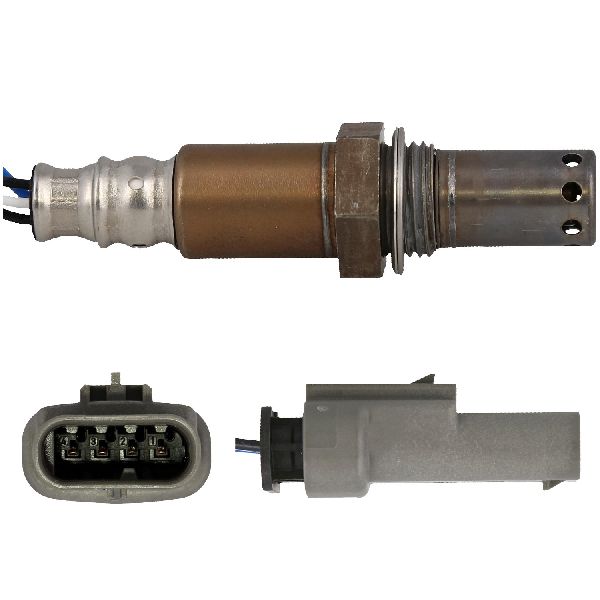
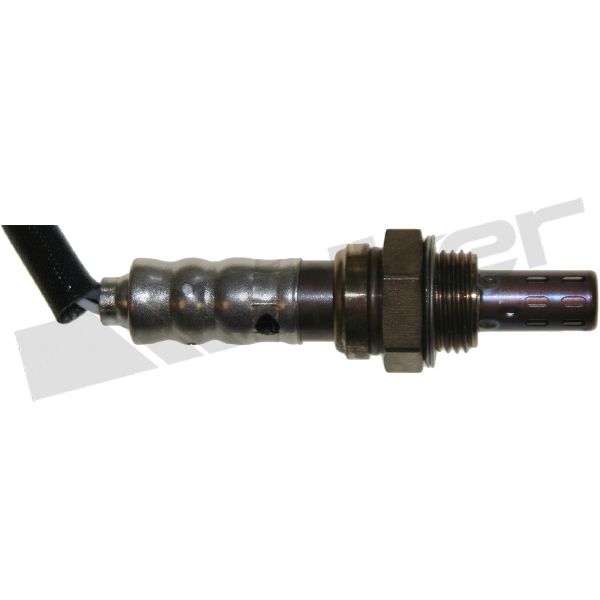
- A faulty downstream oxygen sensor is a much cheaper potential fix than the converter and should be tested via scan tool live data.
- If the catalytic converter must be replaced, ensure any underlying issues like engine misfires or the airbox leak are fixed first to avoid damaging the new part.
What's Unique About the 2014-2016 Gmc SIERRA 1500
For this generation of GMC Sierra (K2XX platform), General Motors has issued specific technical service bulletins (TSBs) that point to unique causes for a P0420 code. Technicians are advised to investigate a poorly sealing air filter box that allows abrasive dirt and sand to enter the engine, damaging O2 sensors and the converter itself. Another TSB highlights that an exhaust leak *after* the downstream oxygen sensor can draw in fresh air during exhaust pulses, causing the sensor to read lean and falsely trigger the code. Furthermore, these engines are known for breaking the rearmost exhaust manifold bolts, creating a significant leak at the head. These documented issues mean that unlike many other vehicles, the first diagnostic steps should be inspecting the air intake and specific sections of the exhaust, not assuming the catalytic converter has failed.
Diagnostic Flowchart
Tap your situation to follow the diagnostic path that matches what you're seeing on this vehicle.
Symptoms You May Notice
- Check Engine Light is on
- Remote start feature is disabled
- Reduced engine power or sluggish acceleration, especially under load
- Possible rotten egg (sulfur) smell from the exhaust
- Decrease in fuel economy
- A ticking noise from the engine bay, especially when cold, indicating an exhaust manifold leak
- Immediately replacing the catalytic converter without first inspecting for air intake leaks, exhaust leaks, or testing the oxygen sensors. This can be a very expensive mistake, as these other issues are common on the Sierra and much cheaper to fix.
Most Likely Causes
- Air Intake Leak at Airbox/Filter Seal 🔴 High Probability → Shop Engine Air Intake Resonator A widely known issue documented in GM TSB #16-NA-111. The plastic air cleaner housing can warp or its clips can break, preventing the air filter from sealing. This allows unfiltered, abrasive debris to be ingested, which can foul the MAF sensor, physically damage O2 sensors, and clog the catalytic converter.
How to confirm: Visually inspect the air filter housing cover for warping, missing tabs, and proper fit. Open the housing and look for dirt, sand, or debris on the 'clean' side of the air filter or inside the air intake tube leading to the throttle body.
Typical fix: Replace the air filter and the entire air cleaner assembly (housing) if it's warped or damaged. Some owners report temporary success by adding weather stripping to the housing to create a better seal.
Est. part cost: $25-$200 - Exhaust System Leak 🔴 High Probability These engines are notorious for the rearmost exhaust manifold bolts breaking due to thermal stress, causing a leak at the cylinder head. Additionally, GM TSB #PIP5110C specifically notes that a leak *after* the rear O2 sensor can draw in outside air, skewing sensor readings and causing a false P0420.
How to confirm: Listen for a distinct 'ticking' sound from the engine bay when the engine is cold, which disappears as the metal expands. Perform a visual inspection of the exhaust manifolds for broken bolt heads. A smoke test is the most reliable method for finding leaks anywhere in the system.
Typical fix: For broken manifold bolts, the bolt must be extracted and replaced, which can be difficult. Repair kits and clamps (e.g., Dorman 917-107) exist to clamp the manifold down without needing to extract the broken bolt. 🎬 Watch: Easy fix for broken exhaust manifold bolts Leaking gaskets or clamps elsewhere should be replaced.
Est. part cost: $10-$150 - Failing Downstream (Post-Catalyst) Oxygen Sensor 🟡 Medium Probability → Shop Oxygen Sensor A 'lazy' or biased O2 sensor can send incorrect data to the ECM, falsely indicating a problem with the converter. It's a common failure point, and can be damaged by oil contamination or debris from a leaky airbox.
How to confirm: Use a scan tool to graph the voltage of the Bank 1 Sensor 2. It should show a relatively steady voltage, typically above 0.6V. If it's fluctuating rapidly and mirroring the upstream sensor, or is stuck at a specific voltage, it's likely faulty.
Typical fix: Replace the Bank 1, Sensor 2 oxygen sensor. This is a relatively simple and inexpensive repair.
Est. part cost: $40-$90 - Failing Catalytic Converter 🟡 Medium Probability → Shop Catalytic Converter Converters fail due to contamination. On these trucks, a primary cause is oil burning from Active Fuel Management (AFM) lifter issues or piston ring problems, which coats the catalyst substrate. Unrepaired misfires or debris from the known airbox issue also destroy converters.
How to confirm: This should be the last diagnosis after all other causes are ruled out. Use an infrared thermometer to check the converter's temperature. The outlet pipe should be at least 100°F hotter than the inlet pipe after the engine is fully warmed up. If not, it's not working.
Typical fix: Replace the Bank 1 catalytic converter. It is critical to fix the root cause of the failure (e.g., oil consumption, misfires, airbox leak) before replacing the converter, or the new one will quickly fail as well.
Est. part cost: $500-$2000
Rare But Worth Checking
- Engine Misfires: Unburned fuel from a misfiring cylinder can enter the exhaust and superheat the catalytic converter, causing rapid failure. Always address P030x misfire codes before dealing with a P0420.
- ECM Calibration Issue: TSB #PIP3119P explains that new or replacement converters require a break-in period. If the battery is disconnected or codes are cleared too soon, a false P0420/P0430 can set. A specific drive cycle may be needed to clear the code. TSB #19-NA-057 also points to a calibration error on other GM vehicles that can cause P0420, fixable with an ECM reprogram.
- Excessive Oil Consumption: Issues with the Active Fuel Management (AFM) system, valve seals, or piston rings can lead to oil entering the combustion chamber. This oil burns and contaminates the O2 sensors and catalytic converter, leading to eventual failure. This is a known issue on the 5.3L and 6.2L EcoTec3 engines.
Diagnosis Steps
- Check for any other stored DTCs. Address misfire (P030x), fuel trim (P017x), or oxygen sensor circuit codes first.
- CRITICAL STEP: Thoroughly inspect the air intake system, specifically the air filter box and its seal, for any signs of dirt bypassing the filter, per TSB #16NA111. Check for a warped housing or broken clips.
- Inspect the entire exhaust system for leaks from the engine to the tailpipe. Listen for a cold-start tick. Visually check for broken exhaust manifold bolts. Use a smoke machine for best results. Pay special attention to the area *after* the rear O2 sensor, per TSB #PIP5110C.
- Check for excessive oil consumption. Monitor the oil level over time. Check the tailpipe for black, sooty residue.
- Use a scan tool with live data graphing. Observe the voltage for Bank 1 Sensor 1 (upstream) and Bank 1 Sensor 2 (downstream). The upstream sensor should switch rapidly between ~0.1V and ~0.9V. The downstream sensor should hold a relatively steady, high voltage (e.g., >0.6V).
- If the downstream O2 sensor is mimicking the upstream sensor's rapid switching, and you have confirmed there are no air/exhaust leaks, the converter is likely inefficient.
- If the downstream O2 sensor is flat, unresponsive, or slow to respond, the sensor itself is likely the problem.
- As a final confirmation, use an infrared temperature gun on the catalytic converter after the engine has been running for 20 minutes. The outlet temperature should be significantly hotter (at least 100°F) than the inlet temperature. If not, the converter is not functioning.
Parts You'll Likely Need
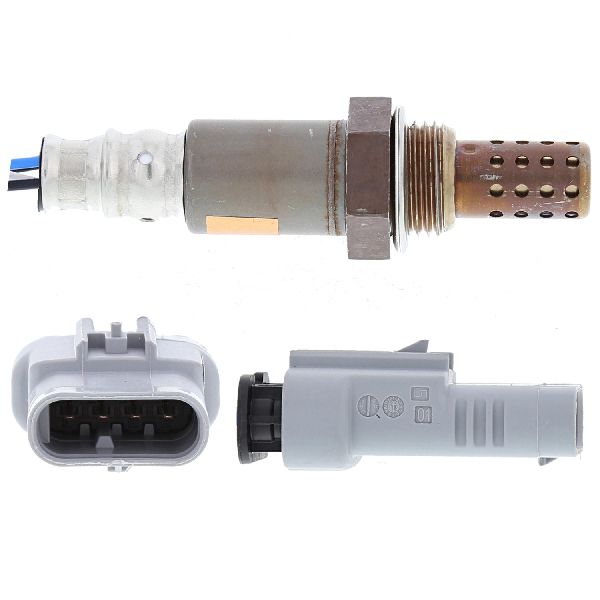
- Downstream Oxygen Sensor (Bank 1, Sensor 2)
(OEM #12657188 (replaces 12665163))— A faulty downstream sensor can send incorrect readings, falsely triggering a P0420 code. It is a common point of failure and much cheaper to replace than a catalytic converter. 🎬 See which parts to replace to clear your P0420 code
Trusted brands: ACDelco, Denso, Bosch, NTK
Related Codes That Often Appear With This One
- P0430 — This is the same catalyst efficiency code but for Bank 2 (passenger side). Seeing both P0420 and P0430 together strongly suggests a systemic issue like the airbox seal leak (per TSB #16NA111), a fuel delivery problem, or that both converters have reached the end of their service life.
- P0171 / P0174 — These codes indicate a lean fuel condition on Bank 1 and Bank 2, respectively. An unmetered air leak from the intake (airbox) or a significant exhaust leak before the upstream O2 sensor can cause both the lean condition and the P0420 code.
- P0300 - P0308 — These are misfire codes. A persistent misfire will dump raw fuel into the exhaust, quickly destroying the catalytic converter. Misfire codes must be addressed immediately to prevent catalyst damage.
Technical Service Bulletins (TSBs) & Recalls
- PIP3119P: Addresses Service Engine Soon lamp at low mileage with P0420/P0430, noting that the diagnostics for these codes are disabled for a specific purpose.
- 16NA111: Provides diagnostic information for an air box/air filter seal leak that can cause P0420 and P0430.
- PIP5110C / PIP5110B: Advises technicians to check for exhaust leaks behind the bank one number 2 (downstream) oxygen sensor when diagnosing a P0420.
- PIP5085C: Mentions P0420 occurring with other codes (P24A0, P2463) and to follow standard diagnostics.
Platform-Specific Known Issues
- Real-World Story: The $4,000 Quote: A 2016 Sierra 5.3L owner with 186,000 miles received a quote for $4,000 to replace the catalytic converter for a P0420 code. This highlights the importance of diagnosing cheaper alternatives first. The owner specifically referenced reading about the air filter assembly leak, showing that this TSB is well-known in the owner community.
- The Deceptive Post-Sensor Leak: GM TSB PIP5110C is a critical piece of information for this platform. It states that an exhaust leak *after* the downstream O2 sensor can cause a P0420. The negative pressure pulses in the exhaust can draw fresh oxygen from the leak into the pipe, which then flows past the sensor. The sensor detects this oxygen and reports a lean condition (high oxygen), which the ECM interprets as the catalytic converter not working, even though it is.
- Fixing Broken Manifold Bolts Without Extraction: Because broken exhaust manifold bolts are so common, the aftermarket has created clamp-on brackets. These brackets bolt to the cylinder head using other existing holes and use a jackscrew to physically press against the manifold, clamping it tight to the head and sealing the leak. This avoids the difficult and costly process of drilling out and extracting the broken bolt, providing a permanent and much simpler repair.
Mechanic-Grade Diagnostic Values
- Upstream O2 Sensor (Bank 1, Sensor 1) Voltage — expected: Rapidly fluctuating between 0.1V and 0.9V on a warm, closed-loop engine.. Failure: Slow or no fluctuation, or voltage is stuck high or low.
- Downstream O2 Sensor (Bank 1, Sensor 2) Voltage — expected: Relatively steady voltage, typically above 0.6V (e.g., 0.7V-0.8V) at a steady RPM when the converter is hot.. Failure: Voltage fluctuates in a pattern that mimics the upstream sensor, or is stuck low.
- Long-Term Fuel Trim (LTFT) Bank 1 — expected: Less than +/- 10% at idle and various steady RPMs (1500, 2500).. Failure: A value greater than +10% suggests a vacuum leak or unmetered air; a value less than -10% suggests a rich condition (e.g., leaking injector). These must be fixed before diagnosing P0420.
- Catalytic Converter Temperature Differential — expected: The outlet pipe temperature should be at least 100°F hotter than the inlet pipe temperature after a 20-minute drive.. Failure: Outlet temperature is the same as or cooler than the inlet, indicating the catalyst is not performing its exothermic reaction.
Hidden / Shadow Codes Worth Checking
- Mode $06, Catalyst Monitor: This is not a DTC, but a function on advanced scan tools that shows the raw data from the ECM's self-tests. You can view the catalyst efficiency test value before it crosses the threshold to set a P0420 code. A value close to the maximum limit indicates a borderline converter. (see via A scan tool capable of displaying Mode $06 data. The specific Test ID (TID) or Component ID (CID) will be labeled for the catalyst monitor (e.g., TID $84 on some GM vehicles).)
Scan Tool Commands That Help
- GDS2 or equivalent professional scan tool: Live Data Graphing — This is the primary diagnostic function. Graphing Bank 1 Sensor 1 and Bank 1 Sensor 2 voltages simultaneously allows for a direct visual comparison to see if the downstream sensor is mimicking the upstream sensor, which is a classic sign of a failed converter.
Wiring & Ground Locations
- O2 Sensor Fuses — In the main underhood fuse block on the driver's side. For 2014-2017 models, these are typically fuses F46 and F50.. The oxygen sensors have heater circuits that require power. A blown fuse will cause the sensor to operate incorrectly or not at all, leading to various O2 sensor and catalyst codes.
- ECM Connector X1 (Blue) — At the Engine Control Module (E92 ECM).. Allows for direct testing of the O2 sensor circuit. For Bank 1 Sensor 2 (the sensor that confirms catalyst operation), the signal wires are at Pin 10 (High Signal, PU/WH wire) and Pin 11 (Low Signal, TN/WH wire). Testing for continuity and voltage here can rule out wiring issues between the sensor and the ECM.
"I Checked Everything" — The Actual Cause
- Per GM TSB #PIP5110C, an exhaust leak *after* the downstream (Bank 1, Sensor 2) oxygen sensor can cause a false P0420. A technician may perform a smoke test and find no leaks between the manifold and the sensor, declaring the system sealed. However, a small leak at a downstream flange or pipe joint can pull in fresh air during the negative pressure pulses of the exhaust stream. This outside air flows past the sensor, making the ECM think there's high oxygen content (low efficiency), even though the catalyst is working properly.
OEM Part Supersession History
12665163→12657188— Standard part revision and update by GM/ACDelco.N/A→12677895— This is another valid ACDelco part number listed for the downstream sensor on 5.3L/6.2L engines for this platform.
Heads up: Always verify the correct part number with the vehicle's VIN, as multiple part numbers may exist depending on specific emissions packages or mid-year production changes.
Model Year Variations Within This Range
- 2014-2016: The core engine architecture (EcoTec3) and known issues (airbox leaks per TSB #16NA111, broken manifold bolts, AFM oil consumption) are consistent across this entire range. The diagnostic procedure for P0420 does not significantly change between these model years.
Helpful Videos
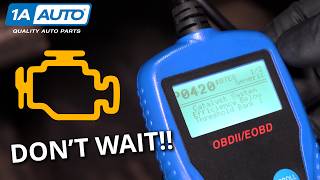
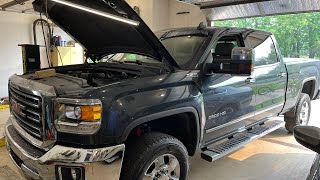
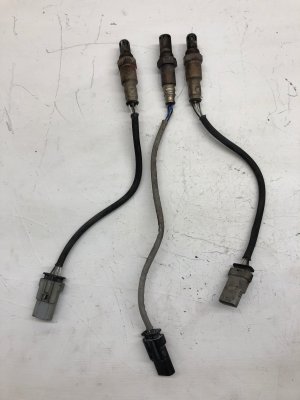
Used OEM Parts in Stock
New Aftermarket Parts Available


The information in this article is provided for general reference and educational purposes only. Vehicle specifications, procedures, and part compatibility can vary by production date, trim level, and region. Always consult your vehicle's factory service manual and verify part numbers before purchasing or performing repairs. Safety-critical components such as airbags, seat belts, and braking systems should be installed by a qualified professional.
- Gmc SIERRA 1500:
- 🧭 Diagnostic Flowchart
- 🎬 Helpful Videos
- 🛍️ Shop This Part
- What's Unique About the 2014-2016 Gmc SIERRA 1500
- Symptoms You May Notice
- Most Likely Causes
- Rare But Worth Checking
- Diagnosis Steps
- Parts You'll Likely Need
- Related Codes That Often Appear With This One
- Technical Service Bulletins (TSBs) & Recalls
- Platform-Specific Known Issues
- Mechanic-Grade Diagnostic Values
- Hidden / Shadow Codes Worth Checking
- Scan Tool Commands That Help
- Wiring & Ground Locations
- "I Checked Everything" — The Actual Cause
- OEM Part Supersession History
- Model Year Variations Within This Range
- 🎟️ Get 5% Off