

P0420 on 2014-2018 GMC Sierra Denali: Catalyst Efficiency Causes and Fixes
On a 2014-2018 GMC Sierra Denali, P0420 often points to a failing catalytic converter, but don't replace it without first checking for exhaust leaks and faulty oxygen sensors. An exhaust leak is a very common and cheaper cause. A new converter can cost over $1,000, while an O2 sensor is typically $50-$150. On this specific platform, TSBs also point to air intake leaks as a surprising potential cause.
- P0420 means the catalytic converter on the driver's side (Bank 1) is not working efficiently.
- Before replacing the expensive catalytic converter, thoroughly inspect for exhaust leaks (especially after the rear O2 sensor) and air intake leaks.
- A faulty downstream (Bank 1, Sensor 2) oxygen sensor can cause this code and is much cheaper to replace than the converter.
- Use a scan tool to watch live O2 sensor data; this is the most effective way to determine if the converter or a sensor is at fault.
- If you must replace the converter, first fix any underlying engine problems like misfires or oil leaks to prevent damaging the new part.
What's Unique About the 2014-2018 Gmc SIERRA DENALI

While many vehicles with a P0420 code end up needing a new catalytic converter, on these specific GM trucks (and their platform mates like the Silverado, Tahoe, and Yukon), there are several documented, less-obvious causes. Manufacturer service bulletins point to issues like air intake box seal leaks allowing debris to foul the system (TSB #16NA111) and, unusually, exhaust leaks occurring *after* the rear oxygen sensor (TSB #PIP5110C). Furthermore, the 5.3L and 6.2L engines in this generation can be prone to excessive oil consumption, which can contaminate and prematurely destroy the catalytic converters. These platform-specific issues mean that a thorough diagnosis is critical to avoid unnecessarily replacing the expensive catalytic converter.
Diagnostic Flowchart

Tap your situation to follow the diagnostic path that matches what you're seeing on this vehicle.
Symptoms You May Notice
- Check Engine Light is on.
- Reduced engine power and sluggish acceleration, especially if the converter is clogged.
- A rotten egg or sulfur smell from the exhaust, indicating the converter is overheating from unburnt fuel.
- Decreased fuel economy.
- Remote start may be disabled by the system when a Check Engine Light is active.
- Replacing the catalytic converter immediately without checking for exhaust leaks, air intake leaks, or a faulty oxygen sensor first. These are common causes and much cheaper to fix.
- Replacing the oxygen sensor without confirming it has failed via scan tool data. While a possible cause, throwing parts at the problem can be wasteful if the converter is truly the issue.
Most Likely Causes

- Failing Catalytic Converter 🔴 High Probability → Shop Catalytic Converter Converters can become contaminated or degraded over time, especially past 100,000 miles. Underlying issues like oil consumption or misfires, which can occur on these engines, accelerate converter failure by sending unburnt fuel or oil into the exhaust, overheating or poisoning the catalyst materials.
How to confirm: Use a scan tool to graph O2 sensor data; if the downstream sensor mimics the upstream, the converter is inefficient. An infrared thermometer can also be used; the outlet of a properly functioning and warmed-up converter should be significantly hotter (at least 100°F) than the inlet. If the inlet is hotter, the converter is likely clogged.
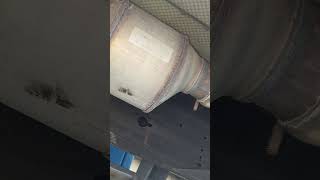
Typical fix: Replace the Bank 1 catalytic converter. This is often an integrated assembly with the Y-pipe. 🎬 Watch this step-by-step GMC Sierra catalytic converter replacement guide. Ensure any underlying engine issues are fixed first.
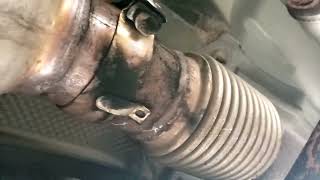
Est. part cost: $400-$1500 - Exhaust System Leak 🔴 High Probability Leaks can develop at manifold gaskets, flanges, or the flexible pipe sections. A GM Technical Service Bulletin (#PIP5110C) specifically highlights checking for leaks *behind* the Bank 1, Sensor 2 (downstream) oxygen sensor, as the exhaust pulses can draw in outside air and fool the sensor. Broken exhaust manifold bolts are also a common source of leaks on these V8 engines.
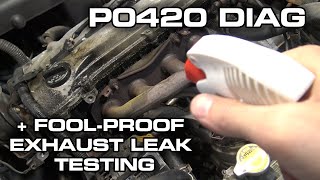
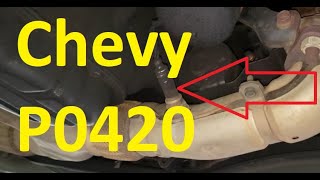
How to confirm: Visually inspect the entire exhaust system for cracks or black soot trails, especially around gaskets and welds. A smoke test is an effective method to pinpoint hard-to-see leaks. 🎬 Watch: How to diagnose P0420 and test for exhaust leaks. A ticking noise on a cold start that goes away as the engine warms up is a classic sign of a leaking exhaust manifold gasket.
Typical fix: Replace the leaking gasket or repair/replace the cracked section of the exhaust pipe. Manifold bolt repair can be intensive.
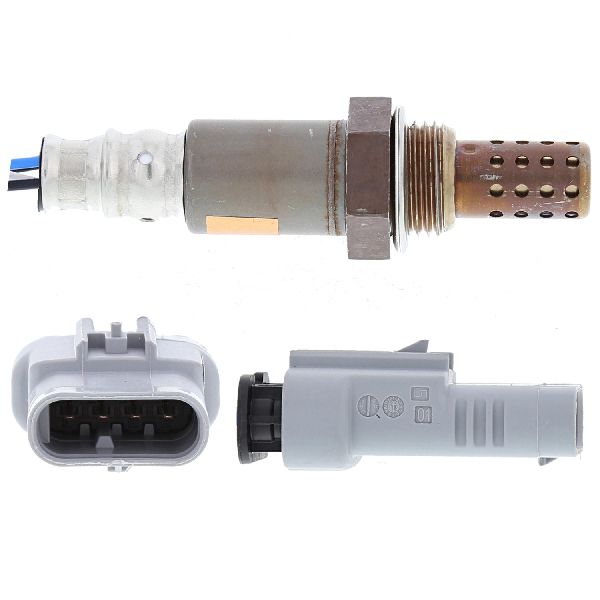
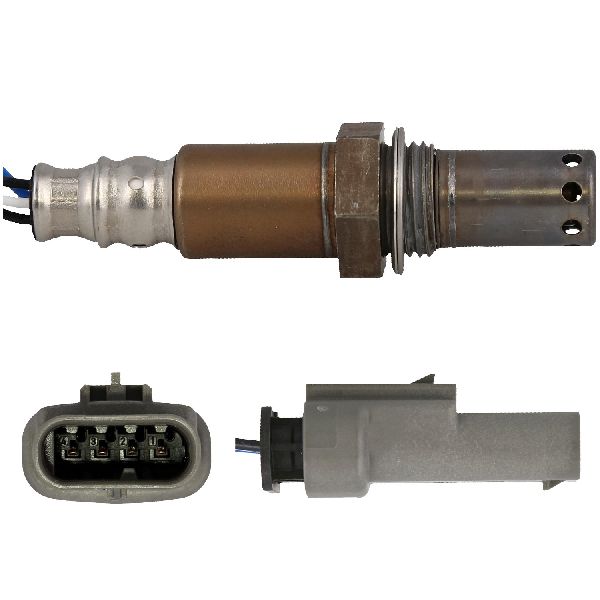
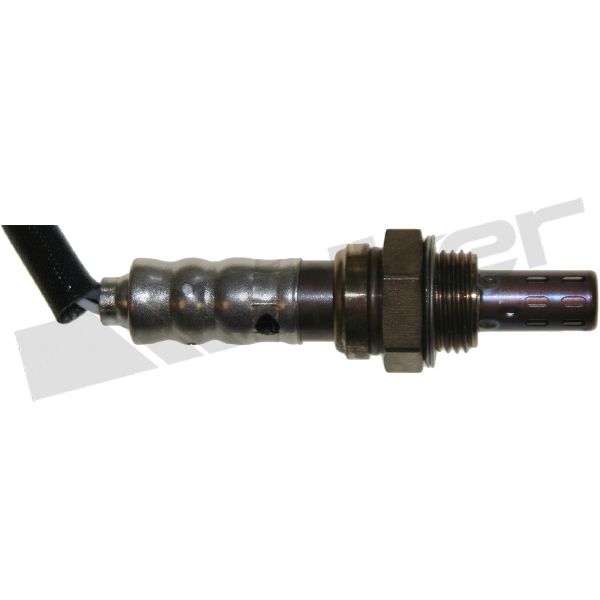
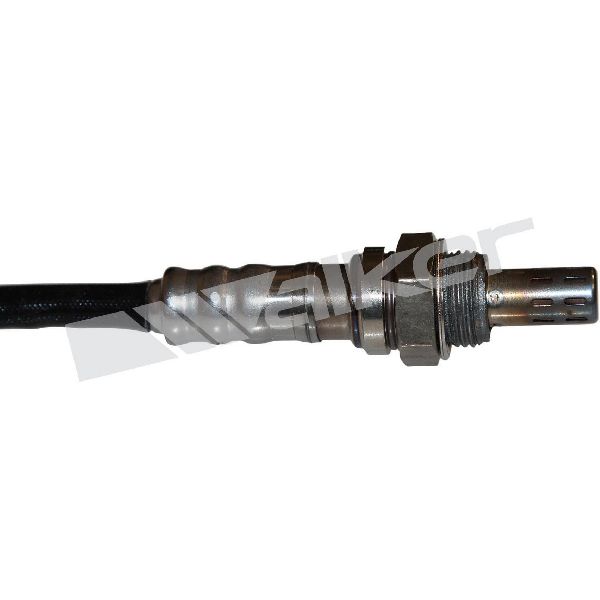
Est. part cost: $20-$300 - Faulty Downstream Oxygen Sensor (Bank 1, Sensor 2) 🟡 Medium Probability → Shop Oxygen Sensor Oxygen sensors are wear items and can become lazy or fail after 80-100k miles, sending incorrect data to the ECM. While often misdiagnosed, a bad sensor can cause a false P0420 code, and it's a much cheaper replacement than a converter.
How to confirm: Use a scan tool to observe the sensor's voltage. A healthy downstream sensor should show a relatively stable voltage (e.g., ~0.7-0.8V) when the engine is warm and at a steady RPM. If it's stuck high, low, fluctuating wildly like the upstream sensor, or unresponsive, the sensor itself is likely the problem.
Typical fix: Replace the Bank 1, Sensor 2 oxygen sensor. The ACDelco downstream sensor is part number 12677895 for the 5.3L/6.2L engines.
Est. part cost: $50-$150 - Air Intake System Leak ⚪ Low Probability → Shop Engine Air Intake Resonator A specific GM Technical Service Bulletin (#16NA111) notes that a poor seal on the air filter box can allow unmetered and unfiltered air/debris to enter the engine. This can affect the air/fuel ratio and the debris can physically damage the O2 sensors and clog the catalytic converter over time.
How to confirm: Inspect the air filter housing for proper closure, check for missing clips or tabs, and examine the seal around the air filter itself for any signs of dirt bypassing it. Look for dust or debris inside the intake tube past the filter.
Typical fix: Reseat or replace the air filter, or replace the air filter housing/seal if damaged. Clean the MAF sensor if it has been contaminated.
Est. part cost: $20-$100 - Underlying Engine Issues ⚪ Low Probability Engine misfires (from bad spark plugs or coils) or excessive oil consumption (a known issue with some of these engines) can send contaminants into the exhaust, poisoning the catalytic converter over time. A rich running condition from a leaking fuel injector can also overheat and destroy the converter.
How to confirm: Check for other trouble codes, especially misfire codes (P0300-P0308) or fuel trim codes (P0171, P0172). Check spark plugs for wear or oil fouling and monitor engine oil levels closely.
Typical fix: Address the root cause, such as replacing spark plugs, ignition coils, or addressing oil consumption issues before replacing the catalytic converter.
Est. part cost: $50-$500+
Rare But Worth Checking
- PCM Software Issue: In some cases, the powertrain control module (PCM) may have overly sensitive parameters for the catalyst monitor. A dealer can check for any available software updates. There are also procedures for breaking in a new catalytic converter if the code appears immediately after replacement.
- Damaged Wiring: The wiring or connector for the downstream oxygen sensor can be damaged by road debris or contact with hot exhaust components, leading to a false code.
Diagnosis Steps
- Scan for any other DTCs. Address codes for misfires (P0300s), fuel system (P0171-P0175), or other O2 sensors first, as they are often the root cause.
- Carefully inspect the entire exhaust system for leaks. Listen for a ticking noise on cold start. Look for black soot trails at gaskets and welds. Pay close attention to the exhaust manifold bolts and the area *after* the rear O2 sensor, as noted in TSB #PIP5110C.
- Inspect the air intake system for leaks, particularly the air filter box seal, as noted in TSB #16NA111. Check for dirt/debris past the air filter.
- Use a scan tool with live data capability to graph the voltage of the Bank 1 upstream (Sensor 1) and downstream (Sensor 2) O2 sensors. The upstream sensor should fluctuate rapidly between ~0.1V and ~0.9V. The downstream sensor should hold a relatively steady voltage (typically >0.6V) on a warm, running engine.
- If the downstream sensor's voltage pattern mirrors the upstream sensor, the catalytic converter is not working efficiently.
- If the downstream sensor's voltage is flat, unresponsive, or stuck, the sensor itself is likely faulty.
- Use an infrared temperature gun on a fully warmed-up engine. The pipe temperature at the converter's outlet should be at least 100°F hotter than the inlet. If it's the same or cooler, the converter is not functioning.
- If all sensors and the exhaust system check out, investigate potential root causes like leaking fuel injectors, incorrect fuel pressure, or excessive oil consumption before condemning the converter.
Parts You'll Likely Need

- Catalytic Converter (Bank 1)
(OEM #23147132 (Y-Pipe Assembly for 5.3L/6.2L))— This is the most common, though most expensive, fix if the converter has failed due to age or contamination. On these trucks, Bank 1 and Bank 2 converters are often part of a single Y-pipe assembly.
Trusted brands: ACDelco (OEM), Walker Exhaust, MagnaFlow
OEM price range: $800-$1500
Aftermarket price range: $400-$800 - Downstream Oxygen Sensor (Bank 1, Sensor 2)
(OEM #12677895)— This sensor is responsible for monitoring the converter. If it fails, it can trigger a false P0420 code. It's a common wear item.
Trusted brands: ACDelco, Denso, NTK
OEM price range: $80-$150
Aftermarket price range: $50-$100 - Exhaust Manifold Gasket
(OEM #12617944)— A common source of exhaust leaks that can trigger a P0420 code due to broken manifold bolts or gasket failure.
Trusted brands: ACDelco, Fel-Pro
OEM price range: $20-$50
Aftermarket price range: $15-$30
Related Codes That Often Appear With This One
- P0430 — This is the identical code for Bank 2 (passenger side). If both appear, it suggests a systemic issue like an engine problem (oil consumption, bad fuel), a clogged air intake, or that both converters have failed around the same time.
- P0300-P0308 — These are misfire codes. An ongoing misfire will dump raw fuel into the exhaust, quickly destroying the catalytic converter. The misfire is the root cause that must be fixed.
- P0171/P0174 (Lean) or P0172/P0175 (Rich) — Fuel trim codes indicate the engine is running too lean or too rich. A lean condition can be caused by an exhaust leak fooling the O2 sensors. A rich condition will destroy the converter with unburnt fuel. These must be addressed first.
Technical Service Bulletins (TSBs) & Recalls
- TSB #16-NA-111: Information on diagnosing MIL with DTCs P0420/P0430 due to poor air filter box seal.
- TSB #PIP5110C: Diagnostic advice for P0420, specifically checking for exhaust leaks *after* the Bank 1 Sensor 2 oxygen sensor.
- TSB #18-NA-137: Similar to 16-NA-111, addresses P0420/P0430 codes caused by improper air filter housing seal.
Platform-Specific Known Issues
- Air Box Seal Leaks (TSB #16-NA-111): A poor seal on the air filter housing allows dirt and debris to bypass the filter. This can contaminate the MAF sensor, damage O2 sensors, and eventually clog the catalytic converter, leading to P0420/P0430 codes.
- Exhaust Leak After Rear O2 Sensor (TSB #PIP5110C): GM identified that an exhaust leak even *after* the post-cat O2 sensor can, due to exhaust pressure pulses, draw in fresh air that causes a false P0420 reading. This is counter-intuitive but a documented issue to check before replacing parts.
- Oil Consumption: The 5.3L (L83) and 6.2L (L86) EcoTec3 engines can suffer from oil consumption issues related to the Active Fuel Management (AFM) system and piston rings. This burning oil contaminates the catalytic converter, leading to premature failure.
Mechanic-Grade Diagnostic Values
- Upstream O2 Sensor (Bank 1, Sensor 1) Voltage — expected: Fluctuating rapidly between 0.1V and 0.9V on a warm, running engine.. Failure: Slow or no fluctuation, or voltage stuck high or low.
- Downstream O2 Sensor (Bank 1, Sensor 2) Voltage — expected: Relatively steady voltage, typically above 0.6V (e.g., 0.7V-0.8V) at steady RPM when the converter is hot.. Failure: Voltage fluctuates in a similar pattern to the upstream sensor, indicating the converter is not storing oxygen.
- Low-Side Fuel Pressure (L83/L86 Engines) — expected: The direct injection system uses a low-pressure lift pump in the tank. For earlier port-injected GM V8s, the spec was often 55-62 PSI. The L83 system operates differently, with a PWM-controlled pump targeting around 72 PSI (500 kPa) for the high-pressure pump feed.. Failure: Low fuel pressure can cause lean conditions, which may not directly set P0420 but can contribute to engine issues that damage the converter over time.
Scan Tool Commands That Help
- GM GDS2 / Professional Scan Tool: Catalytic Converter Break-In Procedure / Drive Cycle — Immediately after replacing a catalytic converter to prevent a false P0420/P0430 from setting. The new converter needs to be properly out-gassed and heat-cycled before the catalyst monitor will run correctly.
Wiring & Ground Locations
- O2 Sensor Fuses — In the main underhood fuse block on the driver's side.. The oxygen sensors have heater circuits that are critical for quick warm-up and accurate readings. For 2018+ models, these may be fuses F46 and F50. For 2014-2017 models, the locations are the same but may be designated differently. A blown fuse will cause the sensor heater to fail, leading to incorrect readings and potentially a P0420 code.
- Engine/Cab Ground Points — Key grounds are located on the engine block, from the battery negative terminal to the chassis, and from the chassis to the cab.. Poor grounds can cause a host of electrical issues, including erratic sensor readings. While not a direct cause of P0420, verifying and cleaning main ground connections is a crucial preventative maintenance step on K2XX trucks to ensure all sensors, including O2 sensors, have a stable reference.
Real Owner Repair Stories
- Reddit user in r/MechanicAdvice (2016 Silverado 5.3L) — Persistent P0420 code immediately after performing a spray-in intake valve cleaning.
❌ Tried (didn't work) Clearing the code (it returned after 2 drive cycles)., Replacing the downstream Bank 1 O2 sensor with a new GM part.
✅ What actually fixed it The consensus from experienced technicians was that the intake cleaning chemical likely overheated and melted the ceramic brick inside the catalytic converter, a common issue if too much cleaner is used at once or introduced through a vacuum line instead of past the MAF sensor. The final fix required replacing the Bank 1 catalytic converter.
Model Year Variations Within This Range
- 2016-2018: The 5.3L V8 was available with an optional eAssist mild-hybrid system (RPO code L8B). This version uses a Belt Alternator Starter (BAS) instead of a traditional alternator and has stop/start technology. While the core engine and exhaust are similar to the standard L83, diagnostics involving the charging system are different.
- 2016+: Starting in 2016, the 8-speed (8L90) automatic transmission became more widely available with the 5.3L V8, having previously been paired mostly with the 6.2L. The standard transmission was the 6-speed (6L80). This doesn't directly affect the P0420 cause but is a key vehicle variation to be aware of during diagnosis.
- 2018: The layout of the underhood fuse box was changed for the 2018 model year. While the fuses for the O2 sensors (F46, F50) are in similar positions, the overall block is different from the 2014-2017 models, which is important when tracing wiring or checking fuses.
Helpful Videos

We Have This Part in Stock


The information in this article is provided for general reference and educational purposes only. Vehicle specifications, procedures, and part compatibility can vary by production date, trim level, and region. Always consult your vehicle's factory service manual and verify part numbers before purchasing or performing repairs. Safety-critical components such as airbags, seat belts, and braking systems should be installed by a qualified professional.
- Gmc SIERRA DENALI:
- 🧭 Diagnostic Flowchart
- 🎬 Helpful Videos
- 🛍️ Shop This Part
- What's Unique About the 2014-2018 Gmc SIERRA DENALI
- Symptoms You May Notice
- Most Likely Causes
- Rare But Worth Checking
- Diagnosis Steps
- Parts You'll Likely Need
- Related Codes That Often Appear With This One
- Technical Service Bulletins (TSBs) & Recalls
- Platform-Specific Known Issues
- Mechanic-Grade Diagnostic Values
- Scan Tool Commands That Help
- Wiring & Ground Locations
- Real Owner Repair Stories
- Model Year Variations Within This Range
- 🎟️ Get 5% Off