

P0420 on 2002-2006 GMC Yukon Denali: Catalyst Efficiency Causes & Fixes
Code P0420 on a 2002-2006 Yukon Denali almost always indicates a failing catalytic converter on Bank 1 (the driver's side). Before replacing this expensive part, it's wise to first check for exhaust leaks, particularly from broken exhaust manifold bolts, and verify the oxygen sensors are functioning correctly, as these cheaper issues can sometimes trigger the code.
- P0420 on a 2002-2006 Yukon Denali points to low catalyst efficiency on the driver's side.
- The most likely cause, especially on a vehicle with over 100,000 miles, is a worn-out catalytic converter.
- Before replacing the expensive converter, always rule out cheaper possibilities: check for exhaust leaks (especially at the manifolds) and test the oxygen sensors.
- Always address other engine codes (misfires, fuel trim) before replacing a catalytic converter, as they are likely the root cause of the failure.
- If you replace the converter, be aware of GM's TSB regarding a specific break-in drive cycle to prevent the code from returning falsely.
What's Unique About the 2002-2006 Gmc YUKON DENALI
On these GMT800 platform trucks, which are known for high mileage, a P0420 code is very commonly the result of the original catalytic converter simply reaching the end of its service life. While sensor or exhaust leak issues are possible, a worn-out converter is the most frequent culprit. Interestingly, GM issued a Technical Service Bulletin (TSB #PIP3119P) that covers these model years, noting that P0420/P0430 codes could appear falsely on low-mileage vehicles or after a converter replacement if a specific break-in procedure wasn't followed. This happens because the diagnostic test might run before the new converter's internal matting has fully out-gassed and settled.
Diagnostic Flowchart
Tap your situation to follow the diagnostic path that matches what you're seeing on this vehicle.
Symptoms You May Notice
- Check Engine Light is on.
- Vehicle fails emissions inspection.
- Reduced engine power or sluggish acceleration, especially on inclines.
- Decrease in fuel economy.
- A sulfur or "rotten egg" smell from the exhaust, indicating a failing converter.
- A ticking noise from the engine bay, especially when cold, which can indicate an exhaust manifold leak.
- Immediately replacing the oxygen sensors without testing them. While an O2 sensor can be the cause, it's often replaced unnecessarily when the catalytic converter is the actual point of failure. The swap-test is a key diagnostic step.
- Replacing the catalytic converter without addressing underlying engine problems like misfires or rich/lean conditions, which will cause the new converter to fail prematurely.
- Replacing the catalytic converter when the true cause is an undiagnosed exhaust manifold leak.
Most Likely Causes
- Failing Catalytic Converter 🔴 High Probability → Shop Catalytic Converter On high-mileage vehicles like the 2002-2006 Yukon Denali, the precious metals inside the converter simply degrade over time and lose their effectiveness. Many owners on forums report that after 150,000+ miles, this is the expected failure.
How to confirm: Use a scan tool to graph the upstream (B1S1) and downstream (B1S2) oxygen sensors. If the downstream sensor's voltage reading fluctuates rapidly, mimicking the upstream sensor, the converter is not working. An infrared thermometer can also be used; the outlet of the converter should be significantly hotter (by at least 100°F) than the inlet when the engine is at operating temperature. A rattling noise from the exhaust can also indicate a broken internal substrate in the converter.
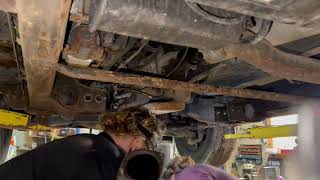
Typical fix: Replace the Bank 1 catalytic converter. On these trucks, this is often part of a Y-pipe assembly 🎬 Watch: How to replace the catalytic converters and Y-pipe that includes the converter for one or both banks. Using an OEM or high-quality direct-fit aftermarket converter is recommended, as some owners report the P0420 code returning with cheaper universal units.
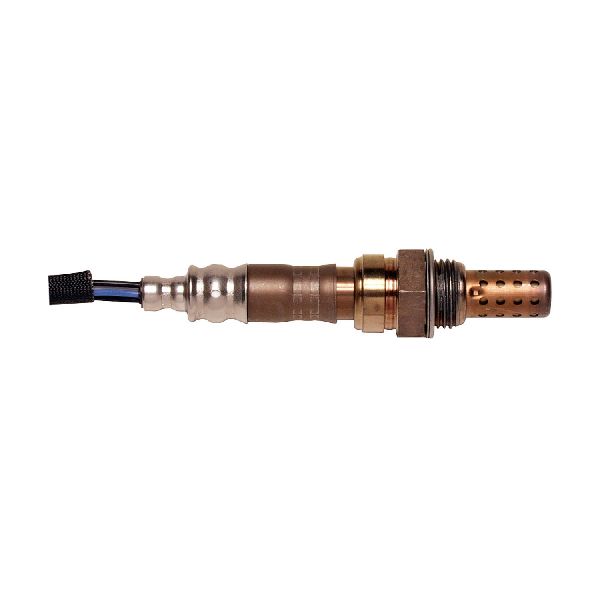
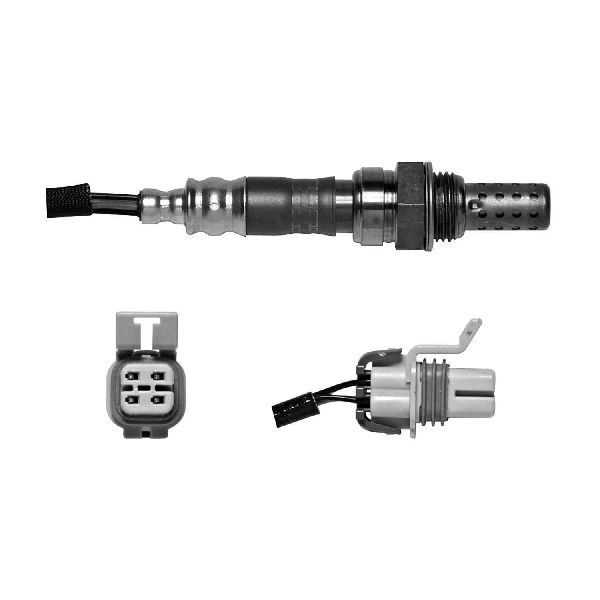
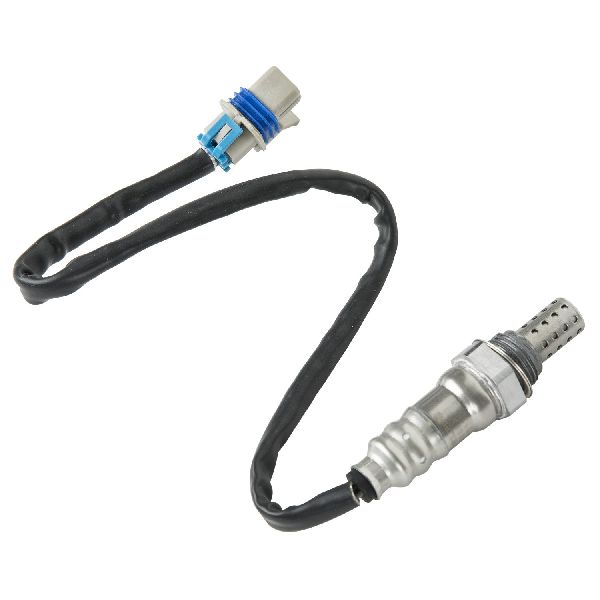
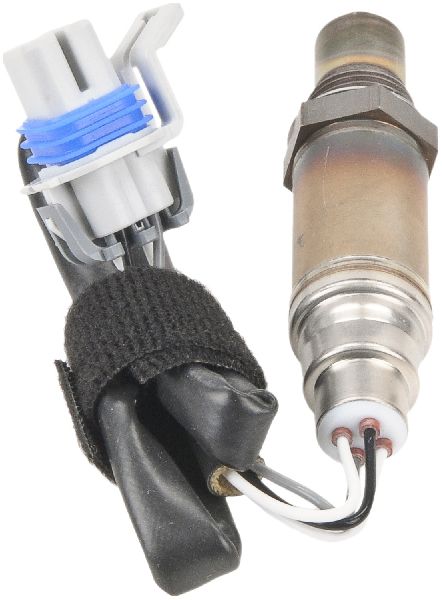
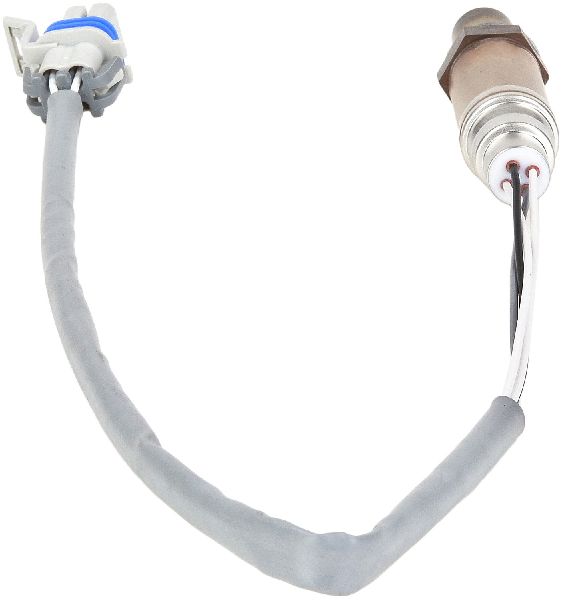
Est. part cost: $300-$800 - Faulty Downstream Oxygen (O2) Sensor 🟡 Medium Probability → Shop Oxygen Sensor O2 sensors are wear items and can become slow to respond or biased over time, sending incorrect data to the PCM. Contamination from oil or coolant can also cause failure.
How to confirm: The best way is to swap the downstream O2 sensors from Bank 1 and Bank 2. Clear the codes and drive the vehicle. If the code changes to P0430 (Bank 2), the sensor is bad. If the P0420 code returns, the sensor is likely good, and the problem is elsewhere. A visual inspection may show a sensor covered in black soot, indicating a problem.
Typical fix: Replace the Bank 1, Sensor 2 (downstream) oxygen sensor. It is highly recommended to use an ACDelco or Denso brand sensor for reliability.
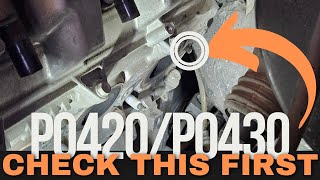
Est. part cost: $50-$120 - Exhaust Leak 🟡 Medium Probability Exhaust manifold bolts on GM V8s of this era are notorious for breaking, especially the one at the rear of the driver's side head (near the firewall) 🎬 See how to check for common exhaust manifold leaks first or the front of the passenger's side head. This allows outside oxygen to be drawn into the exhaust, which skews the upstream O2 sensor reading and causes the PCM to misinterpret the catalytic converter's efficiency.
How to confirm: Perform a visual inspection for black soot marks around exhaust flanges and especially where the manifold meets the cylinder head. A ticking sound that is loudest on a cold start and may quiet down as the engine warms is a classic symptom. A smoke machine test is the most effective way to pinpoint a leak.
Typical fix: Repair the leak. If caused by a broken manifold bolt, a common repair is to install a specialized exhaust manifold bolt repair clamp (e.g., from brands like Dorman or Kral Auto Parts) which clamps the manifold to the head without needing to extract the broken bolt. Otherwise, replace the gasket and any broken bolts.
Est. part cost: $20-$300 - Engine Misfire or Fuel System Problem ⚪ Low Probability
How to confirm: Check for other stored trouble codes, such as misfire codes (P0300-P0308) or fuel trim codes (P0171, P0174). Address these codes first, as they indicate the root cause that is damaging the converter. A rich condition can overheat and melt the converter, while a misfire sends raw fuel into it with the same effect.
Typical fix: Fix the underlying issue, which could be worn spark plugs, faulty ignition coils, or leaking fuel injectors. After the repair, clear codes and re-evaluate.
Est. part cost: $50-$500
Rare But Worth Checking
- Contaminated Catalytic Converter: → Shop Catalytic Converter If the engine has an internal issue like leaking valve seals or bad piston rings, it can burn oil. This oil can contaminate the catalytic converter, ruining it over time. Similarly, an internal coolant leak (e.g., from a head gasket) can also destroy a converter.
- Incorrect Fuel: Using leaded fuel (if available) can quickly destroy the catalytic converter. While less common, this is a known cause of catalyst failure.
Diagnosis Steps
- Scan for all stored DTCs. If any other codes are present (misfire, fuel trim, O2 sensor circuit), diagnose and repair them first.
- Inspect the exhaust system thoroughly for any leaks. Look for black soot trails at gaskets and listen for a ticking noise on a cold start, paying close attention to the exhaust manifolds.
- Using a scan tool with live data graphing, observe the voltage of the Bank 1 Sensor 1 (upstream) and Bank 1 Sensor 2 (downstream) O2 sensors with the engine at operating temperature and held around 2000 RPM.
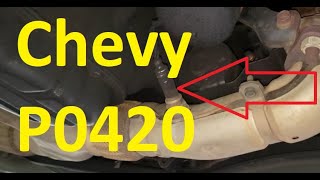
- A healthy system will show the upstream sensor (B1S1) fluctuating rapidly between approximately 0.1V and 0.9V, while the downstream sensor (B1S2) remains relatively steady and stable (typically above 0.5V). 🎬 Watch this guide on diagnosing P0420 causes and fixes
- If the downstream sensor (B1S2) is fluctuating in a similar rapid pattern to the upstream sensor, the catalytic converter has failed and is no longer storing oxygen.
- If the downstream sensor's signal is flat, stuck, or slow to respond, the sensor itself is likely faulty. Confirm by swapping the Bank 1 and Bank 2 downstream sensors and see if the code changes to P0430.
- If a new converter was just installed and the code returned, perform the break-in procedure outlined in TSB #PIP3119P: Drive at sustained highway speed for 25-30 minutes, stop and shut off the engine for 1 minute, then resume highway speed for another 10-15 minutes.
Parts You'll Likely Need
- Catalytic Converter (Bank 1) — This is the most common cause of P0420 on a high-mileage Yukon Denali, as the converter's internal materials have degraded.
Trusted brands: Walker Exhaust (e.g., p/n 16468), MagnaFlow, ACDelco (OEM)
OEM price range: $600-$1200
Aftermarket price range: $300-$800 - Downstream Oxygen Sensor (Bank 1, Sensor 2)
(OEM #ACDelco AFS106 (GM p/n 19355306))— A faulty or slow-responding downstream sensor can send incorrect data to the PCM, falsely triggering a P0420 code.
Trusted brands: ACDelco (GM Genuine Parts), Denso, Bosch
OEM price range: $80-$150
Aftermarket price range: $50-$100
Related Codes That Often Appear With This One
- P0430 — This is the identical code for Bank 2 (passenger side). It's very common for both catalytic converters to fail around the same time due to age and mileage.
- P0300-P0308 — These are misfire codes. Unburned fuel from a misfiring cylinder can enter the exhaust and superheat the catalytic converter, destroying its internal structure.
- P0171, P0174 — These are 'System Too Lean' codes. An exhaust leak before the upstream O2 sensor can cause both a lean code and a false P0420 reading, making it a critical first check.
Technical Service Bulletins (TSBs) & Recalls
- PIP3119P: Addresses false P0420/P0430 codes on low-mileage vehicles or after converter replacement, and provides a specific catalytic converter break-in procedure.
Platform-Specific Known Issues
- TSB #PIP3119P: False P0420/P0430 After Converter Replacement: General Motors issued this bulletin for a wide range of V8-equipped vehicles, including the 2002-2006 Yukon. It notes that a P0420 or P0430 code may set on a low-mileage vehicle or shortly after a catalytic converter has been replaced. This can happen if the diagnostic test runs before the new converter has gone through a proper break-in cycle. The bulletin provides a specific driving procedure to fix this: 1) Drive at sustained highway speed for 25-30 minutes. 2) Stop and shut off the engine for 1 minute. 3) Restart and resume highway speed for another 10-15 minutes. 4) Stop and shut off the engine for 1 minute before resuming normal operation.
- Broken Exhaust Manifold Bolts: → Shop Exhaust Manifold The V8 engines in this platform are widely known for breaking the exhaust manifold bolts, particularly the rearmost bolt on the driver's side and the foremost on the passenger's side. This creates an exhaust leak that is a very common cause of a false P0420 code. The leak introduces unmetered air, which is detected by the upstream O2 sensor, leading the computer to believe the catalyst is not functioning. A distinct ticking noise on cold starts is the primary symptom.
Mechanic-Grade Diagnostic Values
- Long-Term Fuel Trim (LTFT) — expected: Less than +/- 10% at idle and various RPMs (1500, 2500).. Failure: Values greater than +10% (lean) or less than -10% (rich) indicate an underlying fuel or air issue that must be fixed before addressing the P0420.
- Exhaust Back Pressure — expected: Below 1.5 PSI at idle and under 3 PSI at 2500 RPM.. Failure: Readings higher than 3 PSI indicate a clogged or collapsed catalytic converter, which is causing a physical restriction in the exhaust.
- Catalytic Converter Temperature Differential — expected: Outlet temperature should be at least 100°F hotter than the inlet temperature after the engine is at operating temperature. Operating temperature can range from 350°C to 700°C (662°F to 1292°F).. Failure: If the outlet temperature is equal to or cooler than the inlet, the converter is not performing its chemical reaction and is considered failed.
Hidden / Shadow Codes Worth Checking
- Mode 6, Test ID $81 (typical for GM): This is not a DTC but a specific onboard diagnostic test result for the catalyst efficiency monitor. The PCM measures and compares the time it takes for the front and rear O2 sensors to switch across a voltage threshold. A small time difference indicates low oxygen storage capacity and a failing converter. (see via A professional scan tool capable of displaying Mode 6 data is required. This data provides the raw test results that the PCM uses to decide whether to set the P0420 code.)
Wiring & Ground Locations
- G102 / G104 — Typically located on the rear of the passenger's side cylinder head. Some diagrams show G102 at the left rear of the engine.. This is a primary ground point for the ignition coil harnesses. A poor ground here can cause weak spark and intermittent misfires, which can lead to unburned fuel damaging the catalytic converter and triggering a P0420 code.
- G103 — Located on the cowl in the engine compartment, usually above the brake booster on the driver's side.. This is a critical ground for numerous modules, including the Body Control Module (BCM) and the Data Link Connector (DLC). While not a direct cause, a poor ground here can create widespread electrical issues and communication problems that can complicate diagnosis.
- Engine Block Grounds — Multiple points, but a key one is on the front of the driver's side cylinder head, where several sensor grounds terminate. Another is the main battery negative cable connection to the engine block.. The PCM and its sensors, including the O2 sensors, rely on a clean ground reference to the engine block. A corroded or loose ground can introduce noise or voltage offsets into sensor readings, potentially causing the PCM to misinterpret the O2 sensor data and falsely trigger a P0420.
Real Owner Repair Stories
- Tahoe Yukon Forum thread (2009 GMC Yukon Denali 6.2L, 157,000 miles) — Persistent P0420 code, strongly negative long-term fuel trims (-14.1%), and gasoline smell in oil.
❌ Tried (didn't work) Replacing spark plugs and wires, cleaning MAF sensor.
✅ What actually fixed it A shop discovered the fuel alcohol percentage was incorrectly reading over 20% despite no E85 use. Resetting the alcohol composition via a scan tool corrected the negative fuel trims. However, the P0420 code continued to return until the catalytic converters were ultimately replaced, indicating the long-term rich condition had permanently damaged them. - Tahoe Yukon Forum thread (2002 GMC Yukon Denali) — P0420 code returned after being cleared.
❌ Tried (didn't work) Clearing the code.
✅ What actually fixed it The resolution was not posted by the original author, but the key piece of advice from an experienced member was to swap the downstream (post-cat) oxygen sensors between Bank 1 and Bank 2. If the code changes to P0430 (Bank 2), the sensor is confirmed to be the fault. If P0420 returns, the catalytic converter is the likely culprit. This diagnostic step was highlighted as a crucial money-saving measure before replacing expensive parts. - Tahoe Yukon Forum thread (Not specified, but GMT800 platform) — P0420 code returned after fixing P0172/P0175 (System Too Rich) codes by resetting fuel composition.
❌ Tried (didn't work) Fixing the underlying rich fuel condition alone.
✅ What actually fixed it The user was advised by another owner that once a rich condition is fixed, a persistent P0420 almost certainly means the catalytic converter was permanently damaged. The fix was to replace the catalytic converters (specifically a Magnaflow Y-pipe assembly).
"I Checked Everything" — The Actual Cause
- A persistent P0420 with a slight idle miss was not caused by an exhaust leak. The root cause was found to be a combination of two small, unmetered air leaks: a cracked plastic retainer on the PCV inlet tube where it connects to the air intake (after the MAF sensor) and dried-out, brittle intake manifold plenum gaskets. Replacing the inexpensive Fel-Pro intake gaskets resolved the issue without replacing coils or the catalytic converter.
Model Year Variations Within This Range
- 2002-2006: The availability of Flex Fuel (E85) compatible engines (e.g., 5.3L L59) versus gasoline-only engines (e.g., 5.3L LM7, 6.0L LQ4/LQ9). On Flex Fuel models, a faulty fuel composition sensor or an incorrect learned alcohol percentage can cause a persistent rich condition, leading to fuel trim issues and eventual catalytic converter failure that sets a P0420 code. This adds an extra diagnostic step not present on non-Flex Fuel trucks.
Helpful Videos
We Have This Part in Stock


The information in this article is provided for general reference and educational purposes only. Vehicle specifications, procedures, and part compatibility can vary by production date, trim level, and region. Always consult your vehicle's factory service manual and verify part numbers before purchasing or performing repairs. Safety-critical components such as airbags, seat belts, and braking systems should be installed by a qualified professional.
- Gmc YUKON DENALI:
- 🧭 Diagnostic Flowchart
- 🎬 Helpful Videos
- 🛍️ Shop This Part
- What's Unique About the 2002-2006 Gmc YUKON DENALI
- Symptoms You May Notice
- Most Likely Causes
- Rare But Worth Checking
- Diagnosis Steps
- Parts You'll Likely Need
- Related Codes That Often Appear With This One
- Technical Service Bulletins (TSBs) & Recalls
- Platform-Specific Known Issues
- Mechanic-Grade Diagnostic Values
- Hidden / Shadow Codes Worth Checking
- Wiring & Ground Locations
- Real Owner Repair Stories
- "I Checked Everything" — The Actual Cause
- Model Year Variations Within This Range
- 🎟️ Get 5% Off