

P0420 on 2010-2017 Honda Odyssey: Catalyst Efficiency Causes & Fixes
P0420 on a Honda Odyssey usually means the Bank 1 catalytic converter is failing, often due to engine-related issues like oil consumption. Before replacing the expensive converter, always investigate for bad oxygen sensors, exhaust leaks, and especially oil burning caused by the VCM system, which is the subject of a class-action lawsuit and multiple TSBs.
- P0420 on a 2010-2017 Odyssey means the Bank 1 (rear) catalytic converter is not working efficiently.
- DO NOT automatically replace the catalytic converter. The most common root cause is engine oil consumption from the VCM system, which will destroy a new converter.
- Always diagnose first. Check for misfire codes (P030x), inspect spark plugs for oil, and monitor oil levels.
- Consider replacing the downstream O2 sensor as a less expensive first step if diagnostic data is inconclusive.
- Check with a Honda dealer to see if your vehicle is eligible for a warranty extension related to VCM piston ring issues (TSB 13-081).
What's Unique About the 2010-2017 Honda ODYSSEY

The J35 V6 engine in this generation of Odyssey is equipped with Variable Cylinder Management (VCM), a system designed to improve fuel economy by deactivating cylinders under light load. A widely documented side effect of this system is increased oil consumption. The piston rings on the deactivated cylinders (primarily 1-4) can align, allowing oil to get past and into the combustion chamber. This burned oil contaminates the spark plugs, leading to misfires (P0301-P0304), and ultimately fouls and destroys the catalytic converters with oil and carbon deposits, making P0420 a very common code on these vans.
Diagnostic Flowchart

Tap your situation to follow the diagnostic path that matches what you're seeing on this vehicle.
Generation note: This range covers the final year of the third generation (2010) and the full fourth generation (2011-2017). Both generations use a 3.5L J35 V6 engine and feature the VCM system known to cause issues leading to the P0420 code. The underlying causes and diagnostic procedures are very similar for both generations. Honda TSB 13-081 specifically covers 2011-2013 models for piston ring issues.
Symptoms You May Notice

- Check Engine Light is on
- Failed emissions test
- Reduced fuel economy
- Sluggish acceleration or reduced engine performance, especially under load
- Blue smoke from tailpipe during acceleration after VCM has been active, indicating oil burn-off.
- Replacing the catalytic converter without diagnosing the root cause. If the engine is burning oil or has a misfire, the new converter will fail prematurely.
- Replacing the upstream Air/Fuel sensor when the downstream O2 sensor is the one that measures catalyst efficiency.
Most Likely Causes

- Failing Catalytic Converter 🔴 High Probability → Shop Catalytic Converter Often a secondary failure caused by oil consumption or other engine issues fouling the catalyst material over time. The VCM system is the primary driver of this failure chain.
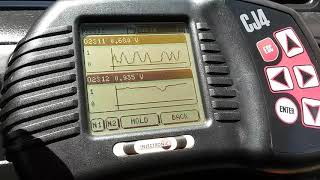
How to confirm: Use a scan tool to graph the upstream and downstream O2 sensor data. If the downstream sensor's voltage pattern mimics the upstream sensor's, the converter is not working. An infrared thermometer can also be used; the outlet of a working converter should be significantly hotter than the inlet. A clogged cat may also cause a lack of power, especially on acceleration.
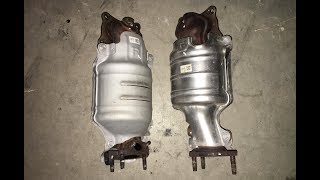
Typical fix: Replace the Bank 1 (rear) catalytic converter. 🎬 Watch this walkthrough on removing the Bank 1 and 2 converters This should only be done after confirming no other issues are present. The OEM part number for the rear converter (Bank 1) for 2014-2017 models is 18290-RV0-A10.
Est. part cost: $400-$1200 - Engine Issues (Oil Consumption, Misfires, Fuel System) 🔴 High Probability The VCM system is known to cause oil to foul spark plugs in cylinders 1-4, leading to misfires (P0301-P0304) that send unburned fuel and oil into the exhaust, destroying the converter. TSB 13-081 specifically addresses this, outlining a procedure to clean pistons and replace rings on the affected cylinders due to a class-action lawsuit settlement.
How to confirm: Check for other DTCs, especially misfire codes (P030x). Inspect spark plugs for heavy carbon or oil fouling. Monitor engine oil levels closely; many owners report losing a quart every 1,000-2,000 miles. Check fuel trims for signs of leaking injectors.
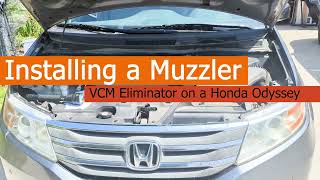
Typical fix: Address the root cause. This may involve replacing fouled spark plugs, fixing fuel injectors, or addressing the VCM-related piston ring issue, which may be covered under a warranty extension (TSB 13-081). Many owners also install a VCM disabling device. 🎬 See how to install a VCM muzzler to prevent oil consumption
Est. part cost: $20-$500 - Faulty Oxygen (O2) or Air/Fuel (A/F) Sensor 🟡 Medium Probability Sensors degrade over time. A lazy or failed downstream (Bank 1, Sensor 2) O2 sensor can send incorrect data, falsely triggering a P0420 code. A faulty upstream A/F sensor can affect the fuel mixture, which in turn can damage the converter.
How to confirm: Graph the sensor data on a scan tool. The downstream sensor should show a relatively steady voltage on a healthy, warm converter. If it's stuck or slow to respond, the sensor is likely bad.
Typical fix: Replace the faulty sensor. The downstream sensor is the most common culprit for a false P0420. Always use quality brands like Denso or NTK. For a 2016 Odyssey, the Denso downstream Bank 1 Sensor 2 is part #234-4355.
Est. part cost: $50-$180 - Exhaust Leak ⚪ Low Probability
How to confirm: Visually inspect the exhaust system from the engine to the catalytic converter for cracks or loose connections. Listen for hissing or ticking sounds. A smoke machine can be used to pinpoint small leaks.
Typical fix: Repair the leak by replacing the gasket or damaged exhaust component.
Est. part cost: $20-$150
Rare But Worth Checking
- Stuck or Failing PCV Valve: → Shop PCV Valve A faulty PCV valve can increase crankcase pressure, leading to oil consumption which can foul the catalytic converter over time. It's an inexpensive part to check and replace. The OEM part number is 17130-RCA-A02 and it fits a wide range of Honda V6 models.
- PCM Software Issue: Honda has issued software updates (like TSB 11-033) to adjust VCM operation and address issues like misfires that can lead to catalyst damage. Another TSB (18-023) notes the ECM can be overly sensitive and misinterpret sensor data, triggering a false P0420, which is also corrected by a software update.
Diagnosis Steps
- Check for any other stored trouble codes. Address misfire (P030x), fuel system, or VCM system (P3400/P3497) codes first, as they are likely the root cause.
- Inspect the exhaust system between the engine and the catalytic converter for any leaks. Pay close attention to manifold gaskets and flex pipes.
- Use a scan tool to observe live data. Warm up the engine and hold the RPMs around 2,500. Watch the voltage graphs for the upstream (Bank 1, Sensor 1) and downstream (Bank 1, Sensor 2) oxygen sensors.
- Analyze O2 sensor graphs: 🎬 Watch: Three ways to diagnose a P0420 code on your Odyssey On a good converter, the upstream sensor will fluctuate rapidly, while the downstream sensor will hold a relatively steady, high voltage. If the downstream sensor mirrors the upstream sensor's fluctuations, the converter has failed.
- If the downstream sensor's voltage is flat or slow to respond, the sensor itself may be faulty.
- Thoroughly investigate engine health. Check for excessive oil consumption by monitoring the dipstick over 1,000 miles. Inspect spark plugs for heavy, black, oily deposits, especially in cylinders 1-4. Check for eligibility for TSB 13-081 or TSB 11-033 before condemning the converter.
Parts You'll Likely Need
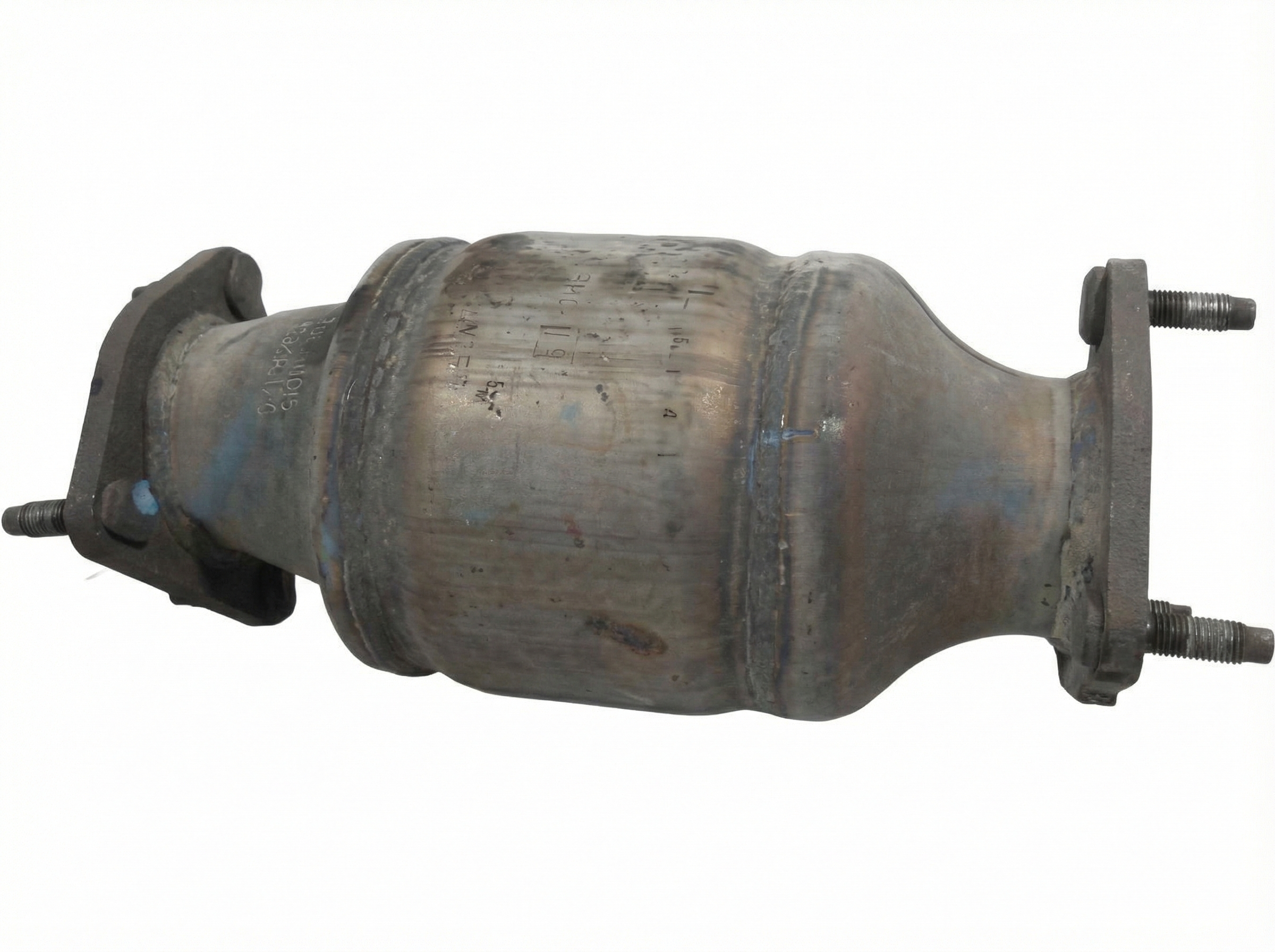
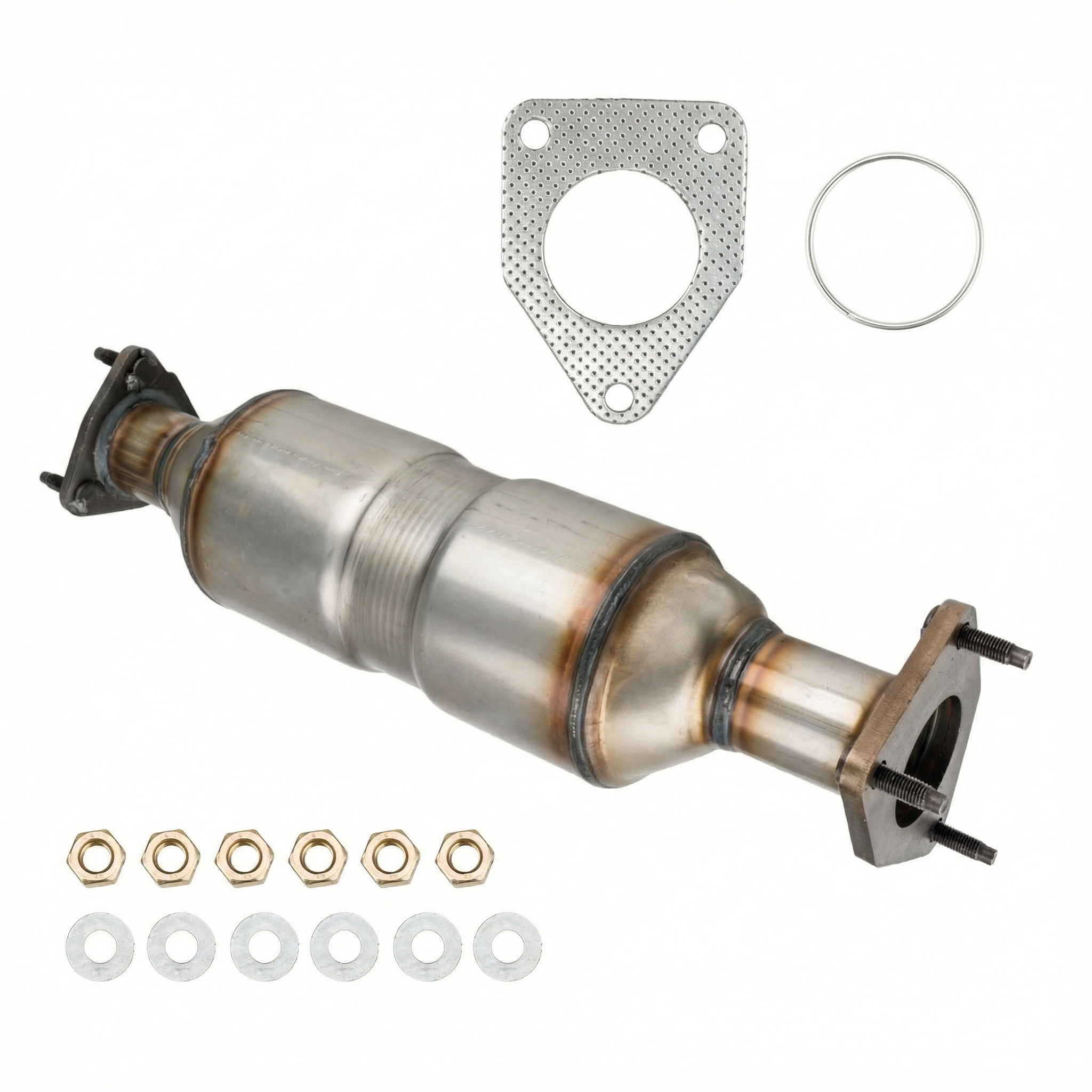
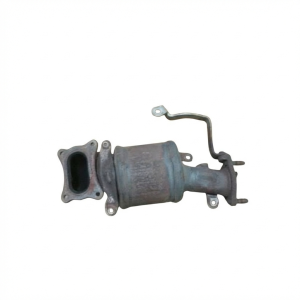
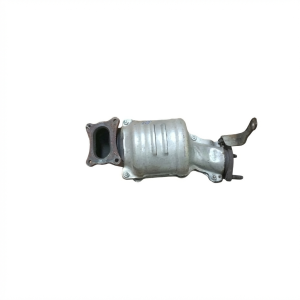
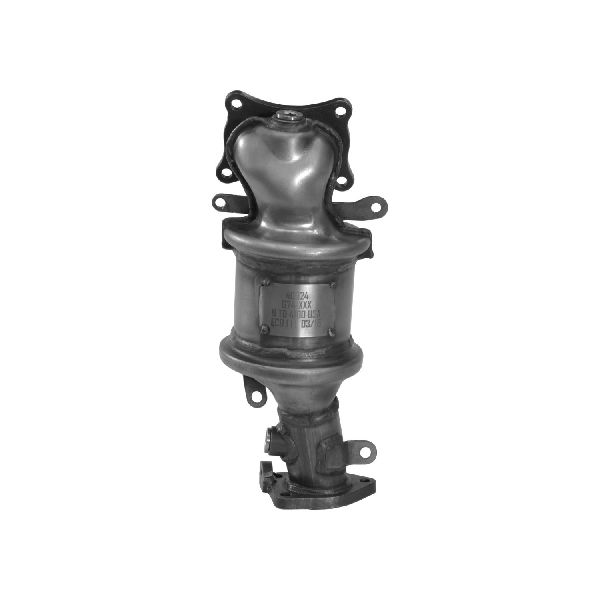
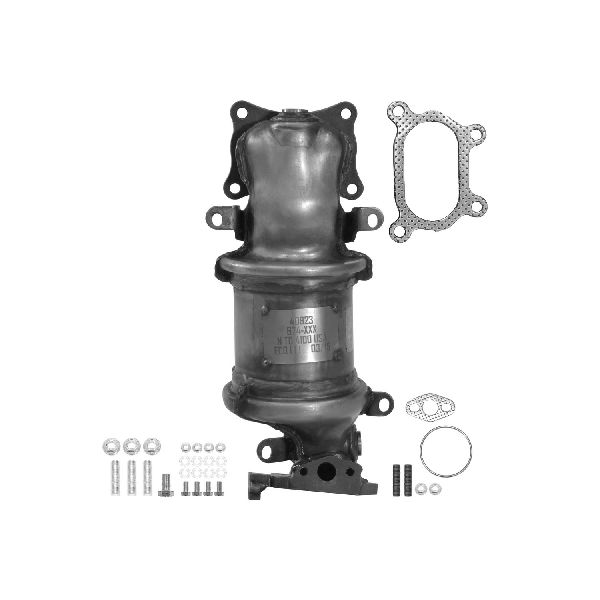
- Bank 1 Catalytic Converter
(OEM #18290-RV0-A10 (Rear, Bank 1, for 2014-2017))— This is the component that the code directly identifies as inefficient. It often fails due to contamination from oil burning or misfires.
Trusted brands: Honda (OEM), Walker Exhaust, MagnaFlow
OEM price range: $900-$1400
Aftermarket price range: $400-$900 - Downstream Oxygen Sensor (Bank 1, Sensor 2)
(OEM #36542-RV0-A01 (Honda), 234-4355 (Denso))— This sensor measures the converter's efficiency. It can fail and give false readings, or it can be replaced along with the converter.
Trusted brands: Denso, NTK
OEM price range: $120-$180
Aftermarket price range: $50-$90 - Upstream Air/Fuel Ratio Sensor (Bank 1, Sensor 1)
(OEM #36531-RV0-A01 (Honda), 234-5010 (Denso))— A faulty upstream sensor can cause an incorrect air/fuel mixture, which can damage the catalytic converter over time.
Trusted brands: Denso, NTK
OEM price range: $150-$220
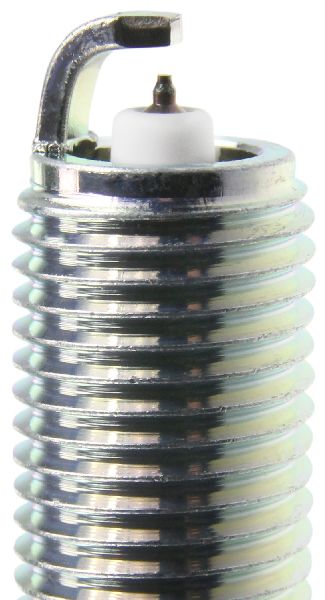
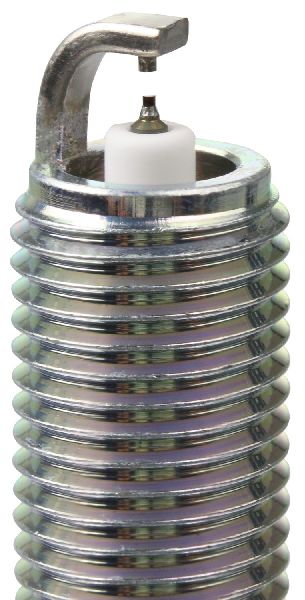
Aftermarket price range: $80-$150 - Spark Plugs — Often become fouled with oil due to the VCM issue, causing misfires that damage the catalytic converter. TSB 13-081 requires replacing them as part of the piston ring repair.
Trusted brands: NGK, Denso
OEM price range: $15-$25 each
Aftermarket price range: $8-$15 each - PCV Valve
(OEM #17130-RCA-A02)— A stuck PCV valve can contribute to oil consumption, which is a primary cause of catalytic converter failure on these vehicles. It is an inexpensive and easy part to replace during diagnosis.
Related Codes That Often Appear With This One
- P0430 — This is the same catalyst efficiency code but for Bank 2 (the front bank). It's common for both converters to degrade at a similar rate, especially when oil consumption is the root cause.
- P0300-P0304 — These are misfire codes. Misfires, often caused by VCM-related oil fouling on cylinders 1-4, are a primary cause of catalytic converter failure. TSB 13-081 directly links these codes to the underlying piston ring issue.
- P3400 / P3497 — These codes relate to the VCM system (Rocker Arm Oil Pressure Switch). They often appear when oil consumption, a root cause of P0420, becomes severe or if the system is malfunctioning. TSB 11-033 addresses these codes.
Technical Service Bulletins (TSBs) & Recalls

- TSB 13-081: Addresses a warranty extension for 2011-2013 Odysseys due to a class-action lawsuit. It states that piston rings on cylinders 1-4 may align, causing spark plug fouling (DTCs P0301-P0304), which is a primary cause of catalytic converter failure. The fix involves cleaning pistons and replacing rings.
- TSB 11-033: Details a PCM/PGM-FI software update to improve VCM timing. Frequent VCM switching can increase oil consumption, and this update aims to mitigate that. It's often associated with VCM-related codes P3400/P3497 but is a crucial step in addressing the root cause of P0420.
- TSB 18-023: Mentions a warranty extension for catalytic converters (P0420/P0430) to 17 years/200,000 miles for vehicles in specific states (CA, CT, ME, MA, NY, VT) due to the ECM misinterpreting sensor data.
Platform-Specific Known Issues
- VCM Muzzler / Disabler as a Preventative Fix: A very common modification discussed by owners is the installation of a 'VCM Muzzler' or similar device. These devices trick the engine coolant temperature sensor to prevent the VCM system from activating. By stopping cylinder deactivation, the device aims to prevent the associated oil consumption and piston ring wear, thereby protecting the catalytic converters from long-term damage.
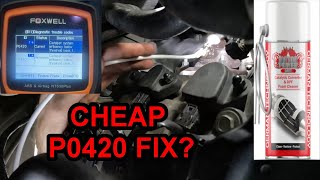
- Owner Experience: Chemical Cleaning as a Temporary Fix: Some owners have attempted to resolve the P0420 code by using in-tank fuel additives or direct-injection catalytic converter cleaners (like Cataclean or DPF cleaner). One YouTube user documented spraying cleaner directly into the O2 sensor bung on a 2011 Odyssey. While this can sometimes temporarily restore enough efficiency to turn off the light for months, it is not a permanent solution and does not address the underlying cause of the contamination (usually oil burning).
- Owner Experience: The 'Spark Plug Non-Fouler' Trick: → Shop Spark Plug A less-recommended workaround mentioned in forums involves installing a spark plug non-fouler on the downstream O2 sensor. This pulls the sensor out of the direct exhaust stream, tricking the PCM into seeing a larger difference between the upstream and downstream sensors, thus clearing the P0420 code. This does not fix the problem and will cause the vehicle to fail a visual emissions inspection.
Mechanic-Grade Diagnostic Values
- Upstream A/F Sensor (Sensor 1) Voltage Graph — expected: Rapidly fluctuating waveform, typically between 2.0V and 4.0V, averaging around 3.3V.. Failure: A flat-line, slow-to-respond, or biased voltage reading indicates a faulty sensor.
- Downstream O2 Sensor (Sensor 2) Voltage Graph — expected: A relatively steady voltage, typically above 0.6V, when the catalyst is hot and working efficiently.. Failure: A waveform that mimics the upstream sensor's fluctuations indicates the catalytic converter is not working. A flat line at 0V or a stuck high voltage indicates a sensor or wiring fault.
- Catalytic Converter Temperature Differential — expected: The outlet temperature should be at least 100°F (38°C) hotter than the inlet temperature on a fully warmed-up engine.. Failure: An outlet temperature that is the same as or cooler than the inlet temperature suggests the converter is inactive or clogged.
Hidden / Shadow Codes Worth Checking
- Mode $06, TID $05, CID $81: Catalyst capability monitored by Oxygen Storage Capacity (OSC) index. This value represents the catalyst's ability to store and release oxygen. (see via A professional scan tool capable of displaying Mode $06 data. The value is compared against a minimum and maximum threshold set by the manufacturer.)
- Mode $06, TID $06, CID $81: Catalyst capability monitored by the secondary oxygen sensor signal during secondary oxygen sensor feedback control. (see via A professional scan tool capable of displaying Mode $06 data. This test checks the response of the downstream O2 sensor during specific test conditions.)
Scan Tool Commands That Help
- Honda HDS (or compatible advanced scan tool): Catalyst Test or OBD-II Drive Cycle — After a repair, the catalyst monitor must be run to completion to verify the fix and turn off the check engine light. This requires performing a specific drive cycle. The HDS can guide a technician through the process and show the monitor's status.
- Honda HDS (or compatible advanced scan tool): Fuel Injector Balance Test — If a leaking fuel injector is suspected of fouling the catalytic converter, this bidirectional test can help identify an injector with a significant flow difference compared to the others.
Wiring & Ground Locations
- G101 — Typically located on the driver's side of the intake manifold, serving as a main ground for the engine harness.. A poor connection at G101 can cause erratic signals from engine sensors, including the A/F and O2 sensors, leading to incorrect data being sent to the PCM and potentially triggering a false P0420 code.
- PCM Connectors — The Powertrain Control Module (PCM) is located on the right side of the engine compartment.. When diagnosing stubborn sensor-related issues, technicians may need to test for continuity and voltage directly at the PCM connector pins for the Bank 1 A/F and O2 sensors to rule out wiring harness damage between the sensor and the computer.
- Engine/Transmission Ground Cables — Multiple large gauge ground straps connect the engine and transmission to the vehicle chassis, often near the driver's side engine mount and on the transmission case.. While less common to cause a single code, a corroded or loose main engine ground can create a host of electrical problems and should be inspected as part of a thorough diagnosis.
Real Owner Repair Stories
- Odyclub.com forum members (Multiple 2011-2017 Honda Odysseys) — P0420 code, often accompanied by P0430 and misfire codes (P0301-P0304), and noticeable oil consumption.
❌ Tried (didn't work) Replacing only the catalytic converter., Replacing only the oxygen sensors.
✅ What actually fixed it For many owners, the long-term solution was addressing the root cause of oil consumption from the VCM system. This involved either having the piston rings replaced under Honda's warranty extension (TSB 13-081) or installing an aftermarket VCM disabling device (e.g., VCMTuner II, S-VCM) to prevent the system from activating. After stopping the oil consumption, the catalytic converters and sensors were replaced. - Reddit user in r/HondaOdyssey (2016 Honda Odyssey EX-L with 107k miles) — P0420 Check Engine Light.
❌ Tried (didn't work) Using fuel additives., Replacing spark plugs.
✅ What actually fixed it Another user commented that they have never been able to clear the code permanently without replacing the catalytic converter, but stressed that the root cause (like oil burning) must be fixed first, otherwise the new converter will be destroyed. The consensus for a true fix points to replacing the converter after addressing any underlying engine issues.
"I Checked Everything" — The Actual Cause
- In some cases, a hairline crack in the exhaust manifold (which is integrated with the catalytic converter on this vehicle) can cause a P0420. This small crack may not be detectable with a smoke test at low pressure but can open up when the manifold heats up, allowing oxygen to enter the exhaust stream and skewing the O2 sensor readings. The fix is a full replacement of the manifold/converter assembly.
OEM Part Supersession History
N/A→18290-RV0-A10— This is the current, specified OEM part number for the rear (Bank 1) catalytic converter.
Heads up: This part is specified for 2014-2017 Honda Odyssey models. While it may physically fit other years, internal specifications or mounting points may differ. Always verify fitment with VIN.
Model Year Variations Within This Range
- 2011-2013: These model years are specifically covered by Honda's TSB 13-081 and the associated class-action lawsuit warranty extension for VCM-related oil consumption and misfires. 2011 models may require a PCM software update as part of the repair, while 2012-2013 models came with the updated software from the factory.
- 2014-2017: These models received a mid-cycle refresh, which included a new 6-speed automatic transmission as standard. While the fundamental J35 engine and VCM system remained, PCM software and some part numbers (like the catalytic converter 18290-RV0-A10) are specific to this later date range.
Real Owner Stories
Aggregated from forums and TSBs cited above. Mileages and costs reflect what owners reported in those sources.
2016 Honda Odyssey EXL — 129000 miles
Symptoms: Check engine light on (P0420).
What fixed it: Used Royal Purple Max-Clean Fuel System Cleaner. The check engine light turned off within 30 minutes, allowing the vehicle to pass a smog test.
Source hint: Reddit r/HondaOdyssey thread titled 'PO420 code came up'
2016 Honda Odyssey
Symptoms: Check engine light on with P0420 code.
What fixed it: Removed the catalytic converter, cleaned it with engine cleaner at a car wash, let it sit, rinsed it, reinstalled it, and then ran fuel injector cleaner through the fuel line.
Cost: $20
Source hint: Reddit r/HondaOdyssey thread titled 'PO420 code came up'
Related OBD-II Codes
Frequently Asked Questions
Does TSB 13-081 apply to my Honda Odyssey's P0420 code?
What is a 'VCM Muzzler' and why do Odyssey owners use it for P0420?
Which catalytic converter needs to be replaced for P0420 on the 2014-2017 Odyssey?
Can a bad fuel injector cause a P0420 on my J35 engine?
What part number do I need if the downstream O2 sensor is causing a false P0420 on my 2016 Odyssey?
Why is there blue smoke coming from my tailpipe along with the P0420 code?
Helpful Videos
Used OEM Parts in Stock
New Aftermarket Parts Available


The information in this article is provided for general reference and educational purposes only. Vehicle specifications, procedures, and part compatibility can vary by production date, trim level, and region. Always consult your vehicle's factory service manual and verify part numbers before purchasing or performing repairs. Safety-critical components such as airbags, seat belts, and braking systems should be installed by a qualified professional.
- Honda ODYSSEY:
- 🧭 Diagnostic Flowchart
- 🎬 Helpful Videos
- 🛍️ Shop This Part
- What's Unique About the 2010-2017 Honda ODYSSEY
- Symptoms You May Notice
- Most Likely Causes
- Rare But Worth Checking
- Diagnosis Steps
- Parts You'll Likely Need
- Related Codes That Often Appear With This One
- Technical Service Bulletins (TSBs) & Recalls
- Platform-Specific Known Issues
- Mechanic-Grade Diagnostic Values
- Hidden / Shadow Codes Worth Checking
- Scan Tool Commands That Help
- Wiring & Ground Locations
- Real Owner Repair Stories
- "I Checked Everything" — The Actual Cause
- OEM Part Supersession History
- Model Year Variations Within This Range
- Real Owner Stories
- 2016 Honda Odyssey EXL — 129000 miles
- 2016 Honda Odyssey
- Related OBD-II Codes
- Frequently Asked Questions
- 🎟️ Get 5% Off