

P0420 on 2017-2019 Honda Ridgeline: Injector, O2 Sensor, or Catalytic Converter?
On a 2017-2019 Honda Ridgeline, code P0420 often points to faulty fuel injectors, not just the catalytic converter. A Technical Service Bulletin (TSB) confirms this issue, and Honda has extended the warranty to 10 years/150,000 miles for this specific repair on many affected vehicles. Diagnosis is key before replacing the expensive converter.
- For a 2017-2019 Ridgeline, P0420 is very likely caused by faulty fuel injectors, not the catalytic converter.
- Check if your vehicle is covered by Honda's warranty extension (10 years/150,000 miles) for the fuel injector issue before paying for repairs.
- Do not replace the catalytic converter or oxygen sensors without first ruling out the fuel injectors.
- Proper diagnosis requires a Honda-specific scan tool to perform a 'Cylinder AF Test'.
- This code will cause an automatic failure on an emissions test.
What's Unique About the 2017-2019 Honda RIDGELINE

For this specific generation of Ridgeline and other Hondas with the direct-injected 3.5L V6 (J35Y6), a P0420 code has a very high probability of being caused by faulty fuel injectors. Honda has issued multiple Technical Service Bulletins (TSBs), including A21-010 and 20-100, stating that debris from the fuel injector machining process can lead to clogging or internal wear. This causes an improper air-fuel mixture, which the PCM can misinterpret as a failed catalytic converter, triggering a false P0420 code. This is a critical distinction, as many owners and shops might mistakenly replace the expensive catalytic converter first when the root cause is actually the injectors. The issue is so well-known that Honda extended the warranty for the fuel injectors to 10 years or 150,000 miles for eligible vehicles.
Diagnostic Flowchart

Tap your situation to follow the diagnostic path that matches what you're seeing on this vehicle.
Symptoms You May Notice
- Check Engine Light is on.
- Reduced fuel economy.
- Vehicle may fail an emissions test.
- Slightly reduced engine performance or sluggish acceleration, though often the truck drives normally.
- Abnormal engine noise or stalling in severe cases related to engine issues.
- Replacing the catalytic converter without first checking the fuel injectors. Given the known TSBs for this Ridgeline, the injectors should be the primary suspect. This is a very common and expensive mistake. 🎬 Watch: Real fixes for P0420 symptoms and causes that actually work.
- Replacing the oxygen sensors. While O2 sensors can fail, they usually trigger their own specific trouble codes. Replacing them for a P0420 code is often a guess that doesn't solve the root problem.
Most Likely Causes

- Faulty Fuel Injectors 🔴 High Probability → Shop Fuel Injector Honda issued TSBs #A21-010 and #20-100 which state that debris from the fuel injector or high-pressure pump machining process can cause clogging or internal wear, leading to air-fuel ratio variations that trigger P0420. This is the most common cause for this code on this vehicle.
How to confirm: A technician must use a Honda-specific scan tool (HDS) to perform a 'Cylinder AF Test'. This test intentionally varies the air-fuel ratio and counts misfires to identify poorly performing injectors. Per TSB A21-010, if P0420 is present alone, this test is required. If it's present with misfire (P030x) or air-fuel imbalance (P219A/B) codes, the injectors are deemed faulty without the test.
Typical fix: Replace the entire set of six fuel injectors. Honda extended the warranty for this specific issue to 10 years or 150,000 miles for eligible vehicles, making the repair free at a dealership if the vehicle qualifies. The updated part is a kit that includes all injectors and seals. 🎬 See this walkthrough on replacing fuel injectors on the 3.5L engine.
Est. part cost: $400-$800 for a set of OEM injectors. - Failed Catalytic Converter (Bank 1) 🟡 Medium Probability → Shop Catalytic Converter The converter can become contaminated and fail due to a persistent upstream problem, such as the faulty fuel injectors mentioned above, which can cause unburned fuel to overheat and damage the converter. It can also fail from age and mileage, but this should be suspected only after injectors are ruled out.
How to confirm: After confirming the fuel injectors and O2 sensors are working correctly and there are no exhaust leaks, the converter is the likely culprit. A temperature gun can be used to check the inlet and outlet temperatures of the converter; the outlet should be significantly hotter. A visual inspection of the internal honeycomb (if possible) may reveal melting or clogging.
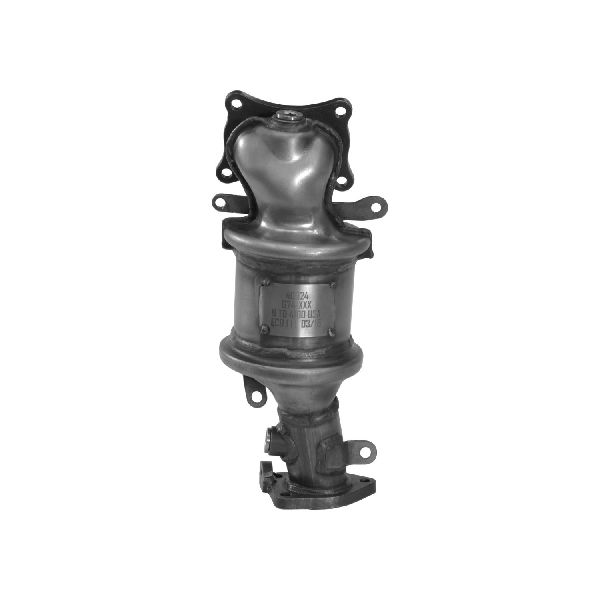
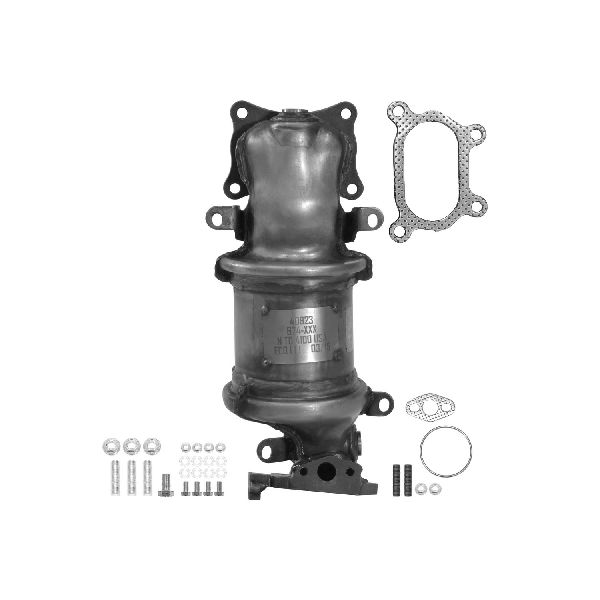
Typical fix: Replace the Bank 1 catalytic converter, which is the rear converter assembly on the V6 engine, closer to the firewall.
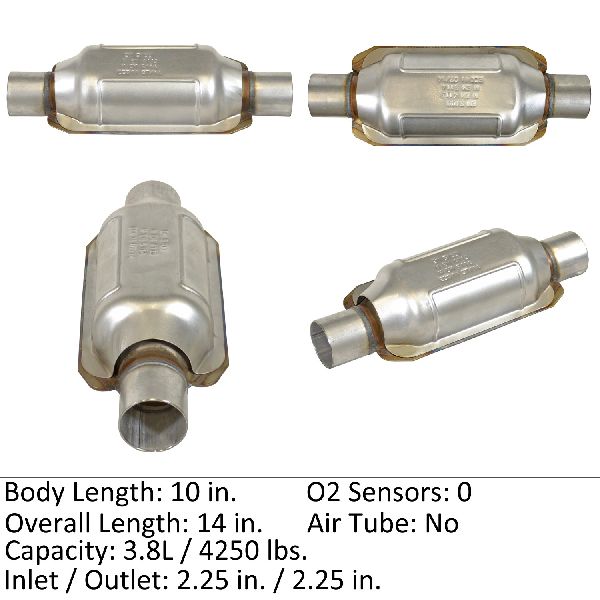
Est. part cost: $700-$1500 for an aftermarket part, OEM is significantly more. - Exhaust Leak ⚪ Low Probability Leaks can occur at the exhaust manifold gaskets or the flanges before or between the oxygen sensors. Rust and vibration can cause gaskets to fail over time, allowing oxygen to enter the exhaust stream and skew O2 sensor readings.
How to confirm: Perform a visual inspection for black soot marks around exhaust connections. A smoke test is the most effective way to pinpoint a small leak. You may also hear a ticking or hissing sound from the engine bay or under the vehicle, especially when the engine is cold.
Typical fix: Replace the leaking gasket or tighten the loose connection.
Est. part cost: $20-$100 for gaskets and hardware.
Rare But Worth Checking
- Faulty Oxygen Sensor (Bank 1, Sensor 2): → Shop Oxygen Sensor While a bad oxygen sensor is a possible cause, it's less common for it to fail in a way that sets a P0420 code without setting its own specific sensor code (e.g., P0137-P0141). It is more often replaced mistakenly when the injectors or converter are the real issue.
- PCM Software Issue: For some related models/years, a PCM software update was required as part of the injector-related TSBs because the original software could misinterpret sensor inputs. TSB A21-010, which applies to 2017-19 Ridgelines, explicitly does *not* require a software update, while TSB 20-100 (covering some 2017 Ridgelines) does. A dealer can verify if any updates are pending.
Diagnosis Steps
- Check your vehicle's VIN for eligibility under Honda's fuel injector warranty extension (TSB A21-010 or 20-100). Contact a Honda dealer with your VIN to confirm coverage. This could result in a free repair.
- Scan for other DTCs. Codes like P030x (misfires) or P219A/B (air-fuel imbalance) alongside P0420 strongly point towards the fuel injector issue, and per the TSB, may warrant immediate injector replacement. 🎬 Watch: How to diagnose these codes using Service Bulletin 20-100.
- If only P0420 is present, the official Honda procedure requires a technician to perform a 'Cylinder AF Test' with a professional HDS scan tool to confirm faulty injectors.
- Inspect the exhaust system thoroughly for any leaks between the engine and the catalytic converter. Pay close attention to manifold gaskets and flange connections. A smoke test is the most reliable method.
- Using a scan tool with live data, monitor the voltage of the upstream (Sensor 1) and downstream (Sensor 2) oxygen sensors for Bank 1 at a steady 2500 RPM. The upstream sensor (Air/Fuel Ratio Sensor) should fluctuate rapidly. The downstream sensor (Heated O2 Sensor) should remain relatively stable and flat, typically above 0.6 volts. If the downstream sensor's voltage is fluctuating in a similar pattern to the upstream sensor, it confirms low catalyst efficiency.
- If injectors test good (pass the Cylinder AF test) and there are no exhaust leaks or other codes, the catalytic converter is the most likely failed component.
Parts You'll Likely Need

- Fuel Injector Set
(OEM #16010-5R1-315)— This is the most probable root cause for a P0420 on this vehicle, as documented by Honda's own service bulletins. The part number 16010-5R1-315 supersedes 16010-5R1-305. Note: The TSB repair may use a specific kit, part number 06160-RLV-305.
Trusted brands: Honda (OEM)
OEM price range: $600-$800
Aftermarket price range: $300-$500 - Bank 1 Catalytic Converter (Rear)
(OEM #18190-RJE-A00)— This is the part the code directly points to. It may fail on its own or as a result of the injector issue. It should only be replaced after confirming injectors and O2 sensors are working correctly. Bank 1 is the rear bank, closer to the firewall.
Trusted brands: Honda (OEM), Walker, MagnaFlow, AP Exhaust
OEM price range: $950-$1400+
Aftermarket price range: $700-$1500 - Bank 1 Sensor 2 Oxygen Sensor (Rear, Downstream)
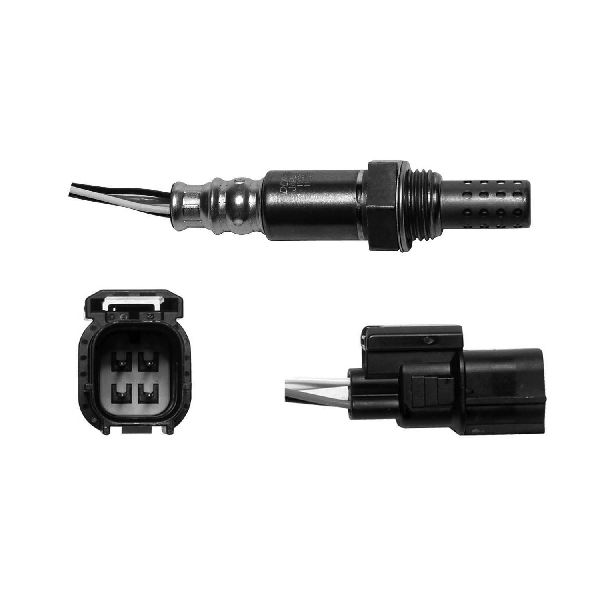
(OEM #Denso 234-4461 (or equivalent))— This sensor is what detects the catalyst's inefficiency. While it's not the most common cause, it can fail and provide false readings. It is a 4-wire, narrow-band sensor.
Related Codes That Often Appear With This One
- P0430 — This is the same efficiency code but for Bank 2 (front bank). It's common to see both if the root cause, like faulty fuel injectors, affects the entire engine. The TSBs cover both codes.
- P0300-P0306 — These are cylinder misfire codes (P0300 for random, P0301-P0306 for specific cylinders). The same TSBs that address the P0420 injector issue also list these codes, as failing injectors are a direct cause of misfires.
- P219A / P219B — These codes indicate an air-fuel ratio imbalance for Bank 1 and Bank 2, respectively. They are directly linked to the fuel injector problem described in Honda's TSBs and are a strong indicator that the injectors are the root cause.
Technical Service Bulletins (TSBs) & Recalls
- A21-010: Warranty Extension: MIL Comes On with DTC P0420/P0430, P030x, and/or P219A/B (Without Software Update). Applies to 2017-19 Ridgeline. Confirms faulty fuel injectors as a cause and outlines repair procedure.
- 20-100: Warranty Extension: MIL Comes On with DTC P0420/P0430, P030x, and/or P219A/B (With Software Update). Applies to some 2017 Ridgelines and other models. This version requires a PCM software update as part of the repair.
- Customer Notification Letter for Warranty Extension: Explains to owners that the warranty on fuel injectors is extended to 10 years/150,000 miles and that the repair will be done for free if the vehicle is eligible and diagnosed with the issue.
Platform-Specific Known Issues
- Honda TSB #A21-010, #20-100, and others detail a known issue with fuel injectors causing DTCs P0420, P0430, P030x, and P219A/B. Honda extended the warranty to 10 years/150,000 miles for this specific problem on affected vehicles.
- Owner experiences shared online frequently confirm that dealers will replace the fuel injectors under this extended warranty to resolve the P0420 code, often after initially suspecting the catalytic converter.
- There was also a major recall for some J35Y6 engines due to a crankshaft manufacturing defect that could cause bearing failure, though this is a separate issue from the fuel injectors.
Mechanic-Grade Diagnostic Values
- Engine Compression — expected: Above 980 kPa (142 psi). Failure: A reading below 980 kPa (142 psi) or a variation between cylinders of more than 200 kPa (28 psi).
- Cylinder AF Test (Lean Check) — expected: Fewer than 25 misfires. Failure: More than 25 misfires are counted when the scan tool commands a lean air-fuel mixture (AF Lambda at 0.9).
- Cylinder AF Test (Rich Check) — expected: Zero misfires. Failure: Any misfires are counted when the scan tool commands a rich air-fuel mixture (AF Lambda at 0.7).
- Long-Term Fuel Trim (LTFT) and Short-Term Fuel Trim (STFT) — expected: Within +/- 10%. Failure: A value consistently exceeding +10% (adding fuel, compensating for lean) or -10% (subtracting fuel, compensating for rich) suggests a problem. High positive trims could indicate a vacuum leak or weak fuel delivery.
Scan Tool Commands That Help
- Honda HDS / i-HDS (or equivalent professional scanner): Cylinder AF Test — This is the primary diagnostic step required by Honda's TSBs when only P0420/P0430 is present. It actively tests each fuel injector's performance to confirm if they are the root cause before proceeding with replacement. The HDS menu path is PGM FI > Inspection > Cylinder AF Test.
- Honda HDS / i-HDS: ALL INJECTORS STOP — This function is used to disable all fuel injectors to safely perform an engine compression test. CRITICAL: An ECM/PCM reset must be performed using the HDS after the test is complete, otherwise the injectors will remain disabled.
Wiring & Ground Locations
- Bank 1 O2 Sensor Connectors — The Bank 1 (rear bank) sensors are between the engine and the firewall. The electrical connectors are mounted on brackets in this tight space.. Accessing the electrical connectors for testing or replacement of Bank 1 O2 sensors is notoriously difficult. Technicians report that the release tabs are hard to reach and that it's sometimes necessary to unbolt the connector's mounting bracket to get enough leverage to disconnect it.
- Chassis Ground Point (for Jump-Starting) — There is no factory-installed, convenient ground stud in the engine bay. However, a pre-threaded, unused hole exists on the chassis frame to the right of the airbox, near the fender.. While not directly related to P0420, a poor ground connection can cause myriad electrical issues. More practically, owners and technicians often need a solid ground for jump-starting or battery testing. Many owners add an M6x1.0, 40mm long bolt to this location to create a permanent, accessible ground point.
Real Owner Repair Stories
- Reddit user on r/hondapilot (2016 Honda Pilot (shares engine and TSB with Ridgeline)) — P0430 and P219A codes.
❌ Tried (didn't work) Checking the public Honda recall/bulletin site by VIN, which showed no results.
✅ What actually fixed it The owner contacted a Honda technician who confirmed the vehicle was likely covered under TSB 20-100 despite the website's results. The dealership replaced the fuel injectors under the extended warranty, resolving the issue. - Reddit user on r/MechanicAdvice (2007 Honda Ridgeline (older generation, for context)) — Persistent P0420 code that would clear and then return.
❌ Tried (didn't work) Replacing the catalytic converter., Replacing the O2 sensors., Replacing the ECU.
✅ What actually fixed it The issue was unresolved in the thread, serving as a cautionary tale. A commenter noted that the vehicle has three catalytic converters and asked if the correct one (Bank 1, next to the firewall) was replaced, highlighting a common diagnostic error. This story emphasizes the importance of precise diagnosis before replacing expensive parts.
"I Checked Everything" — The Actual Cause
- A failing or clogged PCV (Positive Crankcase Ventilation) valve. A bad PCV valve can increase crankcase pressure, allowing oil vapor and combustion byproducts to contaminate the intake air. This can foul spark plugs, O2 sensors, and ultimately degrade the catalytic converter over time, triggering a P0420 code. It is often missed because it does not create a vacuum leak that a smoke test would detect, and Honda does not specify a replacement interval for the part.
OEM Part Supersession History
16010-5R1-305→16010-5R1-315— Standard part revision by the manufacturer.N/A→06160-RLV-305— This is the specific part number for the Fuel Injector *Kit* called for in TSB 20-100. It includes the set of injectors and all required seals for the warranty repair.
Heads up: When performing the TSB repair, this kit should be used rather than ordering individual injectors.
Model Year Variations Within This Range
- 2017 vs 2018-2019: The TSB procedure for the fuel injector issue varies. Some 2017 Ridgeline models fall under TSB 20-100, which REQUIRES a PGM-FI software update in addition to the injector test/replacement. The 2018-2019 models (and some 2017s) fall under TSB A21-010, which does NOT require a software update. A dealer must verify the correct procedure by VIN.
Helpful Videos
Used OEM Parts in Stock
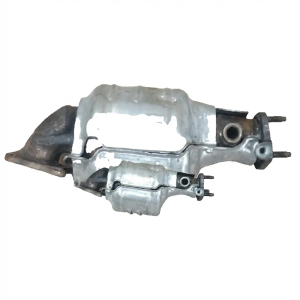
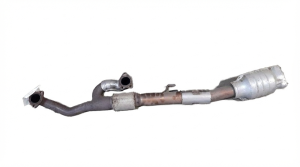
New Aftermarket Parts Available


The information in this article is provided for general reference and educational purposes only. Vehicle specifications, procedures, and part compatibility can vary by production date, trim level, and region. Always consult your vehicle's factory service manual and verify part numbers before purchasing or performing repairs. Safety-critical components such as airbags, seat belts, and braking systems should be installed by a qualified professional.
- Honda RIDGELINE:
- 🧭 Diagnostic Flowchart
- 🎬 Helpful Videos
- 🛍️ Shop This Part
- What's Unique About the 2017-2019 Honda RIDGELINE
- Symptoms You May Notice
- Most Likely Causes
- Rare But Worth Checking
- Diagnosis Steps
- Parts You'll Likely Need
- Related Codes That Often Appear With This One
- Technical Service Bulletins (TSBs) & Recalls
- Platform-Specific Known Issues
- Mechanic-Grade Diagnostic Values
- Scan Tool Commands That Help
- Wiring & Ground Locations
- Real Owner Repair Stories
- "I Checked Everything" — The Actual Cause
- OEM Part Supersession History
- Model Year Variations Within This Range
- 🎟️ Get 5% Off