

P0420 on 2012-2017 Hyundai Accent 1.6L GDI: Catalyst Efficiency Causes and Fixes
For a 2012-2017 Hyundai Accent, code P0420 usually points to a failed catalytic converter, especially over 90,000 miles. A faulty downstream oxygen (O2) sensor is the next most likely cause. Underlying issues like excessive oil consumption are common on this engine and will destroy a new converter if not addressed. Replacing the O2 sensor first is a common, lower-cost diagnostic step (~$75 aftermarket) before committing to a new catalytic converter (~$200-$500+ aftermarket).
- P0420 on your Accent most often means the catalytic converter has failed, but a bad downstream O2 sensor can also be the cause.
- Before buying parts, use a scan tool to watch the live data from both O2 sensors. If the downstream sensor's graph mimics the upstream sensor's graph, the converter is bad.
- Because it's much cheaper and easier, many owners choose to replace the downstream O2 sensor first. This sometimes fixes the issue, but be prepared for it to be a temporary solution if the converter is the real problem.
- The catalytic converter is part of the exhaust manifold on this engine, so you must replace the entire assembly.
- Always address other engine codes (especially for misfires) before replacing the catalytic converter to avoid damaging the new part.
What's Unique About the 2012-2017 Hyundai Accent
On the 1.6L GDI engine in the Accent, the catalytic converter is integrated directly into the exhaust manifold, making it a single, more complex part to replace compared to vehicles with separate components. While no specific TSB for the Accent and P0420 was found, Hyundai has issued TSBs for other GDI-equipped models that involve an ECU software update to correct logic that could falsely trigger this code. Furthermore, a recall on the related Kia Soul (NHTSA 19V-120) for the same 1.6L engine addressed high exhaust gas temperatures causing converter damage, suggesting this engine family can be hard on converters. Excessive oil consumption is also a widely reported issue with this engine, which contaminates and destroys catalytic converters.
Symptoms You May Notice
- Check Engine Light is on.
- No noticeable difference in how the car drives (most common scenario).
- Reduced acceleration or a feeling of hesitation, especially under load (if the converter is clogged).
- Slightly worse fuel economy.
- A rattling noise from the exhaust area, indicating the internal honeycomb of the converter has broken apart.
- Smell of rotten eggs from the exhaust.
- Replacing the catalytic converter when only a faulty downstream O2 sensor was the problem.
- Replacing only the O2 sensors when the catalytic converter has truly failed. While a valid first step, be prepared for the possibility that it won't solve the issue.
- Replacing the upstream (Air/Fuel Ratio) sensor. The P0420 code is based on the reading from the downstream sensor, so the upstream sensor is rarely the cause.
- Replacing the catalytic converter without fixing an underlying problem like oil consumption or misfires, leading to the new converter failing again.
Most Likely Causes
- Failed Catalytic Converter 🔴 High Probability → Shop Catalytic Converter Catalytic converters have a finite lifespan and can fail from normal aging, especially on vehicles with over 90,000-100,000 miles. More critically for this platform, they are often destroyed prematurely by excessive oil consumption or carbon buildup, which are known issues with the Gamma 1.6L GDI engine.
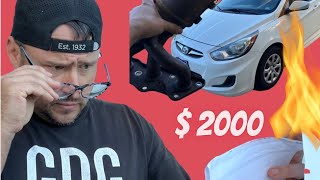
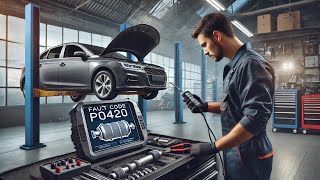
How to confirm: Use a scan tool to graph the voltage of the upstream (Sensor 1) and downstream (Sensor 2) oxygen sensors. At a steady 2500 RPM on a warm engine, Sensor 1 should fluctuate rapidly, while Sensor 2 should remain relatively stable (typically around 0.5-0.8V). If Sensor 2's voltage fluctuates wildly, mimicking Sensor 1, the converter is not working. 🎬 Watch: A detailed walkthrough of the P0420 diagnostic process. An infrared thermometer can also be used; the outlet of a working converter should be significantly hotter than the inlet. A cooler outlet temperature indicates a dead converter.
Typical fix: Replace the exhaust manifold with the integrated catalytic converter. The oxygen sensors are often replaced at the same time. It is critical to address underlying causes like oil consumption first.
Est. part cost: $200-$600 for an aftermarket direct-fit unit. OEM parts can be significantly more expensive. Note that cheap aftermarket converters are known to fail again quickly. - Faulty Downstream Oxygen (O2) Sensor 🟡 Medium Probability → Shop Oxygen Sensor O2 sensors wear out over time and can become contaminated or slow to respond, sending incorrect data to the ECU. A faulty sensor can mimic the signs of a bad converter, triggering a false P0420 code.
How to confirm: Perform the scan tool graph test. If the downstream sensor shows erratic, flatlined, or lazy readings that don't make sense, it may be faulty. You can also test the sensor's internal heater circuit for continuity with a multimeter; the resistance should be approximately 9.0 Ω at room temperature. An open circuit (infinite resistance) indicates a failed heater.
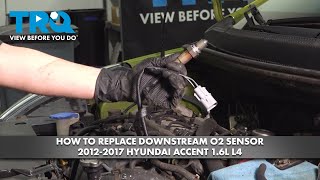
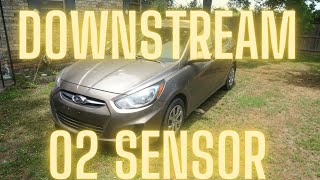
Typical fix: Replace the downstream (Bank 1, Sensor 2) oxygen sensor. This is often done first due to its lower cost and ease of replacement compared to the converter. 🎬 See how to easily replace the downstream O2 sensor.
Est. part cost: $40-$80 for an aftermarket sensor, $120-$180 for an OEM/Denso sensor. - Exhaust System Leak ⚪ Low Probability Rust or damaged gaskets can cause leaks between the engine and the downstream O2 sensor, allowing outside oxygen into the exhaust stream. This extra oxygen can fool the downstream sensor and trigger a P0420 code. One owner on a forum noted an exhaust smell in the cabin before the P0420 code became persistent.
How to confirm: Visually inspect the exhaust manifold, flex pipe, and gaskets for cracks, holes, or black soot trails indicating a leak. You can also have a shop perform a smoke test to pinpoint hard-to-see leaks.
Typical fix: Replace the leaking gasket or repair/replace the cracked exhaust component.
Est. part cost: $10-$50 for gaskets, potentially more if a pipe needs replacement.
Rare But Worth Checking
- Engine Misfires or Fuel System Issues: This is more of a root cause for catalytic converter failure than a direct cause of the code itself. Unburned fuel from misfires (bad spark plugs, ignition coils) or a rich condition (leaky fuel injectors) will enter the exhaust and overheat the converter, destroying it. If you have other codes like P0300-P0304 (misfires) or fuel trim codes (P0171/P0172), you must fix those problems first, or you will destroy the new catalytic converter.
- Intake Valve Carbon Buildup: As a Gasoline Direct Injection (GDI) engine, the intake valves are not cleaned by fuel spray. Over time, carbon from the PCV system builds up, which can disrupt airflow, cause misfires, and lead to an improper air/fuel mixture that damages the catalytic converter. This is a known long-term issue with GDI engines.
Diagnosis Steps
- Check for other DTCs. If any misfire (P030x), fuel system (P017x), or lean (P2191) codes are present, diagnose and fix them first. Also, check engine oil level; low oil may indicate consumption that is damaging the converter.
- Connect a scan tool and view live data. Graph the voltage for the upstream (B1S1) and downstream (B1S2) oxygen sensors.
- Warm the engine to operating temperature and hold the RPM steady at around 2,500.
- Analyze the graph: The B1S1 voltage should fluctuate rapidly between ~0.1V and ~0.9V. The B1S2 voltage should be relatively stable and high (e.g., >0.5V). If B1S2 is fluctuating in a similar pattern to B1S1, the catalytic converter has likely failed.
- If the B1S2 reading is stuck, flat, or behaving erratically, the sensor itself is suspect. Test the sensor's heater resistance with a multimeter; it should be ~9.0 Ω.
- Visually inspect the exhaust system from the manifold to the downstream O2 sensor for any signs of leaks, such as cracks or black soot. Listen for hissing sounds.
- Based on the evidence, decide whether to first replace the cheaper downstream O2 sensor as a test or proceed with replacing the catalytic converter assembly. Be aware that if oil consumption is significant, the new converter's life will be short.
Parts You'll Likely Need
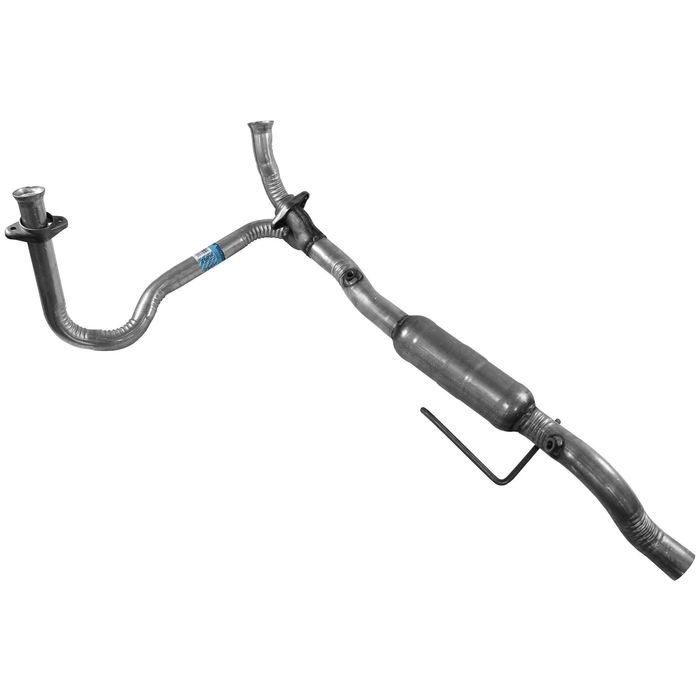
- Exhaust Manifold with Integrated Catalytic Converter
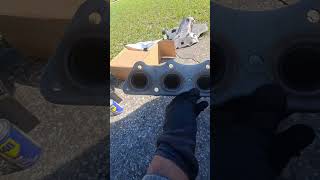
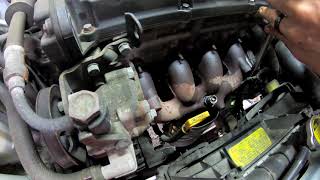
(OEM #28510-2BEB1, superseded by 28510-2BEF1)— This is the most common definitive fix for a P0420 code when the converter has been confirmed to have failed. Must address root causes like oil burning before replacement. 🎬 Watch: Step-by-step guide to replacing the integrated catalytic converter.
Trusted brands: Walker, Dorman, Magnaflow, AP Exhaust
OEM price range: $800-$1200+
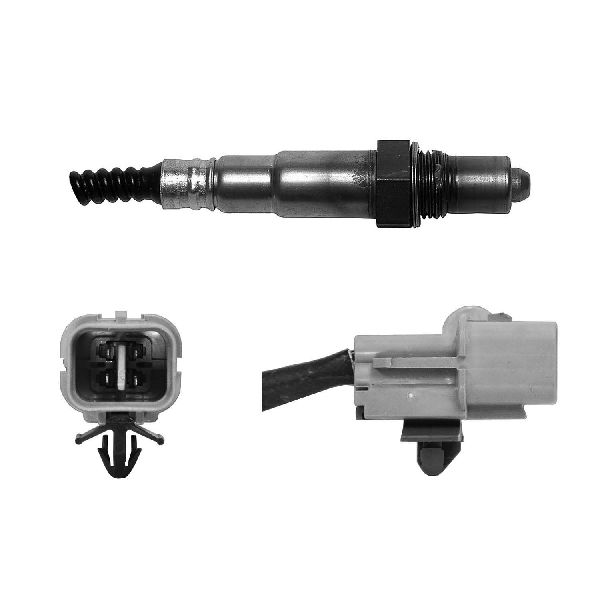
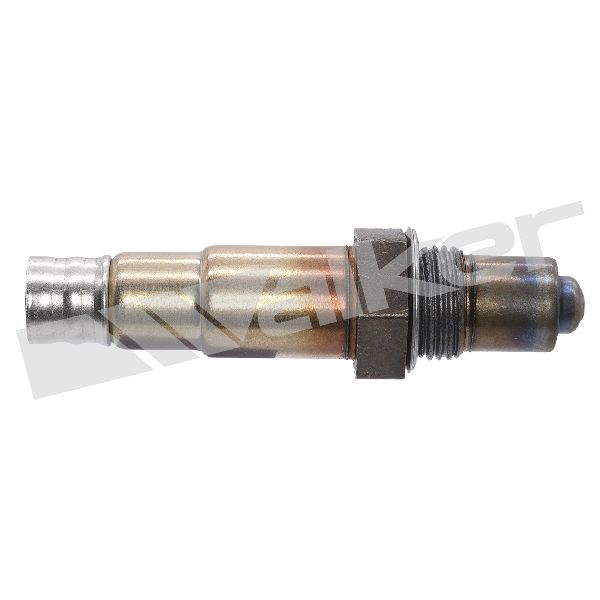
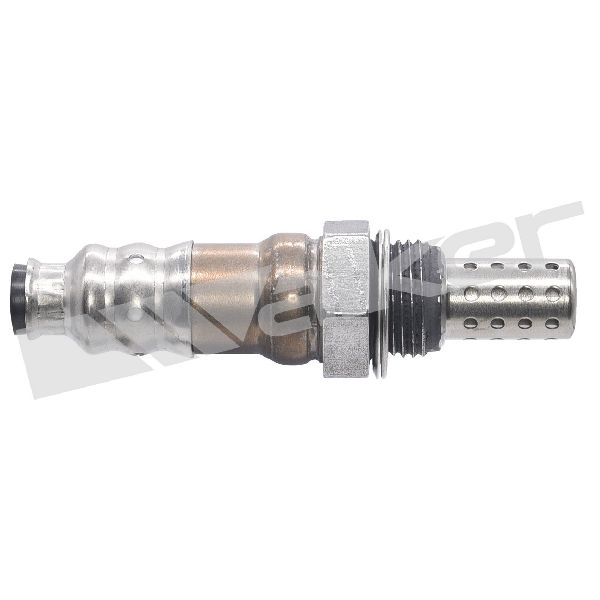
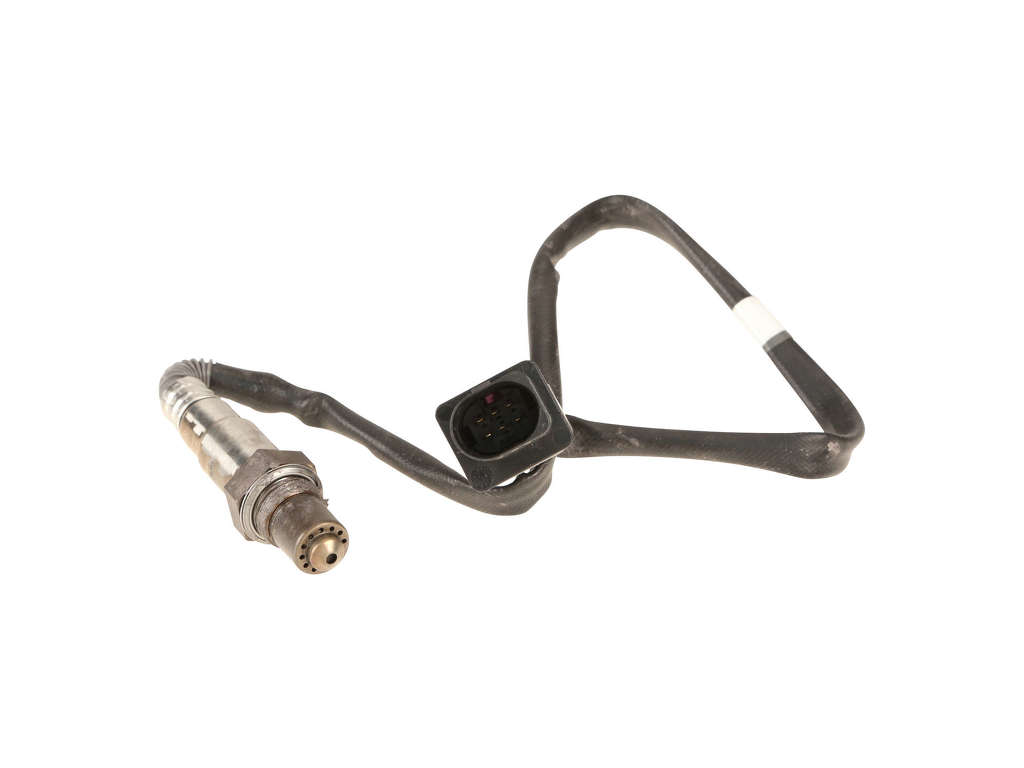
Aftermarket price range: $200-$600 - Downstream Oxygen Sensor (Bank 1, Sensor 2)
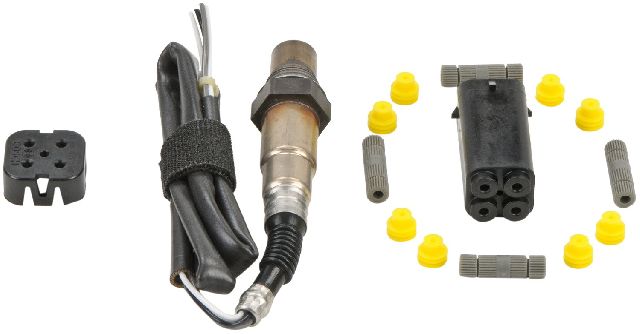
(OEM #39210-2B220)— This sensor is the second most likely cause and is often replaced first as a lower-cost diagnostic step.
Trusted brands: Denso (OEM supplier, P/N: 234-4568), NTK / NGK, Bosch, Walker Products
OEM price range: $120-$180
Aftermarket price range: $40-$80
Related Codes That Often Appear With This One
- P0139 — This code means "O2 Sensor Circuit Slow Response (Bank 1, Sensor 2)". It can indicate that the downstream O2 sensor itself is failing, which can be the root cause of the P0420.
- P030x (e.g., P0301, P0302) — These are cylinder-specific misfire codes. An ongoing misfire allows unburned fuel to enter the exhaust, which will quickly damage the catalytic converter, leading to a P0420 code.
- P2191 — System Too Lean at Higher Load (Bank 1). This code, sometimes seen with P0420 on related GDI engines, points to a fuel delivery or vacuum leak issue that can also contribute to converter failure if left unaddressed.
Technical Service Bulletins (TSBs) & Recalls
- While no specific P0420 TSB for the Accent was found, Kia issued a related safety recall (NHTSA 19V-120 / Kia SC176) for the 2012-2016 Kia Soul 1.6L GDI for high exhaust temperatures damaging the catalytic converter. This indicates a known potential issue within this engine family.
Platform-Specific Known Issues
- A user on Reddit with a 2014 Accent reported a P0420 code returned one year after replacing the converter with an aftermarket unit, highlighting the potential for short lifespan of non-OEM parts or an unaddressed root cause.
Mechanic-Grade Diagnostic Values
- Downstream O2 Sensor (B1S2) Heater Resistance — expected: Approx. 9.0 Ω at 21°C (69.8°F). Failure: An open circuit (infinite resistance) or a significant deviation from the specified value.
- Upstream O2 Sensor (B1S1) Heater Resistance — expected: 2.4 - 4.0 Ω at 20°C (68°F). Failure: A reading outside this range indicates a fault in the upstream sensor's heater.
- High-Pressure Fuel Rail Pressure (at idle) — expected: 2.0 - 15 MPa (290 - 2175 psi). Failure: Pressure significantly outside this range may indicate an issue with the high-pressure fuel pump (HPFP) or sensor. A user reported a normal reading of ~567 psi.
- Low-Pressure Fuel Pump Supply Pressure — expected: 40 - 75 psi. Failure: Low pressure from the in-tank pump can starve the high-pressure pump, though it may not directly cause P0420.
- Downstream O2 Sensor (B1S2) Voltage — expected: Steady at 0.6V - 1.0V (rich) on a healthy, warm converter.. Failure: Fluctuating rapidly similar to the upstream sensor, or staying stuck low (0V - 0.4V).
Scan Tool Commands That Help
- Hyundai GDS (Global Diagnostic System): ECU Update / Software Reflash — A TSB for the related Kia Soul 1.6L GDI (SC176) mandates an ECU update for 'Catalytic Overheating Protection'. If P0420 is present, the converter is also replaced. This should be investigated for the Accent, as it suggests a factory logic issue can contribute to converter failure.
- Hyundai GDS (Global Diagnostic System): Actuation Test: O2 Sensor Heater — To manually command the O2 sensor heater circuit on and off to verify the ECM driver, wiring, and heater element are all functioning. The heater control is a duty cycle, and its operation can be monitored.
Wiring & Ground Locations
- ECM Pin 25 — At the Engine Control Module (ECM), which is located in the engine bay, typically near the battery or firewall.. This is the specific pin for the 'Heated Oxygen Sensor [Bank 1/Sensor 2] heater control output'. A technician can back-probe this pin to verify if the ECM is commanding the heater to turn on, which is crucial for diagnosing a dead sensor vs. a wiring or ECM problem.
- Gg05 — Left rear of the engine compartment.. This is a major ground point in the engine bay. A poor ground here could potentially affect sensor readings or ECM operation, leading to various codes including P0420.
- Gf06 — Base of the left 'B' pillar (the pillar between the front and rear doors).. This is a chassis ground point. While less likely to be the primary cause, checking all major grounds is a key step in diagnosing persistent or unusual electrical issues.
Real Owner Repair Stories
- Reddit user in /r/CarRepair (2016 Hyundai Accent) — P0420 code, significant oil consumption. Low compression on two cylinders (110-115 psi).
❌ Tried (didn't work) The P0420 code persisted even after attempts to fix the root cause of oil consumption.
✅ What actually fixed it The owner performed an engine cleaning with Marvel Mystery Oil and Seafoam to free stuck piston rings, which successfully restored compression to 180 psi across all cylinders. However, the P0420 code remained, strongly implying that the past oil consumption had already permanently damaged the catalytic converter and/or O2 sensors, which would now need replacement. - Reddit user in /r/AskMechanics (2017 Hyundai Accent) — P0420 code, loss of acceleration.
❌ Tried (didn't work) A shop replaced the catalytic converter, O2 sensor, and spark plugs for $2,800.
✅ What actually fixed it The repair did not fix the issue. The P0420 Check Engine Light returned just 20 miles after the expensive repair. The final resolution was not posted, but the story serves as a critical warning that replacing parts without a definitive diagnosis, or using potentially low-quality aftermarket parts, can lead to immediate repeat failure. - YouTuber 'Ben Wrenchin'' (2012 Hyundai Accent) — P0420 code.
❌ Tried (didn't work) The creator notes that in his experience, replacing only the O2 sensor rarely fixes a P0420 code completely.
✅ What actually fixed it The video demonstrates replacing the downstream O2 sensor as a low-cost ($20) first diagnostic step before committing to the more expensive catalytic converter replacement. The outcome of whether it permanently fixed the code was pending a long-term drive cycle, but it illustrates the common DIY approach. - NHTSA ODI #11453941 describes an owner who experienced a loud engine knock followed by codes P0011, P0014, and P0420, indicating a potential exhaust leak and Bank 1/Bank 2 efficiency issues.
- NHTSA ODI #11280320 reports an owner who heard excessive sound from the engine; a mechanic subsequently identified a P0420 code and issues with the O2 sensors and catalyst system efficiency.
OEM Part Supersession History
28510-2BEB1→28510-2BEF1— Unspecified, likely a minor revision or change in manufacturing.
Heads up: Both parts appear to fit the 2011-2017 model range. 28510-2BEF1 is the more recently cited part number. Always verify with a dealer using your VIN.
Model Year Variations Within This Range
- 2012-2014: Early models of the fourth generation are noted by some sources to have more reports of engine issues and premature wear compared to the later 2015-2017 models. The 2017 model is often considered the most refined version of this generation before the redesign.
- 2015-2017: A minor facelift for the 2015 model year included a new grille and headlights, but no changes were made to the 1.6L GDI powertrain or its emissions components.
Diagnostic Flowchart
Other Known Issues on This Vehicle
Issues unrelated to this code that are worth knowing about as an owner of this generation:
- Steering Coupler Failure 🟠 Medium — Very common; typically manifests as a clicking or clunking noise in the steering wheel at low speeds. Onset can be as early as 60,000 miles. (Ref: TSB-17-ST-002-1 covers this issue for many Hyundai models. The replacement part is 56315-2K000-FFF.)
- Excessive Oil Consumption 🔴 High — Frequently reported by owners, often starting after 70,000 miles. Can lead to engine damage if oil levels are not monitored closely. (Ref: No specific recall for the Accent, but it's a widely documented problem for this engine family. It is a primary cause of premature catalytic converter failure.)
- GDI Intake Valve Carbon Buildup 🟠 Medium — An inherent characteristic of GDI engines. Can cause misfires, rough idle, and loss of power, typically becoming noticeable after 60,000-80,000 miles.
- Engine Wiring Harness Chafing 🔴 High — The harness can rub against a bracket, leading to shorts, blown fuses (ignition coil fuse), misfires, or a no-start condition.
- Ignition Coil Failure 🟡 Low → Shop Ignition Coil — A common cause for misfires (P030x codes) and rough running. Often occurs between 30,000-60,000 miles.
Used vs. New Parts: Buying Guide for This Vehicle
When a used part is the smart pick: For this specific repair, using used parts is highly discouraged. A used catalytic converter from a salvage yard likely came from a vehicle with the same GDI engine issues (oil consumption) that cause P0420, and may be clogged or inefficient itself. Used O2 sensors are also a gamble with no way to know their remaining lifespan.
Donor-vehicle mileage cap: roughly under 40000 miles for the part to have meaningful remaining life.
What to inspect on the donor part:
- If considering a used converter, you MUST get a clear view of the honeycomb structure; it should be intact, with no missing chunks, melting, or heavy black soot.
- Ask for the donor vehicle's VIN to check for a history of the SC176 recall (if applicable) or other engine-related issues.
- Avoid any parts from a vehicle that shows signs of a front-end collision, which could have internally cracked the fragile converter substrate.
OEM-only on this vehicle (don't cheap out):
- Catalytic Converter: Strongly recommended. Multiple owner reports and mechanic anecdotes suggest that cheap, aftermarket converters often fail to meet the ECU's strict efficiency monitoring and can cause the P0420 code to return quickly, sometimes within miles.
Aftermarket brands forum-validated for this vehicle:
- Denso (for O2 sensors, OEM supplier, P/N: 234-4568)
- NTK / NGK (for O2 sensors, OEM supplier)
Brands owners have reported issues with on this vehicle:
- Unnamed, low-cost catalytic converters sold on marketplaces like Amazon or eBay are frequently cited as failing prematurely.
Real Owner Stories
Aggregated from forums and TSBs cited above. Mileages and costs reflect what owners reported in those sources.
2017 Hyundai Accent 1.6L GDI — 140000 miles
Symptoms: Check Engine Light on; owner used a scan tool to observe live O2 sensor data graphs to confirm the failure.
What fixed it: Diagnosed as a bad catalytic converter using live O2 sensor data graphs.
Source hint: reddit.com/r/MechanicAdvice/comments/xhd93a/2017_hyundai_accent_code_p0420/
2014 Hyundai Accent 1.6L GDI — ~136700 miles
Symptoms: Exhaust smell in the cabin, oil consumption, and a persistent P0420 code.
What fixed it: Shop recommended catalytic converter replacement after identifying an exhaust leak and oil consumption.
Source hint: reddit.com/r/Hyundai/comments/s7x9u0/2014_accent_p0420_error/
2017 Hyundai Accent 1.6L GDI — ~85000 miles
Symptoms: P0420 code appearing in conjunction with a known oil consumption problem.
What fixed it: Linked the converter failure directly to the engine's oil consumption issues.
Source hint: reddit.com/r/Hyundai/comments/1b0y674/p0420_code/
2012 Hyundai Accent 1.6L GDI
Symptoms: P0420 code present; technician noted that while sensors are often replaced first, the converter is usually the ultimate failure point.
What fixed it: Replacement of the downstream O2 sensor (though the converter was noted as the likely long-term issue).
Source hint: YouTube (Ben Wrenchin')
2014 Hyundai Accent 1.6L GDI
Symptoms: P0420 code returned only one year after the previous repair.
What fixed it: The owner had previously replaced the converter with an aftermarket unit, but the code returned, suggesting either a part quality issue or an unaddressed root cause like oil consumption.
Source hint: vehicle_specific_issues
Related OBD-II Codes
Frequently Asked Questions
Is there a recall for the catalytic converter on my 2012-2017 Hyundai Accent?
My 2017 Accent has a P0420 code and is burning oil. Are these related?
Can I use a cheap aftermarket converter to fix the P0420 code on my 2014 Accent?
How can I tell if it's just the downstream O2 sensor or the whole converter?
I hear a rattling noise under my 2015 Accent along with the Check Engine Light. What is that?
What is the specific part number for the steering clicking I noticed while diagnosing my P0420?
Helpful Videos
Used OEM Parts in Stock
New Aftermarket Parts Available

The information in this article is provided for general reference and educational purposes only. Vehicle specifications, procedures, and part compatibility can vary by production date, trim level, and region. Always consult your vehicle's factory service manual and verify part numbers before purchasing or performing repairs. Safety-critical components such as airbags, seat belts, and braking systems should be installed by a qualified professional.
- Hyundai Accent:
- 🧭 Diagnostic Flowchart
- 🎬 Helpful Videos
- 🛍️ Shop This Part
- What's Unique About the 2012-2017 Hyundai Accent
- Symptoms You May Notice
- Most Likely Causes
- Rare But Worth Checking
- Diagnosis Steps
- Parts You'll Likely Need
- Related Codes That Often Appear With This One
- Technical Service Bulletins (TSBs) & Recalls
- Platform-Specific Known Issues
- Mechanic-Grade Diagnostic Values
- Scan Tool Commands That Help
- Wiring & Ground Locations
- Real Owner Repair Stories
- OEM Part Supersession History
- Model Year Variations Within This Range
- Other Known Issues on This Vehicle
- Used vs. New Parts: Buying Guide for This Vehicle
- Real Owner Stories
- 2017 Hyundai Accent 1.6L GDI — 140000 miles
- 2014 Hyundai Accent 1.6L GDI — ~136700 miles
- 2017 Hyundai Accent 1.6L GDI — ~85000 miles
- 2012 Hyundai Accent 1.6L GDI
- 2014 Hyundai Accent 1.6L GDI
- Related OBD-II Codes
- Frequently Asked Questions
- 🎟️ Get 5% Off