

P0420 on 2016-2021 Hyundai Tucson 2.0L: Catalyst Efficiency Causes and Fixes
The P0420 code on a 2016-2021 Tucson 2.0L most often means the catalytic converter is failing, frequently due to underlying engine issues like oil consumption. Before replacing the converter, check for TSBs and verify your vehicle isn't covered by the federal emissions warranty (8 years/80,000 miles). For the 2019 model year specifically, a TSB requires both a converter replacement and an ECM software update.
- Before paying for repairs, check if your vehicle is covered by the 8-year/80,000-mile federal emissions warranty.
- P0420 on this Tucson is often caused by underlying issues, especially engine oil consumption. You must fix the root cause, or the new converter will fail.
- For 2019 models, a specific TSB (20-FL-010H) exists that requires a new converter and an ECM software update.
- Diagnose by checking for other codes and analyzing live O2 sensor data before assuming the converter is bad.
- Do not simply replace the cheapest part; address the entire system to ensure a long-term fix.
What's Unique About the 2016-2021 Hyundai Tucson
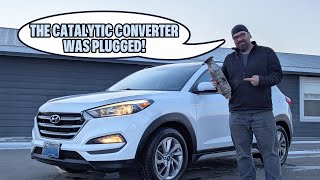
For this generation of Tucson, a P0420 code is often a symptom of a larger problem, not just a worn-out part. Some Hyundai engines from this era, including the 2.0L Nu (G4NA), can suffer from excessive oil consumption. This oil burning contaminates the catalytic converter, coating its internal structure and causing it to fail prematurely. Simply replacing the converter without addressing the oil consumption will likely lead to the new part failing as well. Additionally, for the 2019 model year, Hyundai identified a software logic issue and released a TSB (20-FL-010H) that requires 🎬 Watch: 2019 Tucson manifold converter replacement and TSB details. an ECM update along with the converter replacement to fully resolve the code.
Symptoms You May Notice
- Check Engine Light is on
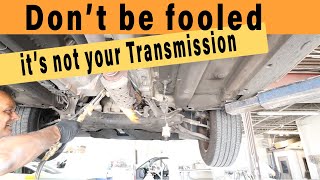
- Reduced engine power and sluggish acceleration, especially up hills. 🎬 See how a clogged converter mimics transmission power loss.
- Poor fuel economy.
- A 'rotten egg' or sulfur smell from the exhaust.
- Rattling noises from underneath the vehicle if the converter's internal structure has broken apart.
- Engine may shudder or feel rough, especially when stopped.
- Failing a state emissions test.
- Replacing the catalytic converter without fixing the root cause. If the engine is burning oil or misfiring, the new converter will fail again quickly.
- Replacing the upstream O2 sensor. While a faulty upstream sensor can cause performance issues, it's the downstream sensor that is primarily responsible for monitoring the converter's efficiency for the P0420 code.
- Assuming any aftermarket converter will work. Many low-cost aftermarket converters use a minimal amount of precious metals and may fail to meet the ECM's efficiency standards, causing the P0420 code to return quickly.
Most Likely Causes
- Failing Catalytic Converter 🔴 High Probability → Shop Catalytic Converter Often fails as a result of other engine issues, like oil consumption or persistent misfires, which are known problems on some Hyundai engines. The converter gets overwhelmed by burnt oil or unburnt fuel, which melts or coats the internal catalyst structure.
How to confirm: After ruling out other causes, a mechanic can use a scan tool to analyze O2 sensor data or use an infrared thermometer to check the inlet and outlet temperatures of the converter. A significant temperature increase indicates it's working; little to no change suggests failure. A technician can also use an in-cylinder pressure transducer to graph exhaust backpressure, which will be elevated if the converter is clogged.
Typical fix: Replace the catalytic converter and attached gaskets. Crucially, the root cause (e.g., oil burning, misfires) must be fixed first to prevent repeat failure.
Est. part cost: $600-$1200 - Faulty Downstream Oxygen (O2) Sensor 🟡 Medium Probability → Shop Oxygen Sensor
How to confirm: Use a scan tool to graph the voltage of the downstream (Bank 1, Sensor 2) O2 sensor. A healthy sensor on a working converter should show a relatively steady voltage. If the sensor is bad, it may be stuck at a certain voltage, not responding at all, or providing false readings.
Typical fix: Replace the downstream O2 sensor. It is often recommended to try this before replacing the much more expensive catalytic converter.
Est. part cost: $50-$150 - Engine Misfires or Rich/Lean Fuel Condition 🟡 Medium Probability Unaddressed misfires (from bad spark plugs or ignition coils) or fuel system problems can dump unburned fuel into the exhaust, which overheats and damages the catalytic converter. One owner of a 2018 Tucson experienced a P0420 code that was preceded by a P0302 (Cylinder 2 Misfire) code, which ultimately clogged the converter. NHTSA ODI #11673527 describes a case where a mechanic found codes P0420, P0300, P0302, P0303, and P0304, concluding that oil consumption was the underlying factor.
How to confirm: Check for other diagnostic trouble codes, such as P0300-P0304 (misfires) or P0171/P0174 (lean conditions). Address these codes first.
Typical fix: Replace worn spark plugs, ignition coils, or faulty fuel injectors depending on the specific codes found.
Est. part cost: $100-$400 - Exhaust Leak ⚪ Low Probability
How to confirm: Visually inspect the exhaust manifold and pipes for cracks or loose connections, particularly between the engine and the downstream O2 sensor. Listen for hissing or ticking sounds from the exhaust system, especially when the engine is cold.
Typical fix: Replace the leaking gasket or repair/replace the cracked exhaust component.
Est. part cost: $20-$300
Rare But Worth Checking
- ECM Software Logic: For the 2019 model year specifically, Hyundai issued a TSB (20-FL-010H) for the P0420 code that requires an ECM software update in addition to replacing the catalytic converter. This suggests the original software may have been too sensitive or contributed to conditions that damaged the converter.
Diagnosis Steps
- Check for Federal Emissions Warranty: Before any repairs, check if your vehicle is still under the federally mandated 8-year/80,000-mile emissions warranty, which covers the catalytic converter. Contact a Hyundai dealer with your VIN. Some owners have had this repair covered under warranty.
- Scan for Other Codes: Use an OBD-II scanner to check for any other codes. If codes for misfires (P030x), fuel mixture (P017x), or O2 sensors are present, diagnose and fix those problems first. An owner in NHTSA ODI #11629617 reported using a personal code reader to identify the P0420 code while away from home before returning to the dealer for further checks.
- Inspect for Exhaust Leaks: Carefully inspect the exhaust system from the engine manifold to the downstream O2 sensor for any cracks, holes, or gasket leaks. A leak can introduce oxygen and fool the sensors.
- Analyze O2 Sensor Live Data: 🎬 Watch: How to diagnose and repair the P0420 code. Use a scan tool with live data graphing. At a steady 2,500 RPM, the upstream O2 sensor (Bank 1, Sensor 1) should show a rapidly fluctuating waveform between ~0.1V and ~0.9V. The downstream O2 sensor (Bank 1, Sensor 2) should show a much flatter, steadier voltage, typically above 0.6V. If the downstream sensor mimics the upstream sensor, the converter is not working.
- Check for Underlying Engine Issues: Check the engine oil level. Excessive oil consumption is a known issue that will destroy a new converter. Investigate any known misfires or fuel system problems.
- Test the Catalytic Converter: If all other components check out, the catalytic converter is the likely culprit. A temperature test using an infrared thermometer (the outlet should be significantly hotter than the inlet) can provide a final confirmation.
- Check for TSBs: Specifically for 2019 models, check for TSB 20-FL-010H, which mandates an ECM update with converter replacement.
Parts You'll Likely Need
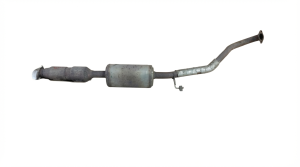
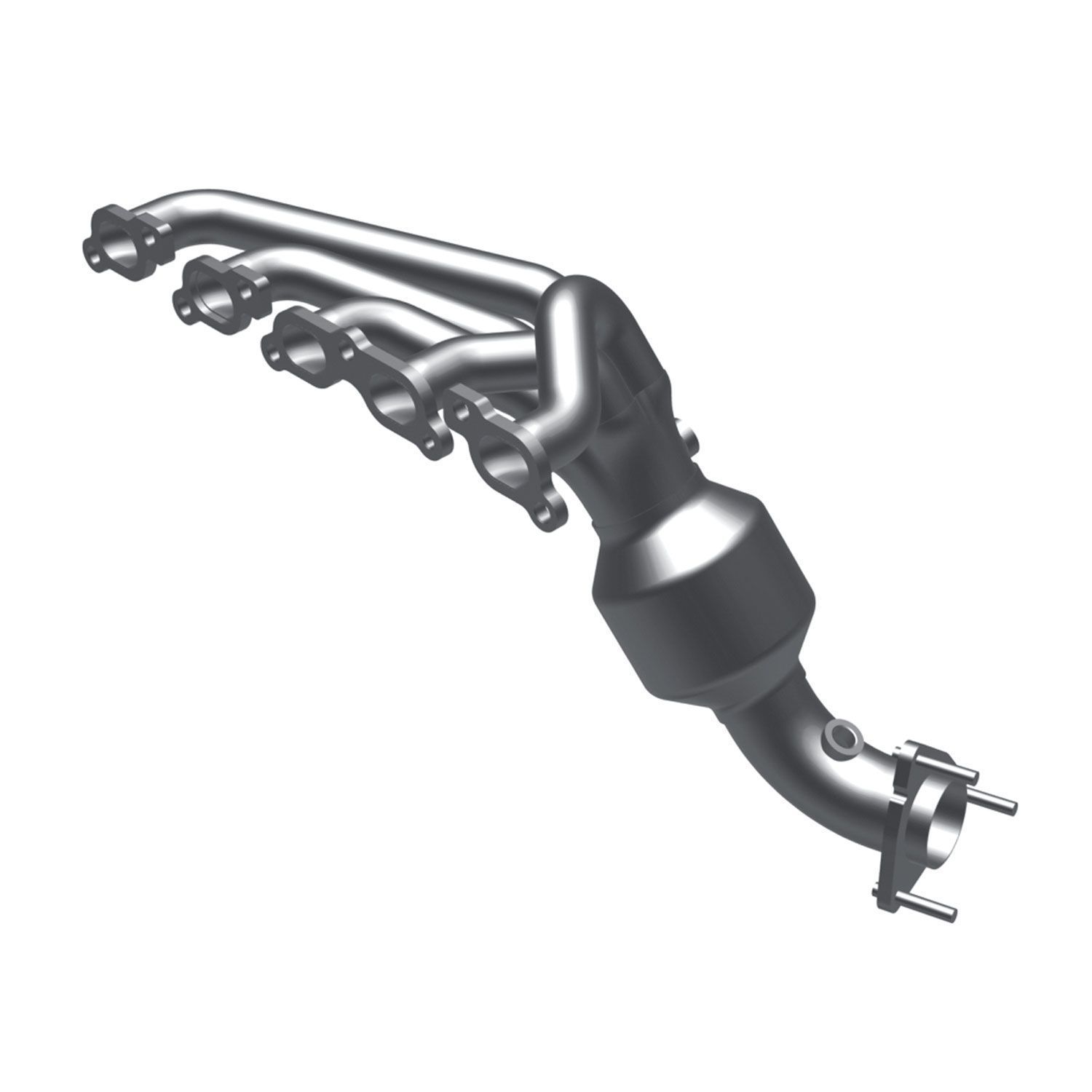
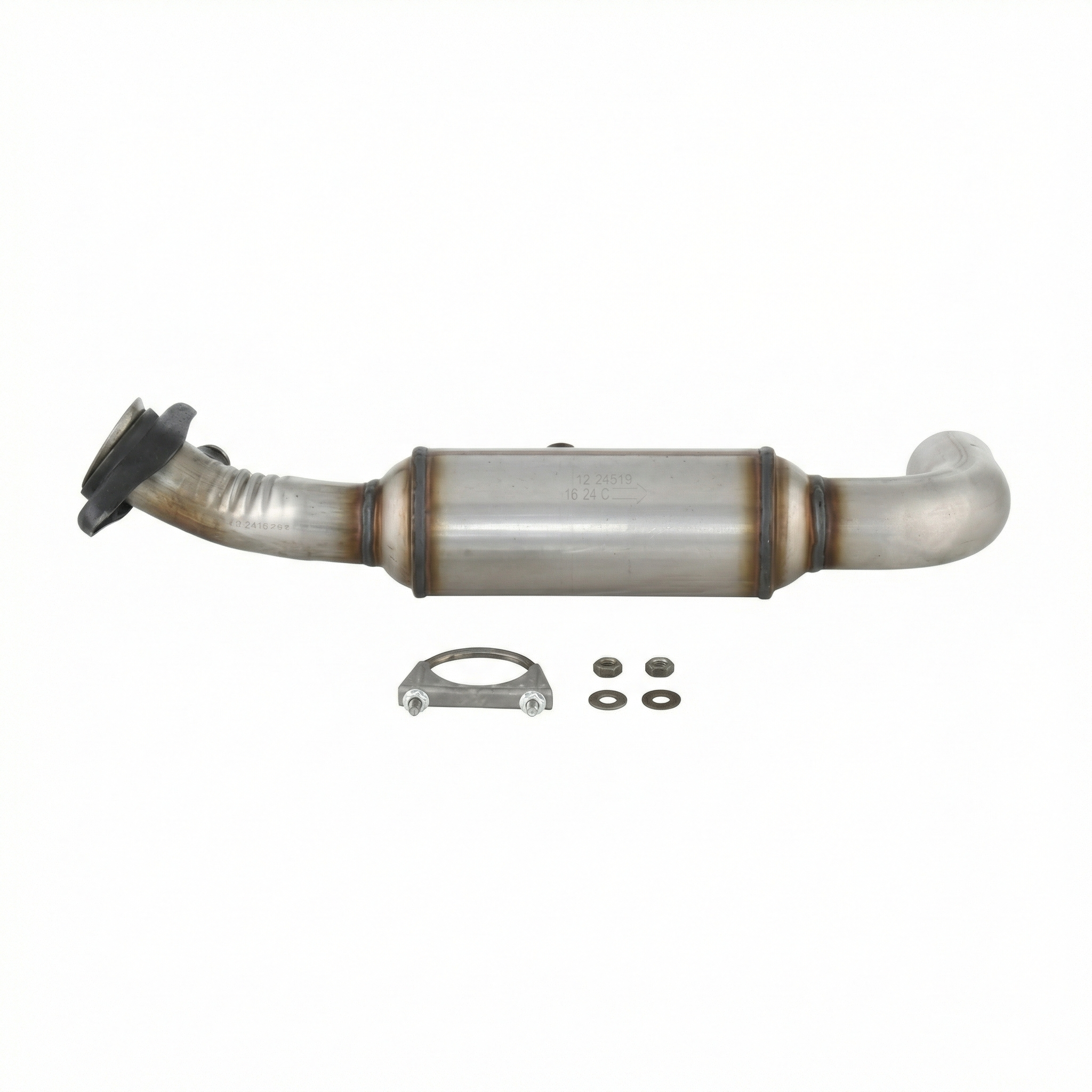
- Manifold Catalytic Converter Assembly
(OEM #28510-2EMN0 (2WD), 28510-2EPE0 (AWD))— This is the most common part to fail and trigger the P0420 code, often due to internal contamination or damage from engine-related problems. The part numbers are specific to the 2019-2021 Tucson 2.0L GDI per TSB 20-FL-010H.
Trusted brands: Hyundai (OEM), MagnaFlow, Walker Exhaust, BRExhaust
OEM price range: $900-$1500
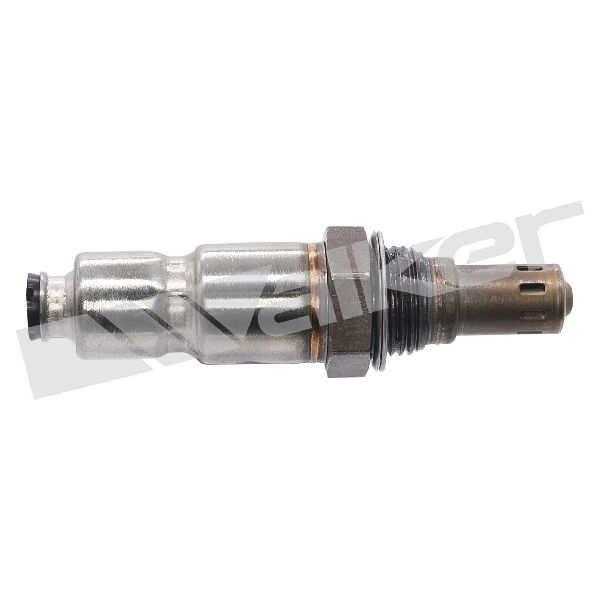
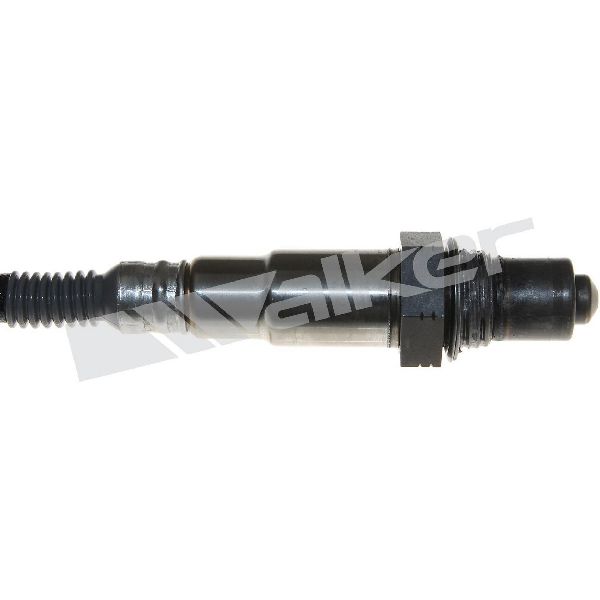
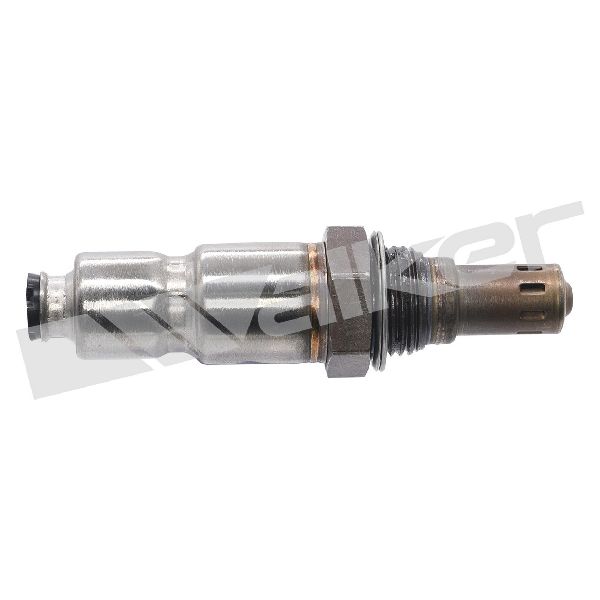
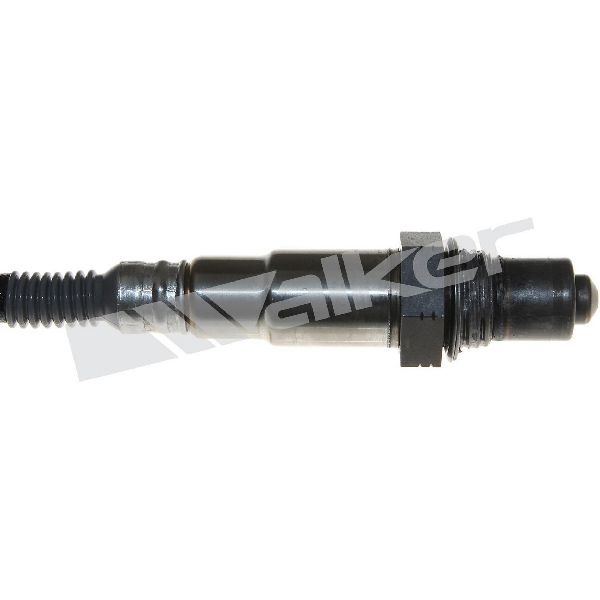
Aftermarket price range: $450-$700 - Downstream Oxygen Sensor (Bank 1, Sensor 2)
(OEM #39210-2ETL2 (2016-2018 FWD))— This sensor is responsible for monitoring the converter's efficiency. It can fail and send incorrect readings, falsely triggering a P0420 code. It's often replaced as a diagnostic step before the more expensive converter.
Trusted brands: Bosch, Denso, NGK/NTK, TRQ
OEM price range: $120-$200
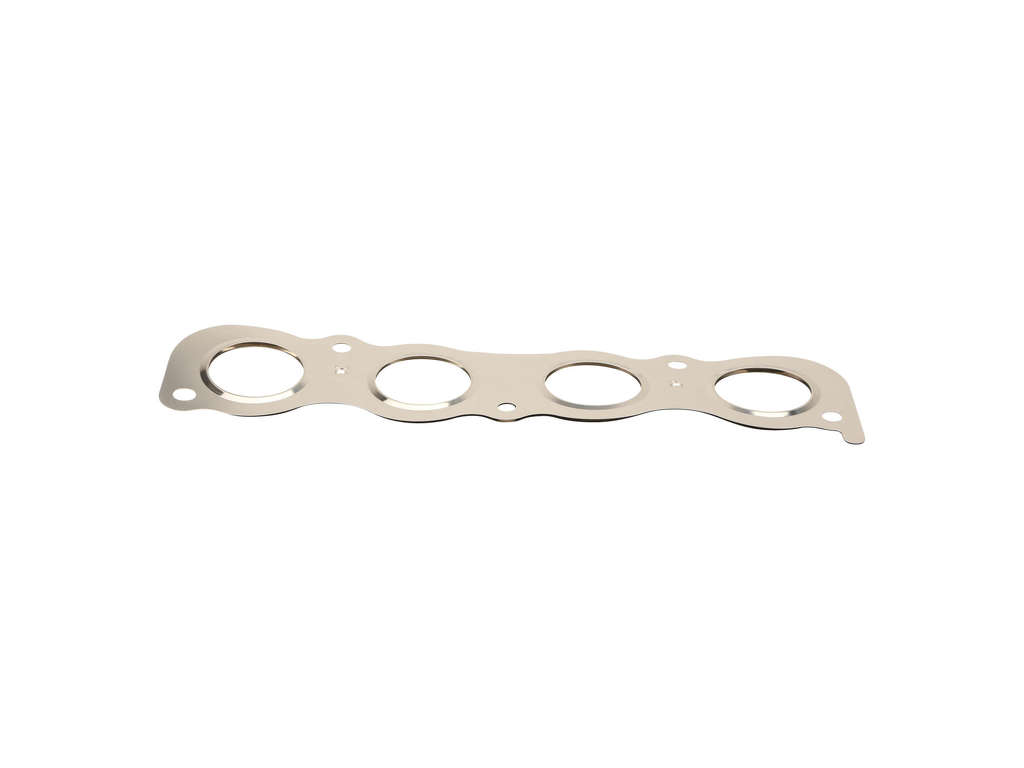
Aftermarket price range: $50-$150 - Exhaust Manifold Gasket — This gasket is required when replacing the manifold catalytic converter to ensure a proper seal and prevent leaks.
Trusted brands: Fel-Pro, Mahle, Hyundai (OEM)
OEM price range: $25-$50
Aftermarket price range: $15-$30
Related Codes That Often Appear With This One
- P0300-P0304 — These codes indicate engine misfires. Unburned fuel from a misfiring cylinder can destroy the catalytic converter, leading to P0420. An owner of a 2018 Tucson reported P0302 and P0300 alongside P0420, which was caused by a bad ignition coil leading to a clogged converter.
- P0171 — This code for 'System Too Lean' can indicate an issue (like an exhaust or vacuum leak) that can also affect the catalytic converter's operating conditions and trigger a P0420 code. A TSB was issued for older Sonatas for this combination, indicating a pattern for Hyundai vehicles.
- P1326 — This code is related to the Knock Sensor Detection System. While not directly linked, severe engine mechanical issues (like the rod bearing failures common in other Hyundai engines) that trigger P1326 can also lead to conditions that damage the catalytic converter.
Technical Service Bulletins (TSBs) & Recalls
- TSB 20-FL-010H: Published October 2020 for 2019 Tucson (TL) with 2.0L GDI engine. Addresses DTC P0420 by requiring replacement of the exhaust manifold catalyst and an ECM update.
- Bulletin #20-FL-010H: This manufacturer bulletin provides specific information related to the repair of DTC P0420, "Catalytic Converter System Bank 1 - Efficiency Below Threshold," found stored in the Engine Control Module.
Platform-Specific Known Issues
- A Technical Service Bulletin (TSB 20-FL-010H) was issued for the 2019 Tucson 2.0L GDI for code P0420, requiring a catalytic converter replacement and an ECM software update.
Mechanic-Grade Diagnostic Values
- Upstream O2 Sensor (Bank 1, Sensor 1) Voltage — expected: Rapidly fluctuating between ~0.1V and ~0.9V at steady RPM (e.g., 2,500) on a warm engine.. Failure: A flat or slow-to-respond signal.
- Downstream O2 Sensor (Bank 1, Sensor 2) Voltage — expected: A steady, flat line above 0.6V (600mV), ideally around 0.7V-0.8V, at steady RPM on a warm engine.. Failure: Voltage graph mimics the rapid fluctuations of the upstream sensor, or is stuck at a low voltage.
- In-Cylinder Pressure Transducer (Exhaust Stroke) — expected: Pressure should be near zero (atmospheric pressure).. Failure: Elevated pressure reading during the exhaust stroke, indicating a restriction or clog in the exhaust system, such as a blocked catalytic converter.
Hidden / Shadow Codes Worth Checking
- Mode 6, TID $81, CID $01: This is the raw data for the Catalyst Efficiency Monitor for Bank 1. The value represents a calculated ratio of the downstream vs. upstream oxygen sensor switching frequency. (see via A professional scan tool or an advanced OBD-II app (like Torque Pro, OBD Fusion) capable of displaying Mode $06 test results. A value that exceeds the manufacturer's maximum threshold will fail the test and set the P0420 code.)
Scan Tool Commands That Help
- Hyundai GDS (Global Diagnostic System): ECM Update - Event #588 — This specific software update is required for 2019 Tucson 2.0L GDI models when replacing the catalytic converter for a P0420 code, as mandated by TSB 20-FL-010H. It improves the DTC logic to prevent the code from returning.
Wiring & Ground Locations
- 91860-D3520 — Engine Bay. This is the OEM part number for the engine ground wiring assembly for the 2.0L Nu engine. A poor engine ground can cause erratic sensor readings, including from the oxygen sensors, potentially leading to a false P0420 code. Ensuring this harness and its connection points are clean and tight is a crucial electrical check.
Real Owner Repair Stories
- YouTube channel 'Auto Repair Tips' (2018 Hyundai Tucson) — Developed a misfire, shaking, and then a severe loss of power where the car wouldn't accelerate properly, feeling like a bad transmission.
❌ Tried (didn't work) Continuing to drive with the misfire.
✅ What actually fixed it The root cause was a failing ignition coil on cylinder 2 (P0302), which dumped unburned fuel into the exhaust and destroyed the catalytic converter. The final fix was replacing both the bad ignition coil and the clogged catalytic converter. The clogged converter was confirmed with an in-cylinder pressure transducer test showing high backpressure. - Reddit user in r/AskMechanics (2019 Hyundai Tucson, 49,000 miles) — Check Engine Light with P0420 code.
✅ What actually fixed it The issue was resolved under warranty by a Hyundai dealer according to TSB 20-FL-010H. The repair involved replacing the catalytic converter and performing an ECM software update. - Reddit user in r/Hyundai (2017 Hyundai Accent (similar engine issues)) — Excessive oil consumption, car shaking at idle, RPMs dropping and surging, and an intermittent P0420 code.
❌ Tried (didn't work) A dealer fixed an alleged 'oil leak' but consumption continued.
✅ What actually fixed it Another user diagnosed the problem as stuck/carboned-up oil control rings, a known issue in GDI engines causing oil burn that destroys the catalytic converter. The recommended fix, before replacing the converter, was to perform a 'piston soak' at home using a product like Berryman's B12 to free the stuck rings and stop the oil consumption. - NHTSA ODI #11608382 — An owner reported that their check engine light came on and off before they could get service; the manifold, catalytic converter, and O2 sensor were eventually replaced at only 37,000 miles due to the P0420 code.
- NHTSA ODI #11571134 — One owner noted that at 19,000 miles, the catalytic converter failed for code P0420, requiring the replacement of the 3-way catalyst, manifold, and upper and lower gaskets.
Model Year Variations Within This Range
- 2019-2021: The 2019 model year received a refresh. While the 2.0L engine remained, it is specified as a GDI engine in TSB 20-FL-010H, which addresses the P0420 code. This TSB requires both a new catalytic converter (PN 28510-2EMN0 for 2WD, 28510-2EPE0 for AWD) and a mandatory ECM software update (Event #588). This procedure is different from earlier 2016-2018 models.
Diagnostic Flowchart
Real Owner Stories
Aggregated from forums and TSBs cited above. Mileages and costs reflect what owners reported in those sources.
2018 Hyundai Tucson SEL — 122000 miles
Symptoms: Vehicle would not accelerate, couldn't go faster than 50 mph. Initially no check engine light, but later a persistent P0420 code. Mechanic noted the car was down 2 quarts of oil on two separate visits.
What fixed it: The issue was not resolved. The owner had spent over $2,000 replacing the catalytic converter and front O2 sensor, and was considering trading the car in.
Cost: $2000+
Source hint: Ask Scotty Community / CarKiller
Related OBD-II Codes
Frequently Asked Questions
Does TSB 20-FL-010H apply to my 2016-2021 Hyundai Tucson?
Will my emissions warranty cover a bad catalytic converter on my Tucson?
Can the 2.0L Nu engine's oil consumption cause the P0420 code?
Should I fix misfire codes before replacing the catalytic converter on my Tucson?
How can I tell if it's just a bad O2 sensor or the catalytic converter on my Tucson?
Helpful Videos


Used OEM Parts in Stock
New Aftermarket Parts Available


The information in this article is provided for general reference and educational purposes only. Vehicle specifications, procedures, and part compatibility can vary by production date, trim level, and region. Always consult your vehicle's factory service manual and verify part numbers before purchasing or performing repairs. Safety-critical components such as airbags, seat belts, and braking systems should be installed by a qualified professional.
- Hyundai Tucson:
- 🧭 Diagnostic Flowchart
- 🎬 Helpful Videos
- 🛍️ Shop This Part
- What's Unique About the 2016-2021 Hyundai Tucson
- Symptoms You May Notice
- Most Likely Causes
- Rare But Worth Checking
- Diagnosis Steps
- Parts You'll Likely Need
- Related Codes That Often Appear With This One
- Technical Service Bulletins (TSBs) & Recalls
- Platform-Specific Known Issues
- Mechanic-Grade Diagnostic Values
- Hidden / Shadow Codes Worth Checking
- Scan Tool Commands That Help
- Wiring & Ground Locations
- Real Owner Repair Stories
- Model Year Variations Within This Range
- Real Owner Stories
- 2018 Hyundai Tucson SEL — 122000 miles
- Related OBD-II Codes
- Frequently Asked Questions
- 🎟️ Get 5% Off