

P0420 on 2012-2017 Hyundai Veloster: Catalyst Efficiency Fixes & Causes
For a 2012-2017 Veloster, code P0420 usually means the catalytic converter is failing or an oxygen sensor is bad. Before replacing the expensive converter, test the O2 sensors and check for exhaust leaks, as a faulty sensor is a common misdiagnosis. Underlying engine issues like oil consumption or carbon buildup on these GDI engines can also be the root cause, destroying the new converter if not addressed.
- P0420 means your catalytic converter isn't working efficiently, but don't assume the converter is bad right away.
- Always test the downstream oxygen sensor first. It's a common failure item on the Veloster and much cheaper to replace than the catalytic converter.
- Check for exhaust leaks between the two oxygen sensors and address any other engine codes (especially for misfires) before replacing parts for P0420.
- If the catalytic converter must be replaced, be aware that it is integrated with the exhaust manifold, making it a more involved and expensive repair.
What's Unique About the 2012-2017 Hyundai Veloster
On the 1.6L GDI (Gamma) engine in the Veloster, the P0420 code is a frequent complaint. While catalytic converters can fail from age, these engines have known issues like oil consumption and intake valve carbon buildup that can contaminate and ruin the converter prematurely. It is crucial to rule out a faulty oxygen sensor first, as replacing one is much cheaper and a very common cause for a false P0420 code on these cars. Additionally, related Hyundai/Kia models with this engine family have had recalls and TSBs for software updates to prevent high exhaust gas temperatures from damaging the catalyst, highlighting a sensitivity in the system's design.
Symptoms You May Notice
- Check Engine Light is on
- Reduced engine power and poor acceleration
- Worse fuel economy
- A sulfur or "rotten egg" smell from the exhaust.
- Rattling noise from under the car if the converter's internal structure has broken
- Strong gasoline odor from the exhaust
- Replacing the catalytic converter when the actual problem is a much cheaper downstream oxygen sensor. Always test the sensors before condemning the converter.
- Replacing O2 sensors or the catalytic converter without addressing the root cause, such as oil consumption or a misfire, leading to repeat failure of the new parts.
Most Likely Causes
- Failing Catalytic Converter 🔴 High Probability → Shop Catalytic Converter Can be damaged by unburned fuel from misfires, or oil/coolant contamination, which can be issues on GDI engines. Age and mileage are also primary factors. The catalyst substrate can also become clogged from carbon buildup, a known issue with GDI engines.
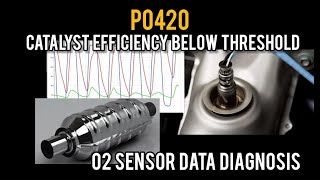
How to confirm: Use a scan tool to graph O2 sensor data; 🎬 Watch: How to diagnose P0420 using O2 sensor data if the downstream sensor (Sensor 2) voltage fluctuates similarly to the upstream sensor (Sensor 1), the converter is not storing oxygen and is likely bad. An infrared thermometer can also be used to check temperatures; the outlet should be at least 100°F (38°C) hotter than the inlet on a working converter after the engine is fully warmed up.
Typical fix: Replace the catalytic converter. On the Veloster, this is an integrated exhaust manifold/converter assembly. 🎬 Watch: Step-by-step Veloster catalytic converter removal and replacement Address any underlying issues (oil consumption, misfires) first.
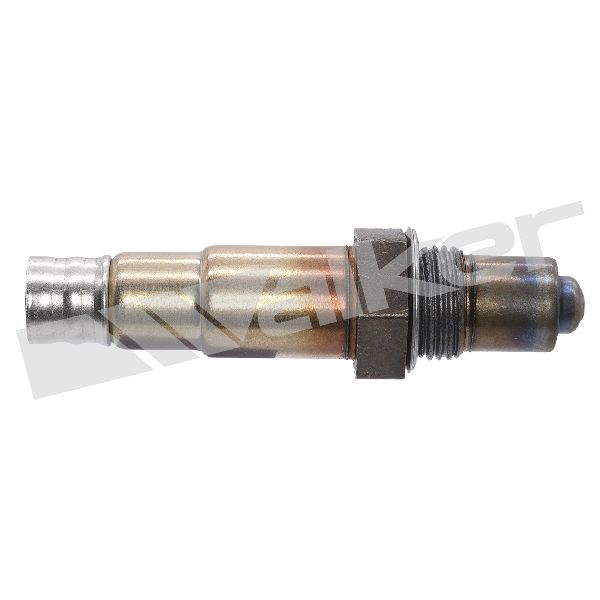
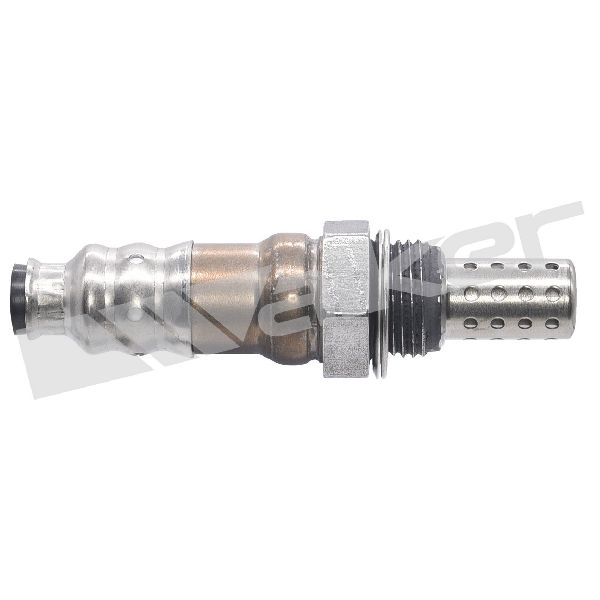
Est. part cost: $250-$700 (aftermarket), $1500+ (OEM) - Faulty Downstream Oxygen (O2) Sensor 🟡 Medium Probability → Shop Oxygen Sensor The downstream O2 sensor's only job is to monitor the catalytic converter. If it becomes lazy, biased, or develops an internal fault, it can send incorrect data to the ECM, falsely triggering a P0420 code. This is a very common point of failure and a frequent misdiagnosis for a bad converter.
How to confirm: Observe the sensor's live data on a scan tool. A healthy downstream sensor should show a relatively steady, stable voltage (typically above 0.5V) when the engine is at a steady cruise. If it's stuck high, low, not responding, or fluctuating wildly like the upstream sensor, the sensor is the likely culprit. A multimeter can also be used to check for continuity within the sensor's heating circuit.
Typical fix: Replace the downstream (Bank 1, Sensor 2) oxygen sensor. 🎬 See this walkthrough for replacing the downstream O2 sensor
Est. part cost: $50-$150 - Exhaust Leak ⚪ Low Probability Rust and vibration can cause cracks or gasket failures in the exhaust system, particularly at the exhaust manifold or the flex pipe. A leak between the upstream and downstream O2 sensors allows outside oxygen to enter, which can fool the downstream sensor and trigger a P0420 code.
How to confirm: Perform a visual inspection for cracks or black soot marks around the exhaust manifold, flex pipe, and gaskets. A smoke test is the most definitive way to find small leaks. You may also hear a ticking or hissing sound from the engine bay that changes with RPM.
Typical fix: Replace the leaking gasket or repair/replace the cracked exhaust component.
Est. part cost: $20-$200 - Engine Running Rich or Misfiring ⚪ Low Probability Issues like leaking fuel injectors, bad spark plugs, or faulty ignition coils can send unburned fuel into the exhaust, which superheats and destroys the precious metals inside the catalytic converter. GDI engines are also prone to carbon buildup on intake valves, which can affect air/fuel mixture and lead to conditions that damage the cat.
How to confirm: Check for other trouble codes (e.g., for misfires like P030x or fuel trim like P0171/P0172). Address these codes FIRST before suspecting the converter. A borescope can be used to inspect intake valves for carbon buildup.
Typical fix: Resolve the root cause of the misfire or rich condition (e.g., replace spark plugs, ignition coils, or fuel injectors). Perform an induction cleaning service to remove carbon deposits.
Est. part cost: $50-$500
Rare But Worth Checking
- ECM Software Issue: Hyundai has issued TSBs and recalls for other models (including the 2019 Tucson with a GDI engine) to update ECM logic for P0420 detection and to prevent conditions that damage the catalyst. It's possible the software's parameters for catalyst efficiency are too sensitive, or that an update is needed to address an underlying engine condition.
Diagnosis Steps
- Check for any other stored trouble codes. If other codes are present, diagnose and fix them first, especially misfire, fuel system, or oil pressure codes.
- Visually inspect the exhaust system from the manifold to the rear O2 sensor for any signs of leaks, such as cracks, holes, or black soot stains around gaskets.
- Use a scan tool to observe the live data streams for the upstream (Bank 1 Sensor 1) and downstream (Bank 1 Sensor 2) oxygen sensors. At a steady 2000-2500 RPM, the upstream sensor should fluctuate rapidly between ~0.1V and ~0.9V. The downstream sensor should hold a relatively steady voltage, typically above 0.5V.
- If the downstream O2 sensor's voltage is switching rapidly and mirroring the upstream sensor, the catalytic converter has likely failed.
- If the downstream O2 sensor's voltage is flat, unresponsive, or stuck (e.g., at 0V or 1V), the sensor itself is the most likely culprit and should be tested or replaced.
- If O2 sensors appear to be working and no leaks are found, use an infrared temperature gun to measure the inlet and outlet pipes of the catalytic converter after the engine is fully warmed up. The outlet should be at least 100°F (38°C) hotter than the inlet, indicating it is working.
- Check engine oil level. Significant oil consumption is a known issue that can poison the catalytic converter.
Parts You'll Likely Need
- Catalytic Converter (Exhaust Manifold Integrated)
(OEM #28960-2BAA0)— This is the direct cause if the converter has truly failed due to age, contamination, or physical damage. On the Veloster, it is part of the exhaust manifold assembly.
Trusted brands: Walker Exhaust, MagnaFlow, Dorman
OEM price range: $1500-$2000
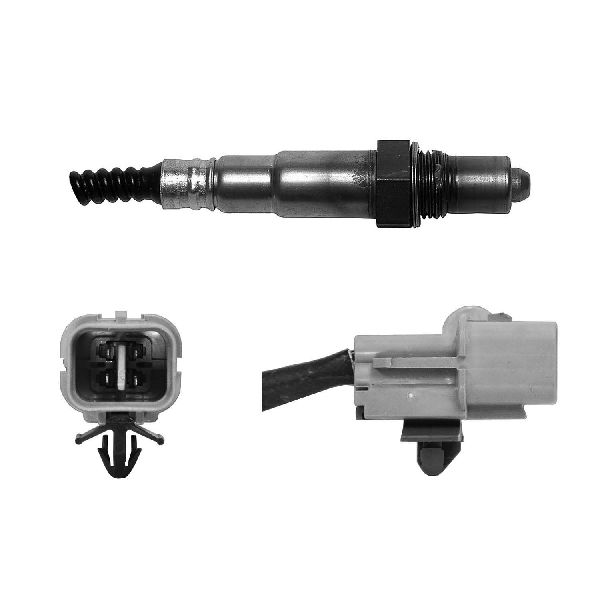
Aftermarket price range: $300-$700 - Downstream Oxygen Sensor (Bank 1 Sensor 2)
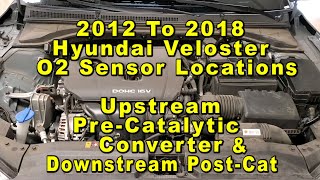
(OEM #39210-2B260)— A faulty sensor is a common misdiagnosis for a bad converter. It's cheaper to replace and should be tested and considered before replacing the entire converter assembly.
Trusted brands: Denso, Bosch, NGK/NTK
OEM price range: $100-$180
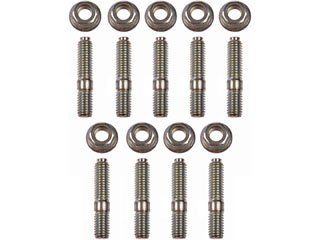
Aftermarket price range: $50-$120 - Exhaust Gaskets — Necessary to replace whenever the catalytic converter or other exhaust components are removed to prevent leaks.
Trusted brands: Fel-Pro, Walker Exhaust
OEM price range: $20-$50
Aftermarket price range: $10-$30
Related Codes That Often Appear With This One
- P0171 — System Too Lean. A vacuum leak or fuel delivery issue causing a lean condition can lead to higher combustion temperatures, potentially damaging the catalytic converter over time. A TSB for other Hyundai models links P0171 and P0420.
- P0300-P0304 — Random or specific cylinder misfires. Unburned fuel from a misfiring cylinder will enter the exhaust and can quickly overheat and destroy the catalytic converter.
Technical Service Bulletins (TSBs) & Recalls
- 16-FL-004: While for a Santa Fe Sport, this TSB shows Hyundai has addressed P0420 and P0171 codes via ECM updates and potential catalyst replacement, indicating a history of dealing with this issue at the manufacturer level.
- Recall 182 / NHTSA 19V204000: Affects 2013 Veloster Turbo models. An ECM update was issued to prevent pre-ignition which could lead to excessive cylinder pressures and engine damage, a condition that could ultimately harm the catalytic converter.
- Recall 198 / NHTSA 20V746000: Affects 2015-2016 Veloster models. Addresses premature connecting rod bearing wear. A failing engine can lead to oil contamination and subsequent catalytic converter failure. The fix includes an engine inspection, replacement if necessary, and a Knock Sensor Detection System (KSDS) software update.
Platform-Specific Known Issues
- A recall on the related 2012-2016 Kia Soul with the same 1.6L engine addressed high exhaust gas temperatures damaging the catalytic converter, which suggests a potential sensitivity for this engine family.
- Owners frequently report replacing the downstream O2 sensor successfully resolves the P0420 code, indicating it's a common failure point that can mimic a bad converter.
- Some owners on forums report using a bottle of fuel system/catalyst cleaner like 'Cataclean' and clearing the code, which sometimes keeps the light off for a period, especially around 100k miles. This is often a temporary fix.
- In some cases, especially with aftermarket catalytic converters, owners have installed a spark plug non-fouler (extender) on the downstream O2 sensor to pull it out of the direct exhaust stream. This can trick the ECM and turn off the light, but it does not fix the underlying efficiency problem and may be illegal in emissions-controlled areas.
Mechanic-Grade Diagnostic Values
- Downstream O2 Sensor (Sensor 2) Voltage — expected: Relatively steady voltage around or above 0.5V at a constant RPM when the catalyst is hot and working correctly.. Failure: Voltage fluctuates rapidly, mirroring the upstream sensor's 0.1V-0.9V switching pattern, or is stuck low (below ~0.1V).
- Long-Term Fuel Trim (LTFT) — expected: Should ideally be within +/- 10% at idle and under load.. Failure: Consistently high positive values (e.g., > +10%) indicate the engine is compensating for a lean condition, which could be caused by a weak fuel pump, clogged filter, or vacuum leak, and can lead to catalyst damage.
- O2 Sensor Heater Circuit Resistance — expected: A specific resistance value (typically low, e.g., 2-20 ohms, though not specified for this exact part in searches).. Failure: An open circuit (infinite resistance) when tested with a multimeter indicates a failed heater element, which can cause incorrect sensor readings.
Scan Tool Commands That Help
- Hyundai GDS (Global Diagnostic System): Readiness Test / Monitor Status — After replacing a component like the catalytic converter or O2 sensor, this function is used to confirm that the catalyst efficiency monitor has completed its self-test and passed.
- Hyundai GDS (Global Diagnostic System): Reset Adaptive Values — After a repair that affects the air/fuel mixture (like replacing injectors or fixing a vacuum leak), resetting the learned fuel trim values can help the ECM adapt to the new conditions faster.
- Hyundai GDS (Global Diagnostic System): ECU Update / S/W Management — As demonstrated in TSBs for other Hyundai models with GDI engines, an ECU update may be required to revise the P0420 detection logic if the original parameters are too sensitive.
Wiring & Ground Locations
- Fuse #22 (Interior Panel) — In the fuse panel located inside the vehicle, likely on the driver's side of the dashboard.. A 2013 Veloster fuse diagram shows this 15A fuse powers both the upstream and downstream oxygen sensors. A fault here would cause sensor codes and could lead to a P0420.
- ECM (Engine Control Module) — Located in the left rear of the engine compartment for the 2013 model year.. This is the computer that receives signals from the O2 sensors and sets the P0420 code. All related wiring terminates here.
- GGGT01, GGGT06, GGGT07, GGGT09 — These are engine compartment ground points. GGGT01, GGGT06, and GGGT07 are on the left side of the engine compartment; GGGT09 is on the left side of the engine itself (for the 1.6L Turbo model).. The O2 sensors and their heater circuits require a solid ground to function correctly. A corroded or loose ground at one of these locations can cause erratic sensor readings and trigger false codes.
Real Owner Repair Stories
- Reddit user in r/veloster (2012 Hyundai Veloster) — P0420 code
❌ Tried (didn't work) Replaced the catalytic converter (integrated manifold), Replaced the upstream (pre-cat) oxygen sensor
✅ What actually fixed it The code remained until the downstream (post-cat) oxygen sensor was replaced. Another user confirmed that starting with the downstream sensor is the correct diagnostic approach. - YouTube channel 'Fix it Angel' (2012-2015 Hyundai Veloster) — P0420 code, failed smog test
❌ Tried (didn't work) Replacing the downstream oxygen sensor. The P0420 code returned after a 50-mile test drive.
✅ What actually fixed it Installing a spark plug non-fouler (an extender) on the downstream O2 sensor to pull it slightly out of the exhaust stream. This kept the check engine light off and allowed the car to pass an emissions test, though it does not fix the root cause of catalyst inefficiency. - Reddit user in r/veloster (2017 Hyundai Veloster Base, high mileage (180 miles/day)) — Persistent P0420 for 7-8 months, occasional bogging down on acceleration.
❌ Tried (didn't work) Had a new engine installed under a recall program, but the P0420 code persisted.
✅ What actually fixed it The owner was still diagnosing, but a commenter reported success on their '13 Veloster by running a bottle of Liqui Moly fuel system cleaner through the tank and driving the car hard. They also advised checking for fouled spark plugs and oil burning.
"I Checked Everything" — The Actual Cause
- While no specific stories matched this pattern exactly, a related scenario involves fuel delivery. A persistent lean condition (indicated by high positive long-term fuel trims > +10%) can overheat and damage the catalytic converter over time. This condition would not be found with an exhaust smoke test. On a 2017 Veloster, a user traced high fuel trims to a failing fuel pump and clogged fuel filter, which are plausible root causes for an eventual P0420 that would be missed by standard exhaust leak checks.
Documented NHTSA Reports
- An owner reported that while no warning lights were active, dealership documentation confirmed a P0420 code was present during a service visit (NHTSA ODI #11664980).
- One owner experienced an intermittent P0420 code alongside a P073F transmission code, noting that the engine would rev but the vehicle would not accelerate from a stop (NHTSA ODI #11460361).
- After a check engine light appeared, a diagnostic at a Hyundai dealer revealed codes P0420 and P0463; the dealer recommended replacing the catalytic converter and fuel sensor (NHTSA ODI #11218601).
- NHTSA ODI #11196018 describes a vehicle with a P0420 code where a mechanic suggested replacing the exhaust manifold/catalytic converter assembly to resolve the catalyst efficiency threshold issue.
OEM Part Supersession History
39210-2B260→N/A— This appears to be the stable part number for the downstream oxygen sensor for the 2012-2017 1.6L non-turbo engine.
Heads up: Be aware that Turbo models and later generations (2019+) use different part numbers (e.g., 39210-2B365). Always verify fitment with the vehicle's VIN.
Model Year Variations Within This Range
- 2013-2017: The Veloster Turbo model features a 201 hp turbocharged GDI engine, compared to the 132 hp naturally aspirated engine in the base model. While the P0420 diagnostic principles are the same, the increased heat and complexity of the turbo system could potentially lead to different failure patterns or life expectancies for the catalytic converter.
- 2016: A new 7-speed dual-clutch transmission (DCT) was offered on the Turbo model. This does not directly impact the P0420 code but represents a powertrain change within the specified vehicle range.
Diagnostic Flowchart
Other Known Issues on This Vehicle
Issues unrelated to this code that are worth knowing about as an owner of this generation:
- Connecting Rod Bearing Failure 🔴 High — Affects 2015-2016 models specifically. Failure can occur at moderate mileage (e.g., 40k-70k miles) and can lead to complete engine seizure. (Ref: Hyundai Recall 198 (NHTSA 20V746000) was issued to inspect engines and install a Knock Sensor Detection System (KSDS) software update.)
- GDI Carbon Buildup 🟠 Medium — A common issue for all GDI engines, including the 1.6L Gamma. Becomes noticeable after 60,000-100,000 miles, causing rough idle, hesitation, and reduced power.
- Excessive Oil Consumption 🟠 Medium — Often linked to GDI engine design and piston ring issues. Can become apparent after 80,000 miles and is a leading cause of catalytic converter failure. (Ref: While not a specific recall for the Veloster's 1.6L GDI, it's a widely reported problem across the Hyundai/Kia GDI engine family.)
- Ignition Coil Failure 🟡 Low → Shop Ignition Coil — Can fail intermittently, typically over 80,000 miles, leading to misfire codes (P030x) which, if ignored, can damage the catalytic converter.
- Valve Cover Gasket Oil Leak 🟡 Low → Shop Engine Valve Cover — A common leak point as the engine ages (typically over 80,000 miles) due to the gasket hardening from heat cycles.
Used vs. New Parts: Buying Guide for This Vehicle
When a used part is the smart pick: For this specific repair, buying used parts is generally not recommended. The critical components (catalytic converter, O2 sensors) are wear items, and a used part may have limited remaining life or be the source of the same fault.
Donor-vehicle mileage cap: roughly under 60000 miles for the part to have meaningful remaining life.
What to inspect on the donor part:
- For a catalytic converter, there is no reliable way to visually inspect its internal condition. Avoid.
- Ensure any wiring and connectors on used parts are free of corrosion, brittleness, or damage.
OEM-only on this vehicle (don't cheap out):
- Catalytic Converter: Many owners report that aftermarket converters, especially cheaper ones, lack the necessary precious metal loading to satisfy the Hyundai ECM's efficiency monitoring, causing the P0420 code to return shortly after installation. While expensive, an OEM converter is the most reliable fix.
Aftermarket brands forum-validated for this vehicle:
- Oxygen Sensors: Denso and NGK/NTK are widely regarded as reliable OEM-quality alternatives.
Brands owners have reported issues with on this vehicle:
- Unbranded or suspiciously low-priced catalytic converters found online. Forum users have reported these units failing catastrophically, sometimes clogging the exhaust entirely.
Real Owner Stories
Aggregated from forums and TSBs cited above. Mileages and costs reflect what owners reported in those sources.
2012 Hyundai Veloster 1.6L GDI
Symptoms: Check engine light on with code P0420; owner replaced the catalytic converter and upstream O2 sensor but the code remained.
What fixed it: Replacing the downstream O2 sensor, as its sole purpose is to monitor the catalyst efficiency.
Source hint: r/Veloster on Reddit: Thread titled '2012 Veloster P0420'
2016 Hyundai Veloster 1.6L GDI — 100000 miles
Symptoms: Experienced the P0420 code at the 100k mile mark.
What fixed it: Suggested first steps included using Cataclean or replacing O2 sensors, which are common failure items around 80k+ miles.
Source hint: r/Veloster on Reddit: Thread titled 'Code p0420 on 2016 veloster'
2012 Kia Soul 1.6L GDI (Platform Mate)
Symptoms: A two-year battle with recurring P0420 codes, involving multiple replacements of the catalytic converter and O2 sensors; symptoms included a sulfur or 'rotten egg' smell from the exhaust.
What fixed it: Addressing underlying 'dirty combustion' (rich condition) that was causing repeat catalyst failures.
Source hint: r/KiaSoulClub on Reddit: Thread 'Recurring P0420 code in KIA Soul 1.6 GDI 2012'
Related OBD-II Codes
Frequently Asked Questions
Does Recall 198 apply to my 2015-2016 Veloster and can it cause a P0420 code?
Is there a recall for the 2013 Veloster Turbo regarding engine issues that affect the catalytic converter?
Can I use a fuel additive like Cataclean to fix the P0420 code on my Veloster?
Why is the downstream O2 sensor frequently mentioned for the Veloster P0420 code?
Is the catalytic converter on the 1.6L Gamma engine a standard pipe section?
Should I be worried about carbon buildup on my Veloster's intake valves?
Helpful Videos


Used OEM Parts in Stock
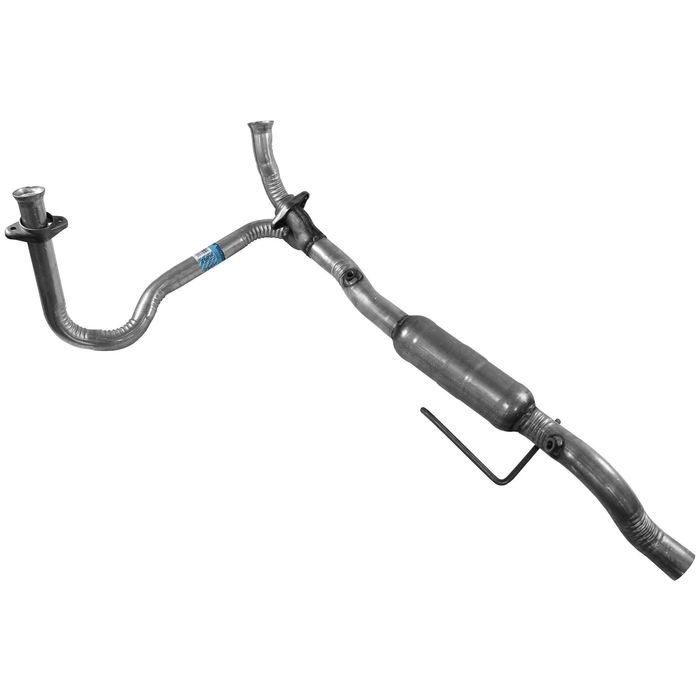
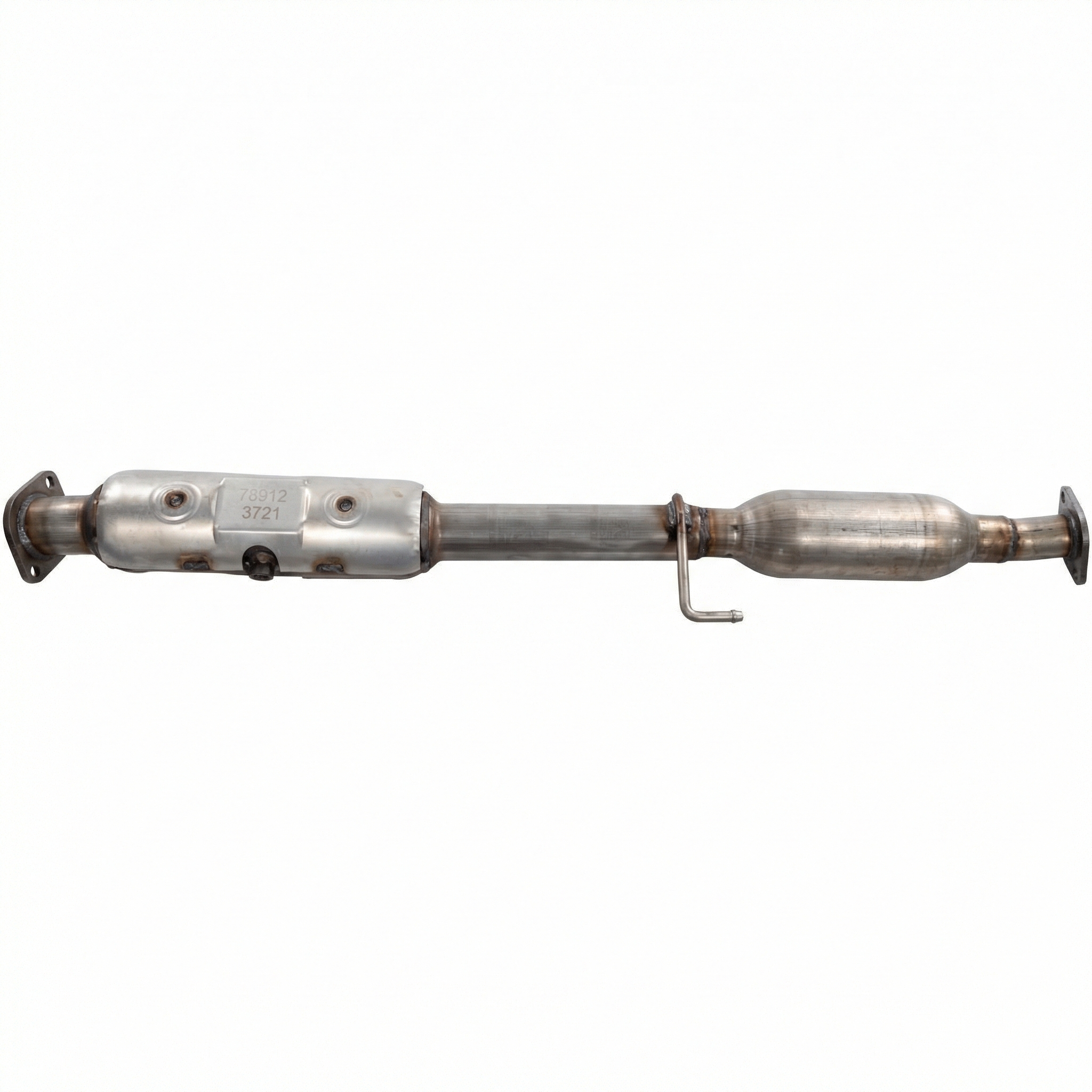
New Aftermarket Parts Available



The information in this article is provided for general reference and educational purposes only. Vehicle specifications, procedures, and part compatibility can vary by production date, trim level, and region. Always consult your vehicle's factory service manual and verify part numbers before purchasing or performing repairs. Safety-critical components such as airbags, seat belts, and braking systems should be installed by a qualified professional.
- Hyundai Veloster:
- 🧭 Diagnostic Flowchart
- 🎬 Helpful Videos
- 🛍️ Shop This Part
- What's Unique About the 2012-2017 Hyundai Veloster
- Symptoms You May Notice
- Most Likely Causes
- Rare But Worth Checking
- Diagnosis Steps
- Parts You'll Likely Need
- Related Codes That Often Appear With This One
- Technical Service Bulletins (TSBs) & Recalls
- Platform-Specific Known Issues
- Mechanic-Grade Diagnostic Values
- Scan Tool Commands That Help
- Wiring & Ground Locations
- Real Owner Repair Stories
- "I Checked Everything" — The Actual Cause
- Documented NHTSA Reports
- OEM Part Supersession History
- Model Year Variations Within This Range
- Other Known Issues on This Vehicle
- Used vs. New Parts: Buying Guide for This Vehicle
- Real Owner Stories
- 2012 Hyundai Veloster 1.6L GDI
- 2016 Hyundai Veloster 1.6L GDI — 100000 miles
- 2012 Kia Soul 1.6L GDI (Platform Mate)
- Related OBD-II Codes
- Frequently Asked Questions
- 🎟️ Get 5% Off