

P0420 on 2011-2015 Kia Optima 2.4L: Catalyst Efficiency Causes and Fixes
On a 2011-2015 Optima, P0420 is often caused by outdated ECU software or a catalytic converter that has failed due to engine oil consumption. First, check if TSB ENG160R1 (a software update for 2012-2015 models) applies to your vehicle before replacing any parts. A new converter can be destroyed if the underlying oil burning issue isn't fixed, a known problem with the Theta II engine that led to a class-action settlement.
- Before any repairs, contact a Kia dealer with your VIN to check if TSB ENG160R1 (an ECU update) is available for your car; this could be a free or low-cost fix.
- P0420 on this engine is very often a symptom of excessive oil consumption, a known issue with the 2.4L Theta II engine. You must address the oil consumption issue before replacing the catalytic converter.
- Do not automatically replace the oxygen sensors. They are usually just doing their job by reporting a problem. A proper diagnosis is needed to confirm if a sensor is truly faulty.
- If other engine codes are present, especially for misfires (P030x) or lean conditions (P0171), resolve them first as they are likely the root cause of the P0420.
What's Unique About the 2011-2015 Kia Optima
For this specific Optima generation, the P0420 code is complicated by two major platform-specific issues. First, Kia released a Technical Service Bulletin (TSB ENG160R1) because the original ECU software for 2012-2015 models was often too sensitive, falsely triggering the code, especially during long periods of engine braking. Second, the 2.4L Theta II GDI engine is notorious for excessive oil consumption due to manufacturing defects, which can contaminate and destroy the catalytic converter. This issue was so widespread it was the subject of a major class-action settlement. This means a P0420 code is frequently a symptom of a larger engine problem, not just a simple converter failure.
Symptoms You May Notice
- Check Engine Light is on
- Failure to pass emissions inspection
- Reduced engine power and acceleration, especially under load
- Vehicle hesitation
- Rattling noise from the exhaust if the converter's internal structure has broken apart.
- Immediately replacing the catalytic converter without checking for TSBs or addressing underlying engine oil consumption issues. The new converter will likely fail again.
- Replacing the oxygen sensors when they are actually correctly reporting a failed converter. A scan tool analysis of sensor data is needed to differentiate.
- Replacing the catalytic converter when the true cause is a small exhaust leak before the downstream O2 sensor.
Most Likely Causes
- Outdated Engine Control Unit (ECU) Software 🔴 High Probability Kia issued TSB ENG160R1 for 2012-2015 models to fix overly sensitive monitoring logic that could trigger a false P0420, especially during long periods of engine braking. This update is specifically noted to address P0420 appearing alongside a P0171 (System Too Lean) code.
How to confirm: Contact a Kia dealership with your VIN. They can verify if TSB ENG160R1 is open for your vehicle or if the update has already been performed. This TSB may also address a P0171 code if present.
Typical fix: A Kia dealer or a qualified independent shop with OEM tools (like Kia's GDS) needs to perform the ECU software upgrade.
Est. part cost: $0 - Failed Catalytic Converter 🔴 High Probability → Shop Catalytic Converter The catalytic converter itself often fails as a direct result of the Theta II engine's tendency to consume excessive oil. Burning oil contaminates the precious metals (platinum, palladium, rhodium) inside the converter, rendering it useless. This is the most common reason for a 'true' P0420 on this platform.
How to confirm: After ruling out software and other causes, a technician can use a scan tool to analyze O2 sensor data. A healthy converter shows a steady downstream O2 sensor reading. An infrared thermometer can also be used; the converter's outlet should be significantly hotter than its inlet. If the inlet is hotter, it indicates a clog.
Typical fix: The catalytic converter must be replaced. CRITICAL: The root cause (e.g., oil consumption, misfires) must be repaired first, or the new converter will also fail quickly.
Est. part cost: $300-$1900 - Excessive Engine Oil Consumption 🟡 Medium Probability The 2.4L Theta II GDI engine was subject to recalls (e.g., SC147) and a class-action lawsuit for manufacturing defects that lead to excessive oil consumption and engine failure. This is a primary cause of 'true' catalytic converter failure. Kia has an oil consumption test procedure outlined in TSB ENG222; consumption over 1 quart per 1,000 miles is considered excessive.
How to confirm: Monitor your oil level frequently. If you are adding oil between changes, consumption is likely excessive. A faulty PCV valve can be a contributing factor and is a cheap part to check and replace. A formal oil consumption test at a dealership may be required for warranty claims.
Typical fix: Fixing oil consumption can range from replacing the PCV valve to requiring a combustion chamber cleaning procedure or a complete engine rebuild/replacement, which may be covered under extended warranties or recall campaigns for this engine.
Est. part cost: $15-$5000+ - Exhaust Leak ⚪ Low Probability
How to confirm: Listen for hissing or ticking noises from the exhaust system, especially when the engine is cold. A visual inspection may reveal cracks or broken gaskets on the exhaust manifold or pipes before the downstream O2 sensor. An exhaust leak can allow oxygen to enter the system, confusing the O2 sensors and mimicking a bad converter.
Typical fix: Repair the leak by replacing the cracked component or failed gasket.
Est. part cost: $20-$300
Rare But Worth Checking
- Faulty Downstream Oxygen (O2) Sensor: → Shop Oxygen Sensor While less common, a 'lazy' or failing downstream O2 sensor can send incorrect data, mimicking the signature of a bad converter. It's often replaced as a final diagnostic step before the expensive converter.
- Engine Misfires or Fuel System Issues: Persistent misfires (P0300-P0304) or a rich fuel condition will send unburned fuel into the exhaust, which can quickly overheat and destroy the catalytic converter. These underlying issues must be addressed first. Worn spark plugs have been reported by some owners as a cause.
- O2 Sensor Spacers / Non-Foulers (Illicit Fix): → Shop Oxygen Sensor Some owners install a spacer on the downstream O2 sensor to pull it out of the direct exhaust stream. This tricks the sensor into giving a steady reading, clearing the code without fixing the underlying problem. This is an illegal modification that will cause the vehicle to fail a visual emissions inspection.
Diagnosis Steps
- Check for TSBs: Contact a Kia dealer with your VIN to see if TSB ENG160R1 (ECU update) is open for your vehicle (2012-2015 models). This is the most important first step.
- Address Other Codes: If codes for misfires (P030x), lean conditions (P0171), or the knock sensor (P1326) are present, diagnose and fix those issues first. A P1326 code is especially critical and indicates a serious engine problem that needs immediate attention. 🎬 See this walkthrough for replacing the P1326 knock sensor
- Check for Oil Consumption: Monitor your engine oil level. If it's dropping significantly (more than 1 quart per 1,000 miles), you have an underlying issue that will destroy a new converter. Check the PCV valve as a potential contributor.
- Inspect for Exhaust Leaks: Visually and audibly inspect the exhaust system from the engine to the downstream O2 sensor for any leaks, paying close attention to manifold gaskets and flex pipes.
- Analyze O2 Sensor Data: Use a scan tool to graph the upstream and downstream O2 sensors. The upstream sensor (Bank 1, Sensor 1) should fluctuate rapidly. The downstream sensor (Bank 1, Sensor 2) should have a relatively steady voltage. If the downstream sensor mirrors the upstream, the converter is not working.
- Test Converter Temperature: Use an infrared thermometer to measure the temperature of the exhaust pipe at the inlet and outlet of the catalytic converter. The outlet should be at least 100°F hotter than the inlet. If it's not, or if the inlet is hotter, the converter is not functioning or is clogged.
- Consider O2 Sensor Failure: If all other tests are inconclusive, the downstream O2 sensor may be faulty. Replacing it is a valid diagnostic step before replacing the converter.
Parts You'll Likely Need
- Catalytic Converter
(OEM #28950-2G420)— This is the part identified as inefficient by the P0420 code. It frequently fails due to contamination from the engine's known oil consumption issues. Part number confirmed by multiple Kia parts dealers.
Trusted brands: Kia (OEM), MagnaFlow, Walker Exhaust, Davico
OEM price range: $1250-$1900
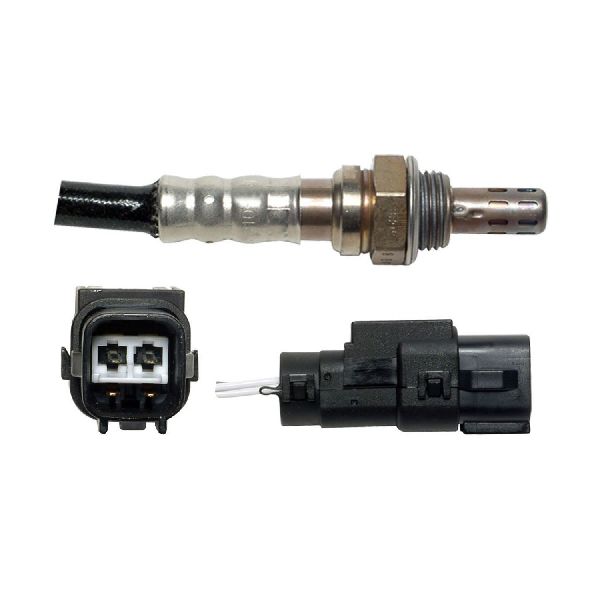
Aftermarket price range: $300-$800 - Downstream Oxygen Sensor
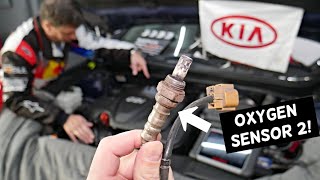
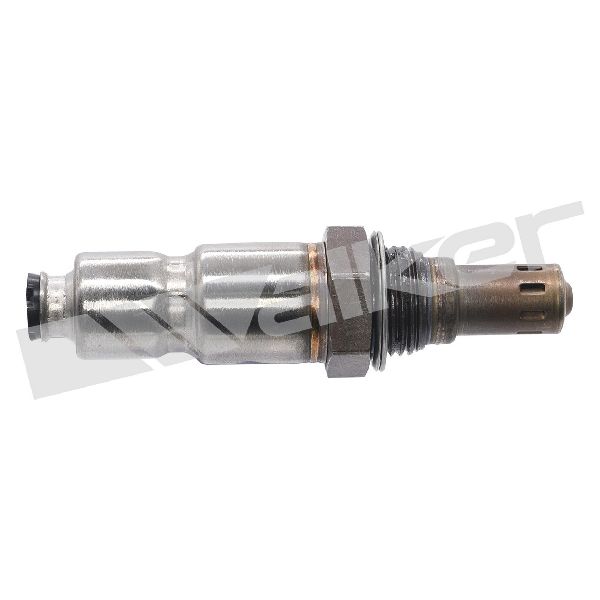
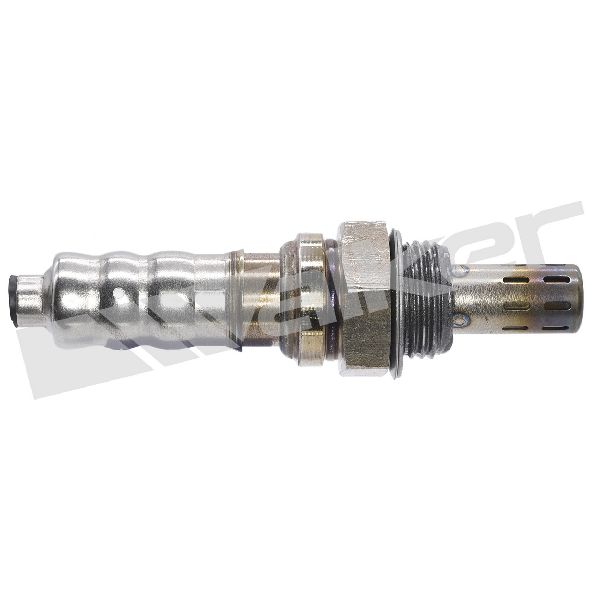
(OEM #39210-2G200)— A faulty downstream O2 sensor can send incorrect readings and falsely trigger a P0420 code. It is sometimes replaced as a diagnostic step before the more expensive converter. Part number confirmed in repair video. 🎬 Watch: How to replace the downstream oxygen sensor
Trusted brands: Kia (OEM), Denso, NTK, Bosch
OEM price range: $120-$180
Aftermarket price range: $70-$130
Related Codes That Often Appear With This One
- P0171 — System Too Lean. TSB ENG160R1 specifically notes that the ECU software issue can cause P0420 and P0171 to appear together, and the update addresses both.
- P0300-P0304 — Cylinder Misfire. Misfires allow unburned fuel to enter the exhaust, which can damage the catalytic converter and trigger a P0420 code.
- P1326 — Knock Sensor Detection System. This code is often related to the larger Theta II engine problems (rod bearing wear) and puts the car in limp mode. The underlying engine issue can also be the root cause of the catalytic converter failure due to oil contamination or metal debris.
Technical Service Bulletins (TSBs) & Recalls
- ENG160R1: Addresses overly sensitive ECU software logic that can cause a false P0420, sometimes with P0171, on 2012-2015 Optima models.
Platform-Specific Known Issues
- Owner Experience with P0420 and P1326: A user on Reddit with a 2015 model reported getting both P0420 and P1326 codes simultaneously. This highlights the connection between the underlying engine knock sensor issue (P1326) and the resulting catalytic converter code (P0420), reinforcing that the P0420 is often a symptom of the larger Theta II engine problem.
- Hyundai TSB for P0420/P0171: A nearly identical TSB (15-01-008) exists for the 2011-2014 Hyundai Sonata with the 2.4L GDI engine, which also calls for an ECM update to fix P0420 and P0171. This TSB goes further, stating that if P0420 is present, the catalytic converter should also be replaced along with the software update, suggesting the faulty logic may have damaged the original converter.
Mechanic-Grade Diagnostic Values
- Long-Term Fuel Trim (LTFT) for Bank 1 — expected: Within +/- 5% at idle and under steady cruise.. Failure: Consistently high positive values (e.g., +10% or more) suggest the ECU is compensating for a vacuum leak or other lean condition that could be the root cause of converter damage.
- Mode $06 Catalyst Efficiency Monitor (Bank 1) — expected: The test value should be above the minimum threshold specified by the ECU. For example, a value of 1.345 might be a pass if the minimum is 1.299.. Failure: A test value that is very close to, at, or below the minimum threshold indicates a borderline or failing catalytic converter, even if the P0420 code is not yet permanently set.
Hidden / Shadow Codes Worth Checking
- Mode $06, Test ID $21: This is not a trouble code but a specific onboard test monitor for Catalyst Efficiency on Bank 1. It provides the raw data the ECU uses to determine if the converter is passing or failing. The Component ID is often shown as $A9. (see via Requires an advanced OBD-II scan tool that supports Mode $06 data display. This data is not available on basic code readers.)
Wiring & Ground Locations
- Downstream O2 Sensor (Bank 1, Sensor 2) & Connector — The sensor is screwed into the middle of the catalytic converter assembly, underneath the vehicle. The wiring harness runs up to a connector that is typically clipped to the vehicle's underbody or a bracket near the transmission.. This sensor provides the post-catalyst reading. Damage to its wiring from road debris or heat can cause incorrect signals, mimicking a P0420 code. The connector is a common point for corrosion or loose pins.
- Upstream O2 Sensor (Bank 1, Sensor 1) & Connector — The sensor is located in the exhaust manifold at the rear of the engine, accessible from the top of the engine bay. Its connector is also located at the top-rear of the engine.. While less likely to directly cause P0420, a faulty upstream sensor can affect fuel control, leading to conditions that damage the converter over time. Its data is also the baseline for the P0420 test.
Real Owner Repair Stories
- Go-Parts article citing owner experiences (Kia Sportage with same 2.4L engine and P0420 issue) — Check Engine Light with P0420 code.
❌ Tried (didn't work) Using a catalytic converter cleaner (OXICAT) in the fuel tank. This made the code go away for a few months, but it returned.
✅ What actually fixed it The problem was permanently resolved by replacing the downstream (post-catalyst) oxygen sensor with a new Denso part.
Model Year Variations Within This Range
- 2011-2015: Vehicles may have been built to Federal (ULEV) or California (PZEV) emissions standards. This can affect the specific catalytic converter part number required. Part descriptions for the OEM converter often specify 'us-components-california' for PZEV models. It is critical to verify the correct part for the vehicle's specific emissions certification using the VIN.
- 2011 vs 2012-2015: The critical ECU software update described in TSB ENG160R1 is only applicable to 2012-2015 models. The 2011 model is not listed in this TSB, meaning a P0420 on a 2011 is less likely to be a 'false positive' from sensitive software.
Diagnostic Flowchart
Real Owner Stories
Aggregated from forums and TSBs cited above. Mileages and costs reflect what owners reported in those sources.
2011 Kia Optima 2.4L — 152500 miles
Symptoms: Car is running poorly, hesitates, and won't go past 55 mph with the pedal to the floor.
What fixed it: The owner did not report a final fix, but noted that replacing the upstream O2 sensor did not resolve the issue.
Source hint: Reddit r/MechanicAdvice
2015 Kia Optima 2.4L
Symptoms: Received both P0420 and P1326 codes simultaneously.
What fixed it: The P0420 was identified as a secondary symptom of the larger Theta II engine knock sensor issue (P1326), requiring the underlying engine problem to be addressed.
Source hint: Reddit user report cited in vehicle specific issues
Related OBD-II Codes
Frequently Asked Questions
Does TSB ENG160R1 apply to my Kia Optima for the P0420 code?
Why is my 2.4L Theta II engine consuming so much oil, and did it cause my P0420?
I have both P0420 and P1326 codes on my Optima. What does this mean?
How much oil consumption is considered 'excessive' by Kia for the Optima?
Can a bad PCV valve cause a P0420 on my 2011-2015 Optima?
Should I replace the catalytic converter if I also have a P0171 code?
Helpful Videos

We Have This Part in Stock


The information in this article is provided for general reference and educational purposes only. Vehicle specifications, procedures, and part compatibility can vary by production date, trim level, and region. Always consult your vehicle's factory service manual and verify part numbers before purchasing or performing repairs. Safety-critical components such as airbags, seat belts, and braking systems should be installed by a qualified professional.
- Kia Optima:
- 🧭 Diagnostic Flowchart
- 🎬 Helpful Videos
- 🛍️ Shop This Part
- What's Unique About the 2011-2015 Kia Optima
- Symptoms You May Notice
- Most Likely Causes
- Rare But Worth Checking
- Diagnosis Steps
- Parts You'll Likely Need
- Related Codes That Often Appear With This One
- Technical Service Bulletins (TSBs) & Recalls
- Platform-Specific Known Issues
- Mechanic-Grade Diagnostic Values
- Hidden / Shadow Codes Worth Checking
- Wiring & Ground Locations
- Real Owner Repair Stories
- Model Year Variations Within This Range
- Real Owner Stories
- 2011 Kia Optima 2.4L — 152500 miles
- 2015 Kia Optima 2.4L
- Related OBD-II Codes
- Frequently Asked Questions
- 🎟️ Get 5% Off