

P0420 on 2011-2017 Lexus CT200h: Catalyst, EGR, and Head Gasket Causes
P0420 on a Lexus CT200h means the catalytic converter isn't working efficiently. While the converter itself may have failed, the root cause is often a clogged EGR system or an exhaust leak. In more serious cases, especially on 2011-2013 models, it can be a symptom of head gasket failure, which is a well-documented issue for this engine.
- P0420 on a CT200h means the catalytic converter has failed or is failing, but you must investigate WHY.
- The most likely root causes specific to this car are a clogged EGR system, an exhaust leak, or a faulty oxygen sensor.
- On 2011-2014 models, P0420 can be an early warning of a failing head gasket. Check for coolant loss or a cold-start engine rattle.
- Do not replace the expensive catalytic converter without first ruling out these other common, and often cheaper, underlying issues.
What's Unique About the 2011-2017 Lexus CT200h
While P0420 is a generic code, on the CT200h's 2ZR-FXE engine (shared with the Gen 3 Prius), it's often a symptom of deeper, well-documented issues. This engine is known for its Exhaust Gas Recirculation (EGR) system—including the valve, pipe, and cooler—clogging with carbon. A clogged EGR circuit increases combustion temperatures, which can lead to engine knock, poor combustion, and ultimately foul and destroy the catalytic converter. Furthermore, early models (2011-2013) are particularly susceptible to head gasket failure, which allows coolant to burn and poison the catalyst, making P0420 one of the first warning signs of a major engine problem.
Symptoms You May Notice
- Check Engine Light is on
- Reduced fuel economy
- Possible rough idle or engine shudder/rattle on cold starts (if related to EGR or head gasket issues)
- Rotten egg or sulfur smell from the exhaust
- Unexplained coolant loss (a strong indicator of head gasket failure)
- Replacing the catalytic converter without first inspecting the EGR system, checking for exhaust leaks, or testing for a head gasket leak. The new converter will likely fail prematurely if the root cause isn't addressed.
- Replacing O2 sensors as a first step. While they can fail, the P0420 code on this platform is more often caused by one of the other common issues, leading to wasted money on sensors.
Most Likely Causes
- Failed Catalytic Converter 🔴 High Probability → Shop Catalytic Converter Often fails as a result of other underlying issues on this engine, such as a clogged EGR system or head gasket leak poisoning the catalyst materials. Simply replacing the converter without fixing the root cause will lead to repeat failure.
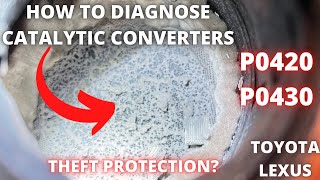
How to confirm: Use a scan tool to graph the upstream (B1S1) and downstream (B1S2) oxygen sensors. If the downstream sensor's voltage reading mirrors the fluctuating reading of the upstream sensor, the converter is not working. 🎬 Watch: How to diagnose a bad catalytic converter using a scan tool.
Typical fix: Replace the catalytic converter assembly (front exhaust pipe). Crucially, the root cause (EGR, head gasket, oil burning) must be fixed first to prevent repeat failure.
Est. part cost: $800-$2000+ - Clogged EGR System (Valve, Cooler, and/or Pipe) 🔴 High Probability This is a very common problem on the 2ZR-FXE engine. Carbon buildup restricts exhaust gas flow through the EGR valve, cooler, and intake manifold passages. This leads to inefficient, hotter combustion that can foul spark plugs and damage the catalytic converter over time.
How to confirm: Remove the EGR pipe, valve, and intake manifold for visual inspection. Significant carbon blockage is a clear indicator. The EGR cooler is often the most severely clogged component.
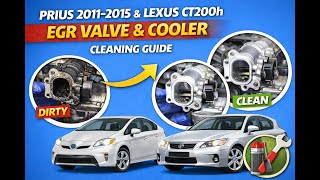
Typical fix: Thoroughly clean the EGR valve, EGR cooler, and all associated pipes and intake manifold passages. Many owners perform this as preventative maintenance every 50-80k miles. Cleaning methods range from chemical soaks (oven cleaner, degreaser) to pressure washing for the heavily clogged cooler. 🎬 See this step-by-step guide for cleaning the EGR valve and cooler.
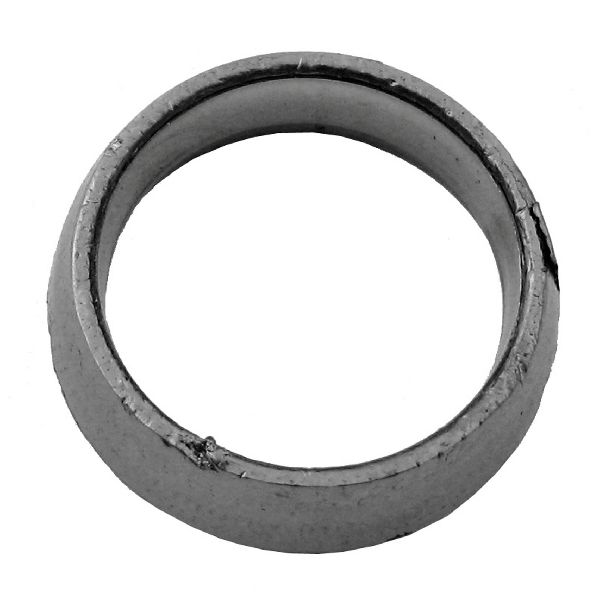
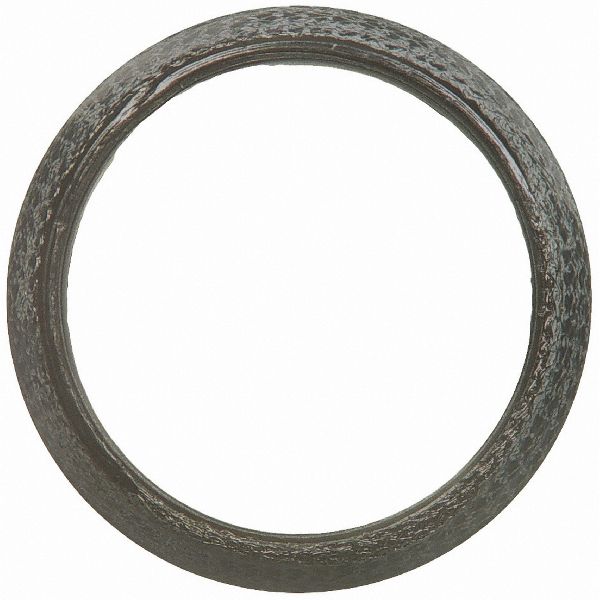
Est. part cost: $20-$50 (gaskets and cleaners) or $150-$300 (new EGR valve) - Exhaust Leak 🟡 Medium Probability Exhaust gaskets, particularly the donut-style gasket between the manifold and front pipe, can degrade and fail over time, allowing unmetered oxygen to enter the exhaust stream and confuse the O2 sensors.
How to confirm: Visually inspect the exhaust system from the engine to the rear O2 sensor for black soot marks or cracks. Listen for hissing sounds. A shop can perform a smoke test to pinpoint leaks. An owner on a forum fixed their P0420 simply by replacing a leaking gasket.
Typical fix: Replace the leaking gasket or repair the cracked pipe. This is a relatively inexpensive first step before suspecting the converter itself.
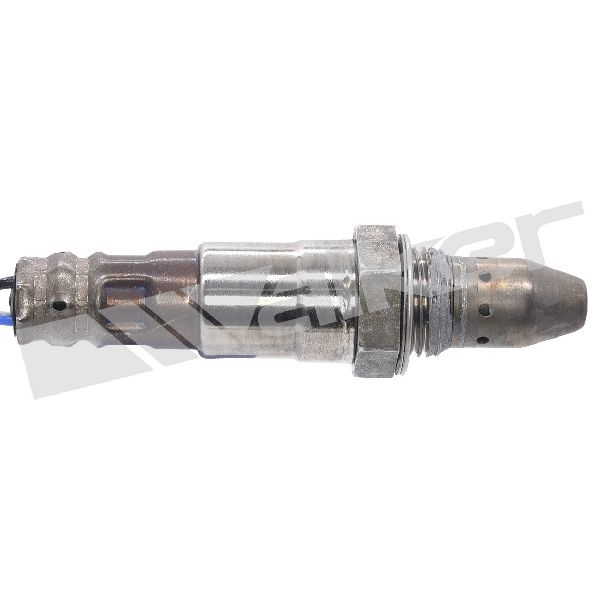
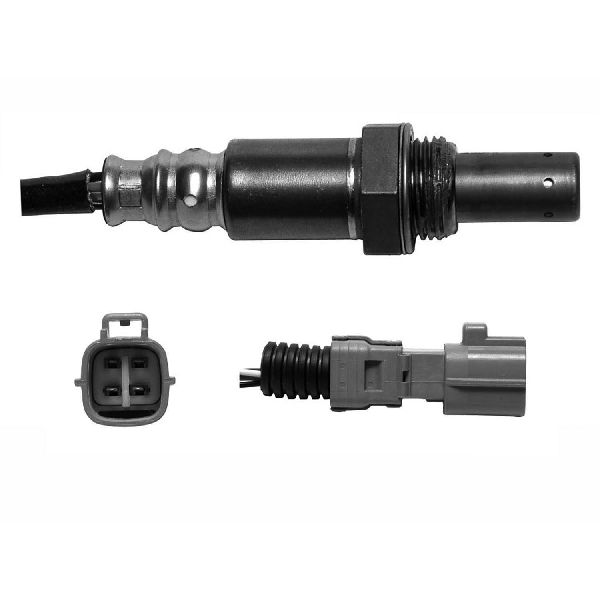
Est. part cost: $15-$50 - Failed Rear (Downstream) Oxygen Sensor 🟡 Medium Probability → Shop Oxygen Sensor
How to confirm: A lazy or biased O2 sensor can send incorrect data. Graph its voltage with a scan tool; it should be relatively stable around 0.6-0.8V on a healthy, warm engine. If it's stuck or fluctuating wildly like the front sensor, it's likely bad. However, many owners replace sensors only to have the code return, indicating another root cause.
Typical fix: Replace the Bank 1, Sensor 2 oxygen sensor.
Est. part cost: $60-$150
Rare But Worth Checking
- Failing Head Gasket: This is a critical potential root cause, especially on 2011-2013 models. A small leak allows coolant into the combustion chamber, which then contaminates and destroys the catalytic converter. Key symptoms include a shaky engine or 'death rattle' on cold starts, unexplained coolant loss, and white smoke from the exhaust.
- Failed Front (Upstream) Air/Fuel Ratio Sensor: → Shop Oxygen Sensor Less common than the rear sensor failing for this code, but a faulty front A/F sensor can cause an improper air/fuel mixture, leading to conditions that damage the converter over time.
- Engine Misfires or Oil Consumption: Unburnt fuel from misfires (bad plugs/coils) or burning oil (worn piston rings, a known issue on early models) can overheat and foul the catalytic converter, causing it to fail. If you have misfire codes (P030x) or are losing oil, fix that problem first.
Diagnosis Steps
- Scan for other codes. If you have misfire (P030x) or EGR (P0401) codes, address them first as they are the likely root cause.
- Check for Coolant Loss. Monitor the coolant level in the reservoir. Any unexplained drop is a major red flag for a head gasket leak.
- Inspect for exhaust leaks. Carefully check all gaskets and pipes between the engine and the rear O2 sensor, especially the donut gasket at the manifold. Repair any leaks found.
- Analyze O2 sensor data. Use a scan tool to graph the upstream (B1S1) and downstream (B1S2) sensors. If the converter is working, B1S1 will fluctuate rapidly and B1S2 will be relatively steady. If B1S2 mirrors B1S1, the converter is not functioning.
- Inspect the EGR system. Given how common this issue is, a full cleaning of the EGR circuit (valve, cooler, pipe, and intake manifold ports) is highly recommended as both a diagnostic and preventative step.
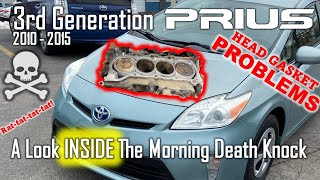
- Test for head gasket failure. Especially on 2011-2013 models or if you have a cold-start rattle/misfire, perform a block test using a combustion leak detector kit on the coolant reservoir. 🎬 Watch: How to test if that cold-start rattle is a head gasket. This checks for exhaust gases in the coolant, a definitive sign of a bad head gasket.
- Test the oxygen sensors. If all other tests are inconclusive, test the sensors themselves for proper response and voltage.
- If all else fails, the catalytic converter is the culprit, likely damaged by a previous, now-fixed issue.
Parts You'll Likely Need
- Catalytic Converter (Front Exhaust Pipe Assembly)
(OEM #17410-37513 (replaces 17410-37510, 17410-37511, 17410-37512))— This is the direct part indicated by the P0420 code when it has failed. It is often replaced as a result of damage from another root cause.
Trusted brands: Lexus (OEM), Walker, MagnaFlow
OEM price range: $1500-$2500
Aftermarket price range: $500-$1200 - EGR Cooler Assembly
(OEM #25601-37010)— This part is extremely prone to clogging with carbon, disrupting the EGR system and leading to conditions that cause P0420. It is often too difficult to clean and requires replacement.
Trusted brands: Lexus (OEM), Genuine
OEM price range: $400-$550
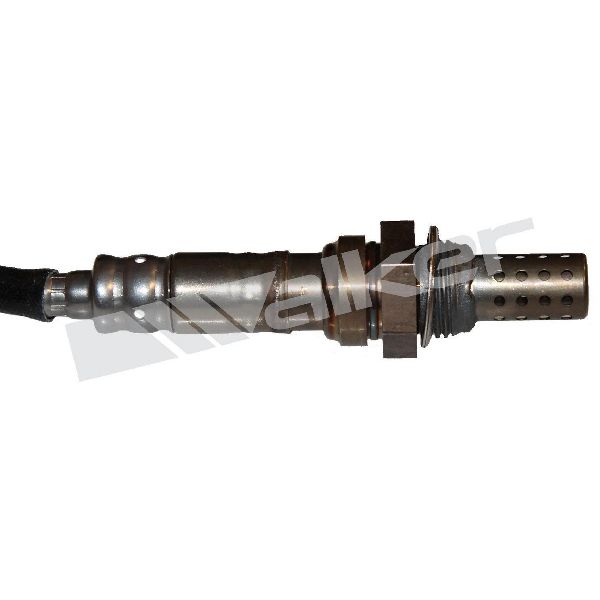
Aftermarket price range: $200-$350 - Rear Oxygen Sensor (Bank 1, Sensor 2)
(OEM #89465-47070)— A faulty or 'lazy' downstream sensor can send incorrect data to the ECM, falsely triggering a P0420 code.
Trusted brands: Denso (OEM supplier), Bosch
OEM price range: $150-$220
Aftermarket price range: $60-$150 - EGR Valve
(OEM #25620-37120)
Related Codes That Often Appear With This One
- P0300, P0301, etc. — Misfire codes (P030X) indicate unburnt fuel is entering the exhaust, which will quickly damage the catalytic converter and lead to P0420. A misfire on cold start is a classic symptom of a leaking head gasket.
- P0401 — 'EGR Flow Insufficient' is a direct indicator that the EGR system is clogged, a primary underlying cause of catalyst failure on this engine.
- P0171 — 'System Too Lean (Bank 1)' can sometimes accompany P0420, potentially pointing to an exhaust leak before the first O2 sensor or a dirty MAF sensor causing an incorrect fuel mixture.
Technical Service Bulletins (TSBs) & Recalls
- Excessive Oil Consumption on 2ZR-FXE Engines: While not directly for P0420, this TSB addresses excessive oil consumption due to piston ring design in early models. Burning oil is a primary cause of catalytic converter fouling and failure.
- Brake Actuator and Pump Assembly Warranty Extension: Lexus extended the warranty for the brake actuator assembly, a common failure point on the CT200h. While not related to P0420, it's a critical known issue for owners.
Platform-Specific Known Issues
- EGR System Clogging: The entire EGR circuit, from the valve to the cooler to the intake manifold passages, is highly prone to clogging with hard carbon deposits. This is considered a routine maintenance item by many owners to prevent P0420 and head gasket failure. Cleaning the cooler is particularly difficult, with many owners resorting to pressure washers as chemical soaks fail.
- Head Gasket Prone on Early Models: The 2011-2013 model years are noted for a higher incidence of head gasket failure. The leading theory is that a clogged EGR system leads to higher combustion temperatures, which stresses the gasket over many engine on/off cycles, eventually causing a failure between a coolant passage and the cylinder.
Mechanic-Grade Diagnostic Values
- Upstream Air/Fuel (O2) Sensor (B1S1) Voltage — expected: Rapidly fluctuating between approximately 0.1V and 0.9V on a scan tool graph as the ECM adjusts the air-fuel mixture.. Failure: A sensor that is slow to respond, or is stuck at a constant high or low voltage, indicates a failure.
- Downstream Oxygen Sensor (B1S2) Voltage at idle/cruise — expected: A relatively stable and steady voltage, typically between 0.5V and 0.8V, after the engine is fully warmed up.. Failure: If the downstream sensor's voltage graph mirrors the rapid fluctuations of the upstream sensor, it confirms the catalytic converter is not working efficiently.
- Catalytic Converter Temperature Differential — expected: Using an infrared thermometer, the outlet temperature of the catalytic converter should be significantly hotter (at least 100°F or more) than the inlet temperature on a fully warmed-up engine.. Failure: An outlet temperature that is the same as or cooler than the inlet temperature suggests the converter is clogged or chemically inactive.
Hidden / Shadow Codes Worth Checking
- Mode $06, TID $81, CID $01: This refers to the raw data from the onboard diagnostic monitor for the catalyst efficiency. A professional scan tool can access Mode $06 data. TID $81 is the test for Bank 1 catalyst efficiency. The CID $01 value is a calculated ratio of the switching frequency of the upstream and downstream O2 sensors. The vehicle's ECM has a specific maximum threshold for this value. If the reported value exceeds the maximum threshold, the P0420 code is set. (see via A professional-grade scan tool with Mode $06 data viewing capability, such as Toyota's Techstream software.)
Scan Tool Commands That Help
- Toyota Techstream: Active Test: Control the EGR Step Position — This bidirectional command allows a technician to manually open and close the EGR valve while monitoring engine RPM and other data PIDs. A drop in RPM or rough idle when the valve is commanded open at idle indicates the valve is physically working and passages are not completely blocked. A lack of change suggests a stuck valve or clogged passages.
- Toyota Techstream: Utility: Catalyst & O2 Sensor Test — Techstream has a guided diagnostic utility that runs the engine at specific RPMs to automatically evaluate the performance of the catalytic converter and oxygen sensors, providing a pass/fail result based on the same criteria the ECM uses to set the P0420 code. This is useful for confirming a diagnosis before replacing expensive parts.
Wiring & Ground Locations
- EA, EB, EC — These are the primary engine bay ground points. They are typically located on the left and right inner fender aprons and on the engine block itself.. The ECM, Air/Fuel Ratio Sensor, and Heated Oxygen Sensor all rely on clean, solid ground connections to provide accurate readings. A corroded or loose ground at one of these points can introduce electrical noise or voltage offsets, potentially causing incorrect sensor readings that could lead to a false P0420 code or other fuel/emissions issues.
- ECM Connector Pins — At the Engine Control Module (ECM), located in the engine bay.. When diagnosing a persistent P0420 with known-good sensors, a technician may need to perform a pin-out test at the ECM connector to check for continuity and resistance in the wiring harness for the upstream and downstream O2 sensors. This can identify a break or short in the harness that is causing the fault, a rare but possible cause.
Real Owner Repair Stories
- Reddit user in r/CT200h (2011 Lexus CT200h) — Loud clattering noise and engine shudder on cold starts.
❌ Tried (didn't work) EGR system cleaning, Block test for head gasket (gave a false positive), Replacing ignition coils
✅ What actually fixed it The user used a borescope to look inside the cylinders and found clear evidence of coolant on top of piston #1. Replacing the head gasket ultimately resolved the cold start rattle. This confirms that the rattle is a primary symptom of an early head gasket failure, which would eventually lead to P0420 as coolant contaminates the catalyst. - Reddit user in r/CT200h (2014 Lexus CT200h) — P0420 Check Engine Light appeared a few days after purchase.
❌ Tried (didn't work) Initial forum advice suggested it was a failing catalytic converter.
✅ What actually fixed it The owner noticed a small leak with water dripping from an exhaust gasket. After replacing the leaking gasket, the P0420 code was resolved. This is a high-value story because the leak was reportedly *after* the secondary O2 sensor, which many technicians would assume could not cause the code. - Reddit user in r/CT200h (High mileage Lexus CT200h) — Persistent misfires and rattling on cold starts.
❌ Tried (didn't work) Cleaned intake manifold, Replaced EGR valve ($300), Cleaned EGR cooler, Replaced spark plugs ($40), Replaced ignition coils ($260), Cleaned MAF and throttle body, Replaced PCV valve
✅ What actually fixed it After numerous part replacements failed to solve the issue, the owner had the head gasket replaced with an upgraded, reinforced version. The user reported a "night and day difference" and the car running much better, finally resolving the misfires that are a known precursor to P0420.
Documented NHTSA Reports
- NHTSA ODI #10381931 — An owner of a related Lexus model reported that diagnostics showed code P0420 (Catalyst System Below Threshold on Bank 1) after previously having a Bank 1 Sensor 1 oxygen sensor short out and require replacement. The report notes that after the sensor failure, the catalytic converter ultimately required replacement.
"I Checked Everything" — The Actual Cause
- In some cases, a very small or intermittent leak in the intake manifold gasket can cause a lean condition that contributes to higher combustion temperatures, stressing the EGR system and eventually the catalytic converter. This type of vacuum leak may not be easily found with a smoke test unless the engine is cold and the gasket has contracted. One owner reported a recurring knocking noise at low RPMs that was temporarily fixed by cleaning the intake manifold but returned, suggesting a sealing issue rather than just carbon buildup.
OEM Part Supersession History
25620-37110 (EGR Valve)→25620-37120— Design update to improve reliability and reduce sticking.
Heads up: For 2011-2012 models, replacing the original EGR valve with the updated part number requires an ECU software update per TSB L-SB-0015-16. Without the update, the car may throw a 'Check Hybrid System' warning and fail to go into gear.13101-37120 (Piston)→13101-37240— Updated piston and ring design to combat excessive oil consumption.
Heads up: This was part of a warranty extension program for oil consumption issues on early models. Vehicles produced after the change already have the improved parts.
Model Year Variations Within This Range
- 2011-2013: These earlier models are significantly more prone to head gasket failure and excessive oil consumption due to the original piston ring design. P0420 on these model years should immediately elevate suspicion of a potential head gasket or oil consumption issue being the root cause, rather than a simple catalyst failure.
- 2014-2017: Later models received updated pistons and rings which reduced, but did not entirely eliminate, oil consumption and subsequent EGR clogging issues. While still a concern, a clogged EGR system is a more likely primary cause than a head gasket failure on these later models.
Diagnostic Flowchart
Other Known Issues on This Vehicle
Issues unrelated to this code that are worth knowing about as an owner of this generation:
- ABS Brake Actuator Failure 🔴 High — Very common, especially on vehicles over 8 years old or 100k+ miles. Often presents with a loud, repetitive buzzing/clicking noise from the engine bay after startup, along with ABS/VSC warning lights. (Ref: Lexus issued a Customer Support Program (24LE01) extending the warranty for this part on some vehicles.)
- Hybrid Inverter Failure / Inverter Coolant Pump Failure 🔴 High — The inverter can fail, causing the car to stall or not start, often displaying a 'Check Hybrid System' message. The cause is sometimes a failed electric coolant pump for the inverter system, which is a less expensive repair.
- Excessive Oil Consumption 🟠 Medium — More common on 2011-2013 models due to piston ring design. Can lead to a host of other issues, including clogged EGR and catalyst failure. (Ref: Related to TSB L-SB-0027-12)
- Hybrid Battery Degradation 🟠 Medium — Typically occurs after 10+ years or over 150,000 miles. Symptoms include reduced fuel economy, sluggish performance, and a 'Check Hybrid System' warning.
Used vs. New Parts: Buying Guide for This Vehicle
When a used part is the smart pick: For components like the EGR cooler, EGR valve, and intake manifold, purchasing a used assembly from a low-mileage donor car at a salvage yard can be a cost-effective strategy. This allows for cleaning the used parts off the vehicle at your leisure and then swapping them in, minimizing vehicle downtime.
Donor-vehicle mileage cap: roughly under 80000 miles for the part to have meaningful remaining life.
What to inspect on the donor part:
- Check the donor vehicle's Carfax or history if possible to see if the head gasket was already replaced.
- When pulling an EGR cooler, try to shine a light through it. If you can see any light, it's likely cleanable. If it's completely blocked, it may be too difficult to salvage.
- Inspect the intake manifold for cracks and signs of heavy oil pooling, which might indicate severe engine issues on the donor car.
OEM-only on this vehicle (don't cheap out):
- Catalytic Converter: Many forum users report that aftermarket catalytic converters (especially non-CARB compliant ones) fail to keep the P0420 code away for long on this sensitive emissions system. While expensive, an OEM converter is the most reliable fix.
- Air/Fuel and Oxygen Sensors: While Denso is the OEM supplier and their aftermarket sensors are identical, avoid no-name or generic brand sensors, as the ECM is calibrated very specifically to the OEM sensor's performance.
Aftermarket brands forum-validated for this vehicle:
- Walker and MagnaFlow for catalytic converters, but only if they are the 'OEM Grade' or CARB-compliant versions, which are more expensive but have a higher chance of success.
- Denso for oxygen sensors (as they are the OEM supplier).
Brands owners have reported issues with on this vehicle:
- Universal, non-direct-fit catalytic converters. They almost always require welding and often do not have the correct catalyst loading to satisfy the ECM, causing the P0420 code to return quickly.
- Cheap, unbranded EGR valves from online marketplaces. A user on Reddit reported one failed, and another user noted a replacement required an ECU update that a cheap part wouldn't be accounted for.
Real Owner Stories
Aggregated from forums and TSBs cited above. Mileages and costs reflect what owners reported in those sources.
2014 Lexus CT200h 1.8L
Symptoms: Check engine light with code P0420.
What fixed it: Replacing a leaking exhaust gasket (specifically the donut-style gasket between the manifold and front pipe).
Source hint: ClubLexus: P0420 Check Engine Code on 2014 CT200h
2011-2017 Lexus CT200h 1.8L
Symptoms: P0420 code and intake manifold full of carbon and oil.
What fixed it: Cleaning the intake manifold, EGR system, and PCV system.
Source hint: PriusChat: P0420 Code Solved
2011-2017 Lexus CT200h 1.8L
Symptoms: Completely clogged EGR cooler that could not be cleared with chemical soaks.
What fixed it: Using a pressure washer to clear the hard carbon deposits from the EGR cooler passages.
Source hint: Reddit r/Lexus: CT200h/Prius EGR cooler cleaning - the only effective method.
Related OBD-II Codes
Frequently Asked Questions
Is there a TSB for the oil consumption that might be causing my P0420 code?
Can a clogged EGR system really cause a catalytic converter failure on the CT200h?
I have a 2012 CT200h with a cold-start rattle; is this related to the P0420?
How often should I clean the EGR system to prevent these issues?
Is the brake actuator related to the P0420 code on my Lexus?
Why did my P0420 return after I replaced the oxygen sensor?
Helpful Videos
We Have This Part in Stock


The information in this article is provided for general reference and educational purposes only. Vehicle specifications, procedures, and part compatibility can vary by production date, trim level, and region. Always consult your vehicle's factory service manual and verify part numbers before purchasing or performing repairs. Safety-critical components such as airbags, seat belts, and braking systems should be installed by a qualified professional.
- Lexus CT200h:
- 🧭 Diagnostic Flowchart
- 🎬 Helpful Videos
- 🛍️ Shop This Part
- What's Unique About the 2011-2017 Lexus CT200h
- Symptoms You May Notice
- Most Likely Causes
- Rare But Worth Checking
- Diagnosis Steps
- Parts You'll Likely Need
- Related Codes That Often Appear With This One
- Technical Service Bulletins (TSBs) & Recalls
- Platform-Specific Known Issues
- Mechanic-Grade Diagnostic Values
- Hidden / Shadow Codes Worth Checking
- Scan Tool Commands That Help
- Wiring & Ground Locations
- Real Owner Repair Stories
- Documented NHTSA Reports
- "I Checked Everything" — The Actual Cause
- OEM Part Supersession History
- Model Year Variations Within This Range
- Other Known Issues on This Vehicle
- Used vs. New Parts: Buying Guide for This Vehicle
- Real Owner Stories
- 2014 Lexus CT200h 1.8L
- 2011-2017 Lexus CT200h 1.8L
- 2011-2017 Lexus CT200h 1.8L
- Related OBD-II Codes
- Frequently Asked Questions
- 🎟️ Get 5% Off