

P0420 on 2013-2018 Lexus ES300h: Catalyst Efficiency Causes and Fixes
The P0420 code on a 2013-2018 Lexus ES300h almost always indicates a failing catalytic converter, especially on vehicles with over 100,000 miles. Before replacing this expensive part, it's crucial to rule out less common but possible causes like exhaust leaks (particularly around heat shields) and faulty oxygen sensors.
- P0420 means the catalytic converter on Bank 1 is no longer working efficiently.
- Before buying a new catalytic converter, always check for exhaust leaks between the two O2 sensors.
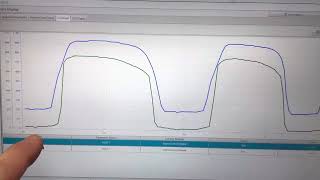
- Use a scan tool to watch live O2 sensor data. If the rear sensor mimics the front sensor, the converter is bad.
- If the converter needs replacement, aftermarket options are significantly cheaper than OEM parts, but ensure they are legal for your state.
- Always replace exhaust gaskets when replacing any part of the exhaust to prevent new leaks.
What's Unique About the 2013-2018 Lexus ES300h
The 2013-2018 ES300h uses the reliable 2AR-FXE engine, which, unlike the older 2AZ-FE, is not known for widespread oil consumption issues that typically cause premature catalytic converter failure. However, like many modern Toyota and Lexus vehicles, the threshold for triggering this code is quite sensitive. Owners and technicians on forums like ClubLexus often report that while an oxygen sensor or exhaust leak can be the cause, the catalytic converter itself is the most frequent culprit once the vehicle has higher mileage (typically over 80,000-100,000 miles). There are no major design differences concerning this code across the 2013-2018 model years, as they all belong to the same generation (XV60).
Symptoms You May Notice
- Check Engine Light is on
- Failure to pass an emissions test
- Slightly reduced fuel economy (in some cases)
- Reduced engine power (if the converter is clogged)
- Sulfur or "rotten egg" smell from the exhaust (less common)
- Immediately replacing the oxygen sensors without proper diagnosis. While a faulty O2 sensor can cause P0420, it's less common than a failed converter on this platform, especially at higher mileage.
- Replacing the catalytic converter without first checking thoroughly for exhaust leaks. An exhaust leak is a much cheaper fix and a common cause of a false P0420 code.
Most Likely Causes
- Failing Catalytic Converter 🔴 High Probability → Shop Catalytic Converter Catalytic converters are wear-and-tear items that fail with age and mileage. While robust on this model, they are the most common definitive cause for P0420 after 80,000-100,000 miles. The precious metals inside degrade over time and lose their ability to catalyze exhaust gases effectively.
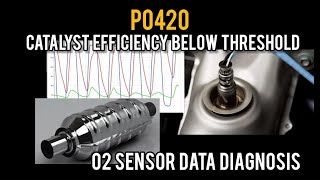
How to confirm: Use a scan tool to graph the downstream O2 sensor (Bank 1, Sensor 2). If its voltage fluctuates rapidly, mimicking the upstream sensor, the converter is bad. 🎬 Watch: How to diagnose efficiency codes and test for leaks. Another method is to use an infrared thermometer to measure the converter's inlet and outlet pipes; the outlet should be at least 100°F hotter than the inlet on a fully warmed-up engine. A professional exhaust shop can also perform a backpressure test.
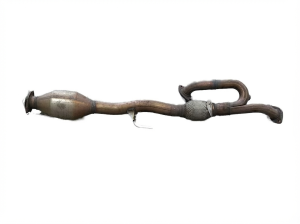
Typical fix: Replace the Bank 1 catalytic converter assembly. On the 2AR-FXE, this is the front exhaust manifold which contains the primary catalyst.
Est. part cost: $400-$800 for aftermarket, $1500+ for OEM - Exhaust System Leak 🟡 Medium Probability Gaskets and pipe flanges can corrode over time, especially in regions that use road salt. A common failure point on similar Lexus platforms is a pinhole leak in the Y-pipe assembly where heat shields trap moisture, causing corrosion. This allows outside oxygen to enter the exhaust stream between the two oxygen sensors, which fools the downstream sensor into sending readings that make the ECM think the converter has failed.
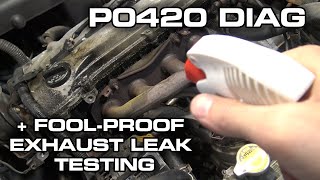
How to confirm: Visually inspect the exhaust system from the engine to the rear O2 sensor for black soot marks, which indicate a leak. Pay close attention to the Y-pipe and areas under heat shields. A shop can perform a smoke test to pinpoint hard-to-see leaks. 🎬 See this guide on pinpointing pesky exhaust leaks with ease. Sometimes a leak is audible when the engine is running.
Typical fix: Replace the leaking gasket or repair the leaking section of the pipe. Welding may be an option for small flange leaks. If the Y-pipe has a pinhole leak, replacement with an updated part is recommended over patching.
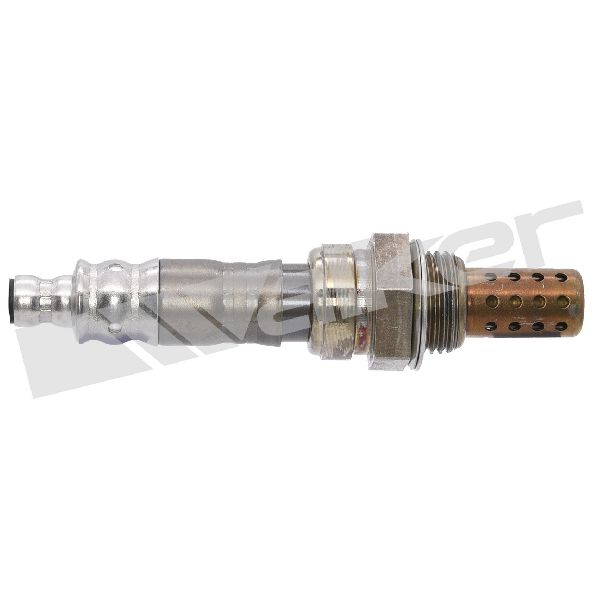
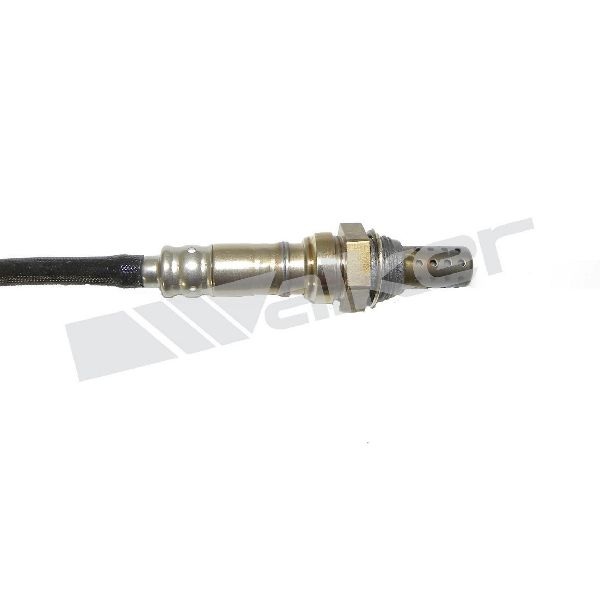
Est. part cost: $20-$50 for gaskets, $200+ for pipe repair/replacement - Failing Downstream Oxygen Sensor (Bank 1, Sensor 2) ⚪ Low Probability → Shop Oxygen Sensor
How to confirm: A faulty sensor might send erratic or incorrect data. With a scan tool, check if the sensor's voltage is stuck (e.g., at 0V or 1V), flatlined, or very slow to respond when it should be steady. If it behaves this way, the sensor is likely bad. Because replacement is much cheaper than a converter, some owners replace it as a diagnostic step if other tests are inconclusive.
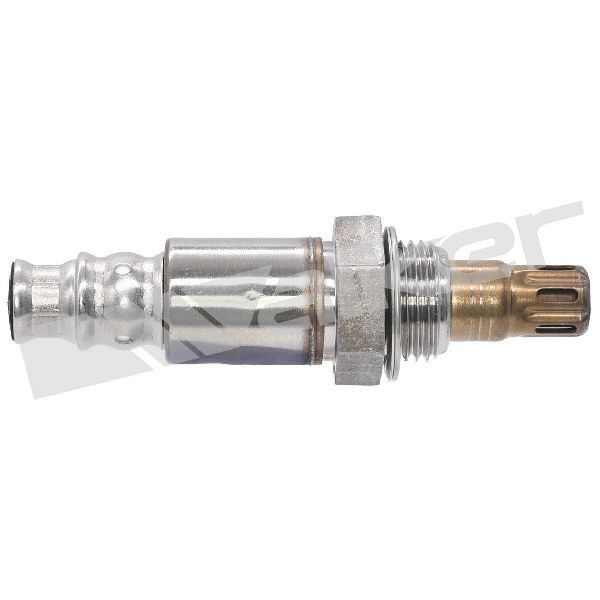
Typical fix: Replace the downstream heated oxygen sensor (Bank 1, Sensor 2). Denso is the OEM supplier.
Est. part cost: $60-$150 for a quality aftermarket brand like Denso
Rare But Worth Checking
- Engine Misfires or Fuel System Issues: If the engine is misfiring or a fuel injector is leaking, unburned fuel can enter the exhaust and superheat or "poison" the catalytic converter, destroying it. This is rare on the well-maintained 2AR-FXE but should be considered if other codes (like P030x misfire codes or fuel trim codes like P0171/P0172) are present.
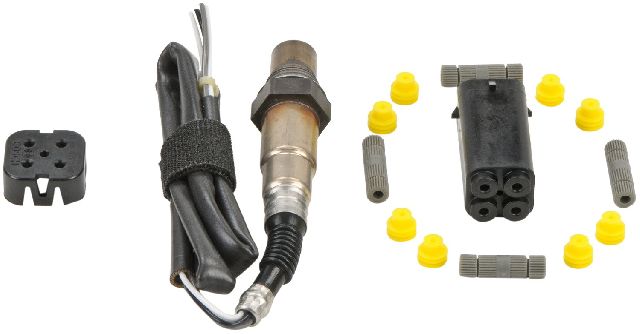
- Failing Upstream Air/Fuel Ratio Sensor (Bank 1, Sensor 1): → Shop Oxygen Sensor A bad upstream A/F sensor usually throws its own specific codes. However, if it's failing in a way that creates a consistently rich or lean fuel mixture without setting a code, it can degrade the catalytic converter over time or confuse the catalyst efficiency monitor.
Diagnosis Steps
- Scan for other DTCs. Address any misfire (P030x), fuel system (P017x), or sensor-specific codes first, as they can be the root cause of catalyst failure.
- Perform a thorough visual inspection of the exhaust system. Look for cracks, corrosion, and black soot marks indicating a leak, paying special attention to gaskets and the Y-pipe assembly under any heat shields.
- Use a scan tool with live data capabilities to monitor the voltage of the Bank 1 Sensor 1 (upstream A/F sensor) and Bank 1 Sensor 2 (downstream O2 sensor) when the engine is fully warmed up and running in closed loop.
- Observe the sensor readings. The upstream sensor (B1S1) should fluctuate rapidly. A healthy catalytic converter will produce a much steadier, flatter voltage from the downstream sensor (B1S2), typically above 0.5V-0.6V.
- If the downstream sensor's waveform mirrors the upstream sensor's rapid fluctuations, the catalytic converter has lost its ability to store oxygen and is failing.
- If the downstream sensor's signal is stuck at one voltage (e.g., 0V), is completely flat, or responds very slowly to changes in engine conditions 🎬 Watch: Everything you need to know about P0420 engine codes., the sensor itself is likely the problem.
- If you don't have a graphing scanner, use an infrared thermometer on a hot engine. The exhaust pipe after the converter should be at least 100°F (38°C) hotter than the pipe before it. If the temperatures are similar or the outlet is cooler, the catalyst is inactive.
Parts You'll Likely Need
- Catalytic Converter (Front Exhaust Manifold Assembly)
(OEM #17410-F0420 (Note: Part numbers can vary by specific production date and region, always verify with VIN. This is a reference number for a similar application).)— This is the most common definitive fix for a confirmed P0420 code after other possibilities like leaks and sensors have been eliminated. On this engine, the primary converter is integrated with the exhaust manifold.
Trusted brands: Walker Exhaust, MagnaFlow, AP Exhaust, Catco
OEM price range: $1500+
Aftermarket price range: $400-$800 - Downstream Heated Oxygen Sensor (Bank 1, Sensor 2)
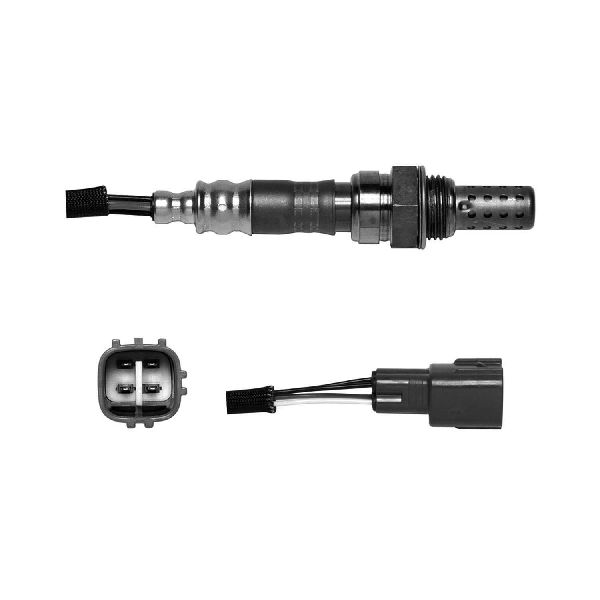
(OEM #Denso 234-4509 (Note: Part numbers can vary, always verify with VIN. This is a commonly cited compatible part).)— This sensor is what reports the converter's efficiency. It can fail and cause the code, and it's a wise, lower-cost replacement to try before condemning the expensive converter if diagnosis is inconclusive.
Trusted brands: Denso (OEM supplier), Bosch, NGK/NTK
OEM price range: $180-$250
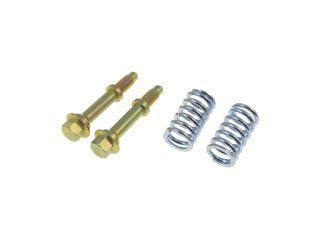
Aftermarket price range: $60-$150 - Exhaust Gaskets — These must be replaced any time an exhaust component is removed to prevent future leaks, which can cause the P0420 code to return.
Trusted brands: Fel-Pro, Bosal, Lexus OEM
OEM price range: $20-$40
Aftermarket price range: $10-$25
Platform-Specific Known Issues
- While the 2AR-FXE engine itself is very reliable, the hybrid system means the gasoline engine does not run 100% of the time. This can sometimes make diagnosis of exhaust-related issues slightly different, as the catalytic converter needs to reach and maintain operating temperature for accurate testing. Ensure the vehicle is fully warmed up and has been driven enough for the engine to run consistently before taking sensor readings.
Mechanic-Grade Diagnostic Values
- Downstream O2 Sensor (B1S2) Voltage, healthy converter — expected: Steady voltage between 0.5V and 0.8V at steady RPM.. Failure: Voltage fluctuates rapidly between 0.1V and 0.9V, mimicking the upstream A/F sensor.
- O2 Sensor Heater Resistance (at 68°F / 20°C) — expected: 5.1 - 6.3 Ohms. Failure: Reading is significantly outside this range (e.g., open circuit or very low resistance). A reading of 6.5 Ohms was considered acceptable by a Denso technician but is technically out of spec.
- Mode $06 Catalyst Deterioration Level (Bank 1) — expected: Test value should be well below the maximum limit. For example, a raw value of 255 might convert to 0.994, with a max limit of 1.0. A healthy, new catalyst will show a much lower value.. Failure: The test value is at or very close to the maximum specified limit.
Hidden / Shadow Codes Worth Checking
- Mode $06, TID $01, CID $01: This refers to the Catalyst Deterioration Level test for Bank 1. It provides the raw test value from the last time the catalyst monitor ran, allowing a technician to see how close the catalyst is to the failing threshold, even before a P0420 code is set. (see via A professional scan tool with Mode $06 capability, such as Toyota Techstream or a high-end generic scanner.)
Scan Tool Commands That Help
- Toyota Techstream: Active Test: 'Control the Injection Volume for A/F Sensor' — This test allows a technician to manually command the fuel mixture to be rich (+12.5% to +25%) or lean (-12.5%). By observing the live data graphs of the upstream A/F sensor and downstream O2 sensor during this test, a technician can confirm if both sensors are responding correctly and if the catalytic converter is buffering the changes as expected. A bad converter will show the downstream sensor reacting almost immediately to the commanded changes.
Wiring & Ground Locations
- ECM (Engine Control Module) — Located in the engine compartment on the left side.. The ECM is the central computer that receives signals from the A/F and O2 sensors to calculate catalyst efficiency. All sensor wiring terminates here.
- E01, D5 (Engine Ground Points) — Various points on the engine block and chassis. For example, D5 is noted as being on the top rear of the engine.. A poor engine or sensor ground can introduce electrical noise or voltage offsets, leading to incorrect sensor readings. This could cause the ECM to misinterpret the data and falsely trigger a P0420 code. Verifying clean and tight ground connections is a crucial step in diagnosing persistent, hard-to-solve electrical-related codes.
- Downstream O2 Sensor Connector — On some similar older Lexus models, the connector for the downstream sensor was located under the driver's seat, requiring the carpet to be pulled back for access. While the exact location on the ES300h may differ, it's important to trace the harness from the sensor to find the connector for testing, rather than assuming it's directly under the vehicle.. This is the point where resistance and voltage checks should be performed to test the sensor and its circuit integrity back to the ECM.
Real Owner Repair Stories
- ClubLexus Forum (Lexus GS (similar platform), year not specified) — Check engine light with both P0420 and P0430 codes present.
❌ Tried (didn't work) Owner was skeptical about replacing both catalytic converters at the same time.
✅ What actually fixed it The owner replaced leaking donut gaskets in the exhaust system. After clearing the codes, they did not return. The user also noted that on a different occasion, a leak at the gasket where the catalytic converter bolts to the exhaust manifold caused the code. - Lexus Owners Club Forum (2005 Lexus ES330) — Intermittent VSC, Trac Off, and Check Engine lights with code P0420, often occurring in cold weather.
❌ Tried (didn't work) Replacing the Bank 1 A/F Ratio Sensor as recommended by the dealer did not fix the problem.
✅ What actually fixed it The user's post was a query for help and did not have a final resolution, but it serves as a valuable example of a common misdiagnosis where the upstream sensor is replaced without success, pointing towards the converter or an exhaust leak as the more likely culprit. - NHTSA ODI #10381931 (Lexus ES300) — An owner reported that after an oxygen sensor shorted out and was replaced, subsequent diagnostics showed code P0420 (Catalyst System Below Threshold on Bank 1), ultimately requiring the replacement of the catalytic converter.
OEM Part Supersession History
Multiple OEM Lexus numbers→Denso 234-4509— Denso is the original equipment manufacturer for Toyota/Lexus. The Denso aftermarket part is identical to the OEM part but sold under the Denso brand. Part number 234-4509 is a cross-reference for numerous Lexus/Toyota downstream O2 sensor part numbers.
Model Year Variations Within This Range
- 2016-2018: The ES series received a facelift for the 2016 model year. This included cosmetic changes like a new front fascia, LED headlights, and rear L-motif taillights. However, the powertrain (2AR-FXE engine and hybrid system) and exhaust system remained unchanged, so the causes and diagnosis for P0420 are identical across the entire 2013-2018 range.
Diagnostic Flowchart
Other Known Issues on This Vehicle
Issues unrelated to this code that are worth knowing about as an owner of this generation:
- Brake Actuator Assembly Failure 🔴 High — Can occur at various mileages, often outside of the basic warranty. Not a recall, but Lexus has issued a Customer Support Program for some vehicles. (Ref: Customer Support Program (e.g., similar to L-SB-0028-12 for other models). Owners report receiving notices.)
- Sticky / Melting Dashboard 🟠 Medium — Common in vehicles exposed to high heat and humidity over several years. (Ref: Warranty Enhancement Program ZLD/ZLZ (e.g., POL11-03). Note: These programs had expiration dates and may no longer be active.)
- Minor Engine Vibration at Startup/Idle 🟡 Low — Some owners report occasional vibrations when the gasoline engine kicks on, especially when the car is stopped. Often attributed to aging motor mounts but generally not considered a serious defect.
- Sunroof Rattle 🟡 Low — Reported by some owners, often fixable by replacing the sunroof seal.
Used vs. New Parts: Buying Guide for This Vehicle
When a used part is the smart pick: For this repair, using a used OEM catalytic converter from a low-mileage, rear-end collision donor vehicle can be a cost-effective alternative to a new OEM part. It is generally a better option than a new, cheap aftermarket converter which may not meet the sensitive requirements of the ECM.
Donor-vehicle mileage cap: roughly under 80000 miles for the part to have meaningful remaining life.
What to inspect on the donor part:
- Verify the donor vehicle's VIN to confirm it's from a compatible year and model.
- Inspect the part for any signs of physical damage, heavy rust, or rattling, which indicates a broken internal substrate.
- Ask the salvage yard for the mileage of the donor vehicle; lower is always better.
- Ensure the integrated O2 sensor bungs and mounting flanges are not damaged or stripped.
OEM-only on this vehicle (don't cheap out):
- Catalytic Converter: While expensive, the OEM converter is guaranteed to meet the efficiency thresholds set by the ECM. Many forum users report that aftermarket converters (especially non-CARB compliant ones) fail to resolve the P0420 code or cause it to return within a year.
Aftermarket brands forum-validated for this vehicle:
- Denso for Oxygen Sensors (A/F and O2): Denso is the OEM supplier, and their aftermarket parts are identical to what Lexus installs at the factory.
Brands owners have reported issues with on this vehicle:
- Generic, unbranded catalytic converters from online marketplaces are frequently cited as failing to meet the required efficiency standards for this vehicle, leading to the P0420 code returning.
Real Owner Stories
Aggregated from forums and TSBs cited above. Mileages and costs reflect what owners reported in those sources.
Lexus ES300h
Symptoms: Check Engine Light with codes P0420 and P219A.
What fixed it: Deep cleaning the O2 sensors, the catalytic converter, and the intake cold air plenum.
Source hint: ClubLexus owner report in 'owner_reports' section
2013 Lexus GS350
Symptoms: Experiencing both P0420 and P0430 codes simultaneously.
What fixed it: Advised to check for exhaust leaks first, as dual codes often indicate a leak rather than two failed converters.
Source hint: ClubLexus.com: Thread 'P0430 and P0420' (June 2022)
Lexus ES300
Symptoms: P0420 code present.
What fixed it: Repairing a small leak found near a rusted flange on the front catalytic converter.
Source hint: Reddit r/MechanicAdvice: Thread 'P0420 Lexus ES300 Advice' (Jan 2025)
Lexus ES300
Symptoms: Diagnostics showed code P0420 (Catalyst System Below Threshold on Bank 1).
What fixed it: Replacing the catalytic converter after a previous oxygen sensor shorted out and was replaced.
Source hint: NHTSA ODI #10381931
Related OBD-II Codes
Frequently Asked Questions
Is there a specific area on the Lexus ES300h exhaust I should check for leaks before replacing the catalytic converter?
My 2013 ES300h has a P0420 code; could this be related to the dashboard or brake issues I've heard about?
Does the hybrid nature of the 2AR-FXE engine affect how I diagnose a P0420 code?
What is the recommended replacement part for the downstream oxygen sensor on this model?
I have a P0420 and a P0430 at the same time on my Lexus; does this mean I need two new converters?
Where is the primary catalytic converter located on the 2.5L 2AR-FXE engine?
Helpful Videos

Used OEM Parts in Stock
New Aftermarket Parts Available

The information in this article is provided for general reference and educational purposes only. Vehicle specifications, procedures, and part compatibility can vary by production date, trim level, and region. Always consult your vehicle's factory service manual and verify part numbers before purchasing or performing repairs. Safety-critical components such as airbags, seat belts, and braking systems should be installed by a qualified professional.
- Lexus ES300h:
- 🧭 Diagnostic Flowchart
- 🎬 Helpful Videos
- 🛍️ Shop This Part
- What's Unique About the 2013-2018 Lexus ES300h
- Symptoms You May Notice
- Most Likely Causes
- Rare But Worth Checking
- Diagnosis Steps
- Parts You'll Likely Need
- Platform-Specific Known Issues
- Mechanic-Grade Diagnostic Values
- Hidden / Shadow Codes Worth Checking
- Scan Tool Commands That Help
- Wiring & Ground Locations
- Real Owner Repair Stories
- OEM Part Supersession History
- Model Year Variations Within This Range
- Other Known Issues on This Vehicle
- Used vs. New Parts: Buying Guide for This Vehicle
- Real Owner Stories
- Lexus ES300h
- 2013 Lexus GS350
- Lexus ES300
- Lexus ES300
- Related OBD-II Codes
- Frequently Asked Questions
- 🎟️ Get 5% Off