

P0420 on 2004-2006 Lexus RX330: Catalyst Efficiency Causes and Fixes
On a 2004-2006 Lexus RX330, code P0420 almost always points to a failed Bank 1 catalytic converter, which is the one against the firewall. While a faulty oxygen sensor is possible, the converter itself is the most common failure point on these higher-mileage vehicles. Expect a higher repair cost due to the difficult-to-access location of the Bank 1 converter. Using cheap aftermarket converters often results in the code returning.
- P0420 on a 2004-2006 RX330 means the catalytic converter on Bank 1 (rear, firewall side) is not working efficiently.
- The most likely cause, especially over 150,000 miles, is a failed catalytic converter itself, not just a sensor.
- Always diagnose properly by checking O2 sensor live data before buying parts. A faulty downstream O2 sensor is the second most likely cause.
- The repair for the Bank 1 converter is labor-intensive and expensive due to its location. Opt for a high-quality OEM or CARB-compliant aftermarket part to ensure the check engine light stays off.
What's Unique About the 2004-2006 Lexus RX330
For the 2004-2006 RX330, the P0420 code is very frequently an indicator of an aged and failed catalytic converter, not just a sensor issue, especially on vehicles with over 100,000 miles. Bank 1 on this transversely mounted 3.3L V6 engine is the cylinder bank located against the firewall, making it significantly more difficult and labor-intensive to replace than the front-facing Bank 2. Owners and mechanics on forums like ClubLexus consistently report that the sensitive Lexus ECU will reject many low-cost aftermarket converters, causing the P0420 code to return shortly after replacement. This makes using a high-quality OEM, OEM-grade, or CARB-compliant converter crucial for a lasting repair.
Symptoms You May Notice
- Check Engine Light and/or VSC light are illuminated.
- Vehicle may feel sluggish or have reduced power, especially during acceleration.
- A rotten egg or sulfur-like smell from the exhaust, particularly after hard acceleration.
- Slight decrease in fuel economy.
- In rare cases of a completely clogged converter, the engine may be difficult to start or may not hold an idle.
- Immediately replacing the catalytic converter without testing the oxygen sensors first. A faulty sensor is a cheaper fix and should be ruled out, although less common on this model.
- Replacing the oxygen sensor when the catalytic converter is actually degraded. This results in the code returning and wasted money on the sensor.
- Using a cheap, low-quality aftermarket catalytic converter, which often is not efficient enough for the Lexus's sensitive ECU, causing the P0420 code to reappear.
Most Likely Causes
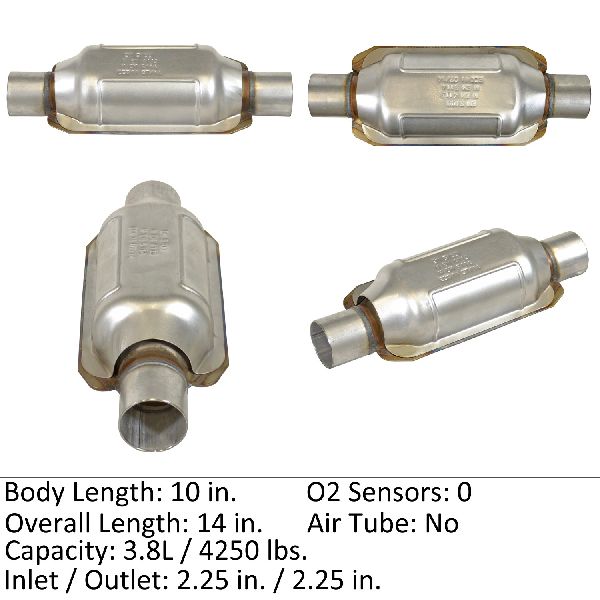
- Failed Bank 1 Catalytic Converter 🔴 High Probability → Shop Catalytic Converter The original catalytic converters on these vehicles are known to lose their efficiency after 150,000+ miles, becoming the most common cause for P0420. Previous engine issues, such as the known oil consumption problems with some 3MZ-FE engines, can accelerate converter failure.
How to confirm: Use a scan tool to monitor live data from Bank 1 oxygen sensors. If the downstream sensor (B1S2) voltage graph mimics the upstream sensor (B1S1), the converter is not working. 🎬 Watch: How to diagnose a bad catalytic converter on a Lexus. An infrared thermometer can also be used; the outlet of a working converter should be at least 100°F (38°C) hotter than the inlet after the engine is fully warmed up.
Typical fix: Replace the Bank 1 (rear/firewall side) catalytic converter manifold assembly. It is highly recommended to use a high-quality OEM or CARB-compliant aftermarket part to prevent the code from returning.
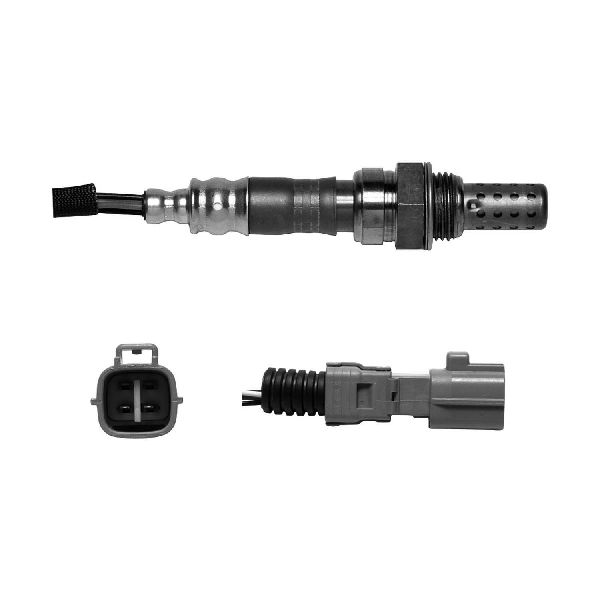
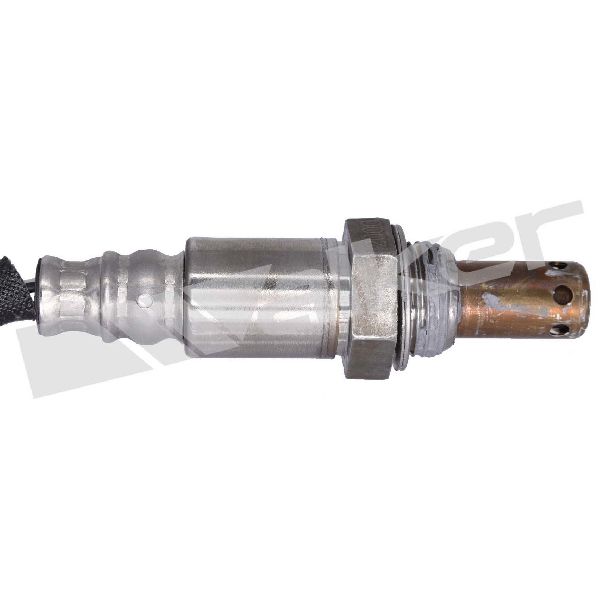
Est. part cost: $300-$900 - Failed Downstream Oxygen Sensor (Bank 1, Sensor 2) 🟡 Medium Probability → Shop Oxygen Sensor Oxygen sensors are wear items and can fail over time, sending incorrect readings to the ECM. A lazy or failed sensor can falsely trigger a P0420 code, though it's less common than converter failure on this model. Given the high mileage of these vehicles, replacing the O2 sensors when replacing the converter is often recommended.
How to confirm: On a live data scanner, a healthy downstream O2 sensor should show a relatively steady, high voltage (e.g., ~0.6-0.8V) when the engine is warm and at a steady RPM. If the voltage is stuck, unresponsive, or fluctuates rapidly like the upstream sensor, the sensor is likely faulty.
Typical fix: Replace the Bank 1, Sensor 2 oxygen sensor. Denso is the original equipment manufacturer (OEM).
Est. part cost: $60-$150 - Exhaust Leak ⚪ Low Probability Exhaust manifold gaskets or the donut gasket at the Y-pipe connection can develop leaks over time, allowing oxygen to enter the exhaust stream. This extra oxygen can fool the downstream O2 sensor into thinking the converter is inefficient.
How to confirm: Perform a visual inspection of the exhaust system from the engine to the rear O2 sensor for any cracks, rust, or black soot marks indicating a leak. A smoke test is the most effective way to pinpoint the location of a small leak.
Typical fix: Replace the leaking gasket or repair the cracked pipe section.
Est. part cost: $20-$100
Rare But Worth Checking
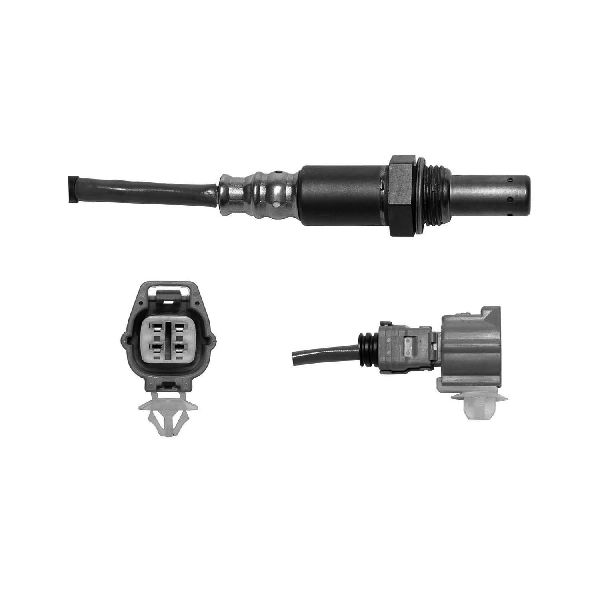
- Failing Upstream Air/Fuel Ratio Sensor (Bank 1, Sensor 1): → Shop Oxygen Sensor A failing A/F sensor can cause the engine to run rich or lean, which over time can damage the catalytic converter. This would typically be accompanied by fuel trim codes or other performance issues.
- Engine Misfires or Fuel System Issues: Unburned fuel from engine misfires or leaking fuel injectors can enter the exhaust and overheat the catalytic converter, causing permanent damage. These issues will almost always trigger other codes, such as P030x (misfire) or fuel trim codes.
- O2 Sensor Spacers / Non-Foulers (A temporary 'trick' not a fix): → Shop Oxygen Sensor Some owners install a spacer on the downstream O2 sensor to pull it out of the direct exhaust stream. This can trick the sensor and turn off the light, but it does not fix the underlying problem and is illegal in many areas as it circumvents emissions controls.
Diagnosis Steps
- Read the code(s) with an OBD-II scanner. Confirm P0420 is present. Note any other codes. 🎬 Watch this helpful breakdown of P0420 code causes and solutions.
- If misfire (P030x) or fuel system codes are present, diagnose and repair those first.
- Visually inspect the exhaust system for any obvious leaks, damage, or loose connections between the engine and the rear oxygen sensor. Look for soot trails around flanges and gaskets.
- Use a scan tool to view live data for the Bank 1 sensors. At a steady 2500 RPM, the upstream A/F sensor (B1S1) should fluctuate rapidly. The downstream O2 sensor (B1S2) should hold a relatively steady, high voltage (above 0.5V).
- If the B1S2 voltage graph mirrors the B1S1 graph, the catalytic converter has failed.
- If the B1S2 voltage is flat, unresponsive, or stuck low (below 0.2V), the oxygen sensor itself is the primary suspect.
- If an exhaust leak is suspected, perform a smoke test to confirm its location.
- Use an infrared thermometer to measure the temperature of the pipe entering and exiting the catalytic converter. The outlet should be at least 100°F (38°C) hotter than the inlet on a fully warmed-up, functional converter.
Parts You'll Likely Need
- Bank 1 Catalytic Converter
(OEM #17150-20030)— This is the most common failure item for P0420 on high-mileage RX330s. Bank 1 is the rear converter, integrated into the exhaust manifold.
Trusted brands: Lexus (OEM), Walker (CARB Compliant options recommended), MagnaFlow (CARB Compliant options recommended), Dorman
OEM price range: $1000-$1500
Aftermarket price range: $300-$900 - Bank 1, Sensor 2 Oxygen Sensor
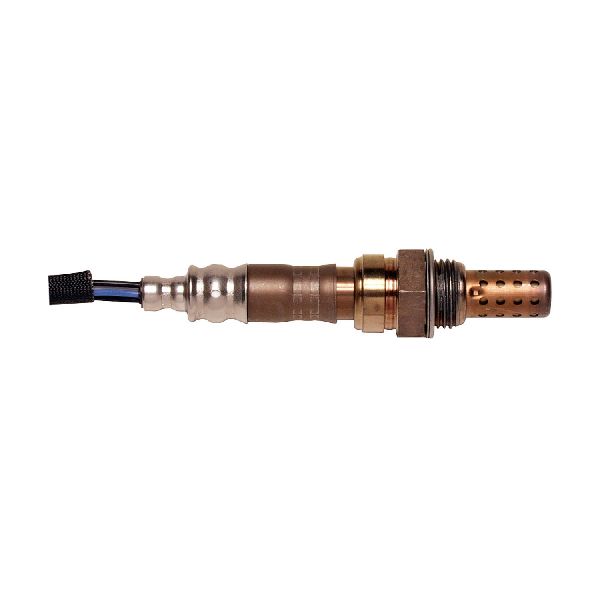
(OEM #89465-0E030)— This downstream sensor is responsible for monitoring converter efficiency. Its failure can directly cause a P0420 code. Denso is the OEM supplier.
Trusted brands: Denso (234-4509), Bosch
OEM price range: $120-$180
Aftermarket price range: $60-$100 - Bank 1, Sensor 1 Air/Fuel Ratio Sensor
(OEM #89467-48050)— This upstream sensor helps control the engine's air-fuel mixture. While less likely to cause P0420 directly, its failure can lead to conditions that damage the converter. Often replaced as preventative maintenance during a converter job.
Trusted brands: Denso (234-9042), Bosch
OEM price range: $150-$220
Aftermarket price range: $80-$150
Related Codes That Often Appear With This One
- P0430 — This is the equivalent code for Bank 2 (front/radiator side). If both P0420 and P0430 appear together, it strongly suggests a systemic issue like old age of both converters, contaminated fuel, or a fuel delivery problem affecting the whole engine.
- P0300-P0306 — These are misfire codes. An engine misfire allows unburned fuel to enter the exhaust, which can quickly destroy a catalytic converter. If you have misfire codes, they must be fixed before replacing the converter.
Technical Service Bulletins (TSBs) & Recalls
- While no specific TSB for the RX330 and P0420 was found, Toyota has issued TSBs like EG042-05 for other models with similar engines (like the Sienna) which involved ECU software updates to adjust sensitivity for the P0420/P0430 codes. This suggests the ECU's monitoring is a known sensitive area.
Platform-Specific Known Issues
- The Bank 1 catalytic converter is on the rear of the engine against the firewall, making access extremely difficult and labor costs for replacement are significantly higher than for the front Bank 2 converter.
- A DIY replacement is a challenging but feasible job for an experienced mechanic with the right tools, but it is not recommended for beginners.
Mechanic-Grade Diagnostic Values
- Bank 1 Sensor 2 (Downstream O2) Heater Circuit Resistance — expected: Approx. 11 - 16 Ohms at 68°F (20°C). A known good new Denso sensor measured 13.7 Ohms.. Failure: An open circuit (infinite resistance) reading on a multimeter indicates a failed heater element inside the sensor.
- Bank 1 Sensor 2 (Downstream O2) Heater Circuit Voltage — expected: Approx. 12V (Battery Voltage) at the harness-side connector with the key on.. Failure: No voltage indicates a problem with the wiring, fuse, or ECM driver, not the sensor itself.
- Live Data - Upstream A/F Sensor (B1S1) — expected: On this engine, the A/F sensor voltage should hold relatively steady around 3.3-3.4V at idle.. Failure: Wild fluctuations or voltage outside this range could indicate a faulty sensor.
- Live Data - Long Term Fuel Trim (LTFT) — expected: Ideally within +/- 5%.. Failure: Sustained high positive values (e.g., +12% or more) suggest a vacuum leak, unmetered air, or a weak fuel system, which must be fixed before condemning the catalytic converter.
Hidden / Shadow Codes Worth Checking
- Mode $06, TID $05, CID $01: This refers to the Catalyst Efficiency Monitor test results for Bank 1. Technicians can view the raw data from the ECU's self-test to see how close to the failure threshold the converter is operating, even before a code is set. (see via A professional scan tool capable of displaying Mode $06 data. The value needs to be compared against the manufacturer's specified min/max limits.)
- Mode $06, TID $33 & $34: According to a Lexus TSB, these Test IDs correspond to the 'Average Lean-to-Rich' and 'Average Rich-to-Lean' time of one waveform cycle for the downstream oxygen sensor. This data can reveal a lazy sensor that is slow to respond. (see via A professional scan tool with Mode $06 capability. The TSB specifies a failure if the time is greater than 3.45 seconds for Bank 1.)
Scan Tool Commands That Help
- Toyota Techstream: Active Test: 'Control the Injection Volume for A/F Sensor' — This bidirectional command allows a technician to manually force the fuel mixture rich or lean (-12.5% or +12.5%). By observing the live data graphs of the upstream A/F sensor and downstream O2 sensor during this test, a technician can definitively confirm if the sensors are responding correctly, which helps isolate the fault to the catalytic converter itself.
Wiring & Ground Locations
- Engine Control Module (ECM) — Located behind the right side of the dashboard, accessible by removing the glove box assembly.. This is the source of the voltage and ground signals for the O2/AF sensors. Any testing at the ECM requires knowing its location to access the connectors (e.g., B4, B5, B6).
- Main Engine Ground — A primary ground strap runs from the lower firewall to the back of the engine block. There are also ground points on the back of each cylinder head.. A corroded or loose engine ground can cause erratic sensor readings and phantom codes. The rear bank (Bank 1) sensors are especially susceptible if the ground on the rear of the engine is compromised.
- Chassis Ground — The negative battery cable grounds to the right inner fender in the engine bay.. While less likely to cause a specific P0420, a poor main chassis ground can affect the entire vehicle's electronics. It's a basic check that should not be overlooked.
- O2 Sensor Heater Wires — On the Denso sensor pigtail, the two wires of the same color (typically black) are for the heater circuit.. This allows for testing the heater element resistance directly at the sensor connector without needing a wiring diagram.
Real Owner Repair Stories
- ClubLexus user (2004 Lexus RX330, ~130,000 miles) — P0420 code, Check Engine Light on.
❌ Tried (didn't work) Replacing the Bank 1 catalytic converter with a NAPA aftermarket part ($321 + labor).
✅ What actually fixed it The code returned after the aftermarket cat was installed. The story highlights the common failure of non-OEM or non-CARB compliant converters to satisfy the Lexus ECU, even when brand new. The final resolution was not posted, but the lesson is that the cheap part did not work. - BobIsTheOilGuy forum user (2004 Lexus RX330, 170,000 miles) — Pending P0420 code, smell of rich exhaust at startup, suspected exhaust leak.
❌ Tried (didn't work) The owner had previously fixed a separate oil consumption issue with a piston soak.
✅ What actually fixed it The owner correctly diagnosed the failure by observing both downstream O2 sensors switching rapidly on a scan tool. Their stated plan was to replace the manifold/converter with a used OEM part from a 2006 Highlander from a salvage yard, along with new gaskets, to avoid the high cost of new OEM parts and the unreliability of aftermarket ones. - Lexus Owner Report — NHTSA ODI #10381931 describes a sequence of emissions failures where a Bank 1 Sensor 1 oxygen sensor shorted out and was replaced, followed later by diagnostics showing code P0420 (Catalyst System Below Threshold on Bank 1), necessitating a full catalytic converter replacement.
When the Usual Fixes Don't Work
- While Pass 2 correctly identifies the catalytic converter as the most likely culprit, the Pass 3 findings reinforce a critical nuance: the ECU's sensitivity. A ClubLexus user's experience of replacing the converter with a new NAPA part, only for the code to return immediately, serves as strong counter-evidence to the idea that any new converter will suffice. This proves that the 'common fix' of 'replace the cat' is incomplete without the strong qualifier to use OEM or high-quality CARB-compliant parts, as the vehicle's software will reject lesser components.
OEM Part Supersession History
89465-0E030 (B1S2 O2 Sensor)→N/A— N/A
Heads up: The Denso aftermarket part 234-4509 is the direct equivalent for the rear (Bank 1) downstream O2 sensor. Note that the front (Bank 2) downstream sensor is a different part number (Denso 234-4168), and they are not interchangeable.
Model Year Variations Within This Range
- 2006: According to forum discussions, the 2006 model year 3MZ-FE engine may have featured an improved PCV system design that resulted in lower oil consumption compared to the 2004-2005 models. Since heavy oil consumption can contaminate and destroy catalytic converters, a 2006 model may be less prone to a P0420 code caused by this specific issue.
- 2004 vs 2005-2006: The navigation system was updated from Generation 3 to Generation 4 for the 2005 model year, which also introduced Bluetooth connectivity. This has no bearing on the P0420 code but is a key difference within the model range.
Diagnostic Flowchart
Real Owner Stories
Aggregated from forums and TSBs cited above. Mileages and costs reflect what owners reported in those sources.
2004 Lexus RX330 — 175000 miles
Symptoms: Check Engine Light with P0420 code present for a while.
What fixed it: Replaced the Bank 1 Sensor 2 (downstream) O2 sensor with a Denso part from Amazon, cleared the code, and it did not return.
Cost: $50
Source hint: ClubLexus - P0420 on 2004 RX330
2004 Lexus RX330
Symptoms: Frustrating experience where the Check Engine Light remained on after replacing the catalytic converter.
What fixed it: Attempted to fix with a NAPA aftermarket catalytic converter, but the code returned, highlighting the platform's sensitivity to part quality.
Source hint: ClubLexus - '2004 RX330 catalytic converter issue P0420'
2005 Lexus RX330
Symptoms: P0420 code requiring replacement of the rear catalytic converter.
What fixed it: Replaced the Bank 1 (Rear) Catalytic Converter from underneath the car. The job took about 4 hours and required multiple extensions and swivels to reach the difficult upstream O2 sensor connector.
Source hint: YouTube - 'Replacing the Bank 1 (Rear) Catalytic Converter on a 2005 Lexus RX330.'
2004 Lexus RX330
Symptoms: Diagnosed P0420 code and suspected an exhaust leak.
What fixed it: Investigated a potential exhaust leak at the donut gasket and weighed the high cost of CARB-compliant converters versus used OEM parts.
Source hint: BobIsTheOilGuy - 'P0420 on 2004 rx330'
Lexus ES300 (Cross-Model Reference)
Symptoms: An owner reported a Bank 1 Sensor 1 oxygen sensor shorted out and was replaced. Later, diagnostics showed code P0420 (Catalyst System Below Threshold on Bank 1).
What fixed it: According to NHTSA ODI #10381931, the vehicle required a full catalytic converter replacement following the sensor failure.
Related OBD-II Codes
Frequently Asked Questions
Is there a TSB for the P0420 code on my 2004-2006 Lexus RX330?
Which catalytic converter is Bank 1 on the 3.3L V6, and is it hard to replace?
Can I use a cheap aftermarket catalytic converter to fix P0420 on my RX330?
What brand of oxygen sensor should I use if I need to replace Bank 1 Sensor 2?
Why did my VSC light come on at the same time as the Check Engine Light for P0420?
Could an exhaust leak cause the P0420 code on my 3MZ-FE engine?
Helpful Videos

We Have This Part in Stock


The information in this article is provided for general reference and educational purposes only. Vehicle specifications, procedures, and part compatibility can vary by production date, trim level, and region. Always consult your vehicle's factory service manual and verify part numbers before purchasing or performing repairs. Safety-critical components such as airbags, seat belts, and braking systems should be installed by a qualified professional.
- Lexus RX330:
- 🧭 Diagnostic Flowchart
- 🎬 Helpful Videos
- 🛍️ Shop This Part
- What's Unique About the 2004-2006 Lexus RX330
- Symptoms You May Notice
- Most Likely Causes
- Rare But Worth Checking
- Diagnosis Steps
- Parts You'll Likely Need
- Related Codes That Often Appear With This One
- Technical Service Bulletins (TSBs) & Recalls
- Platform-Specific Known Issues
- Mechanic-Grade Diagnostic Values
- Hidden / Shadow Codes Worth Checking
- Scan Tool Commands That Help
- Wiring & Ground Locations
- Real Owner Repair Stories
- When the Usual Fixes Don't Work
- OEM Part Supersession History
- Model Year Variations Within This Range
- Real Owner Stories
- 2004 Lexus RX330 — 175000 miles
- 2004 Lexus RX330
- 2005 Lexus RX330
- 2004 Lexus RX330
- Lexus ES300 (Cross-Model Reference)
- Related OBD-II Codes
- Frequently Asked Questions
- 🎟️ Get 5% Off