

P0420 on 2010-2015 Lexus RX450h: Catalyst Efficiency Causes and Fixes
P0420 on a Lexus RX450h indicates low efficiency from the Bank 1 catalytic converter. Before replacing the expensive converter, it is critical to first inspect for exhaust leaks and test the oxygen sensors, as these are common, less expensive causes. Bank 1 is the cylinder bank located against the firewall.
- P0420 on your RX450h means the Bank 1 (firewall side) catalytic converter is reporting low efficiency.
- Do not immediately replace the catalytic converter. It's the most expensive part and may not be the problem.
- First, thoroughly inspect for exhaust leaks between the engine and the second O2 sensor. Pay close attention to gaskets.
- Second, test the oxygen sensors. A failing downstream (post-cat) sensor is a common misdiagnosis for a bad converter.
- Only after ruling out leaks and sensor issues should you consider replacing the catalytic converter.
What's Unique About the 2010-2015 Lexus RX450h
The 2GR-FXE engine in the RX450h is known for its reliability, and premature catalytic converter failure is not a widespread complaint. However, like any vehicle, high mileage can lead to wear. Forum discussions among Lexus owners frequently emphasize checking for exhaust leaks at gaskets and flanges before suspecting the converter itself, as this is a very common trigger for the code on these vehicles. Because this is a hybrid, the gasoline engine does not run 100% of the time, which can affect the operating temperatures and cycles the catalytic converter experiences. While no specific TSBs link this to P0420, it's a unique operating condition of the platform.
Symptoms You May Notice
- Check Engine Light is on
- Reduced fuel economy
- Failure to pass an emissions test
- Possible rotten egg (sulfur) smell from the exhaust
- In severe cases of clogging, a noticeable loss of engine power or hesitation
- In rare cases with both P0420 and P0430 present, some owners report slightly rougher idle as the engine computer struggles with fuel trims.
- Immediately replacing the catalytic converter without checking for exhaust leaks or testing the oxygen sensors. This is a very expensive mistake, as a simple gasket or sensor could be the true cause.
Most Likely Causes
- Failing Catalytic Converter (Bank 1) 🔴 High Probability → Shop Catalytic Converter Catalytic converters have a finite lifespan and can degrade from normal use over many miles (typically 150k+). Contamination from burning oil or coolant, or thermal damage from engine misfires, can accelerate this process. While durable, they are not immune to failure.
How to confirm: After confirming no exhaust leaks and that both upstream and downstream oxygen sensors are functioning correctly, the converter is the remaining culprit. A professional can perform a backpressure test or use a thermal camera to check for a significant temperature increase across the converter, which indicates it's working.
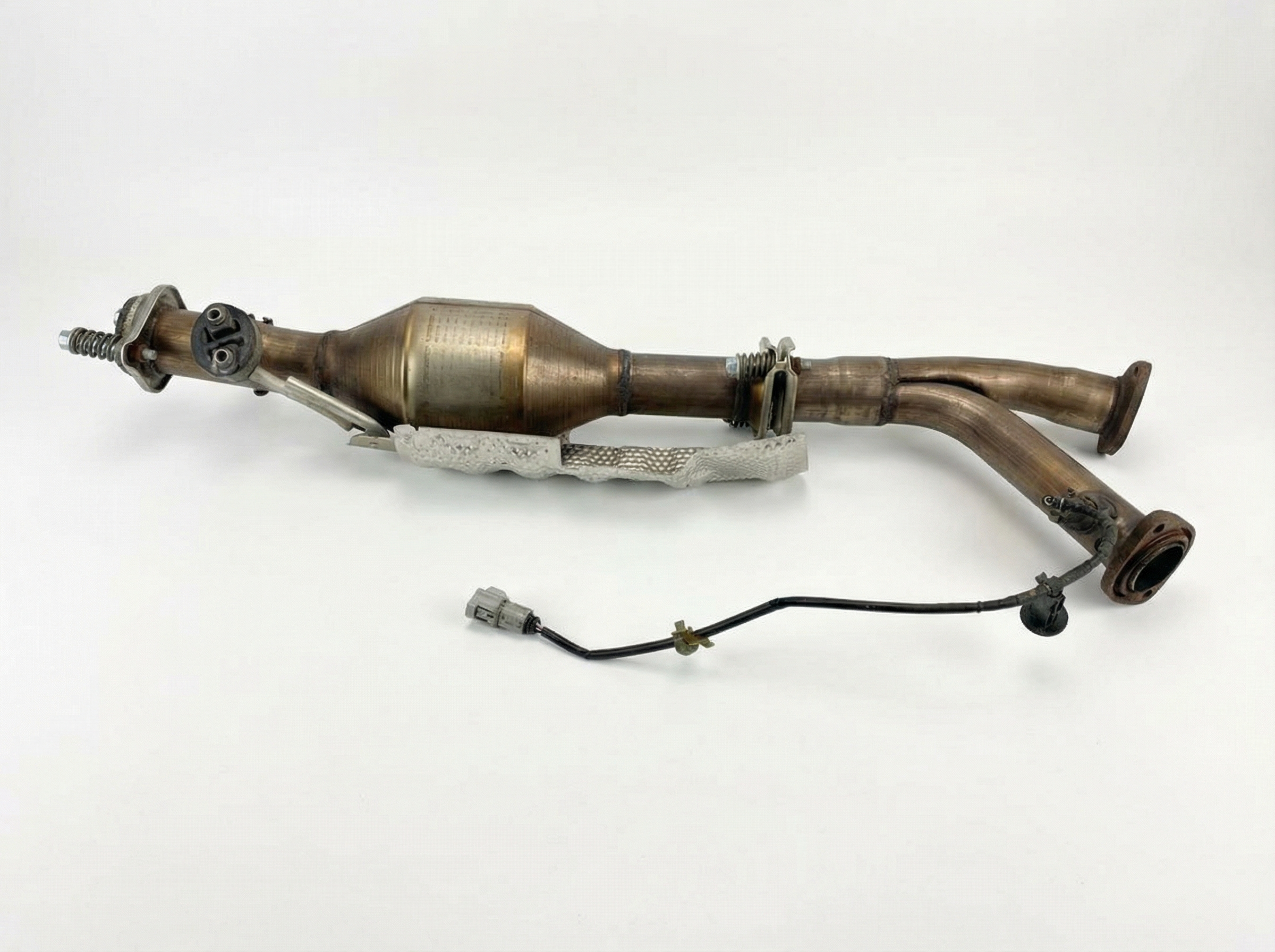
Typical fix: Replace the Bank 1 catalytic converter assembly. On the RX450h, this is part of the front exhaust pipe assembly which includes the catalyst.
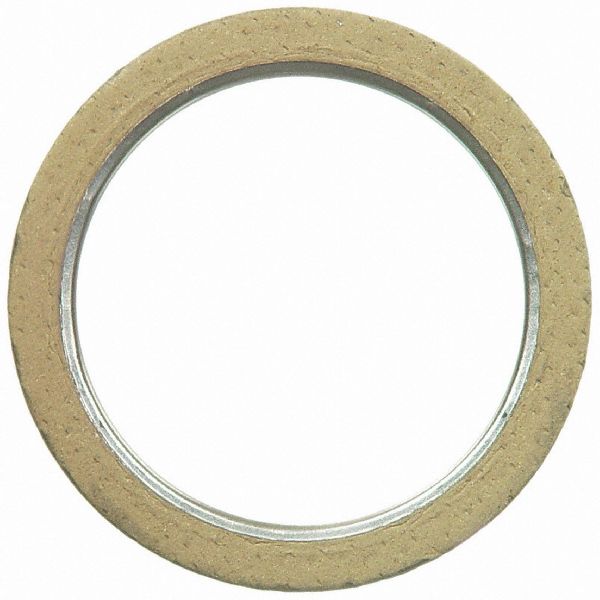
Est. part cost: $1500-$2500 - Exhaust System Leak 🟡 Medium Probability Gaskets in the exhaust system, particularly the circular 'donut' gaskets used by Toyota/Lexus, can degrade over time and cause leaks. A leak between the upstream and downstream sensors allows outside oxygen to enter, which skews the downstream sensor's reading and tricks the ECM into setting a P0420 code. Many forum users report fixing P0420 by simply replacing a leaking gasket.
How to confirm: Perform a visual inspection of the exhaust manifold and pipes for cracks or black soot trails. A common method is to have a helper temporarily block the tailpipe with a rag while the engine is running to increase backpressure and make leaks more audible. A smoke test is the most definitive way to find small leaks. 🎬 Watch: How to diagnose P0420 and perform exhaust leak testing
Typical fix: Replace the leaking gasket or repair the cracked pipe. The gasket between the manifold and the catalytic converter pipe is a common culprit.
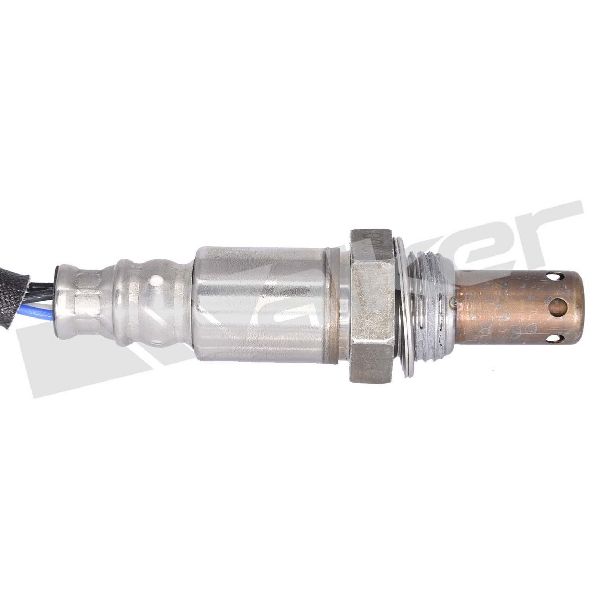
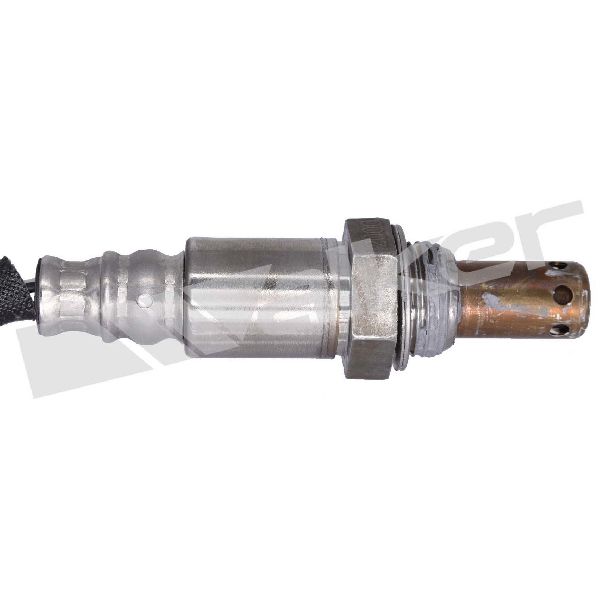
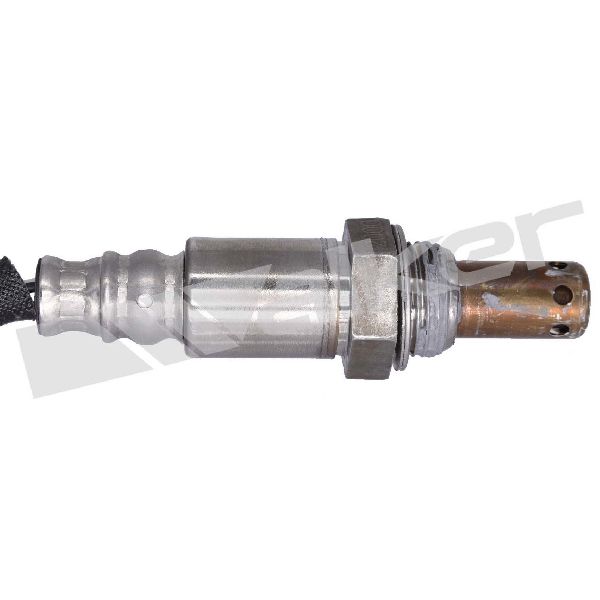
Est. part cost: $20-$100 - Failing Downstream Oxygen Sensor (Bank 1, Sensor 2) 🟡 Medium Probability → Shop Oxygen Sensor Oxygen sensors degrade over time and can become 'lazy' or biased, providing inaccurate readings to the ECM. A faulty downstream sensor can mimic the behavior of an inefficient converter. Given the lower cost compared to a converter, it's often replaced as a diagnostic step, with many owners successfully fixing the code this way.
How to confirm: Use a scan tool to graph the voltage of the Bank 1 Sensor 2. At a steady cruise with a warm engine, the voltage should be relatively stable and above 0.5V. If it fluctuates rapidly between ~0.1V and ~0.9V, similar to the upstream sensor, it may be faulty (or the converter has indeed failed).
Typical fix: Replace the Bank 1, Sensor 2 heated oxygen sensor. The connector for this sensor is located inside the cabin, requiring pulling back the carpet to access it.
Est. part cost: $80-$220
Rare But Worth Checking
- Failing Upstream Air/Fuel Ratio Sensor (Bank 1, Sensor 1): → Shop Oxygen Sensor While less common to directly cause P0420, a faulty A/F sensor can create an incorrect air-fuel mixture. A persistent rich condition can overheat and damage the catalytic converter, leading to a legitimate P0420 code over time. A lean condition can also prevent the cat from operating efficiently.
- Engine Running Condition (Misfires, Fuel System Issues): If you have other codes for misfires (P030x), fuel injectors, or the MAF sensor, they must be addressed first. Unburned fuel entering the exhaust from a misfire will quickly destroy a catalytic converter by melting its internal substrate.
- Excessive Oil Consumption: While the 2GR-FE engine (a close relative) can be prone to oil consumption from stuck piston rings with high mileage or long oil change intervals, the 2GR-FXE is not widely reported to have this issue. However, if the engine is burning oil for any reason, it can contaminate the catalytic converter with phosphorus and lead to a P0420 code.
Diagnosis Steps
- Check for other DTCs. If any codes for misfires (P030x), fuel system, EVAP, or other sensors are present, diagnose and repair them first.
- Visually inspect the exhaust system from the engine to the rear of the vehicle. Look for cracks, holes, or black soot marks indicating a leak, paying close attention to the manifold and pipe flanges, especially the donut gaskets.
- Perform an exhaust leak test. Use a shop-vac in reverse to pressurize the exhaust (from the tailpipe) and spray soapy water on joints, or have a professional perform a smoke test.
- Use a capable OBD-II scanner to view live data. Warm up the engine completely to closed-loop operation.
- Bring the engine to a steady 2,500 RPM and observe the voltage graphs for the Bank 1 Air/Fuel Sensor (B1S1) and the Bank 1 Oxygen Sensor (B1S2).
- The A/F sensor (B1S1) should show rapid fluctuations. The O2 sensor (B1S2) should show a relatively steady, high voltage (e.g., above 0.6V).
- If the B1S2 voltage is fluctuating rapidly, mirroring the B1S1 signal, it confirms the low efficiency reading. This points to either a bad converter, a bad sensor, or an exhaust leak fooling the sensor.
- If there are no exhaust leaks and the upstream A/F sensor is working correctly, consider replacing the downstream O2 sensor (B1S2) as a cost-effective diagnostic step. The electrical connector is inside the vehicle under the carpet.
- If the code returns after replacing the sensor and confirming no leaks, the catalytic converter is the most likely cause of the problem.
Parts You'll Likely Need
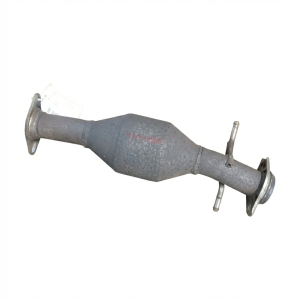
- Bank 1 Catalytic Converter
(OEM #17410-31A90 (Verify with VIN))— This is the component that the code directly identifies as inefficient. If all other causes are ruled out, the converter has likely reached the end of its service life.
Trusted brands: Walker Exhaust, MagnaFlow, OEM Lexus
OEM price range: $2000-$2500
Aftermarket price range: $600-$1200 - Downstream Oxygen Sensor (Bank 1, Sensor 2)
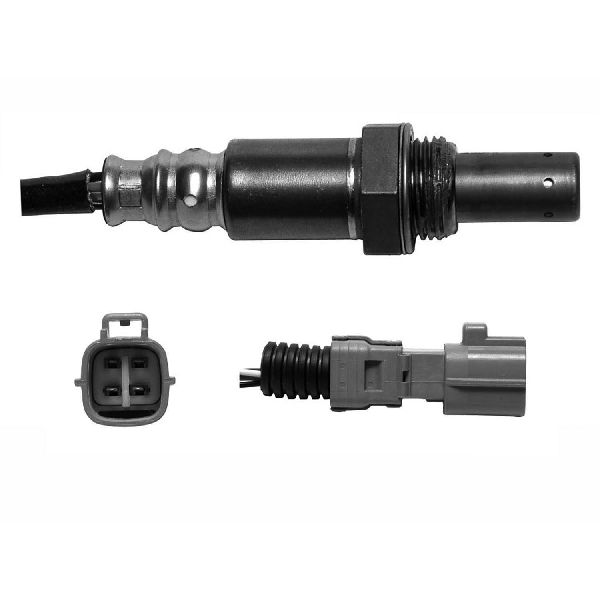
(OEM #89465-48280 (Verify with VIN))— A failing sensor can send incorrect data, mimicking a bad converter. It's a common failure point and a much cheaper part to replace first. Denso is the original equipment manufacturer.
Trusted brands: Denso (e.g., 234-4509), Bosch
OEM price range: $150-$220
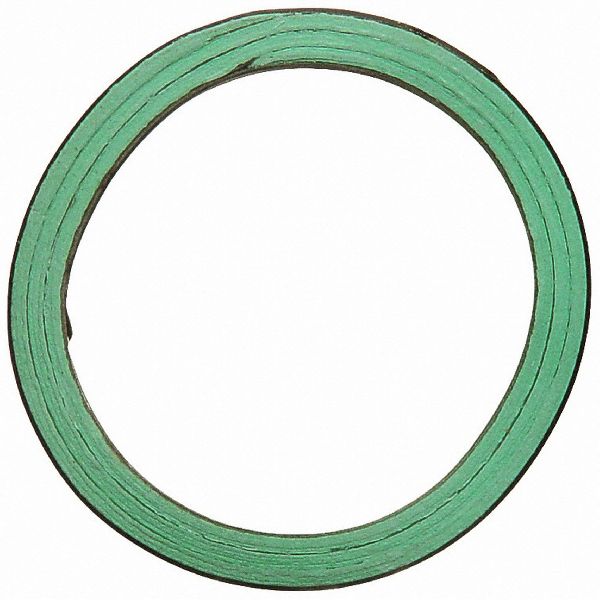
Aftermarket price range: $80-$150 - Exhaust Pipe Gasket (Donut Gasket)
(OEM #90917-A6002 (Manifold to Pipe, Verify with VIN))— Exhaust leaks before the second O2 sensor are a very common cause for P0420 on Lexus vehicles.
Trusted brands: Fel-Pro (e.g., 61040), Bosal, OEM Lexus
OEM price range: $25-$50
Aftermarket price range: $15-$30
Related Codes That Often Appear With This One
- P0430 — P0430 is the identical code but for Bank 2 (the front bank, by the radiator). Seeing P0420 and P0430 together is uncommon but could point to a systemic issue like a major intake leak, MAF sensor problem, or contaminated fuel affecting both cylinder banks. It makes individual component failure (like one O2 sensor or one cat) less likely.
Technical Service Bulletins (TSBs) & Recalls
- EG045-07 - This is an older, general Toyota TSB regarding P0420/P0430 diagnosis, not specific to the RX450h but outlines the standard diagnostic logic of checking sensors and leaks before condemning the converter.
- T-SB-0027-10 - Confirms Bank 1 is the rear bank and Bank 2 is the front bank for the 2GR-FXE engine, which is critical for correct diagnosis and parts replacement.
Platform-Specific Known Issues
- Downstream O2 Sensor Connector Location: → Shop Oxygen Sensor The electrical connector for the Bank 1 downstream oxygen sensor (Sensor 2) is not in the engine bay. It is located inside the passenger cabin, underneath the carpet near the front passenger's seat. Access requires removing trim and pulling back the carpet to unplug the sensor before removing it from the exhaust underneath the car.
Mechanic-Grade Diagnostic Values
- Upstream Air/Fuel (A/F) Sensor Heater Resistance — expected: 1.8 to 3.4 Ω at 20°C (68°F). Failure: Resistance outside this range indicates a faulty heater element in the sensor.
- Downstream Oxygen (O2) Sensor Heater Resistance (Bank 1, Sensor 2) — expected: 2.0 to 3.2 Ω at 20°C (68°F). Failure: Resistance outside this range indicates a faulty heater element. An open circuit (infinite resistance) is a common failure.
- Mode 6 Catalyst Monitor Data (TID $01, CID $01) — expected: The raw value should be below the maximum threshold specified by the manufacturer's data on the scan tool.. Failure: A test value that exceeds the maximum limit indicates the catalyst failed the PCM's internal efficiency test, triggering the P0420 code.
- Techstream Active Test: Control the Injection Volume — expected: When forcing the mixture rich (+12.5%), the downstream O2 sensor (B1S2) voltage should rise above 0.55V. When forcing lean (-12.5%), it should drop below 0.4V.. Failure: If the sensor voltage does not respond correctly, it may indicate a faulty sensor. If it responds too quickly (mirroring the A/F sensor), it confirms the catalyst is not storing oxygen.
Hidden / Shadow Codes Worth Checking
- Mode 6, Test ID $01, Component ID $01: This is not a separate DTC but the specific onboard monitor test for Bank 1 catalyst efficiency. Viewing this data with an advanced scan tool shows the raw test value the ECU uses to determine a pass or fail. A value close to the failure threshold can indicate a borderline converter. (see via A scan tool capable of displaying OBD-II Mode 6 data, such as Toyota Techstream or a high-end generic scanner.)
Scan Tool Commands That Help
- Toyota Techstream: Active Test: Control the Injection Volume — This allows a technician to manually force the engine rich or lean to directly test the response of the upstream A/F sensor and the downstream O2 sensor. It is a definitive way to check if the O2 sensor is responsive and if the catalyst is storing oxygen.
- Toyota Techstream: Monitor / Catalyst Efficiency — After a repair (like replacing a sensor or fixing a leak), you can use this function to check the status of the catalyst monitor. You can see if the monitor has completed its self-test during a drive cycle and whether it passed or failed, confirming if the fix was successful before the MIL comes back on.
Wiring & Ground Locations
- Engine Room J/B and R/B — Located on the left side of the engine compartment.. These junction and relay blocks contain main fuses and relays for the engine control system, including the EFI MAIN fuse which provides power to the oxygen sensor heater circuits. A fault here could disable the heaters, affecting sensor performance.
- Engine Ground Points — Multiple ground points are located on the engine block and cylinder heads. A key ground distribution point is on the left rear of the engine compartment.. The ECM and its sensors rely on clean ground connections. A corroded or loose engine ground can introduce noise into sensor signals, potentially causing incorrect readings from the A/F and O2 sensors, which could lead to a false P0420 code.
Real Owner Repair Stories
- ClubLexus user 'lexusisgs' (Lexus GS (specific year not mentioned, but similar P0420/P0430 issue)) — Check engine light with codes P0420 and P0430.
❌ Tried (didn't work) Resetting the codes with an OBD2 reader provided only a temporary fix.
✅ What actually fixed it The user replaced two leaking exhaust flange gaskets. The old gaskets were visibly deteriorated. The user also applied high-temperature copper silicone for a better seal. This permanently resolved both codes. - ClubLexus user (Lexus GS400 (different engine, but same diagnostic principle)) — P0420 code.
❌ Tried (didn't work) Initially suspecting the catalytic converter.
✅ What actually fixed it The issue was a leak at the gasket where the catalytic converter and the exhaust manifold bolt together. This highlights the commonality of exhaust leaks causing this code across Lexus models. - NHTSA ODI #10381931 (Lexus ES300) — An owner reported that diagnostics showed code P0420 (Catalyst System Below Threshold on Bank 1) after previously having a shorted Bank 1 Sensor 1 oxygen sensor replaced. The diagnostic check confirmed the need to replace the catalytic converter.
When the Usual Fixes Don't Work
- While a P0420 code is most often caused by a failing catalytic converter, exhaust leak, or faulty O2 sensor, there are cases where the root cause is upstream. For example, a persistent lean condition caused by a vacuum leak or a faulty MAF sensor can prevent the catalytic converter from operating at the correct temperature and air-fuel ratio needed to be efficient. This can trigger a P0420 code even if the converter itself is not damaged. In such cases, replacing the converter will not fix the problem, as the code will return until the fuel delivery issue is resolved.
OEM Part Supersession History
Not specified, but multiple revisions exist.→89465-48280— Standard part evolution and updates by the manufacturer.
Heads up: Always verify the correct part number with the vehicle's VIN. While physically similar, there can be minor calibration or heater differences between part numbers that can cause issues.
Model Year Variations Within This Range
- 2013-2015: The RX450h received a facelift for the 2013 model year, which included a new 'spindle grille' front fascia, redesigned headlamps, and revised tail lamps. However, the 2GR-FXE powertrain and exhaust system layout, including the catalytic converters and sensors relevant to P0420, remained fundamentally the same. No significant changes affecting the diagnosis of this code have been noted.
Diagnostic Flowchart
Other Known Issues on This Vehicle
Issues unrelated to this code that are worth knowing about as an owner of this generation:
- Brake Actuator Failure 🔴 High — A well-documented, common point of failure, often occurring between 80,000 and 150,000 miles. Triggers codes like C1391. (Ref: Lexus issued Warranty Enhancement Program ZLG for earlier models (RX400h) and TSBs for later models (e.g., L-SB-0011-23 for 2016-2019) acknowledging the issue.)
- Hybrid Inverter Coolant Pump Failure 🟠 Medium — The small electric water pump that cools the main hybrid inverter can fail, leading to inverter overheating and a 'Check Hybrid System' warning. Not extremely common, but a known issue in the Toyota/Lexus hybrid family.
- 12V Auxiliary Battery Drain 🟡 Low — Owners report that the small 12V battery can drain if the vehicle is left sitting for more than a couple of weeks, preventing the car from entering 'Ready' mode.
- VVT-i Oil Line Leak/Rupture 🔴 High — Early 2GR-FE engines (close relative) had a rubber section in the VVT-i oil supply line that could rupture, causing rapid oil loss. Toyota issued a recall to replace it with an all-metal line. Most 2GR-FXE engines from this era should have the updated part, but it's a critical historical issue for the engine family. (Ref: Recall campaign for early 2GR-FE engines.)
- Power Tailgate Motor Failure 🟡 Low — The motor for the power rear hatch is a known weak point and can fail, causing the tailgate to operate slowly, get stuck, or not open/close at all.
Used vs. New Parts: Buying Guide for This Vehicle
When a used part is the smart pick: Used parts are generally not recommended for emissions components like catalytic converters or oxygen sensors due to their finite lifespan and sensitivity. A used part may have little remaining life or could be the source of the same P0420 code on the donor vehicle. The only exception might be a complete, low-mileage exhaust assembly from a verified collision-damaged vehicle.
Donor-vehicle mileage cap: roughly under 50000 miles for the part to have meaningful remaining life.
What to inspect on the donor part:
- For a catalytic converter, inspect the internal honeycomb structure with a borescope if possible; it should be intact with no signs of melting, clogging, or breakage.
- Check for severe external rust or corrosion, especially at the flanges and welds.
- Verify the donor vehicle's mileage and ensure it was not scrapped due to engine failure (which could have damaged the cat).
OEM-only on this vehicle (don't cheap out):
- Catalytic Converter: Aftermarket converters for Lexus vehicles are notorious for failing to meet the strict efficiency monitoring parameters of the factory ECU, often causing the P0420 code to return within a few months. OEM is very strongly recommended for longevity and to guarantee passing emissions tests.
Aftermarket brands forum-validated for this vehicle:
- Oxygen/Air-Fuel Sensors: Denso is the Original Equipment Manufacturer (OEM) for Toyota/Lexus. Buying a Denso-branded sensor from an auto parts store is equivalent to buying the part from the dealer and is a reliable, cost-effective choice.
Brands owners have reported issues with on this vehicle:
- Unbranded or 'universal' catalytic converters and oxygen sensors found on online marketplaces. These often lack the precise calibration and precious metal loading required for the Lexus emissions system and are a common cause of repeat failures.
Real Owner Stories
Aggregated from forums and TSBs cited above. Mileages and costs reflect what owners reported in those sources.
2010-2015 Lexus RX450h 2GR-FXE
Symptoms: The owner was quoted for a new catalytic converter by a shop to fix a P0420 code.
What fixed it: Replacing the downstream O2 sensor resolved the code without needing to replace the expensive catalytic converters.
Source hint: ClubLexus.com thread titled 'Fixed P0420 code... without replacing Cats'
2010-2015 Lexus RX450h 2GR-FXE
Symptoms: P0420 code present due to an exhaust leak.
What fixed it: Replacing degraded exhaust gaskets (specifically the donut gaskets).
Source hint: Reddit.com/r/Lexus
Lexus RX400h (Platform Mate)
Symptoms: Both P0420 and P0430 codes were present simultaneously.
What fixed it: The community advised checking for intake/exhaust leaks or a faulty MAF sensor as cheaper first steps before replacing the converters.
Source hint: LexusOwnersClub.co.uk
Related OBD-II Codes
Frequently Asked Questions
Which side of the engine is Bank 1 on my 2010-2015 RX450h?
I'm looking for the Bank 1 Sensor 2 connector; is it under the car?
Can a simple exhaust gasket cause a P0420 code on this Lexus?
Is there a TSB that explains how to diagnose P0420 for Toyota/Lexus vehicles?
My RX450h has over 150,000 miles; is it common for the catalytic converter to fail now?
Helpful Videos
Used OEM Parts in Stock
New Aftermarket Parts Available

The information in this article is provided for general reference and educational purposes only. Vehicle specifications, procedures, and part compatibility can vary by production date, trim level, and region. Always consult your vehicle's factory service manual and verify part numbers before purchasing or performing repairs. Safety-critical components such as airbags, seat belts, and braking systems should be installed by a qualified professional.
- Lexus RX450h:
- 🧭 Diagnostic Flowchart
- 🎬 Helpful Videos
- 🛍️ Shop This Part
- What's Unique About the 2010-2015 Lexus RX450h
- Symptoms You May Notice
- Most Likely Causes
- Rare But Worth Checking
- Diagnosis Steps
- Parts You'll Likely Need
- Related Codes That Often Appear With This One
- Technical Service Bulletins (TSBs) & Recalls
- Platform-Specific Known Issues
- Mechanic-Grade Diagnostic Values
- Hidden / Shadow Codes Worth Checking
- Scan Tool Commands That Help
- Wiring & Ground Locations
- Real Owner Repair Stories
- When the Usual Fixes Don't Work
- OEM Part Supersession History
- Model Year Variations Within This Range
- Other Known Issues on This Vehicle
- Used vs. New Parts: Buying Guide for This Vehicle
- Real Owner Stories
- 2010-2015 Lexus RX450h 2GR-FXE
- 2010-2015 Lexus RX450h 2GR-FXE
- Lexus RX400h (Platform Mate)
- Related OBD-II Codes
- Frequently Asked Questions
- 🎟️ Get 5% Off