

P0420 on 2004-2011 Mazda RX-8: Rotary Engine Catalyst Failure Causes and Fixes
On the Mazda RX-8, P0420 almost always means the catalytic converter has failed, often due to a weak ignition system. A new, high-quality catalytic converter is the most likely fix. Do not use cheap aftermarket converters, as the rotary's high exhaust heat will destroy them quickly. The root cause, often a failing ignition system, must be addressed simultaneously to prevent repeat failure.
- P0420 on an RX-8 almost certainly means you need a new catalytic converter.
- The root cause of the converter failure is often a weak ignition system (coils, plugs, wires). Always inspect and likely replace these parts at the same time as the converter to prevent a repeat failure.
- Do NOT install a cheap, generic aftermarket catalytic converter. It will not withstand the rotary engine's heat and will fail quickly.
- Do not drive the car with a P0420 code. A clogged converter can cause excessive backpressure and lead to severe, expensive engine damage.
What's Unique About the 2004-2011 Mazda RX-8
The 13B-MSP Renesis rotary engine in the RX-8 is the primary reason P0420 is a common and serious code on this car. Rotary engines produce extremely high exhaust gas temperatures, far higher than conventional piston engines. This intense heat can quickly degrade and destroy catalytic converters, especially lower-quality aftermarket units. Furthermore, the RX-8's ignition system (coils, plugs, wires) is a well-documented weak point; failing ignition components can send unburned fuel into the hot exhaust, which then ignites inside the catalytic converter and melts its internal structure. This ignition-system-to-converter-failure sequence is the most common story for P0420 on the RX-8.
Generation note: The 2004-2011 year range covers the entire first generation (SE3P) of the RX-8. This includes the original Series I (2004-2008) and the updated Series II (2009-2011). While there were revisions to the engine, ignition, and starter motor, the fundamental causes (ignition failure leading to cat failure) and fixes for P0420 are the same across both series. A key difference is that Series II models have a different catalytic converter and only one downstream O2 sensor in the mid-pipe.
Symptoms You May Notice
- Check Engine Light is on
- Noticeable loss of engine power, especially at high RPM
- Difficulty starting the engine
- In severe cases of clogging, the engine may stall or struggle to run
- A rattling noise from under the car if the converter's internal honeycomb has broken apart
- Strong smell of unburned fuel or a 'rotten egg' sulfur smell from the exhaust
- In extreme cases of a gutted or hollowed-out cat, the car may be louder and have a raw fuel smell that enters the cabin at a stop.
- Replacing only the oxygen sensors. While an O2 sensor can fail, on the RX-8 the P0420 code is overwhelmingly caused by the catalytic converter itself. Replacing the sensor without addressing the cat will not fix the problem.
- Installing a cheap, universal catalytic converter. Universal or standard aftermarket converters are not designed to withstand the extreme heat of the RX-8's rotary engine and will fail very quickly, often within a few hundred miles. Forum users consistently warn against this.
Most Likely Causes
- Failed Catalytic Converter 🔴 High Probability → Shop Catalytic Converter The Renesis rotary engine's extremely high exhaust gas temperatures are very hard on catalytic converters. Standard aftermarket cats often melt or fail within a few hundred miles. The catalyst material can also become contaminated by engine oil due to the rotary's oil injection system or destroyed by fuel from a weak ignition system.
How to confirm: Visually inspect the converter by unbolting it. Look for a melted, collapsed, or missing internal honeycomb structure. A temperature gun can also be used; a working cat should be significantly hotter at the outlet than the inlet after the engine is fully warmed up. A common owner experience is unbolting the cat to find it completely empty.
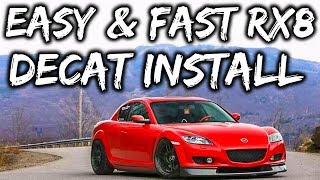
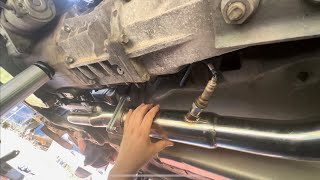
Typical fix: Replace the catalytic converter. It is highly recommended to use an OEM Mazda part or a high-quality, high-flow aftermarket unit specifically designed for the RX-8's heat, such as those from BHR or HJS. Many owners opt for a catless mid-pipe for performance and to avoid future failure, but this is not legal for street use and will cause a persistent P0420 CEL without ECU tuning. 🎬 Watch: How to install an RX-8 midpipe and decat
Est. part cost: $1000-$2500 - Failing Ignition System (Coils, Spark Plugs, Wires) 🟡 Medium Probability The RX-8 ignition system is a well-documented weak point. Weak spark leads to incomplete combustion, dumping raw fuel into the exhaust. This fuel ignites in the catalytic converter, superheating and melting it. This is often the root cause of the converter failure, and failing to address it will destroy the new converter.
How to confirm: Test the ignition coils for proper output. Check for misfire codes (P0300, P0301, P0302). Inspect spark plugs for wear or fouling. A P0420 code that appears shortly after a misfire code is a strong indicator that the ignition system killed the cat. Many owners proactively replace ignition components as preventative maintenance.
Typical fix: Replace all four ignition coils, spark plugs, and spark plug wires as a set. This should be done *before* or *at the same time* as replacing the catalytic converter to prevent destroying the new part. Upgraded coils from brands like BHR are a popular, more durable alternative to OEM.
Est. part cost: $200-$400 - Failed Oxygen (O2) Sensors ⚪ Low Probability → Shop Oxygen Sensor
How to confirm: Use a scan tool with live data graphing. The upstream O2 sensor (Sensor 1) should fluctuate rapidly. The downstream O2 sensor (Sensor 2) should be relatively steady. If the downstream sensor is lazy, stuck, or mirrors the upstream sensor's activity exactly, it may be faulty. However, on an RX-8, this pattern usually indicates a failed cat, not a bad sensor. Forum consensus is that P0420 is almost never just a bad O2 sensor.
Typical fix: Replace the faulty oxygen sensor. It is recommended to diagnose this carefully, as it's less common than a failed converter. Many owners have replaced O2 sensors only to have the P0420 code return, confirming the cat was the real issue.
Est. part cost: $50-$150
Rare But Worth Checking
- Exhaust Leaks: A leak between the upstream and downstream O2 sensors can allow outside air into the exhaust stream, fooling the downstream sensor and triggering a false P0420 code.
- Engine Internal Failure: Severe engine issues, such as failing apex seals leading to low compression, can cause excessive oil consumption and poor combustion. This will contaminate and destroy a catalytic converter. A compression test is recommended if engine health is suspect, especially if the car has trouble starting when hot.
Diagnosis Steps
- Scan for any other trouble codes. Prioritize fixing any misfire (P030x) or ignition-related codes first, as this is the likely root cause.
- Thoroughly inspect the ignition system. Test the coils, and inspect the spark plugs and wires. If they are old or their condition is unknown, it's wise to replace them as a set before replacing the catalytic converter.
- Inspect the exhaust system for any leaks between the engine and the downstream O2 sensor.
- Use a scan tool to monitor live data from the upstream and downstream O2 sensors. If the downstream sensor's waveform mimics the upstream sensor's, the catalytic converter is not functioning.
- Perform a visual inspection of the catalytic converter's internal structure by unbolting it. Look for signs of melting, blockage, or disintegration. Many owners report finding the catalyst matrix completely missing or broken into pieces. 🎬 See this DIY walkthrough for deleting the cat and installing a midpipe
- If the catalytic converter is confirmed to be bad, replace it along with any faulty ignition components to prevent a repeat failure. Do not install a new cat without first ensuring the ignition system is healthy.
Parts You'll Likely Need
- Catalytic Converter
(OEM #N3Y3-20-55XA (S1, supersedes multiple older numbers), N3R22055X (S2, MT), N3R62055X (S2, AT))— This is the most common failed component for P0420 on the RX-8 due to the rotary engine's high exhaust temperatures.
Trusted brands: Mazda OEM, BHR (Black Halo Racing), HJS, Racing Beat
OEM price range: $1500-$2500
Aftermarket price range: $600-$1500 (for high-quality, rotary-specific units) - Ignition Coil Set
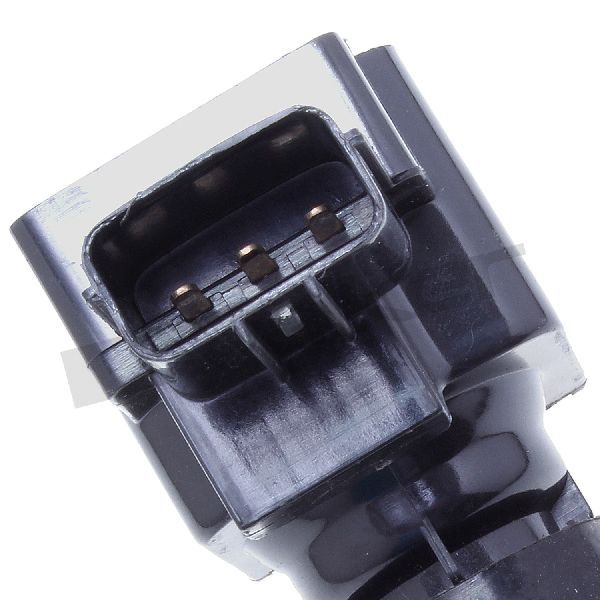
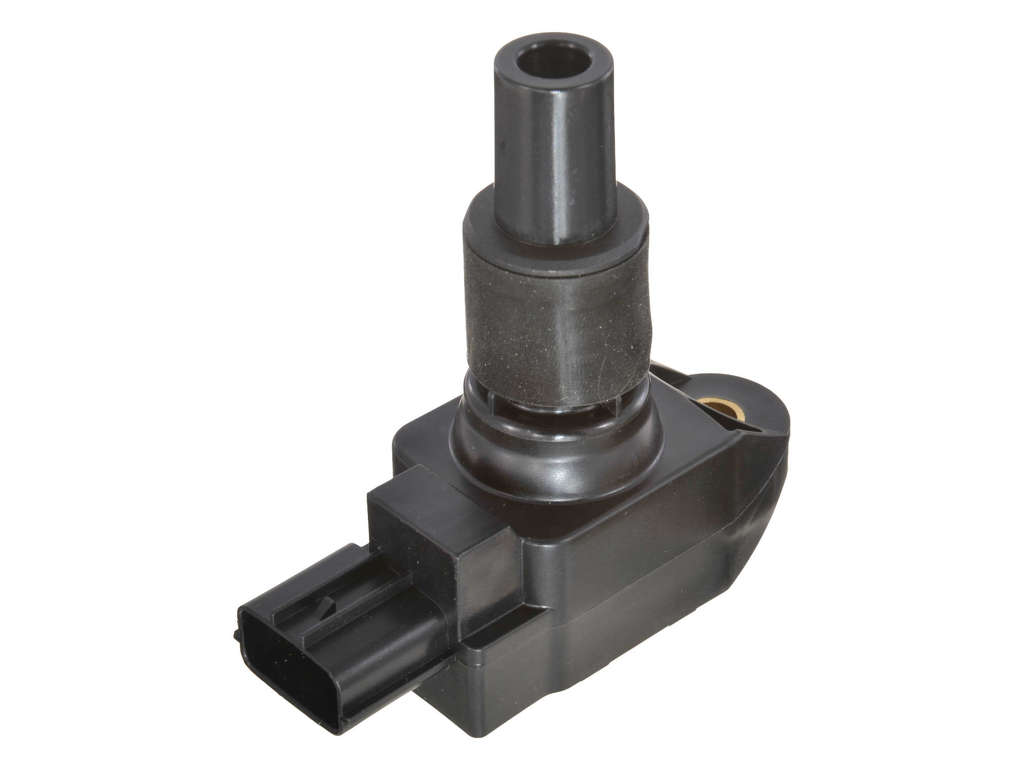
(OEM #N3H1-18-100C (Updated OEM 'C' version))— Failing ignition coils are a primary root cause of catalytic converter failure. They should be replaced to protect the new converter.
Trusted brands: Mazda OEM, NGK (U5093), BHR Ignition Upgrade Kit
OEM price range: $250-$350
Aftermarket price range: $150-$500 - Spark Plugs
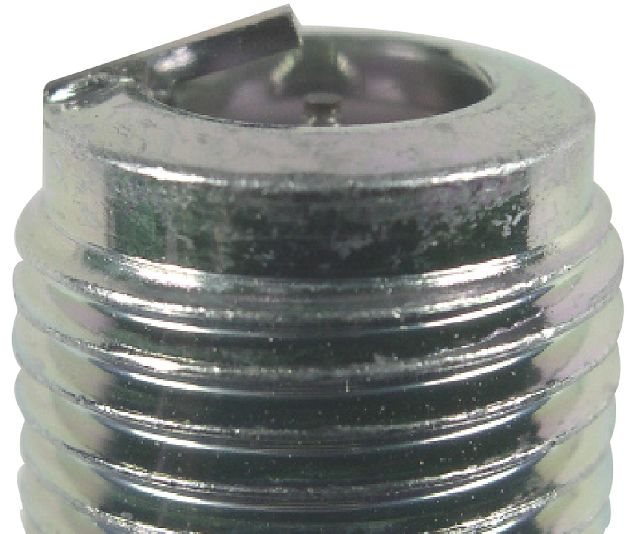
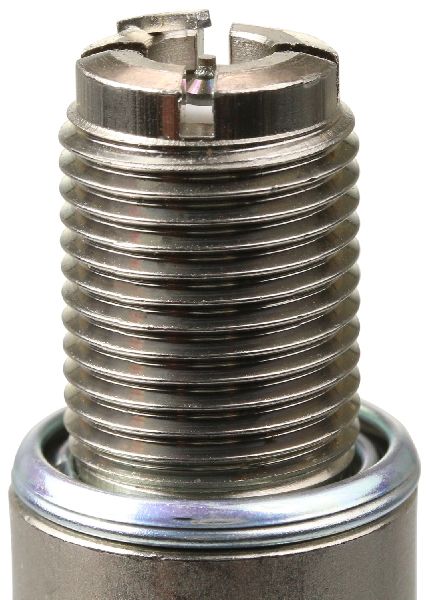
(OEM #RE7C-L (Leading), RE9B-T (Trailing))— Essential for proper combustion. Worn plugs contribute to misfires that damage the catalytic converter. The RX-8 uses two different types of plugs (leading and trailing) that must be installed in the correct positions.
Trusted brands: NGK
OEM price range: $80-$120 (set of 4)
Aftermarket price range: $70-$100 (set of 4)
Related Codes That Often Appear With This One
- P0300, P0301, P0302 — These are misfire codes. A failing ignition system is a primary cause of catalytic converter failure on the RX-8. Unburned fuel from misfires ignites in the converter, destroying it. Seeing these codes together is a strong signal to replace the ignition system and the catalytic converter.
Platform-Specific Known Issues
- Mazda extended the engine core warranty to 8 years/100,000 miles for all RX-8s, which may have covered some related failures, though this has long since expired for all models.
Mechanic-Grade Diagnostic Values
- Fuel Pressure — expected: 54-62 psi at the fuel line. Should hold at least 29 psi for 5 minutes after the pump is turned off.. Failure: Pressure dropping below 54 psi while running or failing to hold pressure can indicate a weak fuel pump, which can cause lean conditions and misfires that damage the cat.
- O2 Sensor Heater Resistance (Rear) — expected: 14.1 - 18.9 ohms. Failure: A reading outside this range (e.g., 10 ohms) indicates a faulty sensor heater, which can cause incorrect sensor readings.
- Mode $06 Catalyst Monitor Test — expected: OBDMID $21, Test ID $80 or $81. A scan tool supporting Mode $06 can run this test to get a direct efficiency value from the PCM.. Failure: A failing result on this specific monitor test is a strong confirmation from the PCM that the catalyst is below the efficiency threshold.
- Long Term Fuel Trim (LTFT) — expected: Close to 0%, typically within +/- 5%.. Failure: A high negative fuel trim (e.g., -17%) at idle suggests the engine is running rich, which could be caused by a leaking injector or faulty front O2 sensor, leading to excess fuel that can damage the catalytic converter.
Scan Tool Commands That Help
- Mazda M-MDS / IDS or equivalent: Catalyst Monitor Test (Mode $06) — This is a non-continuous monitor test that can be initiated by following a specific drive cycle. It directly commands the PCM to evaluate catalyst efficiency. A failure here is a definitive sign the PCM has condemned the cat, distinguishing it from a simple sensor issue.
- Mazda M-MDS / IDS or equivalent: HO2S Test (Mode $06) — Used to test the response time and voltage switching of the oxygen sensors independently of the catalyst monitor. This can help rule out a lazy or biased O2 sensor before condemning the expensive catalytic converter.
Wiring & Ground Locations
- Engine to Chassis Ground — A primary ground strap is located on the lower intake manifold, connecting the engine block to the chassis.. A poor engine ground can cause erratic sensor readings, including from the O2 sensors and eccentric shaft position sensor, leading to poor running conditions that can trigger a false P0420 or damage the cat over time.
- Main Harness Grounds — Two grounds are on the crossmember under the airbox/battery. Another is on the passenger side near the strut mount, and one on the driver's side by the brake booster.. These grounds are critical for the PCM and its associated sensors. Corrosion or looseness at these points can introduce noise into the O2 sensor signals, potentially mimicking a bad catalytic converter.
- Rear O2 Sensor Wiring (S1) — The rear O2 sensor harness has four wires. The wire colors and functions are typically: Y (Signal), BR (Sensor Ground to PCM), W/R (Heater 12V+ from Main Relay), R (Heater Ground to PCM).. When diagnosing a suspected bad O2 sensor, these are the specific wires to test for voltage, ground, and continuity back to the PCM (Pin 2Q for signal, 2A for ground on some models).
- Front O2 Sensor PCM Pin — The front O2 sensor signal wire (AV) connects to pin 2C at the PCM. The sensor ground (SGND) connects to pin 2B.. If a new front O2 sensor doesn't resolve related fuel trim issues that could lead to a P0420, checking for continuity and voltage directly at these PCM pins can identify a wiring harness problem.
Real Owner Repair Stories
- RX8Club.com user 'Snrub' (2004-2008 (Series I) RX-8) — Recurring P0420 Check Engine Light. When accelerating hard, an observer noted smell and visible smoke from the exhaust.
❌ Tried (didn't work) Clearing the code; it would return repeatedly., Initially suspected scan tool communication issues when Mode $06 tests showed zero values.
✅ What actually fixed it The catalytic converter was replaced under warranty by Mazda, which resolved the P0420 code. The user confirmed the failure with a Mode $06 test (OBDMID $21, Test ID $80) that eventually showed a failing value after initially showing confusing results. - RX8Club.com user 'Iceman808' (2005 (Series I) RX-8) — P0420 code appeared after a recent ignition coil failure and replacement. The owner also reported a progressive loss of power at high RPM.
❌ Tried (didn't work) Resetting the code; it would eventually return.
✅ What actually fixed it The owner unbolted the catalytic converter and found the front half of the catalyst element was gone and the back half was clogged. The final fix was replacing the failed catalytic converter. This story confirms the direct link between ignition failure and subsequent catalyst destruction.
OEM Part Supersession History
N3H1-18-100 / N3H1-18-100A→N3H1-18-100B / N3H1-18-100C— The original ignition coils had a high failure rate. The 'B' and later 'C' revisions are internally improved for better durability and longer life to combat weak spark issues that lead to cat failure.
Heads up: The newest 'C' revision is backward compatible with all model years. In North America, the 'C' revision coil is often sold in a box labeled with the 'B' part number ending in '9U' (N3H1-18-100B-9U), but the part inside is the updated 'C' version. Be wary of cheap online coils claiming to be genuine, as they are often counterfeit and fail quickly.
Model Year Variations Within This Range
- 2009-2011 (Series II): The Series II RX-8 uses a different catalytic converter (P/N N3R22055X for MT, N3R62055X for AT) and has only one rear oxygen sensor located in the cat pipe itself, unlike the Series I which had a sensor in the midpipe. While the root causes of P0420 are the same, the specific part numbers for the cat and the diagnostic procedure for the rear O2 sensor are different.
- 2004-2008 (Series I): Uses catalytic converter P/N N3Y3-20-55XA (which supersedes several older numbers). The diagnostic for P0420 involves checking both a front O2 sensor and a rear O2 sensor located in the mid-pipe after the converter.
Diagnostic Flowchart
Other Known Issues on This Vehicle
Issues unrelated to this code that are worth knowing about as an owner of this generation:
- Engine Compression Loss / Apex Seal Wear 🔴 High — Common on engines over 60,000-80,000 miles. Symptoms include difficulty starting when hot, rough idle, and loss of power.
- Engine Flooding 🟠 Medium — Can happen to any owner who starts the car cold and shuts it off before it fully warms up. The engine becomes saturated with fuel and will not start.
- Weak Ignition System (Coils/Plugs/Wires) 🔴 High — Coils are a frequent failure item, often needing replacement every 30,000-50,000 miles. This is a primary root cause for catalytic converter failure (P0420).
- Corroded Oil Cooler Lines 🔴 High — Common in areas with road salt. Lines rust and can burst, causing rapid and catastrophic oil loss, leading to engine seizure.
- Weak Starter Motor (2004-2008 Models) 🟠 Medium — Early models had a slower-cranking starter that could exacerbate hot/cold start issues, especially on engines with borderline compression. Upgrading to the later, faster Series II starter is a common and recommended fix.
Used vs. New Parts: Buying Guide for This Vehicle
When a used part is the smart pick: Due to the high failure rate of key components on this car, buying used parts for a P0420 fix is generally not recommended. A used catalytic converter is a major gamble with a high probability of being clogged, melted, or near the end of its life. Used ignition coils or spark plugs should be avoided entirely. A used O2 sensor could be considered if its history is known and it comes from a low-mileage, well-maintained donor car, but the cost of a new sensor is low enough that it's usually not worth the risk.
Donor-vehicle mileage cap: roughly under 40000 miles for the part to have meaningful remaining life.
What to inspect on the donor part:
- For any part, demand proof of a compression test from the donor engine. A healthy rotary is the best sign its components weren't abused.
- If considering a used catalytic converter, demand clear pictures looking down the inlet and outlet. Any sign of melted, broken, or missing honeycomb means the part is worthless.
- Avoid parts from any car that shows signs of sitting for a long time, has obvious flood/fire damage, or has a salvage title from a major collision.
OEM-only on this vehicle (don't cheap out):
- Catalytic Converter: This is the most critical. Standard aftermarket converters cannot handle the rotary's high exhaust gas temperatures and will fail, often within a few hundred miles. Only OEM or high-quality, rotary-specific aftermarket units should be used.
- Ignition Coils: While some aftermarket upgrades are popular, cheap, unbranded coils are a known point of failure and should be avoided. Stick with OEM (the latest 'C' revision) or a well-regarded performance brand like BHR.
Aftermarket brands forum-validated for this vehicle:
- Catalytic Converter: BHR (Black Halo Racing), HJS, Racing Beat
- Ignition Coils: BHR (Ignition Upgrade Kit), NGK
- Oxygen Sensors: Denso, NTK
- Spark Plugs: NGK (OEM supplier)
Brands owners have reported issues with on this vehicle:
- Any 'universal' or non-rotary-specific catalytic converter.
- Unbranded, low-cost ignition coils sold on sites like eBay or Amazon, which are frequently cited as being counterfeit or failing almost immediately.
Real Owner Stories
Aggregated from forums and TSBs cited above. Mileages and costs reflect what owners reported in those sources.
2004 Mazda RX-8 1.3L Renesis
Symptoms: The P0420 code was going on and off every 2-3 days. The car seemed slower lately, and there was a smell of fuel.
What fixed it: The owner discovered the catalytic converter was completely empty inside.
Source hint: RX8Club.com thread titled 'P0420 and Catalytic converter that empty inside!!!'
2004 Mazda RX-8 1.3L Renesis
Symptoms: The vehicle triggered both a catalyst efficiency code and a specific cylinder misfire code.
What fixed it: The issue required addressing the failing ignition system (misfire) which had destroyed the catalytic converter.
Source hint: RX8Club.com thread titled '2004 Rx8 Help: Codes p0420/p0302'
Related OBD-II Codes
Frequently Asked Questions
Is my 2004-2011 Mazda RX-8 still covered under the engine core warranty for issues related to P0420?
Can I use a standard aftermarket catalytic converter to fix the P0420 code on my Renesis engine?
Will installing a catless mid-pipe permanently clear my P0420 Check Engine Light?
Should I replace my O2 sensors first since they are cheaper than a catalytic converter?
Why is my ignition system blamed for a P0420 catalyst efficiency code?
How can I tell if my RX-8's catalytic converter has physically broken apart?
Helpful Videos
We Have This Part in Stock


The information in this article is provided for general reference and educational purposes only. Vehicle specifications, procedures, and part compatibility can vary by production date, trim level, and region. Always consult your vehicle's factory service manual and verify part numbers before purchasing or performing repairs. Safety-critical components such as airbags, seat belts, and braking systems should be installed by a qualified professional.
- Mazda RX-8:
- 🧭 Diagnostic Flowchart
- 🎬 Helpful Videos
- 🛍️ Shop This Part
- What's Unique About the 2004-2011 Mazda RX-8
- Symptoms You May Notice
- Most Likely Causes
- Rare But Worth Checking
- Diagnosis Steps
- Parts You'll Likely Need
- Related Codes That Often Appear With This One
- Platform-Specific Known Issues
- Mechanic-Grade Diagnostic Values
- Scan Tool Commands That Help
- Wiring & Ground Locations
- Real Owner Repair Stories
- OEM Part Supersession History
- Model Year Variations Within This Range
- Other Known Issues on This Vehicle
- Used vs. New Parts: Buying Guide for This Vehicle
- Real Owner Stories
- 2004 Mazda RX-8 1.3L Renesis
- 2004 Mazda RX-8 1.3L Renesis
- Related OBD-II Codes
- Frequently Asked Questions
- 🎟️ Get 5% Off