

P0420 on 2008-2014 Mercedes-Benz C-Class 1.8L: Catalyst Efficiency Causes & Fixes
On the 2008-2014 C-Class with the M271 engine, P0420 almost always points to a failing catalytic converter. Before replacing this expensive part, you must rule out a bad downstream oxygen (O2) sensor or an exhaust leak. Expect to pay over $900 for an OEM-quality converter. Underlying issues like misfires or oil leaks must be fixed first to prevent repeat failure.
- P0420 on your C-Class most likely means you need a new catalytic converter, which is part of the exhaust manifold on the M271 engine.
- Before spending money on a new converter, have a mechanic confirm there are no exhaust leaks and test the oxygen sensors using a scan tool.
- If you have any engine misfire codes, you must fix the cause of the misfires before replacing the catalytic converter, or the new one will be damaged.
- Do not waste money on 'catalytic converter cleaner' additives; they are unlikely to fix a legitimate catalyst efficiency problem.
What's Unique About the 2008-2014 Mercedes-Benz C-Class
The 2008-2014 Mercedes-Benz C-Class (W204 generation) with the four-cylinder M271 supercharged engine has its catalytic converter integrated directly with the exhaust manifold. This makes it a single, expensive unit to replace. While on many cars P0420 can be a faulty O2 sensor, owner forums for this specific model strongly suggest that the code usually indicates a genuinely failed catalytic converter. One MBWorld.org user states, "if the code says low catalytic converter efficiency... 95% of the time it's a bad catalytic converter. You'll need a new one. It's not the O2 sensor." Owners often waste money on cheaper fixes like fuel additives or sensors only to find the converter was the problem all along.
Symptoms You May Notice
- Check Engine Light is on.
- Reduced engine performance or acceleration.
- Worse fuel economy than usual.
- A 'rotten egg' or sulfur smell from the exhaust, indicating an overheating converter, often due to unburned fuel.
- Failed emissions test.
- Replacing the oxygen sensors without first verifying their failure with a scan tool. While an O2 sensor can be the cause, on this platform, the converter itself is more likely to be the culprit.
- Using fuel additives or 'catalytic converter cleaners'. Forum users report that these rarely provide a permanent fix for a P0420 code that returns quickly, especially if the converter has internal structural damage.
- Installing a cheap, universal aftermarket catalytic converter. These often lack the necessary precious metal loading to satisfy the sensitive Mercedes ECU, causing the P0420 code to return.
Most Likely Causes
- Failing Catalytic Converter 🔴 High Probability → Shop Catalytic Converter On the M271 engine, the catalytic converter is a known failure point that degrades over time and mileage, typically after 80,000-150,000 miles. Forum discussions consistently show this is the most common reason for a persistent P0420 code that returns after being cleared. Contamination from burning oil or unburned fuel from misfires accelerates its failure.
How to confirm: After confirming O2 sensors are working and there are no exhaust leaks, use a scan tool to graph O2 sensor data. If the downstream sensor's voltage fluctuates similarly to the upstream sensor's, the converter has failed. An infrared thermometer can also be used; the outlet of a working converter should be significantly hotter (at least 100°F) than the inlet after the engine is fully warmed up.
Typical fix: Replace the catalytic converter and exhaust manifold assembly. It is highly recommended to replace both the upstream and downstream oxygen sensors at the same time to ensure proper system function and longevity of the new converter.
Est. part cost: $900-$1400 for OEM, $500-$800 for a quality aftermarket unit. - Failing Downstream Oxygen (O2) Sensor 🟡 Medium Probability → Shop Oxygen Sensor The downstream O2 sensor is what the computer uses to judge the catalytic converter's performance. If the sensor itself is old, contaminated with oil, or failing, it can send incorrect data, falsely triggering a P0420 code. In some cases, owners have fixed a persistent P0420 by replacing only the downstream sensor.
How to confirm: Graph the sensor's voltage with a scan tool. A healthy downstream sensor should show a relatively stable voltage (e.g., ~0.6-0.8V). If it's stuck, slow to respond, or mirroring the upstream sensor's rapid fluctuations, it may be faulty. A visual inspection may also reveal oil contamination if the camshaft adjuster magnets are leaking.
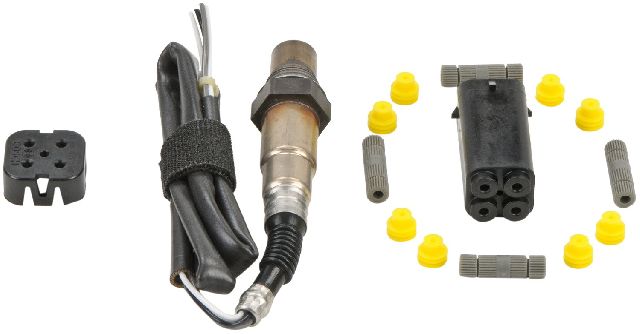
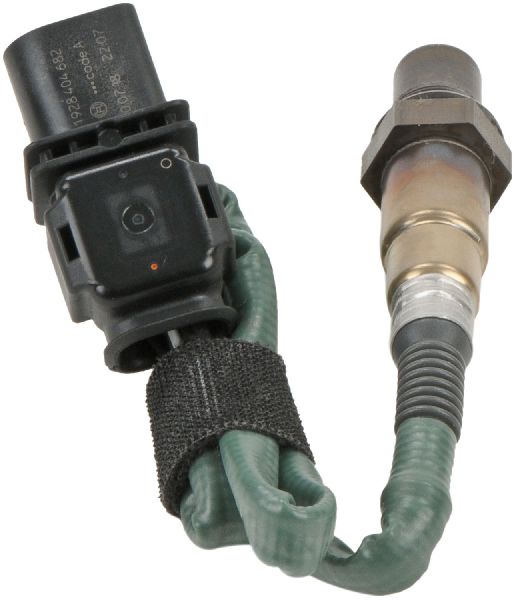
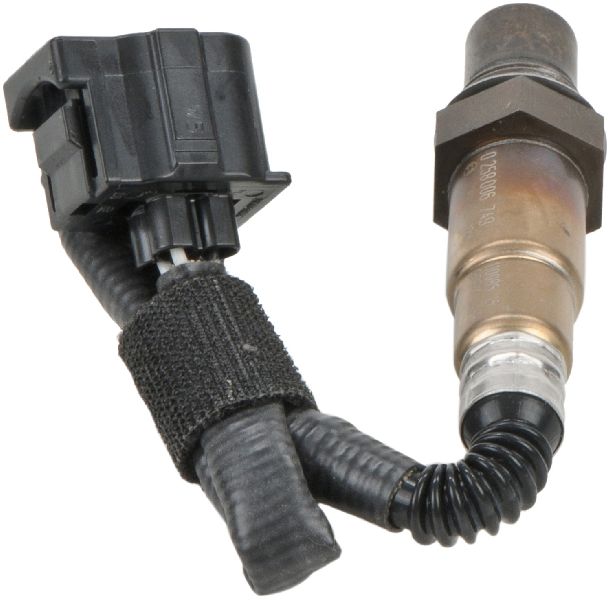
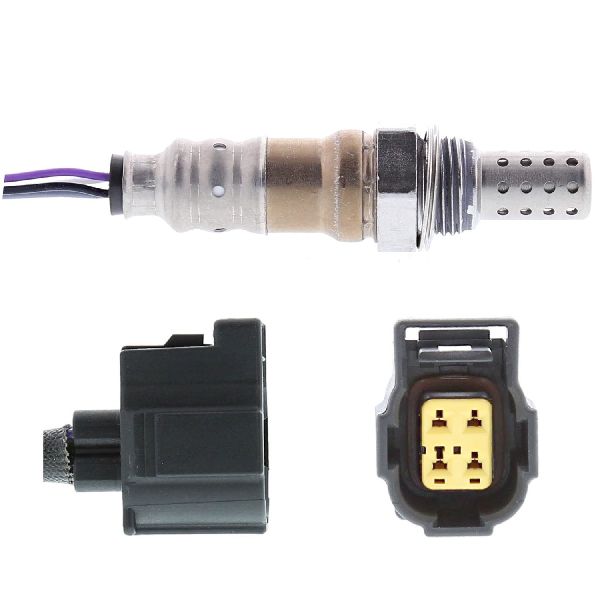
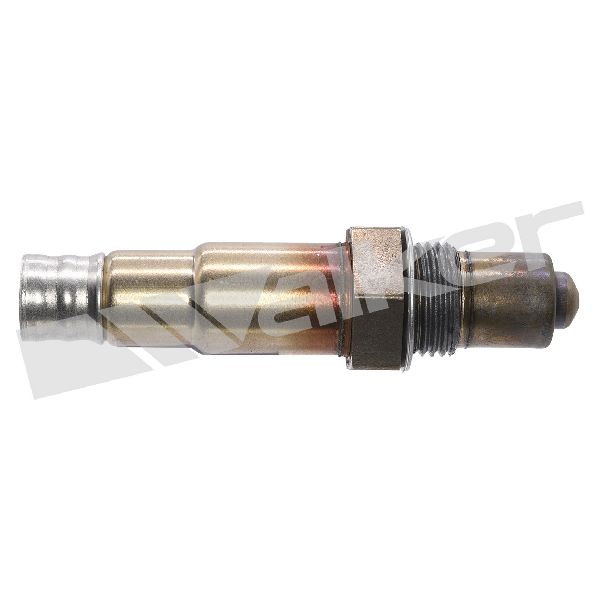
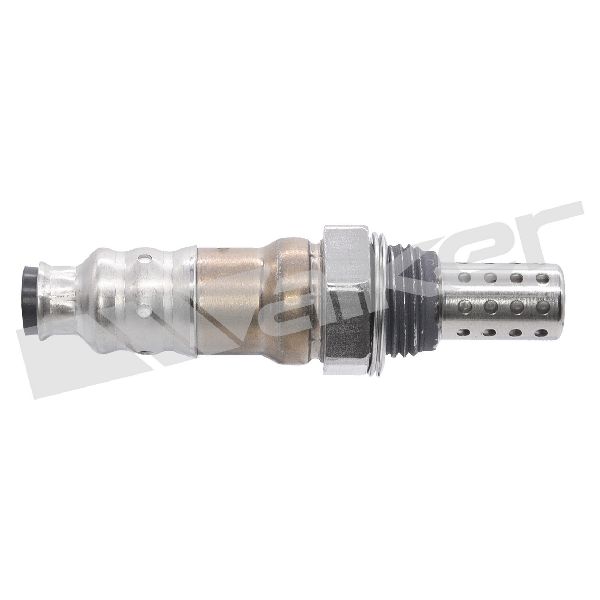
Typical fix: Replace the Bank 1 downstream (post-catalyst) oxygen sensor. Bosch is the OEM supplier. The genuine Mercedes part number is A0065422218.
Est. part cost: $80-$150 - Exhaust System Leak ⚪ Low Probability Leaks from cracked manifolds, failed gaskets, or rusted connections between the engine and the downstream O2 sensor can let outside air into the exhaust. This extra oxygen tricks the sensor into thinking the converter isn't working. While less common than a failed converter, it's a critical check before replacing expensive parts.
How to confirm: Visually inspect the exhaust manifold and all connections for black soot trails or cracks. Listen for a ticking or hissing noise, especially when the engine is cold. A smoke test is the most definitive way to find small leaks.
Typical fix: Repair the leak. This may involve replacing a gasket, tightening a flange, or welding a crack.
Est. part cost: $20-$300
Rare But Worth Checking
- Engine Misfires or Rich/Lean Running Condition: If you have other codes like P0300-P0304 (misfires) or fuel trim codes (P0171, P0172), you must fix those first. Unburned fuel from misfires will overheat and destroy a new catalytic converter very quickly. Common causes for these conditions on the M271 include faulty spark plugs, ignition coils, or leaking vacuum hoses.
- Oil Contamination from Leaking Camshaft Adjuster Magnets: A notorious issue on the M271 engine is oil leaking from the camshaft adjuster magnets. This oil can travel down the wiring harness and contaminate the oxygen sensor connectors, causing them to send faulty readings and trigger a P0420 code. Inspect the connectors for oil. If found, replace the magnets (Part No. A2710510177) 🎬 Watch: How to replace the cam magnets on your M271 engine. and consider installing 'oil-stop' pigtail harnesses (Part No. A2711502733) to prevent future contamination of the main harness and ECU.
Diagnosis Steps
- Scan for all diagnostic trouble codes. If any other codes are present (especially for misfires, fuel trim, or timing), diagnose and fix them first.
- Inspect the full exhaust system from the engine to the rear O2 sensor for any signs of leaks, such as black soot, cracks, or audible hissing. A smoke test is recommended for accuracy.
- Inspect the electrical connectors for the camshaft adjuster magnets and both oxygen sensors for any signs of oil contamination. If oil is present, address the source (likely the cam magnets).
- Use a scan tool with live data capability to graph the voltage of the upstream and downstream oxygen sensors with the engine fully warmed up and held at ~2000 RPM. The upstream sensor should fluctuate rapidly between ~0.1V and ~0.9V. The downstream sensor should be relatively steady above 0.5V.
- If the downstream O2 sensor is fluctuating just like the upstream sensor, the catalytic converter is bad.
- If the downstream O2 sensor reading is flat, stuck, or unresponsive, the sensor itself is likely the problem.
- If no definitive conclusion can be made from the sensor data, consider performing an exhaust backpressure test to check for a clogged converter.
Parts You'll Likely Need
- Catalytic Converter with Integrated Exhaust Manifold
(OEM #A2711401308)— This is the most common cause of a persistent P0420 code on the M271 engine, as the original unit degrades over time.
Trusted brands: Genuine Mercedes-Benz, BM Catalysts, Walker Exhaust, MagnaFlow
OEM price range: $900-$1400
Aftermarket price range: $500-$800 - Downstream Oxygen Sensor
(OEM #A0065422218)— A faulty downstream sensor can send incorrect data to the ECU, falsely triggering the P0420 code. It's often replaced as a primary diagnostic step or along with the catalytic converter.
Trusted brands: Bosch (OEM), Denso
OEM price range: $150-$220
Aftermarket price range: $80-$150 - Upstream Oxygen Sensor — While less likely to cause P0420 directly, it's good practice to replace both sensors when installing a new catalytic converter to ensure the system functions correctly. A failing upstream sensor can also create fuel mixture problems that damage the converter.
Trusted brands: Bosch (OEM), Denso
OEM price range: $150-$220
Aftermarket price range: $80-$150
Related Codes That Often Appear With This One
- P0300-P0304 — Misfire codes (P030x) indicate the engine is not burning fuel correctly. This raw fuel enters the exhaust and can overheat and damage the catalytic converter, leading to a P0420 code.
- P0171 or P0172 — Fuel trim codes for lean (P0171) or rich (P0172) conditions indicate an improper air/fuel mixture. These conditions can stress and eventually ruin the catalytic converter.
- P0016 / P0017 — Crankshaft/Camshaft position correlation codes. These often point to a stretched timing chain, a major issue on the M271 engine. Incorrect timing can affect combustion efficiency, potentially damaging the catalytic converter over time.
Platform-Specific Known Issues
- Oil Contamination of O2 Sensor Harness: → Shop Oxygen Sensor The M271 engine is known for leaking camshaft adjuster magnets. Oil seeps from the magnets into
Mechanic-Grade Diagnostic Values
- Downstream O2 Sensor Voltage (Post-Catalyst) — expected: Relatively steady reading between 0.6V and 0.8V when the catalyst is working efficiently.. Failure: Voltage fluctuates rapidly, mirroring the upstream sensor's pattern (approx. 0.1V to 0.9V), indicating the catalyst is not storing oxygen.
- Catalyst Inlet vs. Outlet Temperature — expected: The outlet pipe temperature should be at least 100°F (38°C) hotter than the inlet pipe temperature after the engine is fully warmed up and running at ~2000 RPM.. Failure: The outlet temperature is the same as or cooler than the inlet temperature, indicating the exothermic reaction is not occurring.
- Long-Term and Short-Term Fuel Trims — expected: Values should ideally be within -10% to +10%.. Failure: Consistently high positive values (e.g., > +10%) suggest a vacuum leak or weak fuel delivery, while high negative values suggest a rich condition (e.g., leaking injector). These must be corrected as they can damage the converter.
- Low-Pressure Fuel System (M271 CGI) — expected: Approximately 4.0 to 6.0 bar. Some sources note it can rise to 6-7 bar at idle and drop to 4-5 bar when revving.. Failure: Pressure significantly below this range could indicate a failing in-tank fuel pump, leading to a lean condition that can affect catalyst readings.
- High-Pressure Fuel System (M271 CGI) — expected: Varies with load, from ~50 bar at idle up to 140 bar under full load.. Failure: Inability to reach target pressure under load can cause lean conditions, while pressure dropping immediately after shutdown can indicate a leak in the high-pressure pump or injectors.
Scan Tool Commands That Help
- Mercedes STAR/XENTRY: Actual Values -> Lambda Control — Use this function to graph both upstream and downstream oxygen sensor voltages simultaneously. It provides the definitive visual confirmation of whether the downstream sensor is mimicking the upstream, which is the classic sign of a failed catalytic converter.
- Mercedes STAR/XENTRY: Control Unit Adaptations -> Reset Adaptations — This should be performed after replacing the catalytic converter or oxygen sensors. It clears the engine control unit's learned fuel trim and other values, forcing it to re-adapt to the new components for optimal performance and preventing old data from causing new issues.
Real Owner Repair Stories
- MBWorld.org Forums user (2010 Mercedes-Benz C300 4MATIC (W204)) — P0420 code, Check Engine Light.
❌ Tried (didn't work) Rislone Cat Cleaner, STP 1 Tank Tuneup, Lucas Fuel System Cleaner
✅ What actually fixed it The user was advised by other forum members that fuel additives are ineffective for a persistent P0420 and that the catalytic converter itself was the failure point 95% of the time on this platform, not the O2 sensor. The implied fix is the replacement of the catalytic converter.
Model Year Variations Within This Range
- 2008-2011 (Pre-facelift): These models primarily used the M271 'Kompressor' (supercharged) engine with sequential fuel injection.
- 2012-2014 (Post-facelift): Mercedes transitioned to the M271 'EVO' engine, which replaced the supercharger with a turbocharger and introduced CGI (Stratified Charged Gasoline Injection) direct injection. While the P0420 diagnosis is similar, the fuel system components (high-pressure pump, direct injectors) are different and more complex. Some sources indicate the timing chain design was updated in the EVO engine.
Diagnostic Flowchart
Other Known Issues on This Vehicle
Issues unrelated to this code that are worth knowing about as an owner of this generation:
- Timing Chain Stretch and Guide Failure 🔴 High — Very common, especially on pre-2010 models or those with extended oil change intervals. Can occur as early as 60,000 miles (100,000 km). Symptoms include a rattling noise on cold starts.
- Leaking Camshaft Adjuster Magnets 🟠 Medium — Extremely common across all years. Oil leaks from the magnet's seal, wicking down the wiring harness and potentially destroying the ECU and O2 sensors. A preventative fix is recommended.
- Brittle Vacuum Hoses 🟠 Medium — Common as the vehicle ages. Plastic and rubber hoses in the PCV system become brittle from heat cycles and crack, causing vacuum leaks, rough idle, and lean codes (P0171).
- Thermostat and Water Pump Failure 🟠 Medium — Common on higher-mileage engines, leading to overheating or the engine failing to reach operating temperature.
- Supercharger Clutch/Bearing Wear 🟡 Low — Less common than other issues, but the Eaton M65 supercharger can develop bearing noise (sounding like marbles) or clutch engagement problems at high mileage.
Used vs. New Parts: Buying Guide for This Vehicle
When a used part is the smart pick: For this specific repair, buying a used catalytic converter is almost never a smart choice. Federal regulations can make it illegal to sell or install a used converter unless it has been tested and certified, which is often more expensive than a new aftermarket part. Given their finite lifespan, a used converter from a donor vehicle has an unknown history and may fail shortly after installation.
Donor-vehicle mileage cap: roughly under 50000 miles for the part to have meaningful remaining life.
What to inspect on the donor part:
- Verify the part number matches your original exactly.
- Inspect the honeycomb structure from both ends; it must be intact, with no missing pieces, melting, or rattling.
- Check for excessive rust on the manifold and flanges, which could indicate imminent failure or create installation leaks.
- Ask for the donor vehicle's VIN to check its history for accidents or engine issues that could have damaged the converter.
OEM-only on this vehicle (don't cheap out):
- Catalytic Converter — Aftermarket converters, especially cheap ones, often lack the required amount of precious metals to satisfy the sensitive Mercedes ECU, leading to the P0420 code returning. For guaranteed compliance and longevity, OEM is the safest bet.
Aftermarket brands forum-validated for this vehicle:
- Walker Exhaust: Known for direct-fit, OEM-quality replacements that often include necessary hardware.
- MagnaFlow: Offers durable stainless steel converters, including performance-oriented high-flow options, many of which are CARB-compliant.
Brands owners have reported issues with on this vehicle:
- Unbranded or generic 'universal' converters from online marketplaces. These are frequently cited in forums as failing to resolve the P0420 code long-term due to insufficient catalyst loading.
Real Owner Stories
Aggregated from forums and TSBs cited above. Mileages and costs reflect what owners reported in those sources.
2008 Mercedes-Benz C200 Kompressor M271
Symptoms: Check engine light illuminated with code P0420.
What fixed it: Confirmed the issue was specific to the M271 powertrain catalytic efficiency.
Source hint: CarKiller.com - Provided an example of a 2008 C200 Kompressor with the M271 engine experiencing a P0420 code
2011 Mercedes-Benz W204 C-Class Kompressor
Symptoms: The vehicle had the timing chain and gears replaced, after which the P0420 fault code appeared.
What fixed it: Diagnosis related to the M271 engine's common failure points following major mechanical work.
Source hint: MBClub UK owner report regarding 2011 w204 kompresör
Mercedes-Benz C-Class (W204)
Symptoms: Persistent P0420 code that returned after being cleared.
What fixed it: The owner initially used an O2 sensor spacer as a temporary measure but eventually performed a permanent fix by replacing the downstream O2 sensor.
Source hint: MBWorld.org - A user documented successfully fixing their P0420 code by installing an O2 sensor spacer/adapter as a temporary measure, and later permanently by replacing the downstream O2 sensor.
Related OBD-II Codes
Frequently Asked Questions
Is there a specific brand of oxygen sensor I should use for my M271 engine to fix P0420?
Can leaking camshaft adjuster magnets on my C-Class cause a P0420 code?
At what mileage does the catalytic converter typically fail on the W204 C-Class?
Will a fuel additive fix the P0420 code on my Mercedes C200 or C250?
My C-Class has a rattling noise on cold starts along with the P0420; are they related?
Can a vacuum leak cause a P0420 on this 1.8L supercharged engine?
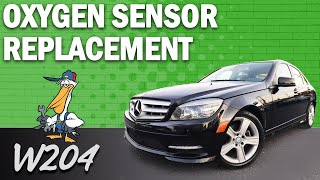
Helpful Videos

We Have This Part in Stock

The information in this article is provided for general reference and educational purposes only. Vehicle specifications, procedures, and part compatibility can vary by production date, trim level, and region. Always consult your vehicle's factory service manual and verify part numbers before purchasing or performing repairs. Safety-critical components such as airbags, seat belts, and braking systems should be installed by a qualified professional.
- Mercedes-Benz C-Class:
- 🧭 Diagnostic Flowchart
- 🎬 Helpful Videos
- 🛍️ Shop This Part
- What's Unique About the 2008-2014 Mercedes-Benz C-Class
- Symptoms You May Notice
- Most Likely Causes
- Rare But Worth Checking
- Diagnosis Steps
- Parts You'll Likely Need
- Related Codes That Often Appear With This One
- Platform-Specific Known Issues
- Mechanic-Grade Diagnostic Values
- Scan Tool Commands That Help
- Real Owner Repair Stories
- Model Year Variations Within This Range
- Other Known Issues on This Vehicle
- Used vs. New Parts: Buying Guide for This Vehicle
- Real Owner Stories
- 2008 Mercedes-Benz C200 Kompressor M271
- 2011 Mercedes-Benz W204 C-Class Kompressor
- Mercedes-Benz C-Class (W204)
- Related OBD-II Codes
- Frequently Asked Questions
- 🎟️ Get 5% Off