

P0420 on 2006-2012 Mitsubishi Eclipse: Catalyst Efficiency Causes and Fixes
On the 2006-2012 Mitsubishi Eclipse, code P0420 most often points to a failing catalytic converter. Before replacing this expensive part, it's crucial to first rule out cheaper causes like exhaust leaks or faulty oxygen sensors. A new converter can cost over $1000, while sensors are typically $50-$150 each. Ignoring the code can lead to failed emissions tests and potentially mask underlying engine problems.
- P0420 means the Bank 1 catalytic converter is not cleaning the exhaust effectively.
- Do not replace the catalytic converter without first diagnosing other potential causes.
- Always check for exhaust leaks between the two oxygen sensors.
- Inspect and test the downstream oxygen sensor for proper operation.
- Address any engine misfires or fuel system problems immediately to prevent damage to a new converter.
What's Unique About the 2006-2012 Mitsubishi Eclipse
The 2006-2012 fourth-generation Eclipse (4G) does not have widespread, unique design flaws that make it exceptionally prone to P0420 compared to other vehicles of its era. However, like many cars, the catalytic converter can fail due to age or other underlying engine issues. For the V6 (6G75) engine, it's important to note that P0420 refers to Bank 1, which is the cylinder bank closer to the firewall, making access to the converter and sensors more difficult than Bank 2. There was a Technical Service Bulletin for other Mitsubishi models (like EMR-06-002 for the 2004 Galant) that addressed similar catalyst efficiency codes with a PCM reprogram, so it's worth checking if all software updates have been performed as the logic can be overly sensitive. Manufacturer Bulletin #TSB-12-13-005 for related Mitsubishi models notes that an incorrect parameter in the judgment criteria may cause a false MIL (mis-detection) for DTC P0420. Some owners have noted that early tunes on these cars could run rich, contributing to premature catalytic converter failure.
Symptoms You May Notice
- Check Engine Light is on.
- Reduced engine performance or acceleration.
- A decrease in fuel economy.
- A sulfur or "rotten egg" smell from the exhaust, indicating the converter is overheating or failing.
- Vehicle may fail an emissions test.
- In many cases, no noticeable symptoms other than the Check Engine Light, which may lead owners to ignore the code.
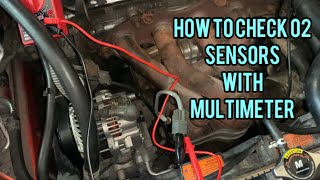
- Immediately replacing the catalytic converter without checking for exhaust leaks, faulty oxygen sensors, or engine 🎬 See how to check O2 sensors with a multimeter performance issues first. The converter is often the victim of another problem, not the root cause. A proper diagnosis should always be performed in a specific order: check for other codes, fix exhaust leaks, test O2 sensors, and then condemn the converter.
Most Likely Causes
- Failing Catalytic Converter 🔴 High Probability → Shop Catalytic Converter Catalytic converters have a finite lifespan and can become clogged or chemically fouled over time, especially on vehicles over 10 years old. Engine issues like misfires or burning oil can accelerate this failure by overheating the converter or contaminating its catalyst materials.
How to confirm: A mechanic can use a scan tool to view live O2 sensor data. A properly functioning converter will show a steady downstream O2 sensor reading. Another test is to use an infrared thermometer to check the inlet and outlet temperatures of the converter; the outlet should be at least 100°F hotter than the inlet. If the outlet is cooler or the same temperature, the converter is not working.
Typical fix: Replacement of the catalytic converter assembly. Ensure any underlying cause (misfires, oil burning) is fixed first.
Est. part cost: $500-$1500+ - Faulty Rear (Downstream) Oxygen Sensor 🟡 Medium Probability → Shop Oxygen Sensor Oxygen sensors wear out and can provide slow or inaccurate readings to the ECM, falsely triggering a P0420 code. It's a common misdiagnosis to replace the converter when only the sensor is bad. Owners have reported replacing the rear O2 sensor only to have the P0420 code return, indicating a deeper issue.
How to confirm: Use a scan tool with graphing capabilities to monitor the voltage of the downstream O2 sensor. If the sensor is lazy, stuck, or fluctuating wildly like the upstream sensor, it may be faulty. Swapping the downstream sensors between Bank 1 and Bank 2 (on V6 models) and seeing if the code changes to P0430 is another diagnostic trick.
Typical fix: Replace the Bank 1 downstream oxygen sensor.
Est. part cost: $50-$150 - Exhaust System Leak 🟡 Medium Probability Leaks in the exhaust manifold, flex pipe, or gaskets between the upstream and downstream O2 sensors can allow extra oxygen into the system. This can fool the sensors and trigger a P0420 code. In one documented case, a leak *after* the downstream sensor was found to be the cause.
How to confirm: Perform a visual inspection of the exhaust system for black soot marks, cracks, rust, or broken gaskets, especially around the manifold and flex pipe. A mechanic may use a smoke machine to pressurize the exhaust and easily spot leaks.
Typical fix: Repair the leak by replacing the damaged gasket, welding the cracked component, or applying exhaust putty for minor leaks. 🎬 Watch: How to fix P0420 by repairing exhaust leaks
Est. part cost: $10-$200 - Engine Misfires or Rich/Lean Running Condition ⚪ Low Probability Unburned fuel from misfires (due to bad spark plugs or ignition coils) can enter the exhaust and overheat the catalytic converter, melting its internal structure and rendering it useless. Similarly, leaking fuel injectors can cause a rich condition that has the same effect.
How to confirm: Check for other stored trouble codes, especially in the P0300-P0308 range for misfires. Analyze fuel trim data with a scan tool to see if the engine is running excessively rich or lean. Negative long-term fuel trims indicate a rich condition.
Typical fix: Address the root cause of the engine issue, such as replacing spark plugs, ignition coils, or faulty fuel injectors.
Est. part cost: $50-$500
Rare But Worth Checking
- Outdated ECM Software: For some Mitsubishi vehicles, an emissions recall or TSB was issued to reprogram the PCM to prevent overly sensitive catalyst monitoring. While EMR-06-002 specifically mentioned the 2004 Galant, it highlights a pattern. It's worth checking with a dealer if any software updates are available for your Eclipse's ECM.
- Engine Oil Contamination: If the engine is burning oil due to worn piston rings or valve seals, the oil can contaminate and clog the catalytic converter over time. A Reddit user rebuilding a 6G75 engine due to high oil consumption noted significant cylinder wall damage, which would lead to the oil contamination that kills converters.
Diagnosis Steps
- Scan for any other trouble codes. If misfire (P030x) or fuel system codes are present, diagnose and fix those first.
- Inspect the exhaust system thoroughly from the engine to the tailpipe for any signs of leaks, cracks, or damage. Use a smoke machine for best results. Pay close attention to gaskets and the flexible pipe section.
- Use a scan tool to observe the live data stream for the upstream (Bank 1 Sensor 1) and downstream (Bank 1 Sensor 2) oxygen sensors. The upstream sensor should fluctuate rapidly between ~0.1V and ~0.9V. The downstream sensor should hold a steady voltage, typically above 0.5V.
- If the downstream sensor is fluctuating similarly to the upstream sensor, the converter is likely inefficient.
- If the downstream sensor signal is flat, lazy, or stuck, the sensor itself may be faulty.
- If O2 sensors and exhaust integrity seem good, perform a temperature test on the catalytic converter using an infrared thermometer. After warming the engine for 15-20 minutes, the outlet pipe of the converter should be at least 100°F (38°C) hotter than the inlet pipe. If it's not, the converter is likely clogged or not working.
- If all other causes are ruled out, the catalytic converter is the most likely culprit.
Parts You'll Likely Need
- Catalytic Converter (Bank 1) — This is the most common, albeit most expensive, fix for a persistent P0420 code after other causes have been eliminated.
Trusted brands: Walker Exhaust, MagnaFlow, Bosal, Eastern Catalytic
OEM price range: $1000+
Aftermarket price range: $400-$900 - Downstream Oxygen Sensor (Bank 1, Sensor 2)
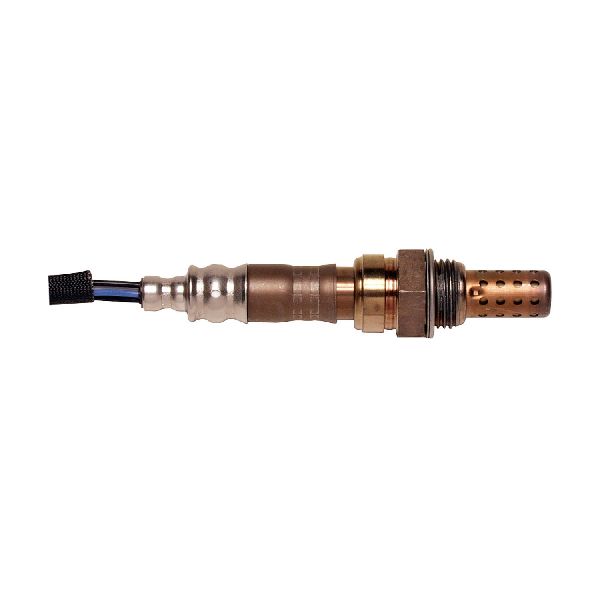
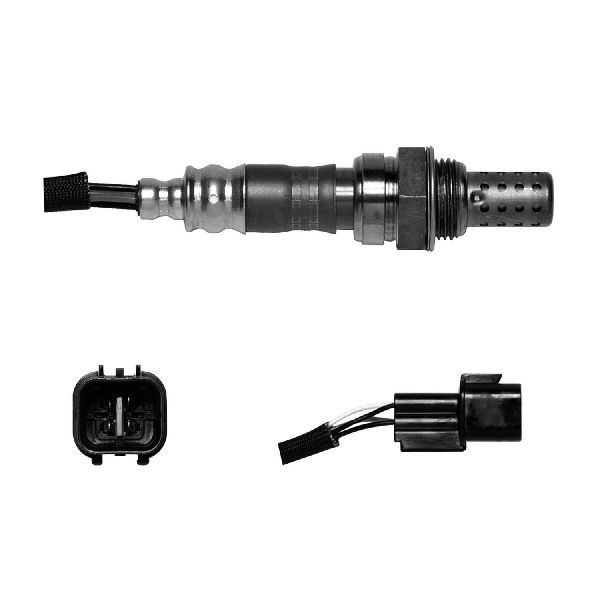
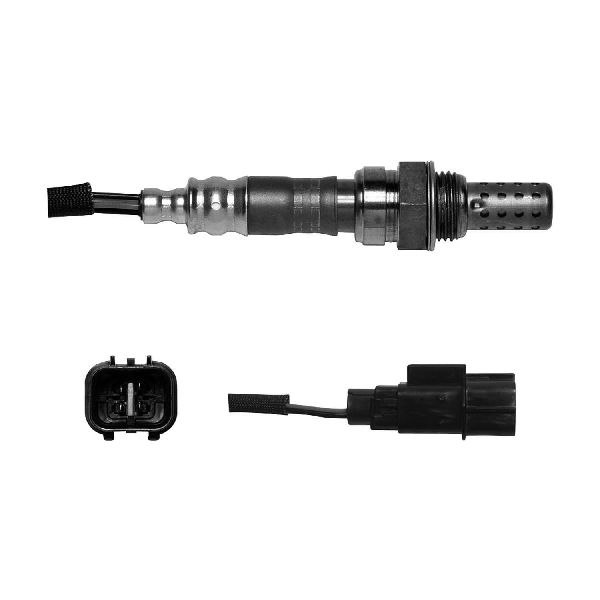
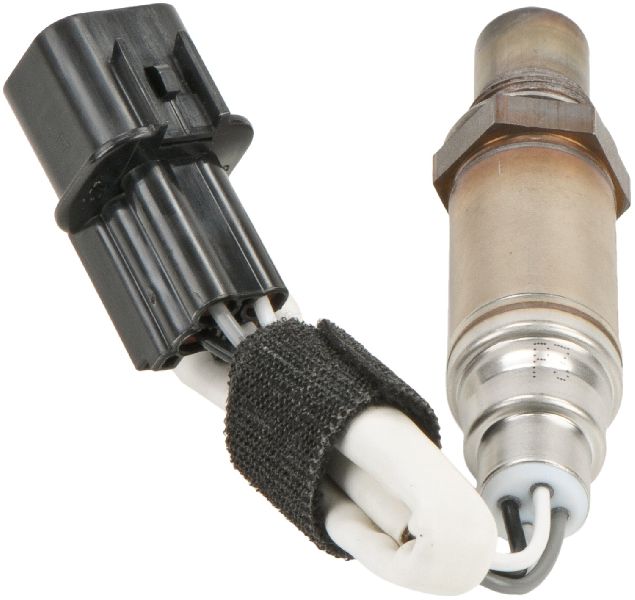
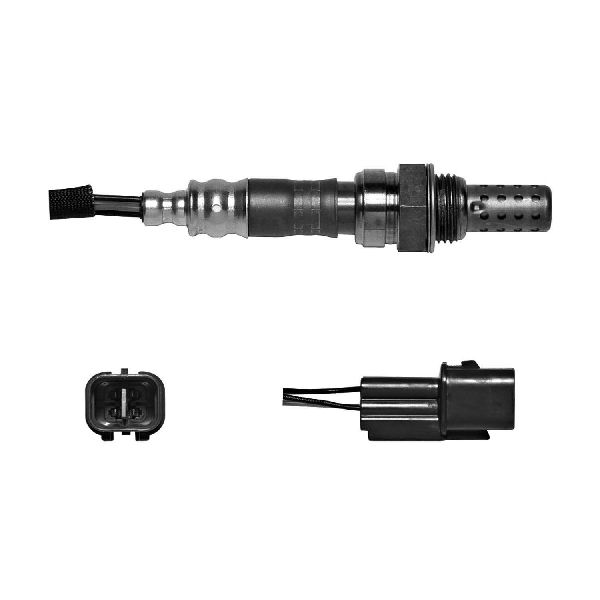
(OEM #1588A141)— A faulty sensor can send incorrect data, triggering the P0420 code. It's a common point of failure and a frequent misdiagnosis for a bad converter. This part number is listed for many Mitsubishi applications of this era.
Trusted brands: Denso, Bosch, NGK/NTK
OEM price range: $120-$200
Aftermarket price range: $50-$150 - Exhaust Manifold Gasket / Donut Gasket — Exhaust leaks before or near the downstream O2 sensor are a common cause of P0420. Gaskets are a frequent failure point.
Related Codes That Often Appear With This One
- P0300-P0306 — Misfire codes (P030x) indicate unburned fuel is entering the exhaust, which can quickly damage the catalytic converter and lead to a P0420 code.
- P0136-P0141 — These codes relate to the downstream oxygen sensor (Bank 1 Sensor 2). A fault in the sensor's circuit or heater can directly cause incorrect readings, leading to a P0420. An owner on a forum reported having a P0140 code, replacing the sensor, and then having the P0420 code appear.
- P0430 — On the 3.8L V6 engine, P0430 is the equivalent code for Bank 2 (the front bank). If both converters are failing due to age or a systemic engine issue (like oil consumption), it's possible to see both codes together.
Technical Service Bulletins (TSBs) & Recalls
- TSB-13-15-001: Addresses a warranty extension for catalytic converters on certain models due to catalyst layer separation, causing P0421/P0431. It also references recall EMR-06-002 for the 2006 Eclipse V6.
- Bulletin #TSB-12-13-005: Notes that some affected Mitsubishi vehicles may display an illuminated MIL with DTC P0420 due to an incorrect parameter in the judgment criteria, which may cause a false mis-detection.
Platform-Specific Known Issues
- Use of O2 Sensor Spacers (Non-Foulers): → Shop Oxygen Sensor A common but legally questionable 'fix' discussed frequently in owner forums involves installing a spark plug non-fouler or a purpose-built spacer on the downstream O2 sensor. This pulls the sensor partially out of the direct exhaust stream, tricking it into seeing a cleaner reading and preventing the P0420 code. This does not fix the underlying problem and will cause the vehicle to fail a visual emissions inspection in states that perform them.
Mechanic-Grade Diagnostic Values
- P0420 Monitor - Mass Airflow Rate — expected: 13 to 45 g/sec. Failure: The catalyst efficiency test will not run if airflow is outside this range.
- P0420 Monitor - Short-Term Fuel Trim — expected: -20% to +17%. Failure: The catalyst efficiency test will not run if STFT is outside this range, indicating a potential underlying fuel mixture problem.
- P0420 Monitor - Barometric Pressure — expected: More than 76 kPa (22.4 in. Hg). Failure: The test may not run at high altitudes.
- P0420 Monitor - Volumetric Efficiency — expected: 25% to 60%. Failure: The test will not run if the engine load is outside this range.
- Catalytic Converter Temperature Differential — expected: Outlet temperature should be at least 100°F (38°C) hotter than the inlet temperature.. Failure: If the outlet is cooler or the same temperature as the inlet, the converter is not functioning.
Scan Tool Commands That Help
- Mitsubishi M.U.T.-III: OBD-II Drive Cycle - Pattern 3 — This specific drive cycle pattern must be performed after replacing a component like the catalytic converter or O2 sensor to force the ECU to re-run the catalyst monitor and confirm the fix.
- Advanced Scan Tool (e.g., M.U.T.-III): Forced Air-Fuel Ratio Variation Test — The ECM can be commanded to forcibly change the air-fuel mixture from lean to rich to check the response speed of the oxygen sensors. This helps diagnose a lazy or failing O2 sensor that might be triggering a false P0420 code.
Wiring & Ground Locations
- Engine to Chassis Ground Strap — On the 3.8L V6, a strap connects the engine motor mount area to the chassis frame.. A poor engine ground can cause unstable voltage for all engine sensors, including the O2 sensors, leading to erratic readings and false codes.
- Firewall Grounds — On the 3.8L V6, ground points are located on the firewall, including one in the back-right corner above the strut tower and another near the passenger side strut tower.. These are primary chassis grounds. Corrosion or looseness here can affect the entire electrical system, including the ECU's reference ground.
- ECU Area Grounds — On the 3.8L V6, at least two ground points are located down behind the ECU assembly in the engine bay.. Clean grounds near the ECU are critical for accurate sensor data processing. A faulty ground here can directly impact how the ECU interprets O2 sensor signals.
- G10 — Located at the rear of the engine.. Provides a ground path for engine-mounted components.
- G12 / G13 / G14 — Located at the left rear of the engine compartment, near or under the relay box.. These grounds serve the engine compartment harness, which includes wiring for the O2 sensors and other emission components.
Real Owner Repair Stories
- DSMtuners.com forum user 'TheRock0720' (4th Gen Mitsubishi Eclipse (2006-2012), 84,000 miles) — Persistent P0420 code returning immediately after clearing, needed to pass inspection.
❌ Tried (didn't work) Replaced catalytic converter with a Walker OEM-equivalent part, Replaced rear O2 sensor, Replaced spark plugs, wires, and coil pack
✅ What actually fixed it The owner installed an O2 sensor spacer (defouler) on the downstream sensor to pull it out of the direct exhaust stream. This tricked the ECU and kept the Check Engine Light off, allowing the car to pass inspection. This indicates the ECU was likely too sensitive for the aftermarket converter's efficiency. - Reddit user 'WheyTooMuchWeight' (2007 Mitsubishi Eclipse GS (2.4L)) — P0421 (Warm-up Catalyst Efficiency code), needed to pass visual and emissions inspection.
❌ Tried (didn't work) Currently using O2 sensor spacers to keep the light off, but wants a permanent fix.
✅ What actually fixed it The thread did not have a final confirmed fix, but another user pointed out a critical, often-missed issue: a factory ECU tune that runs rich and destroys catalytic converters. They recommended checking if the vehicle had received a revised, leaner tune from a Mitsubishi dealer, which is a known issue for the platform.
"I Checked Everything" — The Actual Cause
- In a documented case on a DSMTuners forum, an owner replaced the catalytic converter (with a Walker part), the rear O2 sensor, and all ignition components, and confirmed no exhaust leaks, yet the P0420 code persisted. This is a classic scenario where standard diagnostics fail. The root cause was not a leak or a simple bad part, but likely the ECU's strict efficiency monitoring being incompatible with the aftermarket converter's performance, a problem ultimately bypassed with an O2 sensor spacer.
When the Usual Fixes Don't Work
- While replacing the catalytic converter is the most cited fix for P0420, there are multiple owner accounts where this did not solve the problem. One owner replaced the converter with a new Walker unit, the rear O2 sensor, and performed a full ignition system tune-up, only for the P0420 code to return immediately. The final workaround was an O2 sensor spacer, suggesting the aftermarket converter, while new, was not efficient enough to satisfy the stock ECU's parameters. This highlights that on the 4G Eclipse, simply replacing the converter is not a guaranteed fix, and issues with ECU sensitivity or tune may be the true underlying problem.
Documented NHTSA Reports
- An owner reported in NHTSA ODI #11257261 that they encountered diagnostic code P0420, which appeared to involve the catalytic converter and O2 sensors (intake and outtake), particularly when the air conditioner was on.
- NHTSA ODI #11422587 describes a case where code P0420 indicated faulty catalytic converters prior to a vehicle inspection at approximately 170,000 miles.
OEM Part Supersession History
Unknown, varies by year→1588A141— Part consolidation and updates.
Heads up: The oxygen sensor part number 1588A141 is listed for 2008-2023 Mitsubishi models, including the Eclipse. Pre-2008 models may use a different part number. Always verify the part number with the vehicle's VIN before ordering.
Model Year Variations Within This Range
- 2009-2012 (V6 Only): For the 2009 model year facelift, the 3.8L V6 (6G75) engine received a new dual exhaust system. This resulted in a minor horsepower increase from 263 to 265 hp. While this change doesn't directly cause P0420, the physical components of the exhaust system, including the catalytic converter and piping, may differ from the 2006-2008 models, affecting part selection and fitment.
Diagnostic Flowchart
Other Known Issues on This Vehicle
Issues unrelated to this code that are worth knowing about as an owner of this generation:
- Clear Coat / Paint Peeling 🟡 Low — Very common, especially on darker colored vehicles. Peeling often starts on the roof, hood, and rear bumper after several years of sun exposure.
- Automatic Transmission Hard Shifting/Slipping 🟠 Medium — Reported by some owners, particularly in earlier model years of the generation. Can manifest as harsh shifts or hesitation. Maintenance history appears to be a significant factor in reliability.
- Timing Belt Replacement (4G69 2.4L) 🔴 High — This is a critical maintenance item, not a defect. The 4G69 is an interference engine with a timing belt that requires replacement every 60,000-100,000 miles. Failure to replace the belt will result in catastrophic engine damage.
- Valve Cover Gasket Oil Leaks (6G75 3.8L V6) 🟠 Medium → Shop Engine Valve Cover — A fairly common issue as the vehicle ages. The valve cover gaskets degrade and allow oil to leak, which can drip onto hot exhaust components.
- ABS Hydraulic Unit Failure 🔴 High — Affects 2006-2009 models. Corrosion inside the ABS unit can cause valves to seize, leading to increased brake pedal travel and reduced braking performance. (Ref: NHTSA Recall 15V762000)
Used vs. New Parts: Buying Guide for This Vehicle
When a used part is the smart pick: A used OEM catalytic converter from a low-mileage donor vehicle can be a smarter and more reliable choice than a cheap, new aftermarket converter. Aftermarket units often have less precious metal loading and may fail to meet the ECU's efficiency threshold, causing the P0420 code to return.
Donor-vehicle mileage cap: roughly under 80000 miles for the part to have meaningful remaining life.
What to inspect on the donor part:
- Verify the OEM part number matches your specific year and engine.
- Inspect for heavy corrosion, dents, or cut pipes.
- Shake the converter vigorously; any rattling sound indicates the internal ceramic honeycomb is broken and the part is useless.
OEM-only on this vehicle (don't cheap out):
- Catalytic Converter
Aftermarket brands forum-validated for this vehicle:
- O2 Sensors: Denso and NGK/NTK are OEM suppliers for many Japanese vehicles and are highly recommended.
- Catalytic Converters: If OEM is not an option, MagnaFlow and Walker are reputable aftermarket brands, though fit and finish can vary. MagnaFlow is often praised for quality construction, while Walker is known for broad application coverage and good fitment.
Brands owners have reported issues with on this vehicle:
- Unbranded, generic 'Federal/EPA-only' catalytic converters sold on marketplaces like eBay or Amazon. These are notorious for having insufficient catalyst material and failing within a few months, triggering the P0420 code again.
Real Owner Stories
Aggregated from forums and TSBs cited above. Mileages and costs reflect what owners reported in those sources.
2006 Mitsubishi Eclipse V6
Symptoms: The owner experienced a persistent P0420 code and attempted to clear it by replacing the rear O2 sensor, but the code returned. They suspected an underlying oil leak was the actual cause.
What fixed it: The owner installed an O2 sensor spacer (non-fouler) to successfully clear the code after mechanical repairs failed.
Source hint: Mitsubishi-Forum.com - 'P0420 - Seems to like me'
2006-2012 Mitsubishi Eclipse
Symptoms: The owner dealt with a recurring P0420 code and replaced both the catalytic converter and the O2 sensor, yet the issue persisted.
What fixed it: The community discussed the use of O2 simulators or spacers as a workaround for the persistent code.
Source hint: DSMTuners.com - 'P0420 - The issue is back and seems to be here to stay?'
2006-2012 Mitsubishi Eclipse
Symptoms: The vehicle triggered a P0420 code linked to an exhaust leak.
What fixed it: Repairing the exhaust leak, despite it being located after the downstream O2 sensor, resolved the code.
Source hint: BobIsTheOilGuy.com - 'Exhaust leak and P0420 code'
Related OBD-II Codes
Frequently Asked Questions
Is there a recall or warranty extension for the catalytic converter on my 2006 Eclipse V6?
Can an exhaust leak cause a P0420 on my Eclipse even if it's located after the downstream sensor?
I replaced my rear O2 sensor but the P0420 code came back. Is my new sensor bad?
How can I tell if the P0420 is caused by the converter or just a 'lazy' sensor on my V6 Eclipse?
Are there specific engine issues on the 4G69 or 6G75 that lead to P0420?
Will using a 'non-fouler' or O2 sensor spacer fix my Eclipse's emissions problem?
Helpful Videos

We Have This Part in Stock


The information in this article is provided for general reference and educational purposes only. Vehicle specifications, procedures, and part compatibility can vary by production date, trim level, and region. Always consult your vehicle's factory service manual and verify part numbers before purchasing or performing repairs. Safety-critical components such as airbags, seat belts, and braking systems should be installed by a qualified professional.
- Mitsubishi Eclipse:
- 🧭 Diagnostic Flowchart
- 🎬 Helpful Videos
- 🛍️ Shop This Part
- What's Unique About the 2006-2012 Mitsubishi Eclipse
- Symptoms You May Notice
- Most Likely Causes
- Rare But Worth Checking
- Diagnosis Steps
- Parts You'll Likely Need
- Related Codes That Often Appear With This One
- Technical Service Bulletins (TSBs) & Recalls
- Platform-Specific Known Issues
- Mechanic-Grade Diagnostic Values
- Scan Tool Commands That Help
- Wiring & Ground Locations
- Real Owner Repair Stories
- "I Checked Everything" — The Actual Cause
- When the Usual Fixes Don't Work
- Documented NHTSA Reports
- OEM Part Supersession History
- Model Year Variations Within This Range
- Other Known Issues on This Vehicle
- Used vs. New Parts: Buying Guide for This Vehicle
- Real Owner Stories
- 2006 Mitsubishi Eclipse V6
- 2006-2012 Mitsubishi Eclipse
- 2006-2012 Mitsubishi Eclipse
- Related OBD-II Codes
- Frequently Asked Questions
- 🎟️ Get 5% Off