

P0420 on 2007-2019 Nissan Sentra: Catalyst Efficiency Causes and Fixes
On a 2007-2019 Nissan Sentra, code P0420 almost always points to a failed catalytic converter, often due to age or contamination from engine oil consumption. Before replacing this expensive part, first rule out exhaust leaks and a faulty rear oxygen sensor. For 2013-2016 models, an ECM software update (TSB NTB22-006) must be checked first. An OEM converter can cost over $2,000, while aftermarket direct-fit options range from $400-$800.
- For 2013-2016 Sentras, first check if your vehicle is eligible for the ECM reprogram TSB (NTB22-006) before buying parts.
- Always diagnose properly. Use a scan tool to watch O2 sensor graphs. Replacing a good converter is an expensive mistake.
- Rule out cheaper fixes first: inspect for exhaust leaks and test the rear O2 sensor.
- If you have other engine codes (especially for misfires), fix those immediately. They are likely the root cause that damaged the catalytic converter.
- If your vehicle has under 80,000 miles, check if the repair is covered under the federal emissions warranty.
What's Unique About the 2007-2019 Nissan Sentra
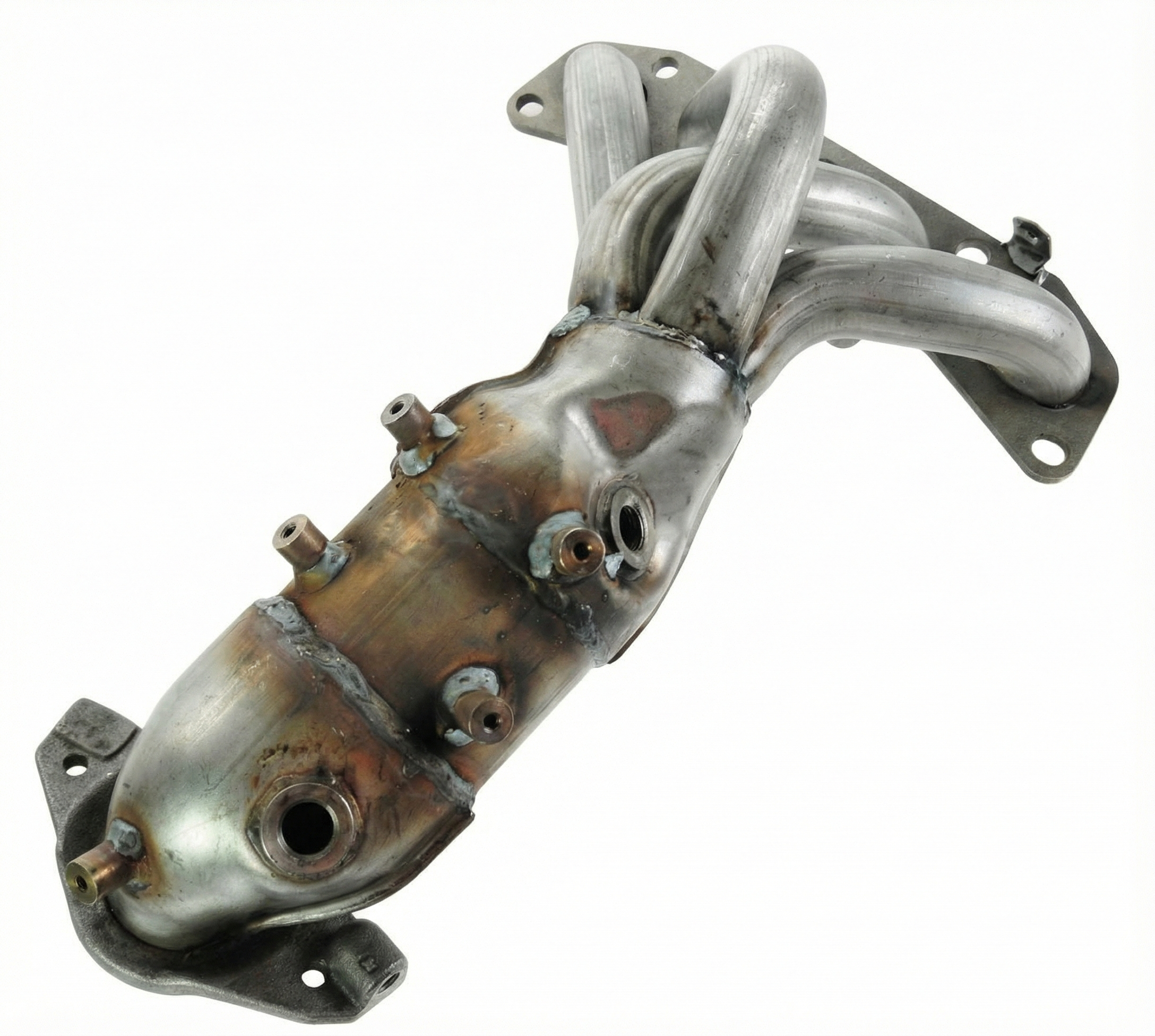
For the B17 generation (2013-2016 Sentra with California emissions), Nissan issued a voluntary service campaign (NTB22-006) for an ECM software update. This campaign addresses potential false P0420 codes by reprogramming the ECM and inspecting the rear oxygen sensor's voltage for a short-to-ground condition. This makes checking for applicable TSBs a critical first step. Furthermore, Nissan extended the warranty on the rear O2 sensor for this issue to 20 years/200,000 miles under TSB NTB22-007. For both B16 and B17 generations, the catalytic converter is integrated with the exhaust manifold, making it a single, more expensive assembly to replace compared to vehicles with separate, bolt-in converters.
Generation note: This range covers two Sentra generations: the B16 (2007-2012, primarily with the 2.0L MR20DE engine) and the B17 (2013-2019, with the 1.8L MRA8DE engine). While the causes are similar, part numbers for converters and sensors are different. A key distinction is TSB NTB22-006, an ECM reprogram for false P0420s, which applies specifically to 2013-2016 B17 models with California emissions. The B16 models are more noted in forums for oil consumption leading to eventual converter failure.
Symptoms You May Notice
- Check Engine Light is on
- Inability to pass state emissions inspection
- Reduced engine power or acceleration (if the converter is clogged)
- Rotten egg smell from the exhaust (less common)
- Slightly reduced fuel economy
- Replacing oxygen sensors repeatedly when the actual problem is a failed catalytic converter. This is a very common story in owner forums.
- Replacing the catalytic converter without first fixing an underlying engine misfire or oil consumption problem, which will quickly destroy the new converter.
- Using a cheap, universal catalytic converter that does not have enough precious metal loading to satisfy the Nissan ECM, causing the P0420 code to return quickly.
Most Likely Causes
- Failed Catalytic Converter 🔴 High Probability → Shop Catalytic Converter Catalytic converters have a finite lifespan. On high-mileage Sentras, they simply wear out. Failure is often accelerated by underlying issues like excessive oil consumption, a known problem with the MR20DE engine, which contaminates the catalyst substrate. This is the most frequent resolution for a persistent P0420 code after other causes are ruled out.
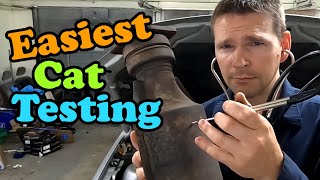
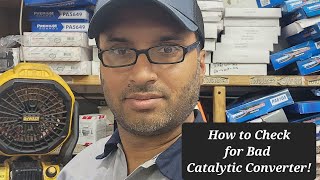
How to confirm: Use a scan tool to graph O2 sensor data. 🎬 Watch: How to check for a bad converter using a scanner. If the downstream sensor (Sensor 2) voltage switches rapidly, mirroring the upstream sensor (Sensor 1), the converter is not storing oxygen and has failed. Alternatively, use an infrared thermometer to measure the temperature of the pipe before and after the converter; the outlet should be at least 50-100°F hotter than the inlet 🎬 Watch: Professional tips for testing your catalytic converter. on a working converter. A mechanic in a Reddit thread confirms that in his experience, P0420 almost always ends up being the converter itself.
Typical fix: Replace the catalytic converter assembly (which includes the exhaust manifold). It is critical to fix any other engine codes or oil consumption issues before replacing the converter to prevent damaging the new part. As noted in NHTSA ODI #10427172, a dealer diagnosis for this code often requires replacing the catalytic converter along with both O2 sensors to ensure a complete repair.
Est. part cost: $2000-$3400 (OEM), $400-$1300 (Aftermarket Direct-Fit) - Failed Rear (Downstream) Oxygen Sensor 🟡 Medium Probability → Shop Oxygen Sensor The rear O2 sensor is what the ECM uses to judge the converter's health. A lazy, biased, or shorted sensor can send incorrect data, leading to a false P0420 code. They are exposed to extreme heat and can fail over time. Nissan's TSB NTB22-007 specifically addresses a short-to-ground condition on these sensors for 2013-2016 models.
How to confirm: After confirming the upstream sensor is working correctly, observe the downstream sensor's voltage on a scan tool. It should be relatively steady. If it's stuck low (below 0.13V on 2013-16 models per TSB NTB22-006), stuck high, or not responding, it may be faulty. Many owners replace this sensor first due to its lower cost, but it's often not the root cause.
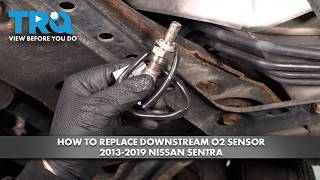
Typical fix: Replace the rear (downstream, Sensor 2) oxygen sensor. 🎬 See this walkthrough for replacing the downstream O2 sensor.
Est. part cost: $80-$150 - Exhaust Leak 🟡 Medium Probability Exhaust gaskets, particularly at the manifold-to-head flange or the flange after the converter, can degrade and leak. Flex pipes can also crack. An exhaust leak before the rear O2 sensor can introduce oxygen into the exhaust stream, fooling the sensor and triggering a P0420 code.
How to confirm: Perform a visual inspection of the exhaust system from the engine to the rear O2 sensor. Look for black soot trails, listen for ticking or hissing noises that are louder when the engine is cold. A smoke test is the most definitive way to find small leaks.
Typical fix: Replace the leaking gasket or repair the cracked pipe/manifold.
Est. part cost: $10-$50 (gaskets) - Engine Oil Consumption Low_as_direct_cause Probability The MR20DE engine in the B16 Sentra (2007-2012) is known for oil consumption issues, sometimes related to piston rings. Burning oil sends contaminants (phosphorus, zinc) into the exhaust, which coat the catalyst substrate and permanently reduce its efficiency, eventually leading to a P0420 code. NHTSA ODI #10379351 describes a similar Nissan engine issue where routine oil consumption was linked to a disintegrating catalytic converter.
How to confirm: Monitor engine oil levels closely. If you are adding more than a quart of oil between changes, you likely have an oil consumption problem. This isn't a direct cause of the code but is a very common reason for the catalytic converter to fail prematurely.
Typical fix: Addressing oil consumption can be a major repair (e.g., piston rings). Often, owners live with it and accept that the catalytic converter may need more frequent replacement. Using a thicker grade of oil is a common, though not always effective, user suggestion.
Est. part cost: $0 (monitoring) to $2000+ (engine repair) - Engine Misfires or Fuel Mixture Issues ⚪ Low Probability Worn spark plugs, failing ignition coils, or leaky fuel injectors can send unburned fuel into the exhaust, which superheats and melts the internal structure of the catalytic converter, leading to failure. NHTSA ODI #10326699 illustrates this relationship, where a P0420 code appeared alongside an engine over-temperature code (P0217) and a cylinder 1 misfire (P0301).
How to confirm: Check for other stored trouble codes, such as P030x (misfire) or P0171/P0172 (fuel trim). Address these codes FIRST before suspecting the converter. A user on Reddit described this exact scenario: a persistent misfire was present before the P0420 code appeared.
Typical fix: Replace spark plugs, ignition coils, or fuel injectors as indicated by other diagnostic codes.
Est. part cost: $50-$300
Rare But Worth Checking
- ECM Software Issue: For 2013-2016 Sentra models (California emissions), a known issue can cause a false P0420. A dealer must perform an ECM reprogram as per TSB NTB22-006. This mirrors reports like NHTSA ODI #10182144, where a service engine light for code P0420 was initially addressed by the dealer "reprogramming the ECM." Always check for TSBs on your specific vehicle.
- Intake or Air Flow Sensor Issues: While less common, related intake issues can sometimes coincide with catalyst codes. NHTSA ODI #11633951 notes a case where P0420 was retrieved alongside P0113 (Intake Air Temperature) and P0101/P0102 (Mass Air Flow) codes.
Diagnosis Steps
- Check for any other diagnostic trouble codes. If codes for misfires (P030x), fuel trim (P017x), or oxygen sensor heaters are present, diagnose and fix them first.
- For 2013-2016 models, check with a Nissan dealer if TSB NTB22-006 (ECM reprogram) or the NTB22-007 (O2 sensor warranty extension) applies to your vehicle.
- Visually and audibly inspect the exhaust system for any leaks, cracks, or damaged gaskets between the engine and the rear oxygen sensor. A common failure point is the flex pipe or flange gaskets.
- Use a scan tool with live data graphing capabilities. Warm up the engine to operating temperature.
- Observe the voltage graphs for the upstream (Sensor 1) and downstream (Sensor 2) oxygen sensors. The upstream sensor should fluctuate rapidly between approximately 0.1 and 0.9 volts. The downstream sensor should remain relatively steady and stable (typically above 0.5 volts).
- If the downstream sensor's graph mimics the rapid switching of the upstream sensor, the catalytic converter is not functioning and needs to be replaced.
- If the downstream sensor signal is flat, unresponsive, or stuck at a very low voltage (e.g., <0.13V for 2013-16 models), the sensor itself or its wiring is likely faulty.
- (Optional) Use an infrared temperature gun to measure the exhaust pipe temperature immediately before and after the catalytic converter. A working converter should have an outlet temperature at least 50-100°F hotter than the inlet.
Parts You'll Likely Need
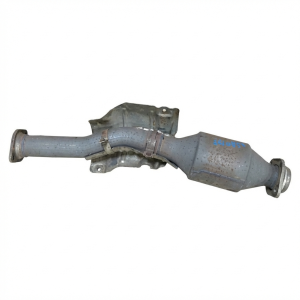
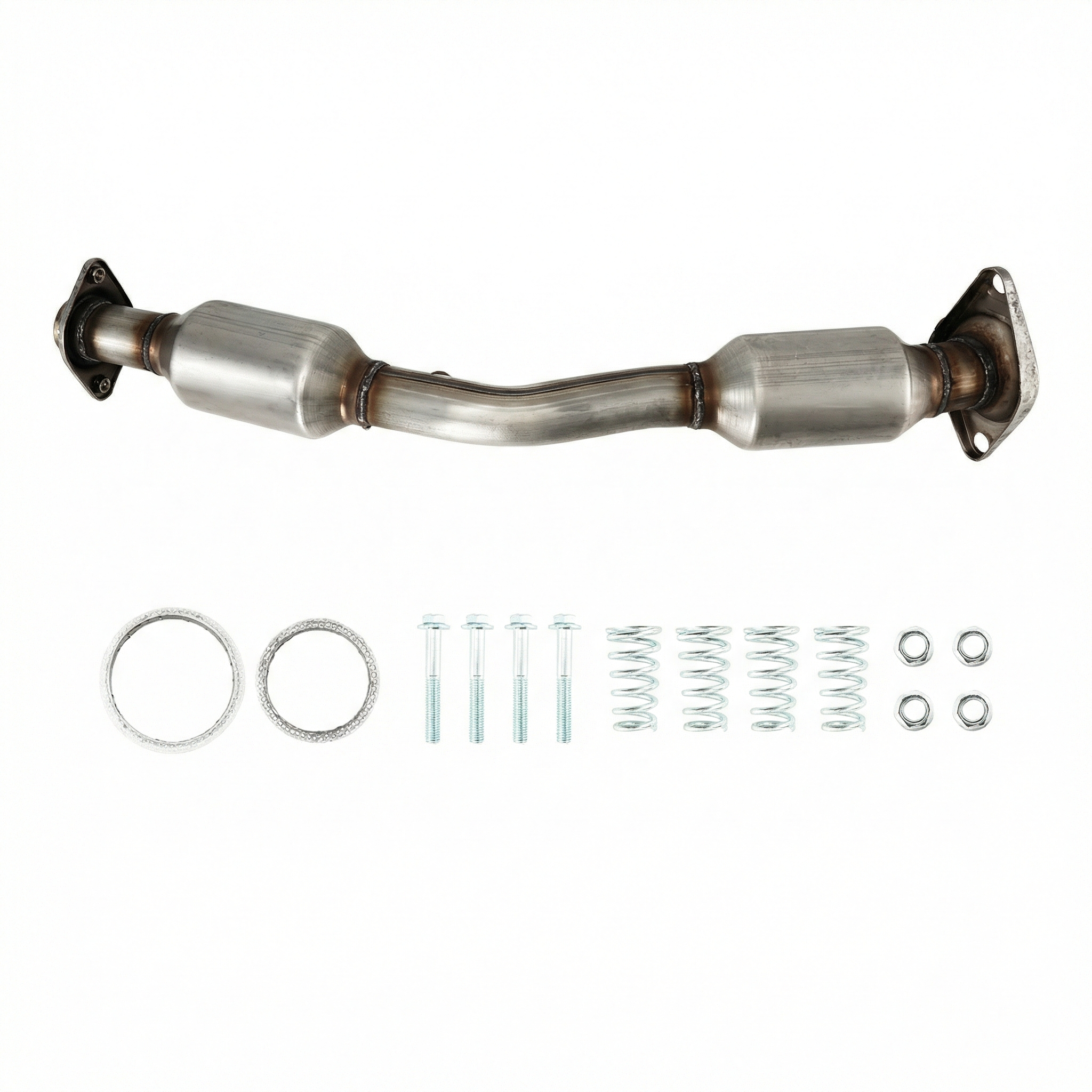
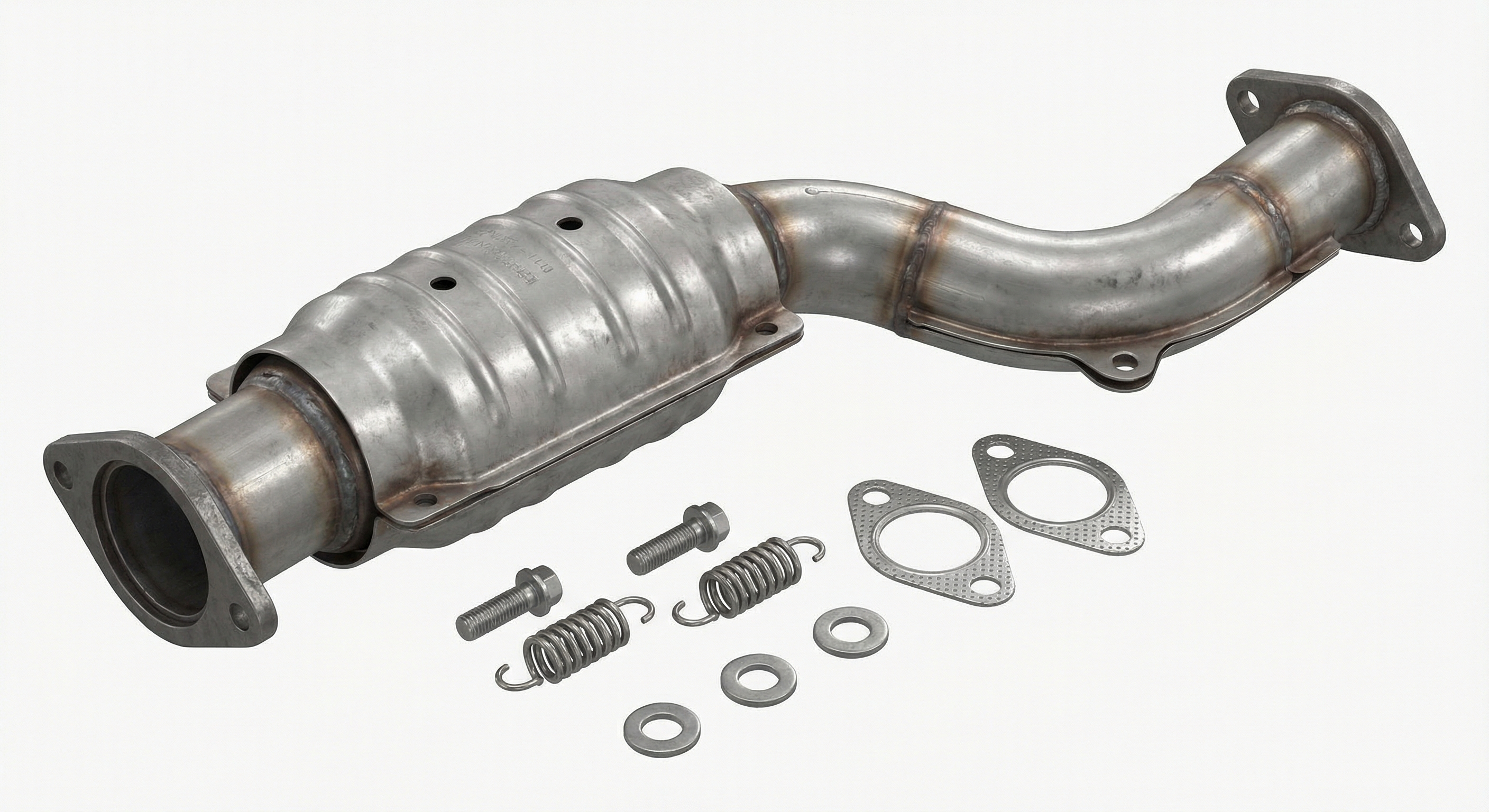
- Catalytic Converter (Manifold Assembly)
Related Codes That Often Appear With This One
- P0137 — This code indicates low voltage from the rear O2 sensor. TSB NTB22-006 specifically mentions diagnosing this DTC as part of the P0420 service campaign for 2013-2016 models, as it can indicate a short-to-ground.
- P0300-P0304 — These are cylinder misfire codes. An engine misfire allows unburned fuel to enter the exhaust, which can overheat and destroy the catalytic converter, causing P0420.
Technical Service Bulletins (TSBs) & Recalls
- NTB22-006: Voluntary service campaign for 2013-2016 Sentra (California emissions) involving an ECM reprogram and rear O2 sensor voltage check to address false P0420 codes.
- NTB22-007: Related to NTB22-006, this bulletin extends the warranty on the rear oxygen sensor for a short-to-ground condition to 20 years/200,000 miles for 2013-2016 Sentra models.
- NTB19-075a: Addresses CVT judder on 2013-2017 Sentra models.
- NTB15-062A: Addresses popping noise from the front suspension when turning.
- NTB12-055g: Addresses a clicking noise from the axle during take-off.
Platform-Specific Known Issues
- A voluntary service campaign (NTB22-006) was issued for some 2013-2016 Sentra models with California emissions to reprogram the ECM. This software issue could incorrectly trigger the P0420 code.
Mechanic-Grade Diagnostic Values
- Downstream O2 Sensor (Sensor 2) Voltage at Cruise — expected: Relatively steady, fixed voltage, typically in the 700mV (0.7V) range.. Failure: Voltage switching rapidly and consistently between ~100mV and ~700mV, mirroring the upstream sensor's activity.
- Downstream O2 Sensor (Sensor 2) Response to Snap Throttle — expected: When the throttle is snapped wide open and released, the voltage should dip, then spike, then recover to a steady state.. Failure: No significant or predictable change in voltage, or continued rapid switching.
Scan Tool Commands That Help
- Nissan CONSULT: Catalyst System Efficiency Test — This is the dealer-level automated test to confirm or deny a P0420. It runs the engine at specific RPMs and loads to actively check the oxygen storage capacity of the catalyst, providing a more definitive pass/fail than just observing live data at idle.
Wiring & Ground Locations
- B16 Sentra (2007-2012) Main Internal Ground — Located behind the glove box. Requires removal of the glove box assembly, and potentially the radio/HVAC trim to access.. A poor ground connection here can cause a variety of intermittent electrical issues, including incorrect sensor readings that could contribute to a false P0420 or other sensor-related codes. Cleaning this ground point is a good preventative measure if chasing electrical gremlins.
- B17 Sentra (2013-2019) ECM Ground — The ECM has multiple ground pins. On a 2018 Sentra, pins 123 and 128 (typically Black/Yellow wires) are direct ECM grounds. Physical ground points are often located on the engine block, chassis near the battery, or on the strut towers.. A faulty ECM ground can cause the computer to misinterpret sensor data, potentially leading to false P0420 codes. Verifying the integrity of the main engine-to-chassis ground strap is a critical step in diagnosing any persistent, unexplained electronic DTCs.
- B16 Sentra (2007-2012) Engine Ground Strap — There are multiple grounds. Key locations include a strap from the negative battery terminal to the chassis, a ground from the EGR area to the transmission, and a ground from the alternator down to the chassis.. Degraded engine grounds can cause the ECM and its sensors to find alternative, higher-resistance paths to ground, leading to voltage drops and noisy signals. This can directly affect the accuracy of O2 sensor readings, which are critical for the P0420 monitor.
Real Owner Repair Stories
- YouTube user CHAUSTER BUFFET (2016 Nissan Sentra, 238,000 miles) — P0420 code, failed emissions test.
❌ Tried (didn't work) The video does not specify other things tried, but implies the owner was facing a catalytic converter replacement.
✅ What actually fixed it Replaced the rear (downstream) oxygen sensor with a Denso brand sensor. After replacement, the owner drove for 60 miles and the OBD monitors for the catalyst passed.
Diagnostic Flowchart
Other Known Issues on This Vehicle
Issues unrelated to this code that are worth knowing about as an owner of this generation:
- CVT Transmission Failure 🔴 High — Extremely common across 2012-2017 models, leading to class-action lawsuits. Symptoms include shuddering, jerking, loss of power, and complete failure, often before 100,000 miles. (Ref: Multiple TSBs (e.g., NTB19-075a for CVT Judder) and warranty extensions were issued, but the underlying design is considered flawed by many owners.)
- Front Suspension Noise (Popping/Clunking) 🟠 Medium — Common on B17 (2013-2019) models. A popping or creaking noise is heard when turning, often caused by strut bearings or coil springs. (Ref: TSB NTB15-062A addresses a popping noise from the front when turning.)
- Brake System Problems 🟠 Medium — Reports include premature master cylinder failure on 2013 models and faulty brake light switches on 2016-2019 models. (Ref: Recall issued for 2007-2008 models for master cylinder leaks (08V311000). Recall issued for 2016-2019 models for faulty brake light switches.)
- Clicking Noise from Axle on Acceleration 🟡 Low — A clicking sound from the front or rear axle during takeoff is a widely reported issue across many Nissan models, including the Sentra. (Ref: TSB NTB12-055g provides a procedure to apply grease to the hub bearing surface to resolve the noise.)
- Engine Stalling/Sensor Failures 🟠 Medium — Particularly noted on the B16 (2007-2012) generation, failures of crankshaft and camshaft position sensors are common and can cause stalling. (Ref: Recalls were issued for crankshaft/camshaft sensors on earlier models.)
Used vs. New Parts: Buying Guide for This Vehicle
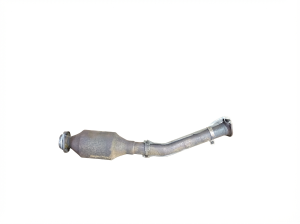
When a used part is the smart pick: For this repair, using used parts is generally not recommended for the core components. A used catalytic converter is a major gamble as its remaining lifespan is unknown and it may not meet emissions standards. A used oxygen sensor is also not advised due to its low cost new and its critical function.
Donor-vehicle mileage cap: roughly under 50000 miles for the part to have meaningful remaining life.
What to inspect on the donor part:
- For a catalytic converter, check for any rattling (indicating broken substrate), and inspect the honeycomb structure from the ends to ensure it's not melted or clogged.
- Ensure the donor vehicle was not involved in a front-end collision that could have damaged the manifold-converter assembly.
- Check the donor vehicle's history for any indication of oil consumption or coolant leaks, which would have contaminated the converter.
OEM-only on this vehicle (don't cheap out):
- Catalytic Converter: While expensive, the OEM converter is designed specifically for the Nissan ECM's stringent monitoring. Many aftermarket converters, especially cheaper ones, lack sufficient precious metal loading and can cause the P0420 code to return within a year.
Aftermarket brands forum-validated for this vehicle:
- Oxygen Sensors: Denso and NTK (NGK) are frequently cited as OEM suppliers for Nissan and are considered top-tier replacements.
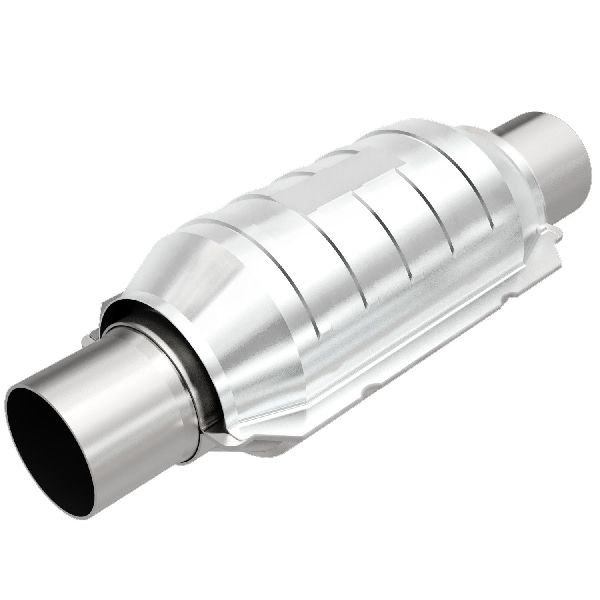
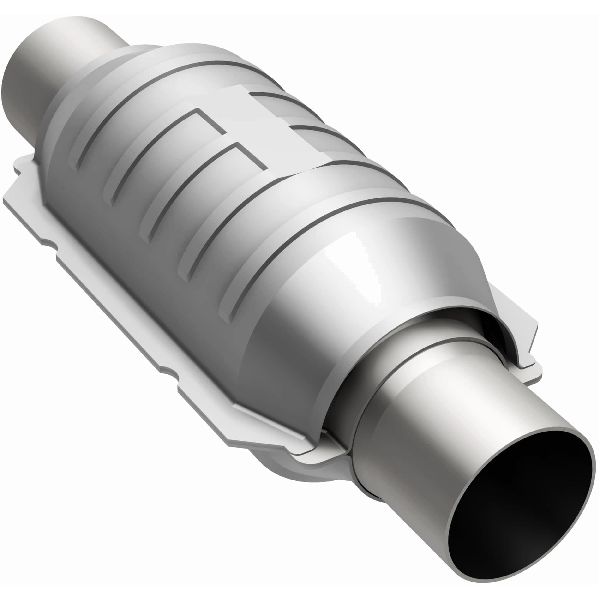
- Catalytic Converters: If an OEM unit is not feasible, higher-quality aftermarket brands like MagnaFlow and Walker are the most recommended. They offer direct-fit options that are more likely to perform correctly long-term than generic or no-name brands.
Brands owners have reported issues with on this vehicle:
- Unbranded or exceptionally cheap 'eBay' catalytic converters. Forum users and mechanics widely report that these often fail to resolve the P0420 code or cause it to return quickly because they cannot satisfy the ECM's efficiency test.
Real Owner Stories
Aggregated from forums and TSBs cited above. Mileages and costs reflect what owners reported in those sources.
2012 Nissan Sentra SR
Symptoms: Check Engine Light on with code P0420.
What fixed it: The owner was advised that in most cases on this platform, the code almost always ends up being the catalytic converter itself rather than just a sensor.
Source hint: https://www.reddit.com/r/MechanicAdvice/comments/5g6jpi/2012_nissan_sentra_sr_code_p0420/
2013-2016 Nissan Sentra
Symptoms: P0420 code triggered; rear O2 sensor voltage stuck low (below 0.13V).
What fixed it: ECM reprogram and rear O2 sensor check/replacement under voluntary service campaign NTB22-006.
Source hint: NTB22-006: Voluntary service campaign for 2013-2016 Sentra
2007-2012 Nissan Sentra (MR20DE) — ~150000 miles
Symptoms: High oil consumption (adding more than a quart between changes) followed by a persistent P0420 code.
What fixed it: Replacement of the catalytic converter assembly, though the underlying oil consumption (piston rings) remained a known issue.
Source hint: https://bobistheoilguy.com/forums/threads/p0420-code-possible-lemon.330101/
Documented NHTSA Reports
Nissan Owner Report (NHTSA ODI #10427172)
Symptoms: Check Engine Light illuminated while driving; an independent shop read the code as P0420.
What fixed it: A Nissan dealer diagnosed the issue and stated that the catalytic converter and both O2 sensors required replacement to resolve the code.
Nissan Owner Report (NHTSA ODI #10326699)
Symptoms: Multiple diagnostic codes including P0420 (TW Catalyst System), P0217 (Engine Over Temp), and P0301 (Cylinder 1 Misfire).
What fixed it: This report highlights how engine cooling and misfire issues often coincide with catalyst efficiency failures.
Nissan Owner Report (NHTSA ODI #11633951)
Symptoms: Check engine warning light illuminated with multiple DTCs: P0420, P0113 (Intake Air Temperature Sensor), and P0101/P0102 (Mass Air Flow).
What fixed it: This case demonstrates that P0420 can sometimes appear alongside intake and air metering sensor faults.
Related OBD-II Codes
Frequently Asked Questions
I have a 2015 Sentra with a P0420 code; is there a software update for this?
Is the rear oxygen sensor on my 2014 Sentra covered under a special warranty?
My 2010 Sentra is burning a lot of oil and now has a P0420 code. Are they related?
Can I just replace the rear O2 sensor to fix the P0420 on my Sentra?
How much does an OEM catalytic converter cost for a Nissan Sentra?
What should I check on my 2013-2016 Sentra before paying for a new converter?
Helpful Videos
Used OEM Parts in Stock
New Aftermarket Parts Available

The information in this article is provided for general reference and educational purposes only. Vehicle specifications, procedures, and part compatibility can vary by production date, trim level, and region. Always consult your vehicle's factory service manual and verify part numbers before purchasing or performing repairs. Safety-critical components such as airbags, seat belts, and braking systems should be installed by a qualified professional.
- Nissan Sentra:
- 🧭 Diagnostic Flowchart
- 🎬 Helpful Videos
- 🛍️ Shop This Part
- What's Unique About the 2007-2019 Nissan Sentra
- Symptoms You May Notice
- Most Likely Causes
- Rare But Worth Checking
- Diagnosis Steps
- Parts You'll Likely Need
- Related Codes That Often Appear With This One
- Technical Service Bulletins (TSBs) & Recalls
- Platform-Specific Known Issues
- Mechanic-Grade Diagnostic Values
- Scan Tool Commands That Help
- Wiring & Ground Locations
- Real Owner Repair Stories
- Other Known Issues on This Vehicle
- Used vs. New Parts: Buying Guide for This Vehicle
- Real Owner Stories
- 2012 Nissan Sentra SR
- 2013-2016 Nissan Sentra
- 2007-2012 Nissan Sentra (MR20DE) — ~150000 miles
- Documented NHTSA Reports
- Nissan Owner Report (NHTSA ODI #10427172)
- Nissan Owner Report (NHTSA ODI #10326699)
- Nissan Owner Report (NHTSA ODI #11633951)
- Related OBD-II Codes
- Frequently Asked Questions
- 🎟️ Get 5% Off