

P0420 on 2022-2025 Ram 1500: Catalyst Efficiency Causes and Fixes
On a 2022-2025 Ram 1500, P0420 often points to more than just a bad catalytic converter. Manufacturer TSBs strongly link this code to engine misfires and, on newer models, software glitches. Before replacing the expensive converter, always diagnose and fix any misfire codes (P0300-P0308) by checking spark plugs and ignition coils first. For 2025 models with the Hurricane engine, a PCM/ISCM software update may be the required fix.
- **Check for Misfires First**: Before considering any other part, scan your Ram 1500 for misfire codes (P0300-P0308). The provided TSBs make this the number one priority.
- **Don't Rush to Replace the Converter**: The P0420 code often indicates a symptom, not the root cause. Replacing the catalytic converter without fixing an underlying misfire or exhaust leak will only lead to the new converter failing prematurely.
- **Inspect for Exhaust Leaks**: A leak in the exhaust manifold or connecting pipes can fool the oxygen sensors and trigger a false P0420 code. Listen for ticking noises and look for soot.
- **Test, Don't Guess**: Use a scan tool to analyze oxygen sensor data. This can help you determine if the sensor is bad or if it's accurately reporting a failed converter.
What's Unique About the 2022-2025 Ram 1500
For the 2022-2025 Ram 1500, a P0420 code has a very strong, documented connection to engine misfires and software calibration. Ram has issued Technical Service Bulletins (TSBs) that explicitly list P0420 alongside various cylinder misfire codes (P030x). For 2025 models with the new 3.0L Hurricane engine, TSB 08-055-25 REV. A specifically calls for reprogramming the Ignition System Control Module (ISCM) to fix this code, indicating a software sensitivity issue. This proves that unburned fuel from a misfire or a simple software glitch are likely root causes, rather than the converter failing on its own. Owners should be extremely cautious about replacing the converter without first addressing ignition, fuel system, or potential software updates.
Diagnostic Flowchart
Tap your situation to follow the diagnostic path that matches what you're seeing on this vehicle.
Symptoms You May Notice
- Check Engine Light is on
- Reduced engine performance or acceleration
- Decrease in fuel economy
- Rough idle or engine running rough, especially if misfires are also present
- A rotten egg or sulfur smell from the exhaust
- Replacing the catalytic converter immediately without diagnosing underlying issues. The TSBs for this truck strongly suggest that misfires and software issues are primary causes, and replacing the converter without fixing the root cause will result in the new converter failing as well.
- Replacing the oxygen sensors without testing them. While O2 sensors can fail, they are often correctly reporting an actual problem with the catalyst's efficiency or are being misled by an exhaust leak.
Most Likely Causes
- Engine Misfire 🔴 High Probability As cited in manufacturer TSBs (#08-087-25, #08-055-25 REV. A), this specific platform has a documented link between misfire codes and the P0420 code. A misfire allows unburned fuel to enter the exhaust, overwhelming and damaging the converter.
How to confirm: Scan for additional codes, specifically P0300 through P0308. Inspect spark plugs, ignition coils, and fuel injectors for the corresponding cylinder.
Typical fix: Replace the faulty spark plug(s) and/or ignition coil(s). Address any fuel injector issues.
Est. part cost: $15-$100 - PCM/ISCM Software Issue 🔴 High Probability TSB 08-055-25 REV. A for the 2025 Ram 1500 with the 3.0L Hurricane engine explicitly states that P0420 can be caused by a software issue in the Ignition System Control Module (ISCM) and is fixed by reprogramming it. Similar issues have been noted on other Stellantis vehicles with HEMI engines, where overly sensitive monitoring logic falsely triggers the code.
How to confirm: A dealership or a properly equipped independent shop can check for available software updates for the PCM or other control modules using a wiTECH diagnostic tool.
Typical fix: Reprogram the PCM or ISCM with the latest manufacturer software. This is often covered under the federal emissions warranty (8 years/80,000 miles).
Est. part cost: $0-$200 - Failed Catalytic Converter 🟡 Medium Probability → Shop Catalytic Converter Can be the result of long-term engine issues (like misfires), contamination from oil/coolant, or simply high mileage. It is often the effect, not the primary cause.
How to confirm: After ruling out all other causes (misfires, O2 sensors, exhaust leaks, software), a professional may use a temperature gun to check inlet/outlet temps or a backpressure gauge to confirm blockage.
Typical fix: Replace the Bank 1 catalytic converter assembly.
Est. part cost: $800-$2000+ - Faulty Oxygen (O2) Sensor 🟡 Medium Probability → Shop Oxygen Sensor Sensors can fail over time, providing incorrect data to the PCM. The rear (downstream) sensor is the primary one for monitoring catalyst efficiency, and a lazy or failed sensor can mimic a bad converter.
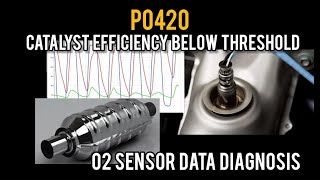
How to confirm: Use a capable OBD-II scanner to graph the voltage of the upstream and downstream O2 sensors. The downstream sensor's voltage should be relatively stable (around 0.5-0.7V), while the upstream sensor fluctuates rapidly. If the downstream sensor mimics the upstream, it may indicate a bad converter or a faulty sensor.
Typical fix: Replace the downstream (post-catalyst) O2 sensor for Bank 1.
Est. part cost: $50-$150 - Exhaust Leak ⚪ Low Probability Exhaust manifold bolts on HEMI engines are known to break, causing a leak often referred to as the 'Hemi tick'. A leak between the engine and the catalytic converter can draw in outside air, skewing O2 sensor readings and falsely triggering P0420.
How to confirm: Listen for a ticking or tapping sound from the engine bay, especially when cold. Visually inspect the exhaust manifold and flanges for black soot marks, which indicate a leak. A smoke test can also pinpoint the leak's location.
Typical fix: Replace the exhaust manifold gasket and any broken bolts. Repair or replace the leaking section of pipe.
Est. part cost: $20-$300
Rare But Worth Checking
- Leaking Fuel Injector: → Shop Fuel Injector A leaking injector can cause a rich fuel condition, leading to carbon buildup and eventual damage to the catalytic converter. This often accompanies misfire codes and can be a root cause of recurring P0420.
- Internal Engine Wear: Excessive oil consumption from worn piston rings or valve seals can contaminate and clog the catalytic converter over time, leading to failure. This is a more serious issue that requires engine work.
Diagnosis Steps
- Use an OBD-II scanner to check for any other stored trouble codes. Pay special attention to misfire codes (P0300-P0308) or fuel trim codes.
- Address all other codes FIRST. If misfire codes are present, inspect and replace the spark plugs and ignition coils for the specified cylinders. This is the most critical step for this vehicle.
- Check for TSBs and Software Updates. For 2025 models in particular, or if P0420 appears with misfire codes without an obvious mechanical cause, check with a dealer if TSB 08-055-25 REV. A or other software updates apply. A simple reflash may be the fix.
- Inspect the exhaust system for leaks. Check from the exhaust manifold to the post-catalyst O2 sensor. Listen for the 'Hemi tick' when cold and look for cracks in the manifold, broken bolts, or soot trails at gaskets.
- If no other codes are present, use a scan tool to observe the live data from the Bank 1 upstream (Sensor 1) and downstream (Sensor 2) oxygen sensors. The upstream sensor should fluctuate rapidly, while the downstream sensor should hold a steady, higher voltage. If the downstream sensor's graph mirrors the upstream, it confirms the converter is not working efficiently.
- Before condemning the converter, test the downstream O2 sensor to ensure it is functioning correctly and not providing false readings. Consider its age; sensors over 80k miles can become 'lazy'.
- If all other components (misfire sources, software, O2 sensors, exhaust system integrity) check out, the catalytic converter is the likely culprit.
Parts You'll Likely Need
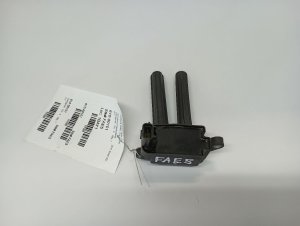
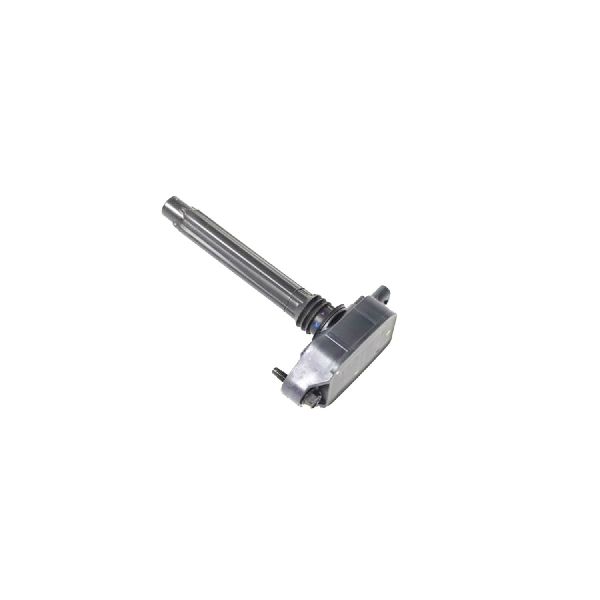
- Ignition Coil
(OEM #68238603AA)— A primary cause of engine misfires which are strongly linked to P0420 on this truck via TSBs.
Trusted brands: Mopar, NGK, Denso
OEM price range: $75-$100
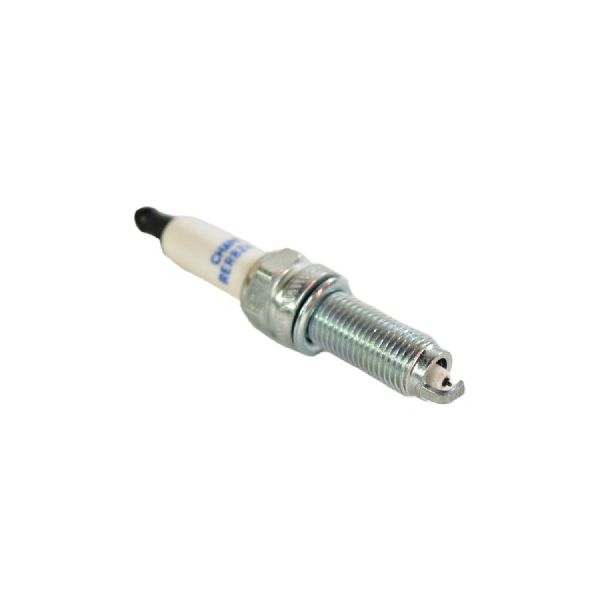
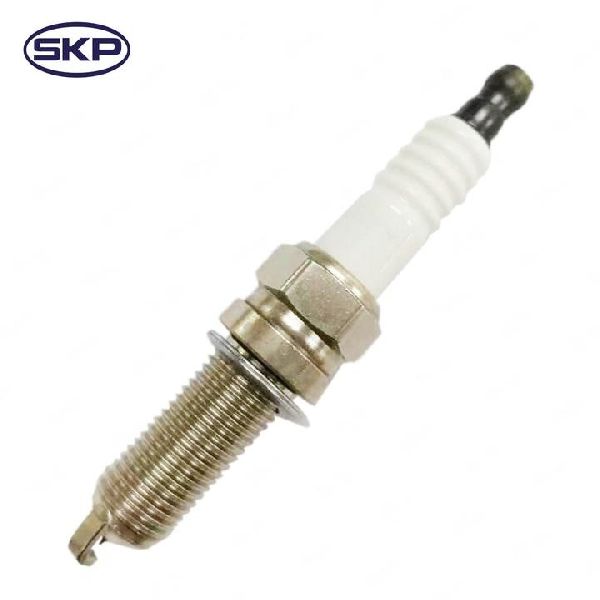
Aftermarket price range: $25-$50 - Spark Plugs — Worn or fouled spark plugs are a common cause of misfires. They are a routine maintenance item that should be checked first.
Trusted brands: NGK, Champion
OEM price range: $5-$15 per plug
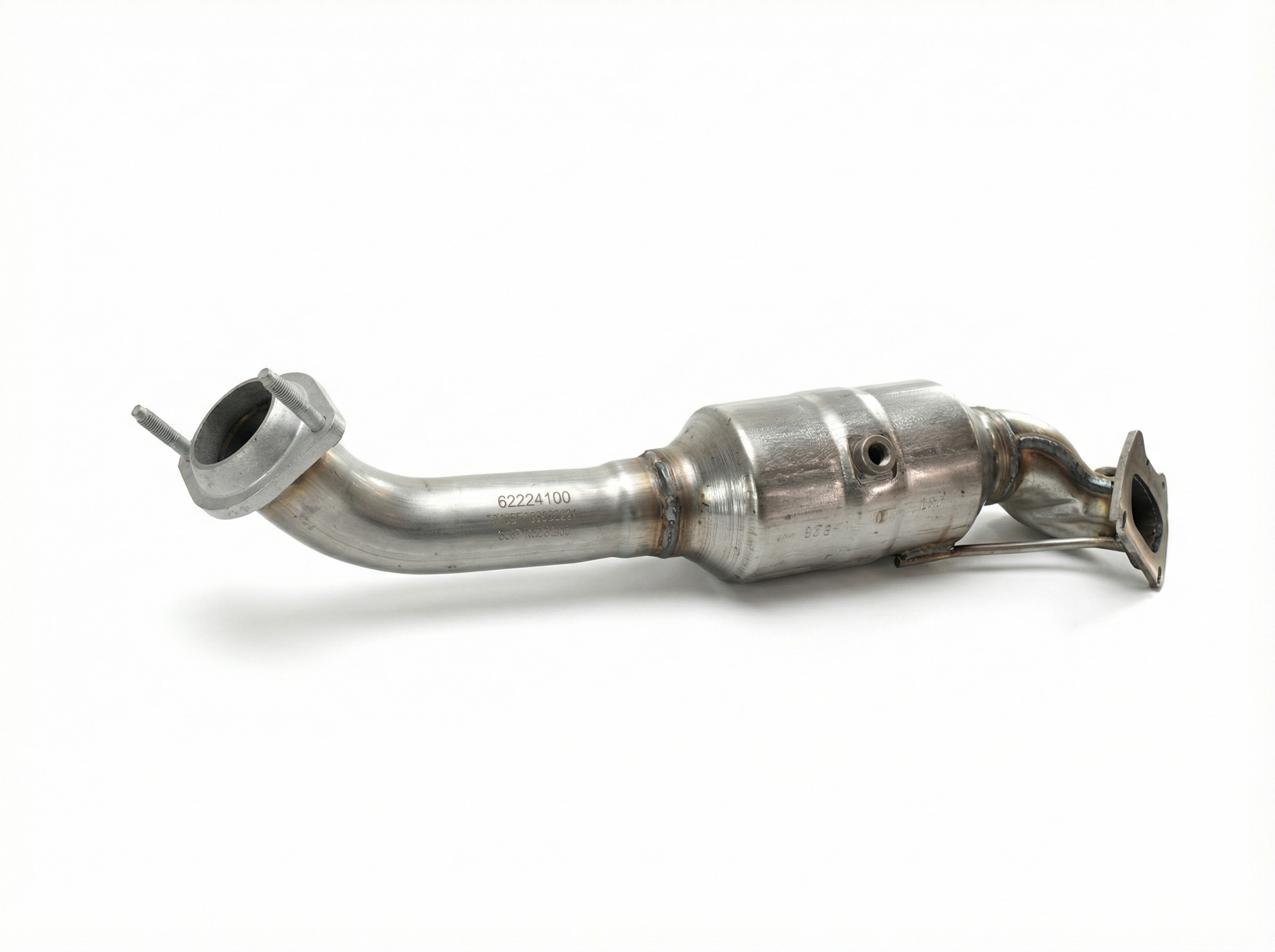
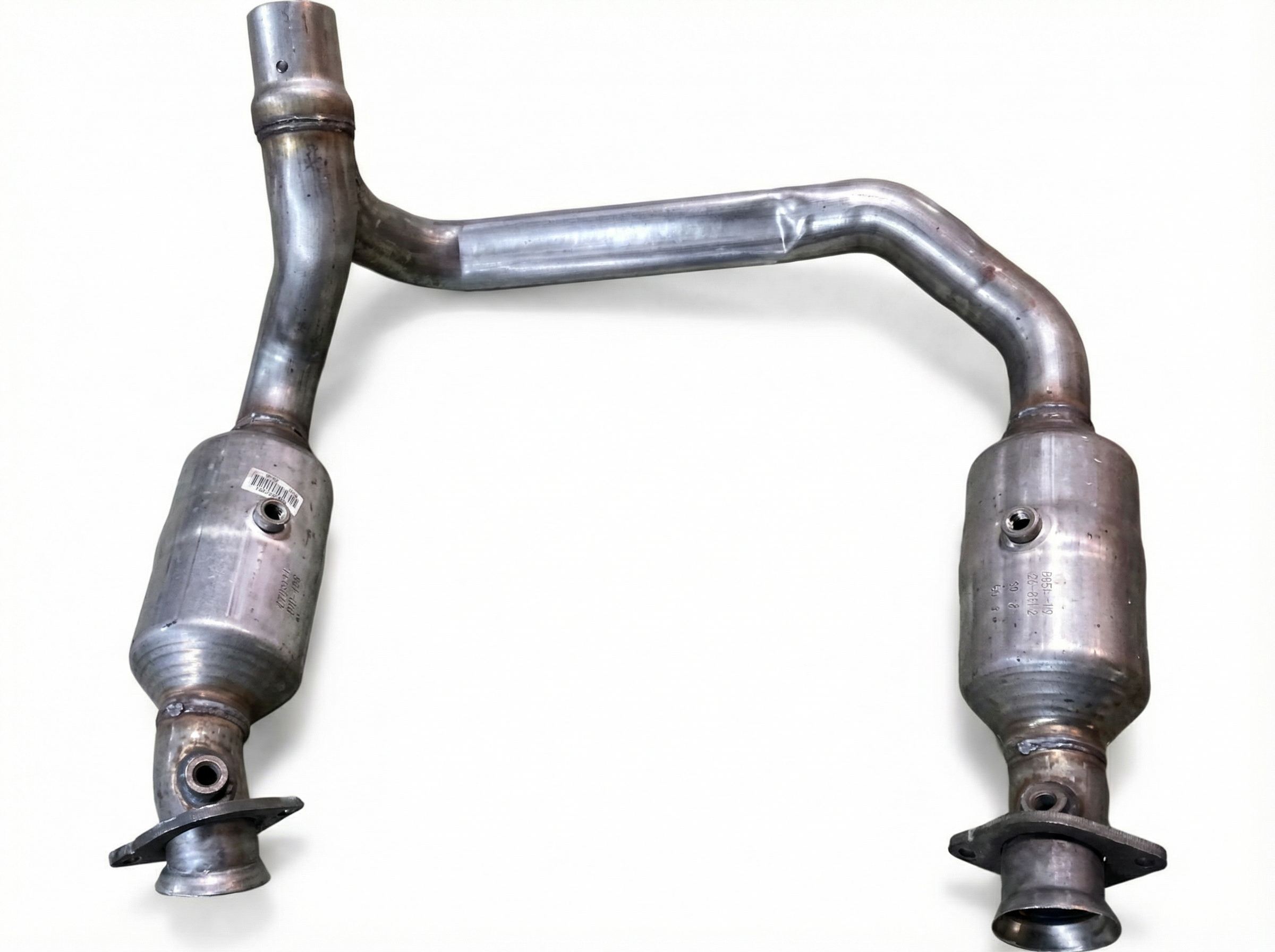
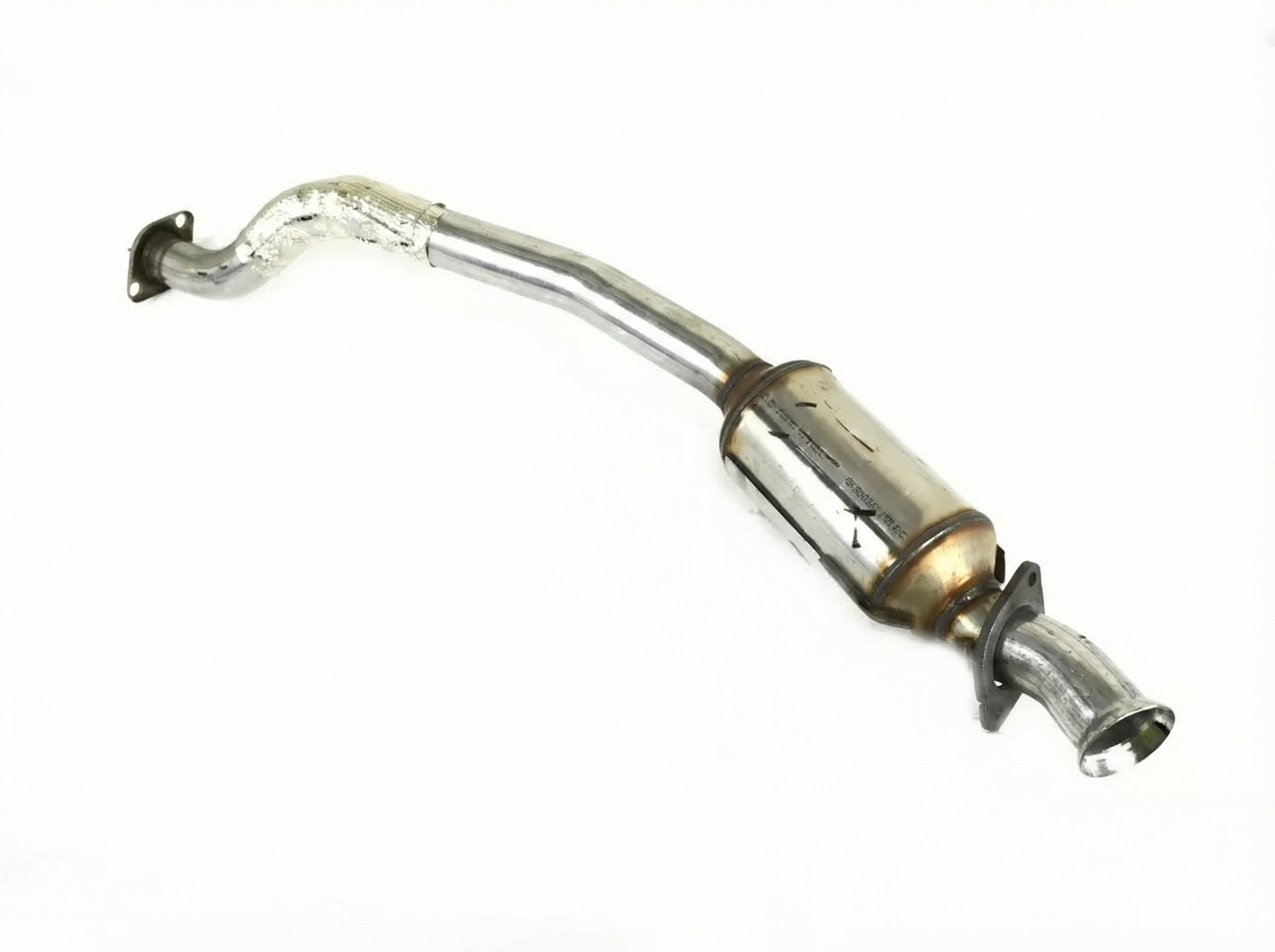
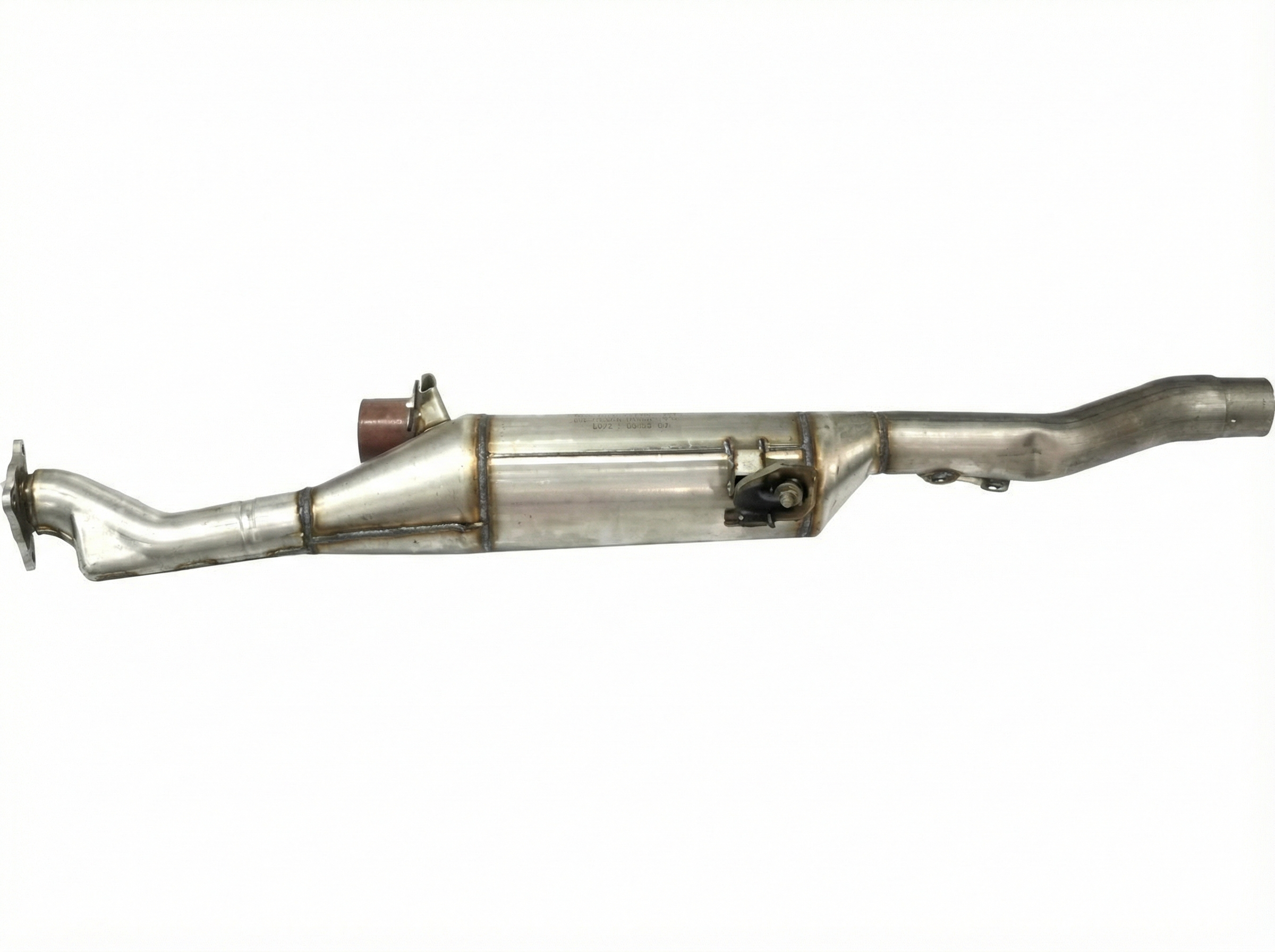
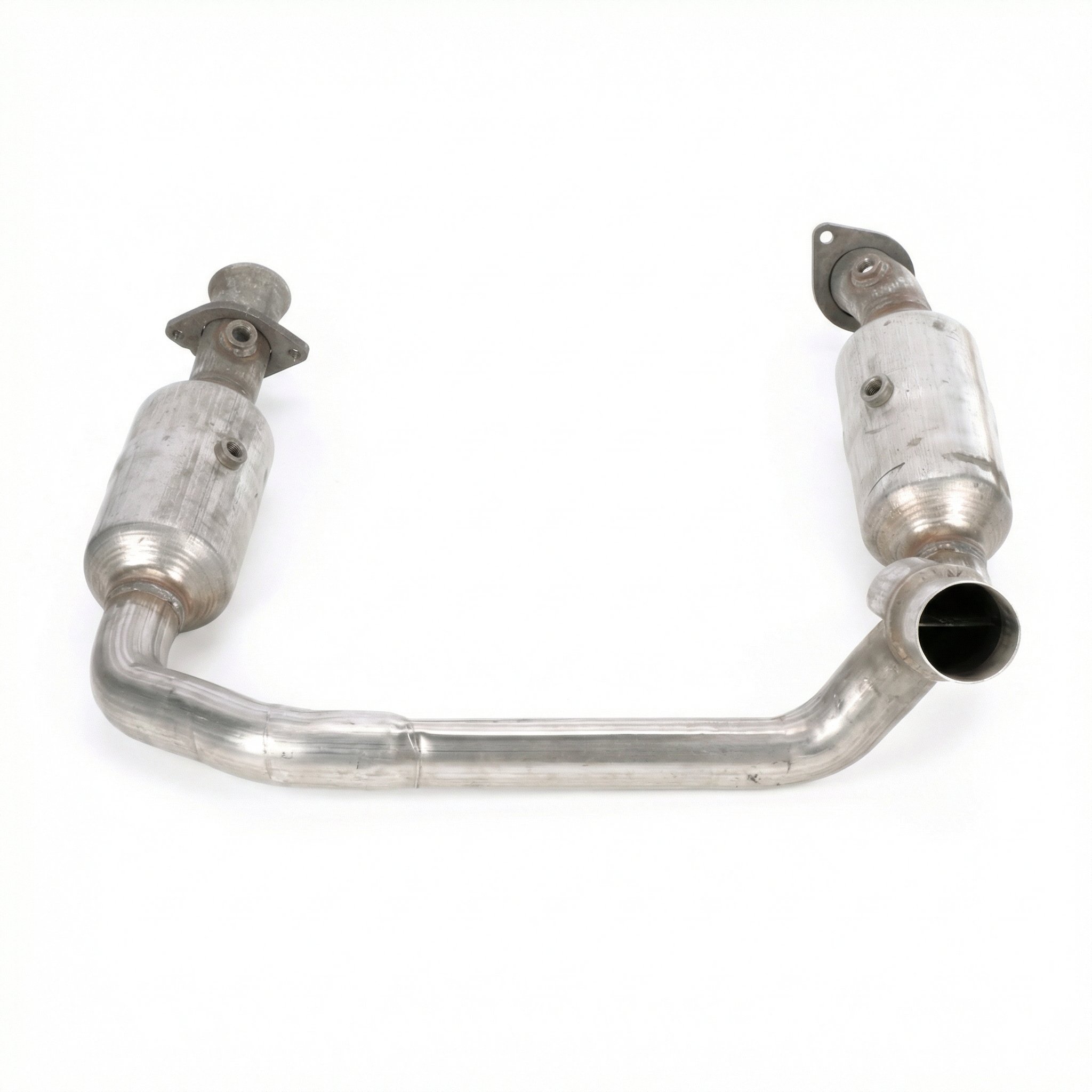
Aftermarket price range: $3-$10 per plug - Catalytic Converter (Bank 1) — This is the part identified by the code itself. It should only be replaced after all other potential causes, especially misfires and software issues, have been ruled out.
Trusted brands: Mopar, Walker, MagnaFlow
OEM price range: $800-$2000+
Aftermarket price range: $400-$900
Related Codes That Often Appear With This One
- P0300 — Random/Multiple Cylinder Misfire Detected. This is a primary cause that can trigger P0420.
- P0301-P0308 — Cylinder-specific misfire codes (e.g., P0305 for Cylinder 5). The TSBs specifically call out these codes appearing with P0420.
- P0430 — Catalyst System Efficiency Below Threshold (Bank 2). This is the identical code for the opposite engine bank. It's common for both to appear if the root cause (like a software issue, poor fuel quality, or systemic engine problems) affects the entire engine.
Technical Service Bulletins (TSBs) & Recalls
- Bulletin #08-087-25 (2025 ELECTRICAL SYSTEM, dated 2025-03-27): Links P0420-00 with cylinder misfire DTCs.
- Bulletin #08-055-25 REV. A (2025 ELECTRICAL SYSTEM, dated 2025-03-05): Also links P0420-00 with various cylinder misfire DTCs.
Platform-Specific Known Issues
- TSB-Documented Link to Misfires: Technical Service Bulletins #08-087-25 and #08-055-25 REV. A for 2025 models explicitly state that P0420 and P0430 may be set in conjunction with cylinder misfire codes (P0305, P0306, etc.). This is the most critical vehicle-specific issue for this code.
- Exhaust Manifold Leaks: → Shop Exhaust Manifold Some generations of Ram Hemi engines are known for broken exhaust manifold bolts, which can cause an exhaust leak that triggers catalyst efficiency codes. While not specific to 2022-2025 in the search results, it is a well-known issue on the platform.
Mechanic-Grade Diagnostic Values
- Downstream O2 Sensor Voltage (at idle, warm engine) — expected: Relatively stable voltage between 0.5V and 0.7V.. Failure: Voltage fluctuates rapidly, mimicking the upstream O2 sensor's readings.
- Upstream O2 Sensor Voltage (at idle, warm engine) — expected: Rapidly fluctuates between approximately 0.2V and 0.8V.. Failure: Slow or no fluctuation, or stuck at a specific voltage.
- Long-Term Fuel Trim (LTFT) — expected: As close to 0% as possible, typically within +/- 5%.. Failure: Consistently high positive or negative values (e.g., >10%) can indicate an underlying issue like a vacuum leak (positive trim) or leaking injector (negative trim) that can lead to P0420.
Hidden / Shadow Codes Worth Checking
- Mode $06, Test ID (TID) for Catalyst Monitor: Mode $06 provides raw data from the PCM's self-tests before a full-blown DTC is set. For P0420, a technician would look at the test results for the catalyst monitor (e.g., TID $51 on some vehicles). It shows a measured value and a maximum allowable value. If the measured value is close to the maximum, it indicates the catalyst is borderline and about to fail, even if the P0420 code is intermittent. (see via A professional scan tool with Mode $06 capability is required. The specific Test ID for the catalyst monitor must be looked up for the specific vehicle year and engine.)
Scan Tool Commands That Help
- wiTECH (Chrysler/Ram Dealer Tool): Reset of SCR Long Term Adaptation Factor — While more common for diesel P20EE codes, some TSBs for gasoline engines also require PCM resets after a flash or component replacement. This function resets the learned values for the emissions system, which can be necessary after replacing a catalytic converter or related sensors to ensure the system relearns correctly.
- wiTECH: PCM Reprogramming/Flash — As noted in TSBs for the 2025 models with the Hurricane engine and for other model years, reprogramming the PCM with updated software can be the direct fix for an erroneous P0420 code.
Wiring & Ground Locations
- G301 / G302 — Located on the left (driver's) side front of the body, near the wheel well or engine compartment.. The PCM and its related sensors (like O2 sensors) rely on clean ground connections. A corroded or loose ground at G301 or G302 can introduce electrical noise or incorrect reference voltages, potentially causing the PCM to misinterpret O2 sensor data and falsely trigger a P0420 code.
- O2 Sensor Harness/Connector — The O2 sensor connectors are located on the exhaust system, near the sensors themselves. The harness routes up into the engine bay.. The wiring for O2 sensors is susceptible to damage from road debris or contact with hot exhaust components. A visual inspection for melted or chafed wires is crucial, as a short or open in the signal or heater circuit can cause incorrect readings and trigger codes.
Real Owner Repair Stories
- Multiple owner reports on forums and YouTube (2019-2024 Ram 1500 with 5.7L Hemi) — Persistent P0420 code, often accompanied by a distinct ticking noise from the engine bay, especially when the engine is cold (the 'Hemi tick').
❌ Tried (didn't work) Replacing O2 sensors., Using catalytic converter cleaner additives.
✅ What actually fixed it The root cause was a cracked exhaust manifold and/or broken exhaust manifold bolts. The leak allowed oxygen to enter the exhaust stream before the O2 sensors, skewing the readings and causing the PCM to believe the catalyst was inefficient. The fix involved replacing the manifold (often with a more robust aftermarket version from brands like BD Diesel), the gasket, and all mounting bolts.
Model Year Variations Within This Range
- 2025+: The 2025 model year marked the replacement of the 5.7L Hemi V8 with the new 3.0L 'Hurricane' twin-turbo inline-six engine, available in Standard Output (SO) and High Output (HO) versions. TSBs for the 2025 model specifically mention software updates for the Ignition System Control Module (ISCM) to resolve P0420, indicating a different diagnostic path compared to the Hemi's common mechanical issues like manifold leaks.
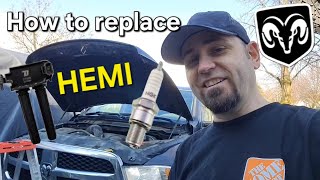
Helpful Videos

Used OEM Parts in Stock
New Aftermarket Parts Available


The information in this article is provided for general reference and educational purposes only. Vehicle specifications, procedures, and part compatibility can vary by production date, trim level, and region. Always consult your vehicle's factory service manual and verify part numbers before purchasing or performing repairs. Safety-critical components such as airbags, seat belts, and braking systems should be installed by a qualified professional.
- Ram 1500:
- 🧭 Diagnostic Flowchart
- 🎬 Helpful Videos
- 🛍️ Shop This Part
- What's Unique About the 2022-2025 Ram 1500
- Symptoms You May Notice
- Most Likely Causes
- Rare But Worth Checking
- Diagnosis Steps
- Parts You'll Likely Need
- Related Codes That Often Appear With This One
- Technical Service Bulletins (TSBs) & Recalls
- Platform-Specific Known Issues
- Mechanic-Grade Diagnostic Values
- Hidden / Shadow Codes Worth Checking
- Scan Tool Commands That Help
- Wiring & Ground Locations
- Real Owner Repair Stories
- Model Year Variations Within This Range
- 🎟️ Get 5% Off