

P0420 on 2014-2020 Ram 3500: Cummins & Hemi Catalyst System Fixes
On a Ram 3500 with a 6.7L Cummins diesel, P0420 is almost always a faulty NOx sensor or an issue with the DEF/SCR system. For Hemi gas engines, it's typically a failing catalytic converter or O2 sensor. For all engines, check for exhaust leaks and crucial PCM software updates before replacing any expensive parts, as TSBs confirm software sensitivity is a known issue.
- For the 6.7L Cummins, P0420 almost never means 'replace the catalytic converter' first. Suspect faulty NOx sensors or outdated software.
- Always check with a dealer for available PCM software updates before paying for any diagnostic time or parts. This is a common and cost-effective fix.
- On Hemi gas engines, the cause is more traditional: likely a bad O2 sensor, an exhaust leak, or the catalytic converter itself.
- Properly diagnosing this code on a Cummins requires a professional scan tool that can read live NOx and temperature sensor data.
- Do not ignore this code. It can lead to reduced power, poor fuel economy, and damage to very expensive emissions components.
What's Unique About the 2014-2020 Ram 3500
The key challenge with P0420 on a Ram 3500 is the major difference between the gasoline Hemi and diesel Cummins engines. For the Hemi, it's a standard catalyst code. For the 6.7L Cummins, P0420 points to a complex aftertreatment system involving a Diesel Oxidation Catalyst (DOC), Diesel Particulate Filter (DPF), and a Selective Catalytic Reduction (SCR) system that uses Diesel Exhaust Fluid (DEF). Diagnosis is more involved, focusing on expensive NOx sensors and DEF system components rather than simple O2 sensors. Furthermore, numerous Technical Service Bulletins (TSBs) indicate that the PCM software is often too sensitive and a simple dealer-installed update can resolve the code without replacing any parts. A 2018 Ram 3500 owner on Reddit detailed a frustrating experience where the final fix was a combination of a NOx sensor and an ECU flash, after a DPF had already been replaced.
Diagnostic Flowchart
Tap your situation to follow the diagnostic path that matches what you're seeing on this vehicle.
Generation note: The 2014-2020 range covers the end of the fourth generation (2012-2018) and the start of the fifth generation (2019-present). While the P0420 code's meaning is consistent, some parts, like NOx sensors, have different part numbers between the generations. A major redesign occurred in 2019, updating the frame, suspension, and technology. The aftertreatment system also evolved, with 2013+ models using the DEF/SCR system, which is different from the NAC system on 2007.5-2012 trucks.
Symptoms You May Notice
- Check Engine Light is on
- Reduced engine performance or 'limp mode'
- Vehicle may fail an emissions test
- Decreased fuel efficiency
- A sulfur or 'rotten egg' smell from the exhaust (more common on gas engines)
- More frequent DPF regeneration cycles on 6.7L Cummins models.
- Rattling noise from the exhaust if the internal catalyst substrate has broken apart.
- Replacing the catalytic converter (or DOC/SCR assembly) before diagnosing sensors, checking for software updates, or inspecting for exhaust leaks. This is the most expensive part and is often replaced unnecessarily.
- On Hemi engines, replacing the catalytic converter when the actual fault is a less expensive downstream O2 sensor.
- Ignoring small exhaust leaks that can introduce oxygen and trick the sensors into reporting a false catalyst efficiency code.
Most Likely Causes
- Faulty NOx Sensor (6.7L Cummins) 🔴 High Probability → Shop Nitrogen Oxide (NOx) Sensor NOx sensors in the complex diesel aftertreatment system are a common failure point and are highly sensitive. Owners often report this as the primary cause for P0420, sometimes accompanied by code P2201, which strongly points to the sensor itself. A Reddit user with a 2018 Ram 3500 confirmed their recurring P0420 was ultimately resolved by replacing a NOx sensor combined with a software flash.
How to confirm: Use a professional scan tool to monitor live NOx sensor readings in parts-per-million (PPM) during a drive cycle. A sensor with erratic, stuck, or illogical readings is faulty. Cleaning the sensor with carb cleaner and letting it soak overnight is a low-cost first step, but often replacement is necessary.
Typical fix: Replace the faulty NOx sensor. There is an upstream (inlet) and a downstream (outlet) sensor; diagnosis is key to replacing the correct one. The upstream sensor is located in the exhaust pipe after the turbo. After replacement, the code should be cleared with a scan tool.
Est. part cost: $300-$856 - Outdated Powertrain Control Module (PCM) Software 🔴 High Probability Manufacturer TSBs and recalls confirm the original software can be overly sensitive, falsely triggering P0420. TSBs #1800824, #1800724, and #1810222REVA all list P0420 as a code that can be resolved by a software flash, often along with a host of other seemingly unrelated codes.
How to confirm: A Ram dealership or a properly equipped independent shop can check your vehicle's VIN against a database of available software updates and TSBs. This should be a primary diagnostic step before any parts are replaced.
Typical fix: Flash the PCM with the latest manufacturer-approved software. This is often performed at a dealership.
Est. part cost: $0-$200 - Failing Catalytic Converter / Diesel Oxidation Catalyst (DOC) 🟡 Medium Probability → Shop Catalytic Converter On Hemi engines, converters fail from age and mileage. On Cummins engines, the DOC can be damaged by unresolved upstream issues like engine misfires, bad injectors, or frequent short trips that prevent proper DPF regeneration. Contaminants from burning oil or coolant can also poison the catalyst.
How to confirm: After confirming sensors and software are good, a technician can perform a backpressure test or use an infrared thermometer to check for a significant temperature difference before and after the catalyst. A working catalyst should be hotter on the outlet side.
Typical fix: Replace the catalytic converter assembly (Hemi) or the DOC/Aftertreatment assembly (Cummins). This is typically the most expensive repair and should be the last resort.
Est. part cost: $800-$3500 - Exhaust System Leak 🟡 Medium Probability
How to confirm: Visually inspect the exhaust system from the engine to the tailpipe for cracks, loose connections, or black soot trails, especially at flanges and gaskets. A ticking or puffing noise when the engine is cold is a strong indicator of a leak near the manifold. A shop can perform a smoke test to pinpoint small, hard-to-see leaks.
Typical fix: Repair the leak by replacing the gasket, tightening bolts, or welding the cracked component. A common gasket part number for the Cummins DPF is 52122213AB.
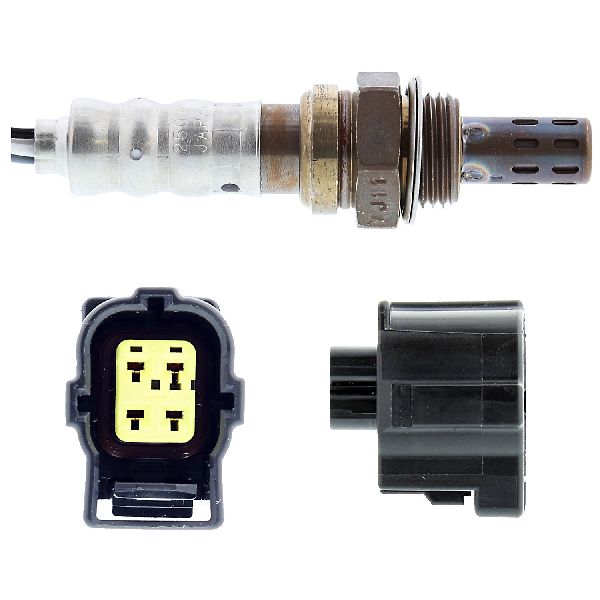
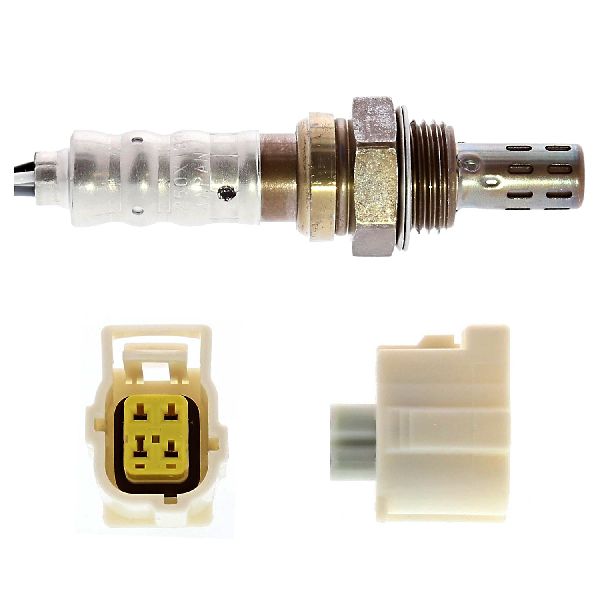
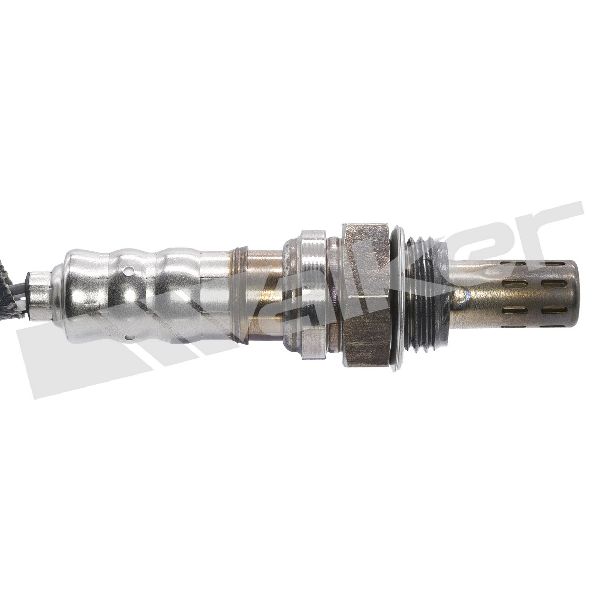
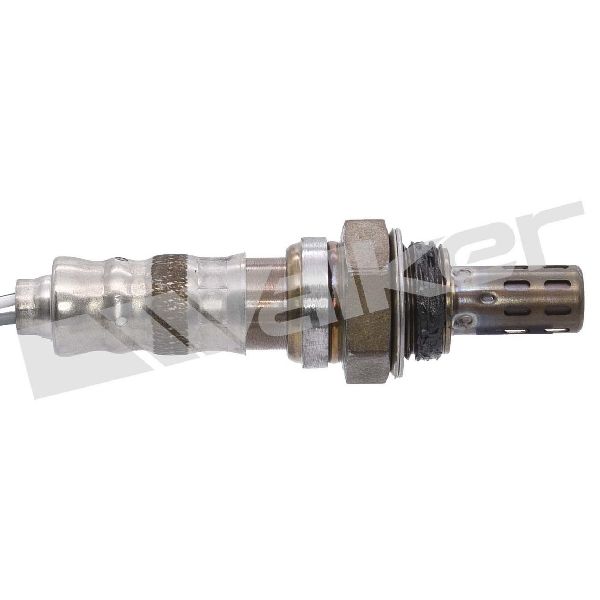
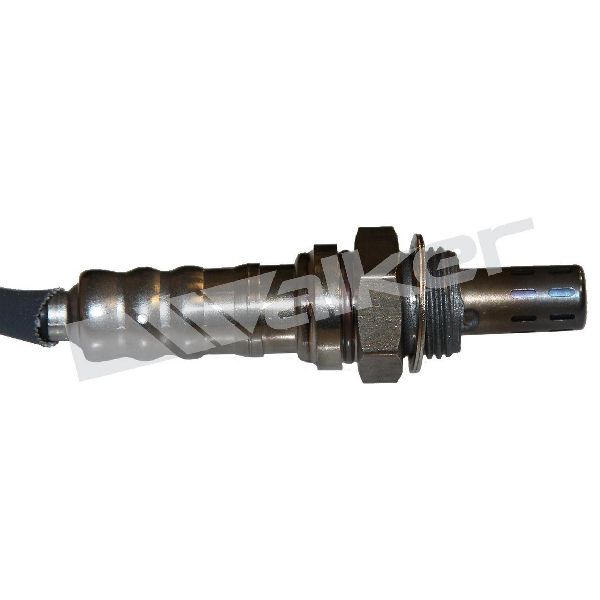
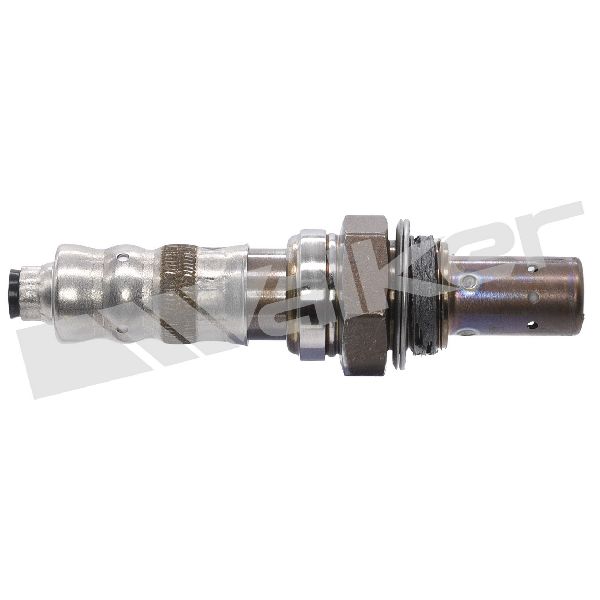
Est. part cost: $20-$300 - Failing Oxygen (O2) Sensor (Hemi Gas Engines) ⚪ Low Probability → Shop Oxygen Sensor
How to confirm: Use a scan tool to graph the voltage of the downstream (post-catalyst) O2 sensor. If it is switching rapidly like the upstream sensor, it indicates either a bad catalyst or a faulty sensor. A definitive test is to swap the downstream O2 sensors between Bank 1 and Bank 2. If the code changes from P0420 to P0430, the sensor is confirmed to be faulty.
Typical fix: Replace the downstream O2 sensor for Bank 1.
Est. part cost: $50-$150
Rare But Worth Checking
- DEF System Malfunction (6.7L Cummins): Issues with the Diesel Exhaust Fluid (DEF) injector, pump, or fluid quality can affect the SCR system's efficiency and trigger a P0420 code. This is often accompanied by other DEF-specific codes like P20EE. A clogged DEF injector was the cause for one owner of a 2014 Ram 2500.
- Engine Misfires or Fuel System Issues: Unburned fuel from a leaky injector or persistent engine misfire can enter the exhaust and overheat the catalyst, causing permanent damage. These issues must be fixed first to avoid destroying a new converter.
Diagnosis Steps
- Scan for all diagnostic trouble codes. Note any other codes that appear alongside P0420, as they can provide critical clues (e.g., P2201 strongly suggests a NOx sensor fault).
- Crucial Step: Contact a Ram dealer or authorized shop to check if your VIN has any open emissions recalls or TSBs related to PCM software updates. This is a known fix for false codes and should be the first step.
- Inspect the entire exhaust system for leaks. Look for black soot, listen for ticking sounds when cold, and feel for escaping air. Repair any leaks found before proceeding.
- For 6.7L Cummins: Use an advanced scan tool to monitor live data from the upstream and downstream NOx sensors and exhaust gas temperature sensors. Compare the readings to specifications to identify a faulty sensor. A bad sensor may have stuck or erratic PPM readings.
- For Hemi Gas Engines: Use a scan tool to graph the voltage of the upstream and downstream O2 sensors. The upstream sensor should fluctuate rapidly, while the downstream sensor should hold a steady, higher voltage. If the downstream sensor mimics the upstream, the catalyst is not working.
Parts You'll Likely Need
- NOx Sensor (6.7L Cummins, Upstream/Inlet)
(OEM #68447681AA (2019-2024); 68210084AA (2013-2018))— This is the most common hardware failure for P0420 on the Cummins. Often fails along with code P2201. - NOx Sensor (6.7L Cummins, Downstream/Outlet)
(OEM #68366500AC / 68366500AB (2019-2020); 68227486AA / 68197109AA (2015-2017))— The second of the two NOx sensors that can fail and cause this code. Proper diagnosis is needed to determine if the inlet or outlet sensor has failed. - Oxygen Sensor (Hemi Gas Engines, Downstream) — On Hemi engines, a faulty downstream O2 sensor can send incorrect data, falsely triggering a P0420 code.
- Exhaust Gasket
(OEM #52122213AB (Example for Cummins DPF))— An exhaust leak is a common and often overlooked cause of P0420. A failed gasket is a frequent source of such leaks.
Related Codes That Often Appear With This One
- P2201 — This code is for 'NOx Sensor Circuit Range/Performance Bank 1'. Seeing it with P0420 on a Cummins is a strong indication that the NOx sensor is the root cause, not the catalyst itself.
- P2002 — This code is for 'Diesel Particulate Filter Efficiency Below Threshold'. As noted in TSB #1810222REVA, it can appear with P0420, indicating a broader issue within the diesel aftertreatment system.
- P20EE — This code for 'SCR NOx Catalyst Efficiency Below Threshold' is closely related to P0420 and points to an issue with the SCR/DEF system. TSB #18-102-22 REV. A lists this as a code addressed by a PCM update.
- P0106, P0116, P203F — As seen in TSBs #1800824 and #1800724, P0420 can be logged with various other performance codes related to pressure, temperature, and reductant level, suggesting a systemic issue or a sensitive PCM calibration that requires a software update.
Technical Service Bulletins (TSBs) & Recalls
- Dated August 10, 2022, this TSB involves a PCM software update for 2020 Ram 2500/3500 trucks with the 6.7L Cummins. It addresses a list of DTCs including P0420 and P20EE (SCR NOx Catalyst Efficiency), indicating a software fix for catalyst efficiency codes.
- Dated January 25, 2024, for 2020 Ram 3500/4500/5500 Cab Chassis models, this TSB lists P0420 among numerous other codes that can be resolved with a PCM software update.
- Dated January 25, 2024, this TSB is for 2019 models and mirrors #18-008-24, listing P0420 as one of many codes fixed by a software reflash, highlighting the sensitivity of the factory calibration.
- Dated August 10, 2022, this TSB for 2019 Ram 2500/3500 trucks with the 6.7L Cummins also involves a PCM flash to correct a list of DTCs, including those related to aftertreatment performance like P20EE.
Platform-Specific Known Issues
- The Diagnostic Runaround: A 2018 Ram 3500 owner on Reddit detailed a frustrating experience chasing a recurring P0420 code. The dealer first replaced the DPF under warranty. When the code returned with P2201, a software update was performed. When P0420 came back again, the dealer began guessing at other sensors. The owner's final conclusion after multiple visits was that the root cause was a combination of a faulty NOx sensor and a necessary ECU flash that eventually resolved the issue, with the plugged DPF being a symptom, not the cause.
- Exhaust Leaks on Hemi Engines: An owner on RamForum.com with a Hemi engine chased a P0420 code after installing an aftermarket exhaust. The system repeatedly loosened, causing leaks at the joints. Even after tightening, the code returned, leading to suspicion of either a damaged new converter or the original O2 sensors failing. This highlights how leaks can precede or complicate a P0420 diagnosis.
Mechanic-Grade Diagnostic Values
- Downstream O2 Sensor Voltage (Hemi, steady state) — expected: Steady voltage around 0.65V to 0.8V.. Failure: Voltage fluctuates rapidly, mimicking the upstream sensor, or stays low (below 0.4V).
- Upstream O2 Sensor Voltage (Hemi, steady state) — expected: Fluctuates rapidly between approximately 0.3V and 0.8V.. Failure: Slow or no fluctuation, or stuck at a specific voltage.
- Catalytic Converter Temperature Differential — expected: Outlet temperature should be at least 100°F hotter than the inlet temperature when the engine is held at 2,000 RPM.. Failure: Inlet and outlet temperatures are roughly the same, or the outlet is cooler than the inlet.
- Long/Short Term Fuel Trim — expected: Within the normal range of -5% to +5%.. Failure: Values consistently outside the -5% to +5% range indicate a fuel mixture problem that must be fixed before addressing the converter.
Hidden / Shadow Codes Worth Checking
- Mode 6, Test ID $21: This is not a DTC, but a diagnostic monitor test for Catalyst Monitor Bank 1. A scan tool capable of reading Mode 6 data can show the test value and limits. A failing value here can confirm the P0420 code is being set because the catalyst monitor test is not passing its internal parameters. (see via An advanced OBD-II scan tool with Mode 6 functionality.)
Scan Tool Commands That Help
- wiTECH or equivalent professional diesel scanner: SCR Visual Leakage Test — When a leak in the DEF/SCR system is suspected. This function pressurizes the reductant system, making it easier to visually identify physical leaks at lines, fittings, or the injector.
- wiTECH or equivalent professional diesel scanner: Exhaust Aftertreatment Reset / DPF Parameter Reset — This is a required step after replacing any major aftertreatment component like the DPF, DOC, or NOx sensors. It resets the learned values and soot/ash counters in the PCM to prevent issues with the new parts.
- Manual Procedure (No Scan Tool): Crankcase Ventilation (CCV) Filter Service Message Reset — After replacing the CCV filter on a 6.7L Cummins, if the 'Perform Service' message is displayed. With the key in the 'Run' position (engine off), press the brake pedal twice, then slowly press the accelerator pedal twice, then turn the ignition off.
Real Owner Repair Stories
- RamForum.com user (Ram with Hemi engine) — Persistent P0420 code returned even after fixing exhaust leaks that developed after an engine swap and exhaust system work.
❌ Tried (didn't work) Clearing the code, Realigning and tightening the entire exhaust system to fix leaks
✅ What actually fixed it The owner replaced all four oxygen sensors, which finally resolved the code. It was noted that the only physical difference between the sensors was the length of the electrical lead on one of them.
"I Checked Everything" — The Actual Cause
- A common scenario is for an exhaust system to pass a smoke test, showing no leaks, yet the P0420 code persists. This often happens when the root cause is not a physical leak but a 'lazy' or degraded downstream oxygen sensor. The sensor may not have failed completely to the point of setting its own specific circuit code, but its ability to accurately read oxygen content is compromised. It begins to fluctuate more like the upstream sensor, tricking the PCM into believing the catalyst has failed when it is actually the sensor providing bad data.
Helpful Videos
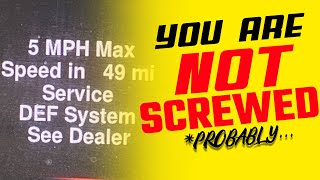
We Have This Part in Stock

The information in this article is provided for general reference and educational purposes only. Vehicle specifications, procedures, and part compatibility can vary by production date, trim level, and region. Always consult your vehicle's factory service manual and verify part numbers before purchasing or performing repairs. Safety-critical components such as airbags, seat belts, and braking systems should be installed by a qualified professional.
- Ram 3500:
- 🧭 Diagnostic Flowchart
- 🎬 Helpful Videos
- 🛍️ Shop This Part
- What's Unique About the 2014-2020 Ram 3500
- Symptoms You May Notice
- Most Likely Causes
- Rare But Worth Checking
- Diagnosis Steps
- Parts You'll Likely Need
- Related Codes That Often Appear With This One
- Technical Service Bulletins (TSBs) & Recalls
- Platform-Specific Known Issues
- Mechanic-Grade Diagnostic Values
- Hidden / Shadow Codes Worth Checking
- Scan Tool Commands That Help
- Real Owner Repair Stories
- "I Checked Everything" — The Actual Cause
- 🎟️ Get 5% Off