

P0420 on 2012-2017 Subaru Crosstrek: Catalyst Efficiency Causes and Fixes
On a 2012-2017 Subaru Crosstrek, the P0420 code almost always points to a failing front catalytic converter, often due to age or engine oil consumption. Before replacing this expensive part (approx. $600+ aftermarket, $2500+ OEM), first rule out cheaper causes like a bad rear O2 sensor or an exhaust leak. The Federal Emissions Warranty covers the converter for 8 years or 80,000 miles.
- P0420 on a 2012-2017 Crosstrek most often means the catalytic converter has failed, frequently due to the engine's tendency to consume oil.
- Before spending over $2,000 on an OEM converter, you must rule out cheaper fixes: exhaust leaks and faulty oxygen sensors.
- The best way to diagnose the issue is by graphing the front and rear O2 sensor data with a scan tool.
- Avoid cheap aftermarket catalytic converters and O2 sensor spacers; they are known to cause the code to return and can create new problems.
- If your engine is consuming oil, this issue should be addressed to prevent destroying the new catalytic converter.
What's Unique About the 2012-2017 Subaru Crosstrek
The first-generation Crosstrek's FB20B engine has a known tendency for higher-than-average oil consumption, particularly in 2012-2013 models. This is a critical factor for the P0420 code, as burning oil contaminates the precious metals inside the catalytic converter, leading to its premature failure. Many owners who replace only the converter without addressing oil consumption or other engine issues find the code returns. Additionally, aftermarket catalytic converters are widely reported to fail quickly on these vehicles, making OEM parts a more reliable, albeit more expensive, solution. A Reddit user with a 2017 model reported replacing an aftermarket converter that failed after only 30 miles, with a mechanic advising that California-certified cars are particularly sensitive and often require the OEM part.
Symptoms You May Notice
- Solid Check Engine Light is the most common symptom.
- Blinking 'CRUISE' light on the dashboard, disabling cruise control.
- Possible subtle decrease in fuel economy or engine power.
- A 'rotten egg' (sulfur) smell from the exhaust if the converter is severely failing.
- In some cases, the code appears specifically when decelerating from highway speeds.
- Replacing the rear O2 sensor when the catalytic converter is the actual failure. This is a common 🎬 See why replacing the O2 sensor is often a mistake attempt at a cheaper fix but often doesn't solve the problem.
- Installing an O2 sensor spacer or 'defouler'. This only tricks the sensor and hides the problem. It can lead to other codes, like P2096 (Post Catalyst Fuel Trim System Too Lean), and will not pass a visual emissions inspection.
Most Likely Causes
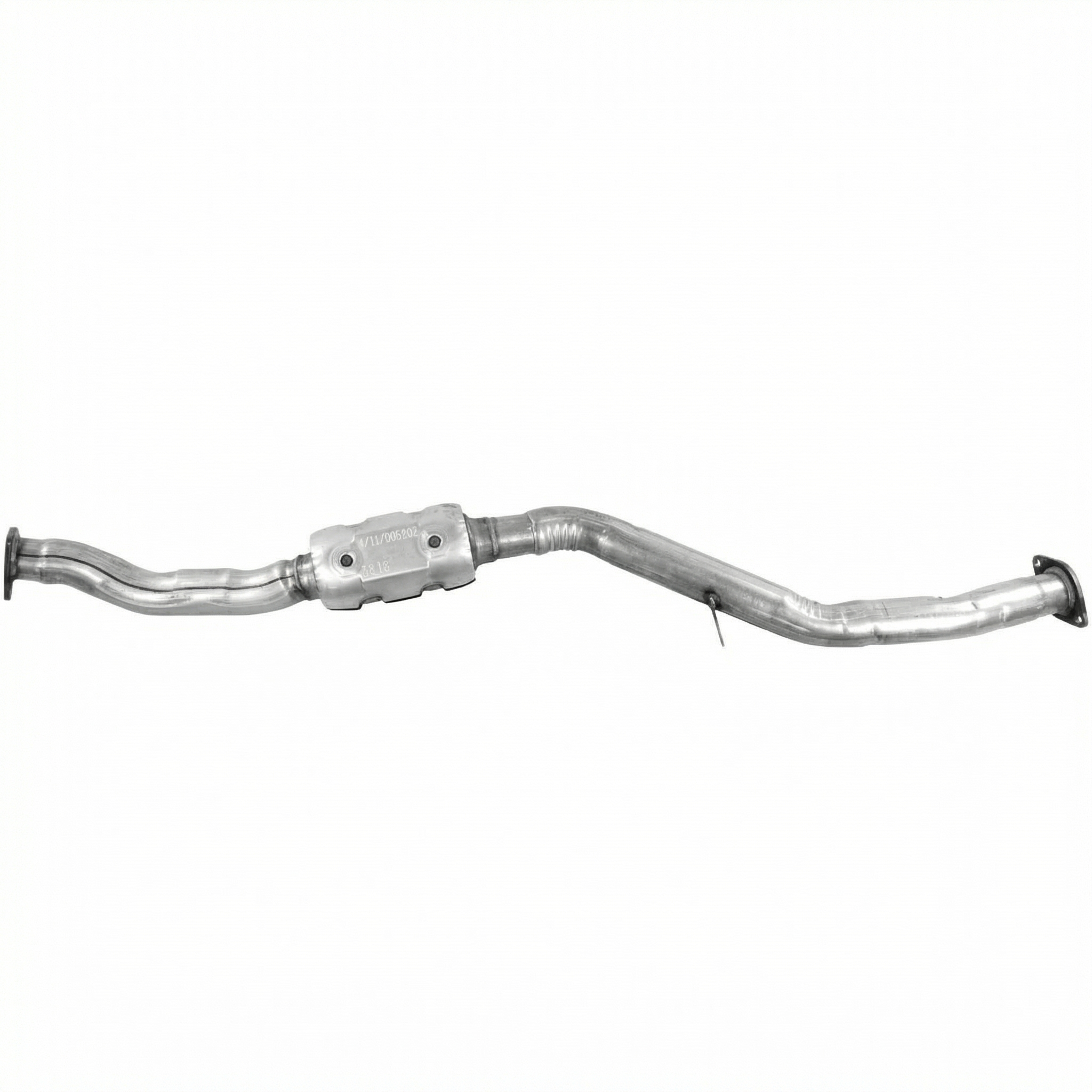
- Failing Catalytic Converter 🔴 High Probability → Shop Catalytic Converter The catalytic converter is often contaminated by burning engine oil, a known issue with early FB20B engines. Normal wear and tear also contribute, especially on vehicles with over 80,000 miles. The converter is integrated into the front exhaust pipe assembly.
How to confirm: Use a scan tool to graph the voltage of the front A/F sensor and rear O2 sensor. With the engine fully warm and held at a steady 2500 RPM, a bad converter will show the rear O2 sensor's voltage fluctuating rapidly, mimicking the front sensor. A good converter will show a steady, relatively flat line from the rear sensor, typically above 0.6V. An infrared thermometer can also be used; the outlet pipe should be at least 100°F hotter than the inlet.
Typical fix: Replace the front catalytic converter/exhaust manifold assembly. 🎬 Watch: How to replace the converter using basic hand tools It is critical to use an OEM or high-quality aftermarket part, as many owners report immediate code return with cheaper units.
Est. part cost: $500-$2700 - Failing Rear Oxygen (O2) Sensor 🟡 Medium Probability → Shop Oxygen Sensor While not a specific vehicle prone issue, it's a common part to fail with age and can send incorrect signals.
How to confirm: If the rear O2 sensor's voltage on a scan tool graph is stuck at one value (e.g., 0V or 1V), responds very slowly, or triggers a specific sensor code like P013a (O2 Sensor Slow Response), the sensor itself is likely faulty. Wiggling the sensor harness while monitoring the live data can also reveal intermittent connection issues.
Typical fix: Replace the rear (downstream) oxygen sensor. Denso is a common OEM supplier for this part.
Est. part cost: $60-$200 - Exhaust Leak ⚪ Low Probability Gaskets, especially the donut gasket between the manifold/converter and the mid-pipe, can degrade over time, causing leaks that introduce oxygen and fool the sensors.
How to confirm: Perform a visual inspection for black soot marks around exhaust flanges and gaskets. Listen for a ticking or hissing noise from the engine bay or under the car, especially when the engine is cold. A smoke test is the most definitive way to find a leak. An exhaust leak before the converter can cause a false P0420 reading.
Typical fix: Replace the leaking gasket(s) or repair the cracked pipe.
Est. part cost: $20-$50 - Failing Front Air/Fuel (A/F) Ratio Sensor ⚪ Low Probability → Shop Oxygen Sensor
How to confirm: A failing front A/F sensor may not fluctuate as rapidly as it should on a scan tool graph, or it may trigger other codes like P0171 (System Too Lean) or P0172 (System Too Rich). A faulty front sensor can cause the engine to run rich, which over time can damage the catalytic converter.
Typical fix: Replace the front (upstream) Air/Fuel ratio sensor.
Est. part cost: $100-$250
Rare But Worth Checking
- Excessive Oil Consumption: This is less a direct cause and more the root cause of catalytic converter failure. If you are adding more than a quart of oil every 3,000-4,000 miles, this must be investigated before replacing the converter, or the new one will also fail. Early FB20 engines (2012-2013) were particularly known for this due to piston ring design.
- Engine Misfires or Fuel System Issues: Unburned fuel from misfires (bad spark plugs, coils) or leaking injectors will destroy a converter. These issues usually trigger other codes (e.g., P0301-P0304) that must be fixed first, as emphasized in Subaru's TSB 09-110-23R.
- Incorrect Air Filter or Dirty MAF/MAP sensor: → Shop Air Cleaner Assembly In one detailed forum account, a user fixed a persistent P0420 code that the dealer could not solve by cleaning the MAF and MAP sensors and replacing a restrictive aftermarket air filter with the OEM Subaru filter.
Diagnosis Steps
- Check for any other stored DTCs. Per TSB 09-110-23R, if misfire (P030x) or fuel trim (P0171/P0172) codes are present, diagnose and fix them first.
- Visually inspect the exhaust system from the engine to the rear O2 sensor. Look for cracks, holes, or black soot indicating a leak at a gasket or weld.
- Check engine oil level. If it is low, be aware that oil consumption is a likely root cause of the converter failure.
- With the engine fully warmed up, use a scan tool with live data graphing capabilities. Monitor the voltage signals from 'Bank 1, Sensor 1' (front A/F sensor) and 'Bank 1, Sensor 2' (rear O2 sensor).
- Hold the engine RPM steady at around 2,000-2,500 RPM.
- Observe the graphs: The front sensor (B1S1) should show rapid, frequent fluctuations. The rear sensor (B1S2) on a healthy converter should show a slow, relatively steady voltage, typically above 0.5V-0.6V. 🎬 Watch: Step-by-step guide to diagnosing the P0420 code
- If the rear sensor's graph mirrors the rapid fluctuations of the front sensor, the catalytic converter is not working and has failed.
- If the rear sensor's graph is flatlined at 0V, stuck high, or responds very slowly, the sensor itself is likely bad.
- If you suspect the converter is clogged, you can check the temperature of the pipe before and after the converter using an infrared thermometer. The outlet pipe should be at least 100°F hotter than the inlet pipe on a working converter.
Parts You'll Likely Need
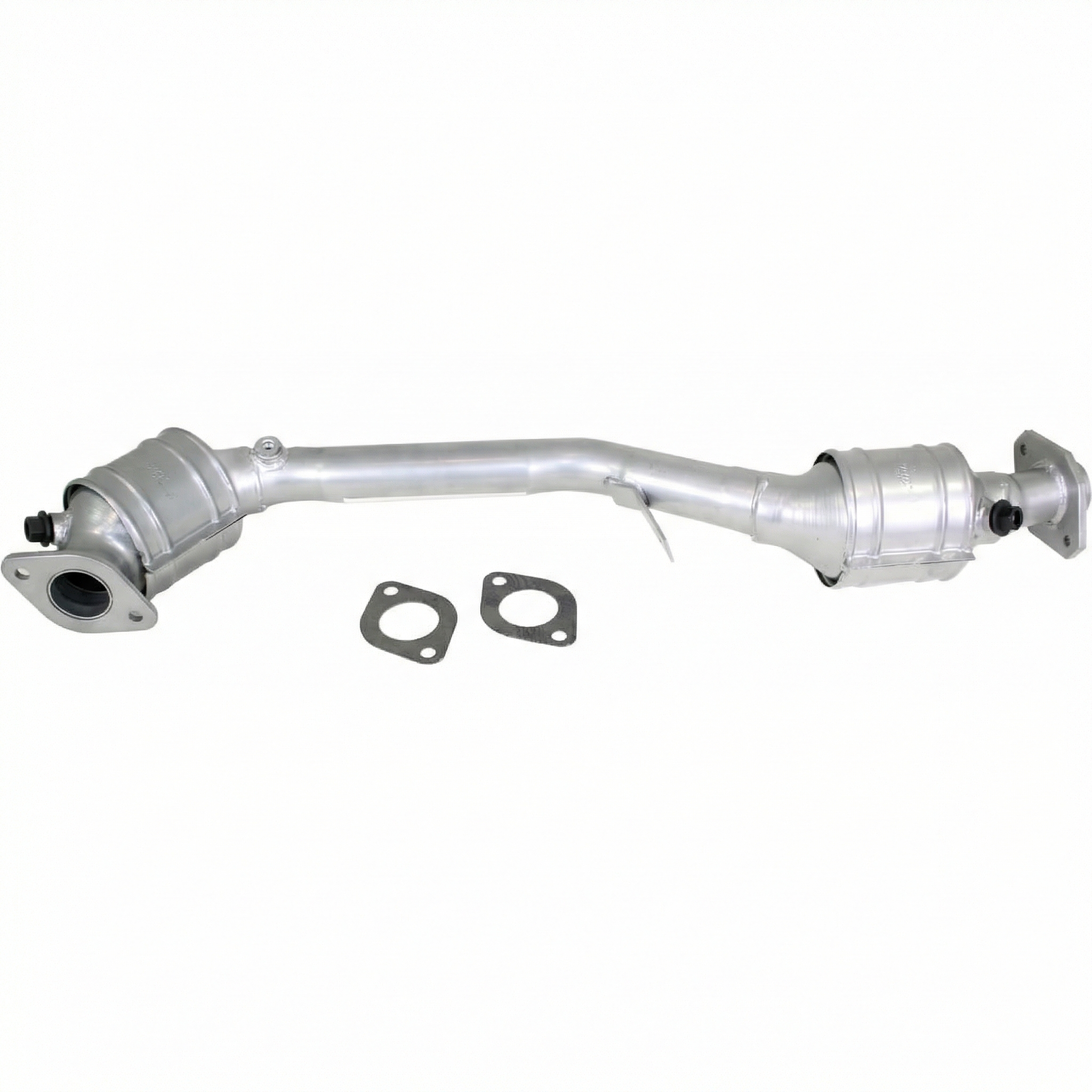
- Front Catalytic Converter / Exhaust Manifold Assembly
(OEM #44620AD15B (replaces 44620AD15A))— This is the most common failure point for a P0420 code on this vehicle, often due to internal degradation from age or oil contamination.
Trusted brands: Subaru (OEM), Walker, MagnaFlow, Dorman
OEM price range: $2000-$2700
Aftermarket price range: $500-$900 - Rear Oxygen Sensor (Downstream)
(OEM #22690AA960)— A faulty sensor can send incorrect data to the ECM, falsely triggering the P0420 code. It is a common misdiagnosis but is sometimes the correct fix.
Trusted brands: Denso (OEM supplier), Bosch, NGK/NTK
OEM price range: $120-$200
Aftermarket price range: $60-$120 - Front Air/Fuel Ratio Sensor (Upstream)
(OEM #22641AA670)— Less common, but a failing front A/F sensor can cause an incorrect fuel mixture, leading to converter damage and a P0420 code.
Trusted brands: Denso (OEM supplier), Subaru (OEM)
OEM price range: $150-$250
Aftermarket price range: $100-$180
Related Codes That Often Appear With This One
- P0171 — System Too Lean. This can indicate an exhaust leak before the front A/F sensor or a vacuum leak, both of which can affect catalyst readings. It can also appear after installing an O2 spacer.
- P2096 — Post Catalyst Fuel Trim System Too Lean. This code often appears after someone installs an O2 sensor spacer in an attempt to defeat the P0420 code.
- P0300-P0304 — Misfire codes. A persistent misfire allows unburned fuel to enter the exhaust, which will quickly destroy the catalytic converter.
Technical Service Bulletins (TSBs) & Recalls
- TSB 09-110-23R: This bulletin provides a detailed diagnostic flowchart for technicians when a P0420 code is detected. It prioritizes checking for other DTCs (misfires, fuel trim), inspecting for exhaust leaks, and verifying sensor data before replacing the catalytic converter. It also includes a specific road test procedure to confirm the failure.
- TSB 05-70-19: While not directly related to P0420, this TSB addresses premature rear wheel bearing failure on 2013-2019 Crosstreks, a common platform issue. It notes that an uneven brake backing plate surface can cause repeat failures and recommends replacing the backing plate with the hub assembly.
Platform-Specific Known Issues
- Subaru issued TSB 09-110-23R for 2017 and newer models, including the Crosstrek, outlining a specific diagnostic procedure for P0420. It stresses the importance of checking for other DTCs, exhaust leaks, and proper sensor function before condemning the catalytic converter.
- The Federal Emissions Warranty covers the catalytic converter for 8 years or 80,000 miles, whichever comes first. Owners within this window should contact a dealer for potential warranty replacement.
- Many owners on forums like subaruxvforum.com and Reddit report that using non-OEM catalytic converters causes the P0420 code to return quickly, sometimes within 100 miles. This suggests the ECM's monitoring strategy is very sensitive and calibrated specifically to the OEM part's efficiency.
Mechanic-Grade Diagnostic Values
- Exhaust Back Pressure — expected: Below 1.5 PSI at idle, and under 3 PSI at 2500 RPM.. Failure: Readings higher than 3 PSI indicate a clogged or collapsed catalytic converter, which is restricting exhaust flow.
- Ignition Coil Primary Resistance — expected: 12,800 Ohms (Ω) +/- 15%. Failure: A reading outside this range indicates a faulty coil, which can cause misfires that damage the catalytic converter.
- Ignition Coil Secondary Resistance — expected: 0.73 Ohms (Ω) +/- 10%. Failure: A reading outside this range suggests the coil's secondary winding is failing.
Hidden / Shadow Codes Worth Checking
- Mode 6, Test ID $81 (Catalyst Monitor Bank 1): This is not a DTC but a non-continuous monitor test result stored in the ECM. It contains the measured efficiency value of the catalyst versus the minimum/maximum allowable thresholds. A value close to or exceeding the limit confirms the P0420 is due to a legitimate efficiency failure. (see via A professional scan tool, including the Subaru Select Monitor (SSM), can access Mode 6 data. On the SSM, this would be viewed under the 'Catalyst Diagnosis' monitor status in the OBD System menu.)
Scan Tool Commands That Help
- Subaru Select Monitor (SSM): Current Data Display & Save — This function is used to graph the front A/F sensor and rear O2 sensor signals in real-time to visually confirm catalyst efficiency. It is the primary diagnostic step for P0420.
- Subaru Select Monitor (SSM): Read Diagnostic Trouble Code (DTC) > Memorized DTC — Used to check for any other stored codes (misfires, fuel trim, etc.) that must be diagnosed before addressing the P0420, as per Subaru's diagnostic procedure.
- Subaru Select Monitor (SSM): OBD System > Catalyst Diagnosis — To check if the catalyst efficiency monitor has completed its self-test. If it shows 'incomplete', a specific drive cycle must be performed before the system can confirm if the fault is still present.
Wiring & Ground Locations
- O2 / A/F Sensor Connectors — On the front passenger side of the engine bay, near the power steering pump and radiator hose. The front A/F sensor has a black and gray plug, while the rear O2 sensor has an all-gray plug.. These connectors are a common point for inspection. Corrosion or damage here can disrupt sensor signals, causing false codes. Wiggling these connectors while watching live data can help identify intermittent connection problems.
- O2 / A/F Sensor Harness Clip — The wiring for both sensors is secured to a bracket on the passenger side, near the timing cover, before routing down to the exhaust manifold.. Ensuring the harness is properly secured in its clips prevents it from contacting hot exhaust components or moving engine parts, which could melt or chafe the wires and cause a short.
Real Owner Repair Stories
- Reddit user ojlenaghan (2017 Subaru Crosstrek (California certified), 85,000 miles) — P0420 code, along with previous misfire codes.
❌ Tried (didn't work) Replaced spark plugs and ignition coils., Replaced MAF sensor and air filter., Replaced catalytic converter with an aftermarket unit., Replaced O2 sensors., Replaced battery.
✅ What actually fixed it The P0420 code returned within 30-100 miles of replacing the aftermarket converter. The consulting mechanic concluded that because the car was California-certified, its ECU was too sensitive for the aftermarket part and required the expensive OEM catalytic converter to resolve the code. - Reddit user Old_Gur_6596 (2017 Subaru Crosstrek, ~80,000 miles) — Initial P0420 code, followed by P2096 (Post Cat Fuel Trim Too Lean) and P0171 (System Too Lean) after installing a spacer. Later developed P013a (O2 Sensor Slow Response).
❌ Tried (didn't work) Installed an O2 sensor spacer (defouler), which temporarily hid P0420 but caused other lean codes., Replaced both the front A/F sensor and rear O2 sensor based on a mechanic's recommendation.
✅ What actually fixed it Immediately after replacing both oxygen sensors, the P0420 code returned within 5 minutes of driving. The conclusion was that the new, accurate sensors were now correctly reporting the underlying failure of the catalytic converter, which was the true root cause all along.
When the Usual Fixes Don't Work
- In one documented case, an owner with a P0420 code followed a common diagnostic path by replacing both the upstream A/F sensor and the downstream O2 sensor. Instead of fixing the issue, this immediately caused the P0420 code to set within minutes of driving. This suggests the original, aged sensors had become 'lazy' and were no longer accurately reporting the poor efficiency of an already-failed catalytic converter. The new, fully functional sensors correctly identified the bad converter at once, proving that replacing sensors can sometimes confirm, rather than fix, a bad catalytic converter.
OEM Part Supersession History
44620AD15A→44620AD15B— Standard part revision by the manufacturer.
Heads up: The new part number is a direct replacement for the old one.
Model Year Variations Within This Range
- 2012-2014: These earlier models with the FB20B engine are more susceptible to excessive oil consumption due to piston ring design. Subaru issued TSB 02-157-14R, extending the warranty and, in confirmed cases, replacing the entire engine short block. This oil burning is a primary cause of premature catalytic converter failure, making P0420 more likely on these specific years if the underlying oil issue was not addressed. The consumption threshold for action was defined as more than 1/3 of a quart in 1,200 miles.
- All (potential): Subaru has been known to release ECM software updates to adjust the sensitivity of the catalyst efficiency monitor. If all hardware checks out, it is worth checking with a dealer if any logic updates are available for the vehicle's specific VIN, as this can sometimes resolve an overly sensitive P0420 trigger.
Diagnostic Flowchart
Other Known Issues on This Vehicle
Issues unrelated to this code that are worth knowing about as an owner of this generation:
- Excessive Oil Consumption 🔴 High — Most common on 2012-2014 models. Subaru faced a class-action lawsuit and extended warranties for some vehicles. Consumption over 1 quart per 1,200 miles was the threshold for a dealer short block replacement under the program. (Ref: Related TSBs and a warranty extension program were issued, though many are now expired.)
- CVT Transmission Shudder/Failure 🔴 High — Common across 2012-2017 models, with symptoms including shuddering, hesitation, and stalling. Subaru extended the CVT warranty to 10 years/100,000 miles for these model years due to widespread issues. (Ref: 10-year/100,000-mile CVT warranty extension.)
- Premature Rear Wheel Bearing Failure 🟠 Medium — A humming or grinding noise that gets louder with speed is a common complaint. Failure often occurs before 100,000 miles. (Ref: TSB 05-70-19 identifies a defective rear brake backing plate as a potential cause for repeat failures on 2013-2019 models.)
- Valve Spring Fracture (Early Models) 🔴 High — While more prominent in the FA20 engine (BRZ), some early FB20 engines were included in recalls for valve springs that could fracture, potentially leading to engine malfunction or failure. (Ref: Recall)
Used vs. New Parts: Buying Guide for This Vehicle
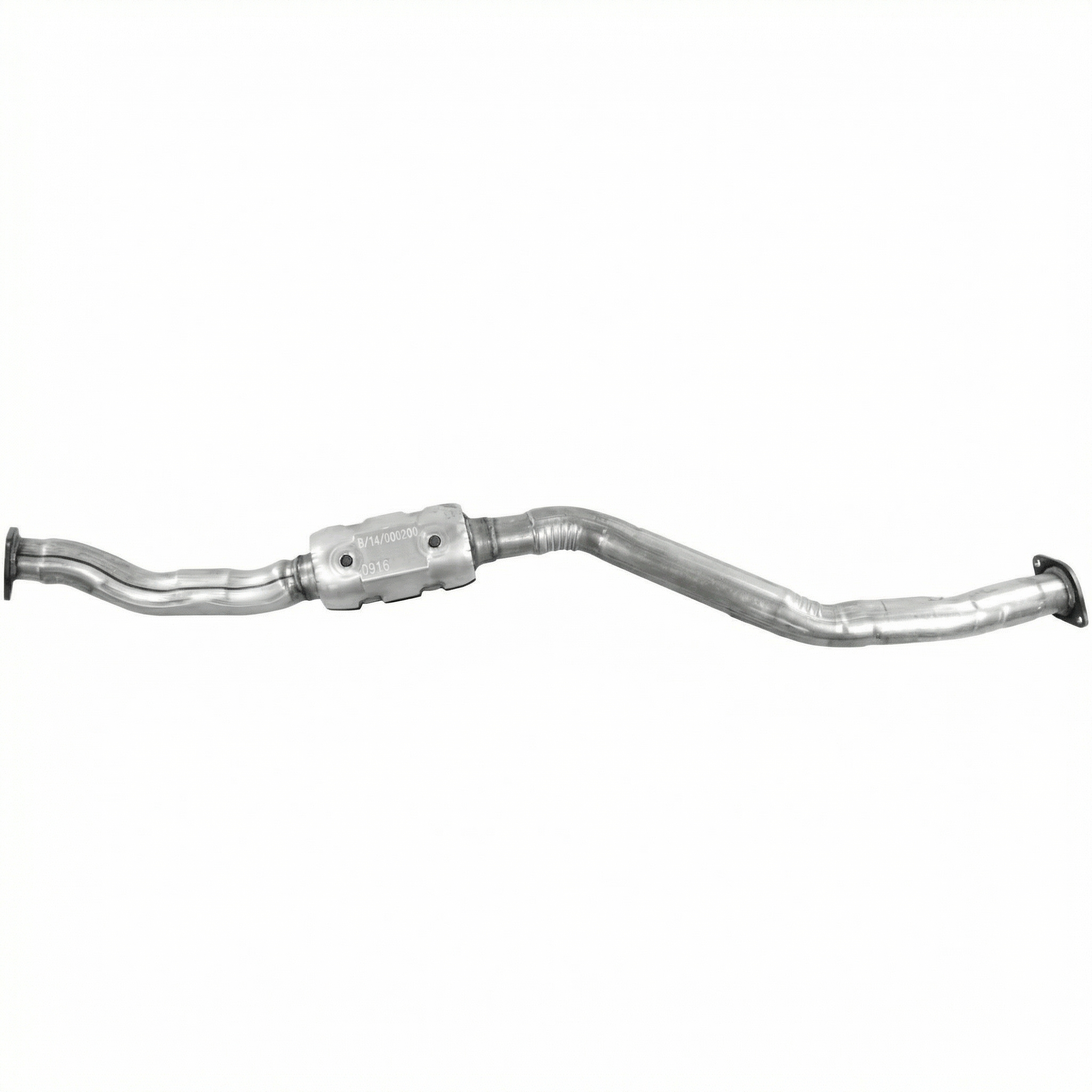
When a used part is the smart pick: A used OEM catalytic converter from a reputable auto recycler can be a smart financial choice, given the high cost of a new OEM part and the reported issues with aftermarket units on this vehicle. This is only recommended if the donor vehicle's history and mileage are known.
Donor-vehicle mileage cap: roughly under 80000 miles for the part to have meaningful remaining life.
What to inspect on the donor part:
- Verify the donor vehicle was not in a front-end collision that could have cracked the converter's internal substrate.
- Check the donor vehicle's VIN to ensure it did not have the oil consumption issue prevalent in early models.
- Inspect the part for heavy rust, damaged flanges, or stripped O2 sensor threads.
- Ask for a photo of the inside honeycomb structure if possible; it should be intact and not melted or clogged.
OEM-only on this vehicle (don't cheap out):
- Catalytic Converter: Strongly recommended, especially for California emissions (PZEV) models. Many owners report aftermarket converters fail to satisfy the ECU's efficiency test, causing the P0420 code to return quickly.
Aftermarket brands forum-validated for this vehicle:
- Denso (for O2/AF Sensors - OEM Supplier)
- NTK (for O2/AF Sensors - OEM Supplier)
Brands owners have reported issues with on this vehicle:
- Unbranded, low-cost catalytic converters from online marketplaces are frequently cited as failing within weeks or months.
Real Owner Stories
Aggregated from forums and TSBs cited above. Mileages and costs reflect what owners reported in those sources.
2017 Subaru Crosstrek
Symptoms: Owner experienced a P0420 code and attempted to fix it with an aftermarket catalytic converter.
What fixed it: The aftermarket unit failed after only 30 miles; the mechanic recommended an OEM part was necessary for the vehicle's emissions standards.
Source hint: Reddit r/Crosstrek: catalytic converter/PO420 issues
2017 Subaru Crosstrek
Symptoms: Owner used an O2 spacer to try and bypass the P0420 code.
What fixed it: The spacer did not fix the issue and instead triggered additional codes P2096, P0171, and P013a.
Source hint: Reddit r/MechanicAdvice: P0420 on Subaru Crosstrek
2013 Subaru XV Crosstrek
Symptoms: Vehicle triggered P0420 code; owner received a dealership quote of $1300 for repair.
What fixed it: DIY replacement of the catalytic converter.
Cost: $0-$500
Source hint: YouTube: My 2013 Subaru XV crosstrek was giving me the code p0420...
2016 Subaru Crosstrek
Symptoms: P0420 engine code returned even after replacing the catalytic converter and both O2 sensors.
What fixed it: The issue persisted, highlighting the failure of aftermarket converters to satisfy the ECM.
Cost: $625-$625
Source hint: subaruxvforum.com: P0420 Engine Code 2016 Subaru Crosstrek
Related OBD-II Codes
Frequently Asked Questions
Is the catalytic converter on my 2012-2017 Subaru Crosstrek covered under warranty?
Does TSB 09-110-23R apply to my Crosstrek for the P0420 code?
Can I use an aftermarket catalytic converter to fix the P0420 code on my Crosstrek?
Why does my cruise control light blink when the P0420 code is active?
Could engine oil consumption be causing my P0420 code?
What is the recommended brand for a replacement rear O2 sensor?
Helpful Videos
We Have This Part in Stock

The information in this article is provided for general reference and educational purposes only. Vehicle specifications, procedures, and part compatibility can vary by production date, trim level, and region. Always consult your vehicle's factory service manual and verify part numbers before purchasing or performing repairs. Safety-critical components such as airbags, seat belts, and braking systems should be installed by a qualified professional.
- Subaru Crosstrek:
- 🧭 Diagnostic Flowchart
- 🎬 Helpful Videos
- 🛍️ Shop This Part
- What's Unique About the 2012-2017 Subaru Crosstrek
- Symptoms You May Notice
- Most Likely Causes
- Rare But Worth Checking
- Diagnosis Steps
- Parts You'll Likely Need
- Related Codes That Often Appear With This One
- Technical Service Bulletins (TSBs) & Recalls
- Platform-Specific Known Issues
- Mechanic-Grade Diagnostic Values
- Hidden / Shadow Codes Worth Checking
- Scan Tool Commands That Help
- Wiring & Ground Locations
- Real Owner Repair Stories
- When the Usual Fixes Don't Work
- OEM Part Supersession History
- Model Year Variations Within This Range
- Other Known Issues on This Vehicle
- Used vs. New Parts: Buying Guide for This Vehicle
- Real Owner Stories
- 2017 Subaru Crosstrek
- 2017 Subaru Crosstrek
- 2013 Subaru XV Crosstrek
- 2016 Subaru Crosstrek
- Related OBD-II Codes
- Frequently Asked Questions
- 🎟️ Get 5% Off