

P0420 on 2005-2009 Subaru Legacy 2.5L: Catalyst Efficiency Causes and Fixes
P0420 on a 2005-2009 Legacy most often points to a failing catalytic converter, but always check for cheaper fixes first. A faulty rear oxygen sensor or exhaust leaks are common misdiagnoses. An OEM converter is expensive, but many aftermarket options fail to resolve the code long-term because the Subaru ECU is notoriously sensitive.
- P0420 on a 2005-2009 Legacy is very common and often means the catalytic converter has failed, partly due to sensitive ECU programming.
- Always diagnose before replacing parts. Check for exhaust leaks and test the rear O2 sensor, as these are cheaper fixes that can cause the same code.
- If the catalytic converter must be replaced, investing in a high-quality OEM or CARB-compliant aftermarket part is crucial to prevent the code from returning.
- Check if your vehicle had the WVI-19 or WVM-23 service campaigns performed, as this directly relates to the P0420 issue.
- Address any underlying engine issues like misfires, oil consumption, or coolant leaks before replacing the converter, or you will destroy the new part.
What's Unique About the 2005-2009 Subaru Legacy
The P0420 code is notoriously common on Subarus of this era, often nicknamed 'the Subaru code' by owners. The EJ253 engine and the vehicle's specific ECU software are particularly sensitive to any drop in catalyst efficiency. In fact, Subaru issued service campaigns and recalls (e.g., WQD-40, WVI-19, WVM-23) to reprogram the ECM logic to be less sensitive and, in some cases, replace the catalytic converter under an extended warranty due to premature failure. This history means that unlike many other cars where an O2 sensor is a likely culprit, on this Legacy, the catalytic converter itself is a very high-probability failure point, often due to underlying issues like oil or coolant consumption that are also common to the EJ25 engine.
Symptoms You May Notice
- Check Engine Light is on
- Blinking 'Cruise Control' light on the dashboard (a standard Subaru feature when a CEL is triggered)
- Reduced engine power and sluggish acceleration
- Worse than usual fuel economy
- A rattling noise from under the car, indicating the catalyst substrate has broken apart
- A 'rotten egg' or sulfur smell from the exhaust
- Engine hesitation or stumbling under load
- Immediately replacing the catalytic converter without checking for exhaust leaks or testing the oxygen sensors first. An exhaust leak or a bad rear O2 sensor is a much cheaper fix and can cause the same code.
- Replacing the catalytic converter without addressing an underlying engine issue like oil consumption or a misfire, leading to the new converter failing prematurely.
Most Likely Causes
- Failing Catalytic Converter 🔴 High Probability → Shop Catalytic Converter Subaru ECUs of this era are highly sensitive, and the original converters were prone to degradation. Subaru issued service programs (WVI-19, WVM-23, WQD-40) to address this known issue with ECM reprogramming and converter replacement. Age, heat cycles, and contamination from common EJ253 engine issues (oil/coolant consumption) are primary contributors.
How to confirm: After ruling out O2 sensors and exhaust leaks, the converter is the likely cause. A definitive test involves comparing the live data waveforms of the front A/F sensor and rear O2 sensor; if the rear sensor mimics the rapid switching of the front sensor, the converter is not working. An infrared thermometer can also be used to check temperatures; the outlet should be significantly hotter (at least 100°F) than the inlet on a working converter.
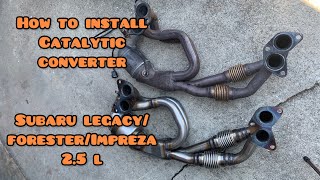
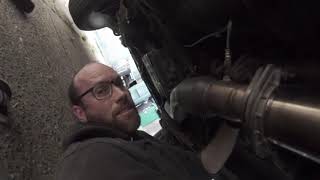
Typical fix: Replace the catalytic converter assembly. Using a high-quality OEM or CARB-compliant aftermarket converter is strongly recommended, as cheap aftermarket units often fail to satisfy the sensitive ECU and cause the code to return. Many owners report the P0420 code returning within months of installing a cheap aftermarket converter. 🎬 Watch: How to diagnose and replace the converter correctly.
Est. part cost: $400-$1500 - Faulty Rear (Downstream) Oxygen Sensor 🟡 Medium Probability → Shop Oxygen Sensor The rear O2 sensor's only job is to monitor the catalyst. If it becomes old, slow, or contaminated with carbon or oil, it can send incorrect data to the ECM, falsely triggering a P0420 code. It's a common failure point on any aging vehicle and is often replaced as a first step due to its lower cost.
How to confirm: Using a scan tool with live data, observe the rear O2 sensor's voltage. At a steady 2,500 RPM with a warm engine, the voltage should be relatively stable (e.g., above 0.6V). If it's fluctuating rapidly like the front sensor or is flatlined at a low voltage, the sensor is likely bad.
Typical fix: Replace the rear oxygen sensor. The OEM manufacturer is typically Denso. This is often attempted before replacing the converter due to its much lower cost. 🎬 See this step-by-step guide for replacing both O2 sensors. A common, though not recommended, workaround seen in forums is installing an O2 sensor spacer or 'extender' to pull the sensor out of the direct exhaust stream, which can trick the ECU but does not fix the underlying problem.
Est. part cost: $50-$150 - Exhaust System Leaks 🟡 Medium Probability Gaskets, especially the donut gasket between the catalytic converter and the mid-pipe, frequently degrade and leak. The exhaust manifold itself can also develop cracks near the collector. A leak before or near the oxygen sensors allows outside air into the exhaust stream, which skews the sensor readings and can trick the ECM into setting a P0420 code.
How to confirm: Perform a visual inspection of the entire exhaust system from the engine to the tailpipe, looking for rust, holes, or black soot marks at flanges. Listen for an audible ticking or hissing sound that is loudest when the engine is cold. A smoke test is the most effective way to pinpoint small leaks.
Typical fix: Replace the leaking gasket or damaged exhaust component. The donut gasket is a very common and inexpensive part to replace. 🎬 Watch: An easy walkthrough for replacing the donut gasket.
Est. part cost: $10-$50 - Faulty Front (Upstream) Air/Fuel Ratio Sensor ⚪ Low Probability → Shop Oxygen Sensor While less common than a rear sensor failure for this code, a lazy or failing front A/F sensor can cause an improper air/fuel mixture. A consistently rich mixture can overwhelm and eventually damage the catalytic converter, leading to a real P0420 condition.
How to confirm: Monitor the front A/F sensor's live data on a scan tool. It should fluctuate rapidly around a lambda value of 1.0. If it's slow to respond or stuck, it needs replacement. This may also be accompanied by fuel trim codes like P0171 (lean) or P0172 (rich).
Typical fix: Replace the front Air/Fuel ratio sensor. The OEM manufacturer is typically Denso.
Est. part cost: $100-$200
Rare But Worth Checking
- Engine Mechanical Issues (Oil or Coolant Consumption): The EJ253 engine is well-known for potential head gasket failures, which can be external (oil/coolant dripping onto the ground) or internal (leaking into the combustion chamber). Piston ring issues can also cause excessive oil consumption. Coolant or oil burning in the combustion chamber will contaminate and destroy both the oxygen sensors and the catalytic converter over time. If you are frequently adding oil or coolant, this is the root cause that must be fixed before replacing any emissions components to prevent repeat failure.
- Ignition System Faults: A persistent engine misfire from bad spark plugs, wires, or a failing ignition coil allows unburnt fuel to enter the exhaust. This raw fuel superheats and melts the internal structure of the catalytic converter, destroying it. Always resolve misfire codes (P030x) before addressing a P0420.
Diagnosis Steps
- Read the code with an OBD-II scanner. Note any other codes present. Misfire or fuel trim codes must be addressed first.
- Visually inspect the entire exhaust system for obvious leaks, cracks, or damage. Pay close attention to the manifold collector area and the donut gasket after the converter.
- Check for underlying engine health issues. Is the oil level consistently low? Is there evidence of coolant loss? Address these first, as they will destroy a new converter.
- Use a scan tool to monitor live data. Warm up the engine and hold the RPMs steady (around 2,500 RPM).
- Observe the front A/F sensor (Bank 1, Sensor 1). Its signal should be switching rapidly.
- Observe the rear O2 sensor (Bank 1, Sensor 2). If the catalytic converter is good, its voltage should be relatively high and stable (e.g., >0.6V). If it is fluctuating rapidly and mirroring the front sensor, the converter has failed. If the signal is flatlined or erratic, the sensor itself is likely bad.
- If O2 sensor data is inconclusive, perform an exhaust backpressure test or use an infrared thermometer to check the converter's inlet and outlet temperatures. The outlet should be at least 100°F hotter than the inlet on a working converter.
- If sensors and exhaust integrity are good, the catalytic converter is the confirmed faulty component. Consider calling a Subaru dealer with your VIN to check for open recalls like WQD-40 that might cover the repair.
Parts You'll Likely Need
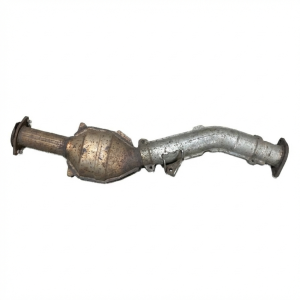
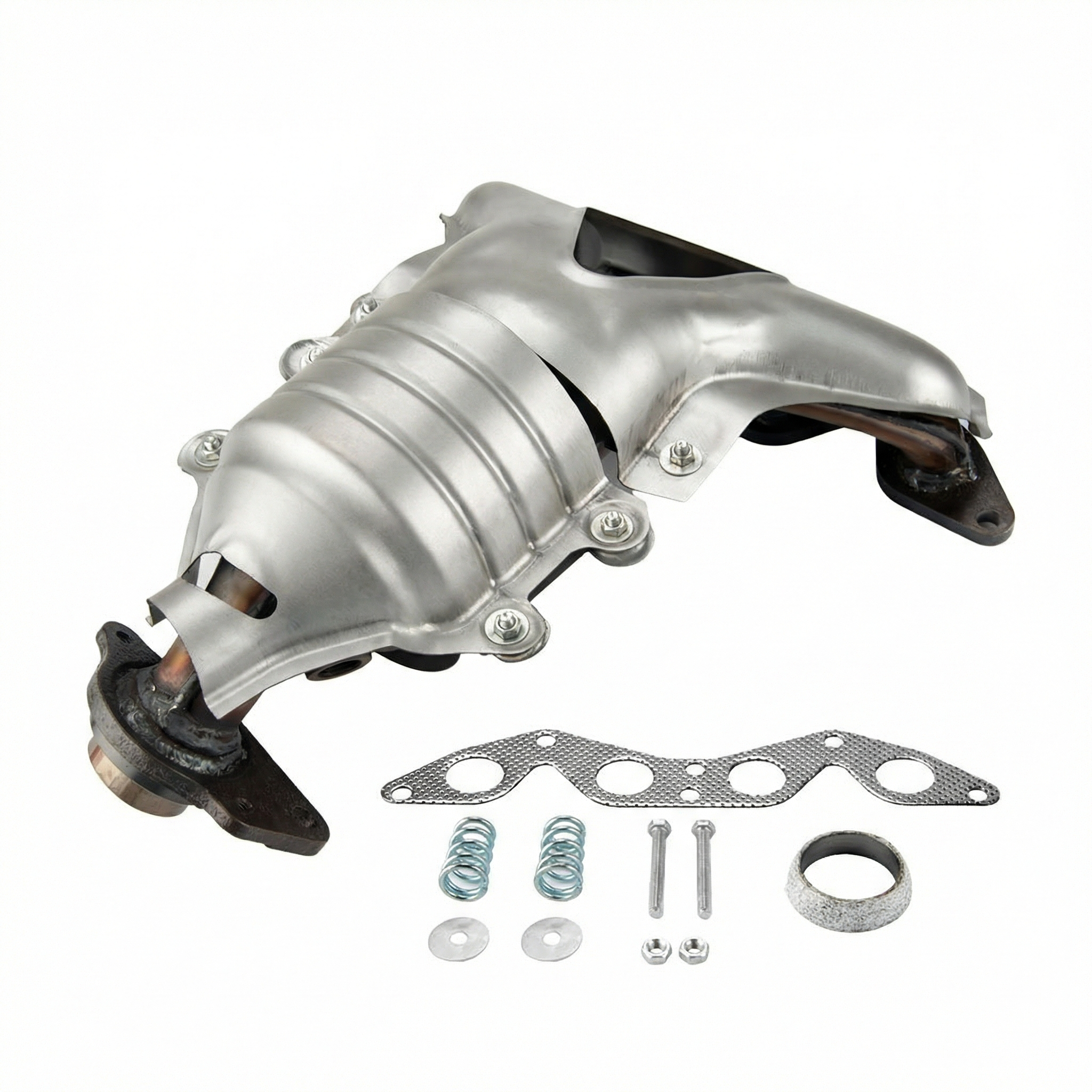
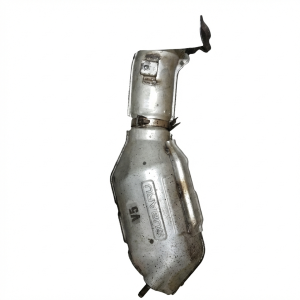
- Catalytic Converter Assembly
(OEM #44620AB51A (Federal Emissions, check VIN for exact fitment))— This is the most common direct cause for a P0420 on this vehicle, due to sensitive ECUs and contamination from engine issues. - Rear Oxygen Sensor
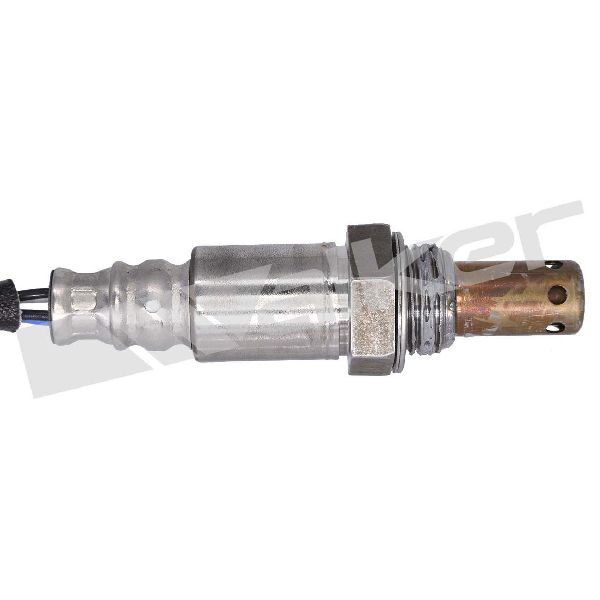
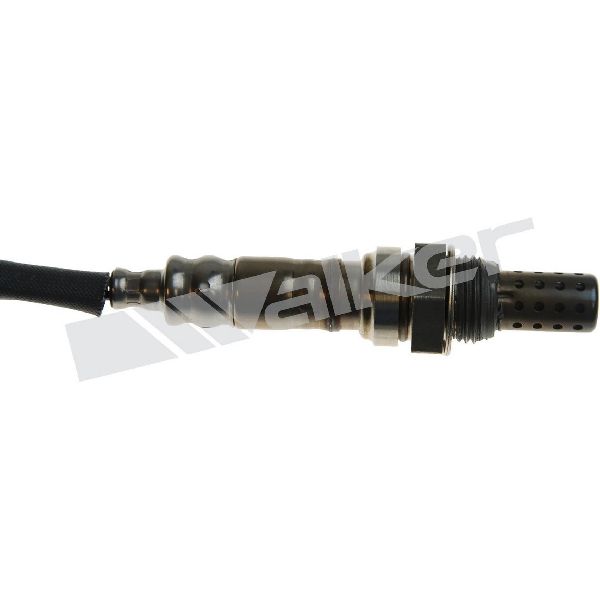
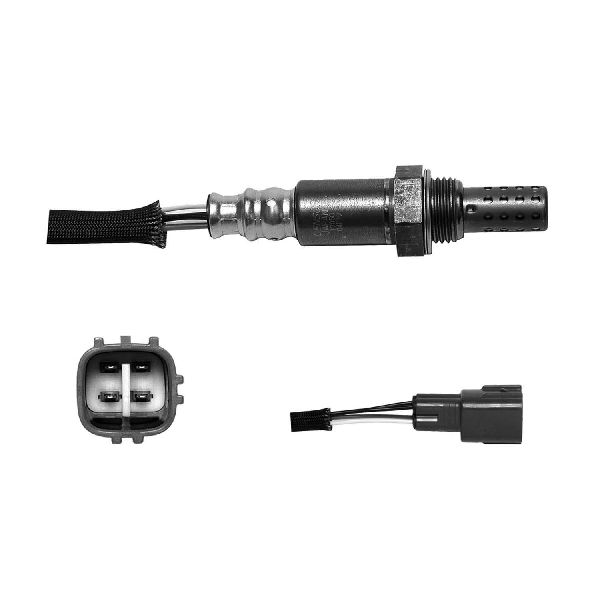
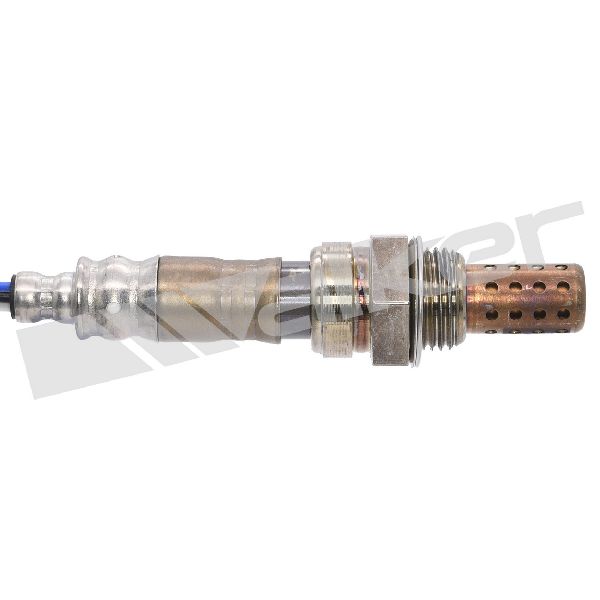
(OEM #22690AA850 (Denso is the OEM manufacturer, check VIN for exact fitment))— A faulty rear O2 sensor is a common cause and is often replaced as a first diagnostic step due to its lower cost compared to the converter. - Exhaust Donut Gasket — This gasket between the catalytic converter and mid-pipe is a frequent point of failure, causing exhaust leaks that can trigger a false P0420.
Related Codes That Often Appear With This One
- P0171 — System Too Lean. This often points to an exhaust leak before the front A/F sensor or a vacuum leak, which can contribute to a false P0420 reading.
- P0137 — O2 Sensor Circuit Low Voltage (Bank 1, Sensor 2). This code directly indicates a problem with the rear oxygen sensor, which is a primary cause of a P0420.
- P030X (e.g., P0301, P0302) — Cylinder Misfire. A misfire allows unburnt fuel into the exhaust, which will quickly destroy the catalytic converter. This is a root cause that must be fixed immediately.
Technical Service Bulletins (TSBs) & Recalls
- WVI-19 / WVM-23: Service campaigns to reprogram the Engine Control Module (ECM) to be less sensitive to minor drops in catalyst efficiency, and in some cases, replace the catalytic converter under an extended warranty.
- WQD-40: A recall for some models that involves an ECM software update to prevent catalytic converter damage and includes testing and potential replacement of the converter.
- TSB 11-80-05R: A technical service bulletin related to reprogramming the ECM for P0420 issues on various Subaru models.
- TSB Bulletin #09-110-23R: This manufacturer bulletin announces specific diagnostic service procedures to be followed when DTC P0420 is detected by the Engine Control Module.
Platform-Specific Known Issues
- The 'O2 Spacer' or 'Mechanical Fix': Across many Subaru forums, owners discuss using a spark plug non-fouler or a purpose-built spacer to pull the rear O2 sensor partially out of the exhaust stream. This makes the sensor read a more stable, lower oxygen level, tricking the ECU into thinking the catalyst is working. While it can turn the light off, it is illegal in many areas, will cause an emissions test failure on visual inspection, and masks the true problem.
- Aftermarket Converter Failure: A very common story from owners is replacing the converter with a cheaper aftermarket part, only to have the P0420 code return within a few months to a year. The sensitive Subaru ECU requires a high level of catalytic efficiency that many non-CARB compliant or budget converters cannot provide long-term.
- PZEV Warranty Coverage: For vehicles originally sold in California or other CARB states, they may carry a Partial Zero Emissions Vehicle (PZEV) warranty. This often extends coverage for specific emissions components, including the catalytic converter, to 15 years or 150,000 miles. Owners have successfully had their converters replaced for free by a dealer under this warranty. It is crucial to check with a dealer using the VIN.
Mechanic-Grade Diagnostic Values
- Downstream O2 Sensor Voltage (Warm Engine, Steady Cruise/2500 RPM) — expected: Relatively stable, > 0.6V (typically 0.7-0.8V). Failure: Voltage fluctuates rapidly, mirroring the front A/F sensor, or is stuck low (< 0.2V).
- Front Air/Fuel (A/F) Sensor Heater Circuit Resistance — expected: 2 to 3 ohms. Failure: Significantly higher resistance, or an open circuit (infinite resistance).
- Mode $06 Catalyst Monitor Test (TID $01, CID $01) — expected: The test value should be below the maximum threshold specified by the ECM.. Failure: If the reported value exceeds the specified maximum limit, the catalyst failed its last self-test.
- Forced Lean Condition (via vacuum leak) - O2 Sensor Test — expected: Sensor voltage should drop to around 200mV (0.2V).. Failure: Sensor is slow to react or voltage remains high.
- Forced Rich Condition (via propane/blocking intake) - O2 Sensor Test — expected: Sensor voltage should rise to around 800mV (0.8V).. Failure: Sensor is slow to react or voltage remains low.
Scan Tool Commands That Help
- Subaru Select Monitor (SSM) or equivalent: Catalyst Diagnosis / Test of Catalyst — This is a guided diagnostic function within the dealer tool to actively test the catalytic converter's performance, providing a more definitive pass/fail than just observing live data during a normal drive cycle.
Wiring & Ground Locations
- Main ECU Ground — On the back side of the driver's side intake manifold.. The ECU gets its primary ground reference from the intake manifold. A poor ground here, often caused by corrosion or modifications like TGV deletes with non-conductive spacers, can cause all sorts of bizarre sensor reading issues, including those for the A/F and O2 sensors, potentially leading to a false P0420.
- O2 Sensor Connectors (Upstream and Downstream) — Near the passenger side strut tower in the engine bay. The connectors are clipped to a bracket in this area.. These connectors are a common point for corrosion or damage. Verifying a clean, secure connection is a key step before condemning a sensor. Technicians often disconnect here to perform resistance tests on the sensor heater circuits.
- Rear O2 Sensor ECM Pins (2005 Model) — At the ECM, the rear O2 sensor signal is on pin 1 of connector B136, and the heater signal is on pin 2 of connector B135.. When diagnosing a potential wiring issue between the sensor and the ECM, a technician can test for continuity and voltage directly at these pins to isolate the fault to the sensor, the harness, or the ECM itself.
Real Owner Repair Stories
- MrSubaru1387 YouTube Channel Commenter (Subaru (model not specified, but general principle applies)) — Persistent P0420 code.
❌ Tried (didn't work) Dealer replaced the entire exhaust system, including the turbo., Dealer reflashed the PCM., Dealer tested the fuel system., Owner serviced the ignition system.
✅ What actually fixed it The owner cleaned the MAF and MAP sensors and, critically, replaced an aftermarket air filter with a genuine OE Subaru air filter. The theory is the aftermarket filter was starving the engine of air and/or the sensors were contaminated, giving false readings and causing the P0420. The code did not return for 14,000 miles after this fix. - Valley Mobile Automotive YouTube Channel (2008 Subaru Outback 2.5L) — P0420 code returned after previous repair.
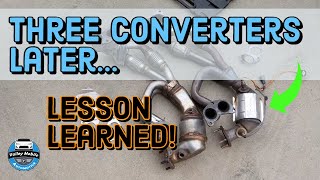
❌ Tried (didn't work) A Walker aftermarket catalytic converter was installed 2.5 years prior and failed., A second, brand new (non-Walker) aftermarket converter was installed and was also unable to keep the code away, with rear O2 readings oscillating under load.
✅ What actually fixed it Installing a genuine OEM Subaru catalytic converter. The live data showed the rear O2 sensor voltage became stable and high (0.8V) under load with the OEM part, whereas it oscillated wildly with two different aftermarket brands. The technician concluded that for this platform, the small size of the converter requires the high efficiency of the OEM unit to satisfy the ECU. - Reddit user in r/subaruimpreza (2009 Subaru Impreza, 201k miles) — P0420 code appeared after fixing a cylinder 4 misfire.
❌ Tried (didn't work) Replacing both front and rear O2 sensors.
✅ What actually fixed it The user's diagnosis was that the preceding misfire and oil saturation in the cylinder (from bad valve cover gaskets) had destroyed the original catalytic converter. The final resolution, though not explicitly stated as completed, was to replace the valve cover gaskets first to stop the oil leak, and then replace the catalytic converter to finally resolve the P0420. This highlights fixing the root cause (oil contamination) before replacing the cat. - NHTSA ODI #11524713 — An owner reported that despite installing a new starter and alternator, the P0420 code remained persistent and all dashboard lights stayed on.
"I Checked Everything" — The Actual Cause
- In one documented case, a persistent P0420 where all exhaust components, sensors, and the catalytic converter itself were replaced by a dealer failed to solve the issue. The actual root cause was found to be a combination of a contaminated Mass Airflow (MAF) sensor and a restrictive aftermarket air filter. Cleaning the MAF and installing an OEM Subaru air filter finally resolved the code. This is a classic example of how incorrect air metering can throw off fuel trims enough to mimic a catalyst efficiency problem, even when no exhaust leak is present.
Model Year Variations Within This Range
- 2005-2009: There was a distinction between Federal (FED) and California (PZEV - Partial Zero-Emission Vehicle) emissions systems. PZEV vehicles have a more complex and sensitive emissions system, and it is critical to use the correct PZEV-rated catalytic converter if the vehicle is so equipped. Installing a Federal converter on a PZEV car will almost certainly result in a recurring P0420 code.
Diagnostic Flowchart
Other Known Issues on This Vehicle
Issues unrelated to this code that are worth knowing about as an owner of this generation:
- Head Gasket Failure 🔴 High — Very common, typically between 80,000 and 150,000 miles. The EJ253 is known for external oil and coolant leaks at the head gasket.
- Wheel Bearing Failure 🟠 Medium — Common failure item, often starting around 60,000-100,000 miles. Presents as a humming or roaring noise that changes with speed and when turning.
- AVCS Banjo Bolt Filter Clogging (on AVCS-equipped models) 🔴 High — Less of a guaranteed failure, but high-impact if it occurs. Tiny mesh filters in the oil supply banjo bolts for the variable valve timing (AVCS) system can clog, starving the system of oil and causing performance issues or engine damage. Many owners and mechanics proactively remove them. (Ref: Subaru issued TSBs advising on inspection/removal for some turbo models, and the principle applies here.)
- Exhaust Heat Shield Rattle 🟡 Low — Extremely common. The thin metal heat shields around the exhaust components rust and the spot welds break, causing a metallic rattling or buzzing noise, especially at certain RPMs. Often fixed with simple hose clamps.
- Melting/Sticky Dashboard 🟡 Low — Common in vehicles exposed to high heat and humidity. The dashboard material can degrade, becoming shiny, sticky, or soft to the touch. A class-action lawsuit was filed for this issue on Legacy and Outback models.
Used vs. New Parts: Buying Guide for This Vehicle
When a used part is the smart pick: For this specific P0420 repair, buying a used catalytic converter is a very high-risk, low-reward strategy and is generally not recommended. The only parts where used might be considered are ancillary components like exhaust hangers or heat shields if they are damaged.
Donor-vehicle mileage cap: roughly under 50000 miles for the part to have meaningful remaining life.
What to inspect on the donor part:
- If forced to consider a used converter, inspect the donor vehicle's history for oil consumption or head gasket issues.
- Visually inspect the catalyst substrate with a borescope; it should be fully intact with no signs of melting, cracking, or missing pieces.
- Avoid any converter with visible external rust or damage.
OEM-only on this vehicle (don't cheap out):
- Catalytic Converter: Multiple owner and technician reports confirm that aftermarket converters (even from reputable brands like Walker) frequently fail to resolve the P0420 code on this sensitive Subaru platform. The cost of an OEM converter, while high, often proves cheaper in the long run than repeated diagnosis and replacement of failed aftermarket units.
- Front Air/Fuel Ratio Sensor: The Subaru ECU is very particular about the signal from the front A/F sensor. Using the OEM manufacturer (Denso) is strongly advised to prevent compatibility and performance issues.
Aftermarket brands forum-validated for this vehicle:
- Denso for Oxygen and Air/Fuel Sensors (OEM Supplier)
- NTK for Oxygen and Air/Fuel Sensors (OEM Supplier)
Brands owners have reported issues with on this vehicle:
- Generic/unbranded catalytic converters: These almost universally lack the precious metal loading required to satisfy the Subaru ECU, leading to the code returning quickly.
- Walker Catalytic Converters: While a reputable brand for many vehicles, there are specific documented cases of their converters failing to resolve P0420 on this Subaru platform.
Real Owner Stories
Aggregated from forums and TSBs cited above. Mileages and costs reflect what owners reported in those sources.
2008 Subaru Legacy PZEV
Symptoms: Recurring P0420 code even after a previous catalytic converter replacement.
What fixed it: The owner investigated warranty coverage options for PZEV engines after the code returned.
Source hint: LegacyGT.com: P0420 Code
2005-2009 Subaru Legacy EJ253 — ~150000 miles
Symptoms: Check engine light on with a P0420 code; owner considered using a spark plug non-fouler to pull the rear O2 sensor out of the exhaust stream.
What fixed it: The 'Mechanical Fix' or O2 spacer was used to trick the ECU into seeing stable oxygen levels.
Source hint: Vehicle_specific_issues: The 'O2 Spacer' or 'Mechanical Fix'
Related OBD-II Codes
Frequently Asked Questions
Is there a recall or TSB for the P0420 code on my 2005-2009 Subaru Legacy?
Could my P0420 code be covered under a special warranty?
Why did my P0420 light come back so soon after I bought a cheap aftermarket converter?
My Cruise Control light is blinking along with the Check Engine Light; is my cruise control broken?
Can I just use an O2 sensor spacer to fix the P0420 code on my Legacy?
What is the 'donut gasket' and why does it matter for this code?
Helpful Videos
Used OEM Parts in Stock
New Aftermarket Parts Available


The information in this article is provided for general reference and educational purposes only. Vehicle specifications, procedures, and part compatibility can vary by production date, trim level, and region. Always consult your vehicle's factory service manual and verify part numbers before purchasing or performing repairs. Safety-critical components such as airbags, seat belts, and braking systems should be installed by a qualified professional.
- Subaru Legacy:
- 🧭 Diagnostic Flowchart
- 🎬 Helpful Videos
- 🛍️ Shop This Part
- What's Unique About the 2005-2009 Subaru Legacy
- Symptoms You May Notice
- Most Likely Causes
- Rare But Worth Checking
- Diagnosis Steps
- Parts You'll Likely Need
- Related Codes That Often Appear With This One
- Technical Service Bulletins (TSBs) & Recalls
- Platform-Specific Known Issues
- Mechanic-Grade Diagnostic Values
- Scan Tool Commands That Help
- Wiring & Ground Locations
- Real Owner Repair Stories
- "I Checked Everything" — The Actual Cause
- Model Year Variations Within This Range
- Other Known Issues on This Vehicle
- Used vs. New Parts: Buying Guide for This Vehicle
- Real Owner Stories
- 2008 Subaru Legacy PZEV
- 2005-2009 Subaru Legacy EJ253 — ~150000 miles
- Related OBD-II Codes
- Frequently Asked Questions
- 🎟️ Get 5% Off