

P0420 on 2015-2016 Subaru Legacy 2.5L: Cracked Exhaust Pipe, Bad O2 Sensor, or Failed Catalytic Converter?
For a 2015-2016 Subaru Legacy, code P0420 is very often caused by a cracked front exhaust pipe, an issue covered by Subaru's voluntary recall WUJ-95. Before replacing the expensive catalytic converter, check with a dealer for this free repair. If the recall doesn't apply or was done, suspect an exhaust leak or a faulty rear O2 sensor before condemning the converter itself, as Subarus are notorious for this specific code.
- Before any other action, contact a Subaru dealer with your VIN to check if your car is covered by the WUJ-95 recall for a cracked front exhaust pipe, which is a free fix.
- An exhaust leak from a cracked pipe or bad gasket is a very common cause for P0420 on this car and must be ruled out before buying expensive parts.
- Do not immediately replace the catalytic converter. A faulty rear oxygen sensor is a common misdiagnosis and is much cheaper to replace.
- If you do need a catalytic converter, using a cheap aftermarket unit on a Subaru often results in the P0420 code returning. Invest in an OEM or high-quality, reputable aftermarket brand.
- Always fix any other engine codes for misfires or fuel mixture problems *before* replacing the catalytic converter to avoid damaging the new part.
What's Unique About the 2015-2016 Subaru Legacy
The 2015-2016 Legacy and its platform-mate, the Outback, with the 2.5L engine are subject to a specific Voluntary Emissions Recall (WUJ-95) for cracks developing in the flexible bellows of the front exhaust pipe. This pipe assembly contains the primary catalytic converter. This means an exhaust leak is not just a possible cause of P0420, but a documented, widespread issue for this exact vehicle, making it the number one item to check. The original installation may have put the pipe under stress, leading to premature failure.
Symptoms You May Notice
- Check Engine Light is on
- Cruise control light may flash, disabling cruise control
- Traction control light may illuminate
- Audible exhaust leak noise (hissing, puffing, or fluttering sound from the front of the car, especially on acceleration).
- Exhaust odor in or around the vehicle.
- Reduced fuel economy
- Sluggish acceleration or loss of power if the converter is clogged or broken apart internally.
- Immediately replacing the catalytic converter without checking for the WUJ-95 recall or performing a thorough exhaust leak inspection. 🎬 Watch: Avoid this $1500 mistake by checking for exhaust leaks.
- Replacing the front A/F sensor when the rear O2 sensor is the actual cause of the faulty reading.
- Installing a cheap, non-compliant aftermarket catalytic converter, which often lacks enough precious metals to satisfy Subaru's sensitive ECM, causing the code to return within weeks or months.
Most Likely Causes
- Cracked Front Exhaust Pipe / Exhaust Leak 🔴 High Probability → Shop Exhaust Pipe A Voluntary Emissions Recall (WUJ-95) was issued for 2015-2016 Legacy and Outback 2.5L models specifically for cracks developing in the flex bellows of the front exhaust pipe assembly. This is the most common cause for P0420 on this specific vehicle.
How to confirm: First, check with a Subaru dealer using your VIN to see if the WUJ-95 campaign is open for your vehicle. Visually inspect the braided flex pipe section of the exhaust for black soot marks or obvious cracks. An exhaust shop can perform a smoke test to pinpoint the leak.
Typical fix: If the recall is active, a Subaru dealer will replace the front exhaust pipe assembly for free. If not, the leaking pipe or gasket must be replaced. Some shops may offer to weld in a new flex pipe section, which is cheaper than replacing the whole assembly.
Est. part cost: $0 (if recall applies) - $200 (for gasket/weld repair) - Failing Rear (Downstream) Oxygen Sensor 🟡 Medium Probability → Shop Oxygen Sensor The rear O2 sensor can become 'lazy' or contaminated with age and mileage, sending inaccurate data to the ECM that mimics a failing converter. It's a frequent misdiagnosis for a P0420 and a much cheaper part to replace than the converter.
How to confirm: Use a scan tool to graph the sensor's voltage at a steady 2,500 RPM. A healthy sensor should show a relatively stable voltage (typically above 0.6V). If the voltage is stuck, slow to respond, or fluctuating wildly like the front sensor, it is likely faulty. 🎬 See how to troubleshoot and graph your Subaru's catalyst code.
Typical fix: Replace the rear (downstream) oxygen sensor. Using an OEM or Denso-branded sensor is highly recommended.
Est. part cost: $60-$150 - Failing Catalytic Converter 🟡 Medium Probability → Shop Catalytic Converter If not caused by the WUJ-95 issue, the converter can fail from normal aging or contamination from engine issues like oil consumption. Subarus are known to be sensitive to converter efficiency, and cheap aftermarket parts often lack sufficient precious metals and fail to resolve the code long-term. Check for Federal (8yr/80k mile) or PZEV (15yr/150k mile) emissions warranty coverage which may cover replacement for free.
How to confirm: This is confirmed after ruling out all other possibilities (exhaust leaks, bad sensors). A scan tool graph showing the rear O2 sensor's voltage mirroring the front A/F sensor's pattern is a strong indicator of a bad converter. An infrared thermometer can also be used; the outlet of the converter should be at least 100°F hotter than the inlet.
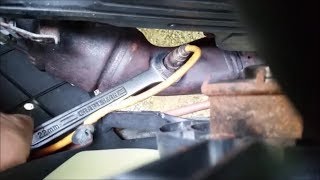
Typical fix: Replace the front catalytic converter assembly. Using an OEM or high-quality CARB-compliant aftermarket part is strongly recommended for a lasting fix. 🎬 Watch: How to replace the catalytic converter with basic hand tools.
Est. part cost: $450-$1400 - Failing Front (Upstream) Air/Fuel Ratio Sensor ⚪ Low Probability → Shop Oxygen Sensor A faulty front A/F sensor can cause the engine to run too rich or too lean, which over time can contaminate and destroy the catalytic converter. While less common than the rear sensor failing for a P0420, it's a possible root cause.
How to confirm: Check for accompanying fuel trim codes (P0171, P0172). A scan tool can show if the sensor is responding slowly or providing irrational data.
Typical fix: Replace the front (upstream) air/fuel ratio sensor.
Est. part cost: $80-$200
Rare But Worth Checking
- Underlying Engine Mechanical Issues: Excessive oil consumption (a known issue with FB25 engines) or internal coolant leaks can contaminate the exhaust and will destroy a new catalytic converter quickly. These root causes must be addressed to prevent repeat P0420 codes.
- Contaminated MAF/MAP Sensors or Clogged Air Filter: → Shop Air Cleaner Assembly Some owners have reported resolving a stubborn P0420 code by cleaning the Mass Airflow and MAP sensors and replacing a dirty aftermarket air filter with an OEM one, after other repairs failed. This suggests that incorrect air metering can contribute to the code.
- O2 Sensor Spacer / Non-Fouler Installation: → Shop Oxygen Sensor This is not a cause, but a common but improper 'fix'. Owners sometimes install a spacer on the rear O2 sensor to pull it out of the direct exhaust stream. This tricks the sensor into showing a stable reading, clearing the P0420 code without fixing the underlying problem. It is illegal in states with emissions testing and only masks the real issue.
Diagnosis Steps
- Contact a Subaru dealer with your VIN to check the status of the WUJ-95 voluntary emissions recall. This is the most important first step.
- Check if your vehicle is covered under the Federal Emissions Warranty (8 years/80,000 miles) or a PZEV extended warranty (up to 15 years/150,000 miles in some states), which may cover the catalytic converter.
- Perform a thorough visual and audible inspection of the exhaust system, focusing on the braided flex-pipe section near the front. Look for soot or listen for a fluttering/hissing leak.
- If no obvious leak is found, have a professional perform an exhaust smoke test to find any small cracks or gasket leaks.
- Scan for any other trouble codes. Address any misfire (P030x), fuel trim (P017x), or sensor circuit codes before proceeding with P0420 diagnosis.
- Using a scan tool with live data graphing, warm the engine to operating temperature and hold the RPMs steady around 2,500.
- Observe the upstream (A/F Sensor 1) and downstream (O2 Sensor 2) voltage graphs. If the downstream sensor's graph mimics the rapid switching of the upstream sensor, the catalytic converter is not working.
- If the downstream sensor's voltage is flat, stuck, or very slow to respond, the sensor itself is likely faulty.
- Check engine oil level. A low oil level may indicate an oil consumption problem, which is a known root cause of catalytic converter failure on FB25 engines.
- If exhaust leaks and sensor function are confirmed to be good, the catalytic converter is the condemned part.
Parts You'll Likely Need
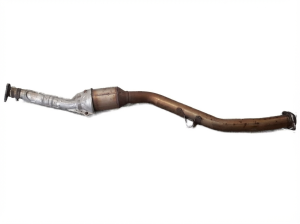
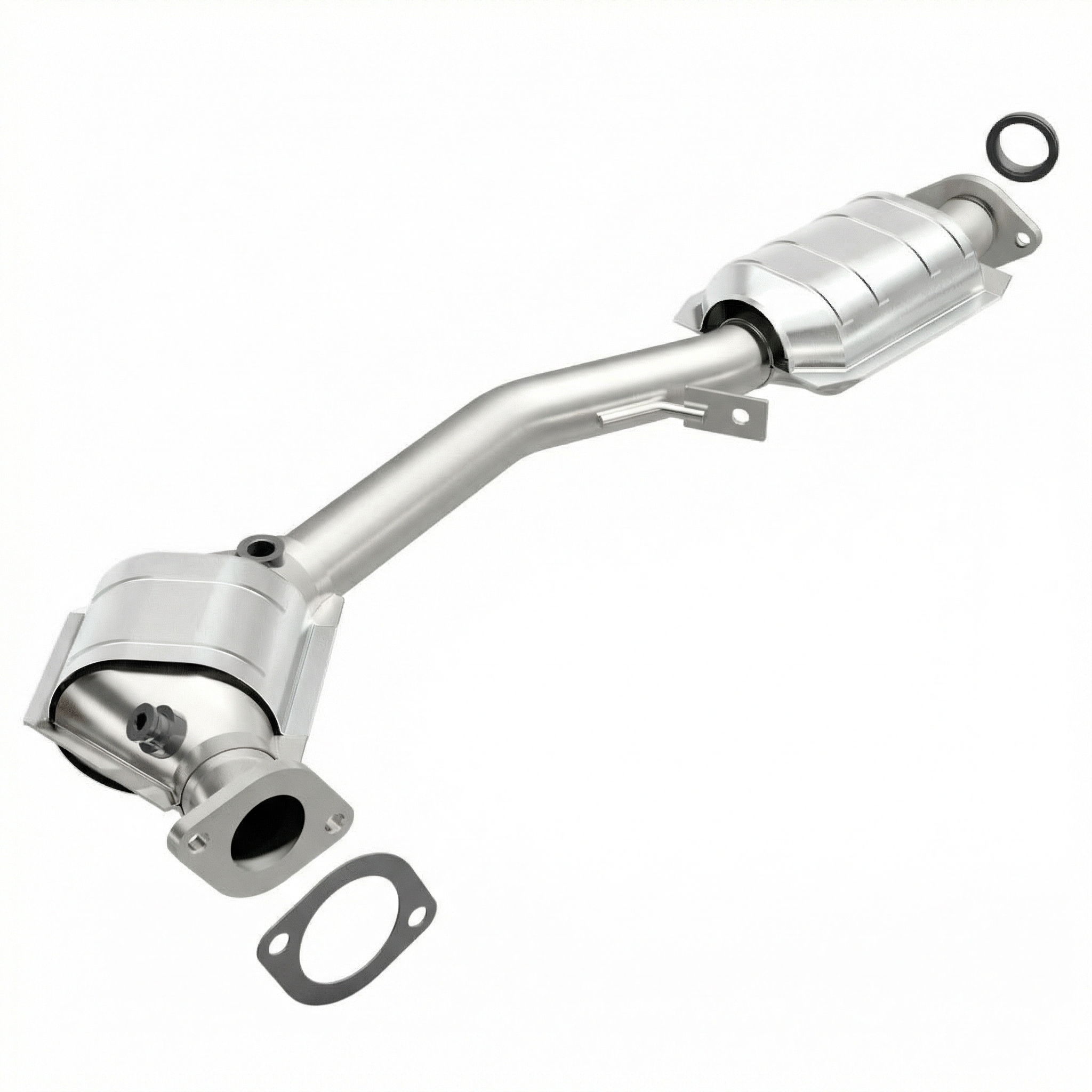
- Front Exhaust Pipe with Catalytic Converter
(OEM #44620AD82A, 44620AD88B (Check with dealer for latest revision))— This is the most common point of failure due to the WUJ-95 recall for cracking flex bellows. It is also the final failed part if all other causes are ruled out.
Trusted brands: Subaru (OEM), MagnaFlow (CARB Compliant), Walker Exhaust (CARB Compliant)
OEM price range: $950-$1400
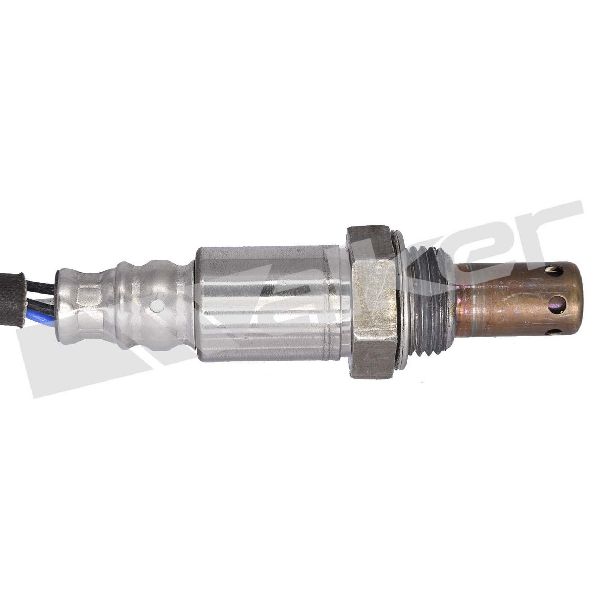
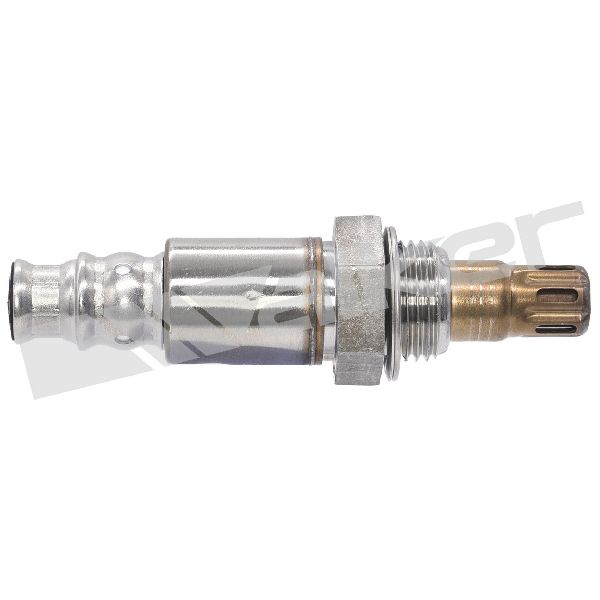
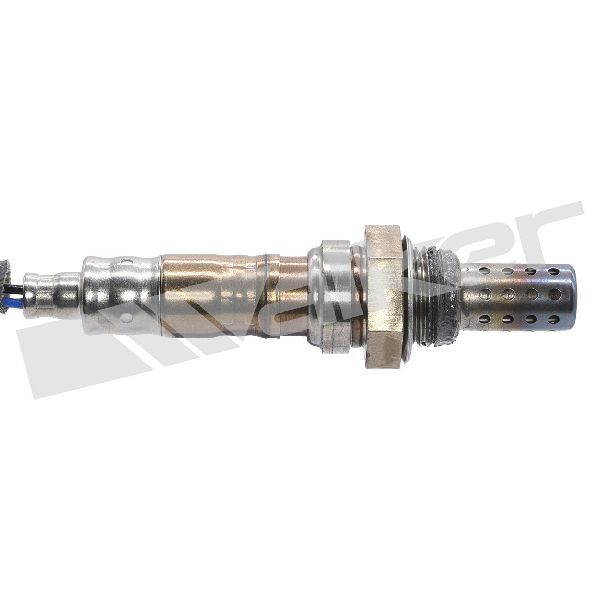
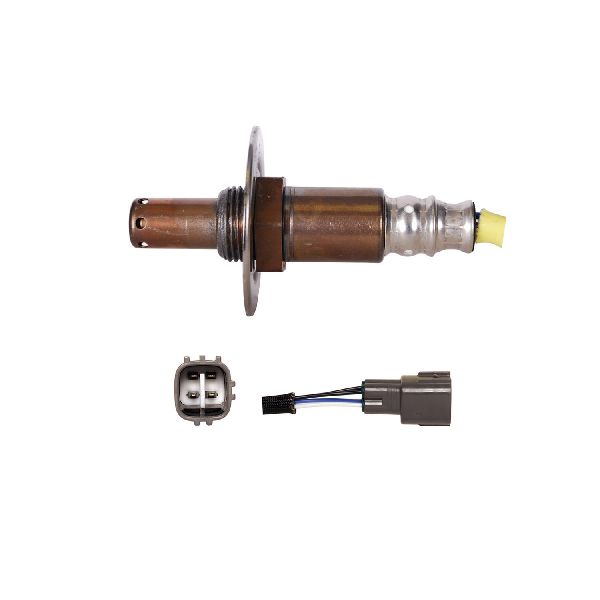
Aftermarket price range: $450-$1200 - Rear Oxygen Sensor (Downstream)
(OEM #22690AA96A)— This sensor is responsible for monitoring catalyst efficiency. It can fail with age, sending incorrect data and triggering a false P0420 code. It's a common and relatively inexpensive part to replace as a diagnostic step.
Trusted brands: Denso (OEM Supplier), NGK/NTK, Bosch
OEM price range: $120-$180
Aftermarket price range: $60-$150
Related Codes That Often Appear With This One
- P0171 — System Too Lean. This can indicate an unmetered air leak, such as the cracked exhaust pipe common to this vehicle, which introduces oxygen before the front A/F sensor and can trigger a false P0420.
- P0172 — System Too Rich. A rich condition can be caused by a faulty front A/F sensor and will lead to premature catalytic converter failure by overheating it.
- P0300-P0304 — Cylinder Misfire codes. Unburned fuel from misfires will rapidly overheat and destroy the catalytic converter. Misfires must be fixed before replacing a converter.
Technical Service Bulletins (TSBs) & Recalls
- WUJ-95: Voluntary Emissions Recall for 2015-2016 Legacy/Outback 2.5L to replace the front exhaust pipe assembly due to cracking bellows.
- TSB Bulletin #09-110-23R: Announces specific diagnostic service procedures to be followed when DTC P0420 (Catalyst System Efficiency Below Threshold Bank 1) is detected by the Engine Control Module (ECM).
- TSB 11-164-16R: ECM reprogramming file to address surging/power decrease, which could relate to overall engine performance affecting emissions.
- TSB 02-163-16R: Procedures for AVCS-related DTCs, which can affect engine timing and combustion efficiency, indirectly impacting the catalytic converter.
Platform-Specific Known Issues
- Voluntary Emissions Recall WUJ-95: Affects 2015-2016 Legacy 2.5L models. The front exhaust pipe assembly, which includes the catalytic converter, is prone to cracking at the flexible bellows. This causes an exhaust leak that directly triggers code P0420. Owners should check with a Subaru dealer to see if their vehicle is covered.
Mechanic-Grade Diagnostic Values
- Rear (Downstream) O2 Sensor Voltage at steady 2,000-2,500 RPM (warm engine) — expected: A relatively stable voltage, typically above 0.6V-0.7V.. Failure: Voltage fluctuates rapidly, mirroring the front A/F sensor, or is stuck low (e.g., <0.2V).
- Catalytic Converter Temperature Differential (warm engine, 2000 RPM) — expected: The outlet temperature should be at least 100°F (38°C) hotter than the inlet temperature.. Failure: Outlet temperature is the same as or cooler than the inlet temperature, indicating no chemical reaction is occurring.
- Front A/F Sensor (Upstream) Lambda Reading at idle/cruise — expected: Should be very close to 1.0, indicating a stoichiometric air/fuel ratio.. Failure: Consistently high (lean) or low (rich) values may indicate a fuel delivery problem that could damage the converter.
- Exhaust Component Torque Specifications — expected: Cylinder Head Flange Nuts: 30 Nm (22.1 ft-lbs), EPF to Center Pipe: 42.5 Nm (31.3 ft-lbs), A/F and O2 Sensor: 21 Nm (15.5 ft-lbs).. Failure: Improper torque can lead to exhaust leaks or damaged threads.
Scan Tool Commands That Help
- Subaru Select Monitor (SSM) or equivalent professional scan tool: Current Data Display / Live Data Graphing — This is the primary tool for P0420 diagnosis. It is used to graph the front A/F sensor and rear O2 sensor voltages simultaneously to observe their behavior under various engine loads and determine if the rear sensor is mimicking the front, which indicates a failed converter.
- Subaru Select Monitor (SSM): Read Diagnostic Trouble Code (DTC) & Clear Memory — Used to read the P0420 code and any other accompanying codes. After a repair is performed, this function is used to clear the code from the ECM's memory.
- Subaru Select Monitor (SSM): Catalyst Diagnosis (OBD Mode) — This function within the OBD menu allows the technician to check the status of the catalyst monitor self-test, indicating if it has completed or is still incomplete.
Real Owner Repair Stories
- Commenter on a MrSubaru1387 YouTube video (Subaru (model not specified, but general principle applies)) — Persistent P0420 code that dealer could not fix after four attempts.
❌ Tried (didn't work) Dealer replaced the entire exhaust system, including the turbo., Dealer reflashed the PCM., Dealer tested the fuel system., Owner serviced the ignition system.
✅ What actually fixed it Owner cleaned the MAF and MAP sensors and replaced an aftermarket air filter with a genuine Subaru OE air filter. The code did not return for at least 14,000 miles. - Valley Mobile Automotive YouTube channel (2008 Subaru Outback 2.5L (similar diagnostic principle)) — P0420 code returned after a previous repair.
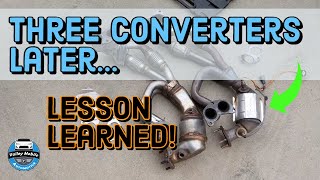
❌ Tried (didn't work) An aftermarket catalytic converter had been previously installed and failed prematurely.
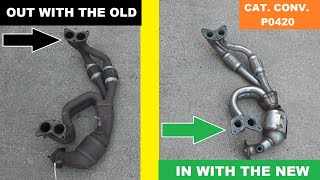
✅ What actually fixed it Diagnosis using a scan tool showed the rear O2 sensor oscillating at cruise, confirming the aftermarket converter had failed. Replacing the aftermarket converter with a genuine Subaru OEM catalytic converter and new OEM gaskets provided a stable, high voltage reading from the rear O2 sensor, fixing the issue. - NHTSA ODI #11524713 — An owner reported that despite installing a new starter and alternator, all dashboard lights stayed on and the only code that came up was P0420.
"I Checked Everything" — The Actual Cause
- In cases where a smoke test reveals no leaks and sensors appear to be functioning, a stubborn P0420 can sometimes be traced back to air metering issues. One owner reported that after a dealer replaced the entire exhaust and tested the fuel system to no avail, the actual fix was cleaning the MAF/MAP sensors and replacing a restrictive aftermarket air filter with an OEM one. This suggests that incorrect air/fuel mixture calculations, even without setting a fuel trim code, can be an underlying cause.
OEM Part Supersession History
44620AD88A→44620AD88B— Updated part for the front exhaust pipe assembly, likely incorporating design improvements to address the cracking bellows issue from the WUJ-95 recall.
Diagnostic Flowchart
Other Known Issues on This Vehicle
Issues unrelated to this code that are worth knowing about as an owner of this generation:
- Excessive Oil Consumption (FB25 Engine) 🔴 High — Affects a notable percentage (estimated 5-7%) of early FB25 engines, particularly from 2011-2014, but can still be a concern for 2015-2016 models. Can start at any mileage. Subaru's official stance is that consuming up to 1 quart per 1,200 miles is 'acceptable'. (Ref: Multiple TSBs exist for earlier models regarding piston ring replacement. For this generation, it's a known issue that can lead to premature catalytic converter failure (and P0420) if not monitored.)
- Lineartronic CVT Transmission Issues 🔴 High — Problems like shuddering, hesitation, stalling, or outright failure are reported, often occurring outside the standard warranty period around 80,000-120,000 miles. Subaru issued a warranty extension for the CVT on many models (up to 10 years/100,000 miles), acknowledging reliability problems. (Ref: Subaru extended the CVT warranty for many vehicles, including the 2015-2017 Legacy. Various TSBs (e.g., 16-151-24R for TR690 shudder) exist for diagnosing issues.)
- Cracked Windshields 🟠 Medium — A higher-than-average number of owners report spontaneous cracking of windshields, leading to a class-action lawsuit. (Ref: Class-action lawsuit (not a recall).)
- Battery Parasitic Drain (CAN System) 🟠 Medium — Many owners of newer Subarus report batteries dying unexpectedly. This is often attributed to the Controller Area Network (CAN) system not allowing modules to fully go to sleep, causing a slow drain.
- STARLINK Infotainment System Problems 🟡 Low — Complaints include the screen freezing, becoming unresponsive, or rebooting randomly.
Used vs. New Parts: Buying Guide for This Vehicle
When a used part is the smart pick: For this specific P0420 issue, buying a used catalytic converter is generally NOT recommended. The primary cause is often a cracked flex pipe (WUJ-95 recall), and a used part may have the same defect or be close to failing. Furthermore, the lifespan and efficiency of a used converter are unknown, and you risk the P0420 code returning quickly.
Donor-vehicle mileage cap: roughly under 40000 miles for the part to have meaningful remaining life.
What to inspect on the donor part:
- Inspect the braided flex pipe section for any signs of black soot, fraying, or cracking.
- Check the catalytic converter body for dents, severe rust, or damage from road debris.
- Look inside the pipe ends to ensure the honeycomb substrate is intact and not broken, melted, or rattling.
- Ask for the VIN of the donor car to check if the WUJ-95 recall was already performed on it.
OEM-only on this vehicle (don't cheap out):
- Catalytic Converter: Forum veterans and professional technicians strongly advise using a genuine Subaru OEM converter. Aftermarket converters for Subarus are notorious for lacking sufficient precious metal content, leading to the P0420 code returning within a few months to a year.
Aftermarket brands forum-validated for this vehicle:
- Denso (for Oxygen/Air-Fuel Sensors - they are the OEM supplier)
- NGK/NTK (for Oxygen/Air-Fuel Sensors)
Brands owners have reported issues with on this vehicle:
- Unnamed or 'white box' cheap online catalytic converters. These almost universally fail to meet the efficiency requirements of the Subaru ECM.
Real Owner Stories
Aggregated from forums and TSBs cited above. Mileages and costs reflect what owners reported in those sources.
2015-2016 Subaru Legacy 2.5L
Symptoms: Audible exhaust leak noise described as hissing, puffing, or fluttering from the front of the car during acceleration; Check Engine Light active.
What fixed it: Subaru dealer replaced the front exhaust pipe assembly for free under the WUJ-95 Voluntary Emissions Recall.
Cost: $0
Source hint: Voluntary Emissions Recall WUJ-95
Subaru Legacy — 176000 miles
Symptoms: P0420 error code with no detectable exhaust leaks.
What fixed it: Replacing the O2 sensors resolved the code for some, though others found the high-mileage original catalytic converter was simply worn out.
Source hint: Reddit r/subaru - 'P0420. No exhaust leaks. 176k miles.'
Related OBD-II Codes
Frequently Asked Questions
Is there a recall for the P0420 code on my 2015-2016 Subaru Legacy 2.5L?
Why did my cruise control and traction control lights come on with the P0420 code?
Could my Legacy's oil consumption be causing the P0420 code?
What is the emissions warranty coverage for the catalytic converter on a 2015 Legacy?
Should I replace the O2 sensors or the catalytic converter first?
Are there any TSBs related to engine performance that might affect my emissions?
Helpful Videos
Used OEM Parts in Stock
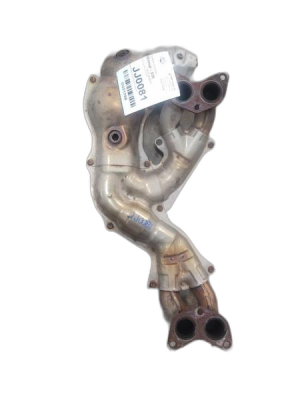
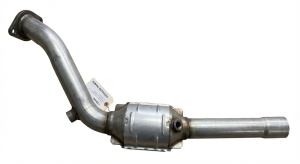
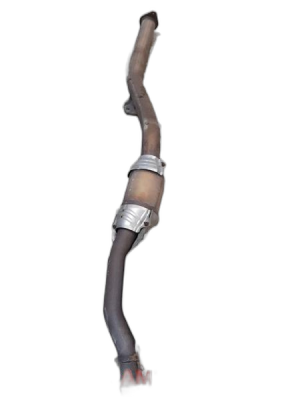
New Aftermarket Parts Available
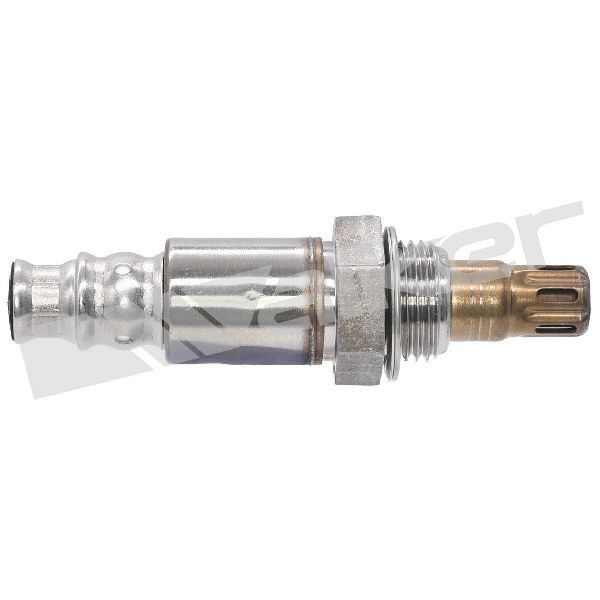

The information in this article is provided for general reference and educational purposes only. Vehicle specifications, procedures, and part compatibility can vary by production date, trim level, and region. Always consult your vehicle's factory service manual and verify part numbers before purchasing or performing repairs. Safety-critical components such as airbags, seat belts, and braking systems should be installed by a qualified professional.
- Subaru Legacy:
- 🧭 Diagnostic Flowchart
- 🎬 Helpful Videos
- 🛍️ Shop This Part
- What's Unique About the 2015-2016 Subaru Legacy
- Symptoms You May Notice
- Most Likely Causes
- Rare But Worth Checking
- Diagnosis Steps
- Parts You'll Likely Need
- Related Codes That Often Appear With This One
- Technical Service Bulletins (TSBs) & Recalls
- Platform-Specific Known Issues
- Mechanic-Grade Diagnostic Values
- Scan Tool Commands That Help
- Real Owner Repair Stories
- "I Checked Everything" — The Actual Cause
- OEM Part Supersession History
- Other Known Issues on This Vehicle
- Used vs. New Parts: Buying Guide for This Vehicle
- Real Owner Stories
- 2015-2016 Subaru Legacy 2.5L
- Subaru Legacy — 176000 miles
- Related OBD-II Codes
- Frequently Asked Questions
- 🎟️ Get 5% Off