

P0420 on 2017-2023 Subaru Outback: Catalyst Efficiency Causes and Fixes
On a 2017-2023 Subaru Outback, code P0420 most often points to a failing catalytic converter, but faulty oxygen sensors or exhaust leaks are also common culprits. A proper diagnosis is crucial before replacing the expensive converter, as Subarus are notoriously sensitive to this code. Subaru issued a specific diagnostic TSB (09-110-23R) for this issue, and using OEM parts for replacement is highly recommended.
- Do not immediately replace the catalytic converter. A thorough diagnosis is essential.
- Check for exhaust leaks and test both front and rear oxygen sensors before condemning the converter.
- If the catalytic converter must be replaced, using a genuine Subaru (OEM) part is strongly recommended to avoid the code returning prematurely.
- Ensure any underlying engine issues, such as oil consumption or rich fuel conditions, are resolved to protect the new converter.
- Check with a Subaru dealer for any available ECM software updates, as per TSB 09-110-23R.
What's Unique About the 2017-2023 Subaru OUTBACK

Subaru has a history of sensitivity to the P0420 code. For this specific generation range, Subaru issued Technical Service Bulletin #09-110-23R, which outlines a detailed diagnostic procedure that must be followed. This procedure emphasizes ruling out other faults (like other DTCs, oil level issues, or sensor failures) before condemning the converter. Furthermore, some earlier Subaru models were known for oil consumption issues that could lead to premature catalytic converter failure, making it important to check oil levels and rule out engine-related problems.
Diagnostic Flowchart

Tap your situation to follow the diagnostic path that matches what you're seeing on this vehicle.
Generation note: This range covers the end of the 5th generation (2017-2019) and the beginning of the 6th generation (2020-2023) Outback. The 5th gen used a 2.5L FB25 engine, while the 6th gen offered an updated 2.5L and a new 2.4L FA24F turbo. While the P0420 code's meaning is the same, TSB 09-110-23R applies to both generations, though specific part numbers for converters and sensors differ.
Symptoms You May Notice

- Check Engine Light is on.
- Blinking 'Cruise' light and solid traction control light may accompany the CEL.
- Vehicle will fail an emissions test.
- Reduced engine performance or sluggish acceleration, especially under load.
- Decreased fuel efficiency.
- A rotten egg or sulfur smell from the exhaust.
- Immediately replacing the catalytic converter without proper diagnosis. The issue could be a much cheaper fix, like an exhaust gasket leak or a faulty oxygen sensor.
- Replacing the catalytic converter with a cheap aftermarket unit. These are known to fail quickly on Subarus, leading to the code's return.
- Replacing only the oxygen sensors when the high-mileage converter has genuinely failed. This results in the code returning after a short period.
Most Likely Causes

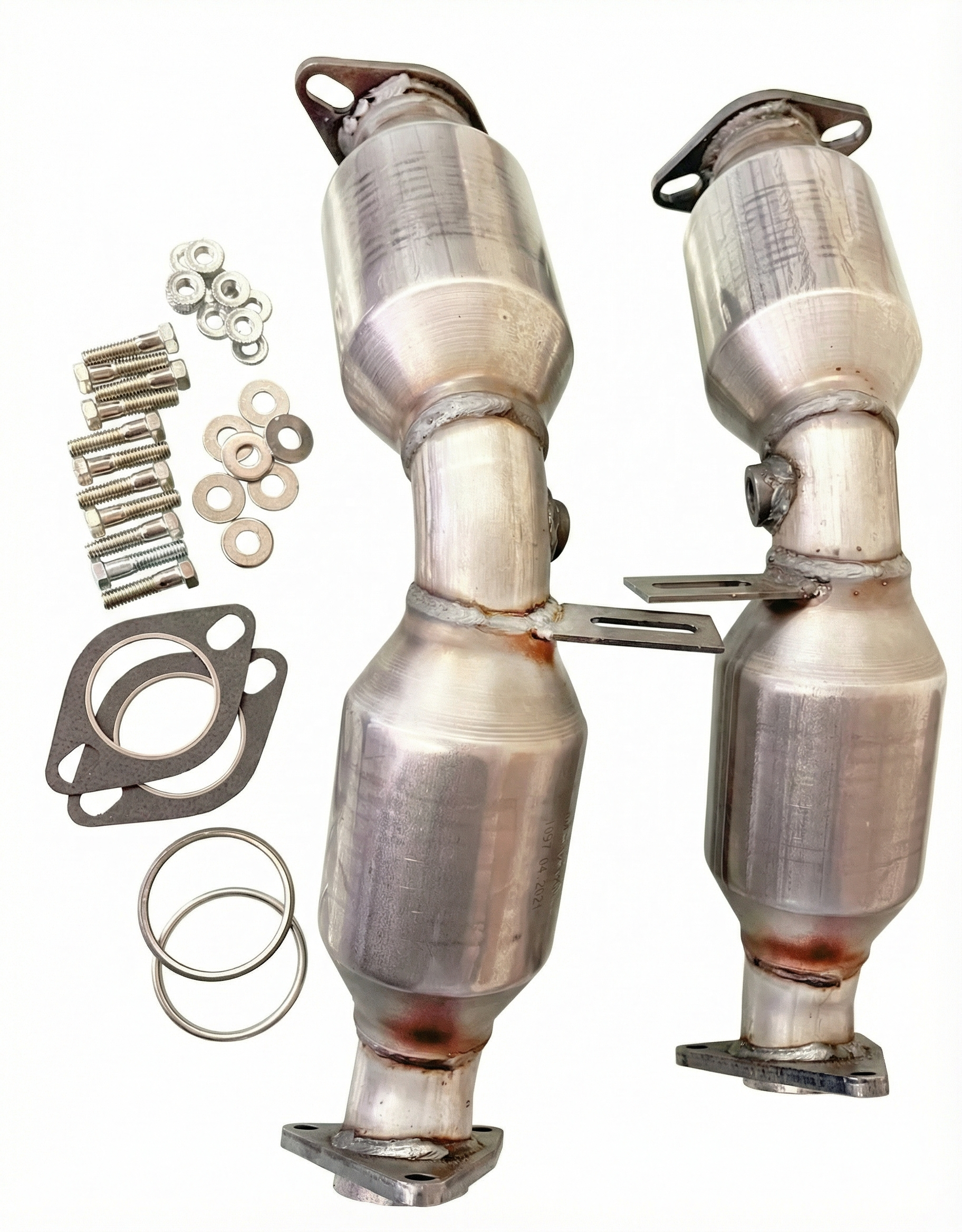
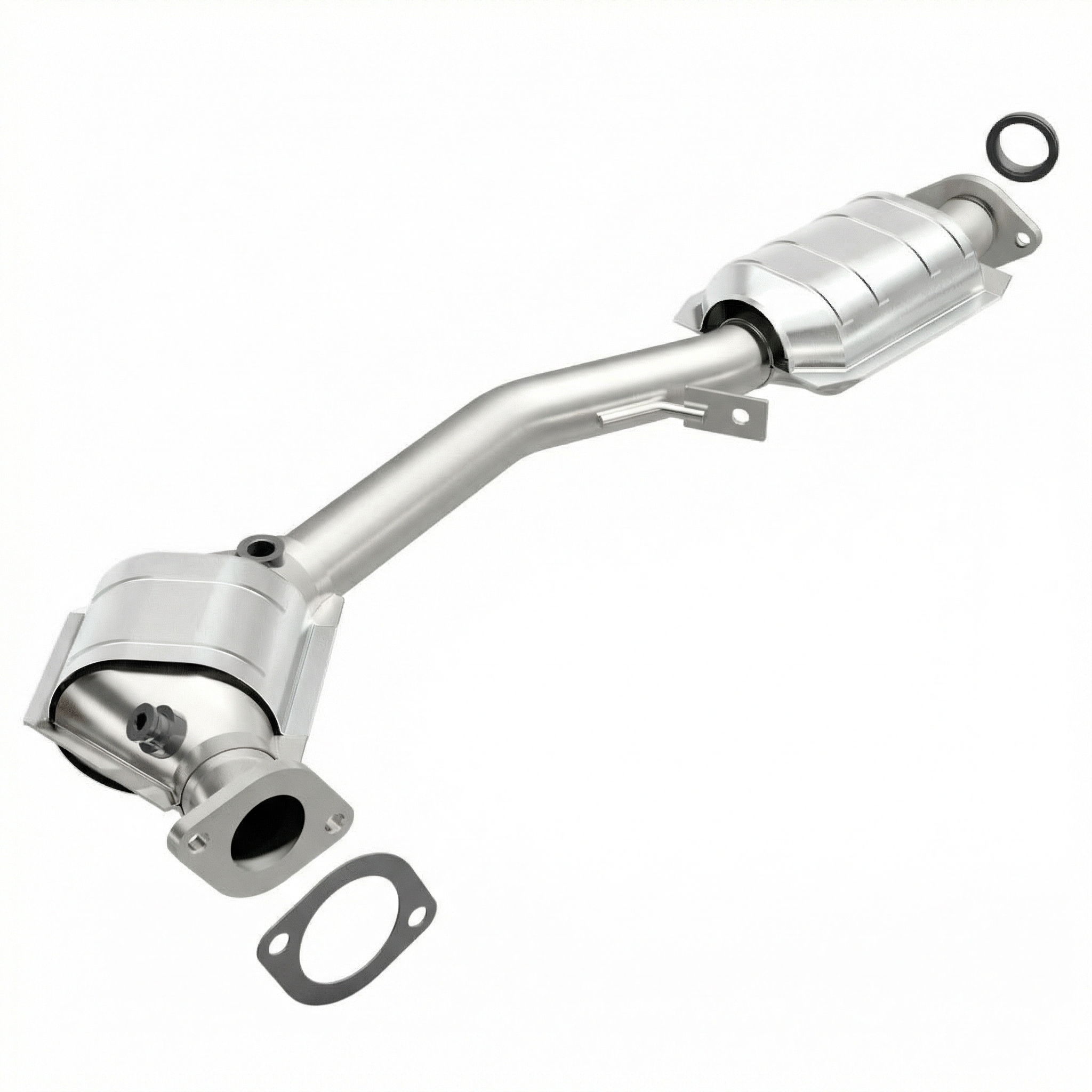
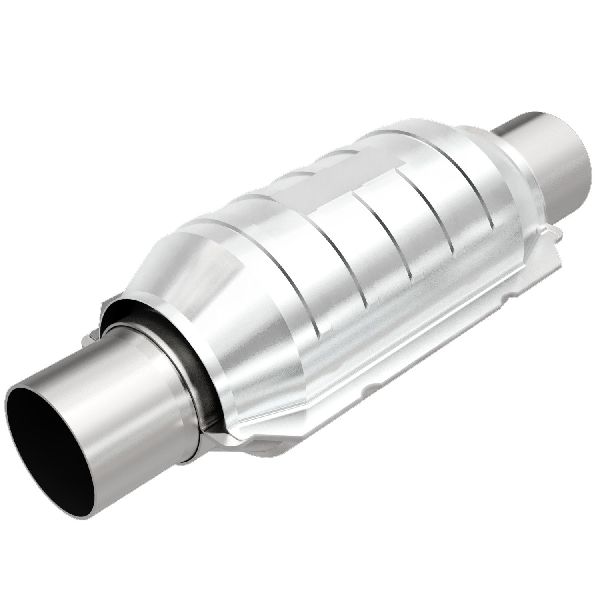
- Failing Catalytic Converter 🔴 High Probability → Shop Catalytic Converter Catalytic converters degrade over time and with high mileage (failures are common over 170,000 miles). They can also fail prematurely due to engine issues like burning oil or a rich fuel mixture. On Subarus, aftermarket converters are notorious for failing quickly, making OEM parts the recommended fix. Always check if your vehicle is under the 8-year/80,000-mile federal emissions warranty.
How to confirm: A technician can use a scan tool to graph O2 sensor data. The downstream sensor should show a steady voltage (e.g., >0.6V) on a warm, working converter. If it oscillates rapidly like the upstream sensor, the converter has failed. An infrared thermometer can also be used; the outlet should be at least 100°F hotter than the inlet.
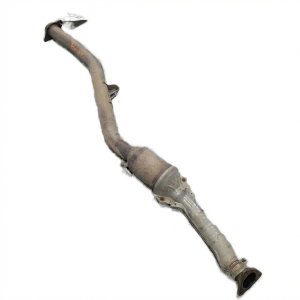
Typical fix: Replacement of the front exhaust pipe/catalytic converter assembly. Using a genuine Subaru OEM part is strongly recommended for longevity and to prevent the code from returning.
Est. part cost: $800-$1700 - Faulty Rear (Downstream) Oxygen Sensor 🟡 Medium Probability → Shop Oxygen Sensor The rear O2 sensor is the primary monitor for the converter. If the sensor becomes lazy or inaccurate, it can send false data to the ECM, incorrectly triggering the P0420 code. It's a common failure point and a frequent first-step replacement for DIYers.
How to confirm: Using a scan tool with live data, observe the sensor's voltage. A healthy downstream sensor should show a relatively steady, stable voltage on a warm engine at steady RPM. A sensor that is oscillating rapidly, is stuck at a low voltage, or is slow to respond may be faulty.
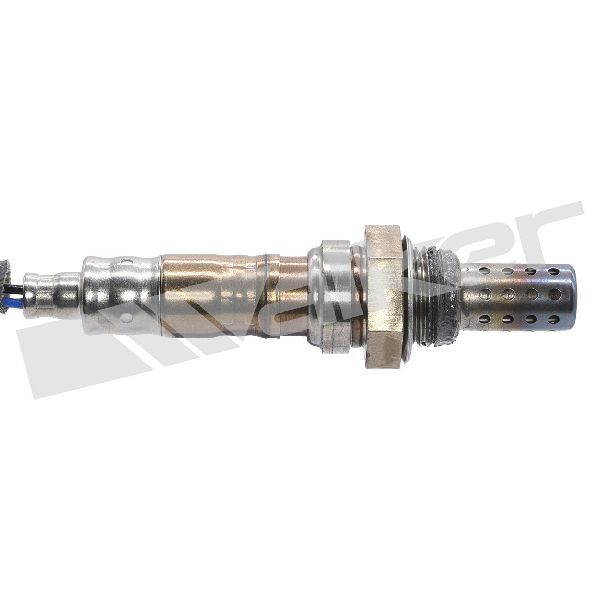
Typical fix: Replace the rear (downstream) oxygen sensor. Use an OEM or a quality brand like Denso for best results.
Est. part cost: $80-$200 - Exhaust System Leak 🟡 Medium Probability Leaks in the exhaust system, especially at the manifold-to-head gaskets or the donut gasket between pipe sections, can allow outside oxygen to enter the exhaust stream. This skews the oxygen sensor readings and is a very common cause for a false P0420 code on Subarus.
How to confirm: Perform a visual inspection for rusted-out sections or black soot trails at gasket locations. A smoke test is the most effective method, where smoke is forced into the exhaust system to reveal the precise location of any leaks.
Typical fix: Repair the leak by replacing the damaged pipe section or, more commonly, replacing the faulty gasket(s).
Est. part cost: $20-$300 - Faulty Front (Upstream) Air/Fuel Ratio Sensor ⚪ Low Probability → Shop Oxygen Sensor A slow or failing front A/F sensor can cause an improper air-fuel mixture. A persistent rich condition will overwhelm and eventually contaminate the catalytic converter, leading to a real P0420 code over time.
How to confirm: Monitor the sensor's response on a scan tool. A healthy sensor will oscillate rapidly between rich and lean. A lazy or biased sensor needs replacement. This issue is often accompanied by fuel trim codes like P0171 (lean) or P0172 (rich).
Typical fix: Replace the front (upstream) air/fuel ratio sensor.
Est. part cost: $100-$250
Rare But Worth Checking
- Engine Control Module (ECM) Diagnostic Logic: While older Subarus had TSBs for software updates to change P0420 sensitivity, the TSB for this model range (09-110-23R) is a strict diagnostic procedure. It's critical to follow these steps to avoid misdiagnosis.
- Engine Mechanical Issues: Problems like leaking fuel injectors, excessive oil consumption (a known issue on some Subaru engines), or engine misfires can send unburned fuel and oil into the exhaust, contaminating and destroying the catalytic converter. These issues will usually trigger other codes (e.g., P030x for misfires) and should be addressed first as per TSB 09-110-23R.
- O2 Sensor Spacer / Defouler: → Shop Oxygen Sensor A common but improper 'fix' involves installing a spacer that pulls the rear O2 sensor out of the direct exhaust stream. This can trick the ECU and turn off the light, but it does not fix the underlying emissions problem and is illegal in many jurisdictions, especially those following CARB standards.
Diagnosis Steps
- Check for other DTCs using a scan tool. Per TSB 09-110-23R, if codes for misfires (P030x), fuel trim (P017x), or O2/AF sensors are present, diagnose and fix them first.
- Inspect the exhaust system thoroughly for any leaks. Pay close attention to gaskets at the cylinder head and flanges. A smoke test is the most reliable method.
- Check the engine oil level and condition. Note any signs of excessive oil consumption or coolant contamination, as this can poison the converter.
- Using a scan tool, analyze the live data from both the upstream (A/F) and downstream (O2) sensors with the engine fully warmed up and held at a steady 2,000-2,500 RPM.
- A healthy system will show the upstream sensor fluctuating rapidly, while the downstream sensor remains relatively stable and high (e.g., >0.6V).
- If the downstream O2 sensor is fluctuating rapidly, mirroring the upstream sensor, the converter is inefficient and has likely failed.
- If the downstream sensor's voltage is flatlined or stuck, the sensor itself is likely faulty.
- As a secondary check, use an infrared thermometer on the catalytic converter body. The outlet temperature should be at least 100°F hotter than the inlet temperature on a fully warmed-up engine.
- If all other causes are ruled out, the catalytic converter is the confirmed culprit.
Parts You'll Likely Need

- Catalytic Converter Assembly
(OEM #44620AD17B (2017-18 2.5L); 44620AD15B (2017-18 2.5L, CA Emissions))— This is the most common, albeit most expensive, fix for a confirmed P0420 code where the converter has failed. OEM is highly recommended.
Trusted brands: Subaru (OEM)
OEM price range: $1000-$1700
Aftermarket price range: $400-$900 (Not Recommended) - Rear Oxygen Sensor
(OEM #22690AB08A (Fits 2020-2023 2.5L))— A faulty rear O2 sensor can give false readings. It's a common point of failure and a much cheaper part to replace first if tests are inconclusive.
Trusted brands: Denso (OEM supplier), Subaru (OEM)
Related Codes That Often Appear With This One
- P0300-P0304 — Misfire codes (P030x) indicate that the engine is not burning fuel correctly. This unburned fuel enters the exhaust and can overheat and damage the catalytic converter, leading to P0420. TSB 09-110-23R requires fixing these codes first.
- P0171 or P0172 — Fuel trim codes (Lean or Rich) indicate an incorrect air-fuel mixture. A prolonged rich condition (P0172) is particularly damaging to the catalytic converter and is a common underlying cause of P0420. TSB 09-110-23R requires fixing these codes first.
- P2097 — Post Catalyst Fuel Trim System Too Rich. This code points to a rich condition detected by the rear O2 sensor, which can be caused by a leaking injector, exhaust leak before the front O2 sensor, or other fuel control issues that can also lead to P0420.
Technical Service Bulletins (TSBs) & Recalls
- TSB #09-110-23R (Nov 7, 2023): Announces a specific, multi-step diagnostic service procedure for when DTC P0420 is detected. It prioritizes checking for other DTCs, checking engine oil, and performing specific sensor tests before condemning the catalytic converter.
Platform-Specific Known Issues
- Poor Longevity of Aftermarket Catalytic Converters: → Shop Catalytic Converter There are numerous owner and technician reports of aftermarket catalytic converters (including brands like Walker) failing within 1-3 years on this platform, causing the P0420 code to return. The general consensus is that only OEM Subaru converters provide a reliable, long-term solution, despite their significantly higher cost.
- Platform Sensitivity to P0420: Subaru vehicles in general are known to be particularly sensitive to setting the P0420 code. It is often referred to as 'The Subaru Code' in owner forums. This sensitivity makes it even more critical to follow a thorough diagnostic procedure (like TSB 09-110-23R) rather than immediately replacing the converter.
Mechanic-Grade Diagnostic Values
- Rear O2 Sensor Heater Circuit Resistance — expected: 5-6 Ohms on a good sensor.. Failure: An open circuit (no reading) or a very high resistance (over 50 Ohms) indicates a failed heater element in the sensor.
- Rear O2 Sensor Live Data Voltage (at steady cruise) — expected: A relatively stable voltage, typically above 0.6V, indicating the catalyst is working.. Failure: Voltage rapidly switching between ~0.1V and ~0.9V, mimicking the upstream A/F sensor, indicates a failed catalyst. A voltage stuck below 0.03V or above 1.2V can indicate a faulty sensor itself.
- Mode 6 / Inspection Mode V Test Result — expected: A value higher than the threshold specified in the TSB 09-110-23R table for the specific model year.. Failure: If the value read from the Subaru Select Monitor (SSM) after the prescribed road test is lower than the official value, it points towards a failed catalytic converter.
Scan Tool Commands That Help
- Subaru Select Monitor (SSM): Read OBD MODE test results — This is the final step in the official TSB 09-110-23R diagnostic procedure, used after a specific road test ('INSPECTION MODE V') to definitively confirm catalyst efficiency against a factory-specified value.
- Subaru Select Monitor (SSM) or equivalent: Graph Live Data (A/F Sensor 1, O2 Sensor 2) — Used to visually compare the switching activity of the front and rear sensors. Observing the rear sensor mimic the front sensor is a primary indicator of a failed catalytic converter.
- Subaru Select Monitor (SSM) or equivalent: Clear Fault Memory — This is performed after a repair and before a confirmation road test to ensure the code does not immediately return. It is a required step in the TSB diagnostic process before performing the 'INSPECTION MODE V' test.
Wiring & Ground Locations
- Main Engine Ground — Commonly found on the intake manifold, where the main wiring harness breaks out. There will be a bolt securing one or more ring terminals to the manifold.. The ECU, which processes all sensor data, relies on this ground. A poor ground connection can introduce electrical noise and cause erratic sensor readings, potentially leading to a false P0420 or other codes.
- Rear O2 Sensor Connector — Follow the wire from the rear oxygen sensor (located after the catalytic converter) to its electrical connector. The connector is typically clipped to the vehicle's underbody or a bracket nearby.. This connector is a potential point of failure due to corrosion or damage. Inspecting it for moisture or bent pins is a crucial diagnostic step before replacing the sensor.
Real Owner Repair Stories
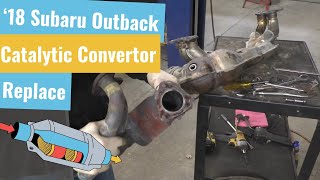
- South Main Auto LLC YouTube (2018 Subaru Outback 2.5L) — P0420 code, significant oil consumption admitted by owner.
❌ Tried (didn't work) The diagnosis immediately pointed to the converter, but the key context was the oil burning.
✅ What actually fixed it Replacement of the catalytic converter assembly. However, the mechanic explicitly warned the customer that the new converter would likely fail prematurely if the underlying oil consumption issue was not addressed, as burning oil contaminates and destroys the catalyst. - Pine Hollow Auto Diagnostics YouTube (2007 Subaru Outback (older model, but demonstrates a common issue)) — P0420 code and an audible exhaust leak sound.
✅ What actually fixed it A visible crack was found in the exhaust manifold/header pipe, just before the catalytic converter. This leak allowed oxygen to enter the exhaust, skewing sensor readings and triggering the P0420. The fix was to replace the entire exhaust manifold and converter assembly. - The Subaru Forums user (2006 Subaru Outback 3.6L (high mileage)) — P0420 code, metallic rattling noise.
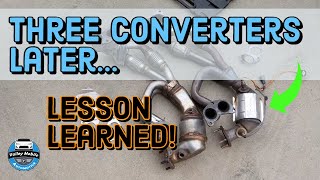
❌ Tried (didn't work) Replacing both catalytic converters. The P0420 code returned after about 200km.
✅ What actually fixed it The story was posted after the cats were replaced and the light came back on. The next suspected cause was the original, high-mileage O2 sensors that were not replaced with the converters, highlighting a common misdiagnosis where only the converter is replaced.
OEM Part Supersession History
44620AD17A→44620AD17B— Standard part revision by manufacturer.
Heads up: This part is specific to 2017-2018 2.5L models.22690AB070→22690AB08A— Standard part revision by manufacturer.
Heads up: Part 22690AB08A is listed for 2020-2024 Outback models, indicating a change from the 5th to 6th generation.
Model Year Variations Within This Range
- 2017-2019 (Gen 5): Uses the FB25 engine. The catalytic converter part number for 2017-2018 models is 44620AD17B.
- 2020-2023 (Gen 6): Introduced an updated 2.5L direct-injection engine and the 2.4L Turbo (FA24F). These models use a different rear oxygen sensor (22690AB08A) and a different catalytic converter assembly than the previous generation.
Real Owner Stories
Aggregated from forums and TSBs cited above. Mileages and costs reflect what owners reported in those sources.
2017 Subaru Outback — 240000 miles
Symptoms: CEL one day which disabled eyesight and cruise.
What fixed it: Replaced catalytic converter.
Source hint: reddit.com - P0420 code : r/subaruoutback
2017 Subaru Outback — 120000 miles
Symptoms: Check engine light started to come on sporadically a few weeks ago.
What fixed it: Dealer diagnosed a bad catalytic converter.
Cost: $4000+
Source hint: reddit.com - r/Subaru_Outback
Related OBD-II Codes
Frequently Asked Questions
Why are my Cruise Control and Traction Control lights on with the P0420 code?
Should I buy an aftermarket catalytic converter like Walker for my Outback?
Does TSB 09-110-23R apply to my P0420 diagnosis?
Is the P0420 code covered under warranty for my 2017-2023 Outback?
Why is P0420 sometimes called 'The Subaru Code'?
Can an exhaust leak cause a false P0420 on my Outback?
Helpful Videos
Used OEM Parts in Stock
New Aftermarket Parts Available


The information in this article is provided for general reference and educational purposes only. Vehicle specifications, procedures, and part compatibility can vary by production date, trim level, and region. Always consult your vehicle's factory service manual and verify part numbers before purchasing or performing repairs. Safety-critical components such as airbags, seat belts, and braking systems should be installed by a qualified professional.
- Subaru OUTBACK:
- 🧭 Diagnostic Flowchart
- 🎬 Helpful Videos
- 🛍️ Shop This Part
- What's Unique About the 2017-2023 Subaru OUTBACK
- Symptoms You May Notice
- Most Likely Causes
- Rare But Worth Checking
- Diagnosis Steps
- Parts You'll Likely Need
- Related Codes That Often Appear With This One
- Technical Service Bulletins (TSBs) & Recalls
- Platform-Specific Known Issues
- Mechanic-Grade Diagnostic Values
- Scan Tool Commands That Help
- Wiring & Ground Locations
- Real Owner Repair Stories
- OEM Part Supersession History
- Model Year Variations Within This Range
- Real Owner Stories
- 2017 Subaru Outback — 240000 miles
- 2017 Subaru Outback — 120000 miles
- Related OBD-II Codes
- Frequently Asked Questions
- 🎟️ Get 5% Off