

P0420 on 2020-2024 Toyota Highlander: Catalyst Efficiency Causes and Fixes
On a 2020-2024 Toyota Highlander, P0420 most often means the catalytic converter is failing. However, before replacing this expensive part, check for small exhaust leaks, especially on 2020-2022 V6 models, as this is a known issue. Also, verify if your vehicle is still under the 8-year/80,000-mile federal emissions warranty, which covers the converter.
- P0420 means the Bank 1 catalytic converter's efficiency is low, but this doesn't always mean the converter is bad.
- First, check if your Highlander is still under the 8-year/80,000-mile federal emissions warranty, as the repair could be free.
- For 2020-2022 V6 models, a small exhaust leak is a known potential cause and should be checked for with a smoke test before replacing any parts.
- If you must replace parts, use high-quality OEM (Toyota) or Denso components, as these vehicles are sensitive to aftermarket sensors and converters.
- Always diagnose and fix any other engine codes (misfires, fuel system issues) before addressing the P0420 to avoid damaging a new catalytic converter.
What's Unique About the 2020-2024 Toyota Highlander
The 2020-2024 Highlander spans two primary gasoline engines: the 3.5L V6 (2GR-FKS, 2020-2022) and a 2.4L Turbo I4 (T24A-FTS, 2023-2024). For the popular 3.5L V6 engine, Toyota issued a technical tip (T-TT-0686-22) advising technicians to inspect for minor exhaust leaks from gaskets or pinhole weld defects before replacing O2 sensors or the catalytic converter for a P0420 code. This suggests that on V6 models, a small, hard-to-find leak can be the root cause, tricking the sensors into setting a false code. The Bank 1 converter on the V6 is the one on the firewall (rear) side.
Symptoms You May Notice
- Check Engine Light is on.
- Reduced engine performance or acceleration.
- A rotten egg or sulfur smell from the exhaust, indicating an overheating or failing converter.
- Decreased fuel economy.
- Vehicle will fail an emissions inspection.
- Rough idle or misfires in some cases.
- A rattling sound from the exhaust area, which has been reported by owners in conjunction with this code (NHTSA ODI #11292428).
- Immediately replacing the catalytic converter without checking for exhaust leaks or verifying oxygen sensor performance. An exhaust leak is a much cheaper fix and a known issue on V6 models.
- Replacing oxygen sensors when the catalytic converter is actually the component that has failed. This is a common mistake when diagnosis is not performed using live sensor data.
- Using a cheap, universal catalytic converter which often fails within a year and causes the P0420 code to return.
Most Likely Causes
- Failing Catalytic Converter 🔴 High Probability → Shop Catalytic Converter Catalytic converters have a finite lifespan and can fail from age, contamination, or engine issues that send unburned fuel into the exhaust. This is the most common ultimate failure for a true P0420 code if other causes are ruled out. Failures are most common between 80,000 and 150,000 miles. Manufacturer service bulletin #T-58-0161-13A notes that a front exhaust pipe catalyst may exhibit a rattle noise when this code is stored.
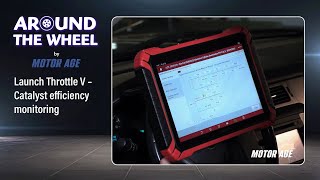
How to confirm: After confirming no exhaust leaks and that O2 sensors are functioning correctly via a scan tool, the converter is the likely culprit. A temperature gun can also be used; the outlet should be significantly hotter than the inlet on a working converter after the engine is warm. A healthy downstream O2 sensor graph will be relatively flat, while a failing converter will cause it to fluctuate, mimicking the upstream sensor. 🎬 See how to diagnose P0420 and P0430 codes with confidence.
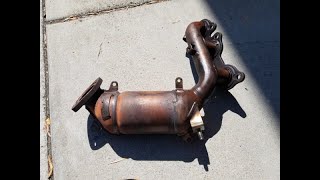
Typical fix: Replace the Bank 1 catalytic converter. 🎬 Watch this walkthrough for replacing the Bank 1 converter. Using an OEM or high-quality OEM-grade aftermarket part (like MagnaFlow or Walker) is crucial, as cheap converters are known to fail quickly and cause the code to return.
Est. part cost: $800-$2000 - Exhaust System Leak 🟡 Medium Probability A Toyota technical tip (T-TT-0686-22) specifically points to small leaks at gaskets or welds as a cause for P0420 on 2020-2022 V6 models. A leak allows outside oxygen into the exhaust stream between the two sensors, which fools the downstream O2 sensor into providing inaccurate data that suggests low catalyst efficiency.
How to confirm: Perform a thorough visual inspection of the exhaust system from the engine to the rear O2 sensor, looking for black soot marks or cracks. A professional smoke test is the most effective method to find small, hard-to-see leaks. 🎬 Watch: How to diagnose efficiency codes and test for leaks.
Typical fix: Repair the leak. This may involve replacing a gasket (e.g., exhaust manifold gasket) or welding a crack. This should always be the first check on V6 models before replacing expensive parts.
Est. part cost: $20-$200 - Faulty Oxygen (O2) or Air-Fuel (A/F) Sensor 🟡 Medium Probability A lazy or failed downstream (post-catalyst) O2 sensor can send incorrect data, triggering the code. While less common, a faulty upstream A/F sensor can also contribute to the issue by creating a poor fuel mixture that damages the converter over time.
How to confirm: Use a scan tool with live data graphing. The upstream A/F sensor (Bank 1, Sensor 1) should show rapid fluctuations. A healthy downstream O2 sensor (Bank 1, Sensor 2) should show a relatively steady, flat voltage once the converter is hot. If the downstream sensor is stuck at a certain voltage or is slow to respond, the sensor itself is likely faulty.
Typical fix: Replace the faulty sensor. It is highly recommended to use OEM (Toyota) or the original supplier brand (Denso) for sensors to ensure compatibility and longevity.
Est. part cost: $150-$300
Rare But Worth Checking
- Engine Misfire or Fuel System Issue: An underlying issue like a leaking fuel injector, incorrect fuel pressure, or a persistent engine misfire can dump unburned fuel into the exhaust, which overheats and destroys the catalytic converter. If you don't fix the root cause, you will destroy the new converter as well. Usually, these issues will be accompanied by other trouble codes (e.g., P030x for misfires).
Diagnosis Steps
- Check for other DTCs. If any other codes are present (especially for misfires P0300-P0306, fuel trim P0171/P0174, or other sensors), diagnose and fix them first as they can be the root cause. One owner reported P0420 appearing alongside several other codes including P1423, C1391, and B1241 (NHTSA ODI #11659073).
- Check Warranty Status. The federal emissions warranty covers the catalytic converter and ECM for 8 years or 80,000 miles. Many 2020-2024 vehicles will fall under this coverage. Contact a Toyota dealer with your VIN to verify.
- Inspect for Exhaust Leaks (Especially V6). Thoroughly inspect the exhaust manifold, gaskets, and pipes leading to the second O2 sensor. Pay close attention to welds and gasket flanges, as noted in Toyota Tech Tip T-TT-0686-22 for V6 models. A smoke test is the most reliable method.
- Analyze Sensor Data. Use a scan tool to view live data. Warm the engine fully (closed loop operation). Observe the Bank 1 Sensor 1 (A/F sensor) and Bank 1 Sensor 2 (O2 sensor). Sensor 1 should fluctuate rapidly. Sensor 2's voltage should be relatively stable (e.g., above 0.5V). If Sensor 2 is fluctuating wildly and mimicking Sensor 1, the converter is not working.
- Test the Oxygen Sensors. If the readings are inconclusive, test the sensors themselves. A lazy or biased sensor can be the cause. On V6 models, a diagnostic trick is to swap the downstream (Sensor 2) from Bank 1 with the one from Bank 2. If the code changes to P0430 after driving, you've confirmed a bad sensor.
- Inspect the Catalytic Converter. If all other possibilities are ruled out, the converter is the likely cause. Check for physical damage, rattling (indicating a broken internal substrate), or signs of overheating (discoloration).
Parts You'll Likely Need
- Catalytic Converter (Bank 1)
(OEM #17150-0P350 (Manifold w/ Converter, V6 Bank 1 - Firewall side), 17410-F0271 (2.4T))— This is the most common cause of a true P0420 code after a certain mileage when the catalyst materials degrade.
Trusted brands: Toyota (OEM), Walker, MagnaFlow, AP Exhaust
OEM price range: $750-$1100
Aftermarket price range: $400-$800 - Downstream Oxygen Sensor (Bank 1, Sensor 2)
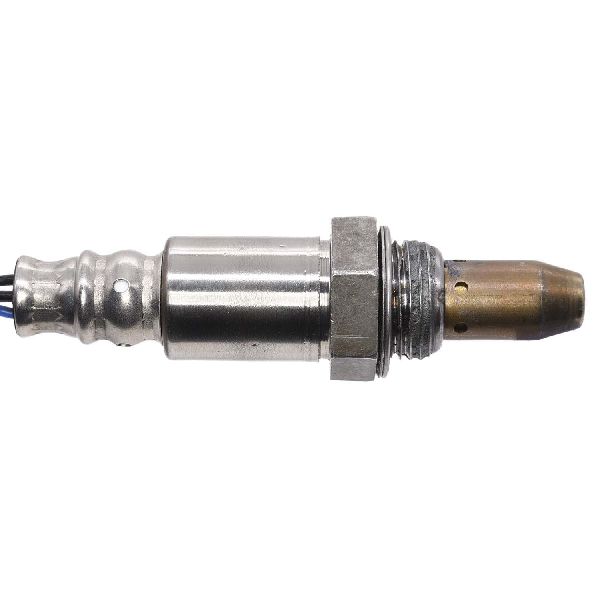
(OEM #89465-0E250 (V6, Bank 1))— A faulty downstream sensor can send incorrect efficiency data to the ECM, falsely triggering the P0420 code.
Trusted brands: Denso (OEM Supplier), Toyota (OEM), NGK/NTK
OEM price range: $140-$200
Aftermarket price range: $80-$150 - Upstream Air-Fuel Ratio Sensor (Bank 1, Sensor 1)
(OEM #89467-48130 (V6, Bank 1))— Though less common to cause P0420 directly, a failing A/F sensor can lead to poor engine performance that eventually damages the catalytic converter.
Trusted brands: Denso (OEM Supplier), Toyota (OEM)
OEM price range: $220-$350
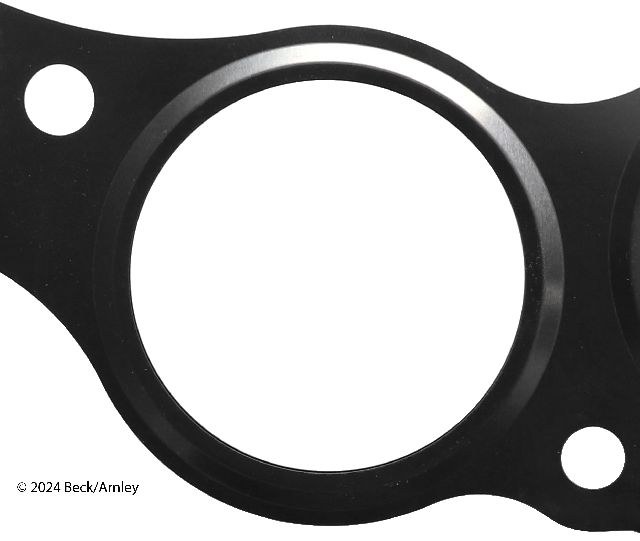
Aftermarket price range: $120-$200 - Exhaust Manifold Gasket — A common source of exhaust leaks that can trigger a false P0420 code, especially on the 3.5L V6 engine.
Trusted brands: Toyota (OEM), Fel-Pro
OEM price range: $40-$70
Aftermarket price range: $20-$40
Related Codes That Often Appear With This One
- P0430 — On V6 models, P0430 is the equivalent code for Bank 2 (the front/radiator side cylinder bank). Seeing both codes together often points to a systemic issue like contaminated fuel or a problem affecting the entire engine, rather than two simultaneous, independent converter failures. NHTSA ODI #10850705 describes a situation where both P0420 and P0430 appeared simultaneously.
- P0171, P0174 — These codes indicate a lean fuel condition. An exhaust leak before the first O2 sensor can cause both a lean code and a P0420, as the extra oxygen affects both the fuel trim and the catalyst monitor.
Technical Service Bulletins (TSBs) & Recalls
- T-TT-0686-22: Advises technicians to inspect for minor exhaust leaks from gaskets or pinhole weld defects before replacing O2 sensors or the catalytic converter for a P0420.
- Bulletin #T-58-0161-13A: While issued for the Tacoma, this Toyota bulletin notes that vehicles may exhibit a catalyst rattle noise and/or MIL "ON" condition with DTC P0420 stored in the ECM.
Platform-Specific Known Issues
- For 2020-2022 models with the 3.5L V6 (2GR-FKS) engine, Toyota issued Tech Tip T-TT-0686-22, which advises checking for small exhaust leaks at welds or gaskets as a potential cause for P0420 before replacing more expensive components.
Mechanic-Grade Diagnostic Values
- Upstream Air-Fuel (A/F) Sensor Voltage (Bank 1, Sensor 1) — expected: Approximately 3.3V at idle, fluctuating with throttle input. Higher voltage (towards 5V) indicates lean, lower voltage (towards 2V) indicates rich.. Failure: Voltage that is stuck, does not respond to throttle changes, or stays consistently high or low.
- Downstream Oxygen (O2) Sensor Voltage (Bank 1, Sensor 2) — expected: A relatively steady voltage, typically between 0.5V and 0.8V, once the engine is warm and the catalytic converter is working.. Failure: Voltage that fluctuates rapidly, mimicking the upstream A/F sensor's pattern. This indicates the converter is not storing oxygen.
- Mode $06 Catalyst Monitor Test (TID $01, CID $01) — expected: The test value should be below the maximum test limit defined in the ECU. For example, a test value of 1.345 with a minimum limit of 1.299 indicates a pass, but it is close to the threshold.. Failure: A test value that exceeds the maximum limit stored in the ECU for the catalyst efficiency monitor. This data can be viewed with an advanced scan tool.
Scan Tool Commands That Help
- Toyota Techstream: Active Test: Control the Injection Volume for A/F Sensor — This function allows a technician to manually command a 12.5% rich or lean fuel mixture. While observing the live data for both upstream (B1S1) and downstream (B1S2) sensors, you can confirm if the sensors are responding correctly to the change. A healthy downstream sensor should show a delayed, dampened response, while a non-responsive or erratically responding sensor could be faulty.
- Toyota Techstream: Data List -> O2 Sensor Test — Use this to view live graphs of the A/F sensor and O2 sensor voltages simultaneously. A healthy system will show a rapidly switching upstream sensor and a stable, flat downstream sensor. If the downstream sensor graph mirrors the upstream sensor's graph, it's a strong indication of a failed catalytic converter.
Real Owner Repair Stories
- Reddit user in r/MechanicAdvice (2009 Toyota RAV4, 2.5L 4-cylinder) — Initial P0138 code for downstream O2 sensor, followed by a persistent P0420 after replacing the sensor and catalytic converter.
❌ Tried (didn't work) Replaced downstream O2 sensor (fixed P0138 but P0420 appeared)., Replaced catalytic converter with an aftermarket unit (P0420 returned)., Replaced upstream O2 sensor (P0420 returned).
✅ What actually fixed it The user noted the P0420 code returned specifically when accelerating on a highway on-ramp. The final resolution was not posted, but the experience highlights a common trap: a new aftermarket catalytic converter did not fix the P0420 code, suggesting either the aftermarket part was inefficient out of the box or an underlying engine performance issue was the true root cause. The old upstream sensor was noted to have a 'white crusty coating,' indicative of potential contamination. - NHTSA ODI #10639515 — An owner reported that after a P0420 code appeared, the vehicle could not meet the minimum threshold for the ECM, and the driver experienced difficulty performing maneuvers properly, nearly causing an accident.
- NHTSA ODI #11292428 — An owner reported a P0420 fault code accompanied by a rattling sound and exhaust back up to the pressure release mount.
OEM Part Supersession History
Not specified→17150-0P350— Standard part for the 2020-2022 Highlander V6 Bank 1 manifold/converter assembly.
Heads up: This is the manifold with integrated catalytic converter for the rear bank (Bank 1) of the 3.5L V6 engine. It will not fit the 2.4T engine.Not specified→89465-0E250— Standard part for the downstream oxygen sensor for the 2020-2022 Highlander V6 Bank 1.
Heads up: This is a downstream sensor. Ensure you are replacing the correct sensor (Bank 1, Sensor 2). Part numbers differ for upstream A/F sensors and for the 2.4T engine.
Model Year Variations Within This Range
- 2020-2022: These model years primarily use the 3.5L V6 (2GR-FKS) engine. P0420 diagnosis on these models should heavily prioritize checking for exhaust leaks per Toyota's technical tip (T-TT-0686-22) before considering component replacement.
- 2023-2024: These model years use the 2.4L Turbo I4 (T24A-FTS) engine. As this is a single-bank engine, there is no P0430 (Bank 2) code. While the principles of P0420 are the same, the parts (converter, sensors) and their locations are entirely different from the V6. The technical tip regarding V6 exhaust leaks does not apply.
Diagnostic Flowchart
Other Known Issues on This Vehicle
Issues unrelated to this code that are worth knowing about as an owner of this generation:
- Wind Noise from Side Mirrors/A-Pillar 🟡 Low — Common on 2020-2023 models. A whistling noise is often heard at highway speeds (35-55 mph). (Ref: T-SB-0048-22 (addresses grille noise, but mirror noise is also widely reported))
- Hesitation or Jerking from 8-Speed Automatic Transmission (V6 Models) 🟠 Medium — Reported by some owners of 2020-2022 V6 models, especially at low speeds or during initial acceleration.
- Sticking or Malfunctioning Fuel Door 🟡 Low — Some owners report the fuel door release mechanism failing, causing the door to not open or close properly.
- Infotainment System Glitches (2020 models) 🟡 Low — Early 2020 models were prone to the head unit freezing, rebooting, or having unresponsive controls. (Ref: Software updates from the dealer often resolve this.)
- Low-Pressure Fuel Pump Failure 🔴 High → Shop Fuel Pump — Affects certain 2017-2019 Hybrid models, but the campaign is relevant for owners of early 4th gen vehicles to be aware of. Can cause engine to stall. (Ref: Special Service Campaign 21TC03)
Used vs. New Parts: Buying Guide for This Vehicle
When a used part is the smart pick: For this specific repair, used parts are generally not recommended for the core components. However, a used OEM oxygen sensor from a very low-mileage donor vehicle could be a cost-effective diagnostic step to confirm if a sensor is faulty before buying a new one.
Donor-vehicle mileage cap: roughly under 40000 miles for the part to have meaningful remaining life.
What to inspect on the donor part:
- For a used O2 sensor, inspect the wiring for any frays, melting, or damage to the connector.
- Check the sensor tip for heavy carbon buildup, oil fouling, or white, crusty deposits which indicate the donor engine had problems.
- Verify the part number on the used part matches the required OEM number exactly.
OEM-only on this vehicle (don't cheap out):
- Catalytic Converter: Aftermarket converters, especially non-CARB compliant ones, are notorious for having less precious metal loading. They may not meet the ECU's strict efficiency monitoring parameters, causing the P0420 code to return shortly after installation. Always prioritize a Toyota OEM converter for this vehicle.
- Air-Fuel Ratio Sensor (Upstream): These sensors are critical for fuel control. Non-OEM versions can have different response curves, leading to poor performance, incorrect fuel trims, and other codes. Stick with Toyota or the OEM supplier, Denso.
Aftermarket brands forum-validated for this vehicle:
- Denso (for O2/AF sensors - they are the OEM supplier)
- NGK/NTK (for O2/AF sensors)
- Walker (for exhaust components and converters, but ensure it is a CARB-compliant or OEM-grade direct-fit model if available)
Brands owners have reported issues with on this vehicle:
- Unbranded, 'universal' catalytic converters from online marketplaces. These are the most common cause of the code returning after a converter replacement.
Real Owner Stories
Aggregated from forums and TSBs cited above. Mileages and costs reflect what owners reported in those sources.
2020-2022 Toyota Highlander 3.5L V6
Symptoms: The vehicle triggered a P0420 code, suggesting low catalyst efficiency, but the issue was actually related to the exhaust structure rather than a dead converter.
What fixed it: Technicians inspected for minor exhaust leaks from gaskets or pinhole weld defects as directed by the manufacturer.
Source hint: T-TT-0686-22: Advises technicians to inspect for minor exhaust leaks from gaskets or pinhole weld defects before replacing O2 sensors or the catalytic converter for a P0420.
Toyota Owner Experience
Symptoms: An owner reported the check engine light came on with codes P0420 and P0430 indicating a catalytic converter issue (NHTSA ODI #10850705).
What fixed it: While the specific fix was not detailed, the owner noted the light appeared immediately after the vehicle was returned from structural service.
Related OBD-II Codes
Frequently Asked Questions
Does Toyota Tech Tip T-TT-0686-22 apply to my 2021 Highlander V6?
Will the federal emissions warranty cover a P0420 repair on my 2022 Highlander?
Is there a specific brand of oxygen sensor I should use for my Highlander?
Can I just replace the gaskets instead of the whole converter on a V6 model?
What are the common symptoms of a failing converter on this generation of Highlander?
Why is it important to check for codes like P0300 before addressing P0420?
Helpful Videos
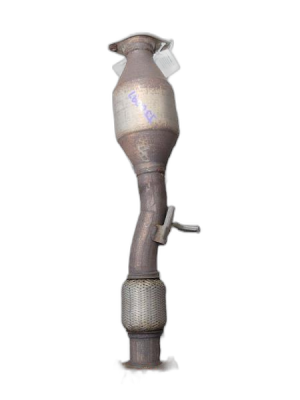
Used OEM Parts in Stock
New Aftermarket Parts Available

The information in this article is provided for general reference and educational purposes only. Vehicle specifications, procedures, and part compatibility can vary by production date, trim level, and region. Always consult your vehicle's factory service manual and verify part numbers before purchasing or performing repairs. Safety-critical components such as airbags, seat belts, and braking systems should be installed by a qualified professional.
- Toyota Highlander:
- 🧭 Diagnostic Flowchart
- 🎬 Helpful Videos
- 🛍️ Shop This Part
- What's Unique About the 2020-2024 Toyota Highlander
- Symptoms You May Notice
- Most Likely Causes
- Rare But Worth Checking
- Diagnosis Steps
- Parts You'll Likely Need
- Related Codes That Often Appear With This One
- Technical Service Bulletins (TSBs) & Recalls
- Platform-Specific Known Issues
- Mechanic-Grade Diagnostic Values
- Scan Tool Commands That Help
- Real Owner Repair Stories
- OEM Part Supersession History
- Model Year Variations Within This Range
- Other Known Issues on This Vehicle
- Used vs. New Parts: Buying Guide for This Vehicle
- Real Owner Stories
- 2020-2022 Toyota Highlander 3.5L V6
- Toyota Owner Experience
- Related OBD-II Codes
- Frequently Asked Questions
- 🎟️ Get 5% Off