

P0421 on 2018 Chevrolet Equinox: Causes, Fixes, and TSBs
For a 2018 Equinox, code P0421 is frequently caused by an exhaust leak at the turbo-to-catalytic converter clamp or by outdated engine software, not a failed catalytic converter. Check for TSBs #18209, #18NA120, and #PIP5615A before replacing any parts. The most common fix is repositioning or replacing a V-band clamp at the turbo outlet.
- Before suspecting expensive parts, check for exhaust leaks at the turbocharger outlet clamp (GM Part #12643268).
- Ask a dealer if your vehicle is eligible for the ECM software update mentioned in TSB #PIP5615A.
- Do not replace the catalytic converter or oxygen sensors unless the TSB-related clamp and software issues have been ruled out.
What's Unique About the 2018-2018 Chevrolet EQUINOX
On the 2018 Chevrolet Equinox and its platform-mate, the GMC Terrain, this code is often not due to a failed catalytic converter. Chevrolet has issued multiple Technical Service Bulletins (TSBs) pointing to specific, less expensive root causes. These include a poorly installed or leaking clamp between the turbocharger and the catalytic converter (TSB #18-NA-120, TSB #18209), and outdated ECM software that can misinterpret sensor data (TSB #PIP5615A). These known issues make it critical to investigate these platform-specific problems before assuming the costly converter has failed.
Diagnostic Flowchart
Tap your situation to follow the diagnostic path that matches what you're seeing on this vehicle.
Symptoms You May Notice
- Check Engine Light is on
- Exhaust smell in the cabin (as noted in TSB #18NA120)
- Audible exhaust leak noise (hissing or ticking, especially on a cold start)
- Smoke from the underhood area (as noted in TSB #18209 for diesel models)
- Reduced engine power or hesitation (less common, but possible if the underlying cause is severe)
- Replacing the catalytic converter before inspecting for exhaust leaks at the turbocharger clamp.
- Replacing oxygen sensors when the root cause is an exhaust leak or an ECM software issue.
- Assuming an aftermarket catalytic converter will perform to OEM standards, which can cause the code to return.
Most Likely Causes
- Exhaust Leak at Turbocharger-to-Catalytic Converter Clamp 🔴 High Probability → Shop Catalytic Converter This is a well-documented issue addressed by two manufacturer TSBs: #18-NA-120 (for a misaligned clamp) and #18209 (for a leaking gasket on diesel models). The clamp can be improperly installed from the factory, causing a poor seal.
How to confirm: Visually inspect the V-band clamp between the turbocharger outlet and the catalytic converter inlet for soot marks, which indicate a leak. Listen for a hissing or ticking sound from this area, especially during a cold start. TSB #18-NA-120 includes diagrams showing correct and incorrect clamp alignment.
Typical fix: Reposition the clamp correctly per TSB #18-NA-120. If repositioning doesn't solve the leak, or if the vehicle is a diesel model covered by TSB #18209, replace the clamp and/or gasket. The labor time for repositioning the clamp under warranty is listed as 0.4 hours.
Est. part cost: $25-$90 - Outdated Engine Control Module (ECM) Software 🔴 High Probability → Shop Engine Control Module (ECM) Manufacturer TSB #PIP5615A explicitly lists a new ECM calibration to address a false P0421 code, among others. This indicates GM found the original software logic to be overly sensitive. 🎬 See this breakdown of P0421 causes and common fixes.
How to confirm: A Chevrolet dealer or a qualified repair shop with access to GM's service information system can check your vehicle's current software VIN against the latest available calibration referenced in TSB #PIP5615A.
Typical fix: Update or reflash the ECM with the new software calibration. This is a software-only fix.
Est. part cost: $0 (if under warranty), $100-$250 (shop labor for flashing) - Failed Catalytic Converter ⚪ Low Probability → Shop Catalytic Converter While possible, this is an unlikely first cause on this specific vehicle due to the known TSBs for cheaper fixes. Failure is more likely if previous issues like misfires or the clamp leak were ignored for an extended period.
How to confirm: This should only be considered after ruling out exhaust leaks and software issues. A shop can perform a backpressure test or use a scan tool to analyze upstream and downstream O2 sensor data on a fully warm engine to confirm inefficiency.
Typical fix: Replace the catalytic converter.
Est. part cost: $800-$2000+ - Faulty Oxygen (O2) Sensor ⚪ Low Probability → Shop Oxygen Sensor
How to confirm: Use a scan tool to graph the voltage of the upstream and downstream O2 sensors. A lazy or non-responsive sensor can be identified. However, an exhaust leak is a more common cause of strange sensor readings on this platform.
Typical fix: Replace the faulty oxygen sensor. The downstream (Sensor 2) is the primary monitor for catalyst efficiency, but a faulty upstream (Sensor 1) can also lead to catalyst issues.
Est. part cost: $50-$150
Diagnosis Steps
- Scan the ECM for any other stored trouble codes. Address other codes (e.g., for misfires, fuel system, other O2 sensor codes) first.
- Thoroughly inspect the exhaust system for leaks, paying close attention to the V-band clamp between the turbocharger and the catalytic converter as specified in TSBs #18-NA-120 and #18209. Look for soot trails or listen for audible leaks.
- If a leak is found at the clamp, repair it. TSB #18-NA-120 outlines a procedure to simply reposition the existing clamp, which takes approximately 0.4 hours of labor. If the gasket is damaged or the vehicle is a diesel model, replace the clamp/gasket assembly (Part #12643268).
- If no leaks are found, contact a Chevrolet dealership or qualified shop to determine if your vehicle's ECM software is up-to-date, referencing TSB #PIP5615A.
- If the software is outdated, have the ECM reflashed with the latest calibration.
- If the code persists after addressing leaks and software, begin diagnostics on the oxygen sensors. Use a scan tool to monitor O2 sensor voltage graphs to check for proper responsive behavior.
- Only consider replacing the catalytic converter if all other potential causes have been definitively ruled out. Use a temperature gun to check inlet vs. outlet temperatures or perform a backpressure test to confirm failure.
Parts You'll Likely Need
- Turbocharger to Catalytic Converter Clamp
(OEM #12643268)— This V-band clamp is the subject of TSB #18-NA-120 and is a known failure point that directly causes code P0421 due to leaks from misalignment or failure.
Trusted brands: ACDelco, GM Genuine
OEM price range: $40-$90
Aftermarket price range: $25-$60
Related Codes That Often Appear With This One
- P0420 — This is the general code for 'Catalyst System Efficiency Below Threshold'. P0421 is a more specific version related to the warm-up phase, but they share the same underlying causes and are often diagnosed together. 🎬 Watch: How to diagnose catalyst efficiency codes on your Equinox.
Technical Service Bulletins (TSBs) & Recalls
- Bulletin #PIP5615A: Communicates an ECM service update calibration for P0421 and other codes.
- Bulletin #18209: Addresses a diesel exhaust leak at the turbo-to-cat clamp that can cause P0421.
- Bulletin #18-NA-120: Provides a procedure to reposition a misinstalled exhaust clamp that causes P0421 and/or an exhaust smell. Explicitly covers both the Equinox and GMC Terrain.
Platform-Specific Known Issues
- A misinstalled clamp between the turbocharger and catalytic converter can cause an exhaust leak, triggering P0421 and potentially an exhaust smell in the a cabin (TSB #18-NA-120). This applies to both gas and diesel models.
- On 1.6L diesel models, a leaking turbocharger-to-catalytic converter clamp/gasket can cause P0421 and visible smoke from the underhood area (TSB #18209).
- An available ECM software update exists to correct false P0421 codes (TSB #PIP5615A).
Mechanic-Grade Diagnostic Values
- Upstream O2 Sensor (Sensor 1) Voltage — expected: Should oscillate rapidly between approximately 100-900 millivolts on a warm engine.. Failure: On a 2018 Equinox, a faulty sensor was observed to hang around 800mV at idle and get stuck at 1,800mV (1.8V) when revved, instead of oscillating.
- Downstream O2 Sensor (Sensor 2) Voltage — expected: Should show a steady, high voltage (e.g., >600-800mV) on a fully warmed-up, healthy catalytic converter.. Failure: If the downstream sensor's voltage starts oscillating rapidly and mimics the upstream sensor's pattern, it indicates the catalytic converter is not storing oxygen and has failed.
- Catalytic Converter Temperature Differential — expected: The outlet pipe of the converter should be significantly hotter than the inlet pipe on a fully warmed-up engine.. Failure: If the inlet pipe temperature is hotter than the outlet, it suggests the converter is clogged and not functioning correctly.
Hidden / Shadow Codes Worth Checking
- Mode $06 Data (Catalyst Monitor Dependencies): This is not a specific code, but a diagnostic mode. Before the main catalyst monitor will run, it depends on other tests (like O2 sensor health) passing first. A technician can view Mode $06 data to see if a dependent sensor test is marginal (i.e., it passed, but just barely). This can prevent the catalyst monitor from completing its own test, even without setting a separate code for the sensor. (see via A professional scan tool with Mode $06 capability.)
Scan Tool Commands That Help
- GDS2 / Professional Scan Tool: Observe Catalyst Monitor Test — To actively watch the ECM test the catalyst. On many GM vehicles, this test can be initiated at idle. The scan tool shows the PCM command a lean-to-rich air/fuel ratio change and then graphs the response of the upstream and downstream O2 sensors to determine catalyst oxygen storage capacity.
- OBD2 Scanner with I/M Readiness function: Catalyst Monitor Drive Cycle — After a repair (like replacing the clamp or converter) or disconnecting the battery, the emissions monitors must be reset. A specific drive cycle is required to make the catalyst monitor 'Ready' for an emissions test. A common GM pattern is: idle for 5 mins, drive >55 mph for 5 mins, drive at a steady 40 mph for 2 mins, then drive at a steady 55 mph for 2 mins.
Wiring & Ground Locations
- G104 — On the engine block, for the 1.5L engine.. The Engine Control Module (ECM) and its sensors, including the Heated Oxygen Sensors (HO2S), rely on clean ground connections. A corroded or loose engine ground at G104 can introduce electrical noise or voltage offsets, leading to incorrect sensor readings and potentially false trouble codes like P0421.
- Engine Compartment Fuse Block — In the engine bay, as shown in owner's manuals.. This fuse block contains fuses and relays for essential powertrain components, including the ECM and emission control modules. A fault in this area could interrupt power or control signals needed for the catalyst monitoring system to operate correctly.
OEM Part Supersession History
12643268→N/A— This part number appears to be current and has not been superseded.
Heads up: This clamp is used on a wide variety of GM turbo applications. While no supersession is noted, always verify fitment with the vehicle's VIN.
Model Year Variations Within This Range
- 2018: The diagnostic approach can differ by engine. TSB #18209 specifically addresses a leak and P0421 on the 1.6L diesel engine, while other TSBs are more applicable to the 1.5L and 2.0L gasoline engines.
- 2018: On some 2018 Equinox models, the upstream and downstream oxygen sensors are identical parts, which can be useful for diagnostics (e.g., swapping them to see if the problem follows the sensor). However, this should be verified by part number for the specific vehicle before attempting.
Helpful Videos
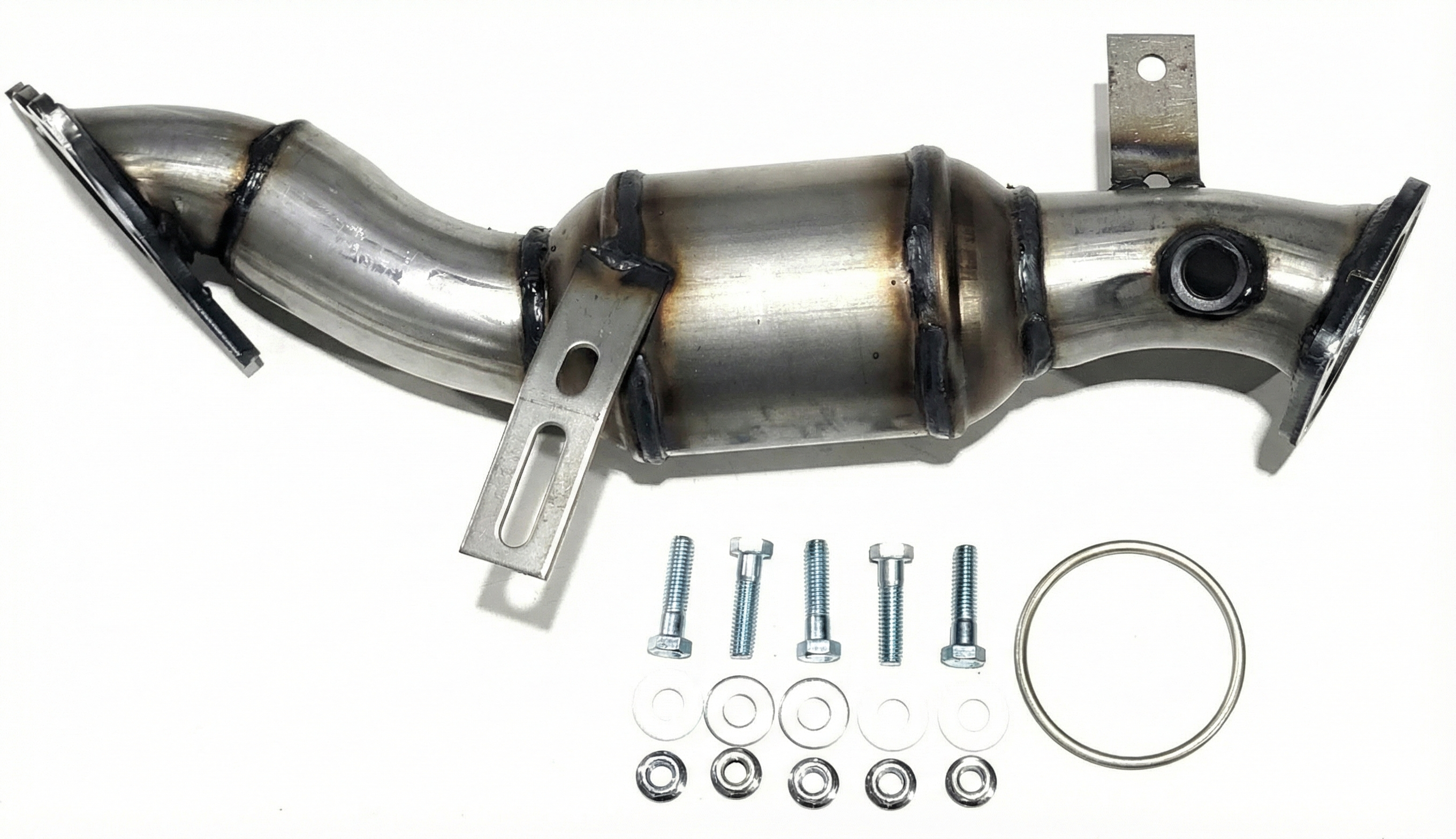
Used OEM Parts in Stock
New Aftermarket Parts Available

The information in this article is provided for general reference and educational purposes only. Vehicle specifications, procedures, and part compatibility can vary by production date, trim level, and region. Always consult your vehicle's factory service manual and verify part numbers before purchasing or performing repairs. Safety-critical components such as airbags, seat belts, and braking systems should be installed by a qualified professional.
- Chevrolet EQUINOX:
- 🧭 Diagnostic Flowchart
- 🎬 Helpful Videos
- 🛍️ Shop This Part
- What's Unique About the 2018-2018 Chevrolet EQUINOX
- Symptoms You May Notice
- Most Likely Causes
- Diagnosis Steps
- Parts You'll Likely Need
- Related Codes That Often Appear With This One
- Technical Service Bulletins (TSBs) & Recalls
- Platform-Specific Known Issues
- Mechanic-Grade Diagnostic Values
- Hidden / Shadow Codes Worth Checking
- Scan Tool Commands That Help
- Wiring & Ground Locations
- OEM Part Supersession History
- Model Year Variations Within This Range
- 🎟️ Get 5% Off