

P0421 on 2020 Chevrolet Silverado 2500: Catalyst Efficiency Causes and Fixes
On a 2020 Silverado 2500 with the 6.6L Duramax, code P0421 is often caused by a software glitch, not a failed part. The most common fix, outlined in TSB 21-NA-214, is a dealer-performed update of the Engine and Transmission Control Modules (ECM/TCM). This issue also affects the identical 2020 GMC Sierra 2500/3500.
- For a 2020 Silverado or Sierra 2500/3500 with the 6.6L Duramax, P0421 is most likely caused by a software issue, not a bad catalytic converter.
- The first step in diagnosis should always be to check with a GM dealer if the software update from TSB 21-NA-214 is needed for your vehicle's VIN.
- Symptoms are not limited to the check engine light; they often include significant transmission performance problems like harsh shifting and vibration.
- Do not replace any expensive emissions hardware until the software has been updated and the exhaust system has been thoroughly checked for leaks.
What's Unique About the 2020-2020 Chevrolet SILVERADO 2500
Unlike on many gasoline vehicles where this code often points to a bad catalytic converter, on the 2020 L5P Duramax, P0421 is frequently a symptom of a software issue. Manufacturer bulletins confirm that the diagnostic parameters can be overly sensitive, leading to false codes. The issue is so prevalent that GM issued a specific Technical Service Bulletin (TSB 21-NA-214) where the primary fix is to reprogram the engine and transmission control modules, rather than replace any expensive hardware. This TSB also applies to the 2020 GMC Sierra 2500HD/3500HD with the same L5P engine.
Diagnostic Flowchart
Tap your situation to follow the diagnostic path that matches what you're seeing on this vehicle.
Symptoms You May Notice
- Check Engine Light illuminated
- Harsh, delayed, or slipping transmission shifts. [Bulletin #21-NA-214]
- Vehicle shake or vibration. [Bulletin #21-NA-214]
- Exhaust brake not working or feels weak. [Bulletin #21-NA-214]
- Reduced engine power or 'Service Emissions System' message on the DIC.
- RPMs fluttering at steady speeds, or a feeling that the transmission is hunting for the right gear.
- Replacing the catalytic converter or DPF assembly without first checking for software updates or exhaust leaks. This is an expensive mistake, as the root cause is often software-related on this truck.
- Confusing the transmission shifting symptoms caused by the software glitch with a mechanical transmission failure. 🎬 Watch: How software issues cause these hard shifting symptoms. Some owners on forums report dealers initially suspecting torque converter issues before realizing the TSB for the ECM/TCM reflash was the correct fix.
Most Likely Causes
- Engine Control Module (ECM) and/or Transmission Control Module (TCM) Software Anomaly 🔴 High Probability → Shop Engine Control Module (ECM) As documented in TSB 21-NA-214, the factory software calibration for monitoring catalyst efficiency is overly sensitive, leading to false positives. This is a well-known issue for this specific model year and engine, affecting both Chevrolet and GMC HD trucks.
How to confirm: A GM dealer or a shop with a subscription to GM's service software can check if the vehicle's VIN has a pending software update related to TSB 21-NA-214. The dealer will use the Service Programming System (SPS) to verify.
Typical fix: Reprogramming the ECM and TCM with the updated software provided by GM. This is typically a 1-2 hour service at a dealership.
Est. part cost: $0 - Exhaust System Leak 🟡 Medium Probability Leaks in the exhaust system before or near the sensors can introduce oxygen, which skews the readings and makes the ECM believe the catalyst is inefficient. TSB 23-NA-061 (which supersedes MC-10234185-0001) specifically addresses diagnosing exhaust leaks as a cause for P0421. Some owners have reported leaks from the exhaust manifold gaskets on L5P engines.
How to confirm: Perform a smoke test or a pressure test on the entire exhaust system, from the turbocharger outlet to the tailpipe, paying close attention to flanges, gaskets, and sensor bungs. Look for black soot trails near manifold and up-pipe connections. 🎬 See this walkthrough on finding and repairing L5P exhaust leaks.
Typical fix: Repairing the leak by replacing the faulty gasket or tightening the leaking connection.
Est. part cost: $20-$100 - Faulty Oxygen or NOx Sensor ⚪ Low Probability → Shop Nitrogen Oxide (NOx) Sensor While less common than the software issue, a sensor can fail and provide incorrect data to the ECM. Contamination from coolant (see rare causes) or normal wear can cause failure.
How to confirm: Monitor live sensor data with a capable scan tool. A failing sensor may provide slow, erratic, or flat-lined voltage readings that don't respond correctly to changes in engine conditions. A reset procedure is required after installation.
Typical fix: Replacing the faulty oxygen or NOx sensor. The L5P has multiple sensors; proper diagnosis is key. For example, the upstream NOx sensor is located in the downpipe. 🎬 Watch: Step-by-step guide to replacing the position 1 NOx sensor.
Est. part cost: $80-$400
Rare But Worth Checking
- Failed Catalytic Converter / Diesel Particulate Filter (DPF) Assembly: → Shop Diesel Particulate Filter (DPF) While this is a common cause on other vehicles, on the 2020 Silverado 2500 Duramax, it should only be considered after software updates have been performed and all other potential causes, like leaks and sensors, have been ruled out.
- Cracked Cylinder Head: In a documented case on a 2020 L5P Duramax with recurring emissions codes (including NOx sensor failures), the root cause was found to be a cracked cylinder head on cylinder #7, leaking small amounts of coolant into the exhaust. This coolant contaminates and destroys downstream emissions components. This is a very rare but severe issue to consider if multiple emissions parts have failed repeatedly and there is unexplained coolant loss.
Diagnosis Steps
- Check for all stored Diagnostic Trouble Codes (DTCs). Note if P0421 is accompanied by any of the other codes listed in TSB 21-NA-214.
- Contact a Chevrolet or GMC dealer with your VIN to determine if your truck has an open campaign or requires the software update specified in TSB 21-NA-214. This should be the first physical step.
- If software is up to date, perform a thorough visual inspection of the exhaust system from the engine to the tailpipe. Look for any signs of soot, indicating a leak, especially around the manifold-to-head and up-pipe flanges.
- Perform an exhaust system pressure/smoke test to find any leaks that are not visually apparent, as detailed in GM bulletin 23-NA-061.
- If no leaks are found, use an advanced scan tool to monitor live data from the upstream and downstream oxygen/NOx sensors to check for proper operation. Compare readings to known-good values.
- If multiple emissions components have been replaced and the issue persists, check for unexplained coolant loss, which could point to a severe underlying engine issue like a cracked cylinder head.
- Only after confirming the software is current and there are no leaks or sensor faults should the catalytic converter/DPF assembly be considered for replacement.
Parts You'll Likely Need
- Engine Control Module (ECM) Reprogramming — This is the most common fix specified by Chevrolet in TSB 21-NA-214 to correct overly sensitive diagnostic parameters that falsely trigger P0421.
Trusted brands: GM Service Programming System (SPS)
OEM price range: $150-$250
Aftermarket price range: N/A - Exhaust Gasket — If an exhaust leak is found to be the cause, a new gasket is required to seal the connection. Manifold gaskets are a potential point of failure.
Trusted brands: ACDelco, Fel-Pro
OEM price range: $30-$80
Aftermarket price range: $15-$50 - Upstream NOx Sensor (Position 1)
(OEM #ACDelco 12718675)— If diagnostics confirm a sensor failure, it must be replaced. This is a low-probability cause compared to the software issue.
Trusted brands: ACDelco, GM Genuine Parts
OEM price range: $250-$400
Aftermarket price range: $150-$250
Related Codes That Often Appear With This One
- P0422 — Main Catalyst Efficiency Below Threshold. Often appears with P0421 and is also addressed by TSB 21-NA-214.
- P20EE — SCR NOx Catalyst Efficiency Below Threshold. This code is also part of the group of codes addressed by the software update in TSB 21-NA-214.
- P2463 — Diesel Particulate Filter (DPF) Soot Accumulation. This indicates a DPF issue that can be triggered by or related to the same software anomaly.
- P2002, P2459, P144E, P0106, P129F, P16F3, P20FF, P226D, P249D, P249E, P11CC, P11D5 — These are all various engine, transmission, and emissions-related codes that are listed in TSB 21-NA-214 as being potentially resolved by the same ECM/TCM software update.
Technical Service Bulletins (TSBs) & Recalls
- Bulletin #21-NA-214: Addresses a Service Engine Soon lamp with multiple DTCs including P0421, caused by a software anomaly. The fix is to reprogram the Engine and Transmission Control Modules on both 2020 Silverado and Sierra HD trucks.
Platform-Specific Known Issues
- TSB #21-NA-214 documents that a software anomaly can cause P0421 along with numerous other codes, leading to symptoms like harsh transmission shifts, vehicle vibration, and an inoperative exhaust brake. The prescribed fix is to reprogram the ECM and TCM.
- TSB #23-NA-061 (and its predecessor) notes that an exhaust leak can be the underlying cause for P0421 and provides a detailed procedure for pressure testing the system to find leaks.
- Some owners on forums like Reddit have noted that the 10-speed transmission has a 'learning period' of up to 500 miles where shifts can feel harsh or unusual, which should not be immediately confused with the fault described in TSB 21-NA-214.
Scan Tool Commands That Help
- GDS2 (GM Dealer Scan Tool): NOx Sensor 1 Reset / NOx Sensor 2 Reset — This function MUST be performed after replacing a NOx sensor. It clears the old sensor's learned calibration values from the ECM, allowing it to properly learn and utilize the new sensor.
- GDS2 (or equivalent): DPF Service Regeneration — Used to manually command a regeneration of the Diesel Particulate Filter. This can be useful if high soot levels are suspected of causing exhaust flow or pressure issues that could indirectly trigger catalyst efficiency codes.
- GDS2: Reductant System Malfunction Warning Service Bay test — This test is used to verify that the NOx sensor learn procedure was successful after a reset, as described in GM service bulletin 22-NA-069. A passing test indicates the sensors have learned correctly.
- GM Service Programming System (SPS2): K20 Engine Control Module: Programming and Setup / K71 Transmission Control Module: Programming and Setup — This is the specific function used to perform the software update outlined in TSB 21-NA-214. The bulletin advises checking for and programming any available TCM updates *before* programming the ECM.
Wiring & Ground Locations
- G103 — On some GM trucks, located at the left rear of the engine compartment on the cowl, above the brake booster. On other models, it may be on the engine block. Its exact location should be verified for the specific vehicle.. This is a major ground point for the Body Control Module (BCM), Instrument Panel Cluster (IPC), and Data Link Connector (DLC). A poor connection here can cause a wide range of communication errors and phantom codes, potentially interfering with proper diagnosis of emissions system faults.
- A38 Reductant Pump/Sender Assembly Connector — The 16-way connector on the Diesel Exhaust Fluid (DEF) tank assembly.. Per TSB PIP5838B, service replacement DEF tanks for 2020 models have a different wiring pinout than the original factory part. For example, on the new service part, the circuit from terminal 10 is moved to cavity 12, and terminal 11 is moved to cavity 6. A technician diagnosing the system must use the 'late build 2022' wiring schematic, not the original 2020 schematic, if the tank has been replaced, to avoid misdiagnosis of DEF system components.
Real Owner Repair Stories
- YouTube channel 'Stevens Truck Power' (2020 L5P Duramax) — A 'Service Emissions System' message on the dash threatening a speed de-rate in 140 miles, but with NO stored trouble codes in the computer.
❌ Tried (didn't work) Driving the vehicle for 50+ miles as suggested by the owner's manual.
✅ What actually fixed it The Manifold Absolute Pressure (MAP) sensor, located on top of the engine, was heavily caked with soot. The technician removed the sensor (one 10mm bolt), carefully cleaned the soot off the sensor tip with a pick and starting fluid until the blue sensor element was visible, and reinstalled it. After a 5-10 mile drive, the message cleared.
"I Checked Everything" — The Actual Cause
- In a documented case, a 2020 L5P Duramax presented with a 'Service Emissions System' warning but no specific trouble codes. The standard diagnostic path for emissions issues (checking for leaks, sensor data, etc.) would not have found the issue. The actual cause was a MAP sensor so heavily caked in soot that it could not read correctly. Cleaning the sensor resolved the warning message, indicating that not all emissions system faults originate in the aftertreatment components themselves.
When the Usual Fixes Don't Work
- While TSB 21-NA-214 and its ECM/TCM reflash is the most common and well-documented fix for P0421 on this truck, it is not a universal solution. If the software update is performed and the code returns, it strongly suggests the fault is not a software anomaly but a genuine hardware failure. In these cases, technicians must disregard the TSB as the final fix and revert to fundamental diagnostics. The cause is likely a physical problem that the original sensitive software was correctly detecting, such as a small exhaust leak (addressed in TSB 23-NA-061), a failing NOx sensor, a clogged DEF injector, or another component issue.
OEM Part Supersession History
12676705, 12673516→12718675— Updated design or manufacturer change for the Upstream (Position 1) NOx Sensor.85108194, 84876221, 84831758, 84230960 (Harnesses for original DEF Tank)→DEF Tank assemblies using harness 85138745— A mid-production change to the DEF tank pump/sender assembly and connector terminals.
Heads up: The new service part has a different pinout. For example, terminal 10 was moved to cavity 12, and terminal 11 to cavity 6. Technicians working on a 2020 truck with a replaced DEF tank must use the late-2022 wiring diagram to avoid misdiagnosis.
Model Year Variations Within This Range
- 2020: While the 2020 model year was consistent from the factory, a critical service part change creates a variation. Per TSB PIP5838B, replacement DEF tank assemblies for 2020 models are built to a newer, post-mid-2022 specification with a different wiring harness pinout. This means a 2020 truck with a replaced DEF tank will not match its original factory wiring diagram, a crucial detail for any future electrical diagnosis of the emissions system.
Helpful Videos

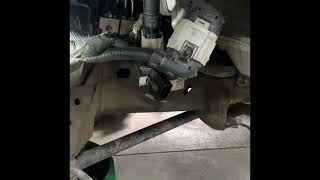
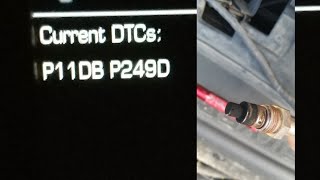
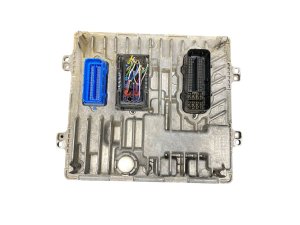
Used OEM Parts in Stock
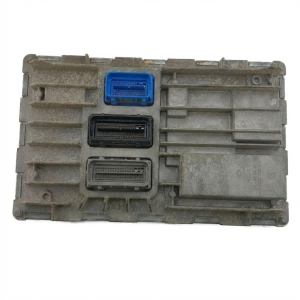
New Aftermarket Parts Available

The information in this article is provided for general reference and educational purposes only. Vehicle specifications, procedures, and part compatibility can vary by production date, trim level, and region. Always consult your vehicle's factory service manual and verify part numbers before purchasing or performing repairs. Safety-critical components such as airbags, seat belts, and braking systems should be installed by a qualified professional.
- Chevrolet SILVERADO 2500:
- 🧭 Diagnostic Flowchart
- 🎬 Helpful Videos
- 🛍️ Shop This Part
- What's Unique About the 2020-2020 Chevrolet SILVERADO 2500
- Symptoms You May Notice
- Most Likely Causes
- Rare But Worth Checking
- Diagnosis Steps
- Parts You'll Likely Need
- Related Codes That Often Appear With This One
- Technical Service Bulletins (TSBs) & Recalls
- Platform-Specific Known Issues
- Scan Tool Commands That Help
- Wiring & Ground Locations
- Real Owner Repair Stories
- "I Checked Everything" — The Actual Cause
- When the Usual Fixes Don't Work
- OEM Part Supersession History
- Model Year Variations Within This Range
- 🎟️ Get 5% Off