

P0421 on 2020 Chevrolet Silverado 3500: Warm-Up Catalyst Causes & Fixes
On a 2020 Silverado 3500 with the 6.6L Duramax, code P0421 indicates the warm-up catalyst is inefficient. This is often not an isolated fault but part of a larger issue described in GM TSB #21-NA-214, which also involves DPF, engine, and transmission problems. The root cause is frequently a clogged Diesel Particulate Filter (DPF) or an exhaust leak, making professional diagnosis essential to avoid replacing the wrong, expensive parts.
- P0421 on a 2020 Silverado 3500 Duramax indicates a problem with the warm-up catalyst's efficiency.
- This code is frequently a symptom of a larger problem. Always check for other DTCs, especially those related to the DPF and exhaust leaks.
- GM has issued specific TSBs (#21-NA-214 and #23-NA-061) that are highly relevant to diagnosing this code.
- Do not automatically replace the catalytic converter or O2 sensors. A thorough diagnosis, starting with a check for exhaust leaks, is crucial to avoid expensive and unnecessary repairs.
- Due to the complexity of the diesel emissions system, professional diagnosis and repair are strongly recommended.
What's Unique About the 2020-2020 Chevrolet SILVERADO 3500
On the 2020 Silverado 3500 with the 6.6L L5P Duramax diesel engine, P0421 is rarely a simple, standalone issue. The warm-up catalyst is an integral part of a highly complex diesel aftertreatment system. This code frequently appears alongside a host of other Diagnostic Trouble Codes (DTCs) related to the Diesel Particulate Filter (DPF) and Selective Catalytic Reduction (SCR) systems. Manufacturer bulletins confirm that P0421 can be a symptom of broader systemic problems, often stemming from a clogged DPF, that may even affect transmission performance due to increased exhaust backpressure. This makes a comprehensive diagnostic approach essential.
Diagnostic Flowchart
Tap your situation to follow the diagnostic path that matches what you're seeing on this vehicle.
Symptoms You May Notice
- Check Engine Light is illuminated
- Reduced engine power or performance
- Shake and/or vibration.
- Exhaust brake may not work correctly.
- Harsh or delayed transmission shifts, shudder, or noise.
- Message on Driver Information Center (DIC) such as "Service Emissions System& 🎬 See what happens when the Service Emissions System message appears.quot;
- Replacing oxygen sensors without checking for exhaust leaks first.
- Replacing the catalytic converter when the root cause is a software issue, a clogged DPF, or an upstream engine problem.
- Treating P0421 as an isolated fault and ignoring other accompanying DTCs (like P2002, P2463) that point to a larger DPF or emissions system problem as described in TSB #21-NA-214.
Most Likely Causes
- Exhaust System Leak 🔴 High Probability GM has issued TSB #23-NA-061 for the L5P engine, acknowledging issues with exhaust leaks that can trigger P0421 and other emissions codes. Leaks upstream of the catalyst can introduce oxygen and skew sensor readings. Common leak points are the turbo-to-downpipe gasket and other exhaust flanges.
How to confirm: Perform a visual inspection for black soot trails around exhaust connections, particularly at the manifold and downpipe flanges. A professional smoke test or pressure test of the exhaust system, as detailed in TSB #23-NA-061, is the most effective way to find small leaks. The test involves pressurizing the system to 5-8 PSI and spraying connections with soapy water to look for bubbles.
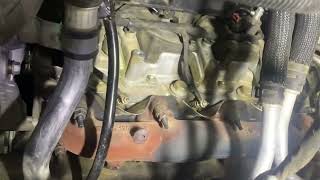
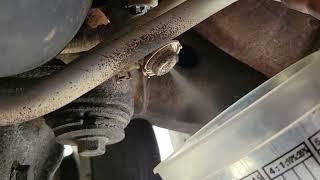
Typical fix: Replace the leaking gasket (e.g., the turbo/downpipe sealing ring) or tighten the loose connection. 🎬 Watch: How to find and repair an L5P exhaust leak. In some cases, a cracked exhaust component may need to be replaced.
Est. part cost: $20-$150 - Failing Warm-Up Catalytic Converter 🟡 Medium Probability → Shop Catalytic Converter The catalyst itself can fail, but it's often a symptom of another problem. TSB #21-NA-214 implies that a clogged DPF downstream can create excessive backpressure and heat, degrading the warm-up catalyst. Contamination from engine issues (leaking injectors, oil consumption) can also poison the catalyst over time.
How to confirm: After confirming no exhaust leaks or sensor issues, the catalyst itself is suspect. A technician can use a scan tool to monitor catalyst temperature and O2/NOx sensor data to confirm inefficiency. An exhaust backpressure test can also point to a clogged or failing unit.
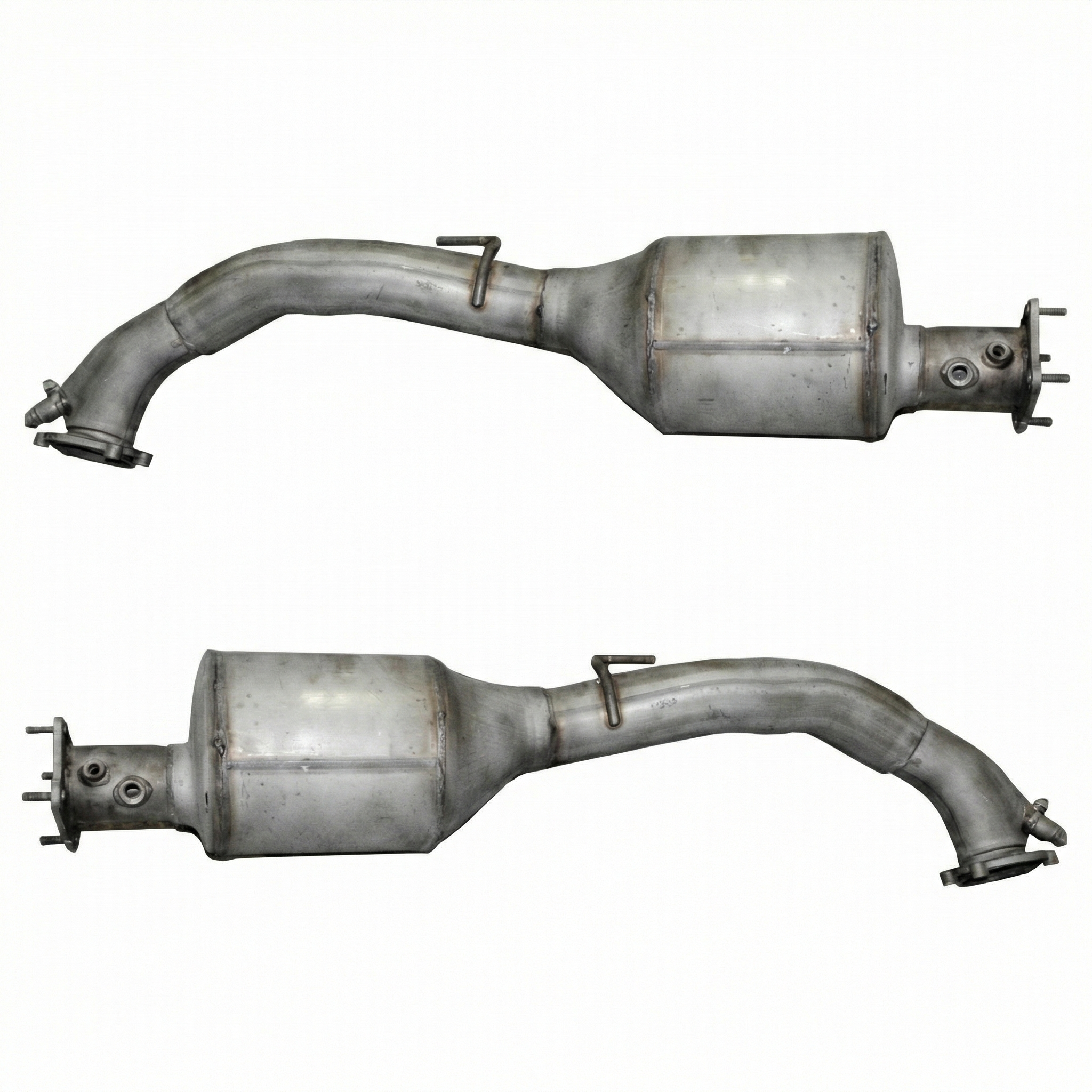
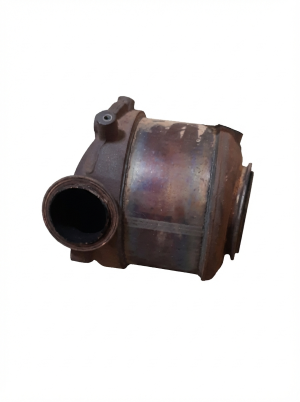
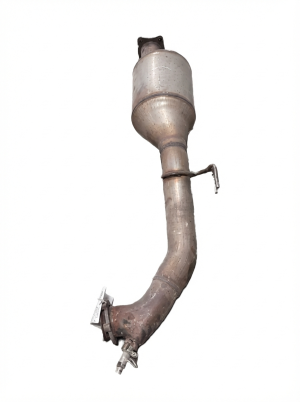
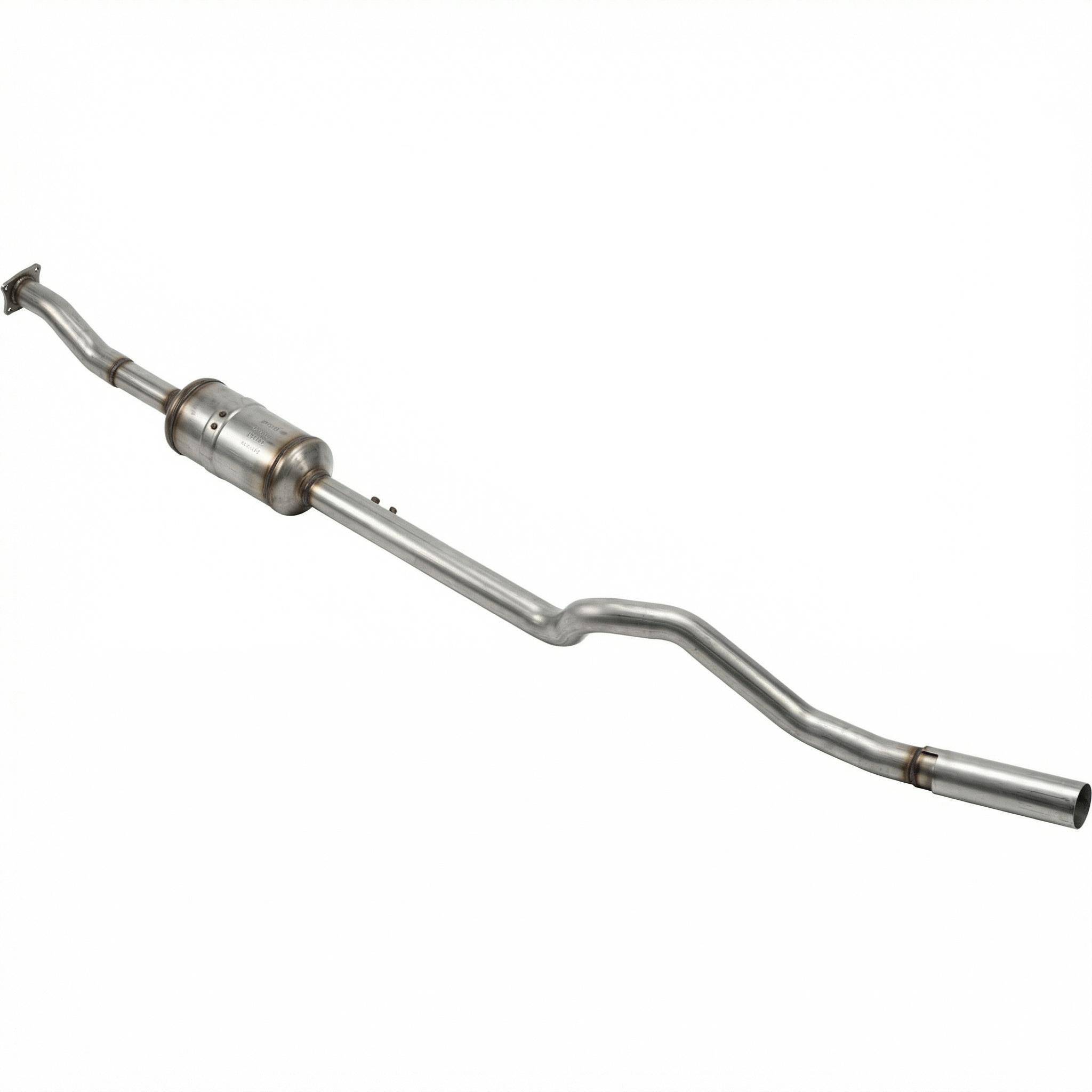
Typical fix: Replacement of the catalytic converter assembly. On the L5P, the warm-up cat is often integrated into the downpipe or the larger DPF/SCR assembly, making it a costly repair.
Est. part cost: $800-$2500 - Faulty Oxygen or NOx Sensors 🟡 Medium Probability → Shop Nitrogen Oxide (NOx) Sensor Sensors are exposed to extreme heat and exhaust gases and can fail over time, sending incorrect data to the ECM. A lazy or biased sensor can mimic the signal of an inefficient catalyst.
How to confirm: Use a diagnostic scan tool to monitor live data from the upstream and downstream sensors during a cold start and warm-up period. A faulty sensor will often show lazy, erratic, or flat-lined voltage/ppm readings when it should be actively changing.
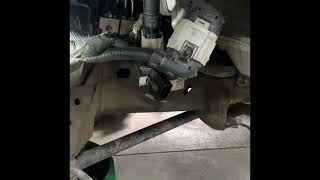
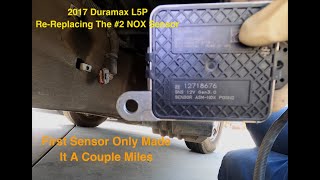
Typical fix: Replace the faulty oxygen or NOx sensor. There are multiple sensors in the system, so correct identification of the failed one is key. 🎬 Watch: Step-by-step guide to replacing an L5P NOx sensor.
Est. part cost: $100-$400 - Software or Control Module Issue ⚪ Low Probability TSB #21-NA-214, which lists P0421, has a potential fix of reprogramming the ECM and TCM with updated software to correct faulty diagnostic logic. Other bulletins, like #22-NA-112, also call for module reprogramming to fix related emissions codes that can appear alongside P0421.
How to confirm: A GM dealership or qualified shop with access to the GM Service Programming System (SPS) can check for available software updates for the vehicle's VIN.
Typical fix: Reprogramming the Engine Control Module (ECM) and/or Transmission Control Module (TCM) with the latest software.
Est. part cost: $0-$200 (Labor cost)
Rare But Worth Checking
- Underlying Engine Issues: Problems like leaking fuel injectors or excessive oil consumption can send contaminants into the exhaust, damaging the catalytic converter over time. If P0421 returns after a catalyst replacement, these issues should be investigated.
- Clogged Diesel Particulate Filter (DPF): → Shop Diesel Particulate Filter (DPF) As highlighted in TSB #21-NA-214, a severely clogged DPF is a major underlying cause. The resulting backpressure can set off a cascade of codes, including P0421. The primary repair may be servicing or replacing the DPF, not the warm-up catalyst itself.
Diagnosis Steps
- Check for all stored DTCs. Pay close attention to any codes related to the DPF (P2002, P2463), SCR (P20EE), or transmission, as they are often linked per TSB #21-NA-214.
- Use a scan tool to check the DPF soot level. A high reading strongly suggests a clogged DPF is the root cause or a major contributing factor.
- Visually inspect the entire exhaust system from the turbocharger back. Look for signs of black soot at flanges and connections, which indicate a leak.
- If no obvious leaks are found, perform a professional smoke or pressure test on the exhaust system to find hairline cracks or bad gaskets, following the procedure in TSB #23-NA-061.
- If no leaks are present, use a scan tool to monitor live data from the upstream and downstream oxygen and NOx sensors during a cold start and warm-up period to evaluate their performance and wiring.
- Check for any available Technical Service Bulletins (TSBs) or software updates for your vehicle's VIN, especially TSB #21-NA-214 and #23-NA-061. A software update may be the prescribed fix.
- If sensors, wiring, and software are all confirmed to be good, and no leaks are present, perform an exhaust backpressure test to check for a restriction in the catalytic converter or DPF.
- Only after all other possibilities are exhausted should the warm-up catalytic converter be considered the failed component.
Parts You'll Likely Need
- Exhaust Gasket(s)
(OEM #GM 12672821 (Turbo to Downpipe Seal))— Exhaust leaks are a common cause of P0421 on these trucks, and replacing the gasket at the leak point is the standard repair. The seal between the turbo and downpipe is a frequent culprit.
Trusted brands: ACDelco, Fel-Pro
OEM price range: $30-$75
Aftermarket price range: $20-$50 - Warm-Up Catalytic Converter / Downpipe Assembly
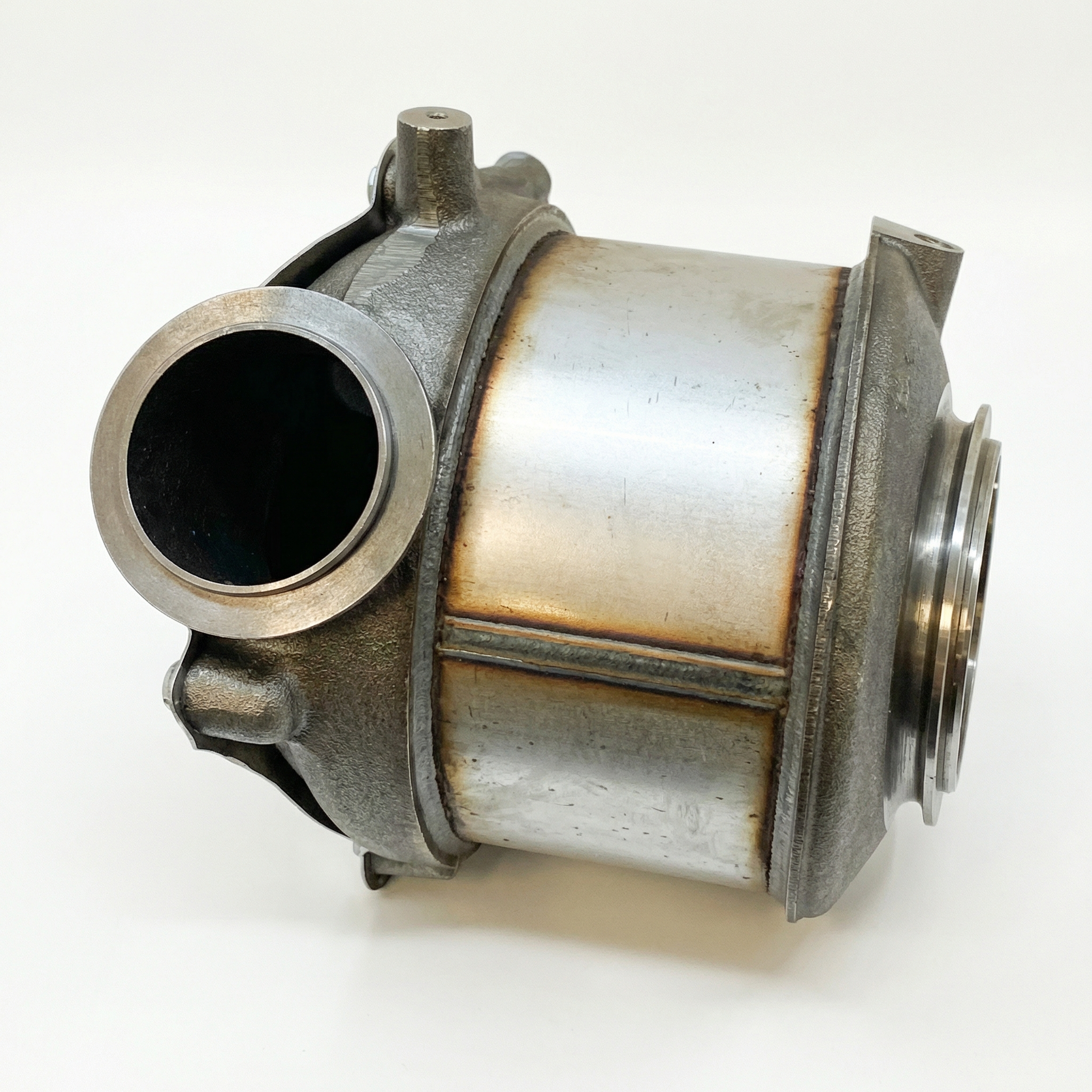
(OEM #12690612 (Example Downpipe P/N))— If the catalyst has failed internally, it must be replaced. On the L5P Duramax, this is often integrated with the exhaust downpipe. However, this is often misdiagnosed; the DPF assembly is a more likely point of failure.
Trusted brands: ACDelco, Walker Exhaust
OEM price range: $1200-$2500
Aftermarket price range: $800-$1800 - NOx Sensor
(OEM #12718675 (Upstream/Position 1), 12680215 (Downstream))— A faulty NOx or Oxygen sensor can send incorrect data, leading to a false P0421 code. Correctly identifying the failed sensor (upstream or downstream) is critical.
Trusted brands: ACDelco, Bosch, Denso
OEM price range: $150-$400
Aftermarket price range: $80-$250
Related Codes That Often Appear With This One
- P20EE — Indicates an issue with the SCR NOx catalyst efficiency, suggesting a wider problem within the diesel aftertreatment system. It is explicitly listed alongside P0421 in TSB #21-NA-214.
- P0422 — This code points to the main catalyst efficiency being below threshold, often appearing with P0421 and indicating a more systemic exhaust treatment failure. It is also listed in TSB #21-NA-214.
- P2002, P2463, P2459 — These codes are directly related to the Diesel Particulate Filter (DPF) efficiency, soot accumulation, and regeneration. Their presence with P0421 is a strong indicator of a clogged DPF system, which is the central theme of TSB #21-NA-214.
Technical Service Bulletins (TSBs) & Recalls
- 21-NA-214: Links DTC P0421 to a wide array of other engine, DPF, and transmission-related codes and symptoms.
- 23-NA-061: Provides diagnostic tips for identifying exhaust system leaks on L5P engines, which are a known cause of P0421.
Platform-Specific Known Issues
- TSB #21-NA-214: This bulletin is critical. It documents that P0421 can appear with a wide range of other DTCs and be associated with customer complaints of shake/vibration, a non-functional exhaust brake, and various transmission shifting problems. The bulletin points towards a systemic issue, often a clogged DPF, and may be resolved by reprogramming the ECM/TCM and servicing the aftertreatment system.
- TSB #23-NA-061: GM acknowledges that exhaust system leaks are a known issue on L5P Duramax engines and can cause P0421, among other codes. This bulletin provides specific diagnostic tips for finding these leaks using a pressure/smoke test, confirming it as a top diagnostic step.
Mechanic-Grade Diagnostic Values
- NOx Sensor 1 (Upstream) vs. NOx Sensor 2 (Downstream) PPM Reading — expected: During a Reductant Fluid Quality Test (RFQT), the downstream NOx sensor should read roughly 70% less than the upstream sensor (e.g., Upstream ~100 ppm, Downstream ~30 ppm or less).. Failure: If the downstream NOx sensor reading is not significantly lower, or if it does not drop to zero shortly after the upstream sensor during a coast-down, it may indicate a faulty sensor or a saturated/degraded catalyst.
- Exhaust Gas Temperatures (EGTs) during DPF Service Regeneration — expected: EGT1: 250-400°C (482-752°F), EGT2: 550-700°C (1022-1292°F), EGT3 & EGT4 should be slightly cooler than EGT2.. Failure: If EGT3 and EGT4 are 100°C (212°F) or more higher than EGT2, it suggests an intake/exhaust leak or a fuel quality issue, which can lead to aftertreatment problems like P0421.
- Exhaust Back Pressure — expected: The stock L5P exhaust necks down to 2.85 inches, creating a restriction. While specific PSI values are not provided without testing, a significant pressure drop is expected after installing a less restrictive aftermarket DPF-back system.. Failure: Excessive backpressure measured before the DPF/catalyst assembly can indicate a clog, which is a root cause for P0421 as noted in TSB 21-NA-214.
Scan Tool Commands That Help
- GM GDS2: Module Diagnostics > ECM > Data Display — To monitor live data from all EGT and NOx sensors simultaneously to compare readings against expected values and identify a lazy or failed sensor.
- GM GDS2: Output Control Functions > DPF Service Regeneration — To manually initiate a DPF regeneration cycle while monitoring sensor data. This is critical for diagnosing the system under specific heat and flow conditions as described in GM bulletins.
- GM GDS2: Configuration / Reset Functions > Reductant System Data Reset — After replacing a NOx sensor or other aftertreatment component, a reset function must be performed to clear learned values and allow the ECM to adapt to the new part. Failure to do so can cause codes to return.
- GM GDS2: Reductant Fluid Quality Test (RFQT) — This is a specific service function used to evaluate the efficiency of the SCR system and NOx sensors. It provides a pass/fail result and is a key step in diagnosing codes like P20EE that are often paired with P0421.
Wiring & Ground Locations
- G110 and G114 — These are ground connections for the body harness (G110) and engine harness (G114) on 2019-2020 Silverado/Sierra trucks.. GM issued Engineering Information (EI) PIE0548 regarding loose connections at these grounds causing various electrical issues. A poor ground for the engine or body harness can affect sensor readings and module communication, potentially leading to false diagnostic codes.
- Engine Block to Chassis/Firewall Ground — A primary ground strap runs from the back of the engine block on the driver's side to the firewall/chassis.. This is a main ground for the engine block. Corrosion or a loose connection here can cause a host of electrical issues, including incorrect sensor readings that could trigger emissions codes.
- PCM Ground — On GM trucks, a critical ground for the Powertrain Control Module (PCM) is often located on the back of the engine block, making it difficult to access.. Since the PCM is responsible for interpreting all sensor data and setting the P0421 code, a faulty PCM ground can cause erratic behavior and incorrect diagnoses. This ground must be clean and secure.
OEM Part Supersession History
12676705, 12673516→12718675— Standard part evolution for improved reliability or manufacturing changes.
Heads up: The part numbers listed are for the NOx Sensor Position 1 (Upstream). Using the correct, most current part number is essential for proper function.
Helpful Videos
Used OEM Parts in Stock
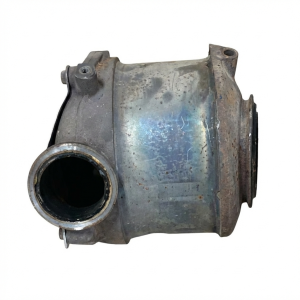
New Aftermarket Parts Available



The information in this article is provided for general reference and educational purposes only. Vehicle specifications, procedures, and part compatibility can vary by production date, trim level, and region. Always consult your vehicle's factory service manual and verify part numbers before purchasing or performing repairs. Safety-critical components such as airbags, seat belts, and braking systems should be installed by a qualified professional.
- Chevrolet SILVERADO 3500:
- 🧭 Diagnostic Flowchart
- 🎬 Helpful Videos
- 🛍️ Shop This Part
- What's Unique About the 2020-2020 Chevrolet SILVERADO 3500
- Symptoms You May Notice
- Most Likely Causes
- Rare But Worth Checking
- Diagnosis Steps
- Parts You'll Likely Need
- Related Codes That Often Appear With This One
- Technical Service Bulletins (TSBs) & Recalls
- Platform-Specific Known Issues
- Mechanic-Grade Diagnostic Values
- Scan Tool Commands That Help
- Wiring & Ground Locations
- OEM Part Supersession History
- 🎟️ Get 5% Off