

P0421 on 2013-2018 Ford C-Max Hybrid: Causes and Fixes for Catalyst Efficiency
This code means the catalytic converter isn't warming up and cleaning the exhaust efficiently. Before replacing the expensive converter, first check for cheaper fixes like a faulty downstream oxygen (O2) sensor or an exhaust leak, which are common misdiagnoses.
- P0421 means the catalytic converter isn't warming up fast enough.
- Always diagnose O2 sensors and check for exhaust leaks before replacing the expensive catalytic converter.
- The exhaust flex pipe is a known weak point on this vehicle and can be repaired separately from the converter.
- The hybrid engine's on-off nature can affect when the code is triggered.
What's Unique About the 2013-2018 Ford C-Max Hybrid
For the Ford C-Max Hybrid, the P0421 code does not point to a single, universally common failure part based on owner data. Unlike some vehicles where a specific component is a known weak point, diagnosis is key on the C-Max. The hybrid system's engine on/off cycles, especially in city driving, can sometimes delay the catalyst monitor from running its self-test. This can lead to the code appearing unexpectedly after a long highway drive where the engine runs continuously, allowing the test to complete and fail. The Atkinson-cycle engine is designed for efficiency over power, which affects its thermal properties and how the catalyst system is monitored.
🎬 Watch: P0421 code causes and diagnostic walkthroughSymptoms You May Notice
- Check Engine Light is on
- Failure to pass an emissions test
- Slightly reduced fuel economy (less common)
- Sluggish acceleration or lack of power (rare, indicates a more severe clog)
- Rotten egg (sulfur) smell from the exhaust (indicates a failing converter)
- Replacing the catalytic converter without first testing the oxygen sensors.
- Replacing the catalytic converter without checking for and repairing exhaust leaks, especially the flex pipe.
- Replacing the catalytic converter when another underlying engine problem (like a misfire or oil consumption) is the true root cause of the converter's failure.
Most Likely Causes
- Failing or Degraded Catalytic Converter 🔴 High Probability → Shop Catalytic Converter Catalytic converters are wear items and can fail over time due to age, mileage, or contamination from underlying engine issues like burning oil or coolant. On this platform, the entire manifold, catalytic converter, and flex pipe are often one expensive unit from the factory.
How to confirm: After confirming O2 sensors and the exhaust system are good, use a scan tool to compare upstream and downstream O2 sensor readings. 🎬 Watch: How to test catalytic converters with a cheap scan tool If the downstream sensor's voltage graph mimics the upstream sensor's, the converter is not storing oxygen and is likely bad. An exhaust backpressure test can also indicate a clog. An infrared thermometer can be used to check temperatures before and after the converter; it should be significantly hotter after the converter.
Typical fix: Replace the catalytic converter assembly. The OEM part is a single unit with the exhaust manifold.
Est. part cost: $500-$1500 - Faulty Downstream Oxygen (O2) Sensor 🟡 Medium Probability → Shop Oxygen Sensor O2 sensors have a finite lifespan and a lazy or failed sensor can send incorrect data to the PCM, falsely indicating a catalyst problem. This is a very common misdiagnosis for a bad converter.
How to confirm: Use a scan tool to monitor the live data from the downstream O2 sensor (Bank 1, Sensor 2). A healthy sensor on a warm engine with a good converter should show a relatively stable voltage (typically >0.5V). If the voltage is stuck, flat, or slow to respond, the sensor is likely faulty.
Typical fix: Replace the downstream (post-catalyst) oxygen sensor. The Motorcraft OEM part is recommended.
Est. part cost: $50-$150 - Exhaust System Leak ⚪ Low Probability The flex pipe section of the exhaust is a known weak point that can crack and leak over time. Gaskets and manifold welds can also degrade, allowing air to enter the exhaust stream before the O2 sensors, which corrupts their readings.
How to confirm: Perform a visual inspection of the exhaust manifold, gaskets, and especially the flex pipe for black soot marks, cracks, or audible ticking noises. A smoke test is the most effective way to pinpoint hard-to-see leaks.
Typical fix: Repair the leak. For a failed flex pipe, a repair section can be welded in, which is much cheaper than replacing the entire catalytic converter assembly.
Est. part cost: $50-$400
Rare But Worth Checking
- Underlying Engine Issue (Misfires, Fuel Trim): An engine that is misfiring or running too rich can send unburned fuel into the exhaust, which superheats and melts the internal structure of the catalytic converter. Always check for and resolve other codes (like P030x, P0171, P0172) before replacing any parts for P0421.
- High Sulfur Fuel: While not documented specifically for the C-Max, Ford has issued TSBs for other vehicles (like TSB 21-2381 for the Expedition) where high sulfur fuel can temporarily coat the catalyst and trigger efficiency codes. Performing a 'de-sulfation' drive cycle (sustained highway driving) might resolve the issue in rare cases.
- PCM Software or Communication Fault: In very rare instances, the Powertrain Control Module (PCM) may have outdated software or a data processing error that incorrectly flags a P0421 code. Checking for available PCM updates with a dealer-level tool can be a final diagnostic step.
Diagnosis Steps
- Use an OBD-II scanner to check for any other trouble codes. If other codes are present, diagnose and fix them first.
- Perform a thorough visual inspection of the exhaust system from the engine to the tailpipe. Pay close attention to the flex pipe section for cracks and the manifold gaskets for soot trails indicating a leak.
- With a scan tool, observe live data for the Upstream (Bank 1, Sensor 1) and Downstream (Bank 1, Sensor 2) oxygen sensors with the engine fully warmed up and running in a steady state (e.g., 2500 RPM).
- The upstream sensor's voltage should fluctuate rapidly between approximately 0.1V and 0.9V. The downstream sensor's voltage should remain relatively steady and stable (e.g., between 0.6V and 0.8V).
- If the downstream sensor's voltage is fluctuating similarly to the upstream sensor, this indicates the catalytic converter is not storing oxygen and has likely failed.
- If the downstream sensor's voltage is stuck high, low, or is very slow to change, the sensor itself is the most likely suspect.
- If available on your scan tool, check the Mode $06 data for the Catalyst Monitor test results. This can provide a direct reading of the catalyst's measured efficiency.
- If O2 sensors and exhaust integrity are confirmed to be good, the catalytic converter is the most probable cause of the code.
Parts You'll Likely Need
- Catalytic Converter
(OEM #FM5Z-5E212-E (Manifold/Converter Assembly))— This is the final diagnosis if all other potential causes like O2 sensors and exhaust leaks have been ruled out.
Trusted brands: Walker Exhaust, MagnaFlow, AP Exhaust, Motorcraft
OEM price range: $800-$1500
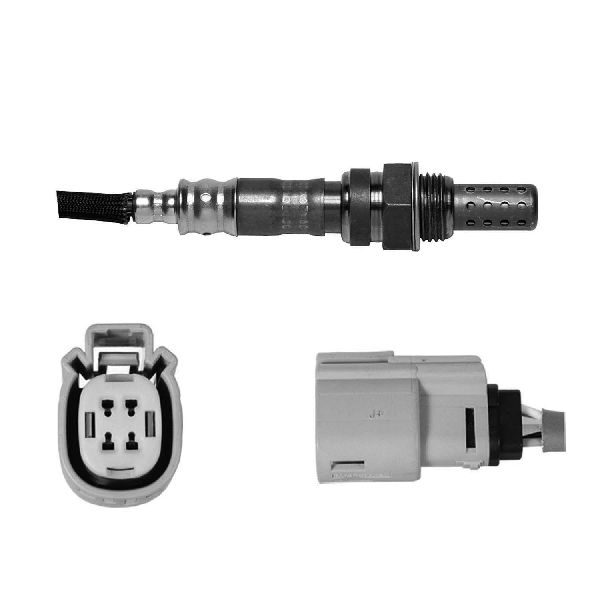
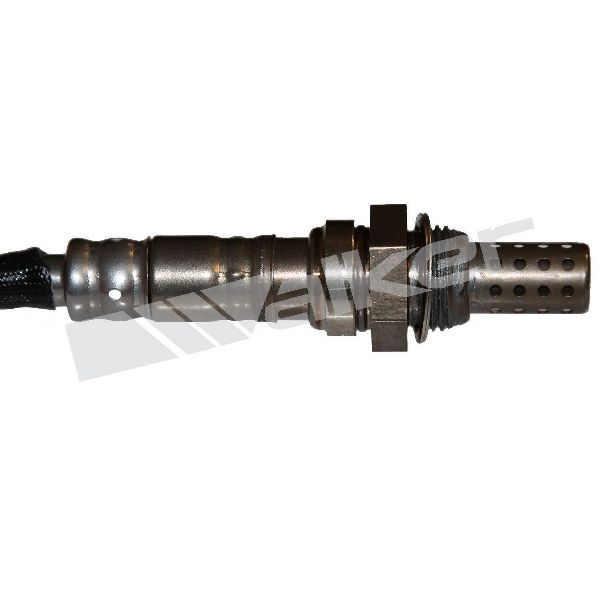
Aftermarket price range: $400-$1200 - Downstream Oxygen Sensor (Bank 1, Sensor 2)
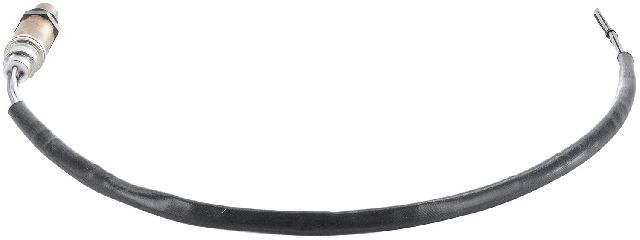
(OEM #Motorcraft DY-1203)— A faulty O2 sensor is a common cause for this code and is a frequent misdiagnosis for a bad catalytic converter. It's much cheaper to replace and should be tested before condemning the converter.
Trusted brands: Bosch, Denso, NTK, Motorcraft
OEM price range: $100-$180
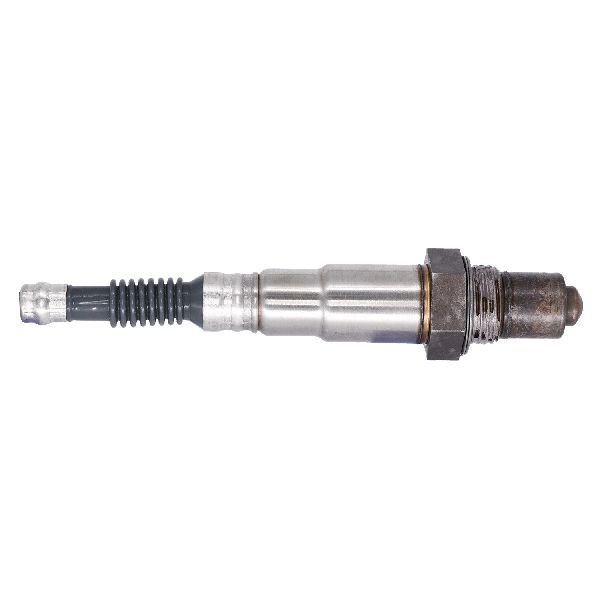
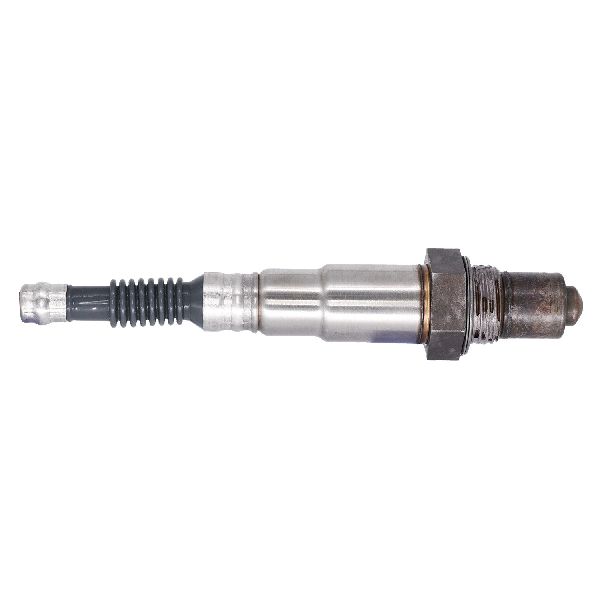
Aftermarket price range: $50-$150 - Upstream Oxygen Sensor (Bank 1, Sensor 1)
(OEM #Motorcraft DY-1184)— Though less common to cause P0421 directly, a failing upstream sensor can affect fuel trim, leading to conditions that damage the catalytic converter over time.
Trusted brands: Bosch, Denso, NTK, Motorcraft
OEM price range: $80-$150
Aftermarket price range: $40-$100
Related Codes That Often Appear With This One
- P0420 — P0420 is the generic code for 'Catalyst System Efficiency Below Threshold'. P0421 is more specific to the warm-up phase. They point to the same fundamental problem with the Bank 1 catalyst.
- P0135-P0141 — These codes relate to the oxygen sensor heater circuits. A faulty heater can cause the sensor to respond slowly, especially during warm-up, which can lead to a false P0421 code.
- P0455 — While unrelated in function, an EVAP system large leak code can sometimes appear alongside other codes if multiple system monitors are run and fail. It does not indicate a causal relationship.
Platform-Specific Known Issues
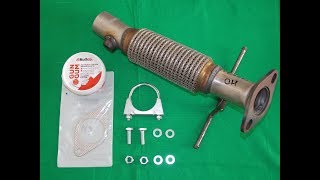
- The exhaust flex pipe is a common failure point, leading to leaks that can trigger this code. 🎬 See this cheap DIY fix for a broken C-Max flex pipe A specific repair section is available to avoid replacing the entire expensive manifold assembly.
- Due to the hybrid system's operation, the gasoline engine may not run long enough during city driving for the catalyst efficiency monitor to complete its test. The code may then appear after a sustained highway trip when the monitor finally runs and fails.
Mechanic-Grade Diagnostic Values
- Downstream O2 Sensor (HO2S B1S2) Voltage — expected: Relatively stable between 0.45V and 0.8V at warm idle/steady RPM.. Failure: Voltage fluctuates rapidly similar to the upstream sensor (0.1V-0.9V), or is stuck high (above 0.82V).
- O2 Sensor Heater Circuit Resistance — expected: 5 to 20 Ohms, measured across the two same-colored wires on the disconnected sensor.. Failure: Infinite resistance (OL) indicates an open circuit; near-zero resistance indicates a short.
- PCM O2 Signal Bias Voltage (Sensor Unplugged) — expected: Approximately 0.45V to 0.5V on the signal wire from the PCM with the key on, engine off.. Failure: Significantly different voltage may indicate a wiring or PCM issue.
- Mode $06 - Catalyst Monitor Bank 1 (OBDMID $21, Test ID $82) — expected: A value representing oxygen storage capacity. The raw value needs interpretation based on the scan tool's scaling.. Failure: On related Mazda/Ford systems, specific value ranges indicate whether to replace the catalyst or simply reprogram the PCM. A value between 0 and 2 often requires a PCM reflash and a specific drive cycle.
Hidden / Shadow Codes Worth Checking
- Mode $06, TID:$81, CID:$01 (or OBDMID:$21, Test ID:$82): This is not a DTC, but a specific monitor test result for the 'Equivalence Oxygen Storage Component' of the catalyst monitor. It provides a raw data value of the catalyst's performance, which is more precise than the simple pass/fail that triggers the P0421 code. (see via A professional scan tool with Mode $06 data capability is required. The specific identifiers (TID/CID vs OBDMID) can vary by tool.)
Scan Tool Commands That Help
- Ford IDS (or equivalent): PCM Reprogramming — Used when a TSB indicates a software update is available to correct false P0421 codes. Also may be required after catalyst replacement on some models to ensure monitors run correctly. A Mazda TSB for P0421 explicitly calls for reprogramming based on Mode $06 results.
- Ford IDS (or equivalent): Clear PCM Keep Alive Memory (KAM) — This can be done by disconnecting the battery for at least one minute. It is often required after a PCM reprogram or major component replacement to reset all adaptive learning tables, including fuel trims and emission monitor strategies.
Wiring & Ground Locations
- G105 — Left side of the engine compartment.. This is a primary ground point for components in the engine bay. A poor connection here can cause erratic behavior in various sensors and the PCM.
- G200 / G201 — Behind the left kick panel, inside the passenger cabin.. These are major grounds for the instrument panel and body control module. A fault here could affect communication between modules or power to the data link connector.
- S102 / S103 — Splices located in the junction box wiring harness, near the breakout to grounds G104 and G106.. These are factory splice points where multiple wires join. Corrosion or damage at these hidden splices can cause intermittent open circuits for PCM power or ground paths, leading to inexplicable codes.
- Downstream O2 Sensor Connector — Located under the vehicle, accessible behind the CV axle.. This is the primary connection point to test the downstream O2 sensor and its wiring back to the PCM. It is exposed to road debris and moisture, making it a potential point of failure.
Real Owner Repair Stories
- Common repair pattern from fordcmaxhybridforum.com (Multiple 2013-2018 Ford C-Max Hybrids) — Persistent P0421 or P0420 code, sometimes with an audible exhaust tick or fumes in the cabin.
❌ Tried (didn't work) Replacing the downstream oxygen sensor., Using a fuel additive catalyst cleaner.
✅ What actually fixed it The integrated exhaust manifold and catalytic converter assembly was removed. A shop cut out the cracked/leaking flex pipe section and welded in a universal exhaust flex pipe repair section. This is significantly cheaper than replacing the entire OEM converter assembly and resolves the exhaust leak that was feeding the O2 sensors false data.
"I Checked Everything" — The Actual Cause
- In cases where a smoke test reveals no exhaust leaks and both oxygen sensors test as functional, the root cause can be a PCM software or data processing error. The physical components are working correctly, but the PCM's calibration tables are too sensitive or contain a glitch, causing it to misinterpret the data from the O2 sensors and falsely trigger a P0421 code. Checking for a PCM software update via a TSB is the diagnostic step in this scenario.
Model Year Variations Within This Range
- 2017-2018 (built on or before 27-Jan-2019): These models may be susceptible to a software glitch that can cause false oxygen sensor codes. TSB 19-2158 addresses this by reprogramming the PCM. Vehicles built after this date or that have had the TSB performed should not have this specific issue.
Diagnostic Flowchart
Other Known Issues on This Vehicle
Issues unrelated to this code that are worth knowing about as an owner of this generation:
- HF35 Transmission Bearing Failure 🔴 High — Common, especially over 100,000 miles. Listen for a high-pitched whine or humming noise that increases with vehicle speed. (Ref: No specific recall, but a widely known issue in the mechanic community.)
- 12V Battery Parasitic Drain 🟠 Medium — Frequent owner complaint. Often caused by faulty door latch sensors or Body Control Module (BCM) issues, leading to a dead 12V battery overnight.
- Degraded Shift Cable Bushing 🔴 High — Widespread enough to cause a major recall. The bushing can detach, preventing the vehicle from going into the selected gear or causing it to roll away. (Ref: Recall 22S43)
- Power Steering Gear Failure 🔴 High — Less common, but subject to recalls for specific production dates. Can lead to a sudden loss of power steering assist. (Ref: Recalls 14S18, 15S18)
- Prematurely Worn Front Strut Mounts 🟠 Medium — Commonly occurs around 50,000-70,000 miles. Causes a popping or binding noise when turning the steering wheel at low speeds.
- Subframe and Rear Control Arm Corrosion 🟠 Medium — More prevalent in regions that use road salt. Can lead to severe rust on the front subframe and rear suspension components, potentially compromising structural integrity.
Used vs. New Parts: Buying Guide for This Vehicle
When a used part is the smart pick: A used part is almost NEVER a good choice for this repair. The primary failure points are the catalytic converter internals (wear item) and the flex pipe (fatigue item). A used assembly from a junkyard is likely to have high mileage on the catalyst and a flex pipe near the end of its life.
Donor-vehicle mileage cap: roughly under 40000 miles for the part to have meaningful remaining life.
What to inspect on the donor part:
- Check for a completely intact, non-frayed flex pipe with no soot marks.
- Inspect the converter body for dents, heavy rust, or signs of being overheated (discoloration).
- Ask for the VIN of the donor car to check its history for prior emissions issues, if possible.
OEM-only on this vehicle (don't cheap out):
- Catalytic Converter: While expensive, the OEM Motorcraft converter assembly (FM5Z-5E212-E) is designed to meet the specific warm-up and efficiency requirements of the Atkinson-cycle hybrid engine. Many owners report that cheap aftermarket converters fail to keep the check engine light off, especially in states with strict emissions testing (CARB).
Aftermarket brands forum-validated for this vehicle:
- Oxygen Sensors: Denso, NTK, Bosch, and Motorcraft are consistently recommended by professionals and forum users.
- Catalytic Converters: If OEM is not an option, choose high-quality, CARB-compliant converters from brands like MagnaFlow or Walker. Be prepared to pay a premium for these over non-compliant versions.
Brands owners have reported issues with on this vehicle:
- Unbranded, 'no-name' catalytic converters sold on online marketplaces. These frequently use insufficient catalyst material and will not perform to OEM standards, causing the P0421 code to return quickly.
Real Owner Stories
Aggregated from forums and TSBs cited above. Mileages and costs reflect what owners reported in those sources.
2016 Ford C-Max Hybrid 2.0L
Symptoms: Owner reported experiencing exhaust fumes inside the cabin.
What fixed it: Diagnosis of an exhaust leak, which is a common cause for triggering catalyst efficiency codes on this platform.
Source hint: reddit.com/r/cmaxhybrid thread titled 'Exhaust leak' from a 2016 owner. URL: reddit.com/r/cmaxhybrid/comments/17gztp4/exhaust_leak/
2013-2018 Ford C-Max Hybrid 2.0L
Symptoms: Check engine light with P0420/P0421 codes; concerns over the high cost of the factory exhaust manifold/converter unit.
What fixed it: Successful, cheaper repairs achieved by welding in a new flex pipe or a universal converter rather than replacing the entire assembly.
Source hint: fordcmaxhybridforum.com - Multiple threads discuss P0420/P0421
Related OBD-II Codes
Frequently Asked Questions
Is there a way to fix the P0421 code on my C-Max without replacing the entire expensive exhaust manifold assembly?
Why did my P0421 code only appear after a long highway drive?
Which replacement oxygen sensor should I use for my Bank 1, Sensor 2?
Could my C-Max's P0421 code be related to the transmission recall?
How can I tell if my catalytic converter is actually bad or if it's just a sensor?
Helpful Videos

We Have This Part in Stock


The information in this article is provided for general reference and educational purposes only. Vehicle specifications, procedures, and part compatibility can vary by production date, trim level, and region. Always consult your vehicle's factory service manual and verify part numbers before purchasing or performing repairs. Safety-critical components such as airbags, seat belts, and braking systems should be installed by a qualified professional.
- Ford C-Max Hybrid:
- 🧭 Diagnostic Flowchart
- 🎬 Helpful Videos
- 🛍️ Shop This Part
- What's Unique About the 2013-2018 Ford C-Max Hybrid
- Symptoms You May Notice
- Most Likely Causes
- Rare But Worth Checking
- Diagnosis Steps
- Parts You'll Likely Need
- Related Codes That Often Appear With This One
- Platform-Specific Known Issues
- Mechanic-Grade Diagnostic Values
- Hidden / Shadow Codes Worth Checking
- Scan Tool Commands That Help
- Wiring & Ground Locations
- Real Owner Repair Stories
- "I Checked Everything" — The Actual Cause
- Model Year Variations Within This Range
- Other Known Issues on This Vehicle
- Used vs. New Parts: Buying Guide for This Vehicle
- Real Owner Stories
- 2016 Ford C-Max Hybrid 2.0L
- 2013-2018 Ford C-Max Hybrid 2.0L
- Related OBD-II Codes
- Frequently Asked Questions
- 🎟️ Get 5% Off