

P0421 on 2020 GMC Sierra 2500: Duramax Warm-Up Catalyst Causes & Fixes
On a 2020 Sierra 2500 with the 6.6L Duramax, P0421 is rarely a simple 'bad cat.' It's almost always a symptom of a larger exhaust after-treatment problem, often linked to the DPF system, as outlined in GM Technical Service Bulletin #21-NA-214. The fix usually involves a software update and/or addressing the root cause in the DPF system, not just replacing the catalyst.
- On a 2020 GMC Sierra 2500 with the 6.6L Duramax, P0421 is a strong indicator of a broader problem, not just a single failed part.
- Always check for other stored codes. P0421 is often accompanied by DPF-related codes like P2002 and P2463.
- Consult a dealer or qualified shop about TSB #21-NA-214. A simple software update for the ECM and TCM may be the entire fix.
- Thoroughly inspect for exhaust leaks before considering any part replacement.
- Do not replace the Diesel Oxidation Catalyst (DOC) or DPF assembly without a complete diagnosis confirming its failure.
What's Unique About the 2020-2020 Gmc SIERRA 2500
For the 2020 GMC Sierra 2500 with the L5P Duramax engine, P0421 is a nuanced code. Unlike on a gasoline car where it often points to a failed catalytic converter, here it's frequently a secondary code triggered by issues in the Diesel Particulate Filter (DPF) system. GM has issued Technical Service Bulletin #21-NA-214, which groups P0421 with numerous DPF and transmission-related codes, indicating a complex underlying issue that can cause a wide range of drivability problems. Ignoring the broader context and simply replacing the DOC will likely not solve the problem.
Diagnostic Flowchart
Tap your situation to follow the diagnostic path that matches what you're seeing on this vehicle.
Symptoms You May Notice
- Check Engine Light (Service Engine Soon lamp) is on.
- Shudder, shake, or vibration while driving, particularly at steady speeds or during light acceleration.
- Harsh or delayed transmission shifts. 🎬 See how the 10L1000 transmission can develop these hard shifts.
- Unusual noises like a whine, growl, or humming.
- Exhaust brake not working or feeling ineffective.
- Reduced engine power and acceleration, sometimes with a "Reduced Engine Power" message.
- Exhaust odors in or around the vehicle, which could indicate an exhaust leak.
- "Service Emissions System" message on the driver information center.
- Immediately replacing the Diesel Oxidation Catalyst (DOC) without further diagnosis. The P0421 code on this truck is often a symptom of another problem, not the root cause. Replacing the DOC without addressing the underlying issue (like a software bug, clogged DPF, or exhaust leak) will result in the code returning.
Most Likely Causes
- Software Anomaly Requiring ECM/TCM Reprogramming 🔴 High Probability TSB #21-NA-214 explicitly calls for reprogramming the Engine Control Module (ECM) and Transmission Control Module (TCM) as the primary step to address a condition causing numerous DTCs, including P0421, and drivability issues like shuddering and harsh shifts. This indicates a known logic issue in the original factory calibration.
How to confirm: A GM dealer or a shop with a subscription to GM's Techline Connect can check if the vehicle's modules have the latest software updates by checking the calibration history against the vehicle's VIN.
Typical fix: Reprogramming the ECM and TCM to the latest calibration. This must be done by a dealer or qualified shop using a GM-approved programming tool to ensure stable voltage during the flash.
Est. part cost: $0 - Clogged or Failing Diesel Particulate Filter (DPF) 🟡 Medium Probability → Shop Diesel Particulate Filter (DPF) The P0421 code is listed in TSB #21-NA-214 alongside primary DPF codes like P2002 (DPF Efficiency) and P2463 (DPF Soot Accumulation), suggesting the DOC inefficiency is a consequence of a DPF problem. Frequent short trips or excessive idling can prevent the DPF from regenerating properly, leading to clogs and excessive backpressure.
How to confirm: A professional scan tool is needed to check the DPF soot level. The ECM will not attempt a regeneration until soot accumulation reaches approximately 100%. At 140%, DTC P2463 will set, requiring a service regeneration. High pressure across the DPF also indicates a restriction.
Typical fix: Initiate a forced DPF regeneration using a scan tool. If that fails or the issue returns quickly, the DPF may need professional cleaning or replacement. In some cases, a collapsed air filter can contribute to a clogged DPF.
Est. part cost: $2000-$5000 - Exhaust System Leak 🟡 Medium Probability GM has issued TSB #22-NA-168 for the L5P Duramax regarding exhaust leaks, which can trigger P0421. Leaks before or near the DOC can introduce unmetered oxygen, causing incorrect sensor readings and leading the ECM to believe the catalyst is inefficient. Common leak points are the manifold gaskets and downpipe connection. 🎬 Watch: Finding and fixing a common Duramax exhaust leak.
How to confirm: Visually inspect for soot trails around exhaust connections. A high-pitched whistle when the exhaust brake is active is a strong indicator. A pressure test with soapy water, as detailed in TSB #22-NA-168, is the definitive way to find leaks, as smoke tests may not reveal small leaks.
Typical fix: Replace the failed gasket or tighten loose connections. In some cases, a cracked exhaust component may need to be replaced.
Est. part cost: $20-$300 - Failed Oxygen or NOx Sensor ⚪ Low Probability → Shop Nitrogen Oxide (NOx) Sensor While less common than software or DPF issues for this specific code cluster, a failing oxygen or NOx sensor can provide false data to the ECM, leading to an incorrect P0421 code. Water contamination in sensor connectors is a known issue. TSB #20-NA-195 also points to a damaged NOx2 sensor as a cause for P0421 and other codes on some 2020 HD trucks.
How to confirm: Use a scan tool to monitor live data from the upstream and downstream oxygen/NOx sensors. A sensor with slow response, stuck voltage, or an out-of-range reading is likely faulty. Inspect connectors for corrosion or water intrusion.
Typical fix: Replace the faulty sensor. The NOx sensors are particularly expensive and may require programming with a GM scan tool.
Est. part cost: $150-$500
Rare But Worth Checking
- Clogged Manifold Absolute Pressure (MAP) Sensor:
- Faulty Fuel Injector Connector:
Diagnosis Steps
- Check for Technical Service Bulletins (TSBs). Specifically, check if TSB #21-NA-214 applies and if the ECM/TCM reprogramming has been performed. This is the most critical first step.
- Scan for all other DTCs. Do not focus solely on P0421. Codes like P2002, P2463, or P20EE are critical clues that point towards a DPF or broader emissions system fault.
- Inspect the exhaust system thoroughly for leaks. Use a pressure test with soapy water as per TSB #22-NA-168 for best results, checking all flanges and gaskets from the turbocharger back. A smoke test may not be sufficient.
- Use a professional scan tool to monitor live data. Check DPF soot load (expect high values if clogged), exhaust gas temperatures (EGTs) across all sensors, and the readings from upstream and downstream oxygen/NOx sensors during a drive cycle.
- Check MAP sensor live data. At idle, the reading should be a steady 95-105 kPa. If readings are erratic, remove and inspect the sensor for soot.
- If soot levels are high (e.g., >100%), attempt a forced DPF regeneration using a scan tool. Monitor the process to ensure temperatures get high enough and that soot levels decrease.
- Inspect and clean the MAP sensor. Given how easy it is to access and its tendency to clog, this is a worthwhile check 🎬 Watch: How to clean your L5P MAP sensor properly. to eliminate a potential contributing factor.
- If diagnostics are inconclusive and other codes from TSB #21-NA-214 are present, the ECM/TCM reprogram is the most likely next step.
- Only consider replacing the Diesel Oxidation Catalyst (DOC) if all other possibilities have been exhausted and the DOC has been proven to be faulty through direct testing (e.g., temperature differential, backpressure).
Parts You'll Likely Need
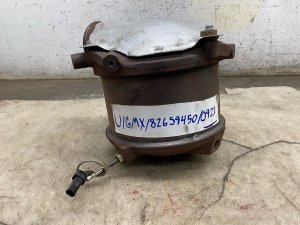
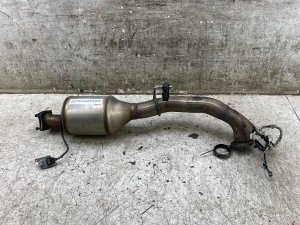
- Diesel Oxidation Catalyst (DOC) / Diesel Particulate Filter (DPF) Assembly
(OEM #86534451 (Long Box), 86534424 (Short Box))— This is the component the P0421 code refers to, but it's integrated with the DPF. It's often replaced as a complete assembly and should only be replaced after confirming it has failed and is not just a symptom of another issue.
Trusted brands: ACDelco, GM Genuine Parts
OEM price range: $1600-$2000 + $375 core charge
Aftermarket price range: $1500-$2500 - NOx Sensor — A faulty NOx sensor can send incorrect data, leading to a false P0421 code. TSB #20-NA-195 identifies this as a potential cause.
Trusted brands: ACDelco, GM Genuine Parts
OEM price range: $400-$600
Aftermarket price range: $200-$400 - Exhaust Manifold to Up-pipe Gasket — Exhaust leaks are a common cause of P0421 on the L5P, and this gasket is a frequent failure point.
Trusted brands: ACDelco, Fel-Pro
OEM price range: $20-$40
Aftermarket price range: $15-$30
Related Codes That Often Appear With This One
- P2002 — DPF Efficiency Below Threshold. Both are part of the same TSB (#21-NA-214) and point to a DPF system issue.
- P2463 — DPF Soot Accumulation. This indicates the DPF is clogged, which is a primary cause for the chain of events leading to P0421.
- P2459 — DPF Regeneration Frequency. The system is trying to regenerate too often, indicating a problem.
- P20EE — SCR NOx Catalyst Efficiency Below Threshold. Another emissions system code often seen with P0421 per TSBs.
- P0106 — Manifold Absolute Pressure/Barometric Pressure Sensor Range/Performance. This can be triggered by exhaust backpressure from a clogged DPF or a faulty/clogged MAP sensor itself.
Technical Service Bulletins (TSBs) & Recalls
- 21-NA-214: Addresses a Service Engine Soon lamp with multiple DTCs including P0421, accompanied by transmission and drivability issues. The primary fix is an ECM/TCM software update.
- 23-NA-061: Provides diagnostic tips for checking the L5P exhaust system for leaks, which can cause P0421, P20EE, and other codes.
- 20-NA-195: Points to a damaged NOx2 sensor as a possible cause for P0421 on certain 2020 Cab Chassis models.
- 23-NA-027: Details the diagnosis and repair of fretting corrosion on L5P fuel injector connectors, a potential root cause of misfires that can lead to catalyst issues.
Platform-Specific Known Issues
- TSB #21-NA-214: General Motors issued this bulletin to address a complex condition on 2020 Sierra/Silverado HD trucks with the L5P engine. It acknowledges that a combination of DTCs, including P0421, can appear alongside severe drivability issues like harsh shifting, shudder, and vibration. The primary fix prescribed is to reprogram the Engine and Transmission Control Modules.
- TSB #23-NA-061: This bulletin provides detailed procedures for pressure/smoke testing the exhaust system on L5P Duramax engines to find leaks, which are a direct cause of P0421 by allowing oxygen into the exhaust stream and skewing sensor readings.
- TSB #20-NA-195: This bulletin applies to some 2020 models and points to a potentially damaged NOx 2 sensor as the cause for a group of DTCs including P0421.
Mechanic-Grade Diagnostic Values
- Manifold Absolute Pressure (MAP) Sensor Live Data — expected: Steady 95-105 kPa at idle.. Failure: Erratic or jumping kPa readings confirm clogging or a sensor fault.
- DPF Differential Pressure Sensor Voltage Check — expected: With the sensor connector unplugged, the 5V reference wire should show 5 volts. The sensor should read 0 kPa with no pressure applied.. Failure: If the 5V reference is missing, there is a circuit issue. If voltage drops significantly when plugged in (e.g., to 0.33V), it can indicate a sensor or wiring problem.
Scan Tool Commands That Help
- GDS2 (GM Global Diagnostic System 2): ECM/TCM Reprogramming — This is the primary fix recommended by TSB #21-NA-214 when P0421 is present with other drivability and emissions codes on the 2020 L5P engine.
- GDS2 (GM Global Diagnostic System 2): Service Regeneration — This is required when the DPF Soot Accumulation level reaches 140% and sets a P2463 code, which is often seen with P0421. It is a controlled process to clean the DPF at the service facility.
Wiring & Ground Locations
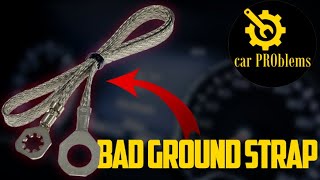
- Engine Block to Frame Ground Strap — A braided ground strap located behind one of the front wheels, connecting the engine block to the vehicle frame.. This strap is exposed to the elements and prone to corrosion, especially in salt-belt regions. A poor ground here can cause numerous intermittent electrical faults and codes, including introducing ground faults to the ECM which can affect emissions system calculations.
- G103 — Located at the left rear of the engine compartment on the cowl, above the brake booster.. This is a major ground point for the Body Control Module (BCM), Instrument Panel Cluster (IPC), and the Data Link Connector (DLC). While not a direct engine ground, a fault here can disrupt communication and module behavior.
Real Owner Repair Stories
- YouTube channel 'Stevens Truck Power' (2020 Duramax L5P) — No DTCs stored, but a 'Service Emissions System' message on the dash with a mileage countdown to speed derate.
❌ Tried (didn't work) Driving the truck for over 50 miles as suggested by the owner's manual.
✅ What actually fixed it The MAP sensor was removed and found to be completely caked in soot. After cleaning the sensor with starting fluid until the blue tip was visible and reinstalling it, a 5-10 mile drive cleared the message. - Reddit user in r/Justrolledintotheshop (2020 GMC Sierra) — Intermittent power steering failure, ESC failure warnings, and other random electrical issues. Codes would clear but then return.
❌ Tried (didn't work) Clearing codes, which only provided a temporary fix., Rumored need for multiple new control modules.
✅ What actually fixed it A visual inspection revealed a heavily corroded and failing braided ground strap connecting the engine block to the frame.
"I Checked Everything" — The Actual Cause
- According to GM TSB #22-NA-168, a standard smoke test can be ineffective for finding the small exhaust leaks that trigger codes like P0421 on these trucks. The bulletin notes that smoke can be hard to see exiting a small leak and can be absorbed by the DPF, masking the issue. The recommended and more effective method is a pressure leak test. This involves sealing the exhaust, pressurizing it to a low PSI (e.g., 2-3 PSI), and spraying all connections, welds, and sensors with a soapy water mixture to look for bubbles, which definitively identify the leak location.
OEM Part Supersession History
12676706 (Downstream NOx Sensor, Position 2)→12718676, 12741484— Part revision and update by manufacturer.
Heads up: The NOx sensors for 2020-2022 models have different part numbers (e.g., Upstream is 12708005 / 12695881), indicating that parts are not interchangeable across these year ranges. Using the wrong year sensor can cause system malfunctions.
Model Year Variations Within This Range
- 2020: GM TSB #20-NA-043 specifically recommends installing a winter grille cover on 2020 model year vehicles that experience MAP sensor icing in freezing temperatures to prevent DTC P0106, a code often associated with the P0421 fault cluster.
Helpful Videos
Used OEM Parts in Stock
New Aftermarket Parts Available

The information in this article is provided for general reference and educational purposes only. Vehicle specifications, procedures, and part compatibility can vary by production date, trim level, and region. Always consult your vehicle's factory service manual and verify part numbers before purchasing or performing repairs. Safety-critical components such as airbags, seat belts, and braking systems should be installed by a qualified professional.
- Gmc SIERRA 2500:
- 🧭 Diagnostic Flowchart
- 🎬 Helpful Videos
- 🛍️ Shop This Part
- What's Unique About the 2020-2020 Gmc SIERRA 2500
- Symptoms You May Notice
- Most Likely Causes
- Rare But Worth Checking
- Diagnosis Steps
- Parts You'll Likely Need
- Related Codes That Often Appear With This One
- Technical Service Bulletins (TSBs) & Recalls
- Platform-Specific Known Issues
- Mechanic-Grade Diagnostic Values
- Scan Tool Commands That Help
- Wiring & Ground Locations
- Real Owner Repair Stories
- "I Checked Everything" — The Actual Cause
- OEM Part Supersession History
- Model Year Variations Within This Range
- 🎟️ Get 5% Off