

P0421 on 2020 GMC Sierra 3500 6.6L Duramax: Causes and Fixes for Warm-Up Catalyst Efficiency
On a 2020 Sierra 3500 Duramax, P0421 is often caused by an exhaust leak before the sensors, not a failed catalytic converter. Check for leaks per TSB #23-NA-061 before replacing any expensive parts. Common leak points include the turbo-to-downpipe gasket and exhaust manifold gaskets. This code is frequently linked to other aftertreatment system issues and may sometimes be resolved with an ECM software update per TSB #21-NA-214.
- For a 2020 GMC Sierra 3500 Duramax, P0421 strongly suggests an exhaust leak, not a bad catalytic converter.
- Always check for GM Technical Service Bulletins (TSBs) for this code; they point directly to exhaust leaks and other complex issues.
- Do not replace the expensive Diesel Oxidation Catalyst (DOC) without first performing a thorough pressure/smoke test of the exhaust system.
- This code is often accompanied by other aftertreatment system codes (DPF, SCR) and can even cause transmission performance problems.
What's Unique About the 2020-2020 Gmc SIERRA 3500
On the 2020 Sierra 3500 with the 6.6L L5P Duramax, P0421 is rarely a simple 'bad cat' issue. GM has issued multiple Technical Service Bulletins (TSBs) that link this code to exhaust leaks and broader aftertreatment system problems. Unlike on many gasoline cars, this code on your truck is a strong indicator to first suspect a leak in the complex diesel exhaust system. An exhaust leak can cause incorrect NOx sensor readings, leading to a cascade of other performance problems, including harsh transmission shifts, exhaust brake failure, and other DTCs, as noted in TSB #21-NA-214. In some cases, the issue is a software anomaly that requires an ECM reprogram at the dealership.
Diagnostic Flowchart
Tap your situation to follow the diagnostic path that matches what you're seeing on this vehicle.
Symptoms You May Notice
- Check Engine Light is on
- Harsh or delayed transmission shifts, including slips, surges, or shudders [TSB #21-NA-214].
- Engine shake or vibration [TSB #21-NA-214].
- Exhaust brake not working or feeling weak [TSB #21-NA-214].
- Hissing, whistling, or ticking noise from the engine bay or exhaust, especially when accelerating or when the exhaust brake is active.
- Exhaust odor in or around the vehicle.
- Reduced engine power and acceleration.
- Decreased fuel economy
- Replacing the Diesel Oxidation Catalyst (DOC) or entire aftertreatment assembly without first performing a thorough exhaust leak test. This is an expensive mistake, as a leak is a more probable and cheaper fix.
- Replacing NOx sensors when the root cause is an exhaust leak feeding the sensor incorrect data.
Most Likely Causes
- Exhaust System Leak 🔴 High Probability This is a widely known issue acknowledged by GM in TSBs #23-NA-061 and #22-NA-168 for L5P Duramax engines. Leaks allow unmetered oxygen to enter the exhaust, skewing NOx sensor readings and causing false catalyst efficiency codes. Common failure points are gaskets at the turbo downpipe flange and the exhaust manifolds.
How to confirm: Perform a professional smoke test or, as recommended by GM, a pressure leak test using a tool like the GE-52250 at 5-8 PSI (34–55 kPa) and soapy water to find bubbles at joints, welds, and sensor bungs. TSBs note that a pressure test is better for finding small leaks that a smoke test might miss.
Typical fix: Tighten loose clamps or bolts. If a component like a gasket or flex pipe has failed, it must be replaced. The turbo-to-downpipe gasket is a single-use part. Then, clear the codes and perform a drive cycle.
Est. part cost: $20-$300 - Engine Control Module (ECM) Software Issue 🟡 Medium Probability → Shop Engine Control Module (ECM) TSB #21-NA-214 explicitly states that a software anomaly can cause P0421 along with a host of other DTCs and transmission issues. GM has released updated calibrations for the ECM and TCM to correct overly sensitive diagnostic parameters and improve system performance. This is often the first step a dealer will take.
How to confirm: A GM dealership or a shop with a subscription to GM's service information system can check if the vehicle's ECM calibration is up to date by checking the VIN against available software updates.
Typical fix: Reprogram the ECM and/or TCM with the latest software. After the update, a NOx sensor reset may be required. 🎬 See how to clear service emissions codes with a scan tool.
Est. part cost: $0-$250 - Related Aftertreatment System Fault (e.g., Clogged DPF) 🟡 Medium Probability P0421 is often set alongside other codes like P2463 (DPF Soot Accumulation) per TSB #21-NA-214. A clogged DPF increases backpressure and affects the entire system's operation, which can lead to an efficiency code upstream. An underlying exhaust leak is often the cause of the DPF issue itself.
How to confirm: Check for other DTCs with a scan tool. Monitor DPF soot levels and backpressure readings on the scan tool. A forced regeneration may be required.
Typical fix: Address the root cause of the accompanying codes first. This may involve a forced DPF regeneration, cleaning, or addressing issues causing excessive soot (like an exhaust leak).
Est. part cost: $0-$500 - Faulty Oxygen or NOx Sensor ⚪ Low Probability → Shop Nitrogen Oxide (NOx) Sensor While possible, sensors are less likely to be the root cause than exhaust leaks or software issues on this platform. A leak or contamination from another issue can make a good sensor report bad data, causing the code.
How to confirm: Use a scan tool to graph the sensor's voltage/reading. A lazy or non-responsive sensor may be faulty. However, definitively rule out exhaust leaks first, as a leak will cause a perfectly good sensor to read incorrectly.
Typical fix: Replace the specific faulty sensor. Ensure the correct sensor is replaced (there are multiple in the system).
Est. part cost: $100-$300
Rare But Worth Checking
- Failed Diesel Oxidation Catalyst (DOC): This is the part the code directly points to, but it's often not the actual cause. It should only be replaced after all other possibilities, especially exhaust leaks and software updates, have been definitively ruled out. It is an expensive part.
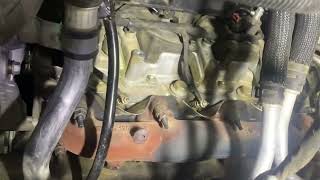
- Broken Exhaust Manifold Studs: → Shop Exhaust Manifold Owners have reported broken exhaust manifold studs, particularly on the rearmost cylinder, leading to a significant exhaust leak that triggers P0421 and audible ticking or squealing noises. 🎬 Watch: Hear what a real L5P exhaust leak sounds like. This requires removing the manifold to extract the broken stud, which can be a labor-intensive repair.
Diagnosis Steps
- Check for Technical Service Bulletins (TSBs) related to P0421 for your vehicle's VIN. TSBs #21-NA-214, #22-NA-168, and #23-NA-061 are highly relevant.
- Scan for all DTCs. Note any other codes present, as they provide critical context (e.g., DPF, SCR, or NOx sensor codes).
- Check for ECM/TCM software updates with a GM dealer or qualified shop. If updates are available, this is often the first recommended step per TSB #21-NA-214.
- Perform a thorough visual inspection of the entire exhaust system from the turbocharger back. Look for soot trails, cracks, or loose connections, especially at the turbo downpipe V-band clamp and exhaust manifold flanges.
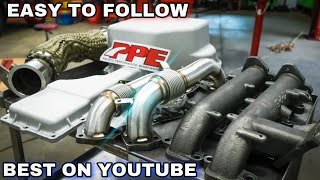
- Conduct an exhaust system leak test. Per GM TSB #23-NA-061, a pressure test with soapy water at 5-8 PSI is preferred over a smoke test for finding small leaks. Pay close attention to the turbo-to-downpipe connection, 🎬 Watch: Step-by-step guide to installing a new downpipe and manifolds. all sensor bungs, and manifold gaskets.
- If no leaks are found, use a professional scan tool to analyze live data from the upstream and downstream NOx sensors and exhaust gas temperature sensors. Compare the readings to specified values.
- If other codes are present (like DPF-related codes), diagnose and resolve them first, as they may be the root cause.
- Only after confirming there are no leaks, the software is current, no other codes are present, and sensor readings are genuinely indicating poor performance should you consider the Diesel Oxidation Catalyst (DOC) itself as the failure point.
Parts You'll Likely Need
- Turbocharger Outlet Gasket (Downpipe Seal)
(OEM #GM 12672821)— This single-use ring gasket seals the connection between the turbocharger and the downpipe/DOC. It is a very common leak point that directly causes P0421.
Trusted brands: ACDelco, GM Genuine
OEM price range: $15-$30
Aftermarket price range: $10-$25 - Exhaust Manifold Gasket — If an exhaust leak is found at the manifold-to-head connection, often due to loose or broken studs, the gasket will need to be replaced.
Trusted brands: ACDelco, Fel-Pro
Related Codes That Often Appear With This One
- P20EE — Relates to SCR NOx Catalyst Efficiency. An issue in one part of the aftertreatment system often triggers faults in another. Both are mentioned in TSB #21-NA-214 and #23-NA-061.
- P2463 — Indicates the Diesel Particulate Filter (DPF) is full of soot. A clogged DPF impacts the entire exhaust flow and can trigger catalyst efficiency codes. It is also listed in TSB #21-NA-214.
- P11D5 — Relates to a NOx sensor learning limit. This code is also explicitly linked to exhaust leaks in TSB #23-NA-061.
- P0422 — Main Catalyst Efficiency Below Threshold. This is a related code that points to a similar issue within the aftertreatment system and is also mentioned in TSB #21-NA-214.
Technical Service Bulletins (TSBs) & Recalls
- Provides detailed diagnostic tips for checking for exhaust leaks on L5P engines, which are a primary cause of P0421. It recommends a pressure test at 5-8 PSI with soapy water as being superior to a smoke test for finding small leaks.
- A critical TSB linking P0421 (and many other codes) to a software anomaly. The fix is to reprogram the ECM and TCM. It also documents the associated symptoms like harsh shifting and a non-functional exhaust brake.
- Another informational bulletin on diagnosing exhaust leaks that cause codes like P0421. It explains that leaks allow oxygen into the exhaust, causing incorrect NOx sensor readings.
Platform-Specific Known Issues
- TSB #21-NA-214 documents that P0421 can appear with a wide range of other DTCs and cause symptoms like harsh transmission shifts, shudder, and exhaust brake failure due to a software anomaly requiring an ECM/TCM update.
- TSB #23-NA-061 provides detailed instructions for pressure testing the exhaust system, noting that it is more effective than smoke testing for the small leaks that typically cause this code on the L5P engine. It specifies a test pressure of 5-8 PSI.
- Owner experiences on forums like 'The Truck Stop' describe a distinct 'pft pft pft' ticking noise under acceleration when an exhaust leak is present, which helps in diagnosis.
Mechanic-Grade Diagnostic Values
- Exhaust Gas Temperature (EGT) Sensor Resistance — expected: Approximately 220 Ohms at room temperature.. Failure: A significantly lower reading, such as ~112 Ohms, indicates a faulty sensor.
- EGT Sensor Circuit Voltage (at connector, key on engine off) — expected: One pin should have approximately 5 volts (reference from ECM), and the other pin should show a good path to ground.. Failure: Absence of 5V or a high resistance to ground points to a wiring or ECM issue, not a sensor failure.
- NOx Sensor 2 (Downstream) Live Data — expected: After warm-up, the reading should be relatively stable and significantly lower than NOx Sensor 1. During deceleration, it should drop close to zero.. Failure: A sensor that is stuck at a specific value (e.g., 150 ppm) or bounces around at high readings (e.g., 1200-1600 ppm) during deceleration may be faulty, assuming no exhaust leaks are present.
Hidden / Shadow Codes Worth Checking
- Permanent DTC (P-code): After a repair is performed and the active DTC is cleared, a 'Permanent' version of the code (e.g., P0421p) may remain stored. This code cannot be cleared with a standard scan tool. It is designed to be cleared by the ECM itself only after it runs and passes the internal self-test for that monitor, which requires a specific drive cycle. (see via Visible on most OBD-II scan tools that can read permanent codes. It may cause confusion if a technician believes the fault is still present after a successful repair.)
Scan Tool Commands That Help
- GDS2 (GM Global Diagnostic System 2): NOx Sensor Reset (for Sensor 1 and Sensor 2) — This function must be performed after replacing a NOx sensor to clear learned values and allow the system to recalibrate with the new sensor. Failure to perform this reset can cause the new sensor to read incorrectly.
- GDS2: Diesel Particulate Filter (DPF) Regeneration Enable — Used to command a forced DPF regeneration. This is critical when P0421 is accompanied by soot accumulation codes like P2463, as a clogged DPF can be a contributing cause.
- GDS2: Reductant System Service Bay Test — This is a comprehensive test of the DEF (reductant) system. While not directly for P0421, it's used to verify the health of the entire aftertreatment system when multiple codes are present, ensuring the SCR system isn't contributing to the problem.
Wiring & Ground Locations
- Engine Wiring Harness Chafe Point — Inspect the engine wiring harness where it passes the black ECM/TCM mounting bracket on the driver's side of the engine bay. A specific TSB for similar models notes this as a common chafe point.. Chafing at this location can damage wiring for multiple engine and emission sensors, including the NOx and EGT sensors that are critical for the P0421 diagnosis. This can lead to erratic sensor readings or open/short circuit codes that mimic sensor failure.
- NOx Sensor Module Connector — The NOx sensor modules are typically bolted to the frame rail on the passenger side. The connectors for these modules are exposed to the elements.. A preliminary GM document (PIP5453A) for L5P engines advises checking NOx sensor electrical connectors for water contamination or corrosion when diagnosing any NOx-related DTCs.
Real Owner Repair Stories
- YouTube channel 'Stevens Truck Power' (2020 Duramax L5P) — No active DTCs, but a 'Service Emissions System' message on the dash with a countdown to speed limitation.
❌ Tried (didn't work) Driving the vehicle for 50+ miles as suggested by the owner's manual.
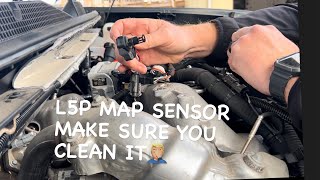
✅ What actually fixed it The Manifold Absolute Pressure (MAP) sensor, located on top of the engine, was completely caked in soot. The technician removed the sensor (one 10mm bolt), carefully cleaned the soot off the sensor tip with a pick and starting fluid until the blue sensor element was visible, and reinstalled it. After a 5-10 mile drive, the message cleared. - YouTube channel 'The Duramax Channel' (2020 Silverado 3.0 Duramax (LM2, not L5P, but demonstrates a relevant wiring failure mode)) — Reduced engine power, limp mode, and DTC P0191 (Fuel Rail Pressure Sensor Circuit).
❌ Tried (didn't work) Initial diagnosis pointed only to the sensor.
✅ What actually fixed it The root cause was twofold: a faulty ECM sending incorrect voltage and poor terminal tension in the fuel rail pressure sensor connector. The fix required replacing both the ECM and the connector pigtail. This highlights that sensor codes can originate from wiring or module faults, not just the sensor itself.
"I Checked Everything" — The Actual Cause
- In cases where a 'Service Emissions System' message appears without clear exhaust leak symptoms (soot, noise) and no active codes are stored, the cause may not be an exhaust leak. One documented fix was a MAP sensor heavily contaminated with soot, which prevented it from reading correctly but didn't immediately set a specific MAP sensor fault. Cleaning the sensor resolved the issue.
OEM Part Supersession History
GM 12676705→GM 12718675— Part revision for the upstream (Position 1) NOx sensor for early L5P models.GM 12676706→GM 12741484, GM 12718676— Part revision for the downstream (Position 2) NOx sensor for 2017-2019 models.GM 12695881→GM 12708005— Part revision for the upstream (Position 1) NOx sensor for 2020-2022 models.
Helpful Videos
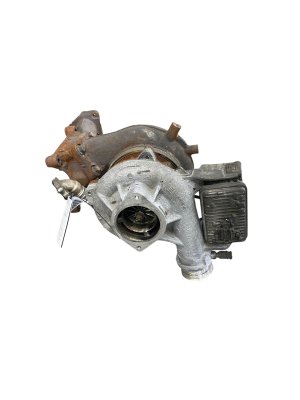
Used OEM Parts in Stock
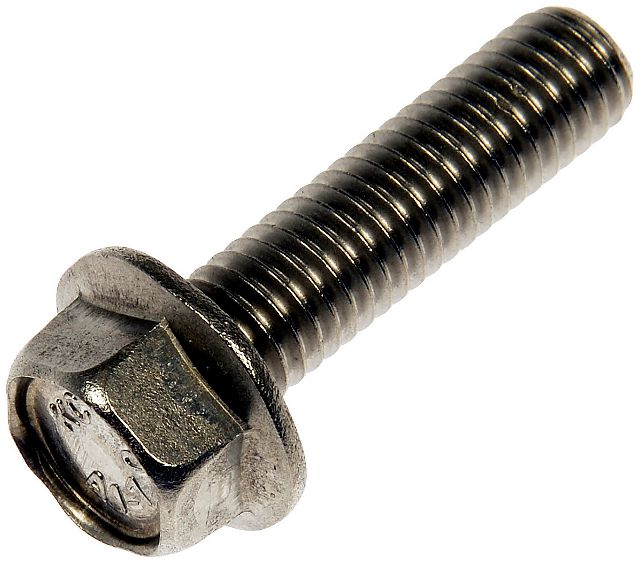
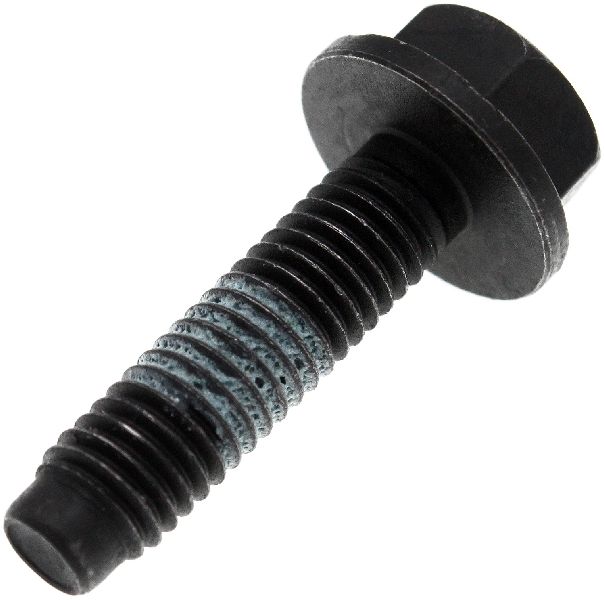
New Aftermarket Parts Available


The information in this article is provided for general reference and educational purposes only. Vehicle specifications, procedures, and part compatibility can vary by production date, trim level, and region. Always consult your vehicle's factory service manual and verify part numbers before purchasing or performing repairs. Safety-critical components such as airbags, seat belts, and braking systems should be installed by a qualified professional.
- Gmc SIERRA 3500:
- 🧭 Diagnostic Flowchart
- 🎬 Helpful Videos
- 🛍️ Shop This Part
- What's Unique About the 2020-2020 Gmc SIERRA 3500
- Symptoms You May Notice
- Most Likely Causes
- Rare But Worth Checking
- Diagnosis Steps
- Parts You'll Likely Need
- Related Codes That Often Appear With This One
- Technical Service Bulletins (TSBs) & Recalls
- Platform-Specific Known Issues
- Mechanic-Grade Diagnostic Values
- Hidden / Shadow Codes Worth Checking
- Scan Tool Commands That Help
- Wiring & Ground Locations
- Real Owner Repair Stories
- "I Checked Everything" — The Actual Cause
- OEM Part Supersession History
- 🎟️ Get 5% Off