

P0421 on 2018 GMC Terrain: Causes and Fixes for Catalyst Efficiency Code
On a 2018 GMC Terrain, especially with the 1.6L diesel engine, code P0421 is frequently caused by an exhaust leak from a misaligned clamp or a software issue, not a failed catalytic converter. Check for exhaust leaks and available ECM updates before replacing expensive parts.
- For the 2018 GMC Terrain, especially diesel models, do not immediately assume P0421 means a bad catalytic converter.
- The most likely causes are less expensive fixes: an exhaust leak at the turbo clamp or an outdated engine software calibration.
- Start your diagnosis by checking for TSBs and performing a careful visual inspection of the exhaust system for leaks before buying any parts.
- An exhaust smell in the cabin or under the hood combined with this code is a strong indicator of the TSB-related exhaust leak.
What's Unique About the 2018-2018 Gmc TERRAIN
For the 2018 GMC Terrain, particularly the 1.6L diesel model, this code is often not due to a failed catalytic converter. GMC has issued specific Technical Service Bulletins (TSBs) that point to less expensive root causes. These include exhaust leaks from improperly installed clamps between the turbocharger and the catalytic converter (TSB 18-NA-120, TSB 18209) and the need for an ECM software update to correct over-sensitive diagnostic parameters (TSB PIP5615A). These well-documented issues make it critical to check for leaks and software updates before assuming the costly converter has failed.
Diagnostic Flowchart
Tap your situation to follow the diagnostic path that matches what you're seeing on this vehicle.
Symptoms You May Notice
- Check Engine Light is on
- Exhaust smell or smoke from the underhood area (especially on diesel models).
- Audible hissing or ticking sound from the engine bay, indicative of an exhaust leak.
- Reduced engine power or hesitation.
- Decreased fuel economy
- Replacing the catalytic converter before checking for exhaust leaks or available ECM software updates. This is a very expensive and often unnecessary first step on this specific vehicle.
- Replacing oxygen sensors when the root cause is an exhaust leak upstream of the sensors, which introduces unmetered air and causes incorrect readings.
Most Likely Causes
- Misaligned or Leaking Exhaust Clamp 🔴 High Probability A known issue documented in GMC TSB #18NA120 and Service Update #18209 for the 1.6L diesel engine, where a misinstalled clamp between the turbo and catalytic converter causes a leak. This is a common manufacturing/assembly issue for this platform.
How to confirm: Visually inspect the V-band clamp between the turbocharger assembly and the catalytic converter for incorrect positioning (the TSB shows correct vs. incorrect alignment) or signs of black soot indicating a leak. A smoke test can also definitively confirm the leak's location.
Typical fix: Remove and properly reinstall the exhaust clamp according to the manufacturer's procedure detailed in TSB 18NA120. If the clamp is damaged or has lost tension, it must be replaced. No other parts are typically needed.
Est. part cost: $0-$50 - Engine Control Module (ECM) Software Update Needed 🟡 Medium Probability → Shop Engine Control Module (ECM) GMC issued TSB #PIP5615A (later replaced by 19-NA-009) which includes a service update calibration for the ECM to address several codes, including P0421, which may be triggered too sensitively.
How to confirm: A GM dealership or a qualified shop with access to GM's service system can check your vehicle's VIN to see if this software update is available and has not been performed. The update is often performed at no charge if the vehicle is under warranty.
Typical fix: Reprogram the ECM with the latest software calibration. This is a dealer or specialty shop-level repair.
Est. part cost: $0-$150 - Leaking Turbocharger to Catalytic Converter Gasket (Diesel Engine) 🟡 Medium Probability → Shop Catalytic Converter Specifically cited in TSB #18209 for diesel models, where a leak at the gasket between the turbo and converter can cause this code. This often happens in conjunction with a misaligned clamp.
How to confirm: Inspect the connection between the turbocharger and catalytic converter for soot, listen for hissing/ticking sounds, and feel for escaping exhaust gases (use caution as components will be hot).
Typical fix: Replace the turbocharger-to-catalytic converter gasket and clamp as necessary. The gasket ensures a proper seal that the clamp alone may not provide if the surfaces are imperfect.
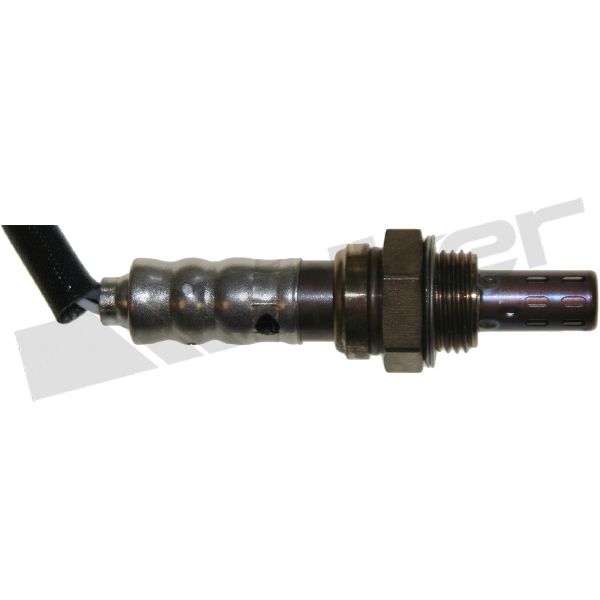
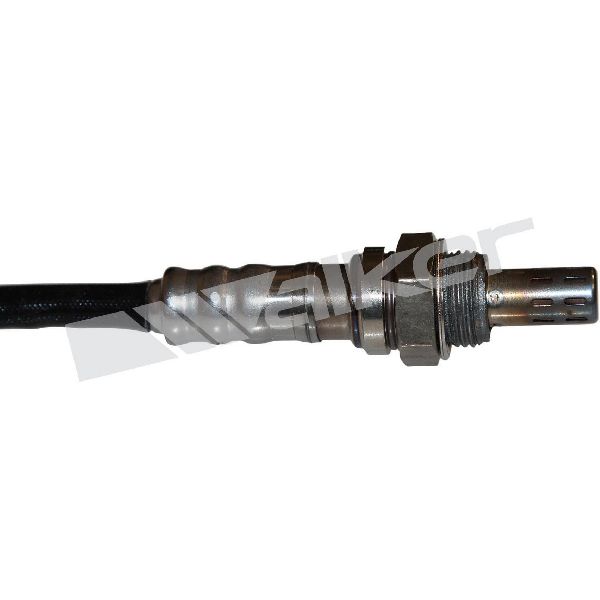
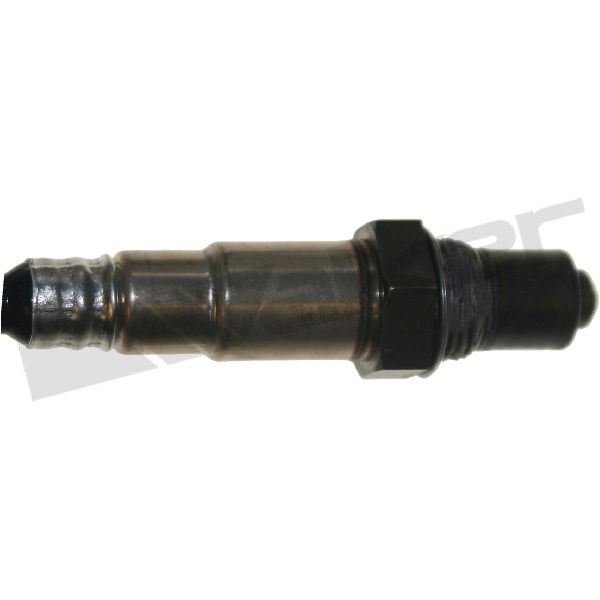
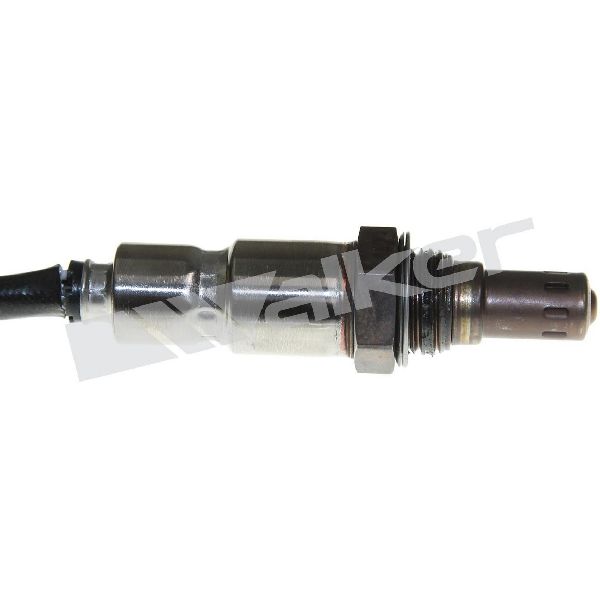
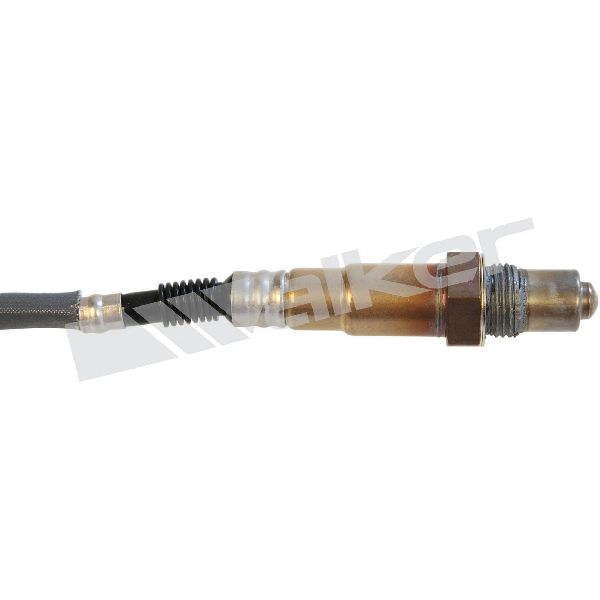
Est. part cost: $30-$75 - Faulty Oxygen Sensor ⚪ Low Probability → Shop Oxygen Sensor
How to confirm: Use a scan tool to monitor the voltage readings of the upstream (Sensor 1) and downstream (Sensor 2) oxygen sensors. A faulty downstream (Sensor 2) sensor may be slow to respond, have erratic readings, or a flatline voltage.
Typical fix: Replace the faulty oxygen sensor, typically the one located after the catalytic converter (Bank 1, Sensor 2).
Est. part cost: $50-$150 - Restricted Air Filter / Intake Issues ⚪ Low Probability GM Service Information document 5091183 notes that on the 1.6L diesel, excessive debris or moisture in the air cleaner housing can, in some cases, lead to DTC P0421. This is an unusual but documented cause for this platform.
How to confirm: Inspect the engine air filter and air cleaner housing for water intrusion, dirt, or debris beyond normal accumulation.
Typical fix: Replace the engine air filter and clean out the air cleaner housing. In some cases, a Service Regeneration of the diesel particulate filter may be required after the repair.
Est. part cost: $20-$60
Rare But Worth Checking
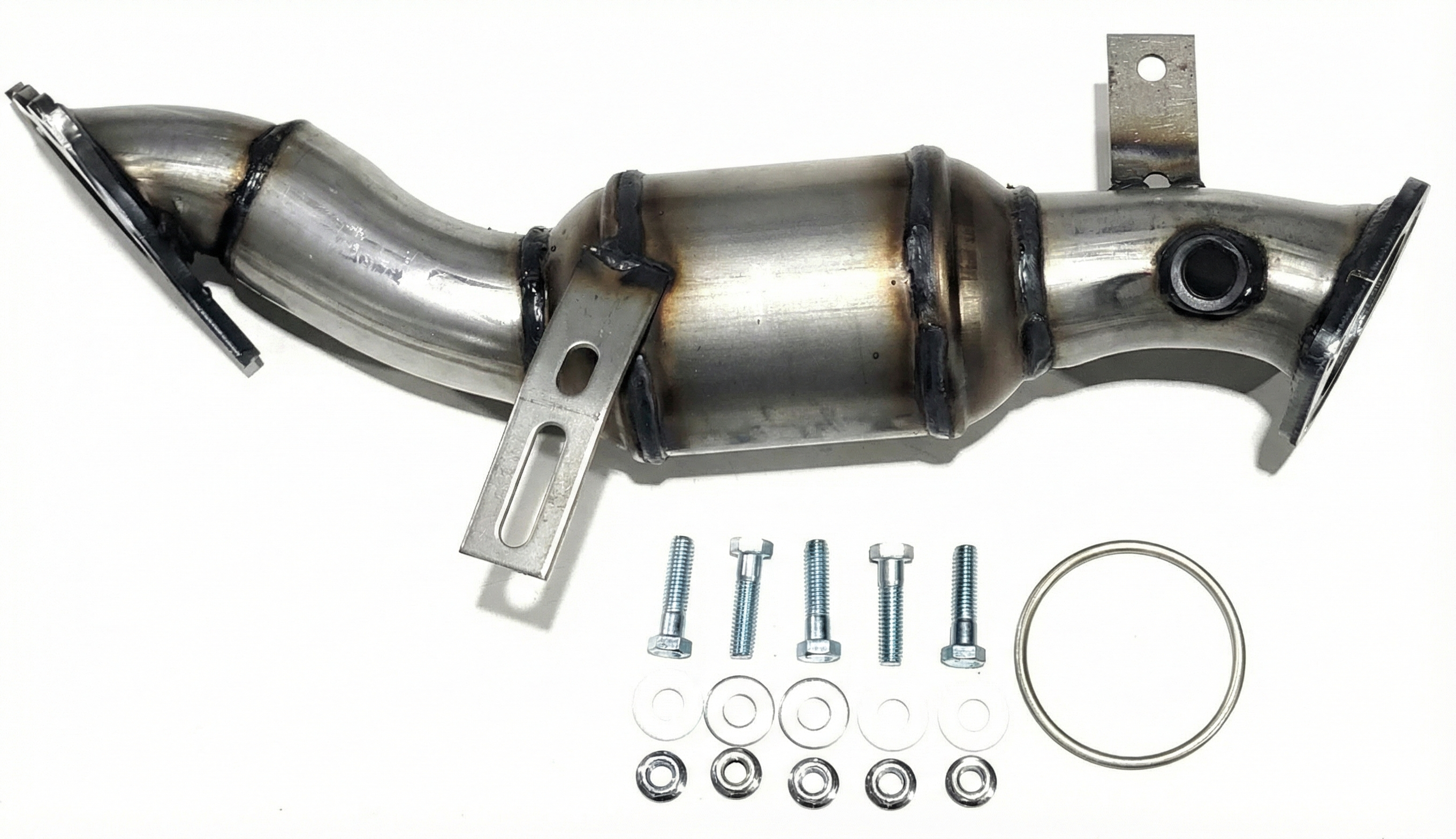
- Failed Catalytic Converter: → Shop Catalytic Converter While this is a common cause for this code on many vehicles, for the 2018 Terrain it should be considered only after ruling out the more common TSB-related issues like leaks and software. An underlying issue like an engine misfire, excessive oil consumption, or coolant leak usually causes the converter to fail prematurely.
Diagnosis Steps
- Scan for any other trouble codes that may be present, which could indicate a root cause (e.g., misfire codes like P0300-P0304, fuel system codes, or turbocharger codes like P0299).
- Check with a GM dealer if your vehicle's VIN has any open recalls or TSBs, specifically mentioning #PIP5615A (or its successor 19-NA-009), #18209 (for diesel), and #18NA120 (for diesel).
- With the engine running (and cool enough to work around), perform a thorough visual and auditory inspection of the exhaust system. Pay extremely close attention to the V-band clamp and connection between the turbocharger and the catalytic converter for signs of black soot or an audible hissing/ticking sound.
- If a leak is suspected, perform an exhaust smoke test to pinpoint its exact location. This is the most reliable way to confirm a small leak.
- Inspect the engine air filter and housing for unusual debris or moisture, per SI document 5091183.
- If no leaks or intake issues are found, use a scan tool to observe the live data from the upstream (Sensor 1) and downstream (Sensor 2) oxygen sensors. The upstream sensor's voltage should fluctuate rapidly between approximately 0.1V and 0.9V. The downstream sensor should hold a relatively steady, high voltage (e.g., >0.6V) once the engine is warm and at a steady RPM.
- If the downstream sensor is mimicking the upstream sensor's fluctuations, and all leaks and software issues have been ruled out, it points towards a degraded catalytic converter. 🎬 See how to test catalytic converters with a scan tool
- If the downstream sensor's voltage is flat, unresponsive, or stuck high or low, the sensor itself may be faulty.
Parts You'll Likely Need
- Turbocharger to Catalytic Converter Clamp
(OEM #55580837)— A common failure point on diesel models leading to exhaust leaks that trigger P0421, as identified in TSB #18209. The original may be misaligned or damaged.
Trusted brands: ACDelco, GM Genuine
OEM price range: $15-$25
Aftermarket price range: $10-$20 - Turbocharger to Catalytic Converter Gasket
(OEM #55580193)— Required when fixing the common exhaust leak between the turbo and converter, as per TSB #18209. Should be replaced whenever the clamp is loosened.
Trusted brands: ACDelco, GM Genuine
OEM price range: $7-$15
Aftermarket price range: $5-$10 - Downstream Oxygen Sensor (Bank 1, Sensor 2)
(OEM #213-4768 (GM 12639692))— If the sensor itself fails, it can send incorrect data to the ECM, falsely triggering the P0421 code. This should be considered after leaks and software updates are ruled out. Note: Part number 12639692 is often listed for the previous generation (pre-2018) Terrain with the 2.4L engine; confirm the correct part number for your specific engine via VIN.
Trusted brands: ACDelco, Bosch, Denso, NGK
OEM price range: $100-$180
Aftermarket price range: $50-$120
Technical Service Bulletins (TSBs) & Recalls
- PIP5615A: Recommends an ECM service update calibration for P0421 among other codes.
- 18209: Instructs dealers to inspect and replace the turbocharger to catalytic converter clamp/gasket for a diesel exhaust leak condition that can cause P0421. It also provides specific part numbers.
- 18NA120: Provides a procedure to reposition a misinstalled exhaust clamp to correct an exhaust smell and/or DTC P0421 on diesel models.
- SI Document 5091183: Links DTC P0421 on the 1.6L diesel to excessive debris or moisture in the air cleaner housing.
Platform-Specific Known Issues
- On 1.6L diesel models, an improperly installed clamp between the turbo and catalytic converter can cause an exhaust leak and trigger DTC P0421.
- A diesel exhaust leak from the turbocharger to catalytic converter clamp/gasket area can set code P0421.
- An available ECM software update exists to recalibrate the sensitivity for P0421 and other codes.
- A dirty or wet engine air filter has been linked to this code on the 1.6L diesel engine per GM service documents.
Mechanic-Grade Diagnostic Values
- GM Catalyst Monitor Drive Cycle — expected: After a cold start, accelerate to 88 km/h (55 mph) and hold steady for 3 minutes. Decelerate by coasting to 32 km/h (20 mph). Accelerate again to 88-96 km/h (55-60 mph) and hold steady for 5 minutes. This allows the catalyst monitor to run.. Failure: The readiness monitor for the catalyst will remain 'Not Ready' or 'Incomplete' if the test fails or cannot run. This may take up to 5 drive cycles if the catalyst is marginal.
- Temperature Sensor Correlation (Cold Start) — expected: Using a scan tool (like GDS2) before starting a cold engine, the Engine Coolant Temperature (ECT), Intake Air Temperature (IAT), and Ambient Air Temperature sensors should all read within a few degrees of each other.. Failure: If one sensor reads a value significantly different from the other two, it indicates a faulty sensor or wiring issue that could affect engine management and emissions calculations.
- Turbocharger to Catalytic Converter Gasket Dimensions — expected: The OEM gasket (PN 55580193) has an inside diameter of 58mm and a thickness of 2.3mm.. Failure: N/A - This is a reference value for part verification.
Scan Tool Commands That Help
- GDS2 (GM Global Diagnostic System 2): Service Regeneration — On 1.6L diesel models, this command may be required after cleaning the air cleaner housing and replacing a filter that was excessively dirty or wet, which can be a root cause of P0421.
- GDS2 (GM Global Diagnostic System 2): Module Diagnostics / Data Display — To view live data from all modules, including graphing upstream and downstream O2 sensor voltages to check for proper operation. It's also used to group and compare temperature sensor readings on a cold start.
- GDS2 (GM Global Diagnostic System 2): Clear DTCs — Used after a repair is completed to clear the P0421 code and turn off the Check Engine Light. A drive cycle must then be performed to confirm the fix.
Wiring & Ground Locations
- Fuse F3 and F15 — In the main underhood fuse box, located in front of the battery.. These fuses power the oxygen sensors. Fuse F3 is a 15A fuse and F15 is a 10A fuse. A blown fuse will cause the sensor heater or the sensor itself to stop working, leading to incorrect readings and potentially triggering P0421.
- Downstream Oxygen Sensor Connector — On the exhaust pipe, after the catalytic converter.. This is a 4-terminal female gray connector. The four wires are typically for the heater circuit (two wires), the sensor signal, and a sensor ground. Checking for corrosion or damage at this connector is a key diagnostic step.
Real Owner Repair Stories
- Trouble Shooter Magazine (via Auto Service Professional) (2018 Chevrolet Equinox with 1.6L diesel engine, ~25,000 miles) — Service Engine Soon light was on with DTC P0421 stored.
❌ Tried (didn't work) The owner took it to the dealer, where an inspection of the exhaust system found no leaks.
✅ What actually fixed it The dealer found excessive debris in the air filter, referencing GM SI document 5091183. They replaced the air filter element and performed a 'Service Regeneration' using a scan tool. The code was cleared and did not return on a road test.
"I Checked Everything" — The Actual Cause
- In a documented case involving a 2018 1.6L diesel, an exhaust inspection (the equivalent of a smoke test for finding leaks) came back clean. The root cause was determined to be an excessively dirty air filter, which is a non-obvious cause that would be missed by focusing only on the exhaust system.
OEM Part Supersession History
12639692 (ACDelco 213-4768)→N/A— Part Application Correction
Heads up: Part number 12639692 is widely listed for the 2011-2017 Terrain with the 2.4L engine. While it is a downstream O2 sensor, it may not be correct for the 2018 model year, which uses different engines (1.5L, 2.0L, 1.6L Diesel). Always verify the correct oxygen sensor part number with the vehicle's VIN before purchasing.
Helpful Videos
Used OEM Parts in Stock
New Aftermarket Parts Available


The information in this article is provided for general reference and educational purposes only. Vehicle specifications, procedures, and part compatibility can vary by production date, trim level, and region. Always consult your vehicle's factory service manual and verify part numbers before purchasing or performing repairs. Safety-critical components such as airbags, seat belts, and braking systems should be installed by a qualified professional.
- Gmc TERRAIN:
- 🧭 Diagnostic Flowchart
- 🎬 Helpful Videos
- 🛍️ Shop This Part
- What's Unique About the 2018-2018 Gmc TERRAIN
- Symptoms You May Notice
- Most Likely Causes
- Rare But Worth Checking
- Diagnosis Steps
- Parts You'll Likely Need
- Technical Service Bulletins (TSBs) & Recalls
- Platform-Specific Known Issues
- Mechanic-Grade Diagnostic Values
- Scan Tool Commands That Help
- Wiring & Ground Locations
- Real Owner Repair Stories
- "I Checked Everything" — The Actual Cause
- OEM Part Supersession History
- 🎟️ Get 5% Off