

P0421 on 2016-2019 Ram 2500: Catalyst Efficiency Causes & Fixes
On a 2016-2019 Ram 2500, P0421 often points to overly sensitive software that needs a dealer update, per multiple TSBs. Before replacing the expensive catalyst, check for a PCM update and inspect for exhaust leaks, especially broken manifold bolts on 6.4L HEMI engines. For the 6.7L Cummins, this code specifically refers to the Diesel Oxidation Catalyst (DOC).
- Always check for a PCM software update first; Ram issued TSBs to fix overly sensitive P0421 fault logic.
- On a 6.4L HEMI, a ticking noise on startup is a strong clue that broken exhaust manifold bolts are the real cause, not the catalyst itself.
- On a 6.7L Cummins, P0421 refers to the Diesel Oxidation Catalyst (DOC), the first component in the aftertreatment system.
- Do not replace the expensive catalytic converter or DOC until you have ruled out software updates, exhaust leaks, and faulty sensors.
What's Unique About the 2016-2019 Ram 2500
For this Ram 2500 generation, P0421 has a unique history. Ram acknowledged in multiple Technical Service Bulletins (TSBs) that the original software was too sensitive and could trigger the code falsely. The official fix was a software update changing the logic from a one-trip to a two-trip fault, meaning the error must be detected on two consecutive drive cycles to trigger the light. Additionally, the cause differs significantly by engine. On the 6.7L Cummins, this code points specifically to the Diesel Oxidation Catalyst (DOC), which is the first component in the diesel aftertreatment system. On the 6.4L HEMI, a very common cause is broken exhaust manifold bolts creating a leak that fools the sensors.
Diagnostic Flowchart
Tap your situation to follow the diagnostic path that matches what you're seeing on this vehicle.
Generation note: The 2016-2018 models are fourth-generation Ram trucks. The 2019 model year is a split, including both the carry-over fourth-generation (sold as Ram 2500 Classic) and the new fifth-generation. The TSBs and common issues primarily relate to the fourth-generation platform. The 2019 6.7L Cummins received updates like a new CGI block and a different turbocharger, but the P0421 fault logic remains similar. For the 6.7L Cummins, a major emissions recall campaign (Emissions Recall 67A) was initiated to update software on 2013-2019 models to reduce NOx emissions, which can affect the overall emissions system operation.
Symptoms You May Notice
- Check Engine Light is on
- Vehicle will fail an emissions test
- Reduced engine power or sluggish acceleration
- Slight decrease in fuel economy
- Audible ticking noise from the engine bay on cold starts (if caused by an exhaust manifold leak on 6.4L HEMI)
- Replacing the catalytic converter without first checking for software updates or exhaust leaks. This is the most common and expensive mistake for this specific code on this vehicle.
- Replacing oxygen sensors when the root cause is an exhaust leak, outdated software, or a wiring issue.
Most Likely Causes
- Outdated Powertrain Control Module (PCM) Software 🔴 High Probability → Shop Engine Control Module (ECM) Ram issued multiple TSBs (e.g., #1813022REVA, #1802321) to correct overly sensitive software that could trigger P0421 incorrectly. The fix changes the logic to require two consecutive faults before illuminating the check engine light. Some TSBs also note the fault could be set incorrectly when an engine block heater is in use.
How to confirm: Contact a Ram dealer or a qualified shop with a wiTECH scan tool to check your vehicle's VIN for outstanding software updates or recalls. They can compare your current calibration ID to the latest available version.
Typical fix: Reprogram the PCM with the latest manufacturer software. This is often referred to as a 'reflash' and may be part of a larger update that addresses other codes like P24A5 (EGR Cooler Bypass) on Cummins models.
Est. part cost: $0-$250 - Exhaust Leak (Especially on 6.4L HEMI) 🔴 High Probability On the 6.4L HEMI V8, the rearmost exhaust manifold bolts are notorious for breaking due to thermal stress from heating and cooling cycles. This creates a leak that allows un-metered oxygen into the exhaust stream, which fools the O2 sensors into reporting poor catalyst efficiency.
How to confirm: Listen for an audible ticking or tapping noise from the engine bay, which is most prominent on a cold start and may quiet down as the engine warms up and the metal expands. Visually inspect the exhaust manifold bolts (particularly those closest to the firewall) for missing heads or black soot trails indicating a leak.
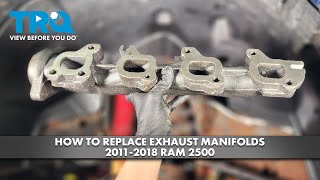
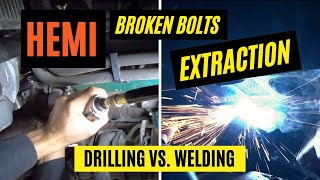
Typical fix: Replace the broken bolts and the manifold gasket. If the manifold is warped from the heat, it will also need to be replaced. This is a labor-intensive repair due to bolt extraction.
Est. part cost: $20-$500 - Failing Catalytic Converter (or DOC on Cummins) 🟡 Medium Probability → Shop Catalytic Converter Catalysts are wear items and can degrade over time from heat and contaminants. On the 6.7L Cummins, this code refers to the Diesel Oxidation Catalyst (DOC), which can be contaminated by upstream engine issues (like a failing turbo leaking oil) or simply fail with age.
How to confirm: After confirming no leaks or sensor issues, use an infrared thermometer to check for a significant temperature increase from the catalyst inlet to the outlet on a fully warmed engine. A working catalyst should be at least 100°F hotter at the outlet. If the inlet is hotter than the outlet, it may indicate a clog.
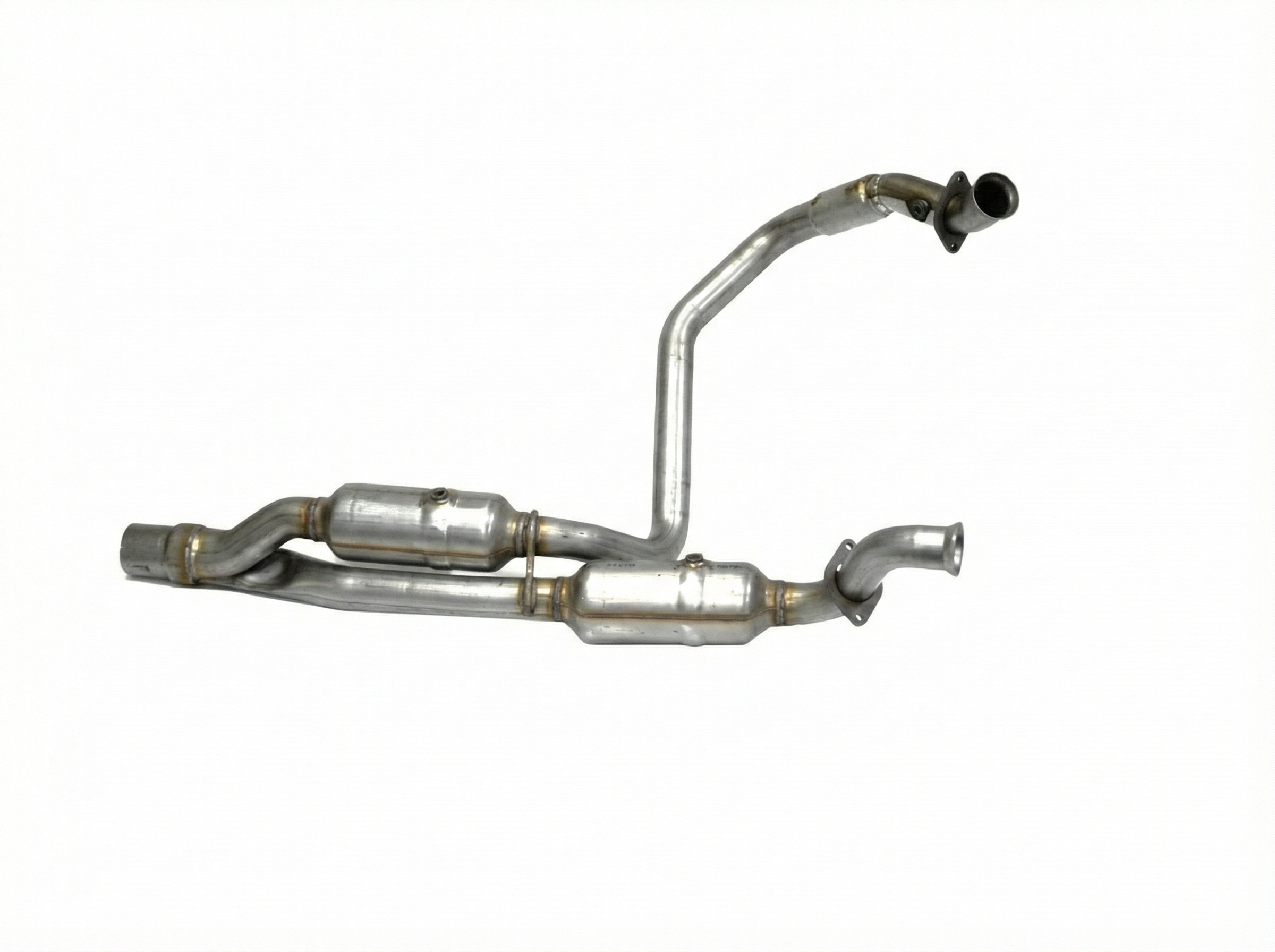
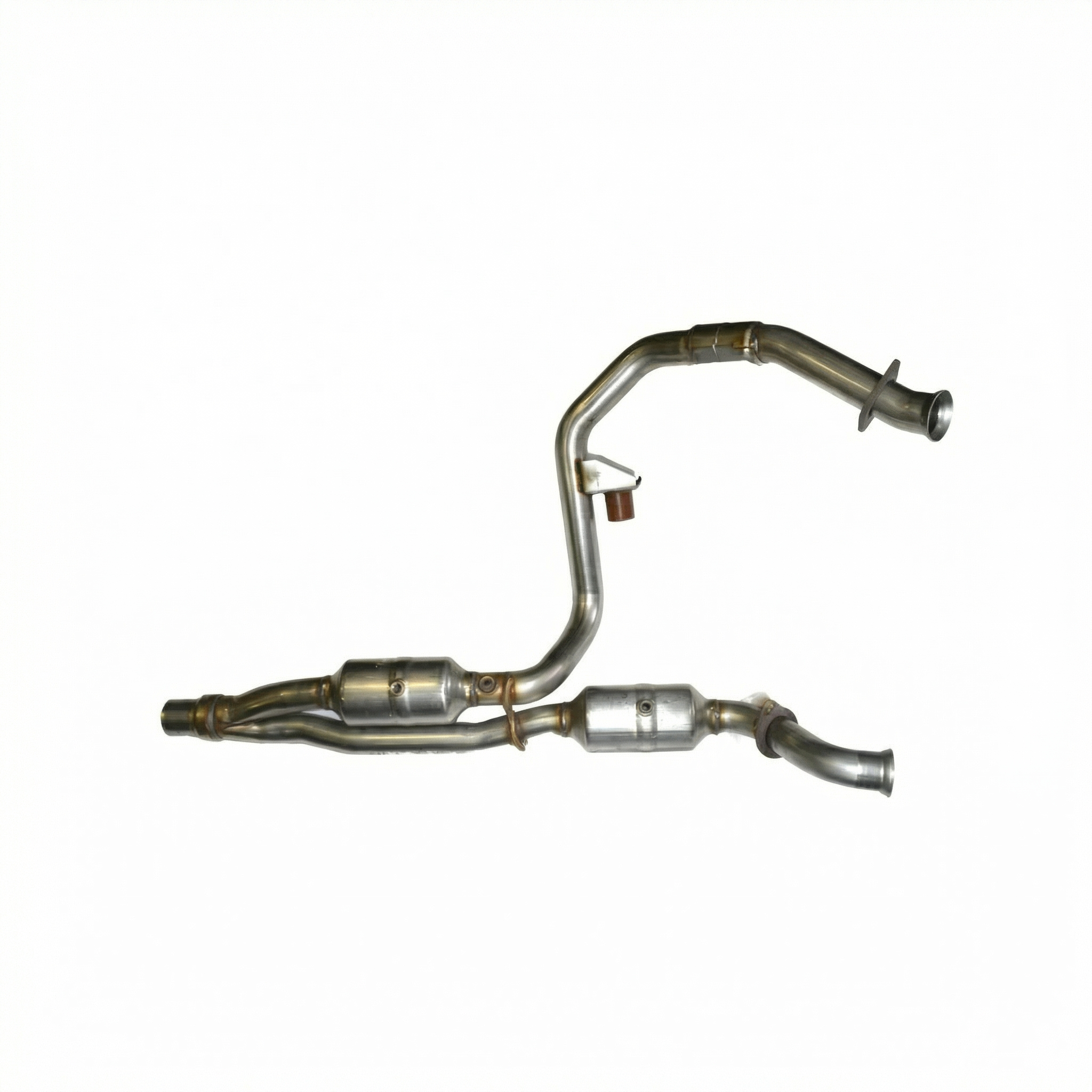
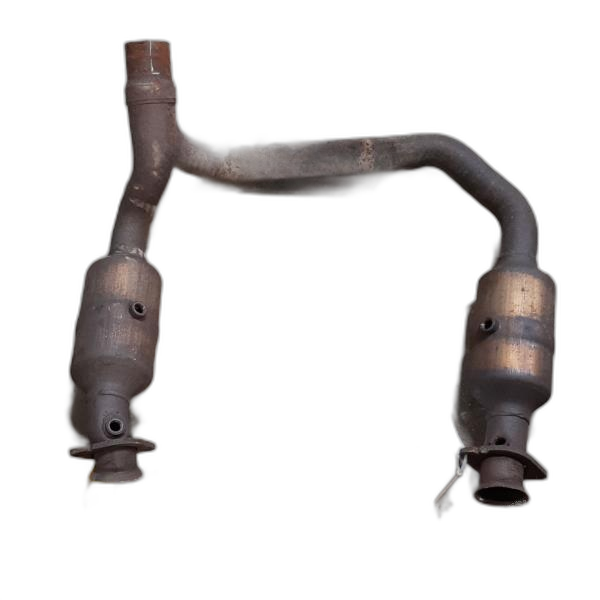
Typical fix: Replace the catalytic converter assembly for Bank 1 (on HEMI) or the full DOC/downpipe assembly (on Cummins). Using OEM parts is highly recommended for longevity and compatibility.
Est. part cost: $800-$2500
Rare But Worth Checking
- Faulty Oxygen (O2) or NOx Sensor: → Shop Nitrogen Oxide (NOx) Sensor While less common than a software issue or leak on this platform, a 'lazy' or failed downstream O2/NOx sensor can send incorrect data, falsely triggering a P0421 code. It's crucial to test the sensors before replacing the expensive catalyst.
- Chafed or Damaged Wiring: There are documented cases where a chafed ground wire in the engine harness caused an intermittent short, leading to a persistent P0421 after other parts were replaced. A thorough visual inspection of the harness, especially around hot exhaust components and sharp edges, is warranted if the common causes don't solve the issue.
- Upstream Engine Issues: Problems like leaking fuel injectors, incorrect fuel pressure, or excessive oil consumption can lead to a fuel-rich condition. This unburned fuel can overheat and damage the catalytic converter over time, causing P0421 as a secondary fault.
Diagnosis Steps
- Check for TSBs and Software Updates: Before any other step, verify with a dealer or professional shop if your truck's VIN has an open campaign or requires a PCM reflash for P0421. This is a known issue per TSBs #1813022REVA, #1802321, and others.
- Scan for Other Codes: Check for any other stored codes (e.g., misfires, fuel trim, O2 sensor circuits, EGR codes) and address them first, as they can be the root cause.
- Inspect for Exhaust Leaks: Carefully inspect the entire exhaust system from the engine to the rear O2 sensor for leaks. On 6.4L HEMI engines, pay extremely close attention to the exhaust manifold bolts, especially the rearmost ones. On the 6.7L Cummins, check the flexible bellows/flex pipe for cracks.
- Analyze Sensor Data: Use a scan tool to graph the upstream (Bank 1, Sensor 1) and downstream (Bank 1, Sensor 2) oxygen sensor readings. On a healthy, warm engine at steady RPM (e.g., 2500 RPM), the upstream sensor should switch rapidly between ~0.1V and ~0.9V, while the downstream sensor should show a much steadier, flatter voltage (typically >0.6V). If the downstream sensor mimics the upstream, it confirms the catalyst is not working efficiently.
- Test Oxygen Sensors: If sensor data is suspect, test the sensors themselves for proper response and heater circuit function to rule out a faulty sensor before condemning the catalyst.
- Test the Catalyst: If all other possibilities are eliminated, perform a temperature test on the catalyst using an infrared thermometer. The outlet should be at least 100°F hotter than the inlet on a working converter.
Parts You'll Likely Need
- Exhaust Manifold Gasket and Bolt Kit (6.4L HEMI)
(OEM #06507746AA (Bolts, verify quantity))— This is the most common fix for P0421 on the 6.4L HEMI, which is caused by broken manifold bolts creating an exhaust leak.
Trusted brands: Mopar, Fel-Pro, Dorman
OEM price range: $50-$100
Aftermarket price range: $20-$60 - Catalytic Converter / Diesel Oxidation Catalyst (DOC)
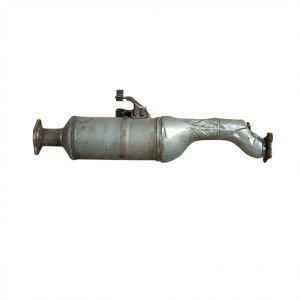
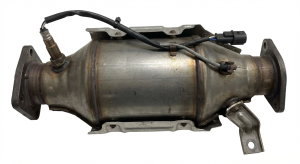
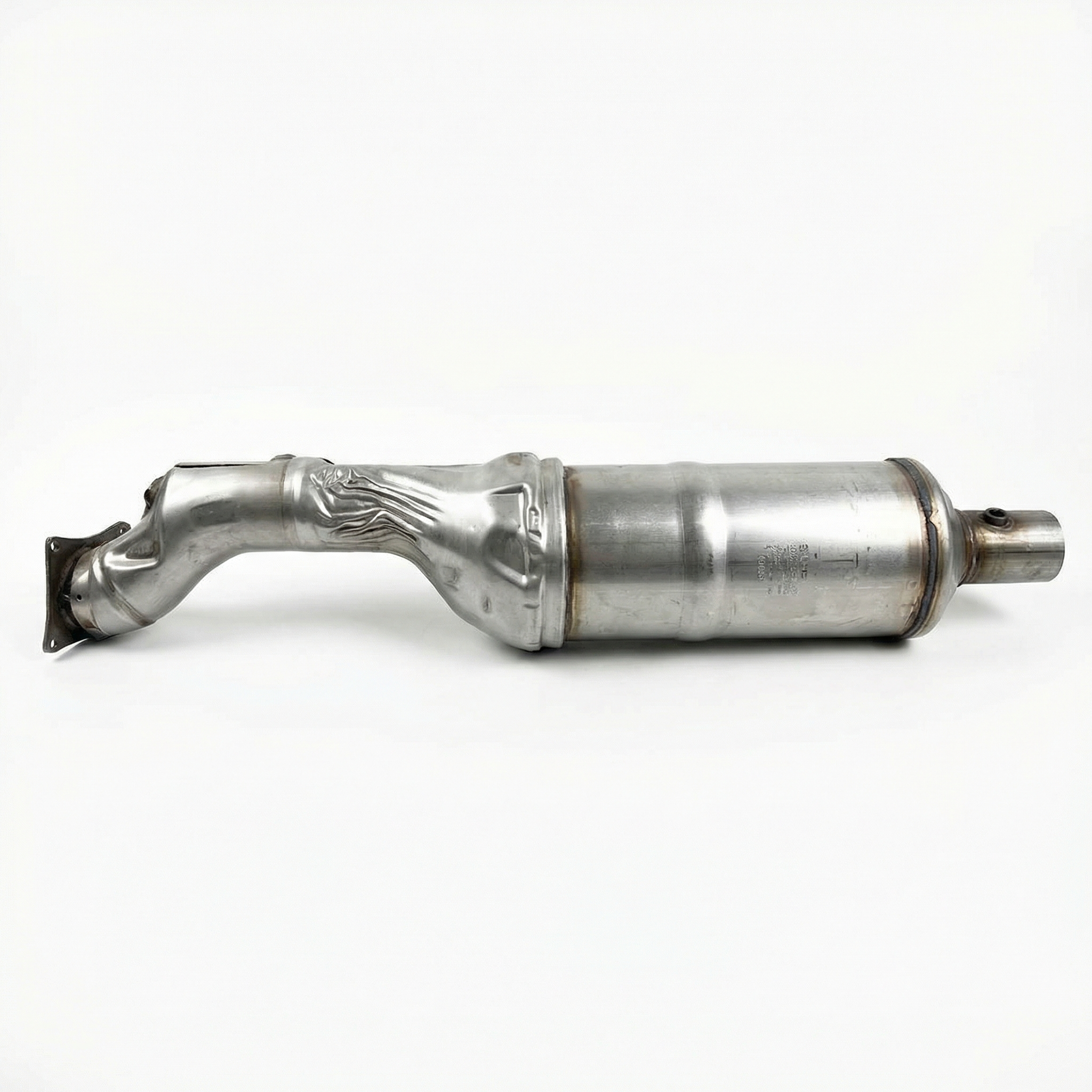
(OEM #68143638AD (6.4L, may supersede), 68143638AD (6.7L, may supersede))— This is the part that is replaced if it has truly failed after all other diagnostics (software, leaks, sensors) have been completed. On the 6.7L Cummins, this part is the Diesel Oxidation Catalyst (DOC).
Trusted brands: Mopar, Walker, MagnaFlow, AP Exhaust
OEM price range: $1100-$3400
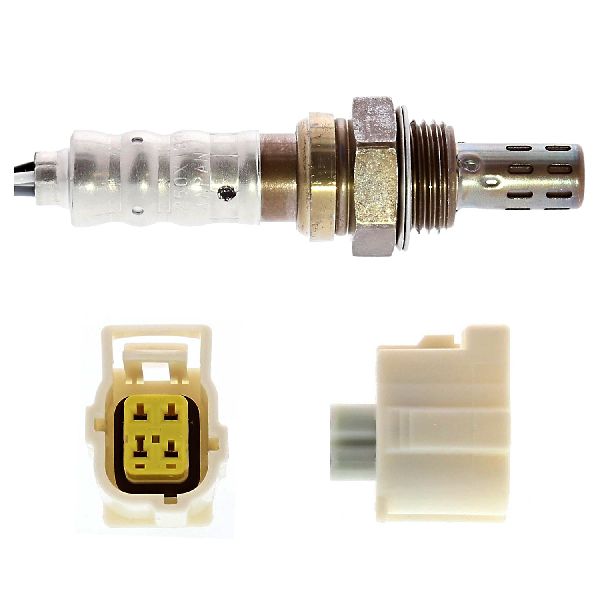
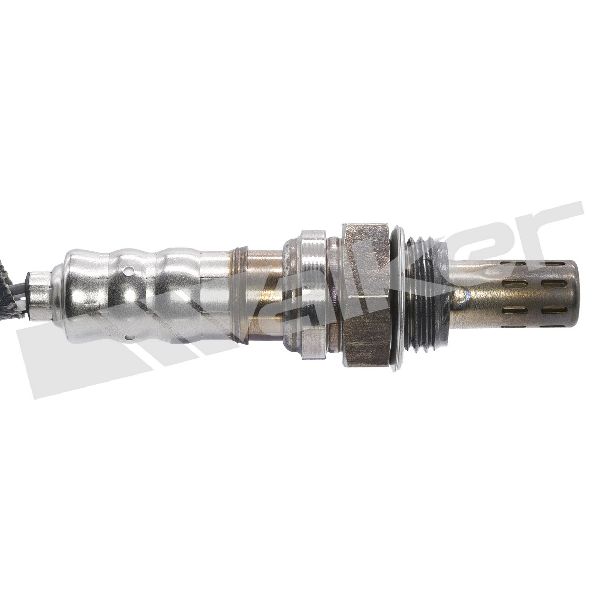
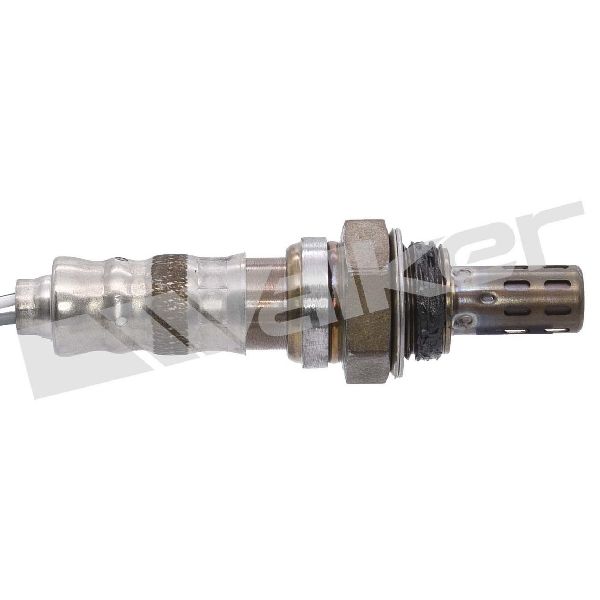
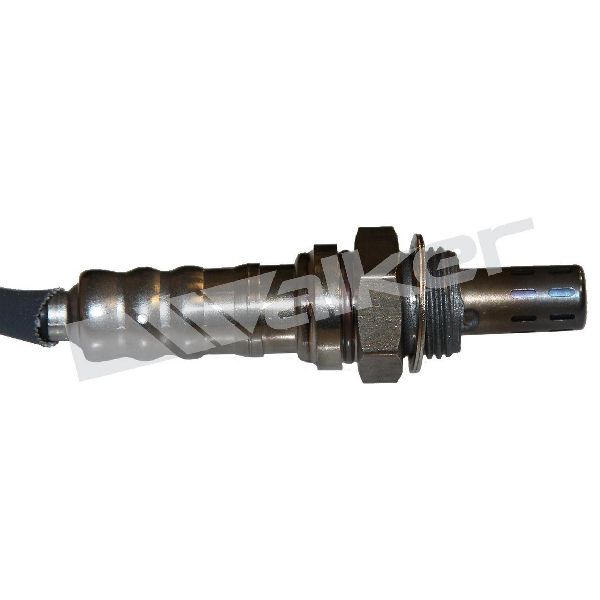
Aftermarket price range: $600-$1800 - Downstream Oxygen Sensor (Bank 1, Sensor 2)
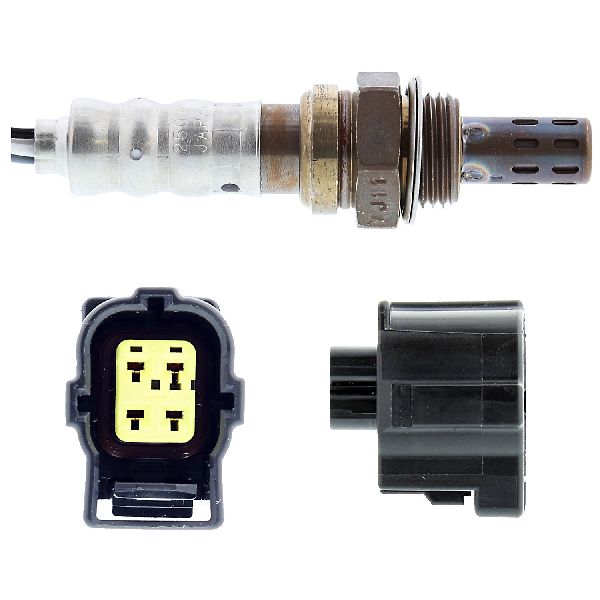
(OEM #68144248AD (6.4L HEMI))— Replaced if diagnostic testing shows the sensor is faulty or 'lazy', providing incorrect data to the PCM.
Trusted brands: Mopar, Bosch, Denso, NTK
OEM price range: $80-$150
Aftermarket price range: $50-$100
Related Codes That Often Appear With This One
- P0431 — This is the identical code for Bank 2 (the other side of the engine). If both P0421 and P0431 are present, it strongly suggests a systemic issue like the need for a PCM software update, a fueling problem, or exhaust leaks affecting both sides.
- P0300-P0308 — These are engine misfire codes. Unburned fuel from a misfiring cylinder can overheat and destroy a catalytic converter, causing P0421 to appear as a secondary, resulting fault. The misfire must be fixed first.
- P24A5 — Stands for 'EGR Cooler Bypass Bank 1 Control Stuck'. This code is often listed alongside P0421 in TSBs for the 6.7L Cummins, indicating that a single PCM software update is designed to address both issues simultaneously.
Technical Service Bulletins (TSBs) & Recalls
- 1813022REVA
- 1802321
- 1806623
- 1810122REVA
- 18-101-22
Platform-Specific Known Issues
- TSB #1813022REVA & #1802321: These bulletins from the manufacturer explicitly state that the P0421 code logic was changed from a one-trip to a two-trip fault via a software update to reduce false positives.
- 6.4L HEMI Manifold Bolt Failure: The rear bolts on the exhaust manifolds are known to snap, causing an exhaust leak that presents as a ticking noise on cold starts. This is a primary cause of P0421 on this engine.
- Cummins Software Updates (TSB #18-101-22 REV. A): For the 6.7L, P0421 is often bundled in PCM updates that address a wide range of diesel-specific codes, including those for the EGR system, NOx sensors, and DPF.
Mechanic-Grade Diagnostic Values
- Downstream O2 Sensor (Bank 1, Sensor 2) Voltage — expected: A steady, relatively flat voltage, typically greater than 0.6V on a fully warmed, healthy catalyst at a steady 2,500 RPM.. Failure: The voltage fluctuates rapidly, mimicking the pattern of the upstream (Bank 1, Sensor 1) sensor, which typically swings between ~0.1V and ~0.9V.
- Catalyst Efficiency Test (via advanced scan tool) — expected: Values should be above 85-90%.. Failure: A calculated efficiency percentage below 85% confirms the PCM's assessment and points to a failing catalyst.
- Mode $06 Catalyst Monitor Test ($81) — expected: The test value should be below the maximum threshold set by the manufacturer.. Failure: If the reported test value from the scan tool exceeds the maximum limit, it indicates the catalyst failed the PCM's internal efficiency test on that drive cycle.
Hidden / Shadow Codes Worth Checking
- Mode $06, Test ID $81: This is not a proprietary 'shadow code' but a standardized OBD-II function that shows the results of the catalyst efficiency monitor. It provides the raw data the PCM uses to trigger P0421, including the test value and the pass/fail threshold. (see via An advanced OBD-II scan tool with Mode $06 functionality. This allows a technician to see how close the catalyst is to the failing threshold before the code is set.)
Scan Tool Commands That Help
- wiTECH (or equivalent professional scanner): PCM Reflash/Reprogramming — This is the first and most critical step for a P0421 code on this platform, as multiple TSBs require a software update to change the fault logic from a one-trip to a two-trip fault, correcting for overly sensitive diagnostics.
Wiring & Ground Locations
- Engine Harness 5-Volt Ground Wire (6.4L HEMI) — A known chafe point exists where the main engine harness can rub against a metal clamp near the top of the engine.. A real-world repair case on a 2016 Ram 2500 showed that a 5-volt reference ground wire chafing at this point caused intermittent shorts and a persistent P0421 code after the PCM and sensors were replaced.
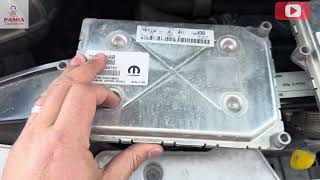
- PCM Connector C1 (6.4L HEMI) — On the Powertrain Control Module (PCM) itself.. Contains critical pins for sensor operation. For example, Pin 42 (K914, BR/WT) is a sensor ground. A fault in the connector or these specific circuits can cause incorrect sensor readings that trigger P0421.
- Exhaust Flex Pipe / Bellows (6.7L Cummins) — Located in the downpipe assembly, before the main Diesel Oxidation Catalyst (DOC).. This flexible section is a common point for developing small, hard-to-see cracks. A leak here introduces oxygen into the exhaust stream before the downstream sensor, which can fool the PCM into setting a P0421 code.
Real Owner Repair Stories
- Go-Parts.com user report (2016 Ram 2500 6.4L HEMI) — Persistent P0421 code, intermittent Limp Mode, and lightning bolt symbol on the dash.
❌ Tried (didn't work) Replacing the Powertrain Control Module (PCM), Replacing the MAP sensor
✅ What actually fixed it A technician found a 5-volt ground wire in the main engine harness had chafed through against a factory clamp. The wire was repaired, and the harness was secured, which resolved all codes and symptoms.
"I Checked Everything" — The Actual Cause
- In a documented case on a 2016 6.4L HEMI, standard diagnostics (including likely visual and smoke tests) failed to find a leak, leading to the unnecessary replacement of the PCM and a MAP sensor. The actual cause was a chafed 5-volt ground wire in the engine harness causing an intermittent electrical fault, which a smoke test would not identify.
OEM Part Supersession History
68143638AC→68143638AD— Standard part revision by the manufacturer, likely for improved durability or material changes.
Heads up: The new part number (68143638AD) is the correct replacement for the old one on 6.4L HEMI engines.
Model Year Variations Within This Range
- 2013-2019 (6.7L Cummins): All 2016-2018 models and 2019 models with a production date on or before October 1, 2019, are subject to a major emissions recall (known as 67A or others) by Cummins/FCA. This involves a mandatory PCM software reflash to alter emissions control strategies, primarily for NOx reduction. This can impact the behavior of the entire aftertreatment system and is a critical factor to consider during diagnosis.
Helpful Videos
Used OEM Parts in Stock
New Aftermarket Parts Available


The information in this article is provided for general reference and educational purposes only. Vehicle specifications, procedures, and part compatibility can vary by production date, trim level, and region. Always consult your vehicle's factory service manual and verify part numbers before purchasing or performing repairs. Safety-critical components such as airbags, seat belts, and braking systems should be installed by a qualified professional.
- Ram 2500:
- 🧭 Diagnostic Flowchart
- 🎬 Helpful Videos
- 🛍️ Shop This Part
- What's Unique About the 2016-2019 Ram 2500
- Symptoms You May Notice
- Most Likely Causes
- Rare But Worth Checking
- Diagnosis Steps
- Parts You'll Likely Need
- Related Codes That Often Appear With This One
- Technical Service Bulletins (TSBs) & Recalls
- Platform-Specific Known Issues
- Mechanic-Grade Diagnostic Values
- Hidden / Shadow Codes Worth Checking
- Scan Tool Commands That Help
- Wiring & Ground Locations
- Real Owner Repair Stories
- "I Checked Everything" — The Actual Cause
- OEM Part Supersession History
- Model Year Variations Within This Range
- 🎟️ Get 5% Off