

P0421 on 2016-2019 Ram 3500: Causes for Cummins & Hemi and Fixes
On a 2016-2019 Ram 3500, P0421 often points to overly sensitive software. A crucial first step is a dealer software update per TSBs #1813022REVA and #1802321, which change the fault logic to be less sensitive. For the 6.4L Hemi, the next most likely cause is broken exhaust manifold bolts causing a leak. For the 6.7L Cummins, this code targets the Diesel Oxidation Catalyst (DOC) but should only be suspected after the software is confirmed to be up-to-date.
- Your first step for P0421 on a 2016-2019 Ram 3500 should always be to check if a PCM software update is available.
- On a 6.4L Hemi, a ticking noise from the engine bay is a strong clue that broken exhaust manifold bolts are the real cause, not the catalytic converter.
- On a 6.7L Cummins, this code points to the Diesel Oxidation Catalyst (DOC), the first component in the aftertreatment system.
- Do not replace the expensive catalytic converter or DOC until you have definitively ruled out software issues and exhaust leaks.
What's Unique About the 2016-2019 Ram 3500
For this specific generation of Ram 3500, the P0421 code has a unique history tied to software sensitivity. Ram acknowledged in multiple Technical Service Bulletins (e.g., #1813022REVA, #1802321) that the original engine software could trigger this code falsely. The official fix was a software update that changed the fault logic from a sensitive 'one-trip fault' to a more robust 'two-trip fault'. This means the PCM must detect the efficiency issue on two separate driving cycles before illuminating the Check Engine Light, significantly reducing false alarms. This makes checking for a PCM update a critical, platform-specific first step before considering any hardware replacement.
Diagnostic Flowchart
Tap your situation to follow the diagnostic path that matches what you're seeing on this vehicle.
Symptoms You May Notice
- Check Engine Light is on
- Vehicle will fail an emissions test.
- Reduced engine power or hesitation, particularly if the catalyst becomes clogged.
- Slight decrease in fuel economy.
- Audible ticking noise from the engine bay on cold starts, which fades as the engine warms up (a classic sign of a manifold leak on the 6.4L Hemi).
- Replacing the catalytic converter before checking for software updates. Many owners have spent thousands on a new converter when a simple PCM reflash (costing one hour of dealer labor) would have solved the problem.
- Replacing oxygen sensors when an exhaust leak is the true cause of the erratic readings on the 6.4L Hemi.
Most Likely Causes
- Outdated Powertrain Control Module (PCM) Software 🔴 High Probability → Shop Engine Control Module (ECM) Manufacturer TSBs #1813022REVA and #1802321 confirm the original software was too sensitive and required an update to change the fault logic to a two-trip system.
How to confirm: A Ram dealership or a properly equipped independent shop can check the current software calibration number against the latest available version using the vehicle's VIN.
Typical fix: Update the PCM software (reflash). This is often the only repair needed and typically takes less than one hour of labor.
Est. part cost: $0 - Exhaust Leak (Broken Manifold Bolts on 6.4L Hemi) 🔴 High Probability On the 6.4L Hemi, the rearmost exhaust manifold bolts are known to break from thermal stress cycling. This allows outside oxygen into the exhaust stream, which skews O2 sensor readings and tricks the PCM into thinking the catalyst is inefficient.
How to confirm: Listen for a distinct ticking sound from the engine bay when the engine is cold, which often disappears as the metal expands with heat. Visually inspect the exhaust manifolds, especially the bolts closest to the firewall. Look for black soot trails indicating a leak or the heads of bolts that are physically sheared off.
Typical fix: Replace the broken bolts and the exhaust manifold gasket. The manifold may need to be resurfaced if warped or replaced if cracked. Using upgraded aftermarket bolts is a common preventative measure.
Est. part cost: $50-$500 - Failing Catalytic Converter / Diesel Oxidation Catalyst (DOC) 🟡 Medium Probability → Shop Catalytic Converter Catalysts fail over time from heat cycles or can be contaminated by engine issues like burning oil or coolant. On the 6.7L Cummins, the DOC is the specific component referenced by this code and is the first stage of the aftertreatment system.
How to confirm: This should only be suspected after software updates and exhaust leak checks have been performed. A technician can use an infrared thermometer to check for a significant temperature increase across the converter (a good cat should be hotter on the outlet). A backpressure test can also check for a physical clog.
Typical fix: Replace the catalytic converter assembly. On the 6.7L Cummins, this is often the entire downpipe assembly containing the DOC.
Est. part cost: $800-$2800 - Faulty Oxygen (O2) Sensor ⚪ Low Probability → Shop Oxygen Sensor
How to confirm: Use a scan tool to monitor the voltage of the downstream O2 sensor (Bank 1, Sensor 2). A healthy sensor on a working catalyst should show a relatively stable voltage. A sensor that is switching rapidly like the upstream sensor, is stuck, or has no signal is suspect.
Typical fix: Replace the downstream (post-catalyst) oxygen sensor for Bank 1.
Est. part cost: $50-$150
Rare But Worth Checking
- Engine Misfires or Fuel System Issues: A misfiring cylinder or a leaking fuel injector can send unburned fuel into the exhaust, which can overheat and destroy the catalytic converter's internal structure. These root causes must be fixed first to avoid destroying a new converter.
- Turbocharger Issues (6.7L Cummins): → Shop Turbocharger A failing turbocharger can leak engine oil into the exhaust system. This oil will coat the inside of the Diesel Oxidation Catalyst (DOC), contaminating it and rendering it ineffective, which will trigger P0421. This is an expensive misdiagnosis if not caught.
Diagnosis Steps
- Check for PCM Software Updates: This is the most critical first step. Contact a Ram dealer or qualified shop with your VIN to verify if the vehicle has the latest software. TSBs #1813022REVA and #1802321 specifically address false P0421 codes with a reflash.
- Inspect for Exhaust Leaks (Especially 6.4L Hemi): Thoroughly inspect the entire exhaust system. On 6.4L Hemis, focus on the rear exhaust manifold bolts, which are prone to breaking. Listen for a cold-start tick. On all models, check gaskets and flex pipes for soot trails.
- Analyze Oxygen Sensor Data: Use a scan tool to graph the upstream (B1S1) and downstream (B1S2) O2 sensor voltages. The downstream sensor voltage should be relatively stable and high (e.g., >0.6V) when the catalyst is hot and working. If it mirrors the rapid switching of the upstream sensor, it confirms low efficiency.
- Check for Other Codes: Scan for any other pending or active codes, especially for engine misfires (P030x), fuel trim (P0171, P0174), or EGR system faults. Resolve these root causes first.
- Test Oxygen Sensors: If sensor data is suspect (e.g., stuck at one voltage), test the sensor's heater circuit and response time directly. A lazy sensor can mimic a bad catalyst.
- Test the Catalytic Converter: If all other possibilities are ruled out, a catalyst failure is likely. A temperature gun can be used to check for a temp rise across the cat (outlet should be hotter). A backpressure test can check for a physical blockage.
Parts You'll Likely Need
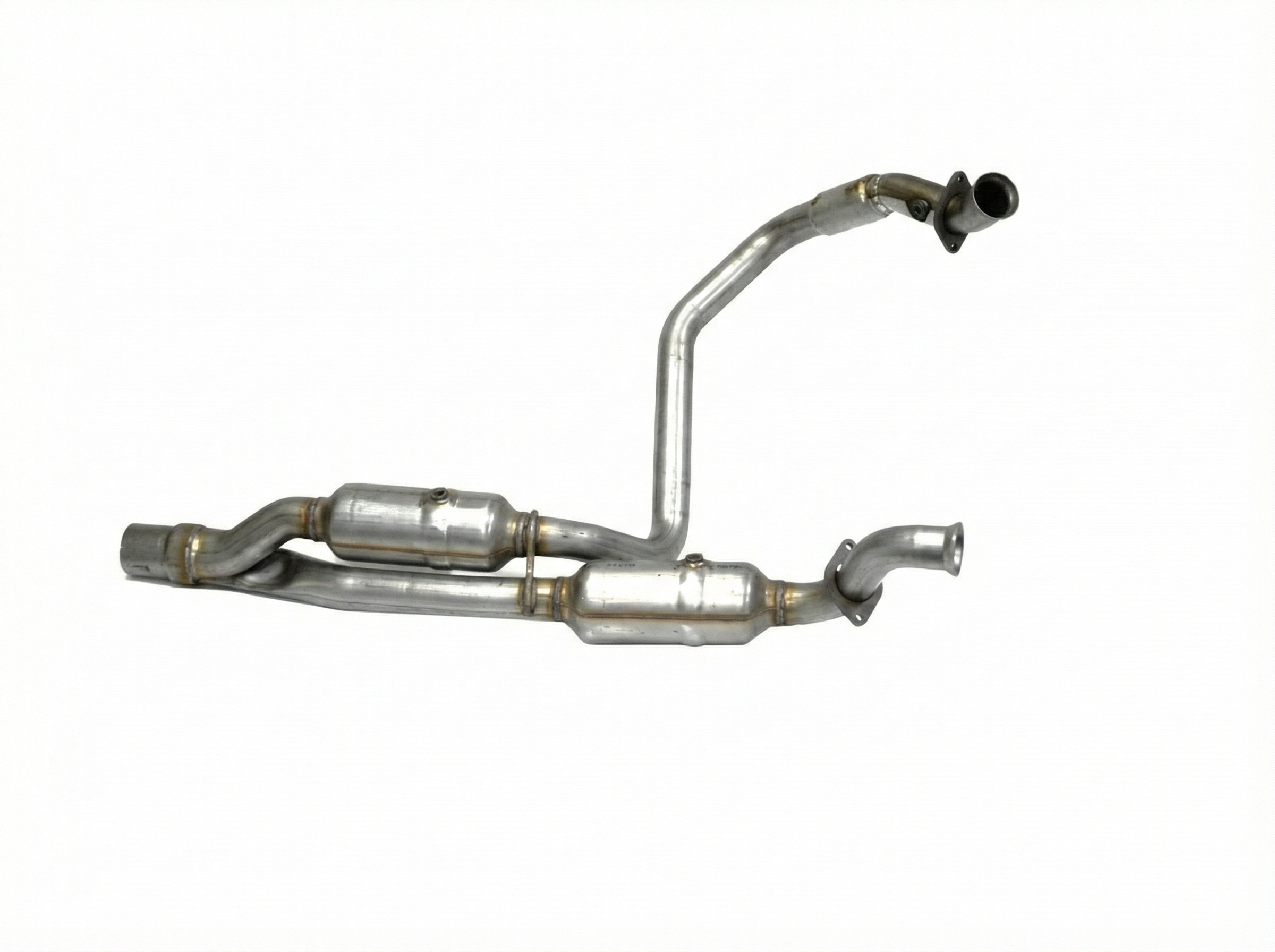
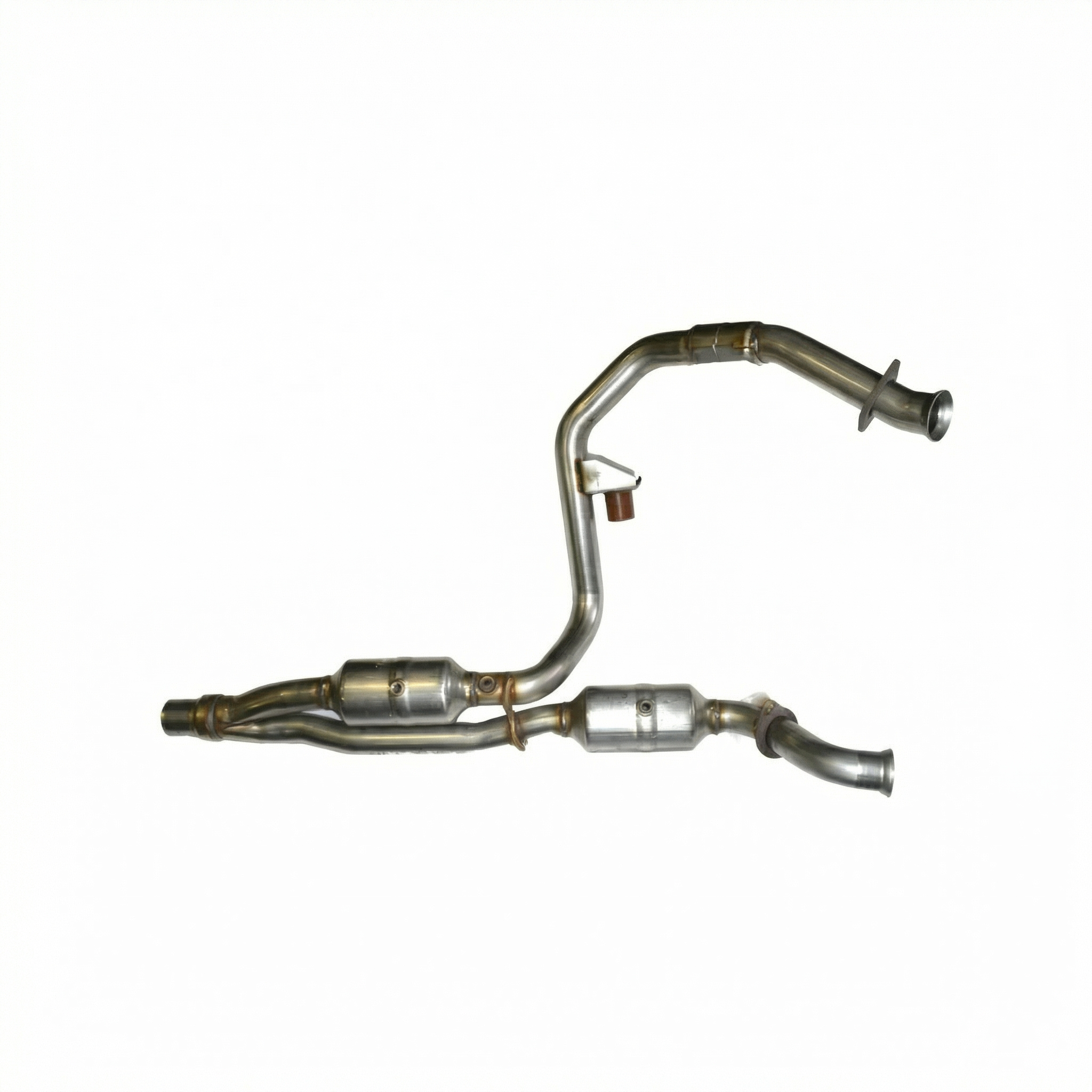
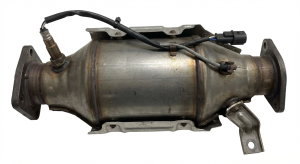
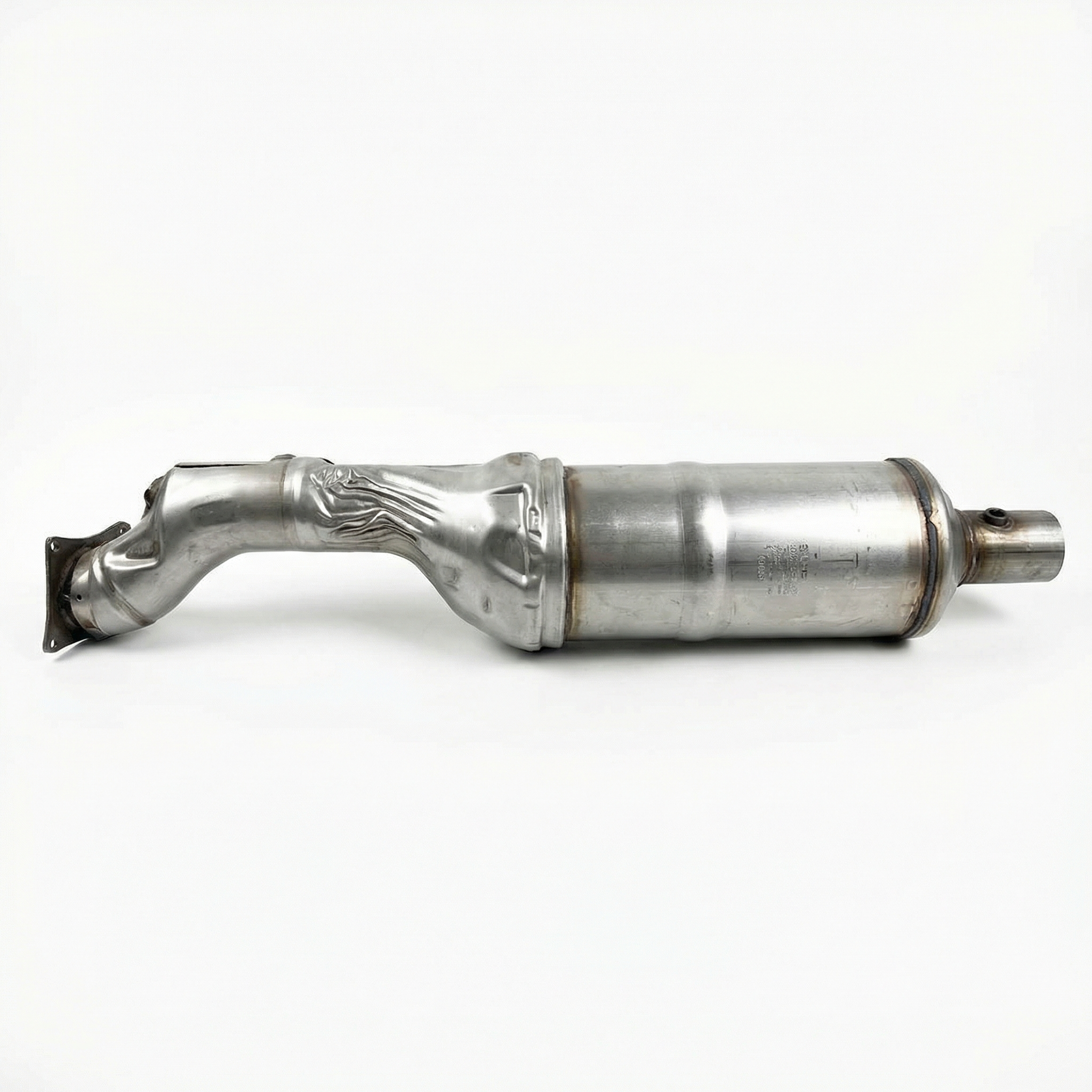
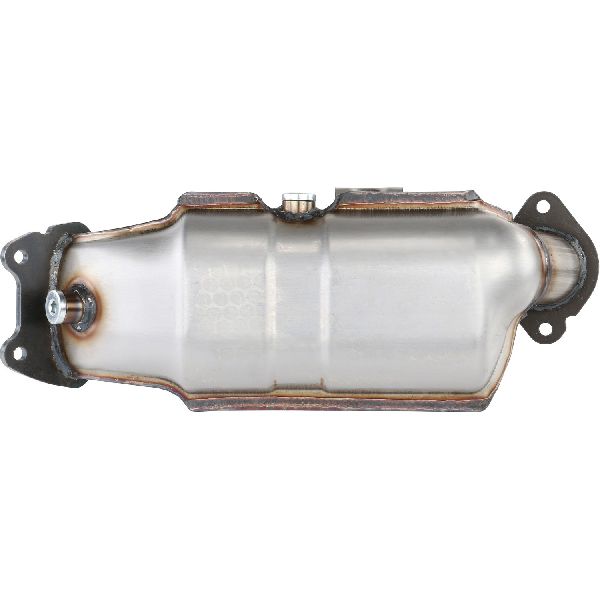
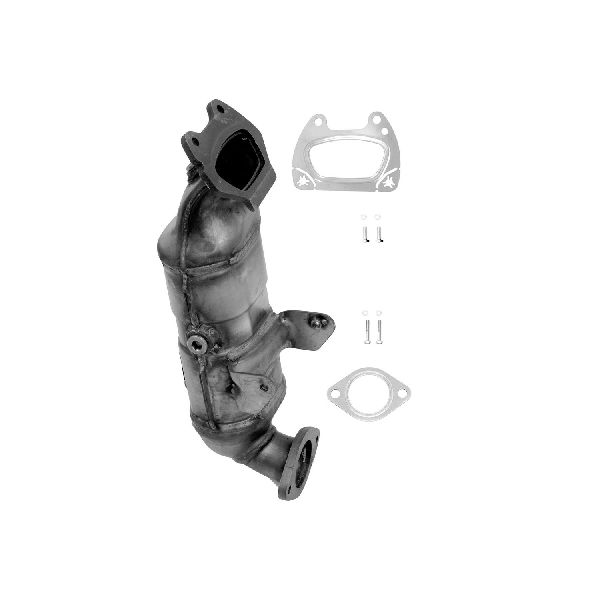
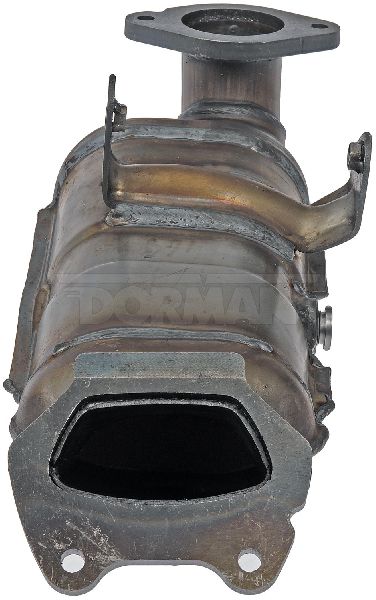
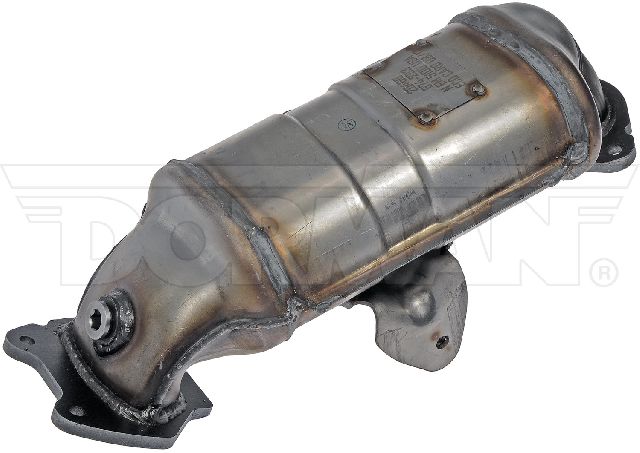
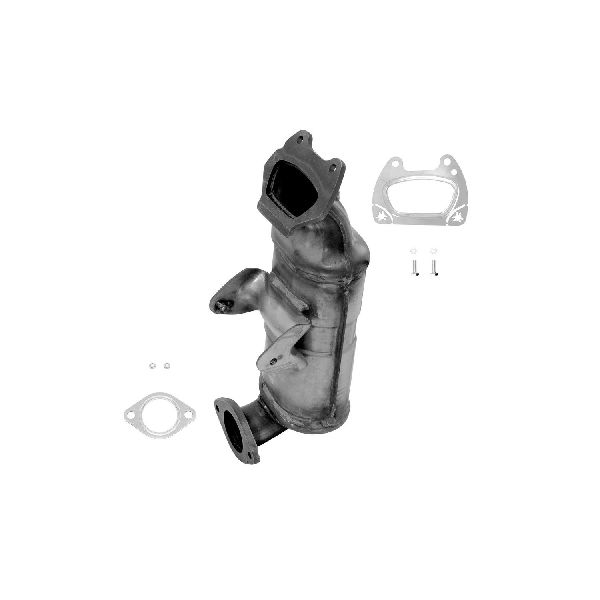
- Diesel Oxidation Catalyst (DOC) / Catalytic Converter
(OEM #68298534AF (example, part of assembly, verify by VIN))— This is the component whose failure is being reported. It should only be replaced after verifying software is up-to-date and no exhaust leaks are present. For the 6.7L, it's often part of the turbo downpipe assembly.
Trusted brands: Mopar, Walker Exhaust, MagnaFlow, AP Exhaust Technologies
OEM price range: $1500-$2800
Related Codes That Often Appear With This One
- P24A5 — This code for 'EGR Cooler Bypass Bank 1 Control Stuck' is listed alongside P0421 in several manufacturer TSBs, suggesting a related software update often addresses both codes simultaneously. [Bulletin #1806623, #1810122REVA, #18-101-22]
- P0300-P0308 — Misfire codes indicate a condition that allows unburned fuel into the exhaust. This raw fuel can quickly damage the catalytic converter, causing P0421 to appear as a secondary effect.
- P0431 — This is the equivalent code for Bank 2 (driver's side on the Hemi). If both P0421 and P0431 appear together, it strongly suggests a systemic issue like a required software update or a fuel system problem affecting both banks, rather than two simultaneously failed converters.
Technical Service Bulletins (TSBs) & Recalls
- 1813022REVA
- 1802321
- 1806623
- 1810122REVA
- 18-101-22
Platform-Specific Known Issues
- Software Sensitivity: As documented in TSBs #1813022REVA and #1802321, the original software calibration was prone to setting this code prematurely. An update to make it a two-trip fault is a common fix. [Bulletin #1813022REVA, #1802321]
- 6.4L Hemi Manifold Bolt Failure: The rear bolts on the exhaust manifolds of the 6.4L Hemi V8 are known to break, causing an exhaust leak that directly leads to P0421 or P0431 codes.
Mechanic-Grade Diagnostic Values
- Downstream O2 Sensor (B1S2) Voltage (6.4L Hemi) — expected: Relatively steady voltage between 0.4V and 0.8V when the catalyst is hot and at a steady RPM.. Failure: Voltage graph mirrors the rapid 0.1V-0.9V fluctuations of the upstream sensor.
- Upstream O2 Sensor (B1S1) Voltage (6.4L Hemi) — expected: Rapidly fluctuating voltage between approximately 0.1V and 0.9V.. Failure: Slow, lazy switching or a voltage that is stuck high or low.
- O2 Sensor Heater Circuit Resistance — expected: Typically between 10 and 40 ohms when measured across the heater circuit pins on the sensor.. Failure: An open circuit (infinite resistance) or resistance outside the expected range.
- DOC Outlet Temperature (6.7L Cummins) — expected: During a drive cycle or forced regeneration, the outlet temperature should be at least 100°F hotter than the inlet temperature.. Failure: A lack of significant temperature rise across the DOC indicates it is not functioning.
Hidden / Shadow Codes Worth Checking
- Mode $06 Data: This is not a hidden code, but a diagnostic mode accessible with an advanced scan tool. It provides access to the raw results of the PCM's self-tests for various components, including the catalyst and oxygen sensors. For P0421, a technician would look at Test ID (TID) $81 and Component ID (CID) $01, which correspond to the Catalyst Monitor Bank 1. This allows viewing the test value and its upper/lower limits before a DTC is officially set. (see via Advanced OBD-II scan tool with Mode $06 functionality.)
Scan Tool Commands That Help
- wiTECH (OEM FCA/Stellantis Tool) or equivalent: Check for PCM/ECM Updates — This is the critical first step for a P0421 on this platform. The tool communicates with dealer servers to see if a newer software calibration is available to fix the overly sensitive fault logic, as described in TSBs #1813022REVA and #1802321.
- Professional Scan Tool: Live Data Graphing (O2 Sensors) — Used to visually compare the upstream (B1S1) and downstream (B1S2) oxygen sensor voltage signals in real-time. This is the primary method to confirm the PCM's finding of low catalyst efficiency.
- Professional Scan Tool (Diesel): Forced Regeneration — On the 6.7L Cummins, a forced regeneration can be commanded to heat the aftertreatment system. A technician can monitor temperatures across the DOC during this process to help determine if it is functioning correctly (i.e., if its temperature rises significantly).
Wiring & Ground Locations
- O2 Sensor Connector (Bank 1, Sensor 2) — On the 6.4L Hemi, Bank 1 is the passenger side. The downstream sensor is located on the exhaust pipe after the catalytic converter. Access often requires removing the passenger-side front wheel and fender liner.. This connector is the source of the signal the PCM uses to judge catalyst efficiency. Corrosion or damage at this connector or its wiring can cause false P0421 codes.
- PCM Ground Circuits — The PCM has multiple ground circuits. A service manual provides a procedure to test these grounds at the PCM harness connectors with the ignition off. General ground locations for Ram trucks are often found near the battery negative terminal, on the fender near the wiper motor, and near the steering column.. A poor ground connection for the PCM can cause erratic behavior and incorrect interpretation of sensor data, potentially leading to false codes like P0421.
- O2 Sensor Pinout (Typical 4-wire) — At the sensor-side of the harness connector. A forum resource with diagrams suggests a common pinout is Pin 1 (Heater +), Pin 2 (Heater Ground), Pin 3 (Sensor Return/Ground), and Pin 4 (Sensor Signal 0-1V).. Knowing the pinout allows a technician to test for correct voltage, ground, and signal directly at the connector, isolating a faulty sensor from a wiring issue.
Real Owner Repair Stories
- RamForum.com user (2022 Ram 2500 6.4L Hemi) — Rough engine sound and Check Engine Light came on after driving on a rough dirt road.
❌ Tried (didn't work) Owner suspected broken manifold bolts.
✅ What actually fixed it A service advisor found the bolts connecting the pre-cat exhaust pipes to the manifold were loose. Tightening these bolts with an impact wrench resolved the noise and the code. - Ram Forum user (2016 Ram 6.4L Hemi) — Not specified, but had a check engine light for broken manifold studs.
✅ What actually fixed it The dealer confirmed both manifold studs on cylinder #8 (rearmost, passenger side) were broken. They replaced the manifold and all studs to fix the problem.
"I Checked Everything" — The Actual Cause
- A common scenario for the 6.4L Hemi involves an exhaust leak that causes P0421. While a smoke test often focuses on the manifold-to-head gasket, the actual leak can be further downstream. In one documented case, the bolts connecting the exhaust pipe flange to the manifold collector had loosened, creating a leak that was fixed by simply re-tightening the bolts. This type of leak might not be obvious during a smoke test if the test pressure isn't high enough or if the connection isn't manipulated during the test.
Model Year Variations Within This Range
- 2019: The 6.7L Cummins engine received a major update for the 2019 model year, including a compacted graphite iron (CGI) block, new cast aluminum pistons, and a switch to hydraulic roller lifters. While the P0421 code still points to the DOC, technicians should be aware that new potential root causes for DOC contamination exist on the 2019+ engine, such as oil consumption from potential lifter/camshaft issues, which were a known concern on these updated engines.
- 2016-2018: These model years are specifically mentioned in TSBs #1813022REVA and #1802321 regarding the overly sensitive software that could falsely trigger P0421. They are also mentioned in emissions recalls like 67A, which involved a software update that increased DEF dosing. While the 2019 model also had software updates, the earlier years are the most well-documented for this specific false code issue.
Helpful Videos

Used OEM Parts in Stock
New Aftermarket Parts Available


The information in this article is provided for general reference and educational purposes only. Vehicle specifications, procedures, and part compatibility can vary by production date, trim level, and region. Always consult your vehicle's factory service manual and verify part numbers before purchasing or performing repairs. Safety-critical components such as airbags, seat belts, and braking systems should be installed by a qualified professional.
- Ram 3500:
- 🧭 Diagnostic Flowchart
- 🎬 Helpful Videos
- 🛍️ Shop This Part
- What's Unique About the 2016-2019 Ram 3500
- Symptoms You May Notice
- Most Likely Causes
- Rare But Worth Checking
- Diagnosis Steps
- Parts You'll Likely Need
- Related Codes That Often Appear With This One
- Technical Service Bulletins (TSBs) & Recalls
- Platform-Specific Known Issues
- Mechanic-Grade Diagnostic Values
- Hidden / Shadow Codes Worth Checking
- Scan Tool Commands That Help
- Wiring & Ground Locations
- Real Owner Repair Stories
- "I Checked Everything" — The Actual Cause
- Model Year Variations Within This Range
- 🎟️ Get 5% Off