

P0421 on 2003-2008 Subaru Forester: Warm-Up Catalyst Fixes & Causes
P0421 on a Subaru Forester usually points to a failing front oxygen (A/F) sensor or a worn-out catalytic converter. Always diagnose sensors and check for exhaust leaks before replacing the expensive converter. A new sensor costs around $100-$200, while a converter can be over $1000. This code is specific to the catalyst's performance during the engine's warm-up phase.
- Do not immediately replace the catalytic converter. The P0421 code is frequently caused by a less expensive part.
- The most likely culprit after a simple exhaust leak is the front oxygen (A/F) sensor. Test or replace it first.
- If you do replace the converter, ensure any underlying issues (misfires, oil burning) are fixed first, or you will destroy the new part.
- Always use high-quality, OEM-spec sensors (like Denso or NTK) as cheap sensors can cause incorrect readings and persistent problems.
What's Unique About the 2003-2008 Subaru Forester
On the EJ25 engine in this generation of Forester, the P0421 code is a common issue as the vehicles age. While the code directly implicates the 'warm-up catalyst,' owners and mechanics frequently find that an aging front oxygen sensor (specifically, an Air/Fuel ratio sensor) is the actual culprit. These sensors can become slow or inaccurate, sending bad data to the ECU and falsely triggering the catalyst code. Due to the high cost of a quality catalytic converter, it's a widely accepted best practice in the Subaru community to investigate or even preemptively replace the oxygen sensors first. This is often the first step before considering a catalytic converter replacement, which can be a very expensive mistake if misdiagnosed.
🎬 Watch: Why misdiagnosing this code is a $1500 mistake.Symptoms You May Notice
- Check Engine Light is on
- Possible reduction in fuel economy
- Sluggish acceleration or loss of power, especially if the converter is clogged
- A rotten egg or sulfur smell from the exhaust
- Hesitation or difficulty starting the engine
- Immediately replacing the catalytic converter without testing the oxygen sensors or checking for exhaust leaks. This is a very expensive mistake, as a faulty front A/F sensor is a frequent cause of this code.
- Replacing the catalytic converter but not fixing the root cause (e.g., engine misfire, oil consumption), leading to the new converter failing prematurely.
Most Likely Causes
- Failing Front Oxygen (A/F) Sensor 🔴 High Probability → Shop Oxygen Sensor The front sensor is critical for fuel trim and its performance degrades over time. A slow-responding sensor can mimic the signs of a bad catalytic converter, making it a very common misdiagnosis. Forum discussions are filled with owners who resolved P0420/P0421 by replacing this sensor first.
How to confirm: Use a scan tool to graph the sensor's voltage. A healthy upstream sensor should show rapid fluctuations between approximately 0.1 and 0.9 volts. A slow, lazy, or biased sensor is a strong indicator it needs replacement.
Typical fix: Replace the front oxygen (Air/Fuel) sensor. Use of a quality OEM brand like Denso or NTK is highly recommended.
Est. part cost: $100-$200 - Failing Catalytic Converter 🔴 High Probability → Shop Catalytic Converter Catalytic converters have a finite lifespan and can fail from old age, or be damaged by other engine problems like misfires or burning oil. The catalyst materials simply become less effective over time. Aftermarket converters may also lack the precious metal loading to satisfy the ECU, causing the code to return.
How to confirm: After confirming sensors and the exhaust system are good, this is the most likely cause. A temperature check using an infrared thermometer should show a higher temperature at the converter's outlet than the inlet. A backpressure test can also confirm a blockage. A rattling sound from the exhaust can indicate a broken internal substrate.
Typical fix: Replace the front catalytic converter assembly.
Est. part cost: $500-$1500 - Exhaust Leak 🟡 Medium Probability Gaskets between exhaust components, especially the 'donut' gasket between the manifold and mid-pipe, can fail with age. Rust can also cause cracks or holes in the pipes or flanges, allowing oxygen to enter the exhaust stream and skew O2 sensor readings.
How to confirm: Perform a visual inspection for soot/black marks around flanges and listen for ticking or hissing noises when the engine is cold. A smoke test is the most effective way to pinpoint small leaks. 🎬 See how to find and diagnose exhaust gasket leaks.
Typical fix: Replace the failed gasket(s) or repair the leaking section of the exhaust.
Est. part cost: $10-$50 - Failing Rear Oxygen Sensor ⚪ Low Probability → Shop Oxygen Sensor While less common than the front sensor failing, the rear O2 sensor can also fail and send incorrect readings to the ECU. Its primary job is to monitor the catalyst, so a fault can directly cause this code.
How to confirm: Use a scan tool to monitor the rear O2 sensor voltage with the engine warm and at a steady RPM (e.g., 2500 RPM). The voltage should be relatively stable and high (e.g., >0.6V). If it's stuck low, or fluctuating rapidly like the front sensor, the catalyst is not working or the sensor itself is faulty.
Typical fix: Replace the rear oxygen sensor. Some owners attempt to use a mechanical spacer or 'non-fouler' to pull the sensor out of the direct exhaust stream as a workaround, though this is not a proper repair and may be illegal in some areas.
Est. part cost: $80-$150
Rare But Worth Checking
- Engine Misfires or Poor Running Condition: If you have other codes like P0300-P0304 (misfires) or fuel trim codes, you MUST fix those first. Unburned fuel from misfires will quickly destroy a new catalytic converter by overheating it.
- Internal Engine Issues: Excessive oil consumption (from worn piston rings or valve seals) or coolant leaks (from a head gasket failure) can contaminate and ruin the catalytic converter. This is a known issue on some high-mileage EJ25 engines.
- PCM/ECU Software Issue: While less common for this specific model, some vehicles can have overly sensitive ECU logic for catalyst monitoring. A dealer can check if any software updates are available, which can sometimes resolve the issue without parts replacement.
Diagnosis Steps
- Check for any other stored trouble codes. Address any misfire, fuel system, or sensor codes first.
- Visually inspect the exhaust system from the engine to the rear muffler. Look for cracks, holes, or black soot marks that indicate a leak, paying close attention to gaskets and welds.
- Use a scan tool to monitor live data. Watch the behavior of the upstream (Bank 1, Sensor 1) Air/Fuel sensor and downstream (Bank 1, Sensor 2) oxygen sensors.
- Confirm the upstream A/F sensor is fluctuating rapidly. If it's slow or stuck, it's likely bad.
- Confirm the downstream O2 sensor holds a relatively steady, high voltage (e.g., >0.6V) once the car is warm and held at a steady 2,500 RPM. If it's switching wildly like the front sensor, it confirms the catalyst is not working OR the sensor itself is bad.
- If sensors appear to be working, use an infrared thermometer to measure the temperature of the pipe before and after the catalytic converter. The outlet should be at least 100°F hotter than the inlet.
- If all other tests are inconclusive, consider replacing the front A/F sensor as a diagnostic step, as it is a common failure point and much cheaper than a converter.
- If a new sensor does not fix the code and there are no leaks, the catalytic converter is the most likely failed component.
Parts You'll Likely Need
- Front Oxygen (Air/Fuel Ratio) Sensor
(OEM #22641AA280 (Replaces 22641AA140))— This sensor is a primary input for this diagnostic and is a very common failure point that can falsely trigger a P0421 code.
Trusted brands: Denso (OEM supplier), NTK
OEM price range: $180-$250
Aftermarket price range: $100-$180 - Front Catalytic Converter Assembly
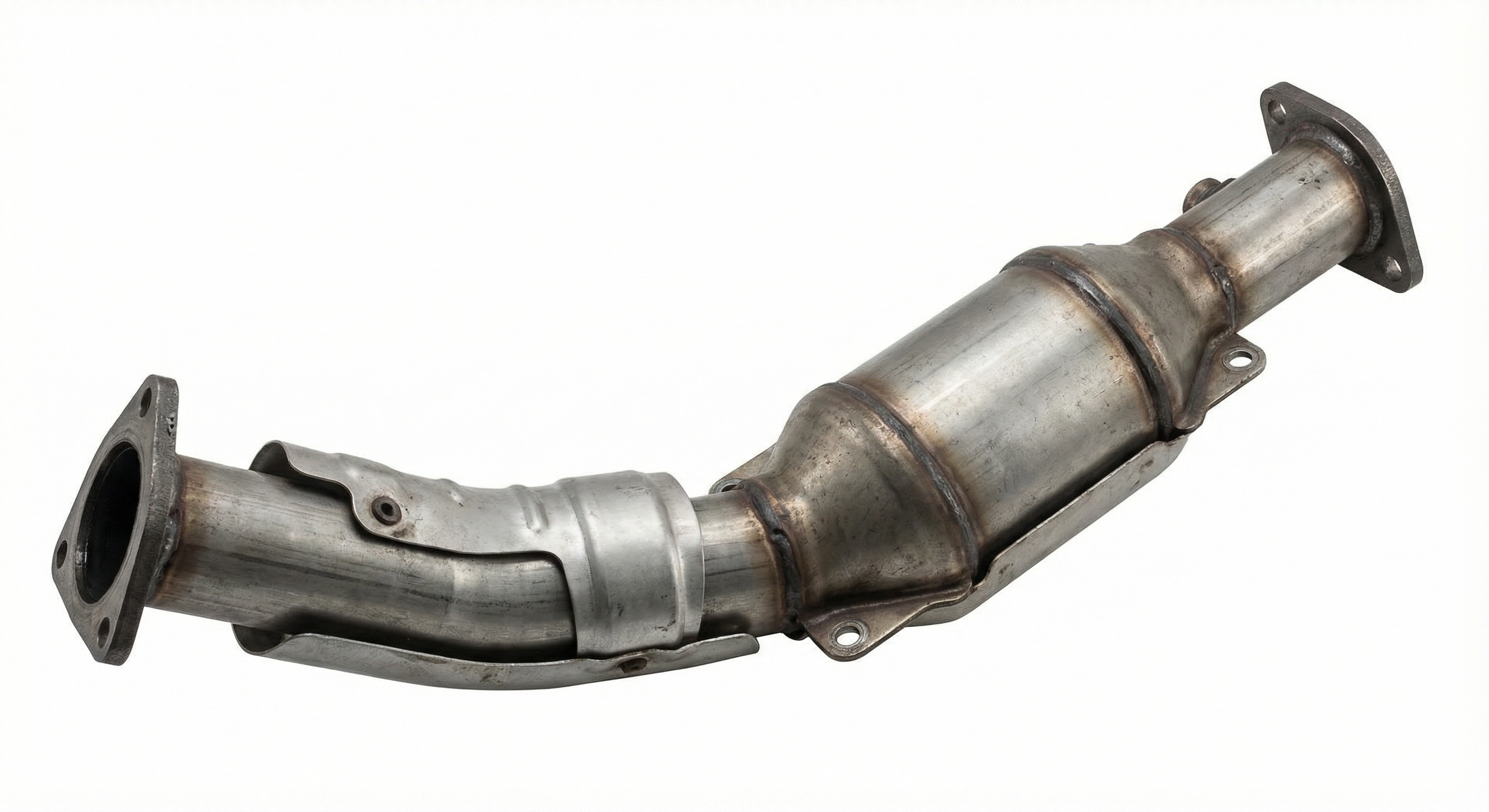
(OEM #44139SA010 (Replaces 44139SA000 for 2003-2006 models))— If the converter has truly failed due to age or contamination, it must be replaced to clear the code and pass emissions. 🎬 Watch this walkthrough on replacing the front catalytic converter. For some later models, it may be integrated with the front pipe assembly under a different part number like 44611AA230.
Trusted brands: Walker, MagnaFlow, Eastern Catalytic
OEM price range: $1000-$1500
Aftermarket price range: $400-$800 - Exhaust Gaskets — Exhaust leaks before the rear O2 sensor are a common cause of this code and gaskets are the primary seal. The donut gasket between the cat pipe and mid-pipe is a frequent failure point.
Trusted brands: Fel-Pro, Bosal, Subaru Genuine
OEM price range: $15-$30
Aftermarket price range: $5-$15
Related Codes That Often Appear With This One
- P0420 — P0420 is the general code for 'Catalyst System Efficiency Below Threshold'. P0421 is more specific to the warm-up phase. They point to the same fundamental problem with the catalytic converter or its monitoring system, and diagnostic procedures are virtually identical.
Technical Service Bulletins (TSBs) & Recalls
- While no TSB specifically for P0421 on the 2003-2008 Forester was found, Subaru has issued bulletins for P0420 on other models (e.g., 09-110-23R) which outline a systematic diagnostic approach. A generic TSB for a different manufacturer (SB-20-001) shows a typical dealer procedure involving checking codes and replacing the catalyst pipe assembly.
Platform-Specific Known Issues
- The 'Mechanical Fix' / O2 Spacer: A commonly discussed, but controversial, workaround involves installing a spark plug non-fouler or a purpose-built spacer to pull the rear O2 sensor out of the direct exhaust stream. This can sometimes trick the ECU into seeing a 'cleaner' reading, preventing the P0421 code. However, this does not fix the underlying emissions problem and may be illegal for on-road vehicles in many jurisdictions.
Mechanic-Grade Diagnostic Values
- Front Air/Fuel (O2) Sensor Current — expected: 0 to 4 milliamps (mA). Failure: A reading outside the 0-4 mA range indicates a faulty sensor.
- Rear Oxygen Sensor Voltage (at steady 2,500 RPM, warm engine) — expected: Relatively stable voltage above 0.6V. Failure: Voltage fluctuates rapidly, mirroring the front A/F sensor, or is stuck low (below 0.4V). This indicates the catalyst is not storing oxygen.
Scan Tool Commands That Help
- Subaru Select Monitor (SSM) or equivalent professional scanner: Catalyst Diagnosis / Test of Catalyst — This function, found under the OBD System menu, allows a technician to view the status of the catalyst monitor readiness test. It will show as 'Complete' or 'Incomplete'. While not a direct command, observing this status after a drive cycle is critical to confirm if the ECU is able to successfully run the test required to clear the P0421 code.
- Subaru Select Monitor (SSM) or equivalent professional scanner: Read Current Data for Engine (Live Data) — Used to monitor the live voltage/current of the front A/F sensor and rear O2 sensor simultaneously. Graphing these values is the primary method for visually confirming if the rear sensor is mimicking the front sensor, which points to a failed catalyst.
Wiring & Ground Locations
- ECU Main Ground — Bolted to the top of the intake manifold, typically on the driver's side towards the rear.. The ECU receives its primary ground reference from the intake manifold, not directly from the chassis or battery. A poor ground at this location due to corrosion or looseness can cause erratic sensor readings, including those from the O2 sensors, potentially leading to a false P0421 code. Ensuring this ground is clean and tight is a crucial, often overlooked, diagnostic step.
- Front A/F Sensor Connector — On the right-hand (passenger) side of the engine, accessible from the top after removing the air intake snorkel. The sensor itself is in the exhaust manifold.. This is the main connector to test the front sensor's wiring and signal directly at the ECU harness side. A pinout diagram for the specific year is needed to test for voltage, ground, and signal integrity back to the ECU.
- Rear O2 Sensor Connector (E25) — Underneath the vehicle, near the transmission. The harness runs up into the cabin. The connector is typically a 4-pin plug.. This connector is the access point for testing the rear O2 sensor heater circuit and signal output before the wiring enters the main body harness. Damage or corrosion here is common due to its exposed location.
Real Owner Repair Stories
- Reddit user in r/MechanicAdvice (Vehicle with 135k miles (model not specified, but EJ25-era symptoms)) — Engine misfiring and running rough, followed by a persistent P0421 code after the initial repair.
❌ Tried (didn't work) Clearing the code; it would return every 20-25 miles.
✅ What actually fixed it The root cause was a failed fuel injector that was dumping raw fuel into the exhaust. After replacing the injector, ignition coils, and spark plugs, the P0421 code appeared. The mechanic advised that the excess fuel had likely coated the catalytic converter and needed to be burned off. The user was instructed to drive the vehicle to see if the code would clear on its own after the fuel system was corrected.
OEM Part Supersession History
22641AA140→22641AA280— Standard part revision and update by the manufacturer.
Heads up: The newer part number (22641AA280) is the correct replacement for the original on 2003-2006 models. Using the old part number, if found, is not advisable.
Model Year Variations Within This Range
- 2004-2005 (Forester XT Turbo models): Early SG Forester XT models (specifically 2004) came with a catalytic converter in the up-pipe, just before the turbocharger. This pre-cat was known to fail, potentially sending debris into the turbo and causing catastrophic failure. Later models (2005+ XT) deleted this up-pipe cat. While P0421 refers to the main warm-up cat post-engine, a failure of this up-pipe cat on an '04 XT can cause downstream issues and is a critical maintenance/reliability item to be aware of.
- 2006-2008: The 2006 model year received a facelift which included engine updates. Non-turbo EJ25 engines received the Active Valve Lift System (AVLS) to improve power and efficiency. While the fundamental cause of P0421 remains the same, wiring diagrams and specific sensor part numbers may differ slightly from the 2003-2005 models.
Diagnostic Flowchart
Other Known Issues on This Vehicle
Issues unrelated to this code that are worth knowing about as an owner of this generation:
- Head Gasket Failure 🔴 High — Very common, typically between 100,000 and 150,000 miles. Affects naturally aspirated EJ25 engines from 1999-2011. The issue can manifest as external oil leaks or internal coolant/oil mixing.
- Rear Wheel Bearing Failure 🟠 Medium — Commonly reported premature failure, sometimes well under 100,000 miles. Symptoms include a loud humming or grinding noise from the rear of the vehicle that changes with speed.
- Excessive Oil Consumption 🟠 Medium — Many owners report needing to add oil between changes. This is often due to the boxer engine design where oil can get past piston rings.
- Rattling Exhaust Heat Shields 🟡 Low — The thin metal heat shields spot-welded to the exhaust pipes often rust and break loose, causing a metallic rattling noise at certain RPMs.
- Front Subframe/Control Arm Rust 🔴 High — In regions with road salt, the front subframe and lower control arms are prone to severe rust and rot, which can be a major safety concern.
Used vs. New Parts: Buying Guide for This Vehicle
When a used part is the smart pick: Given the high cost of an OEM catalytic converter, sourcing a used, low-mileage OEM converter from a reputable auto recycler can be a viable option. This is often preferable to a cheap aftermarket converter which may not meet the Subaru ECU's strict monitoring parameters. Other exhaust components like mid-pipes or axle-back mufflers are also good candidates for used purchase.
Donor-vehicle mileage cap: roughly under 80000 miles for the part to have meaningful remaining life.
What to inspect on the donor part:
- For a catalytic converter, ask for the VIN of the donor car to verify mileage and ensure it's from a non-accident, running vehicle.
- Inspect the converter's internal honeycomb structure with a light; it should be intact, with no signs of melting, clogging, or rattling.
- Check flanges for excessive rust or warping that could prevent a good seal.
- For sensors, avoid used parts. The labor to replace them often outweighs the savings, and their remaining lifespan is unknown.
OEM-only on this vehicle (don't cheap out):
- Front Air/Fuel Ratio Sensor: While top-tier aftermarket is acceptable, OEM (Denso) is highly recommended as the ECU is very sensitive to the signal from this sensor.
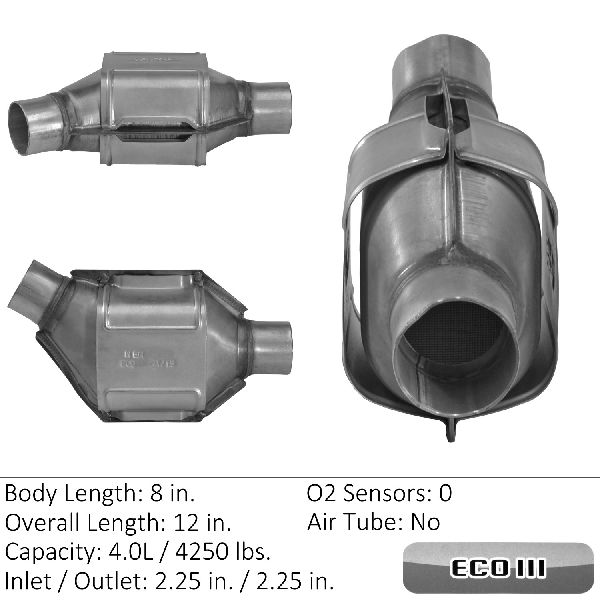
- Catalytic Converter: If buying new, OEM or a high-quality, CARB-compliant aftermarket unit is strongly advised. Many cheaper aftermarket converters lack sufficient precious metal loading and will cause the P0420/P0421 code to return.
Aftermarket brands forum-validated for this vehicle:
- Denso (for O2/AF sensors - they are the OEM supplier)
- NTK (for O2/AF sensors)
- MagnaFlow (for catalytic converters and exhaust systems)
- Walker (for catalytic converters and exhaust systems)
Brands owners have reported issues with on this vehicle:
- Unbranded, 'universal' catalytic converters sold on online marketplaces. These are notorious for failing to meet the efficiency requirements of the Subaru ECU.
Real Owner Stories
Aggregated from forums and TSBs cited above. Mileages and costs reflect what owners reported in those sources.
Subaru Forester EJ25 2.5L
Symptoms: Check Engine Light on with a P0420/P0421 catalyst efficiency code.
What fixed it: Replacing the front A/F sensor, specifically with the Denso brand, resolved the code without needing to replace the catalytic converter.
Source hint: subaruforester.org - Thread: 'P0420 - Catalytic Converter Efficiency Code'
Subaru with EJ25 engine
Symptoms: Check Engine Light on with P0420 code.
What fixed it: Attempted to use an O2 sensor spacer as a cheap fix. Results were mixed; some reported it worked perfectly, while for others the code eventually came back.
Source hint: reddit.com/r/Subaru - Thread: 'P0420 Code'
Related OBD-II Codes
Frequently Asked Questions
Should I replace the catalytic converter first for a P0421 code on my Forester?
What brand of oxygen sensor is best for my 2003-2008 Subaru Forester?
I've heard about an 'O2 spacer' or 'mechanical fix'. Will this solve my P0421 problem?
How can I tell if an exhaust leak is causing the P0421 code on my EJ25?
Is there a specific TSB from Subaru for code P0421 on the 2003-2008 Forester?
My Forester has a rattling sound from the exhaust along with the P0421 code. What could that be?
Helpful Videos
Used OEM Parts in Stock
New Aftermarket Parts Available

The information in this article is provided for general reference and educational purposes only. Vehicle specifications, procedures, and part compatibility can vary by production date, trim level, and region. Always consult your vehicle's factory service manual and verify part numbers before purchasing or performing repairs. Safety-critical components such as airbags, seat belts, and braking systems should be installed by a qualified professional.
- Subaru Forester:
- 🧭 Diagnostic Flowchart
- 🎬 Helpful Videos
- 🛍️ Shop This Part
- What's Unique About the 2003-2008 Subaru Forester
- Symptoms You May Notice
- Most Likely Causes
- Rare But Worth Checking
- Diagnosis Steps
- Parts You'll Likely Need
- Related Codes That Often Appear With This One
- Technical Service Bulletins (TSBs) & Recalls
- Platform-Specific Known Issues
- Mechanic-Grade Diagnostic Values
- Scan Tool Commands That Help
- Wiring & Ground Locations
- Real Owner Repair Stories
- OEM Part Supersession History
- Model Year Variations Within This Range
- Other Known Issues on This Vehicle
- Used vs. New Parts: Buying Guide for This Vehicle
- Real Owner Stories
- Subaru Forester EJ25 2.5L
- Subaru with EJ25 engine
- Related OBD-II Codes
- Frequently Asked Questions
- 🎟️ Get 5% Off