

P0421 on 2010-2015 Toyota Prius: Warm-Up Catalyst Fixes & Causes
P0421 on a Gen 3 Prius indicates the front catalytic converter (part of the exhaust manifold) is inefficient at warm-up. While this can mean a failed converter, it's often caused by a bad downstream oxygen sensor or an exhaust leak. Crucially, these engines can burn oil due to piston ring design, which contaminates and destroys the converter. Addressing the root cause—oil consumption, O2 sensors, or leaks—is essential before replacing the expensive converter.
- Before buying any parts, check your engine oil level. These Prius models can burn oil, which will destroy a new catalytic converter.
- P0421 does not automatically mean you need a new catalytic converter. A faulty downstream O2 sensor or an exhaust leak are common, cheaper-to-fix causes.
- The correct diagnostic procedure involves using a scan tool to watch live O2 sensor data to see if the converter is actually failing.
- If you replace the catalytic converter, consider using an OEM or high-quality aftermarket part. Cheaper units may not be efficient enough and can cause the code to return.
What's Unique About the 2010-2015 Toyota Prius
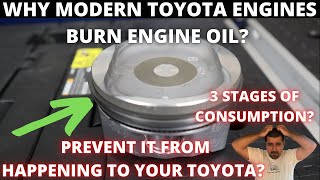
For the 2010-2015 Prius, P0421 is frequently a symptom of a larger, well-documented issue: excessive oil consumption. The 2ZR-FXE engine in these cars is prone to burning oil due to a piston and piston ring design that can become clogged with carbon. This burned 🎬 Watch: Why Toyota engines burn oil and how to prevent it oil contaminates and eventually destroys the catalytic converter. Simply replacing the converter without addressing potential oil burning, a faulty downstream O2 sensor, or an exhaust leak often leads to the code returning. Owners must investigate these root causes first to avoid a costly and repeated repair. Toyota acknowledged the oil consumption issue with TSB T-SB-0168-16 and T-SB-0169-16, which outlined an inspection and repair procedure involving redesigned pistons and rings.
Symptoms You May Notice
- Check Engine Light is on.
- Failure to pass an emissions inspection.
- Slightly reduced fuel economy (often not noticeable by the driver).
- In rare, severe cases, a lack of engine power or a rattling noise if the converter's internal substrate has broken apart and is causing a blockage.
- A 'rotten egg' (sulfur) smell from the exhaust, indicating the converter is struggling to process emissions.
- Immediately replacing the catalytic converter without diagnosing O2 sensors, checking for exhaust leaks, or verifying if the engine is consuming oil. This is the most expensive part and is often replaced needlessly when a cheaper component is the actual cause, or it is replaced without fixing the root cause (oil burning), leading to a repeat failure.
Most Likely Causes
- Failing Catalytic Converter 🔴 High Probability → Shop Catalytic Converter Often a secondary failure caused by the engine's tendency to consume oil, which contaminates the catalyst materials over time. High mileage also contributes to natural degradation. The constant burning of oil deposits soot and other contaminants onto the catalyst substrate, rendering it ineffective.
How to confirm: After confirming O2 sensors and the exhaust system are good, use a scan tool to watch sensor data. If the downstream O2 sensor voltage graph mimics the upstream A/F sensor's graph, the converter is not storing oxygen and has failed. An infrared thermometer can also be used; a healthy converter should be significantly hotter at the outlet than the inlet. If temperatures are the same or cooler at the outlet, it's not working.
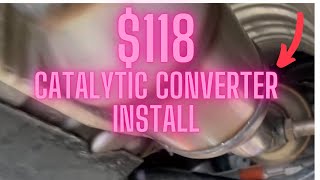
Typical fix: Replace the exhaust manifold assembly, which includes the integrated catalytic converter. 🎬 Watch: How to install a direct-fit replacement catalytic converter It is critical to solve any oil consumption issue first.
Est. part cost: $400-$1500+ - Faulty Downstream Oxygen (O2) Sensor 🟡 Medium Probability → Shop Oxygen Sensor O2 sensors are wear items and can become 'lazy' or biased with age, sending slow or inaccurate data to the ECU that mimics a bad converter. Forum users on PriusChat strongly recommend using only OEM Denso sensors, as aftermarket brands can cause compatibility issues.
How to confirm: Monitor the sensor's live data on a scan tool. A healthy downstream sensor should show a relatively steady, flat voltage (around 0.6-0.8V) once the car is warm and at a steady cruise. If it's stuck low (near 0V), stuck high (near 1V), or switching rapidly like the upstream sensor, it's likely faulty.
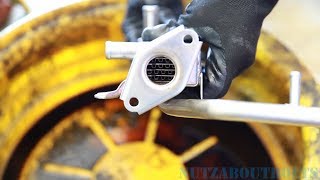
Typical fix: Replace the Bank 1, Sensor 2 oxygen sensor. The OEM supplier is Denso. 🎬 See: Why a Prius O2 sensor can fail
Est. part cost: $50-$180 - Exhaust Leak ⚪ Low Probability Gaskets at the manifold or connections, as well as the flex pipe, can degrade over time from heat cycles and corrosion, allowing outside oxygen to enter the exhaust stream. This extra oxygen fools the downstream O2 sensor into providing a lean reading, which the ECU misinterprets as a failed catalyst.
How to confirm: Perform a visual inspection for black soot marks or cracks around the manifold, gaskets, and flex pipe. Listen for a 'ticking' or 'puffing' noise from the engine bay, especially when the engine is cold. A smoke test is the most definitive way to find a leak.
Typical fix: Replace the leaking gasket or repair/replace the cracked exhaust component.
Est. part cost: $20-$200
Rare But Worth Checking
- Excessive Engine Oil Consumption: This is the primary underlying issue that causes catalyst failure on this vehicle. It doesn't directly set P0421, but it destroys the part that does. Toyota TSBs T-SB-0168-16 and T-SB-0169-16 detail the issue, which stems from a piston ring design that is prone to sticking. Production changes were made in 2014 to address this.
- Faulty Air/Fuel Ratio Sensor (Upstream O2 Sensor): → Shop Oxygen Sensor Less common to cause P0421 specifically, but a faulty A/F sensor can lead to incorrect fuel mixtures (running rich or lean) that damage the converter over time, eventually causing a P0421 code.
- PCM/ECU Software Issue: Extremely rare, but sometimes the powertrain control module can have a software glitch or calibration issue that leads to a false P0421 code. This should only be considered after all other possibilities are exhausted.
Diagnosis Steps
- Read all fault codes. Address any misfire (P030x), fuel system, or oxygen sensor circuit codes (P0137/P0138) before diagnosing P0421.
- Check engine oil level and history. If it is low or there's a history of needing top-offs, suspect oil consumption as the root cause of catalyst failure. Refer to Toyota TSB T-SB-0168-16 and T-SB-0169-16.
- Visually inspect the exhaust system from the manifold to the downstream O2 sensor. Look for black soot marks, cracks, or rust holes indicating a leak. Listen for unusual noises. A professional smoke test is the best confirmation method.
- Use a scan tool to view live data. Warm the engine up completely. Observe the Bank 1 Sensor 1 (A/F sensor) and Bank 1 Sensor 2 (downstream O2 sensor) voltage graphs at a steady 2,500 RPM.
- Analyze sensor data: On a healthy car, the A/F sensor will fluctuate rapidly. The downstream O2 sensor should hold a steady, high voltage (e.g., ~0.7V). If the downstream sensor's graph mirrors the upstream sensor's fluctuations, the catalytic converter is not working.
- Test the downstream O2 sensor: If its reading is flat but very low (e.g., <0.2V), stuck, or slow to respond, the sensor itself is likely bad.
- If all sensors and the exhaust system check out, and there are no oil consumption issues, the catalytic converter is the most likely culprit.
Parts You'll Likely Need
- Exhaust Manifold with Integrated Catalytic Converter
(OEM #17105-37070)— This is the direct fix for a failed warm-up catalyst. On the Prius, the primary catalyst is part of the exhaust manifold assembly. This part is often replaced due to contamination from oil burning.
Trusted brands: Toyota (OEM), Walker (CARB Compliant), MagnaFlow (CARB Compliant), AP Exhaust
OEM price range: $1000-$1500
Aftermarket price range: $400-$900 (Note: Must be CARB compliant for certain states) - Downstream Oxygen Sensor (Bank 1, Sensor 2)
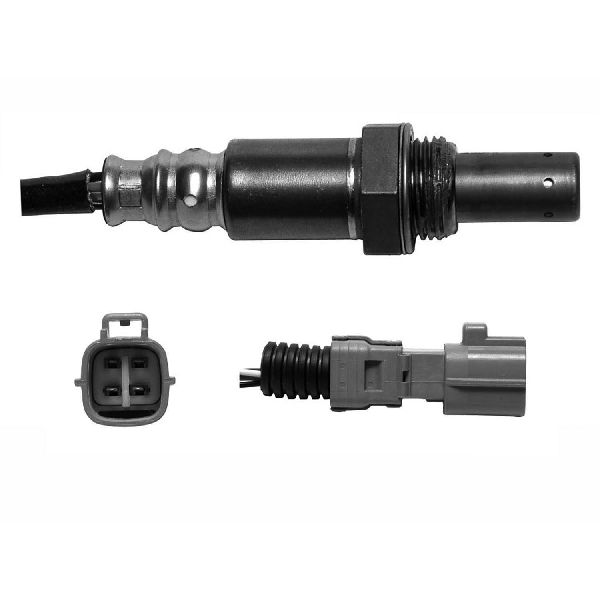
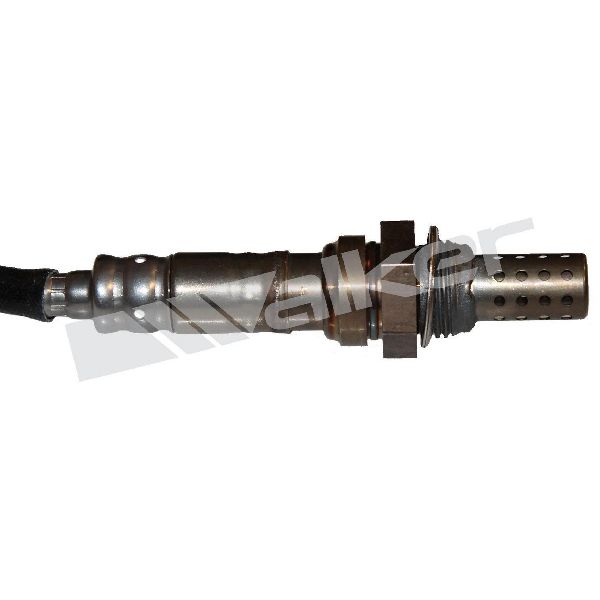
(OEM #89465-47070)— A faulty downstream sensor is a common cause of a false P0421 code and is a logical part to test and replace before condemning the expensive converter. The OEM supplier is Denso, and using the correct Denso part (like Denso 234-4521) is highly recommended by owners to avoid issues.
Trusted brands: Denso (OEM supplier), NGK/NTK
OEM price range: $120-$180
Aftermarket price range: $50-$100 - Piston and Ring Set (for oil consumption fix)
(OEM #13101-37120 (Piston Sub-Assy))— If excessive oil consumption is the root cause, this is part of the official TSB repair to stop the oil burning and prevent future catalyst failure. This is a major engine repair.
Trusted brands: Toyota (OEM)
Related Codes That Often Appear With This One
- P0300-P0304 — If the engine is misfiring, unburnt fuel is dumped into the exhaust, which can rapidly overheat and destroy the catalytic converter, leading to P0421. Oil consumption can also foul spark plugs, causing misfires.
- P0137, P0138 — These codes point directly to a fault in the downstream oxygen sensor circuit (low or high voltage), which can be the root cause of an incorrect P0421 reading.
- P0401 — This code for 'Insufficient EGR Flow' is also extremely common on this Prius. A clogged EGR cooler, valve, and intake manifold passages can cause higher combustion temperatures, which can indirectly stress the exhaust components. While not a direct cause, it's part of the same pattern of carbon/soot buildup issues seen on this engine.
Technical Service Bulletins (TSBs) & Recalls
- T-SB-0168-16: '2ZR-FXE Engine Oil Consumption Inspection Procedure' - Details how to confirm the known issue of oil consumption on 2010-2014 models which can lead to catalyst failure.
- T-SB-0169-16: '2ZR-FXE Engine Oil Consumption Repair Procedure' - Outlines the repair, which involves replacing the pistons and piston rings with redesigned parts.
Platform-Specific Known Issues
- Toyota issued Technical Service Bulletin T-SB-0168-16 for some 2010-2014 Prius models due to excessive oil consumption from the 2ZR-FXE engine. This was followed by T-SB-0169-16 for the repair procedure. The cause was identified as a piston and piston ring design that was prone to carbon buildup, leading to stuck rings. This condition is a known killer of catalytic converters and should be investigated first if you have P0421.
- A thread on PriusChat titled 'TSB on Excessive Oil Consumption for 2ZR-FXE Engine' provides the actual TSB documents and owner discussion confirming the link between the piston ring design and catalyst failure. Owners report that switching to a 5,000-mile oil change interval can help mitigate the issue.
Mechanic-Grade Diagnostic Values
- O2 Sensor Heater Circuit Resistance — expected: 10-40 ohms. Failure: Infinite resistance (open circuit) or zero resistance (short circuit) indicates a failed heater, which can cause incorrect sensor readings during warm-up.
- Downstream O2 Sensor Voltage (Healthy, Warm, Steady Cruise) — expected: Relatively steady voltage between 0.6V and 0.8V. Failure: Voltage rapidly switching similar to the upstream sensor, or being stuck low (<0.2V) or high (>0.9V).
- Techstream Catalyst Monitor Test Value (OSC Time) — expected: A new converter might show 12+ seconds. A passing but marginal converter might be closer to the minimum.. Failure: A value of 2-3 seconds or less indicates a failed catalyst that cannot store oxygen.
Hidden / Shadow Codes Worth Checking
- Mode $06, TID $81: This is not a separate trouble code but a specific Test ID within the OBD-II Mode $06 data. TID $81 corresponds to the Catalyst Efficiency Monitor for Bank 1. Technicians can view the raw test value and compare it against the minimum and maximum allowable thresholds stored in the ECU. A value close to the minimum limit can indicate a catalyst that is about to fail, even before the P0421 code is set. (see via An advanced scan tool capable of displaying Mode $06 data is required. In Toyota's Techstream software, this data is accessible under the 'Monitor' or 'Readiness Monitors' section, often by selecting 'Details' for the catalyst monitor.)
Scan Tool Commands That Help
- Toyota Techstream: Monitor Details (under Engine and ECT) — Use this to view the actual measured values from the last time the catalyst efficiency monitor ran. It provides more than a simple pass/fail; it shows how close the catalyst is to the failure threshold, which is invaluable for diagnosing intermittent or borderline cases.
- Toyota Techstream: Active Test: Control the Injection Volume for A/F Sensor — This bidirectional command allows a technician to manually force the engine rich (+25%) or lean (-12.5%). By observing the reaction of the downstream O2 sensor on a graph, you can test its switching speed and the catalyst's oxygen storage capacity (OSC). A healthy cat will show a delayed response on the downstream sensor, while a bad cat will show an immediate response.
Wiring & Ground Locations
- Engine Harness Ground Cluster — On the driver's side of the 2ZR-FXE engine, there are two main ground wire clusters that bolt directly to the engine block/head area, near the coolant reservoir.. These are critical ground points for the engine harness. A loose or corroded ground here can cause erratic sensor readings, including for the A/F and O2 sensors, potentially leading to a false P0421 code or other engine management faults.
- ECM (Engine Control Module) — Located in the engine compartment on the driver's side, housed in a black plastic and metal casing.. All sensor data (A/F, O2) is sent to the ECM for analysis. When diagnosing, technicians may need to test for voltage and continuity at the ECM connectors to rule out wiring issues between the sensors and the module.
Real Owner Repair Stories
- PriusChat Forum User (2010 Toyota Prius, mileage not specified) — P0420 (functionally similar to P0421 for diagnosis) and P0401 (EGR) codes present.
❌ Tried (didn't work) Initially, the user was focused on the P0420 code, implying a focus on the catalytic converter and O2 sensors.
✅ What actually fixed it The user performed a complete EGR system cleaning, including the EGR valve, cooler, and intake manifold passages. After cleaning the significant carbon buildup, both the P0401 and the P0420 codes were resolved. The theory is that the clogged EGR system led to higher combustion temperatures and inefficient combustion, which in turn stressed and fouled the catalytic converter, causing the efficiency code.
OEM Part Supersession History
13011-37110→13011-37260— Piston ring set was redesigned to address the excessive oil consumption issue. The new design has improved oil control features to prevent carbon buildup and sticking.
Heads up: The older part number (13011-37110) should be avoided if performing an oil consumption repair, as it uses the original problematic design. The updated part (13011-37260 or newer) is required for the TSB fix.
Model Year Variations Within This Range
- 2010-Early 2014: Engines produced before approximately January/February 2014 were equipped with the original piston and ring design that is highly susceptible to the oil consumption issue that leads to P0421.
- Mid-2014-2015: Engines produced after this change point received updated pistons and rings from the factory, making them significantly less likely to develop the severe oil consumption that fouls catalytic converters. While not immune, the failure path is less common on these later models.
Diagnostic Flowchart
Other Known Issues on This Vehicle
Issues unrelated to this code that are worth knowing about as an owner of this generation:
- Brake Booster / Actuator Assembly Failure 🔴 High — Common on high-mileage (100k+) vehicles. Symptoms include a buzzing/groaning noise after releasing the brake pedal, and warning lights (ABS, VSC). (Ref: Toyota offered a Warranty Enhancement Program (ZE1) for this issue, but it has since expired for most vehicles. Repair can be very expensive without coverage.)
- Inverter (Intelligent Power Module) Failure 🔴 High — Can occur suddenly, causing the car to stall or enter a low-power 'limp mode'. Affects 2010-2014 models primarily. (Ref: Multiple recalls (e.g., J0V) and a Customer Support Program (ZE3) were issued to update software or replace the inverter. Failures can still occur.)
- EGR System Clogging 🟠 Medium — Very common, typically starting around 100,000-150,000 miles. A clogged EGR cooler, valve, and intake passages can lead to engine knocking, rough idle, and eventually head gasket failure. (Ref: No recall, but it's a widely known issue. Cleaning the EGR circuit is considered preventative maintenance by many owners.)
- Head Gasket Failure 🔴 High — Often a consequence of a clogged EGR system causing engine overheating. Typically occurs at higher mileages (>150k miles) and presents as a 'death rattle' on cold startup. (Ref: No recall. This is often the result of deferred maintenance on the EGR system.)
- Excessive Oil Consumption 🟠 Medium — Common in 2010-2014 models due to piston ring design. Can start as early as 60,000 miles but becomes more apparent with higher mileage. (Ref: T-SB-0168-16 and T-SB-0169-16 were issued for inspection and repair, but were covered under the powertrain warranty which is now expired for most.)
Used vs. New Parts: Buying Guide for This Vehicle
When a used part is the smart pick: A used downstream oxygen sensor from a low-mileage donor vehicle can be a cost-effective diagnostic step, but it is still a wear item. Given the relatively low cost of a new Denso sensor, most owners opt for new. A used catalytic converter is a significant gamble due to the high likelihood of it being already contaminated from the donor car's own potential oil consumption.
Donor-vehicle mileage cap: roughly under 80000 miles for the part to have meaningful remaining life.
What to inspect on the donor part:
- For a catalytic converter, check the donor vehicle's history for any indication of oil consumption or head gasket failure.
- Visually inspect the converter's honeycomb structure with a light; it should be intact, with no melted, broken, or clogged sections.
- For an O2 sensor, check for physical damage, corrosion on the connector, and heavy, oily soot on the sensor tip.
OEM-only on this vehicle (don't cheap out):
- Catalytic Converter: While some aftermarket brands are CARB compliant, many forum users report that only the OEM Toyota manifold/converter assembly reliably keeps the check engine light off long-term on this sensitive system.
- Piston Rings: For the oil consumption repair, only the updated OEM Toyota parts should be used to ensure the problem is resolved.
Aftermarket brands forum-validated for this vehicle:
- Denso for Oxygen Sensors (OEM supplier)
- NGK/NTK for Oxygen Sensors
- Walker or MagnaFlow for CARB-compliant catalytic converters (if OEM is not an option)
Brands owners have reported issues with on this vehicle:
- Unbranded, non-CARB compliant catalytic converters from online marketplaces are almost guaranteed to fail the ECU's efficiency test and should be avoided.
Real Owner Stories
Aggregated from forums and TSBs cited above. Mileages and costs reflect what owners reported in those sources.
2010-2014 Toyota Prius 2ZR-FXE
Symptoms: Excessive oil consumption leading to catalyst failure; carbon buildup on pistons causing rings to stick.
What fixed it: Replacing the pistons and piston rings with redesigned parts as per T-SB-0169-16.
Source hint: PriusChat.com: Thread 'TSB on Excessive Oil Consumption for 2ZR-FXE Engine'
2010 Toyota Prius 2ZR-FXE
Symptoms: Clogged EGR system, oil consumption, and eventual head gasket failure.
What fixed it: Cleaning the EGR cooler and maintaining strict 5,000-mile oil change intervals to mitigate carbon buildup.
Source hint: Reddit r/prius: Thread '2010 Prius. Really that bad?'
Related OBD-II Codes
Frequently Asked Questions
Does T-SB-0168-16 apply to my 2010-2014 Toyota Prius?
Can I use any aftermarket oxygen sensor to fix a P0421 on my Prius?
Is there a specific repair procedure for the oil consumption issue causing my P0421?
Will cleaning my EGR system help with the issues related to P0421?
How can I tell if my catalytic converter has actually failed or if it's just a sensor?
Does the Lexus CT200h suffer from the same P0421 issues as the Prius?
Helpful Videos

We Have This Part in Stock

The information in this article is provided for general reference and educational purposes only. Vehicle specifications, procedures, and part compatibility can vary by production date, trim level, and region. Always consult your vehicle's factory service manual and verify part numbers before purchasing or performing repairs. Safety-critical components such as airbags, seat belts, and braking systems should be installed by a qualified professional.
- Toyota Prius:
- 🧭 Diagnostic Flowchart
- 🎬 Helpful Videos
- 🛍️ Shop This Part
- What's Unique About the 2010-2015 Toyota Prius
- Symptoms You May Notice
- Most Likely Causes
- Rare But Worth Checking
- Diagnosis Steps
- Parts You'll Likely Need
- Related Codes That Often Appear With This One
- Technical Service Bulletins (TSBs) & Recalls
- Platform-Specific Known Issues
- Mechanic-Grade Diagnostic Values
- Hidden / Shadow Codes Worth Checking
- Scan Tool Commands That Help
- Wiring & Ground Locations
- Real Owner Repair Stories
- OEM Part Supersession History
- Model Year Variations Within This Range
- Other Known Issues on This Vehicle
- Used vs. New Parts: Buying Guide for This Vehicle
- Real Owner Stories
- 2010-2014 Toyota Prius 2ZR-FXE
- 2010 Toyota Prius 2ZR-FXE
- Related OBD-II Codes
- Frequently Asked Questions
- 🎟️ Get 5% Off