

P0422 on 1997-2003 Audi A8 4.2L: Causes for Main Catalyst Efficiency Fault
This code means the catalytic converter on Bank 1 isn't working efficiently. While this could mean a failed converter, first check for exhaust leaks between the oxygen sensors and test the rear O2 sensor to avoid a costly misdiagnosis. On the D2 A8, failing flex pipes are a very common source of leaks that trigger this code.
- P0422 points to an inefficient catalytic converter on the passenger side (Bank 1).
- Before replacing the expensive catalytic converter, always inspect thoroughly for exhaust leaks, especially at the flex pipes.
- Test the rear oxygen sensor. A faulty sensor is a common misdiagnosis that is much cheaper to fix than a converter.
- If you have any other engine codes for misfires or fuel mixture, you must resolve those first to avoid damaging a new catalytic converter.
- Use a scan tool to watch live O2 sensor data; it is the most definitive way to confirm if the converter is truly bad.
What's Unique About the 1997-2003 Audi A8
For the D2 generation Audi A8 with the 4.2L V8 (engine codes primarily ABZ, AKB, AUW), this code is a straightforward indicator of an emissions system problem on the passenger side. These vehicles are now of an age where original catalytic converters and oxygen sensors are reaching the end of their service life. A common and well-documented issue on older Audis is the failure of flexible exhaust pipes, which can corrode and develop leaks that trigger this code. It is crucial to differentiate between a failed converter, a simple exhaust leak, or a faulty oxygen sensor, as the cost difference is significant. Aftermarket catalytic converters are also a known cause for this code, as their efficiency may not meet the strict thresholds monitored by the Audi ECM.
Symptoms You May Notice
- Check Engine Light is on.
- Possible rotten egg (sulfur) smell from the exhaust.
- Reduced fuel economy or sluggish acceleration, though often not noticeable.
- A hissing or ticking noise from the engine bay or under the car, especially on acceleration, if an exhaust leak is the cause.
- Replacing the catalytic converter when the actual problem was a less expensive exhaust leak or a faulty rear oxygen sensor.
- Replacing the rear oxygen sensor when the catalytic converter has truly failed.
Most Likely Causes
- Failed Catalytic Converter 🔴 High Probability → Shop Catalytic Converter Original converters on high-mileage vehicles can become contaminated or simply wear out over time, losing their chemical effectiveness. Physical failure of the internal substrate is also possible.
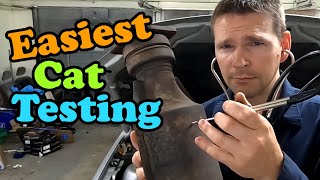
How to confirm: After confirming no exhaust leaks and that O2 sensors are functioning correctly, a failed converter is the most likely cause. A scan tool (like VCDS/VAG-COM) showing the downstream O2 sensor voltage switching rapidly like the upstream sensor confirms this. An infrared thermometer can also be used; the outlet of a working converter should be significantly hotter than the inlet. 🎬 Watch: Professional techniques for testing your catalytic converter's health.
Typical fix: Replace the Bank 1 catalytic converter. Due to the poor performance of some aftermarket units, using an OEM or high-quality OEM-equivalent converter is recommended to prevent the code from returning.
Est. part cost: $600-$1500 - Exhaust Leak 🟡 Medium Probability The flexible, braided sections of the downpipes are known weak points that can corrode and leak, especially on cars from rust-prone areas. A leak between the front and rear O2 sensors allows unmetered oxygen to enter the exhaust, which fools the rear O2 sensor into sending readings that suggest poor catalyst efficiency.
How to confirm: Visually inspect the exhaust system from the manifold to behind the rear O2 sensor. Listen for hissing or ticking sounds that change with engine RPM. A professional smoke test is the most effective way to find small leaks.
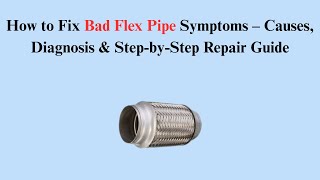
Typical fix: Repair the leak. This may involve welding a crack, replacing a gasket, or, most commonly for this platform, cutting out the old flex pipe and welding in a new universal section. 🎬 Watch this guide on diagnosing and repairing a leaking flex pipe.
Est. part cost: $20-$200 - Faulty Rear (Post-Catalyst) Oxygen Sensor 🟡 Medium Probability → Shop Oxygen Sensor The rear O2 sensor is what the ECM uses to judge catalyst efficiency. If the sensor becomes 'lazy' or fails due to age, it can send incorrect data, falsely triggering a P0422 code. O2 sensors are considered a wear item with a typical lifespan around 100k miles.
How to confirm: Use a scan tool to graph the sensor's voltage. A healthy rear sensor on a warm engine at steady RPM should show a relatively stable voltage (typically above 0.5V). If it's stuck, flatlined, or fluctuating rapidly similar to the front sensor, it's likely bad. You can also test the sensor's internal heater resistance with a multimeter.
Typical fix: Replace the Bank 1, Sensor 2 oxygen sensor. The OEM part number is often a variation of 077906265T.
Est. part cost: $70-$180 - Engine Performance Issues ⚪ Low Probability Issues like misfires from bad spark plugs or coils, leaking fuel injectors, or incorrect fuel pressure can send unburned fuel into the exhaust. This unburned fuel superheats and can quickly melt or poison the catalytic converter's internal structure.
How to confirm: Scan for other trouble codes, such as misfire codes (P0300-P0308) or fuel trim codes (P0172, P0175). Address these codes first before replacing any emissions components. A rich condition must be resolved to protect the new converter.
Typical fix: Resolve the underlying engine problem (e.g., replace spark plugs, ignition coils, or fuel injectors).
Est. part cost: $50-$500
Rare But Worth Checking
- Faulty Front (Pre-Catalyst) Oxygen Sensor: → Shop Oxygen Sensor While less common, a faulty front O2 sensor can cause an improper air/fuel mixture, which affects the catalyst's ability to function and can lead to a P0422 code over time. This would typically be accompanied by fuel trim codes.
- Contaminated Fuel or Engine Oil: Using fuel with improper additives or having an engine that burns excessive oil can contaminate the catalytic converter with phosphorus or other deposits, reducing its efficiency.
- ECM Software/Firmware Issue: In some rare cases, the parameters within the Engine Control Module for catalyst monitoring may be too sensitive. This is less common on older platforms like the D2 but can be a factor, especially if non-OEM components are used.
Diagnosis Steps
- Read all fault codes with an OBD-II scanner, preferably a VAG-specific tool like VCDS. Address any misfire, fuel system, or primary O2 sensor codes before proceeding.
- Perform a thorough visual and auditory inspection of the exhaust system for Bank 1 (passenger side). Look and listen for cracks, holes, or black soot indicating a leak, paying close attention to the braided flexible pipe sections between the engine and the main converters.
- If no obvious leaks are found, use a scan tool to monitor live data from the Bank 1 oxygen sensors (e.g., VCDS Measuring Blocks 032, 033, 036). With the engine fully warmed up and running at a steady 2000-2500 RPM, observe the voltage graphs.
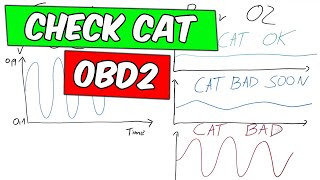
- Observe the voltage graphs. The upstream sensor (Sensor 1) should fluctuate rapidly between approximately 0.1 and 0.9 volts. The downstream sensor (Sensor 2) should show a much steadier, stable voltage, typically above 0.6V. 🎬 See how to monitor O2 sensor live data using OBD2.
- If the downstream sensor's graph mirrors the upstream sensor's rapid fluctuations, the catalytic converter is not storing oxygen and has likely failed.
- If the downstream sensor's voltage is flatlined (e.g., at 0V or 0.45V) or seems stuck and unresponsive, the sensor itself is likely faulty.
- If an exhaust leak is suspected but cannot be seen, a professional smoke test is the definitive method to pinpoint its location.
- Only after ruling out exhaust leaks and faulty sensors should the catalytic converter be condemned.
Parts You'll Likely Need
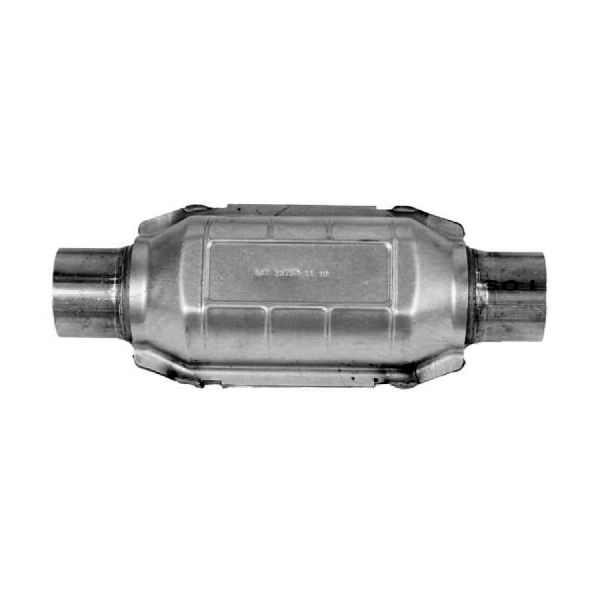
- Catalytic Converter (Bank 1)
(OEM #e.g., 4D0254200X, 4D0254200V (numbers vary by year/model))— This is the most common direct cause if the converter has failed due to age or contamination.
Trusted brands: Bosal, Walker Exhaust, MagnaFlow, OEM Audi
OEM price range: $1000-$1800
Aftermarket price range: $600-$1200 - Rear Oxygen Sensor (Bank 1, Sensor 2)
(OEM #077906265T (for facelift 40v), 077906265D (for pre-facelift 32v))— This sensor measures catalyst efficiency. If it fails, it can provide false readings that trigger the P0422 code.
Trusted brands: Bosch (OEM supplier, e.g., 13842), Denso, NGK
OEM price range: $150-$250
Aftermarket price range: $70-$180
Related Codes That Often Appear With This One
- P0432 — This is the same 'Main Catalyst Efficiency' code for Bank 2 (driver's side). If both appear, it could point to a common issue like fuel contamination, a systemic exhaust leak issue (both flex pipes failing), or suggest that both converters are failing due to age.
- P0300-P0308 — These are misfire codes. An engine misfire allows unburned fuel to enter the exhaust, which can rapidly damage the catalytic converter. If you have misfire codes, they MUST be fixed before replacing the converter.
- P0172 / P0175 — These codes indicate a 'System Too Rich' condition on Bank 1 or 2. A rich condition can overload and damage the catalytic converter. This must be fixed first.
- P0411 — This code for 'Secondary Air Injection Incorrect Flow' can sometimes appear alongside catalyst codes. While not a direct cause, a malfunctioning SAI system can affect how quickly the catalysts reach operating temperature, potentially impacting their long-term efficiency.
Platform-Specific Known Issues
- Aftermarket Catalytic Converter Inefficiency: → Shop Catalytic Converter A recurring theme in owner forums is the P0422/P0432 codes returning months after installing non-OEM catalytic converters. The ECM's monitoring is very sensitive, and many aftermarket units lack the precious metal loading to perform to OEM standards over the long term, even if they work initially.
- Owner Experience: Flex Pipe Leak: An owner on AudiWorld forums with P0422 and P0432 on a 2000 A8 with 107k miles had previously replaced the cats with aftermarket units. The codes appeared 6 months later. While the initial suspicion was the aftermarket cats, the discussion highlights the importance of checking for leaks that could have developed in the meantime, a common scenario.
Mechanic-Grade Diagnostic Values
- O2 Sensor Heater Resistance (cold) — expected: Below 20 Ohms, typically 3-15 Ohms.. Failure: A reading of 20 Ohms or more, or an open circuit (infinite resistance), indicates a failed heater element.
- Fuel Pressure (all 4.2L variants) — expected: 4.0 bar (58 psi).. Failure: Significantly lower or higher pressure can indicate a failing fuel pump or regulator, leading to fuel mixture issues that can damage a catalytic converter.
- VCDS Catalyst Efficiency Test (Bank 1) — expected: In Measuring Block 046, the 'Cat B1 OK' status should appear after running the test. The amplitude ratio should be low (e.g., under 0.5), indicating the converter is working.. Failure: Test status remains 'Test OFF' or fails. A high amplitude ratio (approaching 1.0) indicates the rear O2 sensor is mimicking the front, meaning the catalyst is inefficient.
Scan Tool Commands That Help
- VCDS (VAG-COM): Basic Settings - Group 046 — To manually initiate the catalyst efficiency test for Bank 1. The engine must be warm (catalyst temp > 400°C) and held at a steady RPM (around 2000 RPM). This forces the ECU to evaluate the catalyst and can confirm if it passes or fails the readiness monitor.
- VCDS (VAG-COM): Measuring Blocks - Groups 030-049 — These blocks are used for live data monitoring of all oxygen sensors and catalyst functions. Specifically, Group 036 shows the live readings for the post-cat O2 sensors, and Group 046 shows the catalyst test status and results.
Wiring & Ground Locations
- ECU (Engine Control Module) — In the plenum chamber, located under the hood near the base of the windshield on the driver's side (LHD). It is housed in a black electronics box that requires removing a cover held by Torx screws.. The ECU receives all O2 sensor signals and makes the determination for setting P0422. Water ingress into the plenum box is a known D2 A8 issue that can cause corrosion and phantom electrical problems.
- Engine Ground Points — There are several key ground points. One is on the longitudinal member in the engine compartment (left side). Another major ground cluster is often located in the plenum area near the ECU wiring.. A poor ground connection for the ECU or the O2 sensor heater circuit can cause erratic sensor readings, leading to false catalyst efficiency codes.
- O2 Sensor Connectors (Bank 1) — The connectors for the Bank 1 (passenger side) sensors are notoriously difficult to access. The pre-cat (S1) and post-cat (S2) connectors are located down above the passenger side inner CV joint, often blocked from view by the subframe and axle. Access is typically by feel from underneath the car or through the wheel well.. These connectors are a common point of failure due to heat and exposure. Testing voltage and resistance requires accessing these specific, hard-to-reach connectors.
Real Owner Repair Stories
- AudiWorld Forums user (2002 Audi S8 (D2)) — Check Engine Light with catalyst efficiency codes.
❌ Tried (didn't work) Installing aftermarket catalytic converters from a muffler shop.
✅ What actually fixed it The aftermarket converters failed within a year. An independent mechanic advised that only OEM Audi converters would resolve the issue permanently on this platform, as aftermarket units often lack the precious metal loading to satisfy the sensitive ECU monitoring. - quattroworld.com Forums user (Audi S8 (D2)) — Catalytic converter death rattle.
❌ Tried (didn't work) Seeking a 'direct fitment' replacement, which was difficult to source or very expensive.
✅ What actually fixed it The user had a local muffler shop cut out the old, rattling catalytic converter and weld in a universal replacement. The total cost was around $400, and it resolved both the rattle and the fault codes. - AudiWorld Forums user (2001 Audi A8) — Persistent catalyst codes.
❌ Tried (didn't work) Resetting the light repeatedly.
✅ What actually fixed it The user planned to install an O2 sensor spacer (also called a 'catalyst filter' or 'non-fouler'), which is a small extender that pulls the rear O2 sensor out of the direct exhaust stream. This is a common method to trick the ECU and prevent the CEL from illuminating, especially when using aftermarket cats or test pipes.
When the Usual Fixes Don't Work
- While Pass 2 correctly identifies aftermarket catalytic converters as a potential problem, multiple forum threads show owners successfully using universal weld-in cats from brands like Walker or Magnaflow to fix rattles and codes for a fraction of the OEM cost. The key seems to be professional installation (welding) and potentially the use of O2 sensor spacers if the new cat is slightly less efficient than the ECU expects. This contradicts the idea that only expensive OEM parts will work, offering a viable budget-friendly alternative.
Model Year Variations Within This Range
- 1997-1999 (Pre-facelift 32v): These models (e.g., ABZ engine) may use a 3-wire rear oxygen sensor. The OEM part number is often cited as 077906265D. Care must be taken when using universal sensors to ensure wiring compatibility.
- 2000-2003 (Facelift 40v): These models (e.g., AUW engine) typically use a 4-wire rear oxygen sensor, with OEM part number 077906265T being common. They also feature pre-catalytic converters in addition to the main cats, adding complexity to the exhaust system, though P0422 specifically refers to the main catalyst.
Diagnostic Flowchart
Other Known Issues on This Vehicle
Issues unrelated to this code that are worth knowing about as an owner of this generation:
- ZF 5HP24A Automatic Transmission Failure 🔴 High — Common over 100k-130k miles. Failure of the 'A' clutch drum is a well-documented issue, leading to loss of drive/reverse.
- Timing Belt Service Criticality 🔴 High — The 4.2L V8 is an interference engine. The recommended service interval was retroactively shortened to 75,000 miles. Failure of the belt, tensioner, or water pump will cause catastrophic engine damage. (Ref: Service interval updated by Audi from 105k to 75k miles.)
- Coolant After-Run Pump Failure 🟠 Medium — This auxiliary electric pump circulates coolant to cool the turbos (on turbo models) or cylinder heads after engine shutdown. Failure can lead to coolant leaks from the pump itself or contribute to heat soak issues.
- Clogged Sunroof and Plenum Drains 🟠 Medium — The drains for the sunroof and the plenum under the windshield can get clogged with debris, causing water to leak into the passenger cabin, potentially damaging sensitive electronics like the Transmission Control Module (TCM) located under the passenger-side carpet.
- CV Joint Boot Failure 🟡 Low — The rubber boots on the front axles are prone to cracking and tearing over time, slinging grease and allowing dirt to enter the joint. If not caught early, this will lead to CV joint failure.
Used vs. New Parts: Buying Guide for This Vehicle
When a used part is the smart pick: For this vehicle, sourcing a used OEM catalytic converter from a low-mileage, rear-ended donor car can be a very smart choice. It provides the OEM efficiency the ECU expects at a much lower cost than a new part. Used O2 sensors are generally not recommended as they are a wear item.
Donor-vehicle mileage cap: roughly under 80000 miles for the part to have meaningful remaining life.
What to inspect on the donor part:
- Check for a donor from a 'rust-free' state to ensure the flex pipes and flanges are in good condition.
- Ask for the VIN to confirm the donor vehicle's mileage and year.
- Inspect the converter for any rattling (indicating a broken internal substrate) or physical damage.
- Ensure the O2 sensor bungs are not stripped or cross-threaded.
OEM-only on this vehicle (don't cheap out):
- Catalytic Converter - Strongly recommended. Many owners report that aftermarket converters are not efficient enough for the Audi D2's sensitive monitoring and will cause the P0422/P0432 codes to return within a year.
Aftermarket brands forum-validated for this vehicle:
- Oxygen Sensors: Bosch is the OEM supplier; buying the Bosch-branded part is identical to the Audi part at a lower cost. Denso and NGK are also highly reputable alternatives.
- Catalytic Converters (Weld-in): If OEM is not an option, MagnaFlow and Walker are frequently mentioned in forums as viable universal weld-in options, though professional installation is key.
Brands owners have reported issues with on this vehicle:
- Unbranded, 'no-name' catalytic converters from online marketplaces. These often have minimal precious metal loading and are almost guaranteed to fail the ECU's efficiency test.
Related OBD-II Codes
Frequently Asked Questions
I replaced my catalytic converter with an aftermarket one on my A8 and the P0422 code came back. Is this a common problem?
I hear a hissing or ticking sound from under my A8, and the check engine light is on for P0422. Are these related?
My mechanic wants to replace the catalytic converter for P0422. What else should be checked first on my 4.2L A8?
My 2002 Audi S8 has a P0422 code. Is the diagnosis the same as for the A8?
What is the most reliable way to confirm the catalytic converter has failed, and not just an O2 sensor?
What is the OEM part number for the rear oxygen sensor that can cause a P0422 code?
Helpful Videos
We Have This Part in Stock

The information in this article is provided for general reference and educational purposes only. Vehicle specifications, procedures, and part compatibility can vary by production date, trim level, and region. Always consult your vehicle's factory service manual and verify part numbers before purchasing or performing repairs. Safety-critical components such as airbags, seat belts, and braking systems should be installed by a qualified professional.
- Audi A8:
- 🧭 Diagnostic Flowchart
- 🎬 Helpful Videos
- 🛍️ Shop This Part
- What's Unique About the 1997-2003 Audi A8
- Symptoms You May Notice
- Most Likely Causes
- Rare But Worth Checking
- Diagnosis Steps
- Parts You'll Likely Need
- Related Codes That Often Appear With This One
- Platform-Specific Known Issues
- Mechanic-Grade Diagnostic Values
- Scan Tool Commands That Help
- Wiring & Ground Locations
- Real Owner Repair Stories
- When the Usual Fixes Don't Work
- Model Year Variations Within This Range
- Other Known Issues on This Vehicle
- Used vs. New Parts: Buying Guide for This Vehicle
- Related OBD-II Codes
- Frequently Asked Questions
- 🎟️ Get 5% Off